The fourth and last instalment of Bt1,000 has been transferred to those who had qualified under the “Mor33 Rao Rak Kan” (Section33 We Love Each Other) cash-handout scheme, the Social Security Office said on Monday.
Thai nationals under the social security scheme who did not hold a state welfare card, had not joined the Rao Chana (We Win) scheme and had less than Bt500,000 in financial deposits (as of December 31, 2020), were eligible for the handout.
Those eligible were given Bt1,000 per week for four weeks — on March 22 and 29; and April 5 and 12. They can use the funds until May 31 via the Pao Tang application at participating merchants.
The office urged recipients to use the money before the expiry date, as any leftover amount cannot be transferred to any future cash handout programmes.
Some 9.27 million people were eligible to receive subsidies totalling Bt37.1 billion under the scheme, which aimed to boost recovery of the country’s pandemic-hit economy.
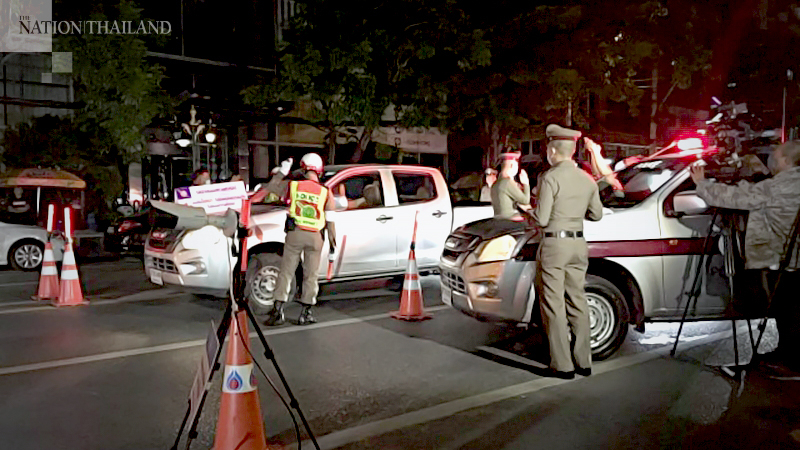
The new Covid-19 wave has infected 113 police officers, Pol Colonel Sirikul Kritphitthayaboon, deputy spokeswoman of the Royal Thai Police Headquarters, said on Sunday.
“Nationwide, 113 police officers have been hospitalised after contracting the virus. Bureaus that reported the most infections were: Metropolitan Police (52 officers), followed by Region 5 Provincial Police (20), Tourism Police (7) and Central Investigation (5),” she said.
“Also, 961 officers are in quarantine as they had close contacts with fellow officers who got infected.
“Three officers have been cured since the latest wave. They are from the Immigration Police Bureau,” she added.
National Police chief Pol General Suwat Jangyodsuk has urged all officers to employ preventive measures against Covid-19, as well as exercise the highest caution when interacting with public from risky groups, especially during the Songkran holidays [April 10-15] when the number of road accidents often spike, Sirikul said.
“All units have been told to employ work-from-home approach where applicable to reduce the risk of the virus further spreading, provided public services were not affected,” she added.
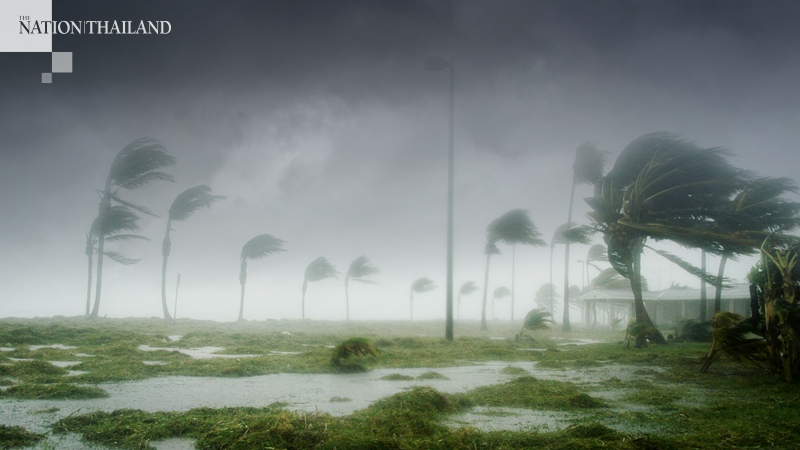
The Thailand Meteorological Department said on Monday that a moderate high-pressure system covers upper Thailand and the South China Sea, while southerly and southeasterly winds prevail across the lower North, the lower Northeast, the Central including Bangkok and its vicinity, and the East regions.
Hot weather is forecast for upper Thailand with thunderstorms and gusty winds in some areas. The easterly winds across the Gulf of Thailand and the South bring isolated thundershowers to the South.
The weather forecast for the next 24 hours:
North: Hot day with haze and thunderstorms in 40 per cent of the areas, gusty winds are possible in some areas; temperature lows of 23-25 degrees Celsius, highs of 35-39°C.
Northeast: Hot day with haze and thundershowers in 10 per cent of the areas, gusty winds are possible in some areas; temperature lows of 22-25°C, highs of 33-38°C.
Central: Hot day with haze and thunderstorms in 40 per cent of the areas, gusty winds are possible in some areas; temperature lows of 23-25°C, highs of 34-36°C.
East: Thunderstorms in 40 per cent of the areas, gusty winds are possible in some areas; temperature lows of 24-26°C, highs of 31-36°C; waves a metre high and 1-2 metres during thundershowers.
South (east coast): Thundershowers in 30 per cent of the areas; temperature lows of 24-27°C, highs of 32-35°C; waves a metre high and 1-2 metres during thundershowers.
South (west coast): Thundershowers in 30 per cent of the areas; temperature lows of 22-28°C, highs of 32-36°C; waves a metre high and 1-2 metres during thundershowers.
Bangkok and surrounding areas: Hot day with haze and thundershowers in 30 per cent of the areas; temperature lows of 26-27°C, highs of 33-37°C.
The Department of Disease Control and International Health Policy Program agency have created a mathematical model to estimate the number of daily Covid-19 cases in 2021 as of Sunday, based on four main measures. The model considers five possible situations.
The results of the study showed the likely number of new patients daily for the next month.
Case 1: No theoretical measures
— 9,140 projected average cases per day, with lowest 1,308 cases per day and maximum 28,678.
Case 2: Closed entertainment venues in risky provinces
— 2,996 projected average cases per day with 817 the lowest and 7,244 maximum.
Case 3: Closed entertainment venues in risky provinces and focus on personal behaviour adjustments
— 934 projected average cases per day with 475 cases per day the lowest and maximum 1,589.
Case 4: Closure of entertainment venues in risky provinces, adjusting personal behaviour and reducing public gathering activities
— 593 projected average cases per day with lowest of 378 per day and 857 maximum.
Case 5: Closed entertainment venues in risky provinces, focus on personal behaviour adjustment, reducing group activities and working from home
— 391 projected average cases per day with 303 the lowest per day and 484 the maximum.
Dr Sophon Iamsirithaworn, director-general of the Communicable Diseases Division under the Department of Disease Control, said that Covid-19 infection was found to be increasing quickly and spreading in many provinces. Most of them are linked to entertainment venues, pubs and karaoke bars. To reduce the risk of a major outbreak, especially during Songkran, four important measures are necessary.
▪︎Social measures: Reduce social gatherings and unnecessary travel across provinces. Community leaders have to find and track people arriving from vulnerable areas and promote preventive measures.
▪︎Public health measures: Proactive screening, separating groups of high-risk and low-risk people to narrow down the spread, provide thorough care to reduce morbidity, and vaccinate people to reduce the severity of the disease.
▪︎Individual measures: DMHTTA is needed for individuals (D – distancing, M – wearing mask , H – washing hands, T – taking temperature, T – testing for Covid- 19 , A – use applications, such as ThaiChana and MorChana). Those who visit high-risk areas must be strictly self-quarantined, especially those going to entertainment venues
▪︎Organisational measures: Focus on work-from-home; online meetings; arrange learning and training online , and hold teleconference, which can replace on-site meetings effectively.
A total of 3,233 Covid-19 cases were found in Bangkok from December 18, 2020, to April 10, 2021, the Centre for Covid-19 Situation Administration (CCSA) said on Sunday.
Of the total patients, 2,581 were found in the Bangkok area and 636 were found outside but related to Bangkok clusters.
All 50 Bangkok districts have reported cases as follows:
1. Bang Khae 421 cases
2. Bang Khen 359
3. Bang Khunthian 225
4. Phasi Charoen 212
5. Watthana 100
6. Nong Khaem 78
7. Suan Luang 66
8. Huai Khwang 65
9. Bang Bon 55
10.Bang Kapi 54
11. Chom Thong 47
12. Thonburi 44
13.Khlong Toei 43
14. Bang Phlat 41
15. Chatuchak 39
16. Klong Sam Wa 34
17. Bangkok Noi 33
18. Din Daeng 33
19. Sathorn 29
20. Wang Thonglang 29
21 Thawi Watthana 27
22. Lat Krabang 26
23. Pathumwan 25
24. Phra Khanong 25
25. Taling Chan 23
26. Don Muang 23
27. Prawet 22
28. Khlong San 21
29. Bang Kho Laem 20
30. Lak Si 20 cases
31. Bangna 20
32. Bueng Kum 20
33. Lat Phrao 20
34. Dusit 19
35. Yannawa 19
36. Sai Mai 19
37. Ratchathewi 18
38. Bang Rak 17
39. Phya Thai 17
40. Bangkok Yai 16
41. Thung Khru 16
42. Minburi 15 cases
43. Rat Burana 11
44. Bang Sue 11
45. Khanna Yao 10
46. Phra Nakhon 9
47. Nong Chok 6
48. Pom Prap Sattru Phai 5
49. Saphan Sung 4
50. Samphanthawong 3
During the period April 4-10, there was an outbreak of a cluster from entertainment venues, which infected 999 people inside and outside Bangkok.
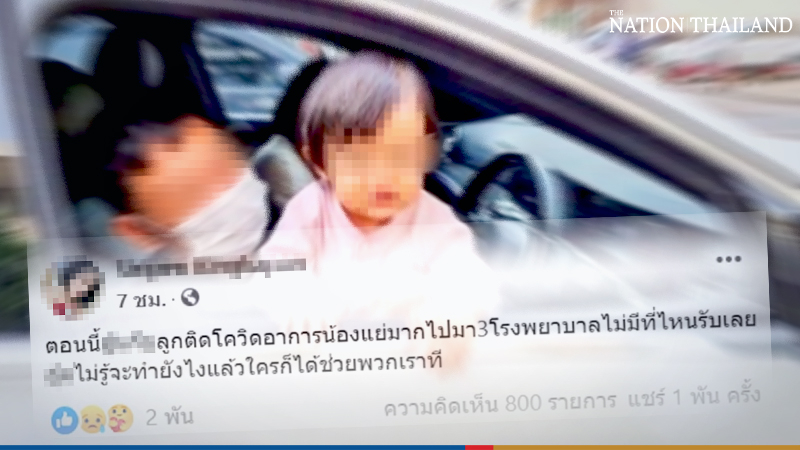
Netizens praised Bhumibol Adulyadej Hospital for treating a 10-year-old child infected with Covid-19 on Sunday.
The hospital’s gesture followed an appeal on Facebook Live by the child’s mother, seeking help from netizens.
She said her child had high fever, and four hospitals she had gone to had denied medical treatment for her child for many reasons, such as “the emergency room was closed” and “the ward was full”.
Later, the assistant to Sai Mai MP, Eakpob Laungprasert, who offered help to the child’s mother, said on his Facebook page that a child is currently under the care of medical personnel at Bhumibol Adulyadej Hospital.
After the good news was posted, many netizens congratulated the child’s mother and praised the hospital staff for their kindness.
The Ministry of Public Health has clarified that it has no policy of allowing Covid-19 patients to be treated at home.
If hospital beds are full, they have a forwarding system with a field hospital and a hotel semi-hospital system (hospitel) to treat patients with mild symptoms.
Dr Opas Karnkawinpong, director-general of the Department of Disease Control, confirmed that unlike many other countries Thailand had no policy of people infected with Covid-19 being confined to their homes.
Infected persons must be hospitalised.
Dr Opas added that the majority of infected people in this new wave have relatively few symptoms, so a hotel system is adapted to be a hospitel, with a medical and public healthcare system. There is a referral system if the symptoms are more severe. There are now thousands of rooms available and if there are many infected people, field hospitals will be set up in Bangkok, he said.
He added that Thais or foreigners with suspected symptoms can detect the infection free of charge as the government subsidises the examination fee for everyone by providing a budget to the National Health Security Office of Bt3 billion, which is sufficient as of now.
Thailand suffered lisses estimated at Bt500 billion in 2019 from road accidents and over 80 per cent involved motorcycles, according to a World Health Organization (WHO) report.
Thailand is the country with the highest death rate from road accidents in Asean — 32.7 per cent.
Meanwhile, by estimating the statistics of road fatalities over the next six years (from 2021 to 2027), the worst- case scenario is estimated at 18,606 deaths per year and about 15,399 deaths per year in a best-case scenario.
Nopadol Santipakorn, managing director, Road Accident Victims Protection Co, said that WHO had estimated the financial loss from road fatalities in different countries. In the case of Thailand, the losses due to accidents were estimated at 3 per cent of gross domestic product, or Bt500 billion on 2019 GDP of Bt16.87 trillion.
Deaths and road accidents during the first three months of this year (January-March) are likely to increase after a sharp decline in numbers in 2020 to 17,831 from 22,000 in 2019, partly due to the April 2020 nationwide lockdown due to the Covid-19 crisis. However, without the Covid-19 factor, the number of deaths may return to 19,000-20,000 people, especially in January 2021. Overall, one person is killed every 23 seconds, and about 317,000 people per year worldwide die in road accidents.
Approximately 39 per cent of the deaths are family heads. This means that the death of one person puts 2.43 people per family in trouble. It is also a loss for Thailand’s demography as the country enters an ageing society, Nopadol said.
The new Covid-19 wave has severely impacted hotel operators in the northern region of Thailand, the president of the Thai Hotels Association Northern Chapter said on Sunday.
La-iad Bungsrithong, who owns Ratilanna Riverside Spa Resort Chiang Mai, said customers, especially government officials, had begun to cancel their bookings in response to the new Covid-19 wave.
She added that Ratilanna Riverside Spa Resort Chiang Mai’s occupancy rate from April 8 to 18 was approximately 20 per cent.
“If the situation continues, the hotel’s occupancy rate may drop to 10 per cent, similar to the previous year when all activities to mark Songkran were cancelled to contain the spread of the virus,” she said.
She urged hotel operators to adjust their businesses to deal with the Covid-19 situation.
“Hotel operators must study the province’s Covid-19 preventive measures to give accurate information to customers,” she added.
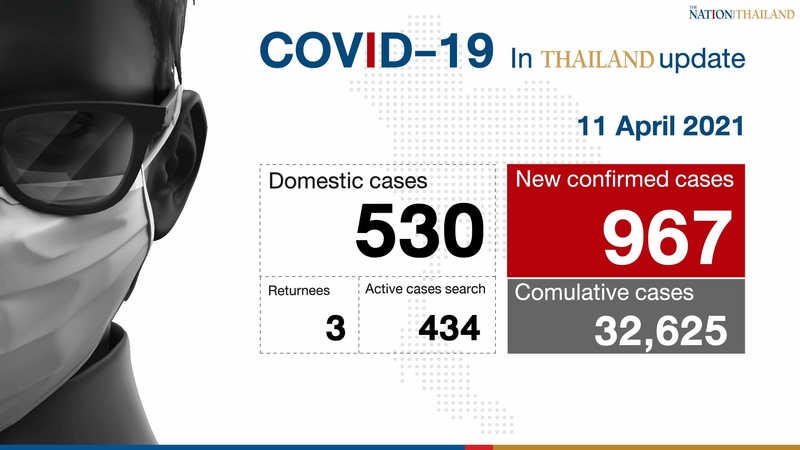
The Centre for Covid-19 Situation Administration (CCSA) on Sunday reported 967 new cases, the highest number Thailand has reported on a single day since the outbreak in 2020.
Only three of them were overseas travellers in quarantine — from the United Arab Emirates and France, and one case at the border checkpoint with Malaysia.
Proactive testing led to the discovery of 434 cases, while 530 were exposed to the disease while visiting high-risk areas.
Meanwhile, 53 patients have recovered and been discharged.
As of Wednesday, the number of confirmed cases in Thailand had risen to 32,635. Of these, 29,427 had been contracted locally, including 17,531 who were found via proactive testing, while 3,198 were returnees. So far, 28,214 have recovered and been discharged, 4,314 patients are still in hospitals, and 97 have died.
According to Worldometer, as of 11am on Sunday, the number of confirmed cases globally had risen to 136 million (up by 703,555), 109.37 million have recovered, 22 million are active cases (102,551 in severe condition) and 2.94 million have died (up by 11,274).
Thailand ranks 113th on the global list of most cases, which is topped by the US with 31.87 million, followed by, Brazil 13.45 million, India 13.36 million, France 5 million, and Russia 4.63 million.
Meanwhile, 15,656 more people have been vaccinated, bringing the total number to 485,957; 2,360 people received the second dose taking the total number of those to have completed the vaccination to 69,439.



 File Photo