A grieving husband in Nakhon Pathom decided to celebrate his dead wife’s birthday instead of holding somber funeral rites.
Sophon Saengwichian, 47, told reporters that his wife, Sakon, 48, succumbed to coronary complications and cancer on Wednesday, a couple of days before her birthday on Friday.
So, he decided to throw her a birthday bash instead as a final gesture of love.
In a bid to meet demands and support tourism, Thai Airways International (THAI) has launched special flights to 13 destinations in Asia and Europe, acting executive vice president Nond Kalinta said on Friday.
Some flights have started operating, while some will be launched soon.
The flights are:
• Bangkok-Tokyo (Narita) every Tuesday, Wednesday, Saturday and return flight every Wednesday, Thursday and Sunday
• Bangkok-Tokyo (Haneda)-Bangkok special flight on March 30
• Bangkok-Osaka-Bangkok every Saturday
• Bangkok-Seoul-Bangkok every Sunday, but the first flight on Wednesday, March 31
• Bangkok-Taipei-Bangkok every Friday
• Bangkok-Hong Kong-Bangkok every Wednesday
• Bangkok-Manila-Bangkok special flights on March 9, 16 and 23
• Bangkok-Kuala Lumpur-Bangkok special flights on March 16 and 31
• Bangkok-London-Bangkok every Sunday
• Bangkok-Paris-Bangkok special flight on March 25
• Bangkok-Frankfurt-Bangkok every Friday and special flight on Sunday, March 28
• Bangkok-Stockholm-Bangkok special flight on March 17
A rare disease is any disease found in a small percentage of the population. There is a lack of a sample size large enough to gain resources for research and clinical trials, making it tough for patients to access affordable rare-disease medication and treatment.
Despite the high-cost therapies, the National Health Security Office (NHSO), in 2020, introduced treatments for 24 rare diseases known as inherited metabolic disorder or inborn errors of metabolism, under the benefits package of the Universal Coverage Scheme.
A person diagnosed with one of those diseases will be transferred to one of seven tertiary hospitals with clinical genetics experts and advanced healthcare technologies.
The hospitals, mainly based in Bangkok, are: Chulalongkorn Hospital, Thammasat Hospital, Siriraj Hospital, Ramathibodi Hospital, Phramongkutklao Hospital, Queen Sirikit National Institute of Child Health, and Srinagarind Hospital in Khon Kaen province.
The move has been made possible by the collaboration among players, including patient groups, clinicians, the Public Health Ministry and the NHSO. However, there are still huge challenges as there are more than 6,000 rare diseases for which many patients still cannot access treatment.
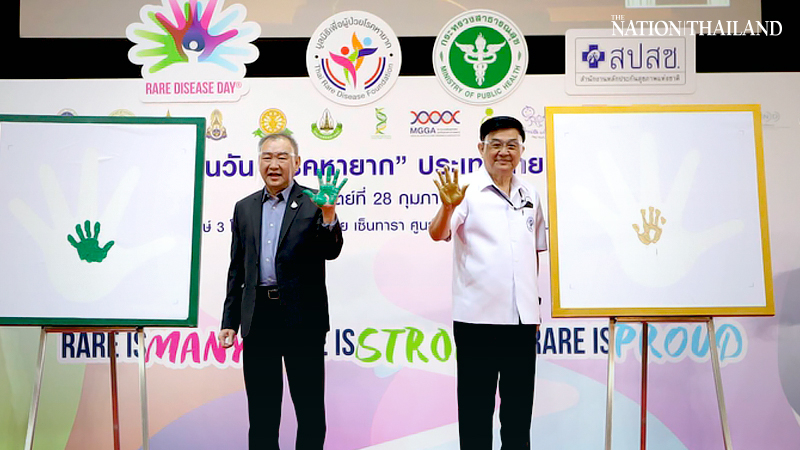
On February 28, all players joined a seminar for the recognition of Rare Disease Day at Centara Government Complex Hotel and Convention Centre in Chaeng Watthana, Nonthaburi province. The event was jointly organised by NHSO, the Public Health Ministry and Thai Rare Disease Foundation. Several experts who play vital roles in pushing forward rare-disease care at a policy level, including Prof Duangrurdee Wattanasirichaigoon from Mahidol University’s Faculty of Medicine Ramathibodi Hospital and also President of Medical Genetics Network, Genetic Society of Thailand; Prof. Kanya Suphapeetiporn from Chulalongkorn University’s Faculty of Medicine; Asst. Prof. Achara Sathienkijkanchai, and Prof. Cherdchai Nopmaneejumruslers from Mahidol University’s Faculty of Medicine Siriraj Hospital and the chairman of NHSO’s working committee on rare-disease care, took part in the seminar.
NHSO secretary-general Sakchai Kanjanawatana and Vice Minister at the Office of the Prime Minister, Prapon Tangsrikertikul, gave the opening speech at the event.
■ Gain public attention
Health experts estimate that 5 per cent of the Thai population have one of the rare diseases, meaning that three million out of more than the 65 million Thai population have some of those diseases. However, only around 20,000 of them receive treatment.
“Three million is a lot. Why aren’t rare diseases a matter of concern for most people? One of the answers is, we don’t have a good strategy to raise this issue and gain public attention,” said Somchai Jitsuchon, an economic researcher at Thailand Development Research Institute Foundation.
He admitted that if his daughter did not have a rare disease, he might not care about it like many others.
“As an economist, I’m interested in the lost opportunity cost for Thailand due to the illness caused by rare diseases. We should have more studies on that, so that society will see the need to address this issue.”
Many technocrats express concern about the financial burden on the government if it provides free treatment to patients with rare diseases. Currently, Civil Servant Medical Benefits Scheme fully covers rare-disease care costs, while there is a gap for patients under the UCS and Social Security Scheme.
Somchai believes that Thai society has the ability to handle the cost if it can have an efficient tax collection system.
■ Driving policy with data
Data on rare diseases are scarce due to inadequate research and a small number of patients.
“When there is no data, patients miss the opportunity,” said Asst. Prof. Thipwimol Tim-Aroon, a clinical geneticist from Ramathibodi Hospital. “Data is essential for convincing policymakers to address rare diseases in healthcare policy. We need the registry system for rare-disease patients.”
Empowering patient groups is the first step to collect data, as it creates a hub for data-sharing among patients, she said.
One success story is the hemophilia patient club, which gathered data and case studies from its networks and used them to convince the NHSO and the Thai government to include hemophilia treatment in the UCS benefits package.
Asst. Prof. Prapat Suriyaphol from Siriraj Hospital, Mahidol University, said during the seminar that digital technology could improve collection of data on rare diseases.
His team is adopting Fast Healthcare Interoperability Resources — a standard describing data formats, elements and an application programming interface for exchanging electronic health records — for the development of Thai patients’ dashboard containing data of their health status and medical records.
He hopes that the dashboard, expected to be launched by next year, will point out the need to address rare diseases at a policy level.
■ Patient empowerment
The voice of patients has a large influence on Thai health policy and the UCS. Genetic LSD Foundation is one of many patient groups that plays an important role in pushing the government to provide rare-disease medication and treatment.
Established in 2009, the foundation focuses on empowering patients by expanding their knowledge about Lysosomal Storage Diseases, the complex and multi-systemic genetic disorders that affect various organs throughout the body. It raises funds and organises activities in which patients can meet, comfort each other, and work together on pushing health policy.
The foundation’s president, Boon Puttipongthanachote, recalled his group’s success in 2013 in convincing the government to add Gaucher disease medication to the National List of Essential Medicines provided to patients under three healthcare schemes.
“We highlighted the fact that the drug was highly effective. Providing it to patients would help their families avoid bankruptcy,” said Boon, adding that his group is currently pushing for access to medication for Pompe disease.
■ Improve regulatory system
The regulatory system is an important component that drives the policy to develop rare disease innovations and products.
Prof John CW Lim, founding Executive Director of the Centre of Regulatory Excellence (CoRE) at Duke-National University of Singapore Medical School, raised three key challenges that regulators and governments face in the Asia Pacific region.
First is insufficient regulatory knowledge and capacity, especially in smaller developing regulatory agencies; second, fragmentation in the regulatory systems that industry faces when it tries to bring new products to the market. And thirdly, the lack of platforms for regulatory science and policy innovation.
CoRE was set up in 2014 with support from Singapore’s Ministry of Health to address the three challenges by using several approaches, including increasing institution regulatory talent, offering capacity building programmes to regulatory authorities, and establishing networks to bring together stakeholders from across government, industry, academia and research.
“At the end of the day, regulation can never exist in a vacuum. The overall government regional and global systems all come into play,” said Lim, adding that rare diseases are being discussed in regional frameworks, including the Asia-Pacific Economic Cooperation Action Plan for Rare Diseases which guides the coordination of different stakeholders across sectors.
“But ultimately, the patient’s voice and patient-centric models are not only important but will become increasingly important across all areas of health and social systems, not only in promoting regulatory agility and regulatory innovation but to make sure that the patient’s voice and the patient-centric model form the basis and are at the heart of how we approach rare diseases going forward,” Lim said.
Two airlines will open new domestic routes later this month after being given the green light by the Department of Airports.
Bangkok Airways will launch new Bangkok-Khon Kaen and Bangkok-Mae Sot services, while Nok Air will operate a Chiang Mai-Mae Hong Son route.
The new routes will run from March 28 to October 30 as part of the summer flight schedule.
The new Bangkok-Khon Kaen service will offer 14 flights per week while the Bangkok-Mae Sot route will offer 21 flights per week. There will be three flights per week on the Chiang Mai-Mae Hong Son route.
Meanwhile, the department said that Krabi, Surat Thani and Hua Hin airports were now ready to receive international flights.
The Department of Empowerment of Persons with Disabilities will ask the Cabinet to increase disability allowance from Bt800 to Bt1,000 per month, said its director-general Saranpat Anumatrajkij on Friday.
“Eligible candidates must possess a disability ID card, be aged over 18, and not be state welfare card holders,” said Saranrat, whose department comes under the Social Development and Human Security Ministry.
The department has also extended the deadline to apply for Bt10,000 emergency loans for disabled people from March 31 to May 31, to help alleviate financial burdens of the disabled.
“For information on the loan, visit www.dep.go.th or the service centre for the disabled disabilities in your province,” she said.
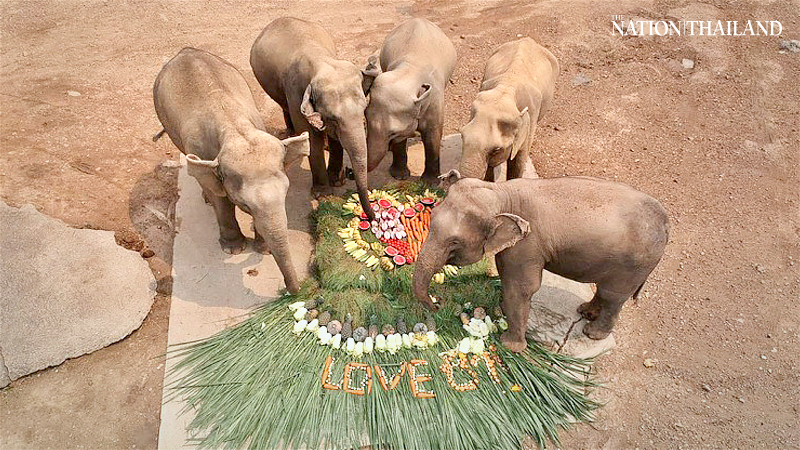
Elephants at the Chiang Mai Night Safari will be presented with a buffet of treats to mark National Elephant Day on Saturday.
Feasting on the array of fruits and vegetables will be the five resident Asian elephants aged between 18 and 43.
People wanting to visit the Night Safari are required to register online first as part of measures to curb Covid-19.
Asian elephants, normally found in India, Sri Lanka, Nepal, Bangladesh, Bhutan, China, Myanmar, Vietnam, Laos, Cambodia, Malaysia, Indonesia and Thailand, are now at the risk of extinction.
The National Elephant Day has been marked on March 13 every year since 1998. The day was announced to underline the importance of the close relationship elephants have had with locals in Thailand for hundreds of years.
The Ministry of Public Health has postponed the launch of the AstraZeneca vaccine on Friday, as it is awaiting the results of an examination after cases of blood clotting were reported in some countries.
Dr Piyasakol Sakonsattayatorn, consultant on strategy and planning for management of the Covid-19 vaccine, announced the postponement of AstraZeneca vaccination for Prime Minister Prayut Chan-o-cha and Cabinet members, who were to be the first recipients.
Dr Piyasakol said that it was necessary to delay the vaccination because there were reports from Denmark and Austria on Thursday night about suspected side-effects that caused blood to clot in the veins.
The Ministry of Public Health and the medical team believed that the vaccination would be the safest for the public but wanted to find out if the side-effects in some European countries, especially Denmark and Austria, were caused by the vaccination, he said.
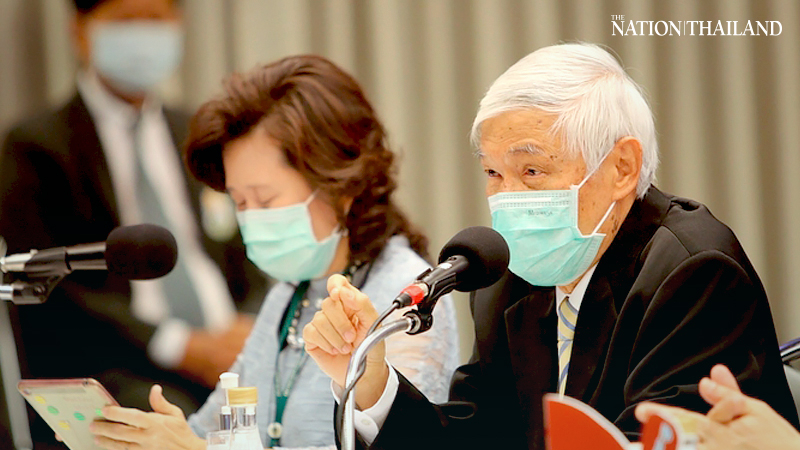
Prof Dr Yong Poovorawan, head of the Centre of Excellence in Clinical Virology at the Faculty of Medicine, Chulalongkorn University, in Bangkok said there were chances of finding adverse reactions or side-effects in a mass vaccination programme. Blood clot in the veins is most common among African and European people, who are at three times more risk than Asians, indicating that genetic factors are involved. There are currently 3 million doses of the vaccine given in Europe, of whom 22 have died, or 7 in a million.
He said the vaccine was not bad but they needed to ensure that the problem did not occur from a manufacturing error.
AstraZeneca vaccine in Thai ministry hand manufactured in South Korea from where Thailand is sourcing its supply after it’s original supplier, Italy, was blocked from fulfilling the order because of an EU restriction. It is not known from where Denmark has got its vaccine.
The National Vaccine Committee has postponed the AstraZeneca vaccination for 1-2 weeks.
Dr Yong added that race or heredity was a major risk factor in vaccination.
However, coagulation has never been associated with any vaccine, he said, adding, Thailand now needs to patiently wait for the report data that may come out within 1-2 days. He still believes that AstraZeneca is one of the best vaccination options.
The MRT Yellow Line, running from Lat Phrao to Samrong in Samut Prakan, is about 74 per cent ready and the builder, BTS Group Holdings, plans to gradually open the line for trials this year.
As for the extension connecting the Yellow Line to BTS Green Line, negotiations with the Mass Rapid Transit Authority (MRTA) have not been concluded yet.
Sources have said that the operator of the Yellow Line extension may have to compensate Bangkok Expressway and Metro (BEM), which runs the MRT Blue Line, for lost revenue because the new extension will allow commuters to connect with the Green Line without needing to use the Blue Line.
A study conducted by the MRTA showed that the number of Blue Line users will drop by about 6,000 per day once the extension is running.
“BTS will not pay any compensation, because it is a listed company. We cannot give any guarantees,” BTS chief Surapong Laoha-Unya said.
He said there is still time to negotiate, but if the MRTA insists on a guarantee of compensation from BTS for lost revenue, then the project will have to be dropped.
MRTA has said it will look into the matter on March 18.
The Yellow Line extension, linking Lat Phrao with the BTS Green Line at Ratchayothin station, is about 2.6 kilometres long and will cost more than Bt3 billion to build. BTS has offered to provide the funding for the project.
Forest officials were relieved to find the wild elephant they had helped revive last week is healthy and leading its life normally in the Chachoengsao Khao Ang Rue Nai Wildlife Sanctuary.
On Friday, Department of National Parks, Wildlife and Plant Conservation (DNP) veterinarian Pattarapol Maneeon posted an update on Facebook saying the elephant and her calf were healthy as per images captured by hidden cameras in the forest.
On February 28, veterinarians were called to help a wild elephant that had strayed from the sanctuary and collapsed in a rubber plantation in Chanthaburi province.
A younger elephant, believed to be the ill animal’s offspring, was nearby guarding its mother.
Veterinarians could only get close to the ill pachyderm after they had tranquilised the young one. When they got to her, they managed to inject her with glucose, vitamins and medication.
According to a DNP Facebook post, officials had on March 1 tried to use a winch to lift the animal, as it could not stand on its own.
However, the effort was in vain as the animal would not allow the use of the equipment.
Eventually, at around 9pm, the elephant stood up on her own and walked out of the plantation.
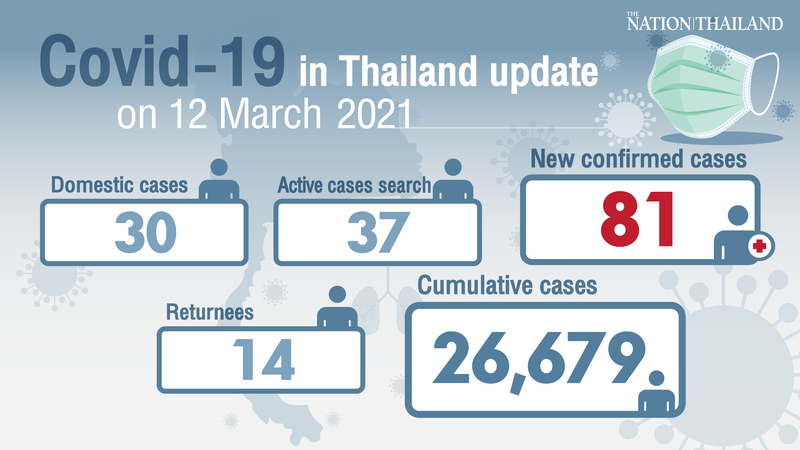
The Centre for Covid-19 Situation Administration (CCSA) on Friday reported 81 new cases, 11 of whom are returnees and three illegal migrants arrested at the Thai-Myanmar border.
Thirty cases were exposed to the virus while visiting high-risk areas. Samut Sakhon leads the list with 14 cases, followed by seven in Pathum Thani, five in Bangkok and two each in Tak and Phetchaburi.
Proactive testing led to the discovery of 37 cases, of which 21 were found in Samut Sakhon (16 Myanmar nationals and five Thais), 13 in Pathum Thani (10 Myanmar nationals, two Thais and one Cambodian) and three Myanmar nationals in Tak.
Of the travellers found infected, seven are Thais returning from the United Arab Emirates, the Netherlands, Switzerland, Belgium, Finland, and the Philippines, as well as, an American from Kazakhstan, an American from the US and two Britons from their country.
Meanwhile, three men from Myanmar were caught crossing the border illegally in Prachuap Khiri Khan province on March 3 and tested positive on March 9.
Separately, 56 patients have recovered and been discharged.
As of Friday, the number of confirmed cases in Thailand had risen to 26,679. Of these, 23,777 had been infected locally, including 14,795 who found via proactive testing, while 2,902 were returnees. So far, 26,056 have recovered and been discharged, 538 patients are still in hospitals, and the death toll remains at 85.
According to Worldometer, as of 10am, the number of confirmed cases globally had risen to 119.12 million (up by 477,306), 94.73 million have recovered, 21.75 million are active cases (89,952 in severe condition) and 2.64 million have died (up by 9,634).
Thailand ranks 116th on the global list of most cases, which is topped by the US with 29.93 million, followed by India at 11.31 million, Brazil at 11.28 million, Russia at 4.36 million and the United Kingdom at 4.24 million.