Twenty men and 16 women were arrested on Friday at a pool villa house in Banglamung district of Chonburi province while they were drinking and dancing to loud music, in violation of the Emergency Decree on Public Administration in Emergency Situations.
“Police tracked down the house following clues in another drug case which indicated that it was where young people gathered to use recreational drugs,” said the chief of Huai Yai Police Station, Pol Colonel Apichnan Watthanawarangkul.
“In the house, officials found ketamine and marijuana, including several items of drug taking equipment,” he said.
The arrested partygoers were taken to the police station for urine tests to check drug usage, before being charged with violating the emergency decree and related drug charges.
“Initial investigation revealed that the group usually held drug parties at entertainment venues in Pattaya, but since the lockdown measures had limited opening hours of those businesses, they had to move their party location to this house instead,” added Apichnan.
Pro-democracy protesters gathered outside Bangkok Remand Prison in Chatuchak district from 3pm on Friday, urging the release of four protest leaders who have been charged with violating the Criminal Code’s Article 112 (lese majeste) and for sedition under Article 116.
The four are: Parit “Penguin” Chiwarak, Arnon Nampa, Somyos Prueksakasemsuk and Patiwat “Bank” Saraiyam. The charges have been filed by the Office of the Attorney-General following their participation in the anti-government rally at Thammasat University’s Tha Prachan campus in September last year.
They have been detained at the prison since February 9 after the Criminal Court denied them bail.
Protesters from the Nonthaburi New Generation Network, Ratsadon 2020 and Red Progressive 2020 groups on Friday clanged pots and pans that they had brought along, while chanting “Release our friends”.
At 8pm, Prachacheun Police Station chief Pol Colonel Sumet Phuchana read an announcement to the protesters that public gathering is prohibited under the Emergency Decree on Public Administration in Emergency Situations, and urged them to go home.
The protesters dispersed peacefully shortly after, but promised to rally in front of the prison every Friday until their demand was met.
The Friday rally was monitored by over 100 crowd control police officers.
The Thailand Meteorological Department said on Saturday that the weak high-pressure covers upper Thailand and the South China Sea, leading to a 1-3 degrees Celsius rise in temperature with fog in the morning in the North and the Northeast. People in upper Thailand should beware of poor visibility, the department said.
Meanwhile, the weak northeast monsoon prevails over the Gulf and the South, resulting in less rain in the South.
The weather forecast for the next 24 hours:
North: Cool to cold weather with fog in the morning; temperature lows of 15-20 degrees Celsius and highs of 31-36°C; temperature on hilltops is likely to drop to 4-12°C.
Northeast: Cool to cold weather with fog in the morning; temperature lows of 15-18°C and highs of 31-33°C; temperature on hilltops is likely to drop to 8-11°C.
Central: Cool weather with fog in the morning; temperature lows of 18-21°C, highs of 35-36°C.
East: Cool weather with fog in the morning; temperature lows of 17-23°C, highs of 32-35°C; waves a metre high and 1-2 metres offshore.
South (east coast): Partly cloudy with thundershowers in 10 per cent of the areas; temperature lows of 19-25°C, highs of 30-34°C; waves a metre high and 1-2 metres during thundershowers.
South (west coast): Partly cloudy with thundershowers in 10 per cent of the areas; temperature lows of 22-26°C, highs of 34-36°C; waves a metre high and 1-2 metres offshore.
Bangkok and surrounding areas: Cool weather with fog in the morning; temperature lows of 20-23°C, highs of 33-35°C.
Warin Lab Contemporary has turned to trash to launch its newly renovated art space in a century-old former residence on Charoenkrung Road Soi 36.
Visitors to “SWAMPED” are immersed in humanity’s waste-management nightmare only to ride the wave to a recycled future.
Envisioning a circular economy, “SWAMPED” reveals how finite resources can be used longer through recycling, upcycling, repairing and refurbishment in order to create a closed-loop system. The villain of this story is not plastic, but humankind’s addiction to convenience.
Garbage collected from corporations and the local community has been woven into installations for an exhibition running February 24 to April 21.
The opening party is on Saturday, March 6, from 5-7pm.
The exhibition also offers an educational workshop together with panel discussions. Visit Warin Lab’s Facebook and Instagram pages to book a seat.
The art space is open Tuesday-Saturday from 10.30am-7.30pm.
The Ministry of Public Health has said that vaccination for Covid-19 would be undertaken in two phases.
Ten provinces that have seen regular cases in the second wave are in the priority list for Covid-19 vaccination from February to April.
The Covid-19 vaccine policy will cover everyone in Thailand, including migrant workers, to ensure effective disease prevention, Dr Sophon Mekthon, chairman of the government’s subcommittee on Covid-19 vaccine management, said on Thursday.
The target groups for Covid-19 vaccine in Thailand is divided into two phases:
Phase 1, due to limited stocks of doses, will prioritise medical personnel and public health officers on the frontline, both in the public and private sectors, people with underlying disease and severe chronic respiratory diseases, people with cardiovascular disease, chronic kidney disease in stage 5 and above, cerebrovascular disease, all cancers during chemotherapy, radiotherapy and immunotherapy, people with diabetes and obesity with weight more than 100kg or body mass index greater than 35kg/m2, people aged 60 and above and staff involved in Covid-19 control who may be required to come in contact with patients.
In phase 2, when there are enough vaccine doses, the focus will be on reviving the economy, society and national security and to build immunity in the population. The target groups are tourism operators, such as hotel staff, entertainment venues, tour guides, international travellers such as pilots/crew, international businessmen, general citizens, diplomats, international organisation staff, and industrial workers.
Dr Sophon Iamsirithaworn, general communicable diseases director at the Department of Disease Control (DDC), said that from February to April, the vaccines will be distributed in 10 provinces with the highest and strict control, areas that used to be the most regulated areas and areas where ongoing infections were found, through hospitals, both public and private, as follows: Samut Sakhon 10 hospitals, Bangkok 62, Samut Prakan 30, Nonthaburi 21, Pathum Thani 22, Rayong 13, Chonburi 32, Chanthaburi 14, Trat 8 and Tak 11.
The vaccination plan for two million doses — each person requiring two doses — for 10 provinces is as follows:
Samut Sakhon: 820,000 doses for 410,000 people — 8,000 medical personnel and 6,000 staff having close proximity to patients, 36,000 people with chronic diseases,150,000 people aged 60 years and above, and 150,000 general public and labourers.
Bangkok: 800,000 doses for 400,000 people — 32,000 medical personnel and 8,000 staff having close proximity to patients; 100,000 people with underlying disease, 100,000 people aged 60 years and above, and 160,000 general public and labourers.
Nonthaburi: 26,000 doses for 13,000 people — 9,000 medical workers and 4,000 staff having close proximity to patients.
Pathum Thani: 26,000 doses for 13,000 people — 9,000 medical personnel and 4,000 staff having close proximity to patients.
Samut Prakan: 28,000 doses for 14,000 people — 9,000 medical workers and 5,000 staff having close proximity to patients.
Rayong: 18,000 doses for 9,000 people — 5,000 medical personnel and 4,000 staff having close proximity to patients.
Chonburi: 28,000 doses for 14,000 people — 10,000 medical personnel and 4,000 staff having close proximity to patients.
Chanthaburi: 16,000 doses for 8,000 peopke — 6,000 medical personnel, and 2,000 staff having close proximity to patients.
Trat: 12,000 doses, 6,000 people — 5,000 medical personnel and 1,000 staff having close proximity to patients
Tak: 160,000 doses for 80,000 people — 8,000 medical personnel, 2,000 staff having close proximity to patients, 10,000 people with chronic disease, 10,000 people aged 60 years and above, and 50,000 for general public and workers.
The remaining 66,000 doses will be kept in reserve to cope with any outbreaks in other areas.
In Phase 2, 61 million doses will be distributed from June and completed by 2021, deploying 1,000 doctors and emergency rooms in hospitals nationwide, at 500 doses per day, 20 days per month, averaging 10 million doses per month. If the vaccines are proved to be safe and effective, DDC may consider expanding the service in some health promotion hospitals.
Mekong River drops to ‘worrying’ levels, Thai sections turning blue-green
NationalFeb 12. 2021The Mekong River in Vientiane is seen from the sky in December 2019, indicating the area’s low water level and the algae that are building up at the very shallow part of the river.
By The Nation
Mekong River levels in Thailand have fallen to worrying levels following a drop in discharge from a Chinese dam upstream, the Mekong River Commission (MRC) said on Friday.
The MRC is the intergovernmental organisation through which Cambodia, Laos, Thailand and Vietnam manage Mekong water use.
Water levels have dropped considerably since the beginning of the year due to lower rainfall, flow changes upstream, hydropower operations in Mekong tributaries, and outflow restrictions from China’s Jinghong hydropower dam, it said.
Section of the Mekong River in Lao capital Vientiane is seen in late January 2021 with the water appearing to flow very slowly
The MRC reports that Chiang Saen – the first monitoring station on the Mekong River in Thailand located 300km from Jinghong – saw water levels plunge by about 1 metre during January 2-4. Since then, the water level at Chiang Saen has been fluctuating between -0.24m and 0.29m. From Chiang Khan in Thailand to Vientiane in Laos, river levels have been fluctuating between -0.32m and 0.50m.
“There have been sudden rises and falls in water levels immediately downstream of Jinghong and further down to Vientiane, which has been challenging for authorities and communities to prepare for and respond to possible impacts,” said Winai Wangpimool, director of the MRC Secretariat’s Technical Support Division.
Rainfall since November is down 25 per cent from the seasonal average, the MRC said. However, water-level data also show that outflow at the Jinghong station yesterday (Thursday) was 775 cubic metres per second (m³/s) – a plunge of almost half of its normal level of approximately 1,400m³/s, which was last recorded in December.
In early January, China’s Water Resources Ministry that the outflow from Jinghong would be restricted to 1,000 m³/s from January 5-24 due to maintenance work. The ministry, however, did not specify the river water level before the outflow restriction nor the volume to be restored on January 25, the MRC said.
“Continuing this flow pattern could have an impact on river transport, fish migration, agriculture and river weed collection,” Winai said. “To help the Lower Mekong countries manage risks more effectively, we call on China and the Lower Mekong countries themselves to share their water release plans with us.”
The Mekong has also fallen to well below average levels in Cambodia and Vietnam.
The drop in flow has turned the Mekong in Nakhon Phanom an aquamarine colour. Citing research, the MRC said this phenomenon would lead to reduced fish catches, threatening livelihoods of Mekong communities as it spreads. Normal conditions may be restored if large volumes of water are released from Chinese reservoirs upstream, it said.
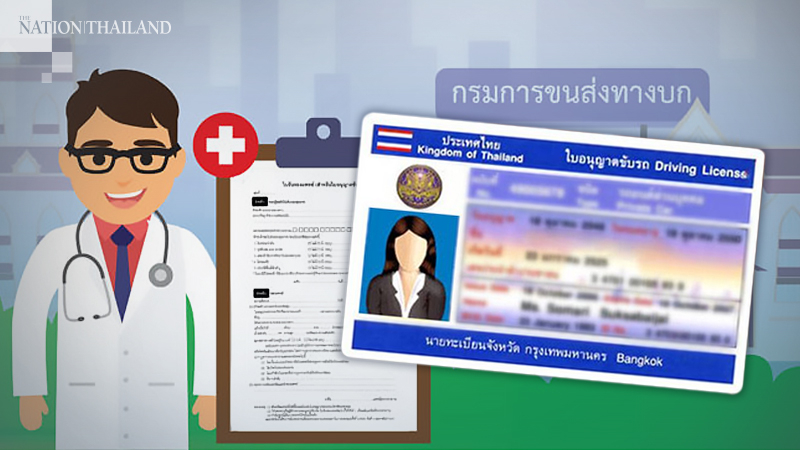
From February 19, people applying for a new driver’s licence or renewing one will be required to present a medical certificate proving they do not have any conditions that may affect their driving.
The certificate is also necessary when a new automobile is purchased.
The Department of Land Transport has set this new condition in a bid to reduce road accidents.
Thailand’s roads are said to the deadliest in Southeast Asia, with some 20,000 fatalities per year or about 56 deaths a day, according to the World Health Organisation.
The prime minister has expressed gratitude for people’s cooperation in the crackdown on illegal gambling dens and illegal migrant workers, government spokesperson Anucha Burapachaisri said on Friday.
Between January 7 and February 9, 253 illegal gambling and 38 illegal migrant worker cases have been reported via the 1111 hotline.
Of the gambling cases, legal action has been taken against 17, while 236 cases are currently under process. As for illegal migrant workers, two cases have been settled, while 36 are being processed.
Meanwhile, the hotline has received 200 complaints of non-compliance with the Emergency Decree. Of the 40 cases that have been settled, seven arrests have been made, 20 people charged with violating the decree and 160 cases are under process.
“The premier appreciates people who have filed complaints because apart from being the eyes and ears of the government, they are also helping stop the spread of Covid-19,” Anucha said.
In a bid to prevent cluster Covid-19 infections, Pathum Thani governor has decided to close all high-risk sites until February 16.
This was in response to 60 new Covid-19 cases being confirmed in the province on Friday, which pushed Pathum Thani’s total new cases in the latest outbreak up to 151.
The governor has ordered the temporary closure of Suchat and Phon Phat markets as well as all surrounding commercial buildings in Thanyaburi’s Prachathipat sub-district. Workers of both markets have been put under a 14-day quarantine.
The Centre for Covid-19 Situation Administration (CCSA) on Friday reported 175 new cases, including eight overseas travellers in quarantine facilities.
Of the 47 patients exposed to the disease while visiting high-risk areas, 35 were in Samut Sakhon, nine in Bangkok and one each in Chonburi, Nonthaburi and Samut Songkhram provinces.
Meanwhile, proactive testing led to the discovery of 120 cases, 60 each in Samut Sakhon and Pathum Thani.
Of the overseas travellers in quarantine, two Thais had returned from Malaysia and Jordan, an Indian had travelled from Indonesia, while a German, a Swede, an Italian, an Icelander and a Sierra Leone citizen had all travelled from their respective countries.
Meanwhile, 411 patients have recovered and been discharged.
As of Friday, the number of confirmed cases in Thailand had risen to 24,279. Of these, 21,681 had been contracted locally, including 13,754 who were found via proactive testing, while 2,598 were returnees. So far, 20,210 have recovered and been discharged, 3,989 patients are still in hospital (83.24 per cent recovery rate) and 80 people have died.
According to Worldometer, as of 10am on Friday, the number of confirmed cases globally had risen to 108.29 million (up by 437,561), 80.32 million have recovered, 25.42 million are active cases (99,948 in severe condition) and 2.38 million have died (up by 13,029).
Thailand ranks 114th on the global list of most cases, which is topped by the US with 28 million, followed by India 10.88 million, Brazil 9.71 million, Russia 4.02 million and the United Kingdom 4 million.


 The Mekong River in Vientiane is seen from the sky in December 2019, indicating the area’s low water level and the algae that are building up at the very shallow part of the river.