HKSAR financial chief expects more tech firms to go public in HK following Alibaba

#ศาสตร์เกษตรดินปุ๋ย : ขอบคุณแหล่งข้อมูล : หนังสือพิมพ์ The Nation

https://www.nationthailand.com/ann/30378949?utm_source=category&utm_medium=internal_referral

HKSAR financial chief expects more tech firms to go public in HK following Alibaba

Dec 01. 2019
Alibaba Group Holding debuts on the Hong Kong Exchanges and Clearing Market on Tuesday. [Photo/VCG]

Alibaba Group Holding debuts on the Hong Kong Exchanges and Clearing Market on Tuesday. [Photo/VCG]
By China Daily/ANN

619 Viewed

HONG KONG – Financial Secretary of China’s Hong Kong Special Administrative Region (HKSAR) government Paul Chan has said Sunday that he expects more tech firms to go public in Hong Kong, encouraged by the successful fund-raising of leading companies including Alibaba.


In his weekly article, Chan said there will be a cluster effect following the listing of tech giants.

Alibaba Group Holding Ltd. made a debut on the main board of Hong Kong Stock Exchange Tuesday in one of the world’s largest fund-raising this year.

Chan said the major opportunities will likely come from the Guangdong-Hong Kong-Macao Greater Bay Area as more and more tech startups are emerging and thriving in the area that aims to become an international center for technology and innovation.

Hong Kong can continue to play the role of an international financial hub to assist the development of those firms, Chan said, in particular citing Hong Kong’s highly-developed market of private equity funds.

It is fortunate that the impact from the nearly-half-year social unrest remains limited in Hong Kong’s financial sector, though the broader economy and people’s livelihood have been severely affected, Chan said

‘High cost of living in Malaysia due to weak ringgit’

#ศาสตร์เกษตรดินปุ๋ย : ขอบคุณแหล่งข้อมูล : หนังสือพิมพ์ The Nation

https://www.nationthailand.com/ann/30378942?utm_source=category&utm_medium=internal_referral

‘High cost of living in Malaysia due to weak ringgit’

Dec 01. 2019
Every vote counts: Dr Mahathir casting his vote at the Perkim 58th annual general meeting in Petaling Jaya. —Bernama

Every vote counts: Dr Mahathir casting his vote at the Perkim 58th annual general meeting in Petaling Jaya. —Bernama
By The Star/ANN

672 Viewed

KUALA LUMPUR: A weak ringgit is one of the reasons behind the high cost of living, says Tun Dr Mahathir Mohamad.

The Prime Minister said previously the ringgit was about RM3.80 to one US dollar.

“Now it is about RM4.20 to one US dollar and now everything that we want to buy has become expensive,” he said after opening the Muslim Welfare Organisation of Malaysia (Perkim) 58th annual general meeting here yesterday.

Dr Mahathir was asked to comment on the findings of the National Worry Index survey that saw bread-and-butter issues topping the list with 86% worried about the cost of basic needs and unaffordable homes, followed by the lack of job opportunities at 77%.

The index – released by think-tank Emir Research – also showed that respondents were generally unsure if the country’s future was on the right track.

To this, Dr Mahathir said those who were not confident with the way the government was implementing its promises could determine Pakatan Harapan’s fate in the 15th General Election.

“If they are unsure, they can vote during the 15th General Election.

“They can vote to determine Pakatan’s fate,” he said, adding that it would take a full five-year term for the government to implement all of its election promises.

Dr Mahathir said Pakatan did not get the full picture when it was drafting its election manifesto.

“When we took over, we found more problems left by the previous government that are more damaging than we had expected. This is why it will take some time to achieve our goals,” he said.

On a separate matter, the Prime Minister said the government was still studying amendments to

the Security Offences (Special Measures) Act (Sosma) 2012.

“We do not simply want to release terrorists who will make bombs and detonate them here and there.

“We cannot give these individuals bail,” he said.

Dr Mahathir added that those who were charged with sabotaging the economy despite there being no concrete support could be given bail and should not be detained for too long.

“At the moment, we want to reduce the detention period of 28 days,” he said.

On Nov 6, Home Minister Tan Sri Muhyiddin Yassin said the government planned to reduce the remand period to 14 days for those detained under the Act.


Read more at https://www.thestar.com.my/news/nation/2019/12/01/high-cost-of-living-due-to-weak-ringgit#TQ3oSRQch54QsbOY.99

Choon How strikes first gold medal for M’sia in SEA Games 2019

#ศาสตร์เกษตรดินปุ๋ย : ขอบคุณแหล่งข้อมูล : หนังสือพิมพ์ The Nation

https://www.nationthailand.com/ann/30378941?utm_source=category&utm_medium=internal_referral

Choon How strikes first gold medal for M’sia in SEA Games 2019

Dec 01. 2019

 It’s a first medal and a gold as wushu exponent Loh Choon How won the men’s taijiquan event to give Malaysia a perfect start at the Philippines SEA Games.

It’s a first medal and a gold as wushu exponent Loh Choon How won the men’s taijiquan event to give Malaysia a perfect start at the Philippines SEA Games.
By The Star/ANN
703 Viewed
MANILA: It’s a first medal and a gold as wushu exponent Loh Choon How won the men’s taijiquan event to give Malaysia a perfect start at the Philippines SEA Games.

The 26-year-old scored 9.680 to take the gold ahead of Brunei’s Hosea Zheng, who finished with 9.590.

Two-time former SEA Games champion Daniel Parantac settled for bronze for the Philippines with 9.560.

Read more at https://www.thestar.com.my/sport/others/2019/12/01/choon-how-strikes-first-gold-medal-for-m039sia-in-sea-games-2019#75xaoPUSqz1iejXO.99

Health-conscious Chinese deal with rising nut prices

#ศาสตร์เกษตรดินปุ๋ย : ขอบคุณแหล่งข้อมูล : หนังสือพิมพ์ The Nation

https://www.nationthailand.com/business/30378951?utm_source=category&utm_medium=internal_referral

Health-conscious Chinese deal with rising nut prices

Dec 02. 2019
By The Nation

987 Viewed

The price of edible nuts in China is rising due to increasing demand among health-conscious consumers.

Beijing in August imposed high import duties of up to 60 per cent on almonds in response to the United States’ punitive tariff actions, but they’re still flowing in from the US.

Meanwhile averse whether has curtailed almond production in China.

The price of almonds hit $3.60 per pound in July and is currently about $3.45, 15 per cent higher than the price this time last year. In May and June alone, the price rose by 8 per cent.

It’s estimated that the harvest completed in October will yield 2.3 billion-2.35 billion pounds of almonds, on target. The US produces about 80 per cent of the almonds consumed around the world, with California growing more than any other locale in the world.

While global demand for US almonds remains high, Americans are increasingly turning to almond milk and almond butter as healthier substitutes for their dairy counterparts, just as soy milk is preferred in the East.

Almond milk is free of cholesterol and gluten and is being touted as a “superfood” due to its claimed health benefits. It’s rich in antioxidants and Vitamin E, which help boost the immune system and reduce the risk of colon cancer. It has flavonoids that protect the walls of blood vessels, curbing the risk of cardiovascular disease.

The fat in almonds is unsaturated, a good choice for reducing cholesterol, controlling blood sugar and lowering the risk of diabetes.

Almonds’ potassium content keeps blood pressure in check, reduces fatigue and, along with magnesium, is beneficial to bones and teeth.

The healthful appeal of almonds nevertheless didn’t stop Beijing from boosting import duties on US products from 50 to 60 per cent. It’s been claimed that imports dropped less than expected, though, with the California Almond Committee saying exports to China and Hong Kong up to August were down 25 per cent compared to the same month last year.

China also imports almonds from Australia, imposing no duties but paying a higher price – even though the nuts remain cheaper there than the US variety.

The US is also the world’s second-largest producer of walnuts, exports of which were forecast to drop to 570,000 tonnes in September due to bad weather in California. The price is currently $3.50 per pound, up 40 per cent from a year earlier.

China grows more walnuts than any other country, especially in Yunnan province, but traders lament that Chinese dessert makers prefer US walnuts, so American imports represent 70-75 per cent of the total consumed in China.

The price of cashew nuts is meanwhile currently declining, from about $5.50 per pound in 2018 to $4.10 currently.

Market unease shouldn’t scare off investors, says wealth manager

#ศาสตร์เกษตรดินปุ๋ย : ขอบคุณแหล่งข้อมูล : หนังสือพิมพ์ The Nation

https://www.nationthailand.com/business/30378964?utm_source=category&utm_medium=internal_referral

Market unease shouldn’t scare off investors, says wealth manager

Dec 02. 2019
The index on Friday (November 29) closed at 1,590.59, 0.45 per cent down from the previous week, with daily turnover at Bt56.3 billion, up 23.2 per cent. 
A lower boundary for this week is expected of 1,575 or 1,550 and an upper bound of 1,605 or 1,615, according to Kasikorn Securities.

The index on Friday (November 29) closed at 1,590.59, 0.45 per cent down from the previous week, with daily turnover at Bt56.3 billion, up 23.2 per cent.  A lower boundary for this week is expected of 1,575 or 1,550 and an upper bound of 1,605 or 1,615, according to Kasikorn Securities.
By The Nation

1,094 Viewed

Retail investors are being urged to invest in Thai stocks via RMF or LTF schemes despite high volatility in the market.

“It’s worth investing because you at least get tax deductions on your investments in retirement mutual funds [RMF] and long-term equity funds [LTF],” said Pipat Luengnaruemitchai, assistant managing director and co-head of the CIO office at Phatra Wealth Management.

Capital gains can also be made in the long run since equity investment has been shown to offer higher returns than bank deposits or investments in bonds, he said.

There is a “high chance” the index will return to about the 1,700 level, he said, blaming the current downturn in the stock market partly on listed firms performing more poorly than expected.

Corporate earnings are expected to rise next year, with market consensus agreeing that earnings-per-share growth would reach 10 per cent.

The Finance Ministry is considering a new long-term investment fund scheme because the LTF will expire at the end of this year.

The Stock Exchange of Thailand Index last week closed below the supported level of 1,600 as foreign investors sold on concerns partly about bleak prospects for the US and China completing a trade deal.

The index on Friday (November 29) closed at 1,590.59, 0.45 per cent down from the previous week, with daily turnover at Bt56.3 billion, up 23.2 per cent.

A lower boundary for this week is expected of 1,575 or 1,550 and an upper bound of 1,605 or 1,615, according to Kasikorn Securities.

The market dropped after US President Donald Trump signed off on legislation supporting democracy in Hong Kong that would allow Washington to impose sanctions on rights abusers in the Chinese enclave, which has seen pro-democracy protests over the past five months.

The protests and the US legislation have both angered Beijing.

SET suggests cryptocoin to protect overseas transactions

#ศาสตร์เกษตรดินปุ๋ย : ขอบคุณแหล่งข้อมูล : หนังสือพิมพ์ The Nation

https://www.nationthailand.com/business/30378958?utm_source=category&utm_medium=internal_referral

SET suggests cryptocoin to protect overseas transactions

Dec 02. 2019
SET president Pakorn Peetathawatchai  has floated the idea of issuing a type of virtual currency to support Thai investors eyeing equities and other assets abroad.

SET president Pakorn Peetathawatchai has floated the idea of issuing a type of virtual currency to support Thai investors eyeing equities and other assets abroad.
By Wichit Chaitrong
The Nation

982 Viewed

The Stock Exchange of Thailand (SET) is considering issuing a stable token coin that Thai investors could use to invest in financial assets abroad and lower the risks encountered due to exchange-rate volatility.

SET president Pakorn Peetathawatchai has floated the idea of issuing a type of virtual currency to support Thai investors eyeing equities and other assets abroad.

The Thai Bond Market Association is mulling a similar idea with the aim of reducing investors’ transaction costs.

Investors sending money overseas often struggle with exchange-rate discrepancies and end up short despite earning capital gains, Pakorn said.

A dedicated, stable cryptocurrency would help them manage any risks that arise and could be purchased for baht at an “almost fixed” exchange rate and later resold when they repatriate their foreign investment, he said.

Thais who invested in Vietnamese equities earned capital gains, only to lose it all upon exchanging the Vietnamese currency for baht. The Vietnamese dong is more volatile than the baht, which has been appreciating for several years, according to a source in financial industry.

The Bank of Thailand, known to be cautious about cryptocurrency, has yet to comment on Pakorn’s proposal.

The central bank is currently experimenting with its own digital currency in the so-called Inthanon project, developing a virtual currency for use in its financial settlements with the commercial banks.

If given permission, Pakorn said, the SET would try out a stable coin of its own in the central bank’s online sandbox.

The central bank has in the meantime introduced several measures to encourage Thais to invest in foreign financial assets, hoping capital outflow will ease pressure on the muscular baht.

Pakorn insisted the stable coin he proposes would also cut transaction fees for investors trading in equities on foreign stock markets.

In another development, the SET is seeking dual listings with Indonesia, home to many growth stocks but lacking in the kind of high-return dividend stocks that are in abundant on the SET, he said.

If large companies in Indonesia could list on the Thai market, Thais would discover more investment opportunities, he explained.

Tokyo stocks seen swayed by trade developments this week

#ศาสตร์เกษตรดินปุ๋ย : ขอบคุณแหล่งข้อมูล : หนังสือพิมพ์ The Nation

https://www.nationthailand.com/business/30378953?utm_source=category&utm_medium=internal_referral

Tokyo stocks seen swayed by trade developments this week

Dec 01. 2019
By The Japan News/ANN1,053 Viewed

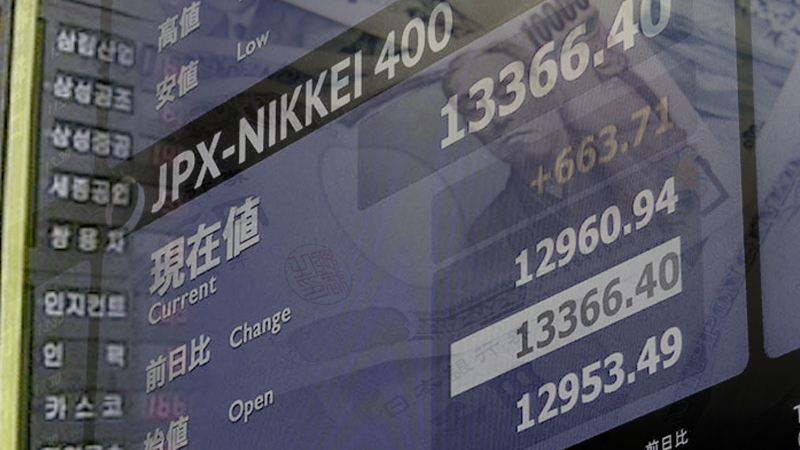
TOKYO (Jiji Press) — Developments in U.S.-China trade talks are expected to strongly influence the moves of Tokyo stocks this week, analysts and brokers said.

Last week, the key 225-issue Nikkei average rose 181.03 points, or 0.78%, to 23,293.91, after optimism for progress in the trade talks was fueled by comments from both sides that they are close to a phase-one deal.

This week, the Nikkei is expected to move mainly between 23,150 and 23,700, the analysts and brokers said.

Masahiro Ichikawa, senior strategist at Sumitomo Mitsui DS Asset Management Co., warned that the Nikkei may fall if there is no further progress in the trade talks, as market players will become increasingly worried that the negotiations are not going well.

On the other hand, Ichikawa said that the Nikkei may rise “if there is any news indicating progress in the talks,” including news that the United States will delay another round of tariffs on Chinese goods scheduled to take effect on Dec. 15.

Meanwhile, Yutaka Miura, senior technical analyst at Mizuho Securities Co., said that market players will also focus on U.S. economic indicators, including the Institute for Supply Management’s manufacturing index for November, due out Monday.

https://the-japan-news.com/news/article/0006197630?fp=06c0e4566e19f302a9374d6be3d2a6a7

Sluggish exports, consumption cast shadow on SKorea’s economy

#ศาสตร์เกษตรดินปุ๋ย : ขอบคุณแหล่งข้อมูล : หนังสือพิมพ์ The Nation

https://www.nationthailand.com/business/30378950?utm_source=category&utm_medium=internal_referral

Sluggish exports, consumption cast shadow on SKorea’s economy

Dec 01. 2019
(Yonhap)

(Yonhap)
By The Korea Herald/ANN

1,063 Viewed

While the government is likely to further lower its economic growth forecast for this year, the latest statistics are not bright, with exports extending the downtrend for 12 consecutive months and consumption hitting a six-year low, data showed Sunday.

South Korea’s exports amounted to $44.1 billion in November, shedding 14.3 percent from a year earlier, extending the downtrend, Imports fell 13 percent during the same period to $40.7 billion, shrinking for the seventh consecutive month, according to the Ministry of Trade, Industry, and Energy.

The trade surplus came to $3.37 billion, marking 94 consecutive months that exports exceeded imports, but this was a 27.8 percent fall from a year earlier.

The sluggish exports were attributed to the weak prices of semiconductor and petrochemical products, as well as the impact of the ongoing US-China trade tensions. There were also fewer working days in November, compared with the previous year, the ministry added.

The memory chip business — backbone sector of the trade-dependent country — slipped 30.8 percent to $7.39 billion in November, accounting for around 15 percent of total outbound shipments. Petrochemical goods shed 19 percent to $3.21 billion during the same period.

Marking the steepest on-year dip was the shipbuilding sector, which plunged 62.1 percent due to a major project cancellation, despite the general recovery of the sector.

Government officials say exports should regain momentum next year, on the back of recovery in the chip industry.

Last week, the Korea International Trade Association suggested that outbound shipments will climb 3.3 percent on-year in 2020, as against this year’s estimated on-year drop of 10.2 percent.

“We believe that exports will gain momentum, starting December,” said Industry Minister Sung Yun-mo.

Private consumption is likely to grow 1.9 percent this year, hitting a six-year low, reflecting the downbeat market sentiment, according to the Bank of Korea. The corresponding figure last year was 2.8 percent.

Last week, the central bank inched down its outlook for the nation’s economic growth pace to 2 percent from the previous 2.2 percent.

“The economic growth rate for this year is anticipated to be around 2 percent,” said Bank of Korea Gov. Lee Ju-yeol, after the rate-setting Monetary Policy Board meeting that froze the nation’s key interest rate at the current 1.25 percent.

The monetary chief’s remark triggered speculation that the figure may end up dipping even below the 2 percent threshold.

Last month, Finance Minister Hong Nam-ki projected the economic growth pace for this year will be in the 2-2.1 percent range, marking the first downward adjustment in the government’s forecasts.

As government figures have always exceeded those from private institutions, concerns are mounting that the final figure will fall within the 1 percent range.

http://m.koreaherald.com/view.php?ud=20191201000120

Facebook issues fake news correction notice on user’s post

#ศาสตร์เกษตรดินปุ๋ย : ขอบคุณแหล่งข้อมูล : หนังสือพิมพ์ The Nation

https://www.nationthailand.com/news/30378974?utm_source=category&utm_medium=internal_referral

Facebook issues fake news correction notice on user’s post

Dec 02. 2019
Facebook has put up a notice at the bottom of a post in the States Times Review page. It reads:

Facebook has put up a notice at the bottom of a post in the States Times Review page. It reads: “Facebook is legally required to tell you that the Singapore government says this post has false information.” PHOTO: SCREENGRAB FROM FACEBOOK
By Tan Tam Mei
The Straits Times/Asia News Network

69 Viewed

SINGAPORE – Facebook has complied with a directive under Singapore’s fake news law to publish a correction notice on a post which the Government says contains false information.

On Saturday (Nov 30), Facebook put up a notice at the bottom of a post in the States Times Review page.

It read: “Facebook is legally required to tell you that the Singapore government says this post has false information.”

The States Times Review website, which the Ministry of Home Affairs (MHA) says spreads “outright fabrications”, is blocked in Singapore.

On Nov 23, the website posted on its Facebook page remarks concerning an earlier post on the Nussu-NUS Students United page, which parodies the National University of Singapore Students’ Union or Nussu.

The spoof page had talked about People’s Action Party member Rachel Ong’s alleged religious affiliations. Facebook later took down this page after accounts linked to it failed to meet community guidelines and violated “authenticity policies”, said Facebook.

The States Times Review’s Facebook post said one person involved in the matter was arrested and another was being investigated by the police.

Under Protection from Online Falsehoods and Manipulation Act (Pofma), the States Times Review was required to carry a correction notice on its Facebook post stating that its article contains falsehoods.

Mr Alex Tan Zhi Xiang, the editor of States Times Review who is based in Australia, has refused to comply with the correction direction by the Pofma Office.

Minister for Home Affairs K. Shanmugam instructed the Pofma Office on Friday to issue a targeted correction direction to Facebook. The American tech company complied on Saturday.

In a statement, a spokesman for Facebook said the company applied a label to the post as required by Singapore law. “As it is early days of the law coming into effect, we hope the Singapore Government’s assurances that it will not impact free expression will lead to a measured and transparent approach to implementation,” it said.

Six airports proposed for privatisation by Airports Authority of India: Reports

#ศาสตร์เกษตรดินปุ๋ย : ขอบคุณแหล่งข้อมูล : หนังสือพิมพ์ The Nation

https://www.nationthailand.com/news/30378973?utm_source=category&utm_medium=internal_referral

Six airports proposed for privatisation by Airports Authority of India: Reports

Dec 02. 2019
Representational image.

Representational image.
By The Statesman/Asia News Network

74 Viewed

There are over 100 airports that come under the authority of the Airports Authority of India, which works under the Ministry of Civil Aviation.

Six airports were recommended by the Airports Authority of India (AAI) for the privatization to the centre including Amritsar, Varanasi, Bhubaneswar, Indore, Raipur and Trichy, a senior government official told.

In February this year, airports at Lucknow, Ahmedabad, Jaipur, Mangaluru, Thiruvananthapuram, and Guwahati were privatised for operation, management, and development through public-private partnership (PPP) model.

“As six airports have already been privatised in February this year, the AAI in its board meeting on September 5 decided to privatise six more airports: Amritsar, Varanasi, Bhubaneswar, Indore, Raipur and Trichy,” a senior government official told news agency PTI.

“Once the board took this decision, the recommendation was sent to the Ministry of Civil Aviation,” the official added.

There are over 100 airports that come under the authority of the Airports Authority of India, which works under the Ministry of Civil Aviation.

In the first round of privatisation of the airports, the contract for all the six airports was bagged by Adani Group by winning the bids with huge margins.

The AAI goes through different bids on the per-passenger fee on which it gives the contract to the lowest bidder.

Out of the six airports, on July 3 the Union Cabinet had approved the leasing out of Ahmedabad, Lucknow and Mangalore airports to Adani Group while the leasing of the other three is yet to be approved by the cabinet.

(With inputs from PTI)