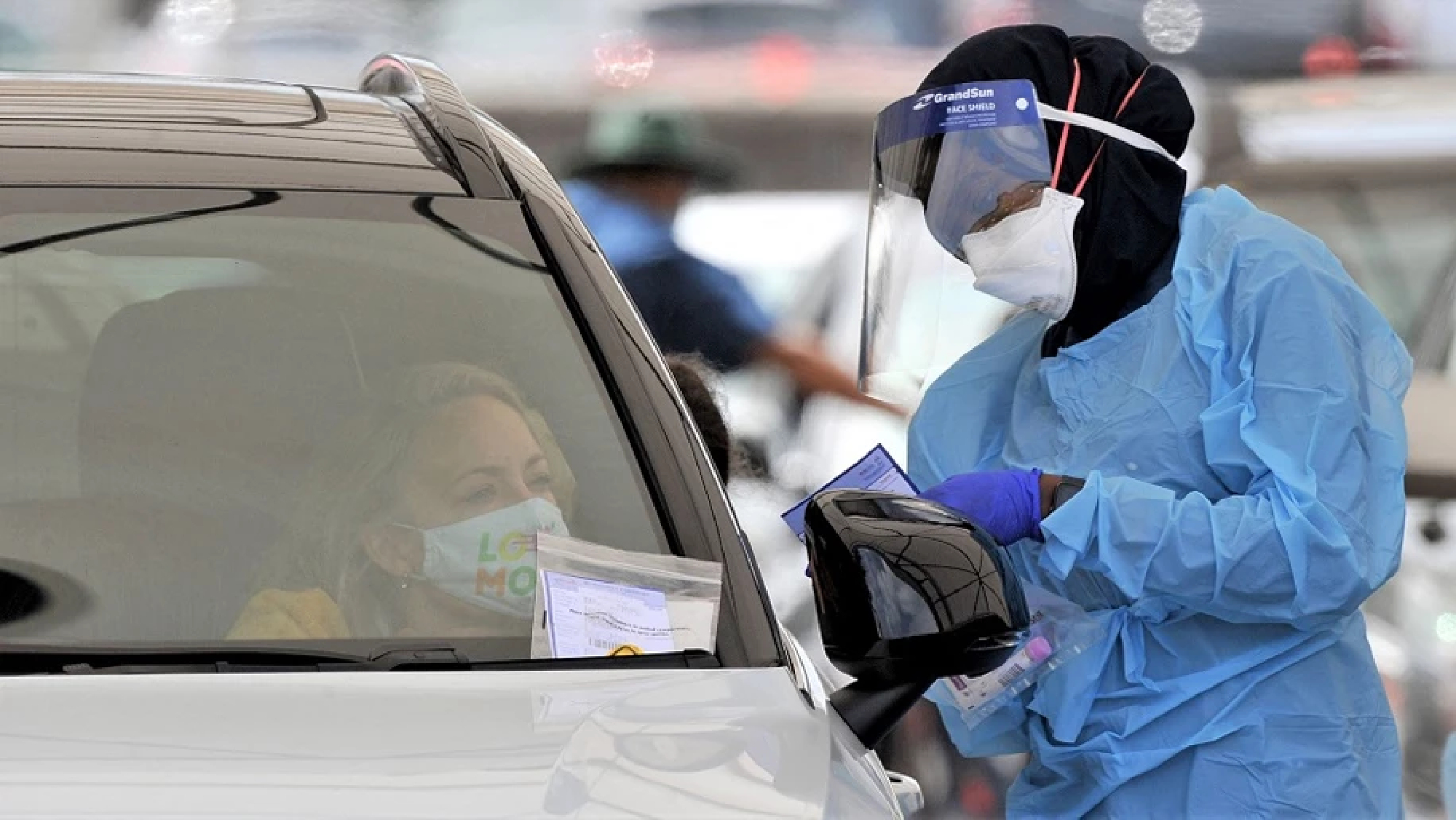
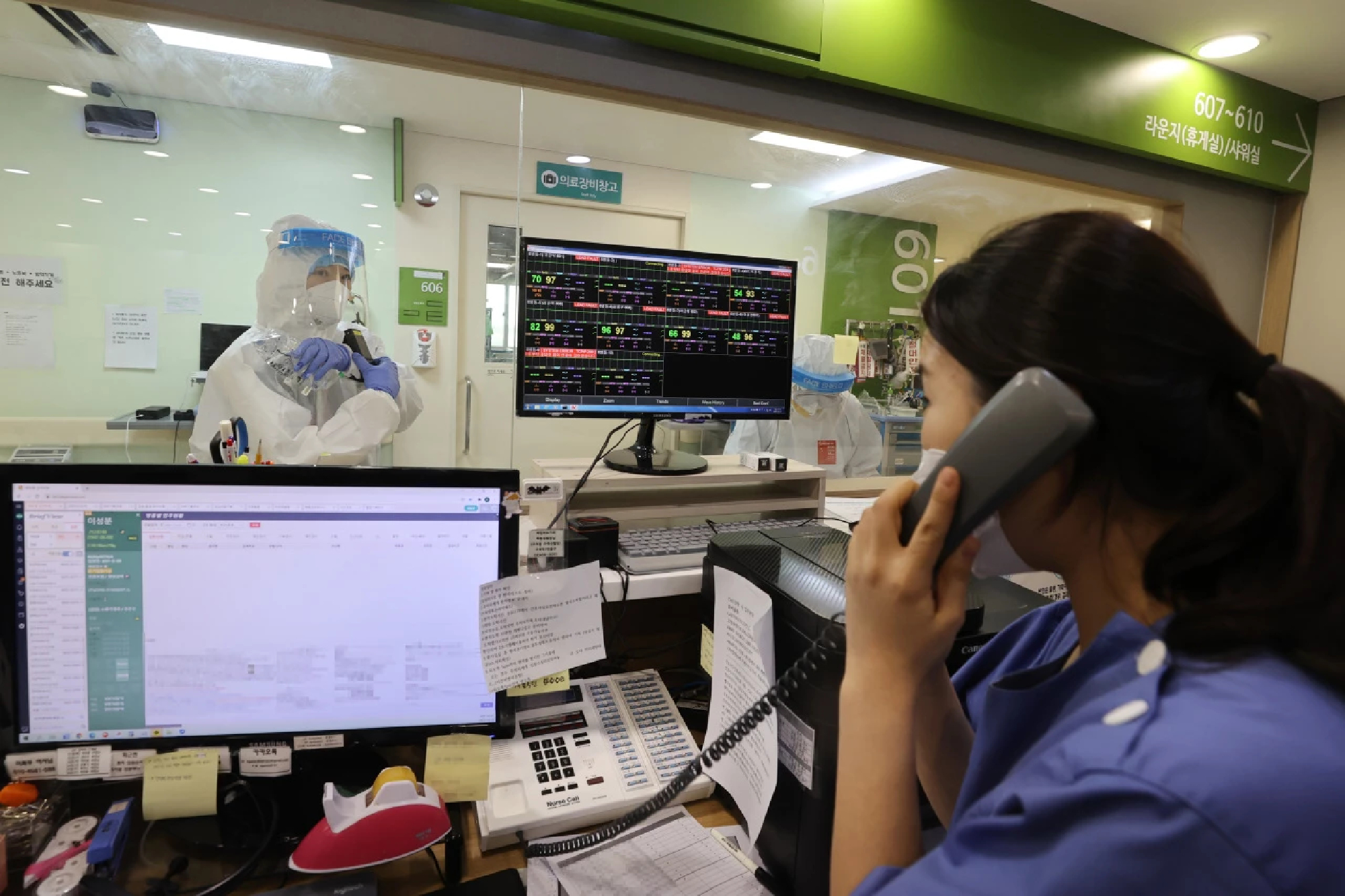
The South Korean government is ordering COVID-19 patients out of intensive care units as hospitals across the country continue to face a severe shortage of beds.
The executive orders were issued Wednesday afternoon to 210 patients who have been hospitalized in COVID-19 ICUs for longer than 20 days, the Ministry of Health and Welfare confirmed Thursday. The ministry said 71 patients have been moved to non-COVID-19 ICUs or other “step-down” beds providing less intensive care accordingly as of Thursday morning. Patients failing to abide by the order were subject to a fine of up to 1 million won ($842).
Wednesday’s orders follow protests from doctors over the 20-day ICU discharge rule for COVID-19 patients now in effect. The ministry had told hospitals last week that the length of ICU stay for COVID-19 patients would be limited to 20 days at most — after which point patients would no longer be waived of their medical bills related to COVID-19 treatment and hospitals would lose aid.
Medical groups, including the Korean Society of Critical Care Medicine and the Korean Medical Association, have decried the measures as jeopardizing patient safety. Some patients were not well enough to be moved on day 20, they said. Since most wards at Korean hospitals have multiple beds, placing recovering COVID-19 patients in a nonisolation setting could expose other patients to infection.
Front-line doctors are now asked to provide proof as to why a patient might need to stay hospitalized longer than the time permitted by the government, according to Dr. Eom Joong-sik, an infectious disease specialist at Gachon University Medical Center, a state-designated COVID-19 hospital.
Eom said despite the penalties such as withdrawal of financial aid for patients staying longer, following through with the orders would not always be feasible. “I understand that these are wartime decisions. But I’m also saying that it will be hard to go through with it knowing it could risk lives being lost.“
The ministry rationale for the new rules is that they would help ease the ongoing hospital bed crisis. Around 80 percent of all intensive care COVID-19 beds were occupied by Wednesday at midnight. In Seoul and cities nearby, the occupancy rate was higher at 85 percent.
Park Hyang, a senior Health Ministry official, told reporters in a closed-door briefing that the orders had basis on laws pertaining to infectious disease control and prevention. But whether to still charge a fine in exceptional circumstances was “being discussed.”
Korea once again broke records for COVID-19 deaths on Thursday, six days since the pause on President Moon Jae-in’s return to normal plan that left almost no restrictions for over a month and a half.
On Wednesday, the number of deaths attributed to COVID-19 reached 109, crossing the 100 mark for a one-day toll for the first time. Over the past week, an average of 71 people died of COVID-19 each day. In the final week of October, right before the Nov. 1 return to normal, the average number of daily deaths was 12.
According to data the Korea Disease Control and Prevention Agency submitted to the main opposition People Power Party Rep. Her Euna’s office, at least 52 people died while waiting for a hospital bed between Nov. 1-Dec. 18.
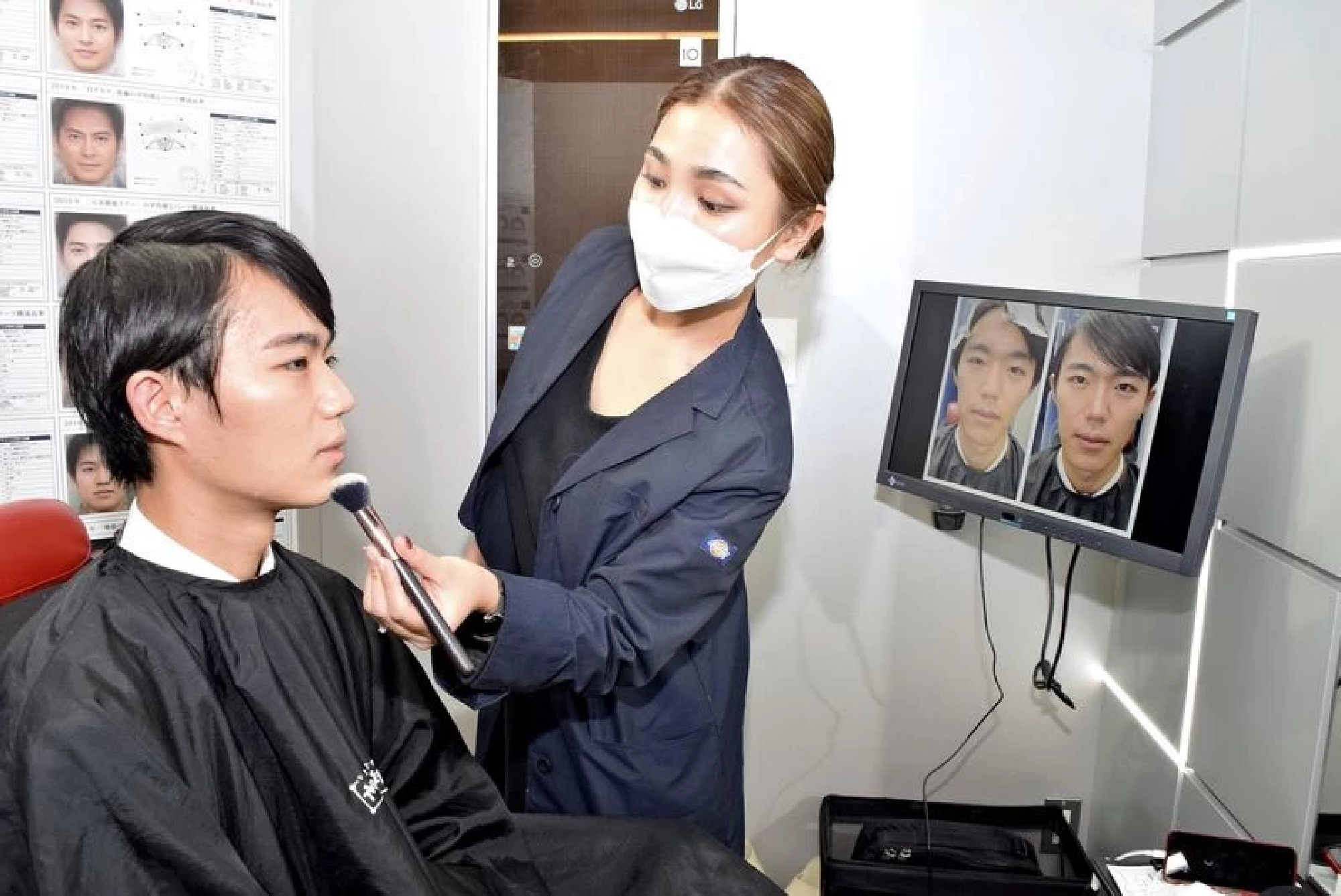
Cosmetics for men are taking off amid the COVID-19 pandemic, as even middle-aged and older men want to improve how they look onscreen in online meetings.
Major cosmetics companies are offering a full range of products for young, middle-aged and older male consumers, and are also putting effort into makeup advice and other services.
Every month, more than 2,000 people visit Ikemen Seisakusho, a men’s salon in Tokyo’s Ginza district, to receive services ranging from basic makeup — such as shaping the eyebrows, and applying base and foundation — to eyelash extensions in which artificial lashes are glued on top of natural ones. The salon’s name means “a factory to produce good-looking men.”
With more online meetings amid the pandemic, many office workers in their 30s and 40s have started visiting the salon. They said they became worried about their age spots or wrinkles when they saw their faces on a computer screen beside those of other people from the same generation.
“We recommend that customers focus on one point on their faces when applying makeup, such as their eyebrows or eyes,” said salon representative Takumi Tezuka, 47.
To take advantage of the new demand, Shiseido Co. launched a project in October on its online site Watashi+ to introduce makeup for men in their 40s and older. A makeup artist shows visitors how to apply natural makeup tailored to their hair style and skin concerns.
The project is designed to address the concerns of men whose hair has lost its bounce, body and luster, and whose skin has begun to show age spots and wrinkles.
The range of products for young men in so-called Generation Z, who were born between the mid-1990s and around 2010, has been expanded, as many men in this age group are said to wear makeup on a daily basis.
In October, Mandom Corp. launched Gatsby The Designer, a line of men’s cosmetics. It includes eyeliner that emphasizes the contours of the eyes and nose shadow to make one’s nose look higher.
According to research company Fuji Keizai Co., the men’s cosmetics market is predicted to mark a year-on-year increase of 4.3% to ¥157.1 billion this year, and is expected to keep expanding.
“The range of product categories for men’s cosmetics, including makeup and skincare, is expected to expand. It’s necessary to promote sales for each generation,” said Yu Sato, a senior analyst at SMBC Nikko Securities Inc.
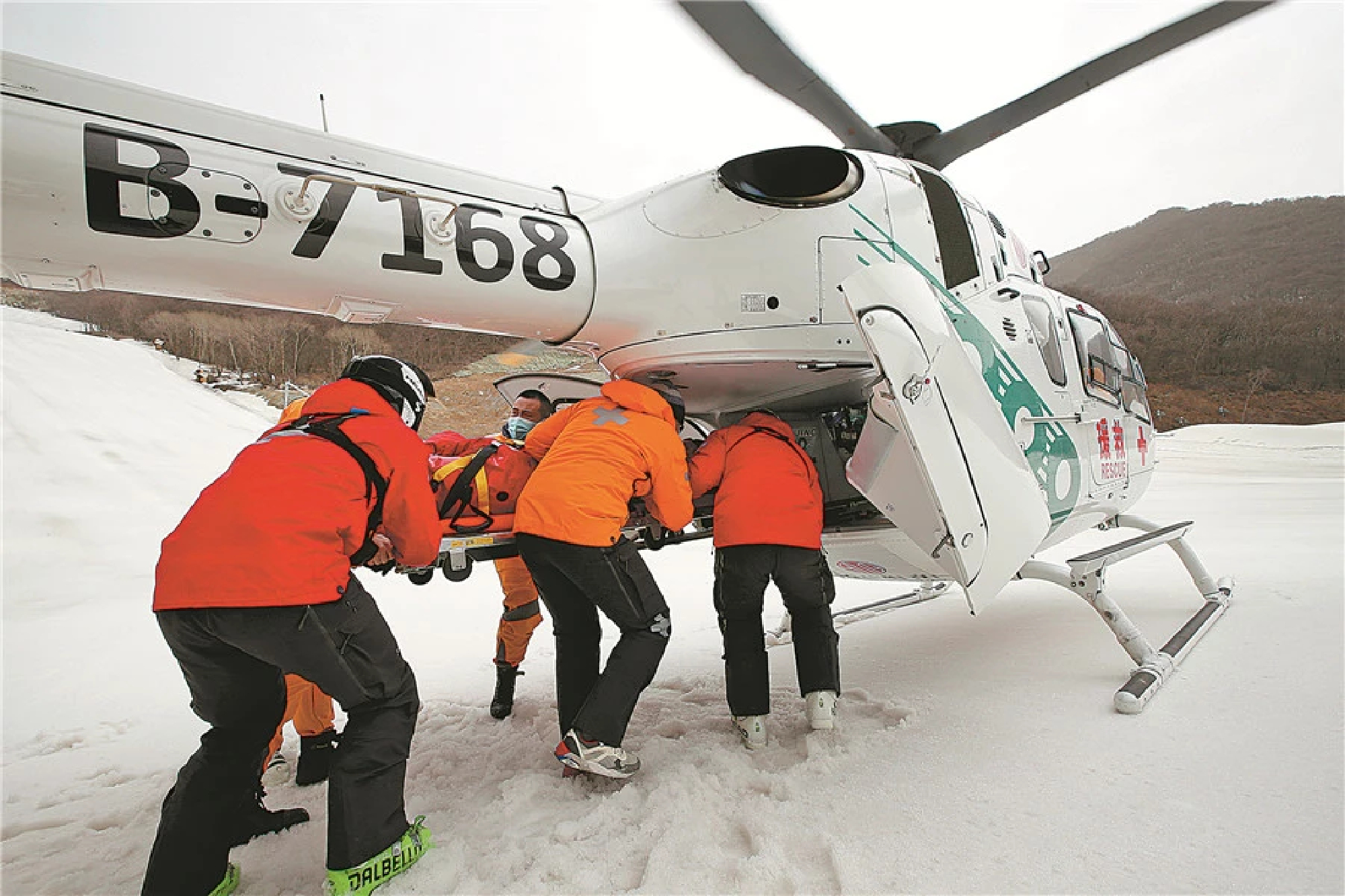
Medical support is ready for the Beijing 2022 Winter Olympic Games, a Beijing official said on Thursday, vowing that the city will provide high-quality and efficient medical treatment for athletes.
Li Ang, deputy director and spokesman of the Beijing Municipal Health Commission, said at a news conference in Beijing that the city has optimally allocated medical resources for the venues of the Games.
The competition zones in Beijing and its Yanqing district have set up 88 medical stations for on-site medical treatment and triage of the sick and injured and have 1,140 medical staff members assigned from 17 designated hospitals and two emergency agencies. Another 120 medical personnel from 12 of the city’s top hospitals form a backup team equipped with 74 ambulances.
Medical personnel in disciplines including orthopedics and oral medicine have been specially assigned in accordance with the characteristics of each sports venue. Additional equipment such as computed tomography and dental chairs have been provided at the hockey venue, he said.
Each venue and designated hospital has developed a medical plan, and many hospitals, including Beijing Anzhen Hospital and Peking University Third Hospital’s Yanqing Hospital, have transformed part of their wards into a special treatment zone for the Games.
Li also said that all medical equipment of the polyclinics at the Beijing Olympic Village and Yanqing Olympic Village has been checked and can ensure outpatient, emergency, rehabilitation and transfer during the Games, which will open on Feb 4. A polyclinic is larger than a usual clinic but smaller than a hospital.
He added that the blood supply will be adequate and medical staff have received training in Olympics knowledge, the English language and skiing skills, with 40 ski doctors at the international rescue level and 1,900 medics with basic first-aid skills.
The second edition of the Beijing 2022 Playbook has been published, outlining COVID-19 countermeasures for the Games, including vaccinations, customs entry requirements, flight booking, testing, the closed-loop system and transportation.
The first port of entry into China must be Beijing Capital International Airport, according to the guide. Huang Chun, deputy director of the epidemic control office of the Beijing Organizing Committee for the 2022 Olympic and Paralympic Winter Games, said this requirement was made because the airport has accumulated rich experience in preventing and controlling COVID-19.
People involved in the Games will be transported in special vehicles and brought into a closed loop from the time they enter the airport to when they leave the country, meaning they will not cross paths with any members of the public, he said.
The airport is also closer to the three competition zones, compared with Beijing Daxing International Airport, and traffic will be smoother. “It can ensure a good experience for people coming to China from abroad in the transportation process,” he added.
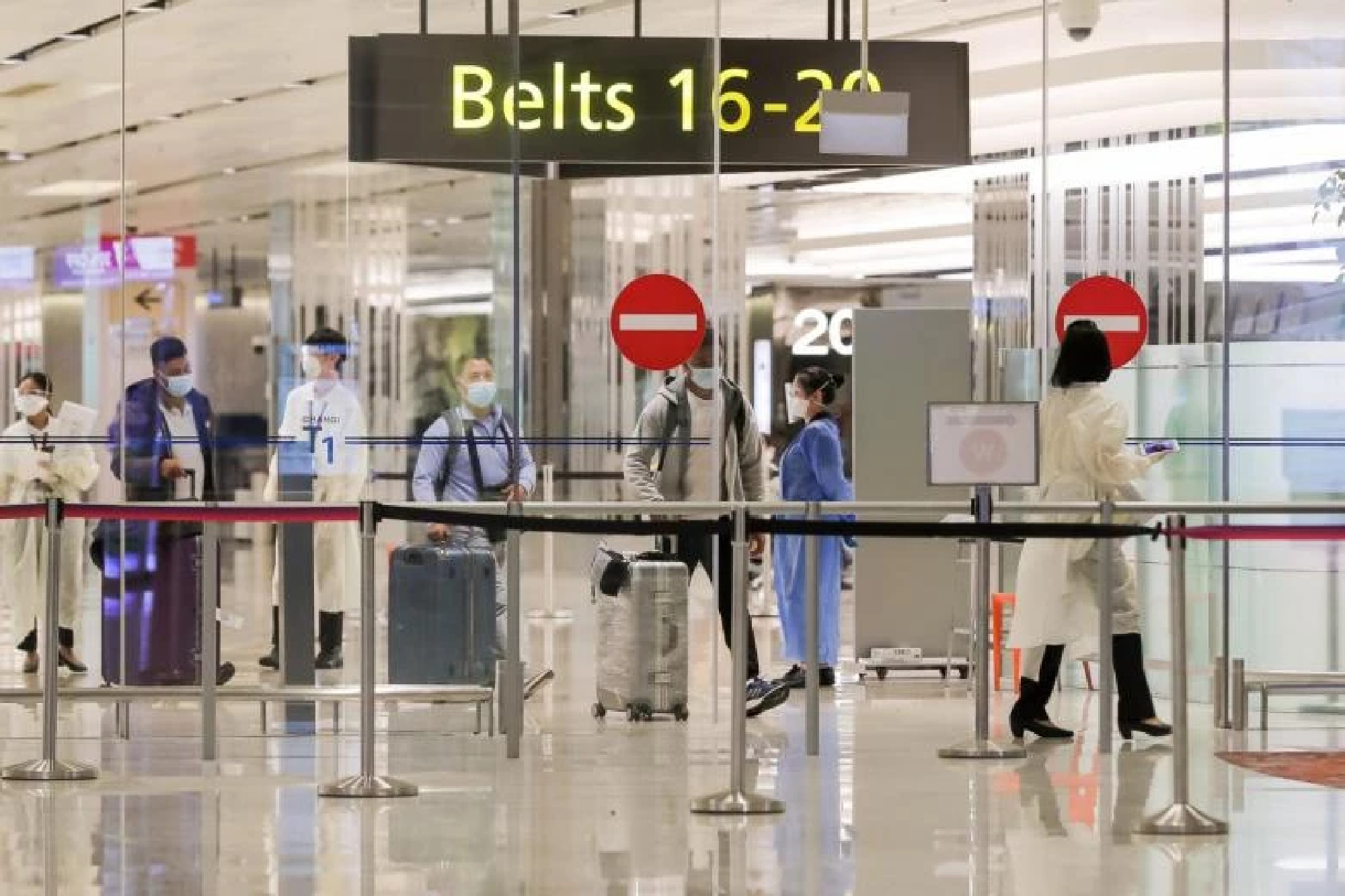
SINGAPORE – Fifty-three of the 65 confirmed imported Omicron cases detected in Singapore as at Monday (Dec 20) had arrived via the vaccinated travel lane (VTL), said the Ministry of Health (MOH).
Of these cases, 41 were detected through on-arrival polymerase chain reaction (PCR) tests, while the remaining 12 were detected through the Republic’s enhanced testing regime.
More than 90 per cent of the Omicron cases who returned via the VTL were returning Singaporeans, permanent residents and long-term residents, said MOH, in response to queries from The Straits Times.
On Wednesday, MOH announced a month-long suspension of the sale of new VTL flight and bus tickets, as the number of imported cases hit a high of 76 cases since the emergence of the Omicron variant.
These measures, which apply from Thursday (Dec 23) until Jan 20, mean that airlines will no longer be allowed to sell new VTL flight tickets for travel into Singapore.
The suspension of sales also applies to those travelling on the Singapore-Malaysia land VTL.
However, eligible travellers who bought tickets earlier will still be allowed to travel via the quarantine-free travel scheme.
VTL travellers who do not adhere to the mandatory seven-day Covid-19 testing regime will face a stay-home notice and enforcement action under the Infectious Diseases Act.
The ministry said that all close contacts of both suspected and confirmed Omicron cases will be placed under 10-day quarantine at dedicated facilities to minimise transmission.
MOH said: “Our border measures will help to buy us time to study and understand the Omicron variant, and to strengthen our defences, including enhancing our healthcare capacity and getting more people vaccinated and boosted.”
In an update on its website on Thursday, MOH announced 322 new Covid-19 infections and two deaths. This brings Singapore’s Covid-19 death toll to 820.
The number of infections is down from the 335 cases recorded on Wednesday, and it is the 21st day in a row that the number of new coronavirus cases has fallen below 1,000, according to statistics on the MOH website.
Overall, there were 226 cases in the community, seven in migrant worker dormitories and 89 imported cases reported on Thursday.
The intensive care unit (ICU) utilisation rate was 50 per cent, down from 52.7 per cent on Wednesday.
There are 419 cases in hospital, with 20 in critical condition, six under close monitoring and 50 requiring oxygen support.
The weekly infection growth rate was 0.57, up from 0.54 on Wednesday.
This figure refers to the ratio of community cases in the past week over the week before.
A weekly infection growth rate that is consistently below one shows that the number of weekly new Covid-19 cases is falling.
The growth rate has been below one since Nov 13.
The total number of cases here now stands at 277,042.
By Jessie Lim with additional reporting by Toh Ting Wei
Dozens of Palestinian protestors were injured on Thursday in clashes with Israeli soldiers in a village northwest of the West Bank city of Nablus, Palestinian medics and eyewitnesses said.
42 Palestinians, including a local journalist, were injured by rubber-coated metal gunshots and 83 others suffered from suffocation after inhaling tear gas fired by the Israeli soldiers in the village of Burqa, northwest of Nablus, the Palestinian Red Crescent Society said in a statement.
Eyewitnesses in the village told Xinhua that clashes between the demonstrators and the Israeli soldiers broke out earlier on Thursday. They added that the protestors organized a demonstration against Israeli settlers’ assaults and expansion of settlements.
The clashes broke out in the village shortly after hundreds of Israeli settlers, under the protection of Israeli soldiers, attempted to break into the village, the Palestinian official news agency WAFA reported.
In the past few days, the tensions between Israel and the Palestinians have been flaring in the West Bank over the Israeli measures. Two Palestinians were killed on Tuesday and Wednesday.
Palestinian protesters run to take cover from tear gas canisters fired by Israeli soldiers during clashes, in the village of Burqa, north of the West Bank city of Nablus, Dec. 23, 2021. (Photo by Nidal Eshtayeh/Xinhua)
Meanwhile, Saleh al-Arouri, deputy chief of the Islamic Resistance Movement (Hamas) told the pro-movement Al-Aqsa TV channel that there is a clear ascending trend of tension in the West Bank as a result of the Israeli occupation practices.
Diplomatic ties between Israel and the Palestinians were interrupted in 2014 due to the Palestinian rejection of the Israeli policies of expanding settlements and the Israeli measures against the Palestinians in East Jerusalem.
Israeli soldiers and a bulldozer are seen in the village of Burqa, north of the West Bank city of Nablus, Dec. 23, 2021. (Photo by Nidal Eshtayeh/Xinhua)
The Palestinians want to establish an independent Palestinian state alongside Israel on all the Palestinian territories occupied by Israel in 1967, including the entire West Bank and the Gaza Strip, with East Jerusalem as its capital.
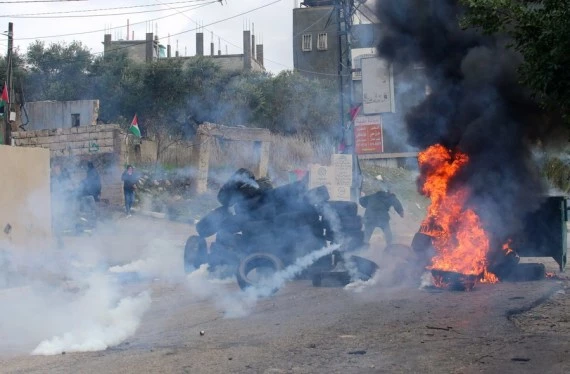
Palestinian protesters burn tires during clashes with Israeli soldiers, in the village of Burqa, north of the West Bank city of Nablus, Dec. 23, 2021. (Photo by Nidal Eshtayeh/Xinhua)
Palestinian protesters run to take cover from tear gas canisters fired by Israeli soldiers during clashes, in the village of Burqa, north of the West Bank city of Nablus, Dec. 23, 2021. (Photo by Nidal Eshtayeh/Xinhua)
The cabinet unanimously approved a decree to introduce new restrictions which will enter into force in the next few days, including prohibiting public gatherings for Christmas and the New Years Eve.
Italy on Thursday tightened anti-pandemic rules for the Christmas and New Year holidays amid concerns over rising Omicron cases across the country.
The cabinet unanimously approved a decree to introduce new restrictions which will enter into force in the next few days, including prohibiting public gatherings for Christmas and the New Year’s Eve.
The step came after several mayors and regional authorities had cancelled all public events in the festivities.
According to the new rule, discos and nightclubs have to stay closed until Jan. 31, 2022. The validity of the health green pass certificate is reduced from nine months to six months in order to stem the spread of the highly contagious Omicron variant, Health Minister Roberto Speranza told a press conference.
The decree also cuts from five months to four months the required time between the completion of full vaccination (two doses) and the administration of a booster dose.
“This is a difficult phase… and we are implementing measures that we think will provide further protection to citizens and to our public health system,” the minister said.
Face masks are required in every outdoor place, plus to use only FFP2 masks — those providing more protection — on public transports and public indoor places.
A policeman checks green pass of a passenger at a bus station in Rome, Italy, Dec. 6, 2021. (Photo by Alberto Lingria/Xinhua)
According to earlier restrictions imposed on Dec. 6, only those vaccinated and recovered, who hold the so-called “super Green Pass,” would be allowed to sit at restaurants and bars, theatres, discos, stadiums and other sports facilities.
Yet, the rapid increase in new cases combined with the forthcoming Christmas and New Year holidays prompted authorities to move further on.
The new restrictions were decided after the National Health Institute (ISS) on Thursday shared with the cabinet the results of a preliminary survey on the spread of the highly contagious Omicron variant.
According to data based on some 2,000 swabs carried out on Dec. 20, Omicron represented 28 percent of new infections.
“Although preliminary, the estimate confirms the great rapidity of the variant spread, which seems to produce large outbreaks in a short time, and it is expected to become predominate, as it is already occurring in several other European countries,” ISS president Silvio Brusaferro said in a statement.
Italy has seen an increase in new infections and deaths, yet the daily caseload has so far remained below that of some other major European countries.
Nonetheless, the surge is significant, with over 44,500 new infections over the 24 hours on Thursday, which marked the highest daily increase since the beginning of the pandemic here.
People wearing face masks walk on a street in Rome, Italy, on Nov. 30, 2021. (Xinhua/Jin Mamengni)
The New Zealand Embassy in Bangkok is seeking an experienced project coordinator with excellent planning and organisational skills to join our team as Asia Pacific Economic Cooperation (APEC) Officer until 2 December 2022.
About the role
The New Zealand Embassy in Bangkok manages New Zealand’s relationship with Thailand, as well as cross-accreditations to Cambodia and Lao PDR. We represent the New Zealand Government to the highest standards of professional excellence in diplomacy, trade and economic engagement, international development and consular services. The Post takes a distinctively New Zealand approach, reflecting New Zealand’s diversity and heritage.
As APEC officer, the successful candidate will undertake a crucial role supporting New Zealand’s participation in APEC 2022 in Thailand. The central focus of the role will be leading logistical and administrative planning for New Zealand ministers and senior officials’ engagement in APEC meetings and events in Thailand.
Successful delivery of New Zealand’s participation in APEC 2022 is a key priority for the Embassy.
Who are we looking for?
The role will suit those with previous experience in project management support, logistics or administration in a policy context. The ability to be highly organised, show attention to detail, and deal with complexity will be critical to success in the role.
The APEC Officer will need to be adaptable and agile in their work, and demonstrated strengths in risk management and contingency planning will also be an advantage.
This role will be an exciting – and rewarding – opportunity to join a dynamic team working to deliver on one of the Embassy’s key priorities for 2022.
• The successful candidate will need excellent English language skills (written and oral communication). Proficiency in Thai would be helpful, but not essential.
• The successful applicant will be employed on local terms and conditions and must have the right to live and work in Thailand.
• The role will be full-time, fixed term until 2 December 2022.
• The monthly salary range is THB 57,137-77,370, depending on qualifications and expertise.
Applications will close at 5pm on Friday 14 January 2022 (ICT). Only shortlisted candidates will be contacted to proceed to the next stage in the process.
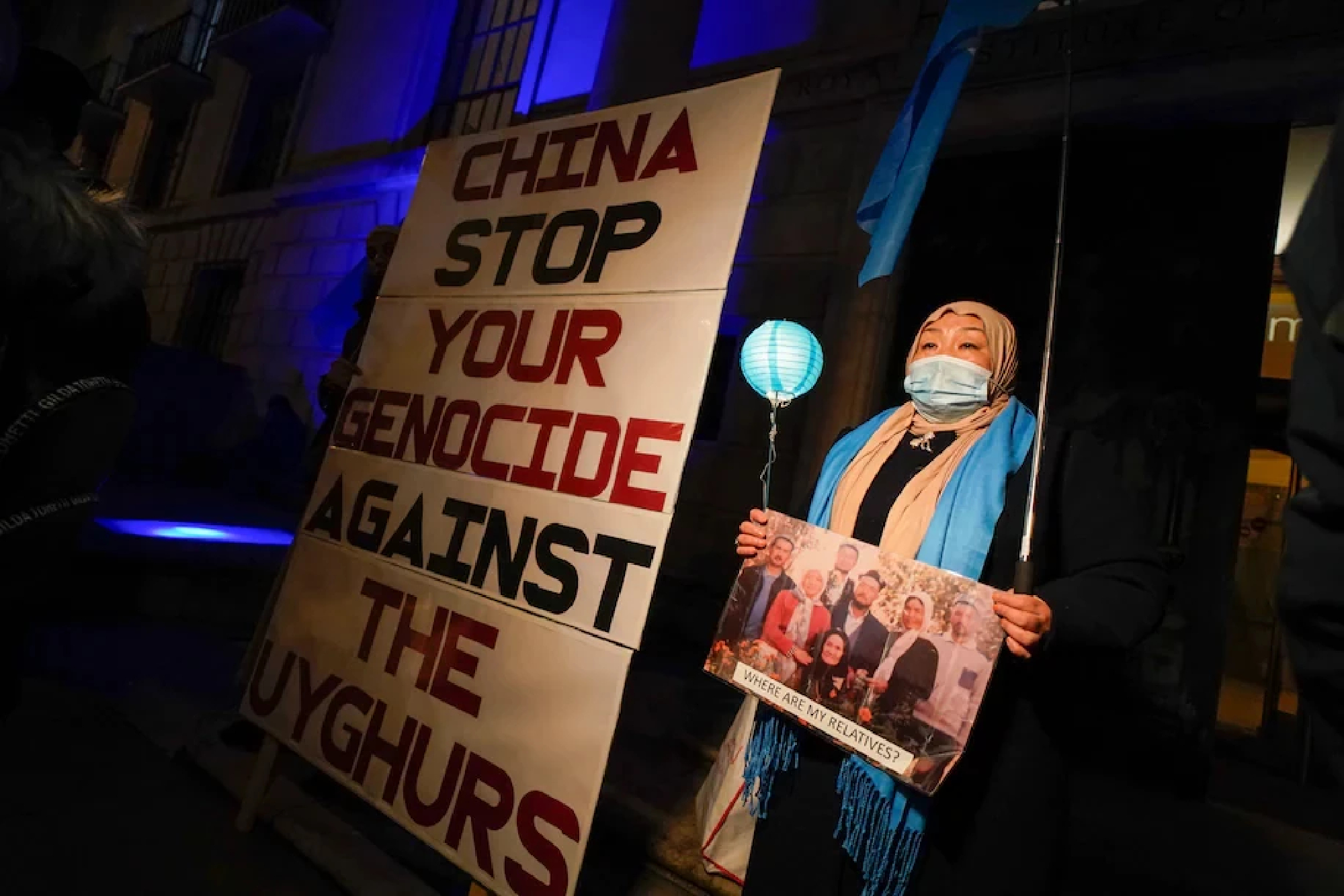
WASHINGTON – President Joe Biden on Thursday signed into law the Uyghur Forced Labor Prevention Act, a bipartisan bill that bans imports from Chinas Xinjiang region unless the importer can prove they were not made with forced labor.
The House and the Senate passed the measure last week. Lawmakers from both parties welcomed Biden’s signing of the law, with Sen. Jeff Merkley, D-Ore., a co-sponsor of the legislation, saying in a statement that it “sends a powerful, bipartisan message that the United States will not turn a blind eye” to China’s violations of human rights.
“The United States must send a resounding and unequivocal message against genocide and slave labor wherever these evils appear,” said Merkley, who is also chairman of the Congressional-Executive Commission on China. “Now that the Uyghur Forced Labor Prevention Act has reached President Biden’s desk and been signed into law, we can finally ensure that American consumers and businesses can buy goods without inadvertent complicity in China’s horrific human rights abuses.”
Biden thanked Merkley and the legislation’s other three sponsors – Sen. Marco Rubio, R-Fla., Rep. Jim McGovern, D-Mass., and Rep. Christopher H. Smith, R-N.J. – as well as House Speaker Nancy Pelosi, D-Calif., and Senate Majority Leader Chuck Schumer, D-N.Y., for their work in pushing the measure forward.
White House press secretary Jen Psaki told reporters on Thursday that U.S. companies “should never feel the need to apologize for standing up for fundamental human rights or opposing repression.”
“As we’ve said before, we call on all industries to ensure that they are not sourcing products that involve forced labor, including forced labor from Xinjiang,” Psaki said at a regular news briefing. “The reality is that companies that fail to address forced labor and other human rights abuses in their supply chains face serious legal risk [and] reputational and customer risks, not just in the United States but in Europe and other regions of the world.”
The legislation applies to “all goods, wares, articles, and merchandise mined, produced, or manufactured wholly or in part” in Xinjiang, a sprawling region in China’s far west where, beginning in 2017, the Chinese government has carried out a mass “reeducation” campaign against Uyghurs and members of other ethnic groups.
Under the 1930 Tariff Act, it is illegal to import into the United States any goods made in whole or in part by forced labor. The new law prohibits all imports from Xinjiang “unless U.S. Customs and Border Protection certifies by clear and convincing evidence that goods were not produced with forced labor.”
Biden’s signing of the law follows a move earlier this year by the Trump administration to issue a sweeping ban on imports of cotton or tomato products from Xinjiang – although enforcement of those sanctions is proving challenging.
Scholars estimate that more than 1 million people in Xinjiang were detained in camps, with some released, some transferred to prison and others pressured to work in factories.
In its annual human rights report released in March, the Biden administration declared China’s treatment of the Uyghurs a genocide, formalizing its dire assessment of Beijing’s campaign of mass detention and sterilization of minority groups in Xinjiang.
China has repeatedly denied that any forced labor has taken place in Xinjiang, although it acknowledges “vocational training programs” for residents whom officials considered susceptible to separatism or religious extremism.
Reasons for detention could include such supposed infractions as wearing a headscarf or a long beard, having more than two children or traveling overseas for vacation.
In a statement Thursday, Pelosi said that with the legislation’s enactment, Biden and Congress “have taken a strong step to combat the exploitation of forced labor in Xinjiang.”
“Congress, on a bipartisan and bicameral basis, will continue to condemn and confront the [Chinese Communist Party’s] human rights abuses in Xinjiang and many other abuses in the region, from Hong Kong to Tibet to the mainland,” Pelosi said. “If America does not speak out for human rights in China because of commercial interests, we lose all moral authority to speak out for human rights any place in the world.”
Rubio called the legislation “the most important and impactful action taken thus far by the United States to hold the Chinese Communist Party accountable for their use of slave labor.”
“It will fundamentally change our relationship with Beijing,” he said. “This law should also ensure that Americans no longer unknowingly buy goods made by slaves in China. I look forward to working with the Biden Administration and my colleagues to ensure the new law is implemented correctly and enforced properly.”
AMSTERDAM – The medieval castle outside Amsterdam had planned a cheeky holiday celebration, marking the end of a terrible year with “the worst tour youve ever had” and encouraging people to realize theres “stuff we can laugh about together.”
But with the Netherlands in a national lockdown once more, organizers at Muiderslot Castle didn’t find much to laugh about this week. They had to refund tickets, give away a dozen Christmas trees and melt a skating rink they don’t expect anyone to use anytime soon.
“This castle has seen pandemics before,” said Annemarie den Dekker, director of programming at the castle. “But my first reaction was disbelief because we were all expecting a Christmas this year.”
The mood in much of Europe reflects hopes briefly glimpsed – and then dashed. As in the United States, new cases of the omicron variant are quickly overtaking previously dominant delta variant. But many European governments have gone further than the United States in reimposing curfews, closures and travel restrictions. Ireland is shutting pubs at 8 p.m. Greece, Italy and Spain have reintroduced outdoor mask mandates. In Austria, people without proof of vaccination or covid-19 recovery can leave home only for essential reasons.
Europeans are being urged – in some places required – to keep holiday gatherings small.
There is some relief that early evidence out of Britain and South Africa suggests omicron doesn’t make as many people as seriously sick as delta. But based on how fast it has been spreading, health officials are still warning about overwhelmed hospitals and a breakdown of public services.
Britain’s National Health Service reported Thursday that staff absences due to covid were up 50% from the previous week. Transport for London announced it was closing a Tube line until the end of the year over a lack of drivers. And the education secretary is calling for former teachers to return to classrooms, in anticipation of omicron-related staff shortages in January.
Britain and other European nations that just a few months ago were celebrating their world-leading status in coronavirus vaccinations are now scrambling to get boosters to as many people as they can.
Covid health passes – documenting vaccination, recovery or a recent negative test – have become routine in much of Europe and helped boost vaccination rates. Some countries are now tightening the rules: adding a booster requirement, dropping testing as an alternative. Italy on Thursday said unvaccinated people would no longer be able to partake in the ritual of having an espresso at a cafe counter. Announcing that the French government intends to add more restrictions for the unvaccinated, Prime Minister Jean Castex lamented that hospital intensive care units “are filled for the most part with unvaccinated people.”
France has seen a problem with fake vaccination cards, too. Carole Ichai, a senior official at a hospital in Nice in southern France, said about 30% of patients in her hospital’s intensive care unit last week had counterfeit vaccination certificates.
“Honestly, I didn’t expect that we would [still] be in this situation,” she said, adding that the constant scramble to respond to spikes in case numbers has become “very destructive for our spirits.”
The Netherlands has the most all-encompassing restrictions at this point, with all but essential shops shut until at least Jan. 14. The sense that the worst of the pandemic is back may be most acute here.
“I can now hear the whole of the Netherlands sighing,” Prime Minister Mark Rutte said when announcing the lockdown. “Another Christmas that is completely different from what we would like.”
But he emphasized the move was necessary to avoid “an unmanageable situation in hospitals.”
In Amsterdam, the canal boats are docked. Dam Square is empty. Stores that were counting on strong Christmas sales are instead sending products back to their wholesalers, knowing they stand no chance of selling them now.
“We didn’t expect this lockdown,” said Oscar Karstens, manager of Catwalk Junkie, a women’s clothing store that relies on foot traffic.
Some tourists, stuck with nonrefundable tickets, arrived in the city anyway this week, but were disappointed they could no longer go to museums, restaurants or the famed Christmas markets.
“It sounded like a good idea to stop in the Netherlands and Europe before Christmas,” said Julz Shevko, 35, who months ago planned a layover in Amsterdam to see the Christmas markets on her way home to Ukraine from a vacation in South America. “It’s so bizarre.”
The restrictions across Europe have ruined yet another much-needed tourism season, said French travel agency operator Marie Vendroux-Deppe, who works with U.S. travelers. Most of her clients canceled their trips in the past few days, and now she doesn’t expect a return to normal until 2023.
“Every three or four months, I finally feel confident again,” Vendroux-Deppe said. “But then new bad news arrives and destroys everything.”
The posh Pulitzer Amsterdam hotel had planned to mark the holidays with parties in its courtyard. It commissioned a Danish fashion designer to decorate a 30-foot Christmas tree. Now, though, the courtyard is closed and guests can’t get near the Christmas tree and its pink oversized bows. The hotel set up tables in guests’ rooms so they can do room service instead.
There will be no midnight masses in the Netherlands. Dutch bishops said they worried about crowds and ventilation and the impact of having “multiple celebrations in one evening.”
In neighboring Britain, by contrast, the archbishop of Canterbury, Justin Welby, encouraged people to go to Christmas Mass. “The worship of God is a necessity,” Welby said, adding that “Anglican churches tend to be large, cold, and drafty; they’re not great places for spreading infections.” He also said getting vaccines and boosters should be considered a moral obligation.
Britain has been more tentative than many other European nations about reimposing coronavirus restrictions. Prime Minister Boris Johnson said his government was watching the data “hour by hour” but didn’t want to issue new guidance before Christmas. That has set up something of a real-world experiment, with people watching how omicron behaves in light-touch Britain vs. lockdown Netherlands.
Nearing the anniversary of its full break with the European Union, Britain now finds itself subject to an array of travel restrictions on the continent.
Malcolm Sullivan had already packed his bags, ready to travel from Berlin to visit family in England, when Germany announced a 14-day quarantine for people entering from Britain. Sullivan canceled his trip, with his partner and 3-year-old. The two-day quarantine on the British side was one thing. But he figured it would be too difficult to quarantine for two weeks with a toddler on their return.
“That was pretty much the most depressing thing I’ve done this year,” he said.
This frustrating Christmas makes it hard to know how to plan anything in the coming months, said Anna-Marie Venderburg. The Dutch 79-year-old had tickets to see the opera “La Traviata” over Christmas weekend in Amsterdam, but that got canceled. She’s still hopeful her ski trip to Austria in late January will go on. She keeps calling the resort, but they are also not sure what the new year will hold.
“They are very nervous too, it’s just not possible to know,” Venderburg said. “It’s a big disaster.”
Australias two most-populous states are bringing back mask mandates as a surge in covid-19 cases, led by the highly contagious omicron variant, threatens to roil Christmas plans for a second year.
In New South Wales, where Sydney is the capital, limits will also return on the number of patrons in hospitality venues from Dec. 27, in an attempt to limit the potential impact on the state’s health care system. Numbers are climbing at a slower rate in Victoria, home to Melbourne, which hadn’t eased public restrictions as fast as its neighboring state in recent weeks.
Both states will require masks to be worn in all indoor settings apart from private homes from Friday. In a further development later in the day, Western Australia state – which has prided itself on its ability to keep covid-19 out of its community through strict border measures – said it was introducing mask mandates and would cancel some events over Christmas when a backpacker tested positive after 12 days in the community.
“Obviously there is concern in relation to our health workers,” NSW Premier Dominic Perrottet told reporters Thursday. “We believe the changes that we are making today will ensure that our health system is well manned over the holiday season as we go through this next stage.”
New South Wales reported a 52% jump in cases to a record 5,715 on Thursday. Perrottet reiterated the number of people needing serious treatment in hospital was still low and manageable, saying the health system was so far coping.
A total of 349 people in the state are in hospital – the most since the start of November. But the number of patients being treated in intensive care units is at 45, compared with 77 almost two months ago when delta was the dominant variant.
“We just ask everybody across our state to be cautious over Christmas,” said Perrottet.
Omicron is putting pressure on Australia’s push to fully reopen. New South Wales and Victoria states recently removed months-long lockdowns which Prime Minister Scott Morrison says are now unnecessary due to a relatively high vaccination rate. Many testing centers have become overwhelmed due to the dramatic rise in case numbers and as some states require visitors to show a negative result from a test taken within 72 hours prior to arrival.
Victoria recorded 2,005 new cases on Thursday, with 398 people hospitalized and 72 in ICU. The state will also require face masks to be worn at major outdoor events with over 30,000 people.
In Western Australia, an international backpacker who complied with entry rules had tested positive for a strain not expected to be omicron, Premier Mark McGowan told reporters in Perth. The traveler has has “hundreds” of potential contacts in venues including pubs, nightclubs and a museum in the 12 days since arrival.
Masks will be mandatory in all indoor settings in the state until at least Dec. 28, while music festivals will be canceled and nightclubs closed.
New cases in Queensland, the third-most populous state, doubled on Thursday from the day before to 369.
“Not only is the spread of this virus inevitable, it is necessary,” Queensland Chief Health Officer John Gerrard told reporters on Thursday. “In order for us to go from the pandemic phase to an endemic phase, the virus has to be widespread. We all have to have immunity.”

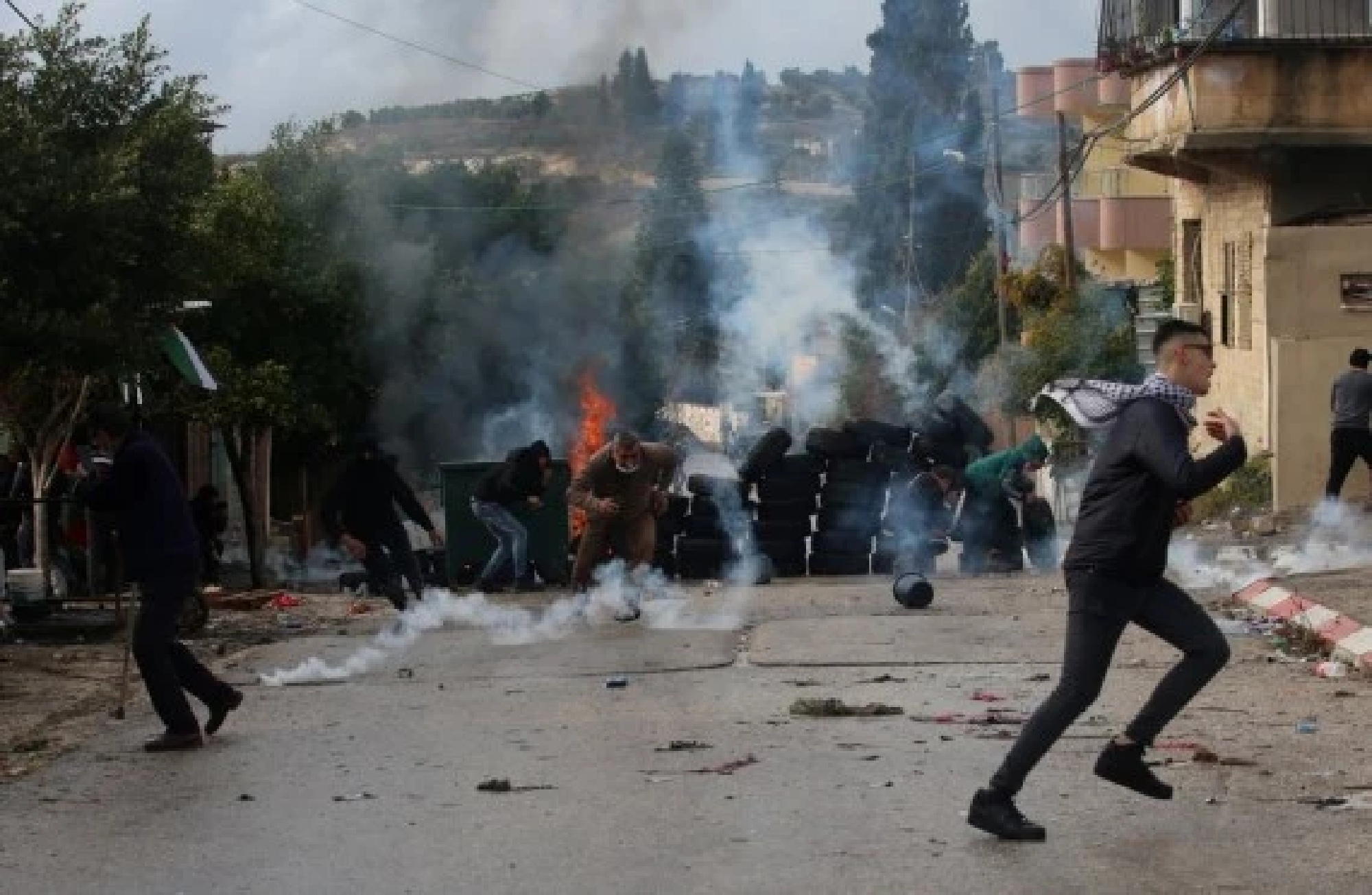
 Palestinian protesters run to take cover from tear gas canisters fired by Israeli soldiers during clashes, in the village of Burqa, north of the West Bank city of Nablus, Dec. 23, 2021. (Photo by Nidal Eshtayeh/Xinhua)
 Israeli soldiers and a bulldozer are seen in the village of Burqa, north of the West Bank city of Nablus, Dec. 23, 2021. (Photo by Nidal Eshtayeh/Xinhua)
 Palestinian protesters burn tires during clashes with Israeli soldiers, in the village of Burqa, north of the West Bank city of Nablus, Dec. 23, 2021. (Photo by Nidal Eshtayeh/Xinhua)
 Palestinian protesters run to take cover from tear gas canisters fired by Israeli soldiers during clashes, in the village of Burqa, north of the West Bank city of Nablus, Dec. 23, 2021. (Photo by Nidal Eshtayeh/Xinhua)
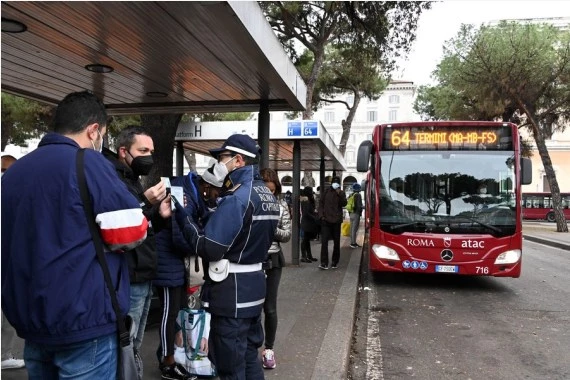 A policeman checks green pass of a passenger at a bus station in Rome, Italy, Dec. 6, 2021. (Photo by Alberto Lingria/Xinhua)
 People wearing face masks walk on a street in Rome, Italy, on Nov. 30, 2021. (Xinhua/Jin Mamengni)