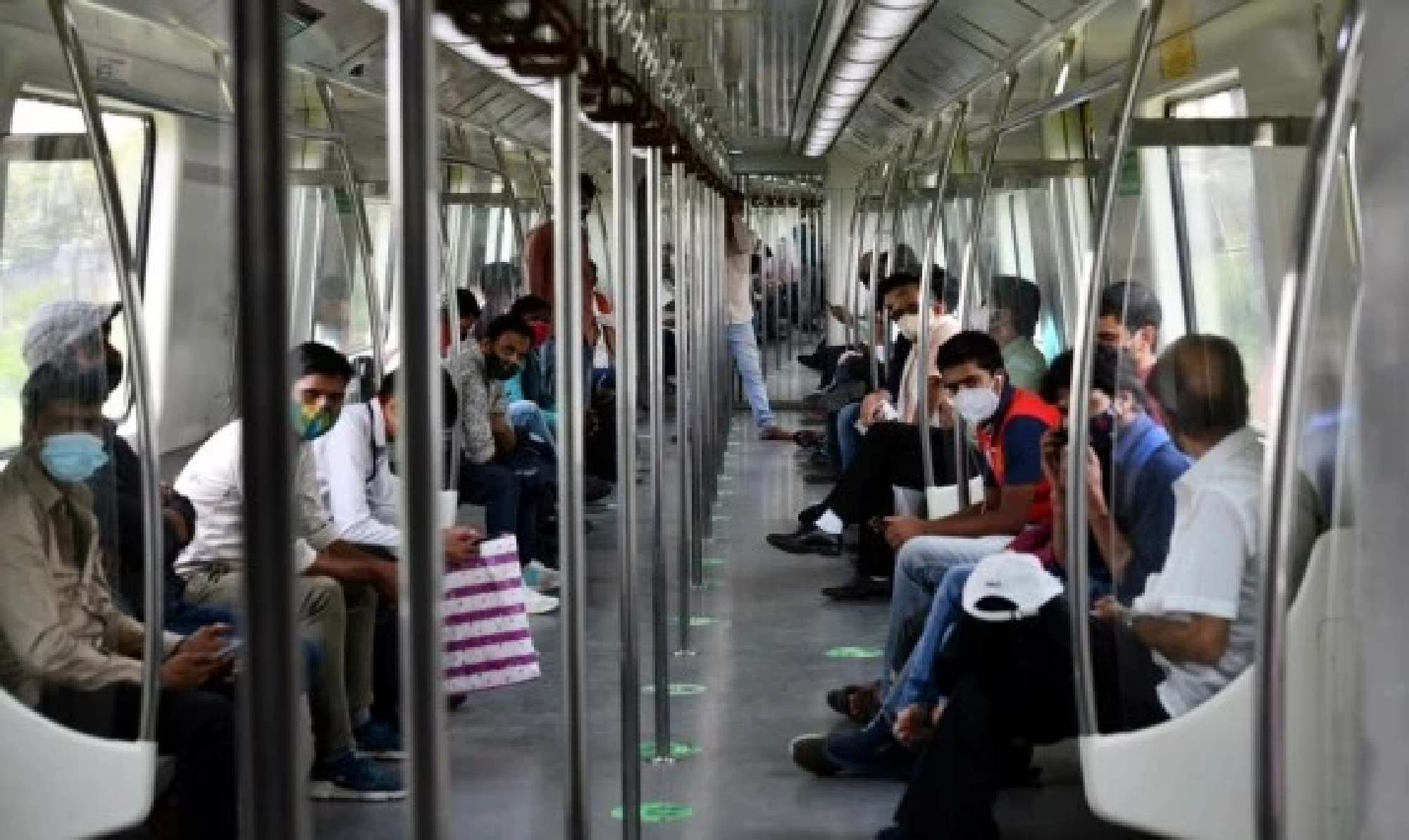
The local government in Indian capital region, Delhi, Wednesday banned all gatherings to celebrate Christmas and New Year in the wake of an increase in Omicron cases.
The order issued by Delhi Disaster Management Authority (DDMA) said all cultural events and other gatherings have been prohibited.
Banquet Halls, except for meetings, conferences, marriages and exhibitions as per conditions prescribed by the authority, will also not be allowed to function, the order said.
While cinemas, theaters and multiplexes are allowed with 100 percent seating capacity, auditoriums and assembly halls can seat only up to 50 percent, the order further said.
District administration officials and police have been directed to tighten the enforcement machinery to ensure that people follow social-distancing norms and wear masks.
A health worker administers a dose of COVID-19 vaccine to a woman during a drive-through vaccination campaign in New Delhi, India, May 27, 2021. (Str/Xinhua)
Market trade associations have also been directed to deny entry to customers without masks.
So far 214 COVID-19 cases of the Omicron variant have been reported in India. According to India’s federal health ministry, of these cases, 90 patients have recovered or migrated.
Delhi reported the highest number of cases of the new variant, 57.
The Omicron strain of COVID-19, known to be highly transmissible, has triggered alarm bells across the globe.
India’s federal health ministry officials said of the reported cases of Omicron in the country, none of the patients have reported severe symptoms.
Federal regulators Wednesday authorized the first easy-to-take pill to treat covid-19, a drug developed by Pfizer that will help refill the nations medicine cabinet even as the omicron variant, now dominant in much of the country, has thwarted most other options.
Tens of thousands of pill packs of Pfizer’s Paxlovid are sitting in a company warehouse in Memphis, ready to be loaded onto trucks and planes in anticipation of the green light from the Food and Drug Administration. But as omicron cases skyrocket nationwide, doctors are expected to quickly burn through that initial supply of the drug, which has shown to be 89% effective at keeping high-risk patients from developing severe illness when given within three days of symptoms starting.
Antiviral pills have been highly anticipated as a potential turning point in the pandemic – a new class of drugs that will help transform life-threatening covid-19 infections into a nuisance. But instead of reinforcing a growing arsenal of drugs, the pills are now urgently needed to help replace workhorse treatments that for more than a year helped keep sick people out of hospitals but are being knocked out by the omicron variant.
Coronavirus cases are spiking across much of the United States, which has seen a 27% rise in new cases in the past week, according to a Washington Post analysis. The seven-day average of cases is 168,981, surpassing the peak of the delta-variant surge in early September. Some states have seen cases soar as the omicron variant has taken hold, according to the Centers for Disease Control and Prevention.
Florida’s seven-day average of new daily cases has more than tripled during the past week. According to the CDC, the omicron variant accounted for more than 95% of new cases between Dec. 12 and 18 in the region that includes Florida.
Hospitalizations are also beginning to rise in some areas of the country as health-care systems brace for a winter surge. Indiana and Ohio have the most covid-19 inpatients per capita in the nation. D.C. has experienced the sharpest increase in hospitalizations per capita during the past week, followed by Maryland, New Jersey, New York and Connecticut.
Patrizia Cavazzoni, director of the FDA’s Center for Drug Evaluation and Research, said in a statement the new antiviral pill was “a major step forward.”
“This authorization provides a new tool to combat COVID-19 at a crucial time in the pandemic as new variants emerge and promises to make antiviral treatment more accessible to patients who are at high risk for progression to severe COVID-19,” Cavazzoni said.
The fast-spreading variant is resistant to two key drugs from a different class of medicines known as monoclonal antibodies that have been the backbone of treatments, leaving only a third antibody drug, sotrovimab, which is in severe shortage. Paxlovid – and another antiviral pill from Merck also expected to be authorized shortly – will be used to fill the gaps. A newly authorized monoclonal antibody from AstraZeneca, used to prevent infections in people who do not respond to vaccines, may also remain effective against the omicron variant.
“There’s no question that it appears we’re in a canoe that is about to go over a significant waterfall,” said Bruce Farber, chief of infectious diseases at Northwell Health, a New York health-care system that includes 22 hospitals. Farber said that in November and December, requests for monoclonal antibody treatments had reached 200 or more per day. He said Northwell will run out of doses by the end of the week.
The five-day Pfizer pill regimen could help meet some of that demand, but it is estimated there will be enough medication through the end of the year for only 180,000 patients, and it is unclear how many of those doses are destined for the United States. With coronavirus cases in the United States projected to potentially hit 1 million a day, those pills could be used up quickly, even though they are authorized only for people 12 and older who are at high risk of severe covid-19 because of age or underlying medical conditions.
“The very good news is that we have a product now that has about a 90% efficacy in preventing hospitalization,” Anthony Fauci, director of the National Institute of Allergy and Infectious Diseases, said Wednesday at a coronavirus task force briefing. “The sobering news is, unfortunately, it is really a quite complicated and complex synthetic process” to manufacture the drug. He added that “we will be working with the company to figure out how we can help alleviate the stress of the long duration that it takes to make it.”
Pfizer has been working to scale up to produce 120 million pill packs in 2022, but those doses will not be available all at once. Mike McDermott, Pfizer’s president of global supply, said that the current goal is to have about 30 million treatments available by the middle of next year but that the company is looking for ways to speed up and increase production.
The United States has made an advance purchase of 10 million packs of Paxlovid at a cost of about $5.3 billion, along with about 3.1 million treatment courses of the Merck drug, molnupiravir, at a cost of $2.2 billion.
McDermott said that thousands of people are working on Paxlovid but that the complex chemistry involved in creating the pill’s active pharmaceutical ingredient means a production run for a batch takes about six to eight months from start to finish. The company creates the active ingredient in giant 10,000- and 20,000-liter tanks, and the process takes a succession of steps, many of which require five to 10 days, with quality checks in between.
“We have experience at this scale – this is not unusual for us,” McDermott said. “The urgency is unusual, for sure.” He drew a parallel to auto racing, in which pit crews and materials are in place at pit stops to make sure no minutes are lost.
Six months ago, when Pfizer started making Paxlovid before knowing whether it would prove successful, the production goal was to churn out 20 million pill packs in 2022. When the first clinical results showed the drug drastically cut the risk of death or hospitalization, by close to 90%, the company bumped up production to 50 million pill packs. Two weeks later, McDermott said, production was increased to 80 million. When the emergency authorization was announced, Pfizer increased that to 120 million packs.
Each pill pack will contain 30 tablets to be taken over five days, so Pfizer is working to produce 3.6 billion tablets next year. The company is leveraging existing infrastructure in Ireland and Germany to make the key ingredient in the pill and to create the tablets, as well as working with contractors. Pfizer has entered into licensing agreements to allow other companies to produce the pills for lower-income countries.
Much of the excitement about the pills stems from their ease of use. The monoclonal antibodies that have been pillars of treatment require intravenous infusions or injections. Pills taken at home would be far simpler. Side effects included diarrhea, high blood pressure, muscle aches and an impaired sense of taste.
Paxlovid must be given shortly after symptoms develop, so the treatment will depend on people getting tested and receiving results quickly – a potential bottleneck as the omicron surge has created shortages of rapid tests. The clinical trial testing the medicine showed that if given within five days, the drug reduced the risk of hospitalization and death by 88% in people with a risk factor for severe disease, including age or underlying medical conditions.
Paxlovid is a combination of two drugs, one called nirmatrelvir that was designed to interfere with an enzyme the coronavirus uses to make copies of itself. The other drug, ritonavir, is an antiviral that slows down the body’s metabolism of the other medication. Ritonavir can react with other commonly taken medications, so the drug’s use will have to be managed by physicians and pharmacists. Paxlovid is not recommended for people with severe kidney or liver problems.
The drug was not tested in people who are pregnant, and the label advises people who are pregnant to discuss the possible benefits and risks with a health-care provider. The drug may interfere with birth control pills, and alternative forms of contraception are recommended while taking the medicine.
Ralph Madeb, co-chief medical officer at New York Community Hospital, said antiviral pills could be “revolutionary” but noted their limitations. Because they have to be given early in infection, they are just one part of the treatment tool kit. And they are arriving as hospitals are battling for more tools.
Madeb said that this week, he requested 900 doses of sotrovimab, the antibody that remains effective against the omicron variant. That would be enough, he said, for nine days.
“Demand right now is just infinite,” Madeb said. “It’s something I’ve never seen before.”
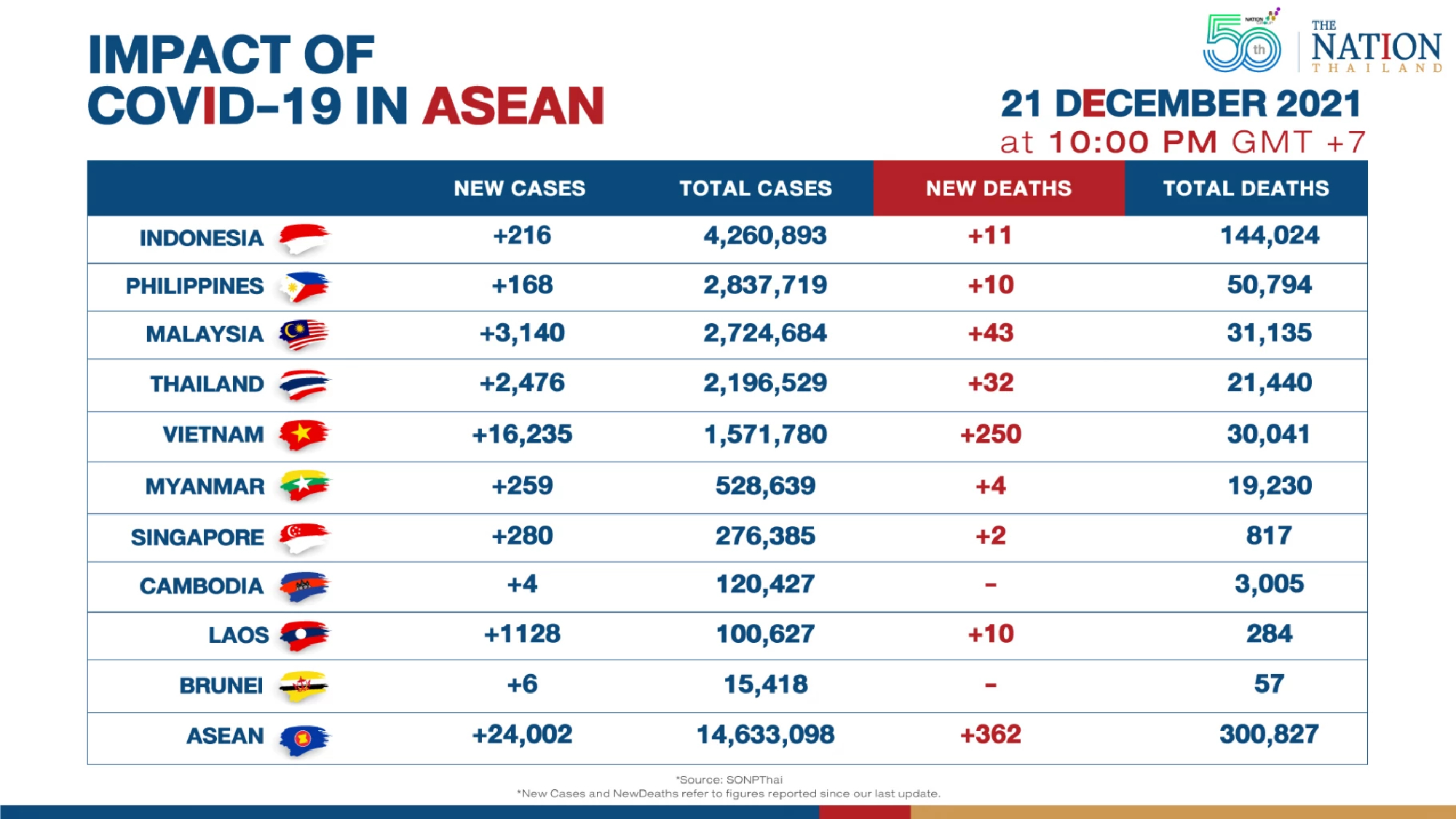
The number of Covid-19 cases crossed 14.65 million across Southeast Asia, with 24,932 new cases reported on Wednesday (December 22). New deaths are at 441, bringing accumulated Covid-19 deaths in Asean to 301,268.
Malaysia and Singapore have agreed to suspend the sale of flight and bus tickets for the vaccinated travel lane (VTL) after a cluster of possible cases of the Omicron variant of COVID-19 was detected in Singapore. The suspension will run from December 23 to January 20 next year and cover travel via the bridge connecting Malaysia to Singapore as well as an air corridor. The bridge link, or causeway, was one of the busiest crossing points in the world with a daily flow of hundreds of thousands of people in both directions before the pandemic.
Meanwhile, Indonesia is expected to see more people going homewards for year-end holidays than last year due to the loosened regulations on public activity restrictions and the high vaccination rate, despite threats by the Omicron Covid-19 variant. As of Tuesday, the Indonesian government still sticks to its plan to impose a more relaxed restriction policy from December 24 to January 2, 2022.
Fully-vaccinated people can travel as long as they can show negative antigen test results, but those who have only received their first doses are required to show negative reverse transcription-polymerase chain reaction test results.
The antiviral drug remdesivir can help keep unvaccinated people at risk of severe covid-19 out of the hospital, according to a new study that found the treatment reduced hospitalization and death by 87% when given soon after diagnosis.
Early in the coronavirus pandemic, remdesivir, an infusion therapy developed by Gilead Sciences, was the first coronavirus treatment authorized by federal regulators for use in hospitals. Wednesday’s study, published in the New England Journal of Medicine, is the first to show that remdesivir can be useful when given on an outpatient basis in the community.
The findings are based on research that predates the delta variant that proliferated during the summer and omicron, the variant spreading with great speed globally. But the study’s main author and other researchers said remdesivir is likely to remain effective even as omicron proves resistant to most medicines in a group known as monoclonal antibodies that have helped prevent people from needing to be hospitalized. Many hospitals are bulging with patients and short on staff.
The study focused on unvaccinated patients, the group most likely to become seriously ill or die if infected.
“If you are going to be a skydiver and jump out of your own plane, it’s best to pack a primary chute as well as a secondary chute,” said the study’s principal investigator, Robert L. Gottlieb, the therapeutic lead for covid-19 research at Baylor Scott & White Health, a medical system in Dallas.
“Vaccines are a primary chute,” Gottlieb said, while therapies such as remdesivir “are the secondary chute.”
Shyam Kottilil, director of the division of clinical care and research at the University of Maryland School of Medicine’s Institute of Human Virology, said, “Infectious-disease doctors would really like to treat people for covid-19 outside the hospital. Any measure that would accomplish that is really beneficial.”
Kottilil, co-author of an editorial in the New England Journal of Medicine accompanying the study, cautioned that the findings do not establish how well remdesivir would work early on with coronavirus patients who are vaccinated and boosted but experience breakthrough infections.
Another limitation of the findings, he said, is that remdesivir is administered by infusion, and it could be cumbersome for sick patients to go to a location to get such treatment three days in a row. The three-day regimen is shorter than the treatment period in earlier research into the drug. Still, Kottilil said, “We would rather have something by mouth, that would be an easier medication to take.”
The Food and Drug Administration on Wednesday authorized the first antiviral pill to treat covid-19, a drug known as Paxlovid developed by Pfizer that must be taken shortly after symptoms develop.
And Tuesday, scientists from the Johns Hopkins Bloomberg School of Public Health and Johns Hopkins University School of Medicine published data from a clinical trial suggesting that convalescent plasma, taken from blood donated by people who have recovered from the virus, could be effective against omicron when given to outpatients soon after becoming infected.
The remdesivir findings were based on a study, sponsored by Gilead, involving 562 unvaccinated covid-19 patients from September 2020, to April, who were randomly selected to receive the three-day infusion therapy or a placebo. The trial initially was designed to include more than twice as many patients but was halted early once monoclonal treatments were available and vaccines had become more widely accessible. With those options available, giving half the study participants a placebo seemed unwise.
All the participants were at high risk for developing a severe case because they were 60 or older or had at least one other condition that makes covid-19 more dangerous, such as high blood pressure, cardiovascular disease, diabetes or obesity.
Nearly a month after joining the study, two of 279 people treated with remdesivir were hospitalized for reasons related to covid-19, compared with 15 of 283 who received the placebo. No one in either group died within that time frame.
Overall, the risk of hospitalization or death – the main outcomes the study set out to measure – was 87% lower in the group that got the treatment.
Symptoms also eased more quickly with the treatment, with 36% of those getting remdesivir reporting improved symptoms by the end of the study’s second week, compared with 20% among those who did not.
On the other hand, the amount of virus in patients’ bodies – known as the viral load – did not differ depending on whether people were treated.
Gottlieb, the principal investigator, said the FDA has the study’s data. Because the drug has full FDA approval, doctors already may prescribe it for other uses. This week, the European Commission widened its “conditional marketing approval” of remdesivir, marketed as Veklury, to include high-risk patients beyond those who need extra oxygen while in the hospital, Gilead announced.
Gottlieb said that, early in the pandemic, people who had the virus but were not sick enough to be in a hospital were advised to quarantine at home.
“The message for going into 2022,” Gottlieb said, is that people with covid-19 and any risk factors for a serious case should “perform a more active quarantine” by contacting their doctor quickly to find out whether treatment is available that could prevent them from becoming seriously ill or dying.
TEL AVIV, Israel – In what its calling a global first, Israels Health Ministry on Tuesday announced that it will offer a fourth coronavirus vaccine shot to citizens 60 and older and other at-risk groups as concerns about the omicron variant proliferate.
Prime Minister Naftali Bennett said he ordered the government to immediately prepare for distributing fourth doses.
“As we did with the booster in the delta surge, we intend to be active and groundbreaking, and do everything to win,” he tweeted. “The world will follow us.”
The Health Ministry’s advisory committee recommended a fourth dose to people 60 and older, those with compromised immune systems, and health-care workers. It required all eligible recipients to have gone four months since their third dose.
The Health Ministry has reported 341 confirmed, and hundreds more suspected, cases of the omicron variant as of Tuesday, citing a “fifth wave” of coronavirus infections.
News of a fourth dose comes the same day as a hospital in the country announced its first omicron-related death. Soroka Hospital, in the southern city of Beersheba, said a 65-year-old patient died after two weeks of hospitalization.
The man reportedly had a host of medical conditions that contributed to his death.
“His morbidity stemmed mainly from preexisting sicknesses and not from respiratory infection arising from the coronavirus,” the hospital said in a statement.
He had received only two vaccine doses, and more than six months had elapsed since receiving the second dose, according to Israeli media outlets.
On Tuesday, Israel’s coronavirus cabinet also approved new restrictions, including limits on crowd sizes in shopping centers and on in-office employees in the public sector.
Health Ministry officials have estimated that the omicron variant makes up between 10% and 15% of all coronavirus infections in Israel. They expect it to be the dominant variant in Israel within two weeks.
The ministry has said that the majority of omicron cases had come from travelers who returned from abroad. On Monday, Israel added 10 countries, including the United States and Canada, to its “red list,” which also includes several European countries and almost all of Africa.
Travel from Israel to red countries is forbidden without permission from a special committee. Israeli citizens flying from a red country must enter a seven-day quarantine even if they are fully vaccinated. Entry of noncitizens has been banned since last month.
The definition for “fully vaccinated” in Israel requires travelers to be 12 years or older and have received a booster shot at least one week prior or be within six months of having received a second vaccination shot. Last month, Israel opened up vaccinations to children as young as 5.
In January, Israel launched the world’s most rapid and widely reaching immunization campaign through the mobilization of its well-organized, meticulously digitized national health-care system.
Last month, Health Minister Nitzan Horowitz said Israel’s decision to begin offering booster shots in July, as the delta variant was spreading across the globe but before they were authorized by the U.S. Food and Drug Administration, was “justified.”
Clalit, Israel’s largest HMO, has found that a third shot of the Pfizer-BioNTech vaccine is 92% effective in preventing serious illness and 93% effective in preventing hospitalization, compared with waning protection from only two doses, according to a large-scale study published in the Lancet medical journal in October.
Out of a population of 9.3 million, 6.4 million have received their first shot, 5.8 million their second and 4.1 million their third, according to the Health Ministry.
Israel has recorded at least 8,235 coronavirus deaths since the start of the pandemic.
AstraZeneca and Oxford University have started developing a version of their coronavirus shot that targets omicron, as researchers study the efficacy of existing vaccines against the latest variant.
“Together with Oxford University, we have taken preliminary steps in producing an Omicron variant vaccine, in case it is needed and will be informed by emerging data,” the AstraZeneca pharmaceutical company based in England said in an email.
The World Health Organization says omicron is spreading faster than the delta variant, though the extent to which it causes severe illness remains unclear. U.S. biotech firm Moderna and pharmaceutical giant Pfizer, along with its German partner BioNTech, have said they are tailoring their shots and working to understand the level of protection they provide.
The Oxford-AstraZeneca vaccine, widely used in European countries and others such as Canada and India, is not approved in the United States.
“Like with many previous variants of concern . . . we have taken preliminary steps in producing an updated vaccine in case it is needed,” Sandy Douglas, who leads a vaccine manufacturing research group at Oxford, told the Financial Times earlier on Tuesday.
He said adenovirus-based vaccines, such as the Oxford-AstraZeneca shot, “could in principle be used to respond to any new variant more rapidly than some may previously have realized.”
The head of the European medicines regulator, Emer Cooke, has said it would take time to reach a consensus on the need for variant-specific vaccines. She added that AstraZeneca had not applied so far for its shot to be used as a booster in the European Union, which along with Britain has largely used Pfizer and Moderna’s mRNA vaccines as boosters. The United States is also using Pfizer and Moderna along with the vaccine from Johnson & Johnson.
Global health officials, who say vaccines remain the best tool to combat the virus, have urged people to get boosters if they can, while the spread of omicron has highlighted inequality in access to vaccines worldwide.
Moderna said earlier this week that a booster dose of its vaccine significantly raised antibody levels against the omicron variant, according to preliminary data, though it did not have the clinical data to speak to its vaccine’s protection against hospitalization or death.
Douglas and his team have published a preprint paper, which has not yet undergone a peer review, outlining the feasibility of producing a vaccine at large scale after a new virus is identified, which they said could enable making millions of doses within 100 days. The Oxford team said the research shows the potential “speed and volume of production of adenovirus-vectored vaccines against new virus variants or other future pandemics.”
The Treasury Department on Wednesday issued new licenses to loosen sanctions restrictions on assistance to Afghanistan, following a wave of appeals from aid organizations, lawmakers and others to prevent economic collapse and mass starvation.
The licenses expand the definition of allowed humanitarian assistance to education, including salary payments to teachers, and permit a broader use of U.S. funds received by aid organizations working inside the country.
The United Nations and international financial institutions have warned that prohibitions of economic dealings with the Taliban, and the freezing of Afghanistan’s $10 billion in foreign reserves – most of it held in the United States – have brought the country to the brink of disaster.
The Biden administration, joined by much of the world, has said that the militant government that took over the country in August cannot be recognized unless it ensures the human and civil rights of all Afghanistans, including minorities and women, and breaks ties with terrorist organizations such as al-Qaida.
But the abrupt cessation of foreign-aid funding that provided 40% of all government revenue and more than 75% of all public spending has brought most banking and commerce to a halt and left many without jobs or working without paychecks amid a prolonged drought, the ravages of the coronavirus pandemic and the onset of Afghanistan’s harsh winter.
Last week, dozens of U.S. lawmakers and former top U.S. military and diplomatic officials who served in Afghanistan joined the United Nations and humanitarian organizations in appealing for changes in administration policy.
In Islamabad Monday, Martin Griffiths, the U.N. undersecretary for humanitarian affairs, told a special session of the Organization of Islamic Cooperation foreign ministers that Afghanistan’s economy was in “free-fall” and warned that “if we don’t act decisively and with compassion” it would “pull the entire population with it.”
While the humanitarian response in terms of food, shelter and medical supplies sent to Afghanistan were crucial, Griffith said, it was not enough. He called for flexible donor funding that could be used to pay salaries for public sector workers and support basic services including health, education, electricity and livelihoods.
Addressing the meeting, convened especially to discuss the Afghanistan situation, Pakistani Prime Minister Imran Khan called the crisis “man-made,” and said it is “being created despite knowing that it can be averted if [Afghanistan’s U.S.-based] accounts are unfrozen and liquidity is put into their banking system.”
The OIC set up a special fund for Afghanistan, and urged member states to contribute.
Secretary of State Antony Blinken told reporters Tuesday that the administration is “looking intensely at ways to put more liquidity into the Afghan economy, to get more money into people’s pockets, and doing that with international institutions, with other countries and partners, trying to put in place the right mechanisms to do that in a way that doesn’t directly benefit the Taliban but does go directly to the people.”
The Treasury actions announced Wednesday expand on earlier measures authorizing noncommercial cash remittances to individuals in Afghanistan, and assurances issued to the international commercial banking community that many transactions with Afghanistan could continue without violating U.S. sanctions.
The United Nations Security Council on Wednesday also unanimously approved a U.S.-sponsored resolution, effective for one year, that largely duplicated the Treasury actions. The Taliban is sanctioned as an organization, as are about 130 members of its leadership.
According to a Treasury Department fact sheet, the sanctions do not “prohibit the export or reexport or goods or services to Afghanistan, moving or sending money into and out of Afghanistan, or activities in Afghanistan, provided that such transactions or activities do not involve sanctioned individuals, entities or property in which sanctioned individuals and entities have an interest.”
Newly authorized transactions, it said, “explicitly do not authorize financial transfers to the Taliban or the Haqqani Network,” an affiliated organization.
The United Nations has appealed for funding to expand a program it set up in October to pay the salaries of tens of thousands of health care workers, with money going directly to them and not through the Taliban government.
“It’s taken time to figure out the mechanisms,” said a senior Biden administration official, speaking on the condition of anonymity under rules set by the administration. “As the situation evolves, we’re going to find new ways to assist.”
Officials have said the administration is not currently considering unfreezing Afghanistan’s frozen reserve funds, noting that they are the subject of litigation by victims of the Sept. 11, 2001 terrorist attacks and have been attached by federal courts.
NAIROBI, Kenya – South Africas huge wave of omicron cases appears to be subsiding just as quickly as it grew in the weeks after the country first announced to the world that a new coronavirus variant had been identified.
South Africa’s top infectious-disease scientist, who has been leading the country’s pandemic response, said Wednesday that the country had rapidly passed the peak of new omicron cases and, judging by preliminary evidence, he expected “every other country, or almost every other, to follow the same trajectory.”
“If previous variants caused waves shaped like Kilimanjaro, omicron’s is more like we were scaling the North Face of Everest,” Salim Abdool Karim said in an interview, referring to the near-vertical increase in infections that South Africa recorded in the first weeks of December.
“Now we’re going down, right back down, the South Face – and that is the way we think it may work with a variant like omicron, and perhaps even more broadly what we’ll see with subsequent variants at this stage of the pandemic,” he said.
Just a week ago, South Africa was seeing skyrocketing positivity rates and massive lines for testing. But during the first days of this week, there has been a turnaround in rates and stress on testing facilities. In addressing the surge of infections, South Africa had decided not to impose a lockdown or other major restrictions, although many countries, including the United States, imposed restrictions on travelers originating in South Africa and neighboring countries.
On Monday, the United States’ top infectious-disease expert, Anthony Fauci, said the Biden administration was considering lifting those travel restrictions, given that community spread of the variant was occurring in many countries.
“We likely are going to pull back on that pretty soon because we have enough infections in our own country,” Fauci told reporters at the National Press Club. “We’re letting in people from other countries that have as much or more infection than the Southern African countries. So [it is] likely we are going to look at that very carefully to see if we can pull back.”
Also on Wednesday, South Africa’s National Institute for Communicable Diseases released a study – not yet peer-reviewed – that bolstered earlier findings from the country that omicron was causing fewer hospitalizations and instances of severe side effects than previous coronavirus variants.
The study found that the omicron variant was 80% less likely to lead to hospitalization than the delta variant and that for patients who were hospitalized, the risk of severe illness was 30% lower.
Karim said that both the quick peaking of cases and omicron’s lower severity could be due to multiple country-specific factors in South Africa, the most prominent being that more than 70% of South Africans have been infected by previous variants, probably giving a greater proportion of the population a more robust antibody response.
“In South Africa, variants, even highly mutated ones, will run out of people pretty quickly,” he said. “Pretty much by the end of last week it was running out of steam; there just aren’t enough people left to infect.”
Karim noted that omicron accounted for nearly every new coronavirus case in South Africa last week. Recent data from the United States showed that more than 70% of new U.S. cases were caused by the variant.
“By the time we knew about it, it was fully established,” Karim said. “Based on the proportion of sequences that come back as omicron, I’d say we are probably between two and three weeks ahead of the U.S., about two ahead of Norway and Denmark, and substantially ahead of, probably up to four weeks, the U.K. and the rest of Europe. But what we’re seeing here in South Africa at least tentatively should be good news for everyone.”
Biden administration officials have closely studied the South Africa data, looking for clues about omicron case growth and the severity of infections, said three officials involved with the U.S. coronavirus response.
While the early South African results are heartening, with hospitalizations increasing far less than the overall case count, the officials cautioned that it remains too early to base U.S. policy on the overseas data alone because of differences in demographics and other factors. For instance, a greater proportion of South Africans have likely been infected by earlier strains of coronavirus than Americans and may retain more protection against omicron as a result, two officials said.
“Data from South Africa is critical. Data from South Africa, the Netherlands, the United Kingdom, and New York paint a more complete picture,” said an official who was not authorized to comment on the record.
Since South African scientists announced the detection of the omicron variant less than a month ago, European governments have imposed new restrictions, in part because most of the data and research on omicron is so new and unproved.
In Britain and elsewhere in Europe, a dramatic increase in omicron infections has prompted a wave of travel restrictions and lockdowns. In Britain, scientists warned that without stricter measures, infections could reach 600,000 to 2 million cases a day by the end of this month.
Denmark, considered by health officials to be a test case for highly vaccinated countries, also has experienced a massive rise in case numbers, unlike in previous waves. Scientists say this is due in part to omicron’s higher transmissibility.
LONDON – Researchers looking at real-world coronavirus cases in Britain reported Wednesday that the omicron variant appears to be less severe than the once dominant delta strain.
Early evidence from Scotland and England suggests that omicron is sending fewer people to the hospital with severe symptoms.
That surveillance tracks well with the latest observations from South Africa, where public health officials have reported that omicron is tending to result in milder illness. Scientists had not been sure whether that finding would hold elsewhere.
“This is a qualified good news story,” said Jim McMenamin, National Covid-19 Incident Director at Public Health Scotland and one of the co-authors of the Scottish study.
Public health experts remain worried that a sudden, massive surge of a highly infectious but less virulent omicron variant could still flood hospitals with very sick patients. New daily coronavirus cases recorded in Britain exceeded 100,000 on Tuesday for the first time in the pandemic.
Prime Minister Boris Johnson has said his government is watching the data but would not call for stricter measures to fight spread until after Christmas at the earliest.
The early research from Scotland was led by the scientists at the University of Edinburgh, in a well-vaccinated population not too different from the United States. The study, which has not yet been peer reviewed, found that people infected with omicron were almost 60% less likely to enter the hospital than those infected with delta, the dominant strain around the world for much of 2021.
The Scottish scientists said recently vaccinated people appear to have some protection against symptomatic infection from omicron, but less so than against delta. A third dose or booster of an mRNA vaccine was associated with a 57% reduction in the odds of developing symptomatic covid. Boosters gave better protection against the delta variant – more than 80%.
The researchers estimated the potential for reinfection 10 times more likely with omicron than with delta.
The numbers they were working with were small but statistically significant, they said – if omicron acted the same as delta, they would expect 47 people to have been admitted to hospital so far. Currently, there are only 15.
The scientists said there were not enough omicron infections and hospitalizations among those over 60 years to reach confident conclusions, but they expected the overall trend would hold.
The evidence that omicron was causing less severe illness in England came out of Imperial College London.
That group, led by Neil Ferguson, reported that those infected by omicron were 15 to 20% less likely to go to an emergency room with severe symptoms and 40% less likely to be hospitalized overnight, when compared to those infected by delta.
Ferguson also urged caution.
“Our analysis shows evidence of a moderate reduction in the risk of hospitalization associated with the omicron variant compared with the delta variant,” he said. “However, this appears to be offset by the reduced efficacy of vaccines against infection with the omicron variant.”
Ferguson stressed that given the high transmissibility of the omicron virus, “there remains the potential for health services to face increasing demand if omicron cases continue to grow at the rate that has been seen in recent weeks.”
South Africa’s top infectious-disease scientist, who has been leading the country’s pandemic response, told The Washington Post on Wednesday that the country had rapidly passed the peak of new omicron cases and, judging by preliminary evidence, he expected “every other country, or almost every other, to follow the same trajectory.”
South Africa, though, has a younger average age than countries in Europe or the United States, and it was not in the middle of a delta surge when omicron arrived.
The number of Covid-19 cases crossed 14.63 million across Southeast Asia, with 24,002 new cases reported on Tuesday (December 21). New deaths are at 362, bringing accumulated Covid-19 deaths in Asean to 300,827.
Severe cases of Covid-19 recorded in Vietnam’s Hanoi are on the rise, with some hospitals concerned about overcrowding. The city recorded 1,612 new cases of Covid-19 on Monday, the second consecutive day on which the city recorded the highest number of daily infections nationwide.
Hanoi Field Hospital’s deputy head said the increasing number of new cases led to more severe cases. The number of severe cases often accounted for three per cent of the total infections.
Meanwhile, Malaysia’s Finance Minister announced that the National Trust Fund allocation will be increased to RM6bil from RM5bil previously to ensure a sufficient supply of vaccines, including booster doses, for not only the adult population but also teenagers. Based on the current assessment, it is critical for everyone to be given a booster dose, especially with the emergence of the Omicron variant.

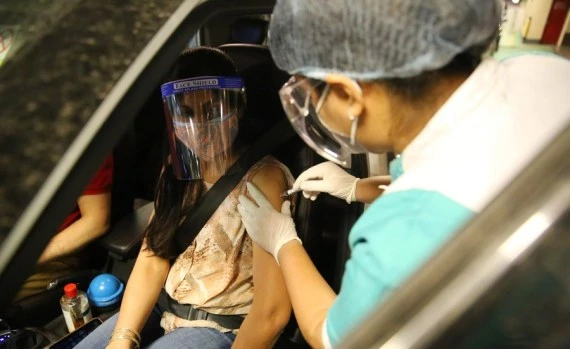 A health worker administers a dose of COVID-19 vaccine to a woman during a drive-through vaccination campaign in New Delhi, India, May 27, 2021. (Str/Xinhua)