LONDON – A British judge on Tuesday shed light on the lavish lifestyle of Dubais ruling family by awarding a record-breaking settlement worth in excess of $720 million to a princess in her custody battle with the ruler of the emirate.
The settlement concludes a long-running and acrimonious case that has played out in British courts between Princess Haya Bint al-Hussein, 47, daughter of the late King Hussein of Jordan, and her ex-husband, multibillionaire Dubai ruler Sheikh Mohammed bin Rashid al-Maktoum.
During the trial, the court heard details of the immense luxury in which the princess lived before she fled Dubai with her two children, Zayed, 9, and Jalila, 14.
But the case also exposed a dark side to the glittering image of the Dubai royal family, including Mohammed’s abusive behavior toward his wife and children, which prompted Haya to file for divorce and flee to Britain in 2019, saying that she feared for their lives.
The judge agreed that she faced genuine risks and awarded the bulk of the settlement toward providing potentially a lifetime of security for the princess and her children, including armored cars, cyber-protection, cameras and ballistic safeguards and bodyguards.
In October, a court ruled that Mohammed had used Israeli company NSO Group’s Pegasus spyware to hack the phones of Haya, along with those of the closest members of her inner circle.
The court also heard evidence that Mohammed had abducted and brought back to Dubai two of his daughters, Princesses Latifa and Shamsa. Mohammed allegedly sought to buy a property neighboring one of Haya’s homes and issued threats to her life, including a text message that said, “We can find you anywhere.”
Justice Philip Moor, the High Court judge who presided over the case, said in his statement detailing the award that there is no question that Haya and her children face an ongoing threat to their safety from her former husband. “The main threat they face is from [Mohammed], not from outside sources,” he said.
Mohammed, who did not attend any of the hearings, has denied all the charges through his lawyer. In a statement on Monday, a spokesman for the sheikh did not contest the amount. He said that Mohammed had “always ensured that his children are provided for” and requested that the media respect their privacy.
In total, the award comprises a lump sum of $333 million to cover living costs as well as annual payments for the children’s education and security, to be secured with a guarantee of $385 million. Because it is unclear how long the annual payments will last, it is difficult to put a final total on the amount, but lawyers say it ranks as the largest single divorce payout in in British legal history.
In justifying the amounts, Moor cited the need to preserve the “truly opulent and unprecedented standard of living enjoyed by these parties.”
In addition to security, the amounts are intended to cover the costs of the upkeep of Haya’s two homes, near Kensington Palace in London and in the suburban town of Egham in Surrey, as well as vacations, clothes, horses and salaries for staff. The costs were diligently itemized – $500,000 for food during vacations; $368,000 to maintain three horses and other pets for the children; $51,000 to replace two Somersault Sunken trampolines they had owned at their palace in Dubai.
Haya had originally sought in excess of $1.1 billion, but the judge reduced many of her claims. A request for $42 million to replace the haute couture wardrobe she was forced to leave behind in Dubai was cut to $1.3 million because, the judge said, he was unable to put a price on the items of clothing he was shown in a video.
A request for $26 million worth of jewelry was reduced to $18 million. A budget for the costs of hiring private planes for vacations was cut from $2.3 million to $1.3 million. Moor said he did not believe children should go on vacation too often, especially when they have school examinations coming up.
Among the requests the judge threw out was the cost of a car collection for Haya’s son because, he noted, it wasn’t necessary for a 9-year-old to own cars.
It was, however, important, he said, that the children “should be able to have a lifestyle that is not entirely out of kilter with that enjoyed by them in Dubai.”
But Moor allowed the cost of a $1.9 million renovation to Haya’s kitchen in London, including a pizza oven. “I remind myself that money was no object during the marriage,” he said, by way of explanation.
While living in Dubai, Haya, who was Mohammed’s sixth and youngest wife, received an annual budget of more than $100 million to run her household, and her children were given allowances in excess of $10 million a year each, the court had been told.
She would routinely spend vast amounts on vacations, including the hiring of private yachts and travel by helicopter. The hotel bill for one vacation in Italy came to more than $800,000, the judge noted. He awarded her $6.7 million to spend on vacations.
Her lawyer, Nicholas Cusworth, told reporters that Haya was not, “in the context of this case, wealthy.” She had been forced to sell jewelry and racehorses worth $20 million while waiting for the settlement, and he said her legal fees had amounted to more than $90 million.
Mohammed’s lawyer Nigel Dyer described some of Haya’s claims as “absurd” and said she was seeking to enrich herself in the guise of providing for her children. He cited an allegation, which was not mentioned by the judge in his ruling, that Haya had an affair with a bodyguard and paid more than $8 million to blackmailers to stop them from revealing the liaison.
Moor ruled that the fabulous wealth enjoyed by the princess and her children before the divorce “takes this case entirely out of the ordinary.”
“It will be quite impossible to replicate, pound for pound, the standard of living enjoyed before their parents separated,” he said.
French police have uncovered 182,000 fake health passes since the documents were introduced this summer in a bid to control the spread of the coronavirus.
President Emmanuel Macron introduced the official passes in July, and they have become necessary to gain access to numerous venues, including bars, restaurants and many long-distance trains. They can be obtained through vaccination, recovery from covid-19 or a recent negative test.
Interior Minister Gérald Darmanin last week asked police to step up their investigations into the criminal networks or individuals behind the fake passes, as concerns grow about the highly contagious new omicron variant. On Monday, he said the fake documents were detected “as part of the 400 ongoing investigations.” The minister didn’t provide details on any arrests or individuals involved. He has previously said some cases had been traced to health professionals.
“Using, procuring or selling false health passes, in particular via social networks, is punishable by 5 years in prison and a 75,000 euro fine,” Darmanin said in a statement posted on Twitter. He has previously condemned the fake documents as “death passes.”
The introduction of France’s health pass prompted weeks-long nationwide protests this summer. Even though the rallies have shrunk in size, incidents of vandalism against vaccination centers and other sites continue to be reported.
The police crackdown on fake passes comes as France, and other nations, are tightening restrictions in the face of the highly transmissible omicron variant, which is spreading at lightning speed across the European continent.
The Netherlands was the first to enter a full-scale lockdown on Sunday, with all nonessential stores, bars and restaurants closed at least until Jan. 14. Scientists are pushing British Prime Minister Boris Johnson to take tougher measures to slow the exploding number of new infections, although so far he has said no rules would change.
Officials in Paris are reluctant to impose new curfews or lockdowns on people who have been vaccinated. But officials argue that the threat of omicron means authorities have to increase pressure on those refusing vaccination. France recorded 367,297 new cases in the past week, according to Johns Hopkins University data, shy of a previous weekly record of 422,681 set in November 2020.
French Prime Minister Jean Castex said on Friday the government will propose a bill in parliament in January to change the official health pass into a “vaccine pass,” meaning only vaccinated people will be allowed to enter indoor public places such as bars, restaurants and cinemas.
About 72 percent of the country is fully vaccinated, according to Washington Post data.
Marine Le Pen, the leader of France’s far-right nationalist party, has said from the outset that the health pass was a “backward step for individual freedoms” and views the planned vaccine pass as akin to mandatory vaccination.
“French people are losing individual freedoms,” she said on cable TV channel BFM over the weekend.
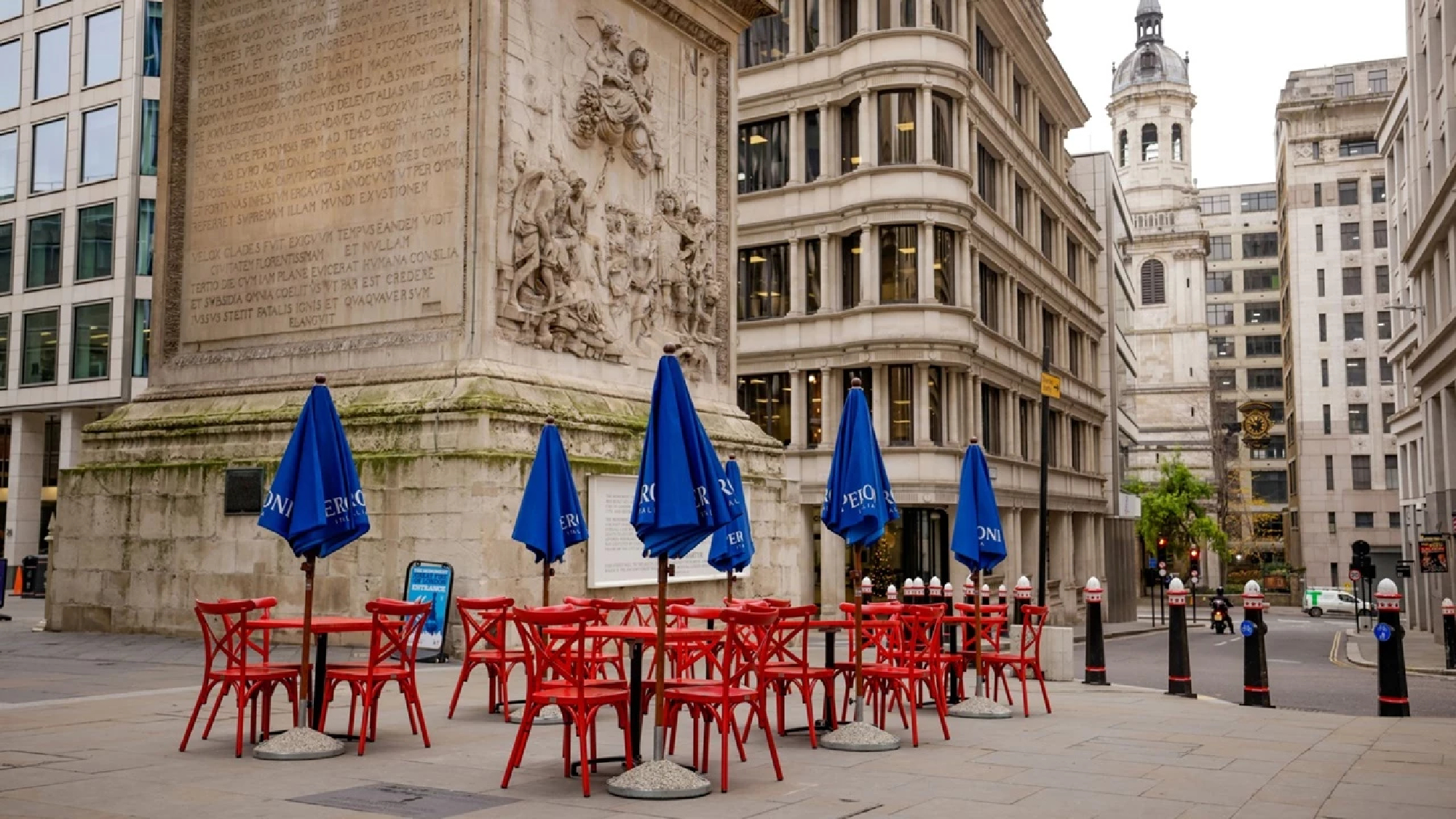
Rishi Sunak announced a billion pounds ($1.3 billion) of support for U.K. hospitality businesses struggling with slumping demand triggered by a record wave of Covid-19 infections, as he declined to rule out further curbs to tackle the fast-spreading omicron variant.
Pubs, restaurants and other eligible hospitality and leisure businesses will be able to claim cash grants worth up to 6,000 pounds each, the U.K. Chancellor of the Exchequer said Tuesday in a pooled broadcast interview. He also unveiled extra cash for cultural institutions and to compensate companies for sick pay.
The move aims to end a growing clamor from firms for more support, amid what the Confederation of British Industries has called a “lockdown by stealth” as Britons steered clear of social gatherings to avoid the virus. Until now, the Treasury had pointed to measures already in place including grants, lower sales tax and business rates relief, but companies had called for more.
“The current situation is very difficult, especially for those in the hospitality industry,” Sunak said. Asked about the prospect of new restrictions, Sunak repeated Boris Johnson’s message that ministers can’t rule anything out. “We’re just dealing with an enormous amount of uncertainty at the moment.”
Sunak did, however, hint that the Treasury is prepared to step in with more assistance if tighter curbs are introduced, saying he will “always respond proportionately and appropriately to the situation that we face.”
Sunak said the grants are comparable in size to those in place earlier this year when businesses were required to shut. A further 30 million pounds will go into a pot to help cultural institutions such as museums and theaters.
The lobby group UKHospitality said Monday that December is set to be a “disaster” for the industry, with many businesses losing 40% to 60% of their trade. It warned companies would fold without government support.
The opposition Labour Party has criticized Sunak for his “radio silence” on the crisis, while the Night Time Industries Association urged him to “come out of hiding.” The chancellor was ultimately forced to cut short a work visit to California to jet back for talks with industry groups.
The assistance announced Tuesday falls short of demands by business groups who also wanted to see extensions to tax breaks beyond March and relaxed repayment terms on government-backed loans. Some industry chiefs had also wanted to see a return of Sunak’s flagship furlough program, through which the government splurged 70 billion pounds, paying up to 80% of the wages for 11.7 million jobs through to its end in September this year.
The new economic measures come with Johnson’s cabinet in disagreement over when and whether to bring in new curbs to stem the omicron surge. Doing so would be politically risky for the prime minister, who is also boxed in by opposition in his Conservative Party, with ministers — including Sunak — demanding further data on the severity of omicron.
The government’s Scientific Advisory Group for Emergencies, or SAGE, warned last week that “more stringent measures would need to be implemented very soon” to avoid daily Covid hospitalizations rising to at least 3,000, piling pressure on the National Health Service.
Johnson on Monday held off on bringing in new restrictions, saying that while his ministers didn’t exclude doing so if needed, for now they needed more information, even as daily cases soar above 90,000.
Earlier, Cabinet minister Steve Barclay suggested no steps will be taken before Christmas, telling LBC Radio: “We’re saying to people they should continue with Christmas, but in a cautious way.” He later told the BBC ministers must be “clear-eyed” about the economic consequences of any curbs.
SAGE said bringing back some of the restrictions used earlier in the year — including limits on household mixing and the closing of hospitality venues — could “substantially reduce” the peak in cases.
One option they suggested was going back to so-called Step 2 restrictions in Johnson’s roadmap for emerging from the last lockdown. That included pubs and restaurants only being able to serve customers outdoors, a ban on indoor mixing between households and a maximum of six people or two households being allowed to interact outdoors.
Johnson has so far resisted imposing some of the measures recommended by his scientists, and he’s promised Parliament would get a chance to vote on new curbs if he did bring them in. Recalling MPs would need at least a day’s warning, and U.K. papers have reported that may come after Christmas, with new rules taking effect before January.
President Joe Biden on Tuesday outlined plans to expand coronavirus testing sites across the country, distribute a half-billion free at-home tests and deploy more federal health resources to aid strained hospitals, as the omicron variant drives a fresh wave of infections.
At the White House, Biden acknowledged that Americans are “tired, worried and frustrated” with covid-19, which he described as a “tough adversary.” But he stressed in remarks at the White House that “we’ve shown that we’re tougher; tougher because we have the power of science and vaccines that prevent illness and save lives.”
The president said Americans have an obligation to get vaccinated, calling it a “patriotic duty,” and pointed to former president Donald Trump’s comment that he got his vaccine booster shot.
Biden stressed that while the number of covid cases have soared to levels not seen since 2020, the outlook was far different with vaccines and other treatment.
“This is not March of 2020. Two hundred million people are fully vaccinated. We’re prepared. We know more,” he said.
Speaking directly to parents, Biden said, “We don’t have to shut down schools because of covid-19. We can keep our K-12 schools open. That’s exactly what we should be doing.”
The Biden administration will start delivering a half-billion free rapid tests to homes next month, according to the statement, and health officials will set up a website where Americans can order them. New federal testing sites will also be established across the country, starting with one in New York City this week.
The Biden administration has emphasized increased testing as one of the pillars of its pandemic response, but it has been criticized for failing to provide at-home tests at low cost. Americans are paying $25 for a pack of two tests, if they can find any at a pharmacy.
Health officials say they fear that the emergence of the quickly spreading omicron variant could overwhelm health-care facilities nationwide. The variant accounted for 73 percent of new coronavirus cases in the United States between Dec. 12 and 18, according to modeled projections from the Centers for Disease Control and Prevention.
To relieve overrun hospitals, the federal government will immediately send emergency medical teams to Michigan, Indiana, Wisconsin, Arizona, New Hampshire and Vermont, the president said. Some of those states, such as Michigan, had been suffering from case surges even before the announcement of the first omicron case in the United States this month.
The administration will deploy an additional 1,000 military doctors, nurses, paramedics and other health-care personnel to strained medical centers in January and February as needed, the White House said. The president is set to order the Federal Emergency Management Agency to work with states and territories to prepare more hospital beds ahead of expected surges.
Federal officials have earmarked N95 masks, gloves, gowns and ventilators from the national stockpile ready for shipment to states that may require rapid assistance with medical supplies. “The Administration has pre-positioned these supplies . . . so that we can send them to states that need them immediately,” the White House said.
Biden’s speech comes three weeks after he unveiled his initial plan to combat a winter surge, which included campaigns to increase vaccinations and booster shots, more stringent testing for international travelers, and plans to make rapid at-home coronavirus testing free for more people.
But after close to a year of repeated messages to get vaccinated, administration officials have struggled to get through to holdouts, trying social media campaigns, vaccination lotteries and other efforts to raise awareness. Still, fewer than one-third of fully vaccinated people have received booster shots.
On Tuesday, Biden is expected to renew his plea with Americans to get vaccinated and boosted, as well as outline efforts to make vaccination easier, including new pop-up clinics.
“While cases among vaccinated individuals will likely increase due to the more transmissible Omicron, evidence to date is that their cases will most likely be mild,” the White House said. “In contrast, unvaccinated individuals are at high risk of getting COVID-19, getting severely ill, and even dying.”
Emirates flight attendant Hanan Elatr surrendered her two Android cellphones, laptop and passwords when security agents surrounded her at the Dubai airport. They drove her, blindfolded and in handcuffs, to an interrogation cell on the edge of the city, she said. There, she was questioned all night and into the morning about her fiance, Saudi journalist Jamal Khashoggi.
The next day, at 10:14 a.m. on April 22, 2018, while her devices were still in official custody, someone opened the Chrome browser on one of the Androids.
They tapped in the address of a website “https://myfiles%5B.%5Dphotos/1gGrRcCMO”, on the phone’s keyboard, fumbling over the tiny keys, making two typos, and then pressed “go,” according to a new forensic analysis by cybersecurity expert Bill Marczak of Citizen Lab. The process took 72 seconds.
The website sent the phone a powerful spyware package, known as Pegasus, according to the new analysis.
Over the next 40 seconds, the phone sent 27 status reports from its web browser to the website’s server, updating the progress it was making installing the spyware.
The spyware had been developed by an Israeli firm, NSO Group, for what it says is use against terrorists and criminals. The website was configured by NSO for a United Arab Emirates customer, said Marczak, whose research group is based at the University of Toronto and devoted to uncovering cyberespionage.
The new analysis provides the first indication that a UAE government agency placed the military-grade spyware on a phone used by someone in Khashoggi’s inner circle in the months before his murder.
“We found the smoking gun on her phone,” said Marczak, who examined Elatr’s two Androids at The Washington Post’s and her request. Emirati authorities returned them to her several days after her release.
Marczak said he could see the Android trying to install Pegasus, but he could not determine whether the spyware had successfully infected the phone, which would enable Pegasus to steal its contents and turn on its microphone. But he said the UAE operator did not type the website address in a second time, which would ordinarily be expected in the event of a failed first attempt.
Elatr’s phone was confiscated just after she and Khashoggi had gotten engaged and were in a long-distance relationship. Because both traveled frequently, with Elatr based in Dubai and Khashoggi in Washington, they often discussed travel and meeting plans in the United States and abroad using apps on their phones, according to Elatr and her phone records.
Marczak discovered the https://myfiles%5B.%5Dphotos address in 2017 while researching the presence of Pegasus spyware on global networks. By scanning the internet, Citizen Lab was able to identify a network of computers and more than a thousand web addresses used to deliver Pegasus spyware to the phones of targets in 45 countries, according to group’s landmark “Hide and Seek” report. The methodology has been used by other cyber-researchers to identify Pegasus hacks worldwide.
The researchers found a particular set of web addresses, including https://myfiles%5B.%5Dphotos, associated with Pegasus targets primarily in the UAE.
Working with an international journalism consortium led by the Paris-based nonprofit Forbidden Stories, The Washington Post reported in July that an unknown operator employing Pegasus sent five SMS text messages over an 18-day period in November 2017 and a sixth one on April 15, 2018, according to an analysis by Amnesty International’s Security Lab of Elatr’s Androids. The research could not determine if the texts resulted in Pegasus being installed inside the phone.
Marczak’s research advances the understanding of what happened to Elatr’s phone by identifying a UAE agency operator in the process of trying to install Pegasus on the device while she was in UAE custody. He also found forensic data indicating her Android was also trying to install Pegasus.
Following The Post’s report in July, NSO Group chief executive Shalev Hulio said a thorough check of the firm’s client records showed none had used Pegasus to attack the phones of Khashoggi or Elatr before a Saudi hit team murdered him in Istanbul on Oct. 2, 2018.
“Regarding the wife of Saudi journalist Jamal Khashoggi . . . We checked and she was not a target,” Hulio told an Israeli technology publication in July. “There are no traces of Pegasus on her phone because she was not a target.”
After The Post’s most recent reporting, NSO’s attorney, Thomas Clare, said, “NSO Group conducted a review which determined that Pegasus was not used to listen to, monitor, track, or collect information about Ms. Elatr. The Post’s continued efforts to falsely connect NSO Group to the heinous murder of Mr. Khashoggi are baffling.”
Clare said the premise was “deeply flawed” and the details “make no sense from a technical standpoint.” He said Pegasus is installed remotely and that it would therefore be “completely unnecessary and make no sense” that a human would type the address of a Pegasus-linked website into a target’s phone.
That capability is described in NSO’s own marketing materials, first published in an unauthorized leak in 2014. The documents were filed as an exhibit in an ongoing lawsuit WhatsApp brought against NSO in 2019, alleging that Pegasus used the WhatsApp messaging service to infect phones. The materials state, “When physical access to the device is an option, the Pegasus agent can be manually injected and installed in less than five minutes.”
Clare acknowledged that the spyware uses SMS texts to send website links that deliver Pegasus attacks. But he said that “technological safeguards prevent” this method from being used six times in an 18-day period. The NSO marketing materials say that “the system operator can choose to send a regular text message (SMS) or an email, luring the target to open it . . . although the target clicked the link they will not be aware that software is being installed on their device.”
Clare said the marketing materials “are outdated and do not necessarily provide accurate descriptions of the software’s capabilities and limitations as of 2018.”
The Israeli Ministry of Defense requires NSO to get its approval before selling Pegasus to a foreign country to ensure the sale is in Israel’s national interest. NSO says it has sold Pegasus to 60 government agencies in 40 countries.
NSO said it has no visibility into the real-time targeting of individuals by its clients after it licenses its software to them. But the firm can demand access to customer records to investigate allegations of abuse. The company has said it has shut down five clients in the past several years and foregone millions of dollars in revenue because of its concern for human rights. It also said its technology has saved many lives by enabling law enforcement agencies to catch terrorists and criminals.
“There is one thing I want to say: We built this company to save life. Period,” Hulio told The Post in July.
He said of the reports of the attacks on journalists and other abuse: “It’s horrible. I am not minimizing it. But this is the price of doing business. . . . This technology was used to handle literally the worst this planet has to offer. Somebody has to do the dirty work.”
The international investigation found that authoritarian governments have used Pegasus against journalists, human rights defenders, diplomats, lawyers and pro-democracy opposition leaders. New revelations continue to roll out. France found traces of the spyware on the phones of five ministers. The U.S. State Department announced that indications of Pegasus were found on the phones of 11 employees in Uganda. After initial denials, Hungary admitted it used the spyware.
Countries have responded forcefully. The United States, Britain and France each spoke with high-level Israel officials to express their consternation. The Biden administration blacklisted NSO Group from receiving access to certain U.S. technologies last month, adding it to an “entities list” reserved for companies whose activities are “contrary to the national security or foreign policy interests of the United States.” NSO said it was “dismayed” by the move and is seeking its reversal. Apple is suing NSO to prevent it from targeting iPhones with Pegasus in the future.
“I’m glad governments are beginning to understand that the lack of regulation can lead to deadly consequences,” said Randa Fahmy, Elatr’s Washington-based pro bono attorney.
The UAE, a federation of monarchies in the Persian Gulf, has been one of NSO’s most notorious clients. It has used Pegasus against anti-regime activists, journalists and even a royal princess attempting to escape her father, the international media investigation and others have found. In October, a British court revealed that NSO Group ended its contract with the UAE because Dubai’s ruler had used it to hack the phones of his ex-wife and her lawyer, a member of Britain’s House of Lords.
The UAE continues to deny all allegations against it. The UAE Embassy in Washington did not respond to multiple requests for comment. In the past, the UAE has denied allegations that it used Pegasus against human rights activists and other civil society figures.
The UAE is a longtime ally of Saudi Arabia. In 2013, the two countries signed a mutual security agreement promising cooperation on intelligence and law enforcement matters. The UAE has spied on Saudi dissidents abroad and sent them to Riyadh, according to human rights groups and a recent lawsuit filed in federal court in Portland, Ore., on behalf of an imprisoned Saudi human rights activist.
– – –
Three years ago, Hanan Elatr was a globe-trotting supervisor for the Emirates airlines. She was married to a pro-democracy icon and earning a salary that allowed her to support her mother and siblings. Today, she said, she fears for her life.
“Every day when I see the daylight, I don’t know why I’m still alive, because I’m the second victim after Jamal in this tragedy,” she said in a recent interview, tearing up. “I lost my life . . . I used to provide for my family and now I can’t even find my own food.”
She has spent most of her savings and for a time was sleeping on an air mattress in an empty apartment. At age 53, she recently moved into a basement bedroom of a stranger while waiting for her political asylum case to work its way through the system.
With the help of Rep. Jamie Raskin, D-Md., she recently received a temporary work visa. In addition to organizing her new life, she dresses in her finest clothes and high heels, does her makeup and hair and then takes the Metro or buses to job interviews at local hotels and restaurants. Last week she landed a job as a waitress for $2.70 an hour plus tips.
Elatr said she feels forgotten in the wake of Khashoggi’s murder. She found out he had disappeared via Twitter after waking up from a long flight, alone in her apartment in Dubai. While she was dealing with the likelihood he had been murdered, she was also learning that he was planning to marry another woman, an accepted practice among Muslims in some countries.
His new fiancee, Hatice Cengiz, was waiting for him outside the Saudi consulate in Istanbul. He had gone there to obtain a document necessary to marry her. Instead, he was murdered with the approval of Saudi leader Mohammed bin Salman, U.S. intelligence agencies later concluded. Mohammed has denied any involvement, and some of his underlings have been convicted and sentenced for the crime.
Cengiz, whom Le Monde later dubbed the “unofficial heiress of Jamal Khashoggi,” became an effective spokeswoman in front of the crowd of television cameras that gathered outside the consulate.
Elatr, meanwhile, has struggled for attention. She was Khashoggi’s fourth wife, after his three divorces. Many of Khashoggi’s friends in Washington did not know about his marriage to her in Virginia in June 2018.
“Nobody knew her. Jamal had kept it a secret,” said Sarah Leah Whitson, a longtime human rights advocate and the executive director of Democracy for the Arab World Now (DAWN), a Mideast-focused organization founded by Khashoggi. “I don’t know what was going on in his head.”
Amnesty International’s initial steps to help Elatr as far back as May are still tangled in bureaucracy and miscommunication seven months later, according to correspondence between the organization and Elatr’s attorney. The organization said it has been overwhelmed by surges in refugees and said that “unfortunately there were unexpected delays” in handling Elatr’s case, but it intends to reconnect with her to complete a review of the matter.
In Turkey, Cengiz’s life has been demolished, too, she told The Post in an interview in Istanbul this summer. Turkey has assigned her constant bodyguards, and safety considerations prevent her from traveling in the region and remaining in her academic position.
“In the case of both Hanan and Hatice, their lives have been completely upended. Both have paid a tremendous price,” said Whitson. “Hanan has been interrogated and harassed by the UAE and is in dire financial straits and Hatice,” too, is suffering.
– – –
On the evening of April 21, 2018, Elatr had finished a 15-hour flight from Toronto to the UAE, weary and ready for bed, when she entered immigration as usual at Dubai International Airport. She immediately noticed a cluster of official-looking men staring at her. She knew that Khashoggi was a target because of his human rights advocacy. She rushed to the bathroom to call her sister.
“Something is not right,” she remembers telling her in the toilet stall. She quickly deleted WhatsApp, which she and Khashoggi used to communicate. When she came out of the restroom, a large man trapped her on one side and the sole woman in the group on the other. “Walk with us quietly and behave,” the man whispered.
She felt sick and began shaking uncontrollably, she said. The agents drove her to her home, blindfolded and in handcuffs, to search for documents and computers, according to her sworn affidavit in her asylum case. Three friends of Elatr’s have given her lawyers affidavits attesting that Elatr recounted the same facts to them soon after she was released.
Then they drove her to the Al Awir Central Jail, a large high-security complex, on the edge of the city. She was fingerprinted. Agents took a DNA swab from her mouth. They photographed her face from various angles. And then more intense questions about Khashoggi began late at night and into the morning.
She recalled them asking: What are Jamal’s activities? Who is Jamal’s network? What is Jamal’s income? How is Jamal’s health? She answered every question, she said. She said she told them there was no network preparing to topple the Gulf monarchies. Yes, Khashoggi wanted political activists freed from Saudi prisons. Yes, he favored democracy and respect for human rights in the Arab world. But the royal families should have roles, too, like those in Britain and Sweden. When the agents left her alone, she slid onto the floor to sleep.
The agents brought her back to her house after 17 hours, but she was put under house arrest for 10 days. The interrogations and months-long stints of house arrests continued over the next year, as did phone harassment by her intelligence agency handler, who called himself Mohammed Abdu, she said. Elatr’s siblings in Dubai and Egypt also were interrogated and had their passports confiscated when they tried to travel to see their ailing mother or visit Elatr.
Unbeknown to Elatr, the Emiratis had been using Pegasus to try to spy on her as far back as November 2017, according to Amnesty’s Security Lab. It was a period of telephonic courtship between two people always on the go, as she traveled for the airlines and he gave speeches and met associates in Europe and Turkey.
The profilers designed fake SMS messages to get her to click on a link and infect her phones: They tempted her with a flower bouquet she would receive at home with one click, photos from her sister Mona if she would click on another link, a package waiting at the office of a common Emirati carrier, if she would click on yet another.
The beginning of April was a big week for Elatr and Khashoggi. He had proposed to her on April 3, she said, and gave her an engagement ring. Pegasus was used in an attack on one of her phones again on April 15, 2018, with an SMS message using the “myfiles[.]photos” website address, the same one the agent would type into one of the Androids a week later.
The couple continued to meet and communicate by phone, using multiple new apps that Khashoggi told Elatr he hoped would make it harder for him to be surveilled. Just past midnight on Sept. 7, their last in-person meeting, she texted him after she had landed in New York City. They planned to stay together at the Sheraton Hotel.
Three weeks later she sent him her flight schedule, which had her arriving at Dulles International Airport on an Oct. 20 flight to Washington, where they planned to meet again.
On Sept. 30, Khashoggi was in Turkey arranging to marry Cengiz but sent Elatr birthday greetings from two phones. One message read: “Bless you, happy birthday, may you be well and happy this year.”
On Oct 1, at 2:12 a.m., she replied: “I appreciate it a lot and hope you are well and happy . . . from the plane back to Dubai.”
The next day he was murdered.
Elatr intends to ask Turkish authorities for his phones. The authorities have refused to release them or to publicly share what they have learned. As relations warm between Turkey and Saudi Arabia and the UAE, Elatr doubts she will ever get answers.
“I feel very devastated that I might be the tool to watching Jamal,” Elatr recently told The Post. “I want to know how many countries were watching my husband move and what were the tools used against my husband.”
This years energy crunch is threatening to derail Europes economic recovery as gas and electricity costs soar to fresh records.
Prices surged on Tuesday after Russia curbed gas flows to Europe and France, usually a power exporter, was forced to boost electricity imports and burn oil to keep the lights on. Higher costs have forced some companies to shut down or curb output, while inflation in the euro-zone climbed to an all-time high last month.
The energy crunch is deepening just as the coronavirus omicron variety spreads across Europe, darkening the region’s economic outlook. Costs are also adding to supply-chain snarls that have upended industries from car makers to wind turbine manufacturers. Food producers are also feeling the pinch, with the cost of energy-intensive fertilizers surging.
“It’s not only the cost of energy that’s a problem right now, we have all these supply-chain issues,” said Anne-Sophie Corbeau, a research scholar at the Center on Global Energy Policy at Columbia University. “Eating and heating are very important things. Right now, a lot of people might have problems with heating, but you might have problems with eating because fruit and vegetables are expensive. Everything is becoming quite expensive.”
Futures surged as much as 19% as Russian gas flows into Germany via a key route dropped to zero, and were instead moving eastward to Poland, according to network operator Gascade. German and French power prices surged more than 10% as nuclear outages bite, forcing six oil-fired units to be turned on in France on Tuesday morning, according to filing with Entsoe.
Electricite de France said last week it would halt four reactors accounting for 10% of the nation’s nuclear capacity, straining power grids already coping with freezing weather. About 30% of France’s nuclear capacity will be offline at the beginning of January, and to make matters worse, Germany is closing 50% of its reactors before the end of the year.
The power shortages means Europe needs to burn more gas just as Russia has signaled its supply will remain capped next month. Lower supplies into Germany will force Europe to keep withdrawing gas at high rates from its already depleted storages, risking a prolonged deficit of the fuel well into next winter.
“These exciting times will continue for a bit longer and will probably not end before the winter ends,” said Hans van Cleef, a senior energy economist at ABN Amro. “Depending on how much inventories will be left by then, the price effects of current shortages could last even much longer.”
The energy crunch is so severe that Trafigura’s Nyrstar will pause production at its zinc smelter in France in the first week of January because of rising electricity prices. Norwegian fertilizer producer Yara International, which curbed output earlier this year, said it would continue to monitor the situation closely and curtail production where necessary.
“I’m worried about one thing: the cost of fertilizer products,” Corbeau said. “This is going to bite us eventually in terms of the cost of food and this isn’t going to have an impact on Europe, this is going to have an impact in a lot of countries.”
The French government has asked EDF to restart some nuclear reactors earlier than planned. Ecology Minister Barbara Pompili said this weekend that in addition to the early reactor restarts, the country had contracts with some companies in which they agreed to cut production during peak demand hours in exchange for payments from the government.
Freezing temperatures spreading across the continent this week also aren’t helping, and Europe’s vast network of renewable sources just can’t keep up. German wind output plunged to as low as 2,277 megawatts on Tuesday, the lowest since Nov. 16.
Benchmark European gas prices traded in the Netherlands surged to an all-time high of 175.06 euros a megawatt-hour. Futures were up 15% at 169.40 euros by 1:51 p.m. in Amsterdam. German power for next year was 11% up at 280.25 euros a megawatt-hour, near an earlier record of 281.75 euros.
The U.S. Centers for Disease Control and Prevention (CDC) has overcounted the number of partially vaccinated citizens, which means millions more Americans are unprotected amid the upcoming winter period, Russian broadcaster RT has reported.
The CDC has recorded second doses and booster shots as first shots, thereby largely exaggerating statistics, said the report.
While the CDC’s data show around 240 million Americans had received at least one dose of a vaccine, only 203 million were fully vaccinated, suggesting 37 million U.S. citizens got one shot without completing their vaccination, it said.
This gap is highly unrealistic as it is far larger than other developed countries.
The European Union has just a 2.6 percent gap between the singly-vaccinated and the fully-jabbed, while the U.S. has the largest disparity at 11 percent, said the report, citing Bloomberg’s statistics.
The U.S.-led mission fled the Afghanistan front of their so-called “war on terror,” leaving nothing but trash, extreme poverty and universal unemployment.
The outgoing year has been a difficult one for Afghans. Almost as hastily as they had arrived, U.S.-led forces ran for home after 20 years. The military precision with which the evacuation was executed stands in stark contrast to the chaos left behind.
Economic activity has ground to a halt. Poverty is on the rise.
In the summer, the U.S.-led mission fled the Afghanistan front of their so-called “war on terror,” leaving nothing but trash, extreme poverty and universal unemployment. As the Americans and associates hightailed it back where they came from, the government they had kept in power collapsed.
The Taliban took power on Aug. 15 and formed a caretaker government on Sept. 7.
A Taliban member walks past damaged vehicles at the Kabul airport in Kabul, capital of Afghanistan, Sept. 20, 2021. The Kabul airport was damaged with its many facilities destroyed during the withdrawal of the last U.S.-led forces and U.S.-led evacuation flights in late August. (Photo by Saifurahman Safi/Xinhua)
Unwelcome foreign forces had been completely ejected from the country by late August, ending a military presence that began impulsively in the wake of the catastrophic events of 9/11. The most obvious result of a campaign meant to bring stability to Central Asia is a country with a battered economy. This sorry state of affairs has reportedly been attained at a cost to Washington of around 2 trillion U.S. dollars.
The war is not even over. While 300 Islamic State fighters have given up their arms in the eastern Nangarhar Province over the past couple of months, the hardline group has claimed responsibility for a series of bomb blasts across the country. Taliban spokesman Zabihullah Mujahid has downplayed the claims, saying the Emirate has little to fear from the group.
The caretaker administration found itself unable to pay civil service salaries. Largely dependent on foreign aid for the past 20 years, the state apparatus has been largely destroyed.
Photo taken on Oct. 23, 2021 shows a displaced persons camp in Mazar-i-Sharif, capital of Balkh province, Afghanistan. (Photo by Kawa Basharat/Xinhua)
NOTHING ON THE TABLE
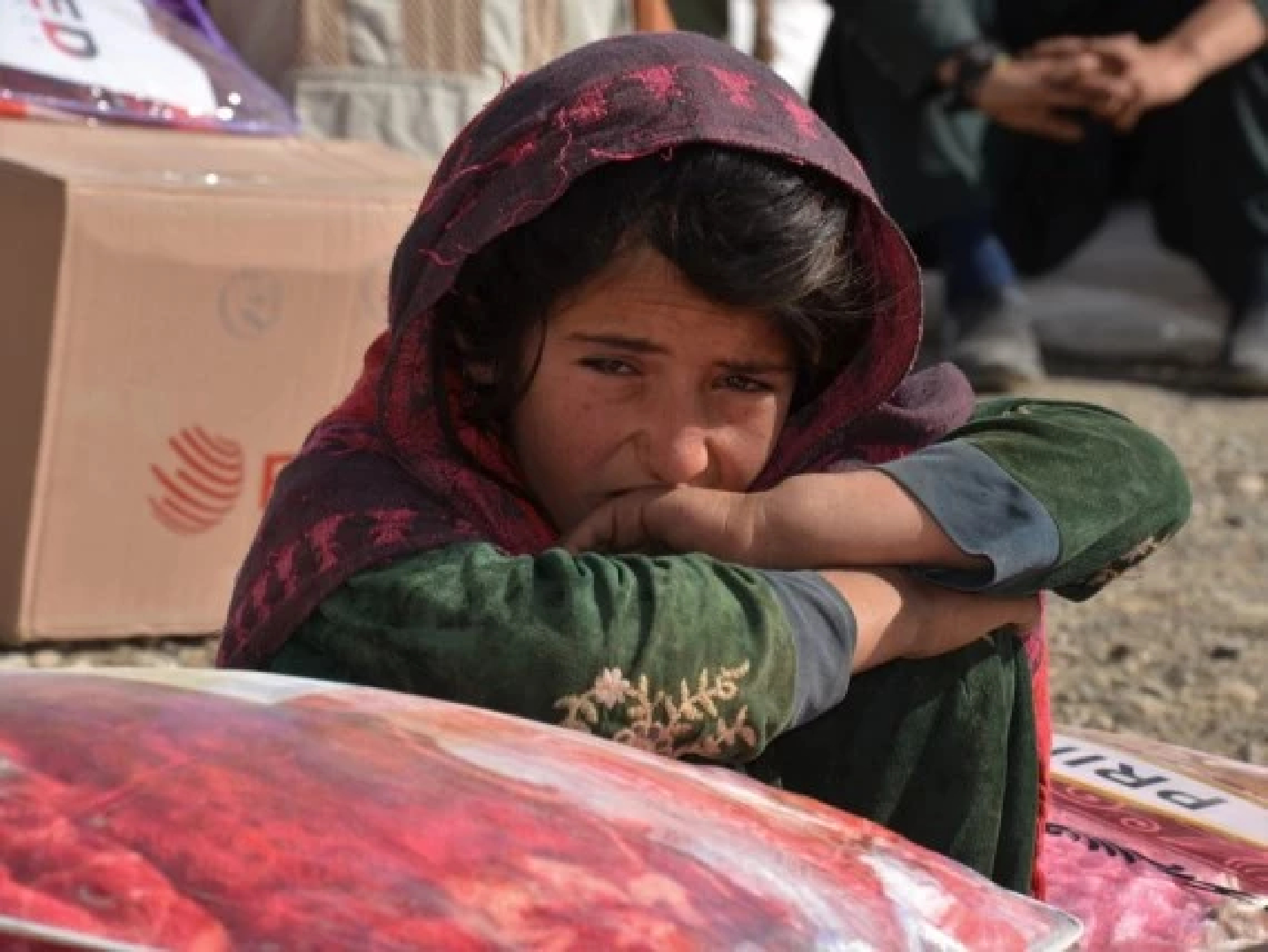
The majority of Afghans are facing acute food insecurity and are unable to feed themselves. The World Food Program (WFP) and other UN agencies estimate that more than 22 million of Afghanistan’s 36 million people will go hungry to some degree this winter. Many will be unable to cope with genuine emergencies of hunger.
“Afghanistan is facing an avalanche of hunger and destitution the likes of which I have never seen in my twenty plus years with the World Food Program,” said WFP country director Mary-Ellen McGroarty recently. The prices of basic goods including flour, cooking oil and sugar have almost doubled.
“Unfortunately, we no longer have enough money to buy anything. Everyone is suffocating in a stifling economic crisis caused by the change of regime,” said Salim Khan, a Kabul resident.
An Afghan man waits to get hired at a market in Kabul, Afghanistan, Oct. 28, 2021. (Photo by Saifurahman Safi/Xinhua)
NOTHING IN THE BANK
Following the U.S. military pullout in Afghanistan and the Taliban’s takeover of the country in mid-August, Washington reportedly has frozen more than 9 billion U.S. dollars of Afghanistan’s central bank, leaving the new rulers in the doldrums.
In mid-August, a bank run led to a ceiling on withdrawals of 200 U.S. dollars per week. Basic services are collapsing. Food and other life-saving aid is about to run out. Afghan Acting Foreign Minister Amir Khan Muttaqi has demanded Washington unblock his country’s assets.
“America has paralyzed the banking system. That is why the banks can’t give money to their customers. Restrictions on banking have led food-price rises over the past couple of months,” said Sayed Mohammed, who failed to withdraw cash from his account that week.
“The high price of U.S. dollars has affected our business. People have no cash to buy things, the price of flour, rice and cooking oil is much higher now than a month ago. A couple of days one piece of bread cost 10 afghani. Today I had to sell for 20. As the price of flour goes up following an increase in the exchange rate, we have no choice but to increase the price of our bread.”
Omicron is spreading rapidly nationwide and has been found in at least 48 U.S. states as of Monday.
Omicron has taken the hold to become the dominant COVID-19 variant in the United States as more people are traveling and gathering for holidays.
The infection cases caused by Omicron amounted to 73.2 percent of all infection cases in the week ending Dec. 18, from 12.6 percent of all infection cases in the week ending Dec. 11, according to the latest model estimates of the U.S. Centers for Disease Control and Prevention (CDC) on Monday.
At the beginning of this month, Omicron only accounted for 0.7 percent of all infection cases.
Omicron is spreading rapidly nationwide and has been found in at least 48 U.S. states as of Monday, since the first case in the country was detected in California on Dec. 1.
Travelers wait at the check-in counters of Southwest Airlines at Dallas Love Field Airport in Dallas, Texas, the United States, Dec. 17, 2021. Gary Kelly, CEO of Southwest Airlines, has tested positive for COVID-19, the company headquartered in Dallas of the U.S. state of Texas said on Friday, two days after he attended a hearing in U.S. Senate along with some other U.S. airline chiefs and lawmakers. (Photo by Guangming Li/Xinhua)
The unprecedented infectiousness of the Omicron variant and its possible ability to evade the immune system have stoked concerns across the nation. However, experts said preliminary data suggest the new variant appear to cause less severe symptoms and hospitalizations.
COVID-19 cases, deaths and hospitalizations continued to surge in the United States, leading to cancellation of large events including sports games and live concerts. Some colleges have shifted back to online classes and exams for the rest of the semester to make students go back home earlier.
The country is averaging about 130,000 new cases daily, a 10 percent increase from the previous week, the latest CDC data showed.
The seven-day average of daily deaths is about 1,180, up 8.2 percent from the prior week, according to the CDC weekly data.
Currently, the United States is witnessing about 7,800 new hospital admissions each day, a 4.4-percent increase from the previous week, the data showed.
A person performs a self-swab test for COVID-19 in the Brooklyn borough of New York, the United States, Dec. 17, 2021. (Photo by Michael Nagle/Xinhua)
New York State set COVID-19 infection record for a third straight day on Sunday with more than 22,000 positive cases. People waited in long lines at testing sites.
However, the surge in new infection cases did not deter people from flying for holidays. The U.S. Transportation Security Administration (TSA) has screened over two million passengers for a fourth day in a row.
The TSA expected up to 21 million Americans will fly between Dec. 23 and Jan. 3.
Experts warned the United States is moving toward Christmas in dramatically different shape than it was before Thanksgiving.
A month ago, case counts had been rising, to about 90,000 per day on average. For much of December cases appeared to hover around 120,000 but recently leaped above 130,000 per day, Johns Hopkins University data showed.
Health experts urged the public to test before heading for travels and large gatherings, getting vaccinated and boosted, masking in public indoor settings, and practicing physical distancing to slow transmissions.







 A woman is seen in front of Christmas decorations at a shopping mall in Bangkok, Thailand, on Dec. 20, 2021. (Xinhua/Rachen Sageamsak)
 A girl is seen in front of the Christmas decorations at a shopping mall in Bangkok, Thailand, on Dec. 20, 2021. (Xinhua/Rachen Sageamsak)
 A woman is seen in front of Christmas decorations at a shopping mall in Bangkok, Thailand, on Dec. 20, 2021. (Xinhua/Rachen Sageamsak)
 A woman walks through the Christmas decorations at a shopping mall in Bangkok, Thailand, on Dec. 20, 2021. (Xinhua/Rachen Sageamsak)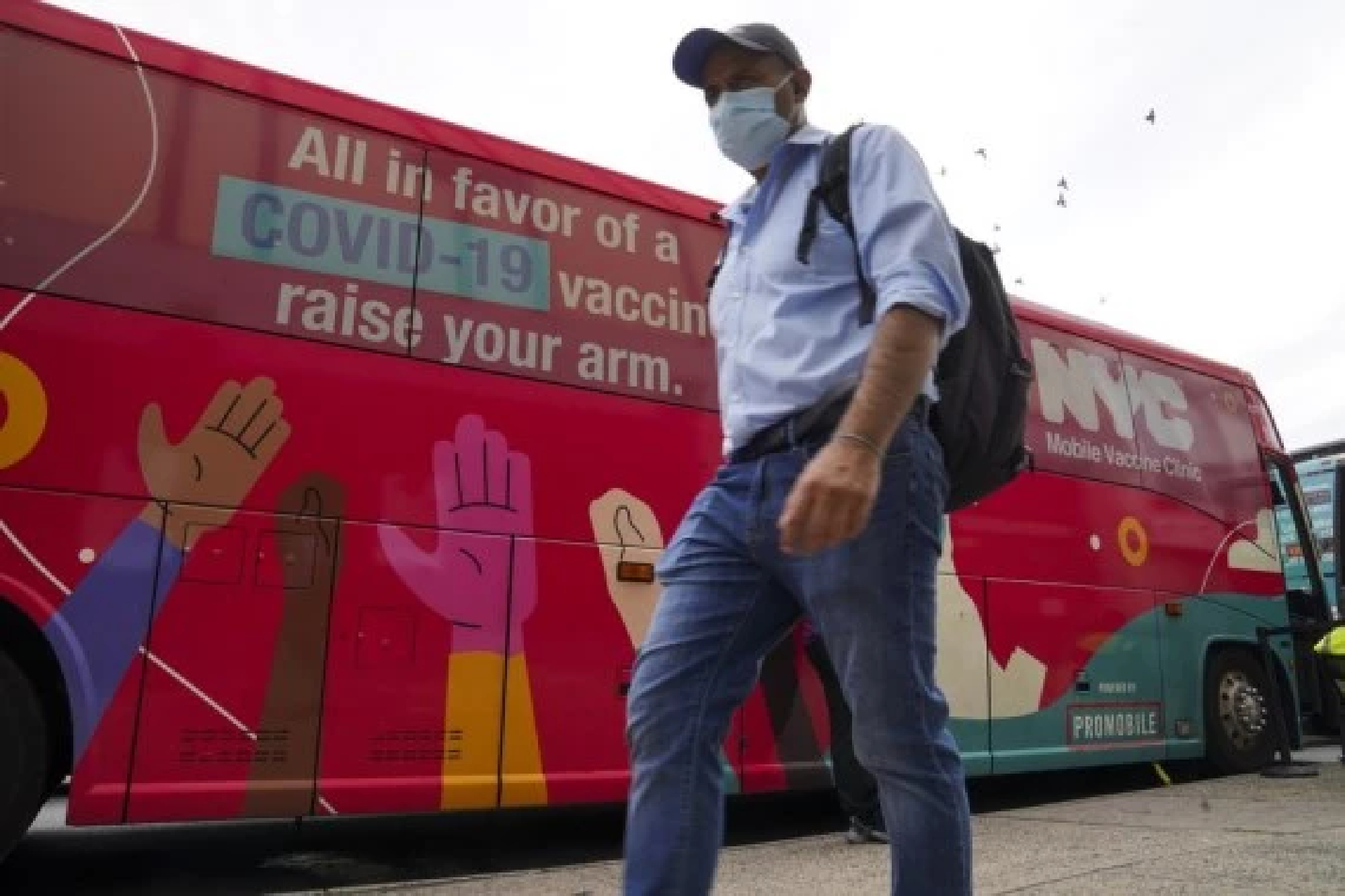
 A Taliban member walks past damaged vehicles at the Kabul airport in Kabul, capital of Afghanistan, Sept. 20, 2021. The Kabul airport was damaged with its many facilities destroyed during the withdrawal of the last U.S.-led forces and U.S.-led evacuation flights in late August. (Photo by Saifurahman Safi/Xinhua)
 Photo taken on Oct. 23, 2021 shows a displaced persons camp in Mazar-i-Sharif, capital of Balkh province, Afghanistan. (Photo by Kawa Basharat/Xinhua)
 An Afghan man waits to get hired at a market in Kabul, Afghanistan, Oct. 28, 2021. (Photo by Saifurahman Safi/Xinhua)
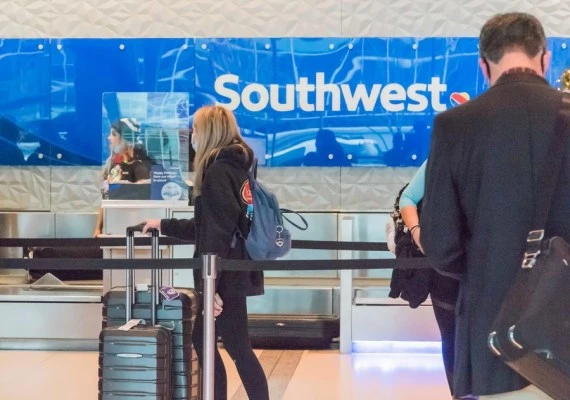 Travelers wait at the check-in counters of Southwest Airlines at Dallas Love Field Airport in Dallas, Texas, the United States, Dec. 17, 2021. Gary Kelly, CEO of Southwest Airlines, has tested positive for COVID-19, the company headquartered in Dallas of the U.S. state of Texas said on Friday, two days after he attended a hearing in U.S. Senate along with some other U.S. airline chiefs and lawmakers. (Photo by Guangming Li/Xinhua)
 A person performs a self-swab test for COVID-19 in the Brooklyn borough of New York, the United States, Dec. 17, 2021. (Photo by Michael Nagle/Xinhua)
