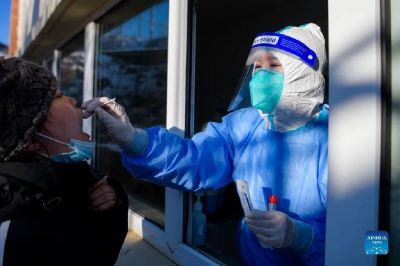
BEIJING — A health official has emphasized the importance of committing to the current strategy in China to clear COVID-19 infections in a timely manner as highly contagious variants of the virus continue to rage around the world.
Since mid-October, the latest COVID-19 resurgence in China has spread to more than 20 provincial-level regions. Most regions managed to contain the outbreak within an incubation period of about 14 days, said Ma Xiaowei, head of the National Health Commission, in a recent interview with Xinhua.
“We have been thinking, especially during the process of coping with the spread of the Delta variant, how to control the epidemic with more effective measures, lower costs and at faster speeds to minimize its impact on economic and social development and people’s lives,” Ma said.
He added that the government has also noticed that the epidemic response in some countries, which have not implemented strict epidemic control measures, has not been satisfactory. There have been relapses that severely impacted people’s lives, health and the economy and society overall.
As a result, China has been focusing on improving epidemic prevention and early detection, he noted.
Aiming to contain an outbreak within an incubation period, relevant agencies have been making full use of the “golden period,” the first 24 hours of a discovered case, to find those who were in close contact, isolate potentially infected individuals before the virus spreads, or before the infected person can transmit the virus, Ma said. He hailed the strategy as an essential procedure for China’s fight against COVID-19.
The tracing results showed that all the local clustered cases in the latest resurgence in China originated from overseas, Ma said.
Given the loopholes exposed, the government has asked local authorities to strictly remain on guard against imported cases, enhance epidemic response capacity in key areas, step up the management of activities in industries like tourism, and continue to promote mass vaccination and the research and development of related testing reagents.
“China’s practices in fighting COVID-19 show that effectively containing the virus, in a country with a population of more than 1.4 billion, is its biggest contribution to the international anti-pandemic fight,” Ma said.
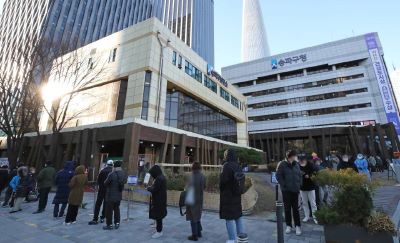
South Korea on Wednesday counted more than 5,000 new cases of COVID-19 for the first time since the outbreak started. The previous record was set Nov. 24 with 4,115 cases. The Korea Disease Control and Prevention Agencys situation report showed 5,122 cases and 34 deaths were found in the last 24 hours.
The new high comes a month after the country eased most pandemic restrictions upon entering first of its three-stage return to normal scheme on Nov. 1.
The number of patients with severe or critical COVID-19 also reached a record high of 723. In and around Seoul nearly 90 percent of critical care beds were occupied by Tuesday afternoon, according to the update from the Ministry of Health and Welfare, which oversees COVID-19 bed assignments.
As beds become scarce, the government announced Monday that home isolation will be the default care arrangement for all COVID-19 patients.
So far 452,350 people here have been infected with COVID-19, of whom 3,658 have died, according to official statistics.
Learning from the insufficient response to the coronavirus crisis by the cabinets of former prime ministers Shinzo Abe and Yoshihide Suga, the government is aiming to make a preemptive strike against the new omicron variant by banning all nonresident foreigners from entering Japan in principle.
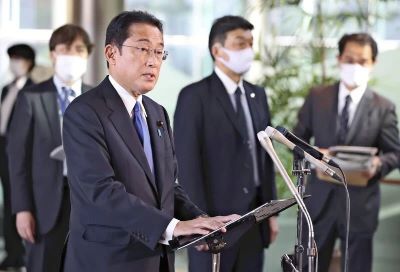
Although there are many unclear factors about the new variant, including how infectious it is, Prime Minister Fumio Kishida based his decision on the assumption of a worst-case scenario.
When Kishida announced at the Prime Minister’s Office on Monday that border control measures would be tightened, he said emphatically, “I’m ready to accept all criticism that I’m being too cautious about the omicron variant, even though its impact is still unknown.”
Following announcements on Thursday that the new variant has been detected in South Africa and other countries, the Japanese government said Friday that returning Japanese nationals and reentering foreign residents who had recently been to any of six countries, including South Africa, would have to quarantine at government-designated facilities for 10 days.
According to an aide to the prime minister, the action was taken before the World Health Organization designated the omicron variant as a variant of concern because stock prices were falling around the world, and the government decided a swift response was necessary.
Cases of coronavirus infection have been falling in Japan, so the government allowed — at the request of domestic business circles — some new arrivals of nonresident foreigners from Nov. 8, including short-term business visitors and foreign students and technical interns. Certain conditions had to be fulfilled, including the submission of plans describing their activities in Japan.
Kishida decided quickly to stop the entry of nonresident foreigners this time because he wanted to draw on the lessons learned from the Abe and Suga cabinets.
In the early days of the virus’ spread, the United States denied entry to foreign nationals who had traveled anywhere in China. In contrast, the then Abe Cabinet barred only foreign travelers who had been to China’s Hubei Province, a response that was criticized as inadequate.
In spite of the spread of coronavirus variants, the then Suga Cabinet did not quickly suspend the flow of businesspeople between Japan and 11 other countries and regions, sending its approval rating down.
Masahisa Sato, director of the Foreign Affairs Division of the ruling Liberal Democratic Party, has criticized the Suga Cabinet’s response to the pandemic. Sato told reporters on Monday, “Compared with earlier measures against the pandemic, the Kishida Cabinet has been promptly responding to the coronavirus.”
The prime minister intends to deal flexibly with coronavirus control measures from now on. However, if the government continues to take strict measures in this regard, that could hinder economic activities that had been headed toward normalization.
Although the government has drawn up a strategy to ease border control measures toward the year-end and New Year season, and to facilitate preparations for accepting foreign tourists, it will likely be forced to review that plan.
■ Go To resumption eyed
Kishida met Monday with Kenichiro Yamanishi, chairman of the Japan Travel and Tourism Association, and others. At that gathering, the prime minister said he wanted to consider resuming the government-initiated Go To Travel campaign to help the domestic tourist industry, which has been suspended since the end of last year, during the year-end and New year period.
Kishida indicated he would make a cautious decision based on the spread of the omicron variant.
Regarding quarantine measures for people going to and coming from abroad, Kishida said, “I want to consider what strict border control measures should be taken, working from a careful evaluation of the new variant.”
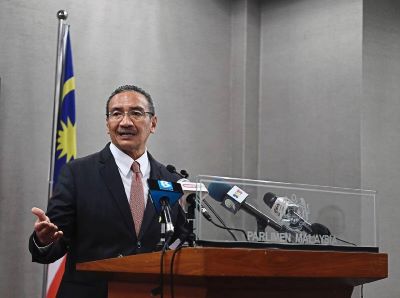
KUALA LUMPUR: Malaysia is putting on hold its transition to the endemic phase of Covid-19 due to uncertainties brought about by the recent emergence of the Omicron variant, says Defence Minister Datuk Seri Hishammuddin Hussein.
He said this was decided by the Cabinet after the Covid-19 Quartet Ministers meeting yesterday.
“Most importantly, for now, the Quartet meeting decided to temporarily put our efforts to transition to the endemic stage on pause until we know more about the Omicron variant,” he told a press conference in Parliament yesterday.
He said the Omicron variant was discussed at length at the meeting, adding that another wave of Covid-19 cases could put Malaysia’s pandemic progress at risk.
“If we don’t monitor Omicron closely, then how are we supposed to deal with it?” he added.
Hishammuddin also said Putrajaya was monitoring countries where Omicron had spread and that the situation was fluid at the moment.
However, he gave his assurance that there would be no changes to the country’s international pilot tourism programme in Langkawi.
Hishammuddin said domestic travel was addressed together with Transport Minister Datuk Seri Dr Wee Ka Siong and representatives from the Tourism, Arts and Culture Ministry.
“They are considering other tourism bubble locations after Langkawi,” he added.
Regarding the Langkawi bubble as a success, he said there would be an announcement soon by the Tourism, Arts and Culture Ministry along with Prime Minister Datuk Seri Ismail Sabri Yaakob.
Hishammuddin also said the travel ban on seven African countries – South Africa, Botswana, Lesotho, Mozambique, Namibia, Zimbabwe and Eswatini – was not based on geopolitics but on health.
“I believe these African countries understand that it isn’t about diplomacy or geopolitics, but health.
“We don’t want to jeopardise our progress for the last one and a half years with irresponsible decisions,” he said.
Hishammuddin added that after the launch of the Vaccinated Travel Lane (VTL) between Malaysia and Singapore, the government was considering opening up other similar routes to Kuching, Penang and Langkawi.
“I have asked all sides to continue discussions with the countries concerned, but we will not make a decision until we know the real impact of Omicron.
“I hope everyone in our country will remain vigilant and doesn’t take risks,” Hishammuddin added.
On Ismail Sabri’s first official visit as premier to Singapore on Monday, he said he hoped to create more travel channels like the green travel bubble with Australia, New Zealand, Japan, South Korea, Thailand and certain provinces in China where Covid-19 was under control.
For now, the VTL initiative, which allows quarantine-free travel, is only for fully vaccinated individuals who are citizens, permanent residents and long-term pass holders of Malaysia and Singapore.
Hishammuddin also said the government would impose stricter border controls on countries where the new variant was prevalent.
SINGAPORE – The relaxation of social measures will be paused, and travellers entering Singapore will face stricter rules from 11.59pm on Thursday (Dec 2), as the country acts to buy time amid the spread of the new Omicron Covid-19 variant around the world.
The moves come as Singapore works to assess the implications of the new Covid-19 variant that has already spread to at least 16 countries, after the variant was identified in South Africa last week.
The Ministry of Health (MOH) said on Tuesday that no cases of Omicron have been detected locally, adding that the pre-emptive measures will help to reduce the risk of importing the virus.
Commenting on the moves during a press conference held by the multi-ministry task force on Covid-19, Health Minister Ong Ye Kung said: “This is a prudent thing to do for now when we are faced with a major uncertainty.”
Singapore has just emerged from a stabilisation phase and has been relaxing social measures, such as allowing more people to dine together in restaurants and hawker centres and also increasing group limits for gatherings.
While the current measures will not be dialed back for now, the task force said it will hold off on further relaxation.
MOH also said that anyone in Singapore confirmed or suspected to be infected with the Omicron variant will not be allowed to undergo home recovery, and will have to be taken to the National Centre for Infectious Diseases for isolation.
Close contacts of these cases will undergo a 10-day quarantine at designated facilities, and take polymerase chain reaction (PCR) tests at the start and end of their quarantine.
“We are introducing a set of measures that serves as a strong yet reasonable response to the new variant to protect our local community,” said MOH. “We will continue to monitor and evaluate data on the Omicron variant as it emerges and adjust our border and domestic measures accordingly.”
MOH also announced the tightening of border measures that will take effect from 11.59pm on Thursday.
First, air travellers arriving on the quarantine-free Vaccinated Travel Lane (VTL) scheme will have to undergo supervised, self-administered antigen rapid tests (ARTs) at a Quick Test Centre on day three and day seven of their arrival.
Currently, these travellers are allowed to enter without having to undergo quarantine under the scheme, and have to take a Covid-19 swab test only prior to their departure for Singapore, and after arrival here.
Second, all air travellers entering, transferring or transiting through Singapore must have tested negative in a pre-departure test within two days of leaving for Singapore.
Currently, travellers from Hong Kong, Macau, China and Taiwan are not required to take pre-departure tests, and need to take a Covid-19 swab test only upon arrival. These places are in Category I of MOH’s risk classification framework, which means they have the lowest risk of Covid-19 infections.
Third, all travellers must take a Covid-19 polymerase chain reaction (PCR) test on arrival. This will affect non-VTL travellers entering Singapore who are not from Hong Kong, Macau, China and Taiwan. Currently, they do not have to take a test upon arrival, but have to be tested before the end of their stay-home notice period.
Travellers must self-isolate at home, in a hotel room or at a designated stay-home notice facility – depending on where they came from – while waiting for their on-arrival test result.
MOH said that it will also conduct a one-time PCR testing exercise for surveillance purposes, for travellers who arrived in Singapore between Nov 12 and 27, and had been to the countries or regions affected by Omicron in the 14 days before their arrival.
These travellers have been notified of their scheduled test time and venue, said MOH, asking for the understanding and cooperation of affected travellers for the testing exercise.
Meanwhile, after the upcoming VTLs with Thailand, Cambodia, Fiji, Maldives, Sri Lanka and Turkey start around the middle of December, no more VTLs will be launched.
MOH had also earlier announced that three other planned VTLs for Qatar, Saudi Arabia and the United Arab Emirates have been postponed indefinitely. This is done as a precautionary measure to reduce the risks of importing the Omicron variant to Singapore, said MOH.
News of the Omicron variant, which is assessed by the World Health Organisation to have a “very high” global risk, has in the past two days triggered Japan and Israel to announce plans to close their borders to foreigners.
The variant has many more mutations than the Delta variant and has sparked concerns among health authorities worldwide, though the impact of the mutations is still being investigated by scientists.
MOH said Singapore needs to buy time to learn more about the variant as some of the mutations found in the variant’s genome, previously found in other variants, were known to enhance transmissibility and reduce vaccine efficacy.
“In terms of vaccine efficacy, early data suggests that current vaccines should remain effective against severe disease and death. However, more studies are needed to understand the actual impact of this variant on our existing countermeasures, including vaccines and treatments,” MOH added.
MOH noted that there has been a rapid increase in the proportion of cases that are infected by the Omicron variant in South Africa. It also said more countries have reported cases over the last few days, suggesting that the variant has spread globally.
It added that Singapore’s community would have some protection against this new variant.
At the press conference on Tuesday, Trade and Industry Minister Gan Kim Yong, who co-chairs the Covid-19 multi-ministry task force, said: “Very little is known yet about this variant with regard to its transmissibility and severity, and how effective vaccines are against it.
“We are closely monitoring the situation, and scientists around the world are working on it.”
These tightened restrictions will be in place for four weeks. They will be reviewed or extended if necessary, said MOH.
MOH also said that from Thursday, it will go back to rostering weekly routine PCR tests for airport and other front-line workers at the borders who may come into contact with travellers from places affected by the Omicron variant. This replaces the current routine ART tests that such workers have to go through.
MOH said a PCR-based test will help detect not just Covid-19, but the Omicron variant, in a timely manner.
Aircrew serving flights from countries with Omicron cases will be subjected to an on-arrival PCR test, and post-arrival PCR tests on day three and day seven following each flight.
All other airport and border front-line workers will continue with routine ARTs. Those who have recovered from a Covid-19 infection will also have to undergo regular Covid-19 testing as well.
MOH said that as an added precaution, those with a positive ART result will have to go for a confirmatory PCR test.
HONG KONG – Hong Kong scientists have succeeded in isolating Omicron variant from clinical specimens which will help in developing vaccines against the new COVID-19 strain, The Hong Kong University said on Tuesday.
In a statement, HKU said its Department of Microbiology researchers were the first known research team in Asia that has succeeded in isolating the Omicron variant.
The isolated variant will enable the development and production of vaccines against Omicron, which has been designated as a “variant of concern” by the World Health Organization.
The research team is now working on expanding the virus for use in assessing its transmissibility, immune evasion capability, and pathogenicity in animal models. The team is also exploring opportunities for urgent development and production of inactivated whole virus vaccines, the HKU said.
The HKU team succeeded in isolating the variant late Monday, four days after the first two Omicron cases were confirmed in Hong Kong on 25 November, and five days after the variant was first reported to the World Health Organization from South Africa on 24 November.
WHO designated the variant, initially identified as B.1.1.529 a variant of concern, and named it Omicron on Nov 26.
Cases of the Omicron variant have since been reported from around the world in countries and regions such as Australia, Belgium, Botswana, Britain, Denmark, Germany, Hong Kong, Israel, Italy, the Netherlands, France, and Canada, as governments impose urgent travel bans and heightened surveillance.
“We recognize the serious threats of the variant and jumped into action immediately,“ Chair of Infectious Diseases Professor Kwok-yung Yuen, who led the research effort, was quoted as saying in the statement.
“Isolating the variant is the first step in the urgent study of the variant.”
Other leaders of the research team include Professor Honglin Chen and Dr. Kelvin To, Head of the Department of Microbiology.
“We are glad that our department is contributing to the global effort to fight the pandemic amid the emergence of the Omicron COVID-19 variant,” To said.
On Nov 28, a 37-year-old man returning from Nigeria via Ethiopia and Thailand became the city’s third patient infected with the Omicron variant after he tested positive during his quarantine at a local hotel.
Virus isolation and incubation were conducted at the biosafety level 3 laboratory (P3 laboratory) of the University of Hong Kong, following standard operating procedures. HKU currently has the only P3 laboratory in Hong Kong.
The microbiology team is now working to further isolate and purify the variant virus for inactivated whole virus vaccine production.
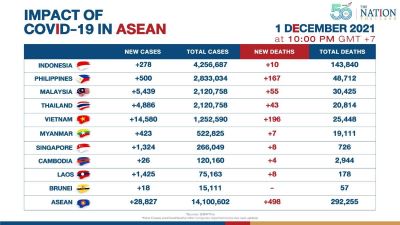
The number of Covid-19 cases crossed 14.1 million across Southeast Asia, with 28,827 new cases reported on Wednesday (December 1), higher than Tuesday’s tally at 26,937. New deaths are at 498, decreasing from Tuesday’s number of 370. Total Covid-19 deaths in Asean are now at 292,255.
Vietnam’s National Institute of Hygiene and Epidemiology announced that the third phase trial of a Vietnamese Covid-19 vaccine “Covivac” has been suspended over difficulties in finding volunteers. The trial needed around 4,000 volunteers, but with no district having thousands of unvaccinated residents who qualify for clinical trials, finding the needed volunteers has proved difficult.
Meanwhile, Malaysia has temporarily banned the entry of travellers from countries that have reported the Omicron Covid-19 variant or are considered high-risk. Malaysia will also delay plans to set up Vaccinated Travel Lanes (VTL) with the affected countries, and reimpose quarantine requirements for Malaysian citizens and long-term residents returning from those nations, regardless of their vaccination status.
Less than a week after the new omicron variant of the coronavirus was reported to the World Health Organization, global leaders on Wednesday agreed to start negotiations to create an international agreement to prevent and deal with future pandemics – which some have dubbed a “pandemic treaty.”
The special session of the World Health Assembly, only the second ever held by the WHO’s governing body, pledged by consensus to begin work on an agreement, amid a round of applause, after three days of talks.
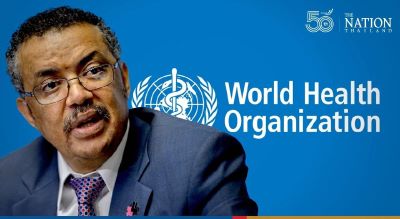
“I welcome the decision you have adopted today, to establish an intergovernmental negotiating body to draft and negotiate a WHO convention, agreement or other international instrument on pandemic prevention, preparedness and response,” WHO Director General Tedros Adhanom Ghebreyesus said.
The commitment by countries to negotiate a “global accord” would “help to keep future generations safer from the impacts of pandemics,” he added.
However, agreeing to agree is a slow process, and any final treaty could take years and is likely to come well after the end of the coronavirus pandemic. “Of course, there is still a long road ahead,” Tedros acknowledged.
The news was generally welcomed by advocates for a global system more equipped to address the inequity and supply constraints that have emerged during the pandemic. “The timetable for action is realistic,” said James Love, director of the nonprofit watchdog group Knowledge Ecology International. “All of that said, the ambitions are high in terms of both the legal status and the subjects to be addressed, and it will be difficult to keep this up.”
But some experts said the proposal wasn’t ambitious enough. “I think we need a ‘public health treaty’ that is broader and covers all big diseases,” said Srividhya Ragavan, an expert in global health at Texas A&M University’s School of Law, adding that a “pandemic treaty” would be a “self-center approach” for the West.
“Fact is, too many people are lost from lack of access to available medications for diseases such as cancer,” Ragavan said.
The assembly’s decision will see the creation of an “intergovernmental negotiating body” to draft and negotiate the final convention, which would then need to be adopted by member states. The negotiating body will hold its first meeting by March 1, the WHO said. It will also hold public hearings to inform its deliberations and deliver progress reports.
As the session got underway Monday, the WHO warned of a “very high” global risk from the omicron variant. Tedros said it “demonstrates just why the world needs a new accord on pandemics,” and called for a “legally binding” agreement.
The decision adopted by the assembly on Wednesday, however, stops short of calling for a legally binding instrument, but aims to beef up global action plans toward preventing, preparing and responding to future pandemics. The recent arrival of a fast-spreading variant from an under-vaccinated country should bolster those who favor a treaty. For over a year, experts have warned that “no one is safe until everyone is safe.”
Supporters say a “pandemic treaty” or other international instrument could address some of the failures of the coronavirus pandemic. For example, it could put in place a global structure to identify threats earlier; better share data or genome sequences of emerging viruses; and ensure the equitable distribution of vaccines or other drugs.
But some nations, including major players China and Russia, have reacted with apprehension to any calls for a treaty. The pandemic has shown that often, when threatened, governments don’t tend to think globally, choosing instead to look out for themselves.
The United States has said it is largely in favor of such an accord.
“The United States is committed to working with member states to take forward the recent recommendations of the working group on preparedness and response. That includes developing a new WHO convention, agreement or other international instrument and making agreements to improve the effectiveness and agility of international health regulations,” White House press secretary Jen Psaki said Tuesday. “Of course, that’s in all of our interests.”
Britain and European Union states have also championed an agreement. Outgoing German Chancellor Angela Merkel called this week for “reliable financing” for the WHO and greater contributions from its member states – while alluding to the E.U. position of supporting a binding agreement.
“Viruses know no national borders,” Merkel said by video message. “That’s precisely why we should lay down measures to be taken to improve prevention, early detection and response in internationally binding fashion.”
DAKAR, Senegal — Nigeria has confirmed its first cases of the omicron coronavirus variant after three travelers arriving from South Africa tested positive, the Nigeria Center for Disease Control said Wednesday.
The travelers all landed in Africa’s most populous country over the past week, Ifedayo Adetifa, the NCDC’s director general, said in a statement. The infections are “widespread globally,” he added.
“Therefore,” he said, “it is a matter of when, not if, we will identify more cases.”
Confusion abounded, however, after the nation’s top health agency initially reported that omicron was found in samples collected in October, which would have made Nigeria the first place the variant was known to have existed. The wording of the statement was subsequently changed.
A medical official who works with the NCDC, speaking on the condition of anonymity because of the sensitivity of the subject, told The Washington Post that the information was a mistake, saying the passengers were actually swabbed in the last days of November.
Nigeria was the first West African nation to record an omicron infection since scientists in southern Africa flagged the variant last week. Ghana also confirmed cases Wednesday, saying the variant was detected in people entering the country from Nigeria and South Africa.
Thus far, around two dozen countries have reported detecting omicron.
The United States and other nations responded to the announcements with travel bans targeting southern African countries – against the advice of the World Health Organization – igniting outrage across the continent. Scientists condemned the move, saying it could discourage nations from sharing lifesaving information as the pandemic evolves.
“Instead of vilifying South Africans, we should be praising them,” said Christian Happi, director of the African Center of Excellence for Genomics of Infectious Diseases in Ede, Nigeria.
Dutch officials reported Tuesday that omicron was in the Netherlands and other European countries before South Africa rang the alarm, though the first samples of the new variant were in people who came from southern Africa. Scientists caution that little is known about the variant, which has been linked to a surge of cases in South Africa. Information on how speedily it spreads or if it resists vaccines isn’t expected to be available for weeks.
“It’s very possible that it has been here way before,” said Happi, who runs a sequencing laboratory in southwestern Nigeria, “but it’s too early to say.”
South Korea announced its first five cases of omicron on Wednesday – all with links to Nigeria – and earlier this week, Canada reported that its first two cases of the variant were detected in people returning from a trip to the West African nation. A case in Hong Kong was also in someone who had traveled to Nigeria.
Since the pandemic began two years ago, most African nations have recorded comparatively fewer coronavirus cases. Health officials caution that testing remains limited in many areas and that travelers tend to make up a significant share of those being swabbed.
The continent also has the slowest regional vaccination rate. Less than 2 percent of Nigerians are fully vaccinated. The nation of 213 million has counted about 214,000 coronavirus cases and 2,977 deaths.
The European Union recommended Wednesday that member states review essential travel restrictions on a daily basis and coordinate their actions in response to the omicron variant.
The daily assessment is needed to determine whether the temporary restrictions need to be applied to additional countries, as well as what kind of testing or quarantine of essential travelers is required, according to an EU official. The aim is to adapt the measures, or lift them as more evidence becomes available, the official added.
A group representing the airline industry said it hoped the European Commission’s approach would counter the divergent response it’s seen so far from European governments when it comes to travel rules and the omicron variant.
“We welcome the commission’s continued efforts to coordinate member states’ strategy to limit the spread of the omicron variant,” Agnes Leroux, the policy director for Airlines for Europe (A4E) said in a statement. “With further scientific updates expected in the coming days on the severity of infection linked to omicron, reviewing measures on a daily basis is a good approach in order to amend travel restrictions as needed.”
EU nations have implemented restrictions on travel to southern Africa and some have added in additional testing requirements.
The bloc’s executive arm also called on national governments to rapidly deploy booster shots and quickly implement proposals to limit the validity of the EU’s digital vaccine certificate to nine months without a booster.
European Commission President Ursula von der Leyen said Wednesday that she believed EU nations should also discuss whether mandatory vaccinations are needed to help fight the ongoing spike in Covid-19 cases, as well as the new omicron variant.
“I think it is understandable and appropriate to lead this discussion now — how we can encourage and potentially think about mandatory vaccination within the European Union,” she said during a news conference. “This needs discussion. This needs a common approach. But it is a discussion that I think has to be led.”
The EU decided against holding an emergency virtual leaders’ summit, according to an EU official. Instead, health ministers will meet Tuesday to discuss the Covid situation and EU leaders will address it at their next scheduled summit on Dec. 16, the official added.
European governments should put in place targeted and proportionate precautions and restrictions to limit the spread of the virus, the EU said.
The bloc also pledged to accelerate its efforts to share vaccines worldwide in order to achieve the global vaccination target of 70% in 2022, which was agreed at the Group of 20 summit in October.
As of Tuesday, 11 EU members have recorded at least 59 cases of the omicron variant, including in the Netherlands, Sweden and Spain. EU agencies are currently collecting and analyzing data on the variant. The European Medicines Agency said on Tuesday that the approval of vaccines to address the new variant, if needed, could take three to four months.