ECB keeps stimulus settings in place to await economic rebound
The European Central Bank left its crisis-fighting tools unchanged, asserting that its current stimulus settings are powerful enough to put the economy on track for a rebound later this year.
The Governing Council kept the size of its pandemic-bond buying program at 1.85 trillion euros ($2.2 trillion), confirming that purchases will run at an elevated pace in the current quarter.
Officials also held the deposit rate at -0.5% and said they will continue to provide long-term loans to banks to keep credit flowing to businesses and households.
At its last meeting in March, the ECB pledged to significantly step up asset purchases to contain the fallout of a government-bond sell-off that was driven by a speedy U.S. economic recovery from the coronavirus pandemic. Such market moves pose a risk to euro-zone activity, as sovereign yields are used as a reference for the cost of bank loans to companies and households.
Officials have spent an average net 17 billion euros per week under their pandemic program since then, up from about 14 billion per week in the first weeks of 2021. The aim is to keep borrowing costs for companies, households and governments across the euro area favorable during the pandemic. Net purchases are currently set to last until the end of March 2022.
More than 60% of economists in a recent Bloomberg survey expect the ECB to stick to that timeline, despite regular pledges from officials that they will extend and expand the program if needed.
The European Union has significantly stepped up its pace of vaccinations in recent weeks, smoothing the path for an economic rebound that’s expected to gain strength in the second half of the year. For now, wide parts of the bloc are still facing severe restrictions to fight an elevated level of infections.
Lagarde may also be asked about the ECB’s plans for winding down emergency stimulus, as well as the institution’s ongoing strategy review. The latter, which includes a likely revision of the central bank’s “below, but close to 2%” inflation target, is set to produce results by September.
The timetable risks clouding the outlook for investors trying to judge the ECB’s intentions for policy during the recovery phase. That raises the specter of volatile borrowing costs — a so-called taper tantrum — that could undermine the region’s bounce back from the virus lockdowns.
Belgian central-bank chief Pierre Wunsch said this month he hopes the ECB can begin exit talks “within a reasonable time frame,” and his Dutch colleague Klaas Knot suggested tapering purchases from the third quarter.
France’s Francois Villeroy de Galhau has proposed a transition from pandemic bond-buying to an “adapted” version of an older purchase program, while maintaining negative interest rates, long-term bank loans and explicit guidance on its inflation tolerance.
Published : April 23, 2021
By : Syndication Washington Post, Bloomberg · Alexander Weber
Nearly 2m vaccinated in S. Korea as inoculation rollout speeds up
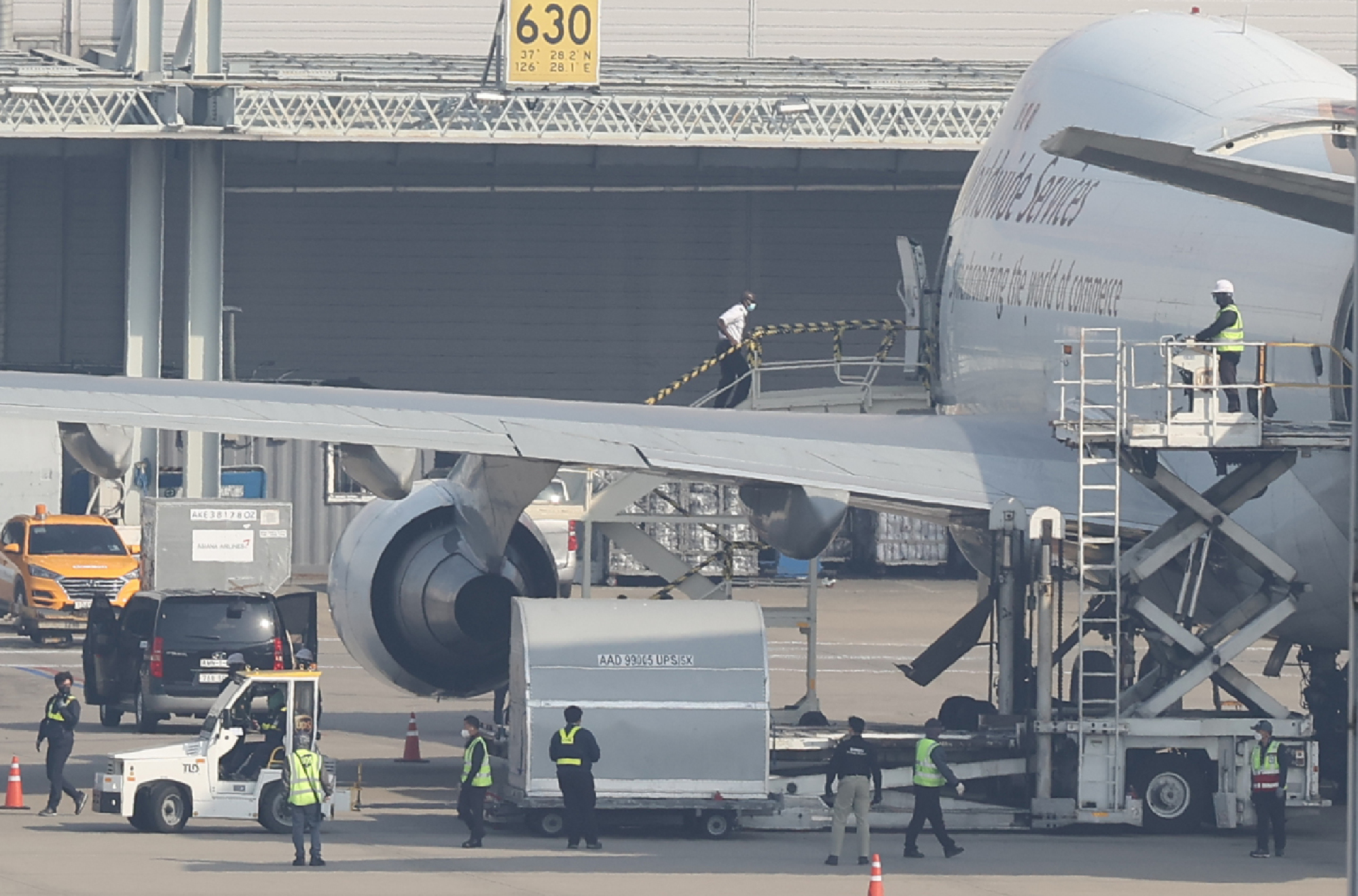
South Korea has inoculated nearly 2 million people so far as the country ramps up its COVID-19 immunization drive by providing more shots and securing more doses.
An accumulated 1,903,767 people were administered with their first shots as of Wednesday as part of the nationwide campaign that kicked off on Feb. 26, accounting for 3.66 percent of the country’s 52 million population, the Korea Disease Control and Prevention Agency (KDCA) said.
An accumulated 60,622 people have been fully vaccinated after receiving two doses.
Of the total, 1,141,154 people, mostly health care workers and patients at long-term care facilities, received the first jabs of the two-dose vaccine regimen developed by British-Swedish pharmaceutical giant AstraZeneca and Oxford University, the KDCA said.
Meanwhile, 762,613 people received the first shot of US pharmaceutical giant Pfizer Inc.’s two-dose vaccine regimen, the KDCA said. The group mostly includes doctors, nurses and other health professionals treating COVID-19 patients, and elders aged 75 and older.
The KDCA noted that an average of 130,000 people have been inoculated every day recently, up highly from an average of 18,000 people during the first week of the vaccination campaign.
The authorities aim to complete inoculating 3 million people by the end of this month and 12 million people by end-June, with a goal of achieving herd immunity by November.
The accelerating inoculations come amid woes over a potential delay in vaccine supplies, which could take the nationwide inoculation scheme off schedule.
The KDCA earlier announced that it has secured enough coronavirus vaccines to inoculate 79 million people, yet the arrival schedule has only been finalized for AstraZeneca and Pfizer vaccines.
Adding to woes, safety controversies over the AstraZeneca vaccine have complicated the inoculation campaign as the products make up about 60 percent of the country’s rollout for the first half of the year.
The country was again taken aback by the United States’ decision to pause the use of Johnson & Johnson’s Janssen products over blood clotting.
The authorities have planned to receive 6 million doses of the Johnson & Johnson vaccine. The bottles are scheduled to be provided in the third quarter, yet the shipment schedule is not finalized.
To stave off a potential supply shortage, the Seoul government said earlier it is seeking a “vaccine swap” agreement with the United States, but such a deal may not happen at least for the time being after a US State Department spokesman said his country is currently focused on vaccinating Americans.
On Wednesday, President Moon Jae-in also ordered his aides to review the possibility of introducing Russia’s Sputnik V COVID-19 vaccine.
On Thursday, the country reported 735 more COVID-19 cases, the highest since Jan. 7 when the country reported 869 cases, the KDCA said. The total caseload was increased to 116,661. (Yonhap)
Hanoi set to attract up to $40 billion in FDI over next five years
HÀ NỘI — Hà Nội has compiled a plan to attract between US$30 and 40 billion of foreign direct investment (FDI) during the 2021-25 period, Deputy Director of the municipal Department of Planning and Investment Vũ Duy Tuấn said.
According to Tuấn, during the 2016-20 period, the city attracted 3,113 foreign-funded projects worth $26.5 billion, 4.2 times higher than the capital recorded in the previous five-year period.
Of 33 key projects, 11 have been completed in line with plans, 15 are under construction, and 12 are about to begin.
As of March 31, there were 2,907 projects worth VNĐ1.65 quadrillion ($71.52 billion) not funded by the local budget. Of these, 967 have been completed and 182 had stopped or had their licences revoked.
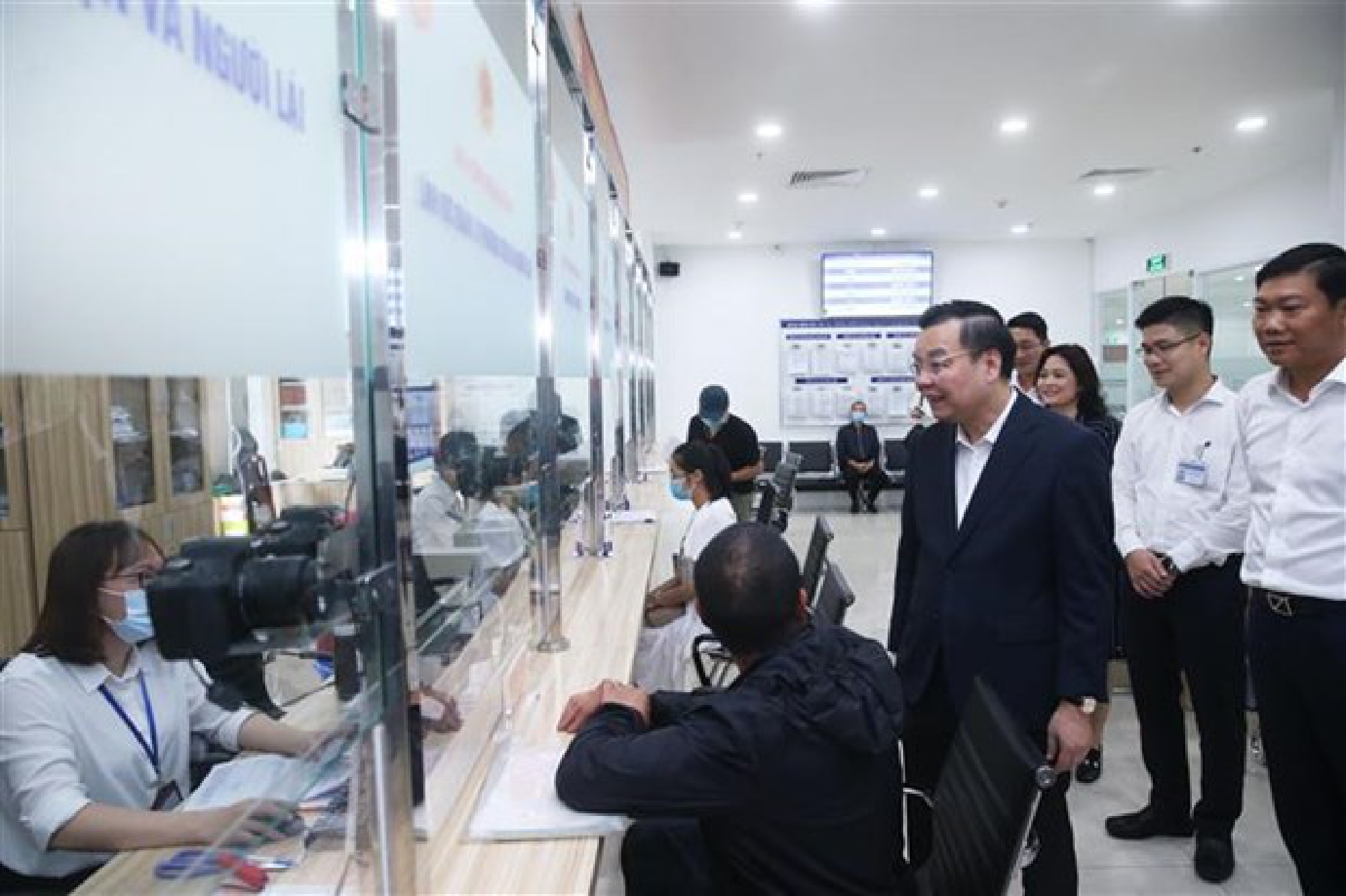
At a working session with local authorities on Monday, Chairman of the municipal People’s Committee Chu Ngọc Anh asked the department to follow the city’s goals and working programmes to actively issue related plans or make proposals to local authorities.
He ordered the department to quickly review the local list of key projects and suggest new ones for the 2021-25 period, adding that the proposed projects should boost the city’s socio-economic growth and also prove feasible.
Anh also requested smooth and close coordination between the department and relevant sectors and localities. — VNS
Indonesia searching for missing submarine with 53 on board
The Indonesian Navy is searching for a submarine with 53 people on board that went missing on Wednesday and is seeking help from neighboring Australia and Singapore in the hunt, the Indonesia’s military commander told Reuters.
The German-made submarine, KRI Nanggala-402, was conducting a torpedo drill in waters north of the island of Bali but failed to relay the results as expected, a navy spokesman said.
“We are still searching in the waters of Bali, 96 kilometers from Bali, [for] 53 people,” military chief Hadi Tjahjanto told Reuters in a text message.
The military chief confirmed that assistance in the search for the submarine and missing crew members had been sought from Australia and Singapore. He said that contact with the vessel was lost at 4:30 a.m. on Wednesday.
Representatives of the defense departments of Australia and Singapore did not immediately respond to requests for comment.
The 1,395-ton KRI Nanggala-402 was built in Germany in 1978, according to the Indonesian cabinet secretariat’s website, and underwent a two-year refit in South Korea that was completed in 2012.
Indonesia in the past operated a fleet of 12 submarines purchased from the Soviet Union to patrol the waters of its sprawling archipelago.
But now it has a fleet of only five including two German-built Type 209 submarines and three newer South Korean vessels.
Indonesia has been seeking to upgrade its defense capabilities but some of its equipment still in service is old and there have been deadly accidents involving in particular ageing military transport planes in recent years.
Event expected to work as cooperation platform for nations to tackle challenges
President Xi Jinping’s participation in the upcoming climate summit could make the widely watched meeting more constructive and fruitful as the world is gearing up for more ambitious climate goals.
At the invitation of United States President Joe Biden, Xi will take part in the Leaders Summit on Climate and deliver an important speech to the summit via video link from Beijing on Thursday, Foreign Ministry spokeswoman Hua Chunying announced on Wednesday.
The two-day meeting, which could see the participation of about 40 world leaders, has drawn global attention, as it’s the first summit hosted by the US on climate issues since the departure from office of former US president Donald Trump, who was noted for his disregard of the global climate crisis.
It also comes as the world is in dire need of a concerted effort to implement the Paris Agreement and take the issue a step forward.
At a news briefing on Wednesday, Foreign Ministry spokesman Wang Wenbin said that China hopes that the summit can be an “exchange and cooperation platform for global cooperation to tackle climate challenges, facilitate the effective and comprehensive implementation of the Paris Agreement, and promote concerted efforts in global climate and environmental governance”.
In the past week, China has engaged in a series of high-level climate talks. On Friday, the top leaders of China, France and Germany agreed during a virtual summit to jointly work toward an equitable and reasonable climate governance mechanism.
At the meeting, Xi reiterated China’s commitments to peak its carbon emissions before 2030 and attain carbon neutrality before 2060. He also said China had decided to adopt the Kigali Amendment to the Montreal Protocol and is stepping up curbs on emissions of non-CO2 greenhouse gases.
China and the US issued a joint statement on Sunday on coping with climate change after Xie Zhenhua, China’s special envoy for climate change affairs, and US Special Presidential Envoy for Climate John Kerry met in Shanghai.
In his written address to a forum on carbon neutrality on Tuesday in Beijing, Xie said, “The joint statement issued after the China-US climate dialogue fully demonstrates that we can work together toward a sustainable future only via pragmatic cooperation and with joint efforts to seek for answers and paths.”
Sino-US cooperation vital
The joint statement said the two countries will beef up their respective climate action while joining hands in efforts to bring the goals included in the landmark Paris Agreement into reality.
The Paris Agreement, adopted in 2015, aims to keep the global temperature increase this century below 2 C from preindustrial levels and to pursue efforts to limit the temperature increase even further to 1.5 C.
Richie Merzian, a former Australian government negotiator to the United Nations Framework Convention on Climate Change, said he expected to see a positive outcome from possible talks between China and the US during the summit.
“It’s only because China and the US came together in 2015 that we had a Paris Agreement,” Merzian, who is also director of the Climate and Energy Program at the Australia Institute, said in an interview with Xinhua News Agency. “That is how important both those countries are to global efforts.”
China and the United States have been widely praised for laying the foundations of international support for the Paris Agreement. Following Xi’s visit to the US in June 2013, then US president Barack Obama visited China in November 2014.
On Nov 12, 2014, the two presidents made public the China-US Joint Announcement on Climate Change, which said they “resolved to work closely together over the next year to address major impediments to reaching a successful global climate agreement in Paris”.
Merzian said it was in the interests of China and the US to address climate change, as both of them suffered consequences such as increased frequency and severity of extreme weather events.
The scholar also noted that countries could benefit from the new economy to be created in climate change mitigation efforts. “Those are the green technologies that China has been doing so well, manufacturing and shipping out to the world and also implementing domestically,” he said.
“So really, everyone benefits when China and the US can work together,” he said.
Lin Jiaqiao, co-founder and co-director of the Beijing-based Rock Environment and Energy Institute, said he saw electric vehicles and renewable energy as two sectors offering potential for cooperation between China and the US.
The two countries have listed these two sectors as strategies to decarbonize their economies, as well as to increase employment opportunities and stimulate economic growth. However, they still need to hammer out a substantive cooperation framework for the sectors based on the consensus outlined in their joint climate statement, Lin said.
More targets envisioned
Experts have also expressed high expectations about major economies unveiling more ambitious climate targets before or at the virtual summit.
According to a statement by the US government, by the time of the summit, the US will announce an ambitious 2030 emissions target as its new Nationally Determined Contribution for post-2020 climate action under the Paris Agreement.
Quoting unnamed sources, The Associated Press said in a report on Tuesday that Biden will pledge to cut US greenhouse gas emissions by at least half by 2030, which is nearly double the nation’s previous commitment.
“While China announced an updated nationally determined contribution last December, the ball is now in the US court,” said Zhang Jianyu, founder and chief representative of the Environmental Defense Fund’s China program.
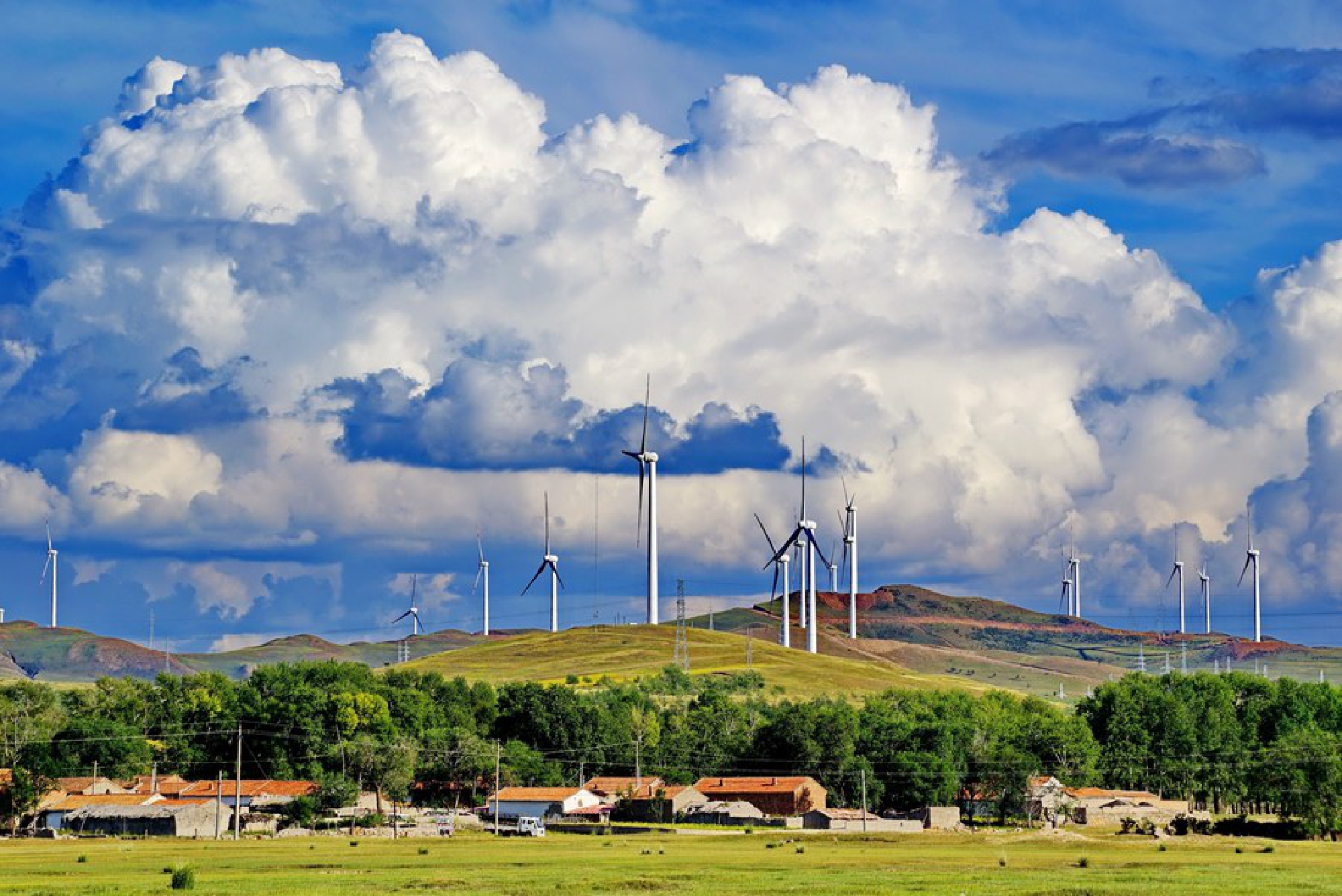
China announced late last year that it will lower its carbon dioxide emissions per unit of GDP by over 65 percent from the 2005 level and increase the share of non-fossil fuels in primary energy consumption to around 25 percent by 2030. The country will also increase the share of non-fossil fuels in primary energy consumption to around 25 percent.
The European Union also reached a tentative climate deal on Wednesday that is intended to make the bloc climate neutral by 2050.
“Our political commitment to becoming the first climate neutral continent by 2050 is now also a legal commitment. The climate law sets the EU on a green path for a generation,” European Commission President Ursula von der Leyen said early on Wednesday.
Under the provisional deal reached after officials negotiated through the night, the EU will also commit itself to an intermediate target of cutting greenhouse gas emissions by at least 55 percent by 2030 compared with 1990 levels, AP reported.
On Tuesday, the UK government pledged to cut carbon emissions by more than three-quarters of their 1990 levels by 2035 while closing a loophole that had left much of the pollution from airplanes and ships out of the tally, according to AP.
On Wednesday, Russian President Vladimir Putin said that Russia’s emissions of greenhouse gases should be less than the EU’s over the next 30 years, but that it would be difficult to reach that goal given Russia’s size, Reuters reported.
Pakistan urges orderly pullout of troops from Afghanistan
Apr 19. 2021
By Dawn/ANN
DUBAI: Foreign Minister Shah Mahmood Qureshi on the second day of his three-day visit to the United Arab Emirates has announced that facilitation by Pakistan led to the US-Taliban peace agreement and subsequent intra-Afghan negotiations and expressed the hope that Afghan parties would work constructively to achieve shared objective of a peaceful, stable and prosperous Afghanistan.
Highlighting the country’s abiding interest in a peaceful, secure and stable Afghanistan, Mr Qureshi underscored Islamabad’s consistent policy to enhance bilateral relations and facilitate Afghan peace process. “We support reconciliation in Afghanistan and progress in peace process, in Istanbul. I look forward to meeting FM Atmar at Istanbul Conf & to hosting him in Pakistan soon after to discuss a way forward post conf,” the foreign minister tweeted after receiving a call from his Afghan counterpart Hanif Atmar on Sunday.
While discussing the evolving peace process and the US announcement to withdraw forces, Mr Qureshi reiterated Pakistan’s consistent policy to support an orderly and responsible withdrawal of foreign troops. With a view to continuing close consultations, he also invited Mr Atmar to visit Pakistan after the meeting in Istanbul.
Separately, FM Qureshi also clarified that he had no meeting scheduled with his Indian counterpart Subrahmanyam Jaishankar but expressed willingness to talk with Delhi if it took back its steps of August 5, saying that Pakistan could not ignore the Kashmir issue.
Islamabad had suspended trade and diplomatic ties with India in 2019 after New Delhi had revoked the special status of the part of disputed Jammu and Kashmir. However, in February, Islamabad and New Delhi pledged to end all firing along the disputed frontier, after months of violence between the nuclear-armed neighbours. Further signs of rapprochement include an exchange of letters between Indian Prime Minister Narendra Modi and his Pakistani counterpart Imran Khan, who have both called for peaceful relations.
The foreign ministers of India and Pakistan made crossover visits to the UAE this weekend, days after UAE’s envoy to Washington Yousef Al Otaiba confirmed that the Gulf nation had played a role “in bringing the Kashmir escalation down and created a ceasefire, hopefully”.
During his Dubai visit, Foreign Minister Qureshi said both India and Pakistan would have to think about their bilateral ties. Pakistan never evaded talks and wanted to live in peace with all its neighbours including India, he stressed. However, he made it clear that he had no meeting scheduled with his Indian counterpart during his visit.
While addressing a press conference after visiting Pakistan pavilion at World Expo-2020 to be held later this year, Mr Qureshi termed the mega event a landmark achievement for the UAE and the entire region. “Pakistan is delighted to be a part of Expo2020 with the Pakistan Pavilion, in collaboration with the UAE government,” he said. The presence of Pakistan pavilion in the international expo was a manifestation of decades-old friendship between Pakistan and the UAE, he said, adding that it also showed the enhanced economic ties and bilateral cooperation between the two brotherly countries in different sectors.He expressed the hope that his visit to the UAE would strengthen their bilateral ties and announced that he would have a meeting with his counterpart in the UAE on Monday.
Talking about the World Expo, Mr Qureshi said professionals among the Pakistani community in the UAE would be invited to the event to highlight the role they had played in the progress and prosperity of the Gulf country. He said he would also invite Prime Minister Imran Khan to the mega event as both countries were making an effort to organise different programmes to celebrate the 50 years of brotherly diplomatic relations.
On the occasion, he also announced that the government wanted to give the right to vote to the overseas Pakistanis and it was consulting with other political parties on the issue. “We want that overseas Pakistanis should have a role in Pakistani politics and policy making.”
Pakistan ambassador to the UAE Afzal Mahmood, consul general in Dubai Ahmad Amjad Ali and other senior officials of the embassy also accompanied the foreign minister during the tour, according to a press release.
Earlier, the foreign minister on his arrival in Dubai late Saturday night had tweeted: “Good to be in the #UAE.”
Myanmar shadow government wants seat at ASEAN crisis talks
Apr 19. 2021
By The Jakarta Post
Myanmar’s shadow government on Sunday urged Southeast Asian leaders to give it a seat at the table during crisis talks this week, and not to recognise the military regime that seized power in a February coup.
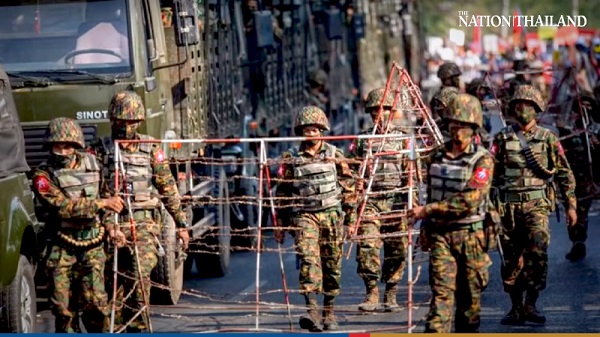
The army has moved to quell mass protests against its rule, killing at least 730 people according to a local monitoring group.
Min Aung Hlaing’s invitation to the meeting of the 10-country Association of Southeast Asian Nations has drawn scorn from activists who have urged foreign leaders not to formally recognise the junta.
Moe Zaw Oo, deputy minister of foreign affairs for the parallel “national unity government” — formed Friday by ousted lawmakers mostly from Suu Kyi’s party, as well as ethnic-minority politicians — said ASEAN had not reached out to them.
“If ASEAN wants to help solve the Myanmar situation, they are not going to achieve anything without consulting and negotiating with the NUG, which is supported by the people and has full legitimacy,” he told Voice of America’s Burmese service. “It’s important that this military council is not recognised. This needs to be handled carefully.”
Meanwhile, the junta continued targeting the media on Sunday, arresting Japanese freelance reporter Yuki Kitazumi. He was arrested at his home in Yangon on Sunday evening, his assistant said in a message.
In February, he was beaten up and briefly detained during a crackdown on protesters but was later released.
The number of reporters arrested so far has totalled more than 65 and at least 34 remain in custody, according to monitoring group Reporting ASEAN.
Authorities announced Sunday night on state-run television 20 more celebrities and 20 more doctors would be added to their arrest warrant list of 420 prominent people.
Earlier unrest continued across the country on Sunday, with protesters rallying in Mandalay, Meiktila, Magway and Myingyan, showing support for the national unity government.
At Palaw in the country’s south, demonstrators brandished banners that read: “Military dictators should not be allowed to rule. The dictatorship will be uprooted.
Support the national unity government.” Young demonstrators also staged motorbike rallies while carrying flags in Hpakant and Sagaing.
The previous night, there were violent clashes in the central gem-producing city of Mogok when security forces cracked down on protesters.
According to an AFP-verified video filmed by a resident, soldiers crouched on a street as their commanding officer shouted that he wanted “deaths”. The Assistance Association for Political Prisoners (AAPP) verified two deaths at Mogok.
Much of Myanmar remains under a curfew imposed shortly after the coup, running from 8 pm to 4 am every night.
Late Saturday, a young man was shot and killed in Kyaukme town in northern Shan state while riding his motorbike during the curfew.
Thai billionaire plans $7.2 billion buyout of Singtel associate Intouch
Apr 19. 2021
By The Strait Times/ANN
BANGKOK (BLOOMBERG) – Gulf Energy Development, Thailand’s biggest power producer by market value, has offered to acquire Intouch Holdings, a Singtel associate company that control’s the nation’s largest mobile phone operator, for as much as 169 billion baht (S$7.2 billion).
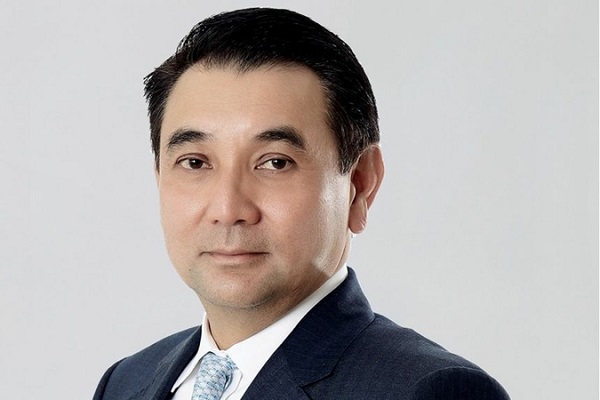
Gulf Energy, controlled by billionaire Sarath Ratanavadi, offered to buy 2.6 billion shares, or about 81 per cent of Intouch, that it does not already own at 65 baht each, it said in an exchange filing on Monday (April 19). The offer price is 11 per cent higher than Intouch’s close on Friday.
Gulf Energy will also tender for 100 per cent of Advanced Info Service, Thailand’s biggest mobile phone company controlled by Intouch, at 122.86 baht each. The Advanced Info offering will be subject to Gulf Energy securing at least 50 per cent of Intouch, it said.
Singtel is the biggest shareholder of Intouch after acquiring a 21 per cent stakefrom Singapore investment company Temasek in 2016.Former Thai prime minister Thaksin Shinawatra sold Intouch – then named Shin Corp – to Temasek in 2006, sparking public criticism. Singtel also owns about 23 per cent of Advanced Info, according to stock exchange data.
In a statement to the Singapore Exchange at 1.02pm on Monday, Singtel said it views its stakes in Intouch and Advanced Info as strategic investments, and believes “in the long-term outlook of the businesses”.
Singtel said it is reviewing its strategic options to ensure that Intouch and Advanced Info shareholders “get full benefit of the intrinsic value of the businesses”. It added that it will make the relevant disclosures, if any, at the appropriate time. It also advised its shareholders to refrain from taking any action in respect of their shares in Singtel that may be prejudicial to their interests, and to exercise caution when dealing in the shares.
Singtel shares were trading up six cents or 2.35 per cent at $2.61 as at 1.13pm on Monday, after the announcement of the Intouch buyout offer.
While Intouch shares jumped as much as 9 per cent in Bangkok on Monday, the most since March 2020, Gulf Energy tumbled as much as 5.3 per cent to its lowest level since November.
Mr Sarath, 56, Thailand’s second-richest person, has expanded his 10-year-old energy company into deep-sea port, tollway and telecommunication businesses, as well as power projects in Vietnam, Oman and Germany. Acquisitions of Intouch and Advanced Info will generate long-term benefits from their potential and cash flows as Thailand’s leading telecommunication companies, Gulf Energy said.
Gulf Energy’s proposed acquisition of Intouch would be Thailand’s third-biggest buyout deal, according to data compiled by Bloomberg.
Mr Sarath, Gulf Energy’s chief executive officer, has a net worth of about US$9 billion (S$12 billion), most of which comes from his and his family’s stake in the power producer, according to Bloomberg Billionaires Index.
Gulf Energy will finance the acquisitions of Intouch and Advanced Info from cash flow and bank loans, according to the company’s statement. Shareholders will hold a meeting on June 25 to consider the proposed acquisitions.
Most of Intouch’s earnings come from Advanced Info and Thaicom, the nation’s biggest satellite operator. It also invests in technology start-ups. Gulf Energy will request that the regulator waive a mandatory requirement to make a tender offer for Thaicom, it said.
Thaicom shares surged as much as 9.2 per cent, while Advanced Info fell 0.6 per cent as at 10.41am in Bangkok.
Japan teams up with U.S., Australia to build submarine cables
Apr 19. 2021
By The Japan News/ANN
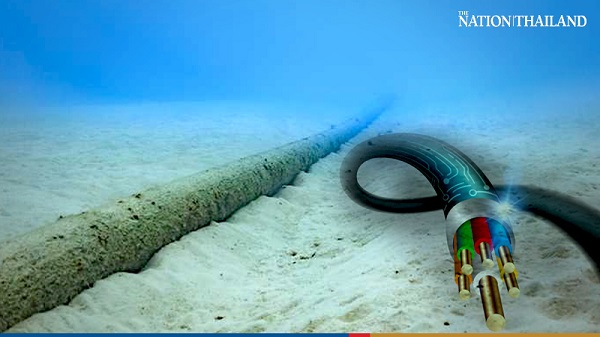
Japan, the United States and Australia will work together to set up submarine communications cables in the Pacific region, The Yomiuri Shimbun has learned, in a bid to counter China’s rapid expansion in field of undersea cables.
Government-affiliated financial institutions in each country will provide financial support for new contracts for marine cable projects. The three countries will deepen their cooperative relationship to secure this infrastructure, which is vital for security, and counter the risk of data exfiltration and disconnection.
Submarine cables are thin optical fibers covered with resin and laid in the deep sea around the world. They are said to account for 99% of the world’s international communications, and the demand for cable installation is growing in parallel with the increase in global transmissions.
According to NEC Corp., the latest cable system can transmit data equivalent to about 10,000 DVDs per second.
In March, officials from government, industry and academics in the three countries discussed the issue at an informal meeting and agreed to strengthen cooperation over submarine cables. They also agreed to strengthen information sharing on China’s activities and cooperate in financing submarine cable projects in strategically important areas, according to sources.
This trilateral cooperation is being spurred by China, which is rapidly rising in the field of submarine cables. Companies in Japan, the United States and Europe hold a combined share of about 90% of the world’s submarine cables, and China’s Huahai Communication Technology Co. — which used to be a subsidiary of Huawei Technologies Co. — now has the fourth-largest global share.
China has been actively laying undersea cables in various places under its Belt and Road Initiative to create a huge economic bloc. In particular, China is seeking to expand its influence over the Pacific island nations, some of which have friendly relations with Taiwan, by providing economic cooperation and assistance. Some Chinese companies are pursuing orders for undersea cables from those islands.
The Chinese companies are believed to use low costs as leverage to win contracts, apparently with the government’s financial backing, according to some observers. Japan, the United States and Australia will support the establishment of reliable telecom networks with the support of government-affiliated financial institutions in each country.
In January, NEC won a contract to build a submarine cable connecting Palau, one of the Pacific island nations, with the United States and other countries. The project will be financed by the Japan Bank for International Cooperation as well as government agencies in the United States and Australia.
The three countries plan to increase the number of such projects by strengthening their cooperation.
Kerry backs Japan’s wastewater release, rules out US intervention
Apr 19. 2021
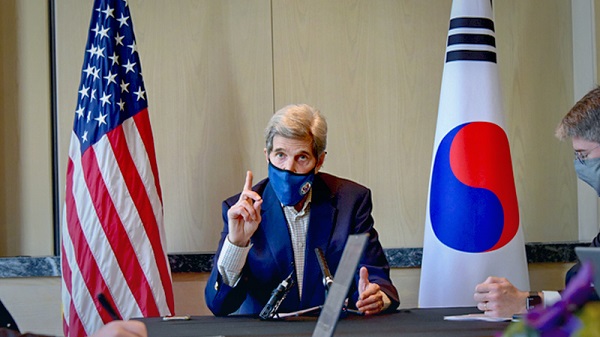
US special presidential envoy for climate John Kerry speaks during a roundtable meeting in Seoul on Sunday. (US Embassy in South Korea)
By The Korea Herald/ANN
US climate envoy John Kerry reaffirmed Washington’s backing for Japan’s recent decision to release radioactive water from the Fukushima nuclear plant into the sea, while ruling out the possibility of stepping into the related process, amid Seoul’s call for Washington’s cooperation in ensuring Tokyo’s transparency.
US climate envoy John Kerry reaffirmed Washington’s backing for Japan’s recent decision to release radioactive water from the Fukushima nuclear plant into the sea, while ruling out the possibility of stepping into the related process, amid Seoul’s call for Washington’s cooperation in ensuring Tokyo’s transparency.
“The US is confident that the government of Japan has had full consultation with IAEA, that IAEA has set up a rigorous process,” Kerry said at a media roundtable in Seoul on Sunday, referring to the International Atomic Energy Agency. “And I know that Japan has weighed all the options and the effects and they’ve been very transparent about the decision and the process. What is key is Japan’s continued coordination with IAEA as it monitors the process.”
The visiting US envoy underlined Washington’s confidence that “Japan has worked very closely with IAEA, and will continue to” do so, reaffirming the US’ support that Tokyo’s decision was made in accordance with globally accepted nuclear safety standards.
When asked whether Washington is willing to take a certain role in regards to the issue, such as persuading Japan to release related information to the international community, Kerry said Washington is not planning anything as of now.
“We don’t think it is appropriate for the US to jump in to the process that’s already underway and where there are very clear rules and expectations,” said Kerry.
“Will we be concerned to make sure that the procedure is followed? Sure. We take interest in that, but not anything in a formal way in process,” he noted.
Kerry’s remark came after his meeting with South Korean Foreign Minister Chung Eui-yong the previous day. During their talks, Chung conveyed Seoul’s serious concern over Japan’s decision to discharge radioactive water from the disaster-crippled Fukushima nuclear plant into the Pacific Ocean, and had asked for Washington’s interest and cooperation so that Tokyo would provide information in a more transparent and speedy manner to the international society, according to the ministry.
Last week Japan decided to dump more than 1 million tons of the treated wastewater it has collected since the Fukushima Daiichi nuclear plant was damaged by an earthquake and tsunami in 2011. Since the crisis, the contaminated water has been stored in thousands of tanks inside the plant, but the storage space is expected to run out in the summer of 2022.
The discharge will start in about two years, and it will take decades to completely release it, according to Tokyo.
The decision — which came after years of debate — has been met with fierce backlash from neighbors including South Korea and China, as well as from environmental activists and the local fishing industry.
Japan insists the water will be treated and diluted so radioactivity can be reduced to safe levels, but Seoul has condemned Tokyo, saying the water threatens the safety of the maritime environment of neighboring countries and the decision was unilaterally made without sufficient consultation with other countries.
Seoul is considering taking legal action against Tokyo at the international court to block the disposal.
Kerry arrived in South Korea on Saturday after a four-day visit to China where he held a meeting with his Chinese counterpart, Xie Zhenhua, and they agreed to cooperate to curb climate change with seriousness and urgency. Their meeting came just days before President Joe Biden is set to host a virtual summit of world leaders to discuss climate issues on Thursday and Friday.
On whether Chinese President Xi Jinping will attend the summit, Kerry said it’s up to China to make the decision.
“China has to make its own announcement about the decision of who participates and how. President Xi is invited, and we very much hope that he will take part,” he said.
During the Saturday meeting between Kerry and Chung, the two agreed to work together to take a leading role for international solidarity to achieve carbon neutrality by 2050.
To this end, Seoul has set its goal to cut emissions by more than 50 percent by 2030, based on 2010 levels, and limiting the temperature rise to 1.5 degrees Celsius.
“I think Korea has set an ambitious target and Korea is trying to do a lot, it’s not easy for any country,” said Kerry, adding Washington will continue to work with countries to raise ambition to achieve the goal and take additional steps.