Chinese firm offers 6 million vaccine doses to Bangladesh #SootinClaimon.Com

#SootinClaimon.Com : ขอบคุณแหล่งข้อมูล : หนังสือพิมพ์ The Nation.

https://www.nationthailand.com/ann/30404985

Chinese firm offers 6 million vaccine doses to Bangladesh

Apr 17. 2021

By Mohammad Al-Masum Molla
The Daily Star/ANN
Bangladesh explores alternatives as India’s Serum fails to deliver shipments on time

Chinese drugmaker Sinopharm has offered 60 lakh doses of Covid-19 vaccine to Bangladesh when there has been a surge in daily infection rates and deaths for days, said officials.

With Serum Institute of India failing to comply with the commitment to supply three crore vaccine shots in six installments, the Bangladesh government started to explore alternative sources for the jabs in a desperate attempt to continue the inoculation against the Covid-19, they said.

As part of that effort, the Chinese drugmaker Sinopharm through a medium has recently offered Bangladesh to give the 60 lakh doses, the officials added.

Contacted, Health Minister Zahid Maleque told The Daily Star that the Chinese Sinopharm, through its trustee sources, offered 60 lakh doses of its Covid-19 vaccine called BBIBP-CorV.

“We are giving importance to this issue. The negotiation is going on. We wanted to know about the price of the vaccine, when they will be able to deliver it and how many they will deliver,” the minister said.

He also said once Sinopharm gives those information, then they can move ahead about purchasing the Chinese vaccine.

 In early 2020, the Beijing Institute of Biological Products created an inactivated coronavirus vaccine called BBIBP-CorV. China, UAE, Bahrain, Egypt, Pakistan and some other countries across the world are using this vaccine. The World Health Organization is yet to give the approval of the vaccine. But the WHO advisory panel said Sinopharm has presented data on their Covid-19 vaccines indicating levels of efficacy.

On December 30 last year, Sinopharm announced that the vaccine has an efficacy of 79.34 percent, which led the Chinese government to approve it. However, the United Arab Emirates, which approved a Sinopharm vaccine earlier that month, said the vaccine was 86 percent effective, based on interim results of its phase-three trial.

Apart from this, the Bangladesh government is also communicating for Russian vaccine Sputnik V.

Asked about whether there is any update about Russian Sputnik V vaccine, the minister said, “Bangladesh ambassador in Russia is in talks with the Russian authorities. It is also in progress.”

Russia approved the Sputnik V vaccine for domestic use in August 2020.

The government has signed an agreement of purchasing three crore doses of vaccines from Serum Institute of India through its local agent Beximco. As per the agreement, the government was supposed to get 50 lakh doses of vaccines each month. But till yesterday, the government has only received 70 lakh doses of vaccines in two installments.

In the meantime, New Delhi reportedly imposed a temporary restriction on all major exports of the AstraZeneca vaccine made by SII to meet demands at home, reported global media.

Contacted, Nazmul Hassan Papon, managing director of Beximco, said Serum informed them that they were ready to export, but were yet to get government clearance.

Prof Abul Bashar Mohammad Khurshid Alam, director general of Directorate General of Health Services, said they were trying desperately to get the same Oxford-AstraZeneca vaccine from alternative sources to keep the ongoing vaccination campaign smooth.
[Vietnam] Millions of labourers still affected by COVID-19 in first quarter #SootinClaimon.Com

#SootinClaimon.Com : ขอบคุณแหล่งข้อมูล : หนังสือพิมพ์ The Nation.

https://www.nationthailand.com/ann/30404984

[Vietnam] Millions of labourers still affected by COVID-19 in first quarter

Apr 17. 2021

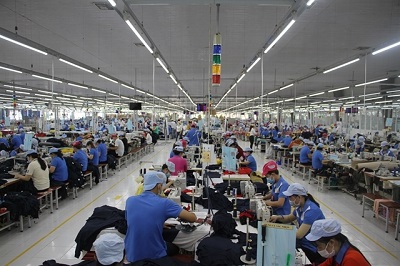
Workers at a textile factory at Trà Kha Industrial Park in Bạc Liêu City. — VNA/VNS Photo Chanh Đa

By Viet Nam News/ANN

HÀ NỘI — About 9.1 million people in Việt Nam had their employment status negatively impacted by the COVID-19 pandemic in the first quarter of this year, with workers in the service sector worst affected, according to the General Statistics Office of Việt Nam (GSO).

The office on Friday published a report on the impacts of COVID-19 on the Vietnamese labour market in January, February and March.

More than one in five workers in the service sector reported negative impacts from the pandemic in the first quarter, while those in the agriculture, forestry and fisheries sector were least affected, with just 7.5 per cent of workers reporting negative impacts.

In total, almost 9.1 million people lost their jobs, had to take time off work, or saw their working hours reduced.

They include 540,000 labourers who lost their jobs and 2.8 million who had their work suspended due to interrupted production, said Phạm Hoài Nam, director of GSO’s Population and Labour Statistics Department.

As many as 3.1 million said they faced reduced working hours or had to take time off work.

About 6.5 million of the 9.1 million saw their incomes reduced and labourers in urban areas suffered more than those in rural areas, with 15.6 per cent of workers in the cities affected compared to 10.4 per cent in rural areas.

Việt Nam had 51 million labourers from the age of 15 in the first quarter of 2021, down by 1.1 million compared to the previous quarter and 180,900 compared to the same period last year, according to the report.

Nam said it was common for the number of labourers to increase year on year as the population expands, but this year recorded an unusual trend in which the labour force in the first quarter downsized compared to the same periods in 2020 and 2019.

This was likely due to the pandemic’s resurgence before the Tet (Lunar New Year) holiday in late January, he said.

The proportion of young people not in employment, education or training was 16.3 per cent or nearly 2 million people in the first quarter of 2021, compared to 15.4 per cent in the first quarter of 2020.

The average monthly income of labourers reached VNĐ6.3 million (US$274) in the first quarter, a slight increase of VNĐ339,000 ($14.7) compared to the previous quarter.

Men have an average monthly income of VNĐ7.3 million, higher than women at VNĐ5.2million.

Labourers in urban areas have incomes 1.5 times higher than those in rural areas at VNĐ7.9 million compared to VNĐ5.4 million.

On the bright side, the report said the pandemic had changed working habits and encouraged more use of IT.

More than 78,000 people said they had started applying IT in their work in the first quarter.

“The statistics on the employment situation in the first quarter of 2021 reflect the difficulties and fluctuations of the economy and the labour market of Việt Nam in recent years.

“These difficulties represent a huge challenge to the Government’s efforts to achieve the dual goals of developing the economy and recovering from the pandemic,” Nam said.

In the context of unpredictable trends in the labour market, the GSO proposed issuing vaccine passports and preparing to resume tourism to offer more jobs and take advantage of the potential of Vietnamese labourers.

Nam said Việt Nam still had 3.5 million workers in the agricultural sector who make products for themselves and their families. About 93.5 per cent of these self-employed workers do not have any professional or technical qualifications.

Those people need to be given more incentives to attract them to the official labour market to improve their livelihoods and labour productivity for the society, Nam said. — VNS

Korea stops financing infra projects in Myanmar amid deepening crisis #SootinClaimon.Com

#SootinClaimon.Com : ขอบคุณแหล่งข้อมูล : หนังสือพิมพ์ The Nation.

https://www.nationthailand.com/ann/30404983

Korea stops financing infra projects in Myanmar amid deepening crisis

Apr 17. 2021

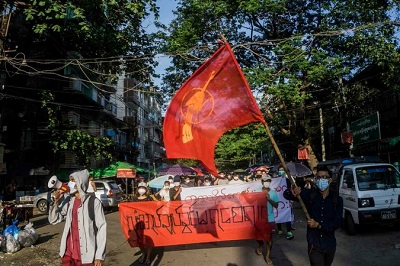
Citizens of Myanmar protest on the streets of Yangon on Feb. 11. (AFP-Yonhap)

By Choi Jae-hee
The Korea Herald/ANN

Responding to the prolonged crisis in Myanmar, the South Korean government has decided to halt financing for government infrastructure projects there until next year, a source told The Korea Herald on Friday.

“The Ministry of Economy and Finance has temporarily suspended financial support through the Korea Economic Development Cooperation Fund for any new infrastructure projects by the military government,” said an official at the Export-Import Bank of Korea, who requested anonymity.

“Discussions are also underway to decide whether to cease the ongoing EDCF operations for Myanmar that took place long before the military coup, but nothing has been confirmed yet,” he said.

The EDCF is a state-run fund launched in 1987 to help poor and less developed countries by extending low-interest loans. It is managed by the Finance Ministry.

“The government has put a temporary halt on consultations with Myanmar in terms of promoting new infrastructure projects financed by the EDCF,” said a Finance Ministry official, declining to comment further.

In September 2019, the government signed its current EDCF agreement with Myanmar and pledged to provide $1 billion worth of loans to the Southeast Asian country until 2022 to support its industrialization and economic growth through various infrastructure projects.

Under the deal the state-run policy lender — the Export-Import Bank of Korea, under the Finance Ministry, which operates the EDCF projects — decided to offer a 70 billion won ($62.79 million) loan to help Myanmar build a Korea-Myanmar Industrial Complex.

The industrial park, scheduled to be built in 2024, was to be jointly established by the government-owned Korea Land and Housing Corporation and Myanmar’s Construction Ministry in a town just north of Yangon, Myanmar’s largest city.

Myanmar’s military regime has not decided whether to continue with the infrastructure projects that started before the coup, casting clouds over the current projects supported by the Korean government, including the industrial park, the Finance Ministry official said.

Meanwhile, the military in Myanmar has escalated its lethal crackdown on protesters since it seized power Feb. 1, detaining elected leader Aung San Suu Kyi. The civilian death toll has reached 550 as of April, according to a Myanmar-based human rights group called the Assistance Association for Political Prisoners.

Xi: Nation to honor climate pledges #SootinClaimon.Com

#SootinClaimon.Com : ขอบคุณแหล่งข้อมูล : หนังสือพิมพ์ The Nation.

https://www.nationthailand.com/ann/30404982

Xi: Nation to honor climate pledges

Apr 17. 2021

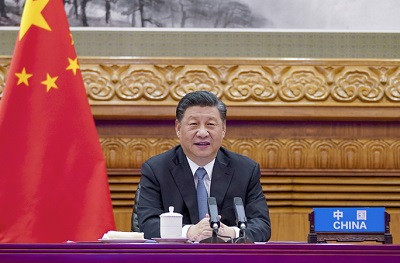
President Xi Jinping attends a video summit with French President Emmanuel Macron and German Chancellor Angela Merkel in Beijing, April 16, 2021. [Photo/Xinhua]

By XU WEI
CHINA DAILY/ANN

Chinese, French and German leaders agreed during a virtual summit on Friday to jointly work toward an equitable and reasonable climate governance mechanism for win-win cooperation and make the response to climate change a pillar for cooperation between China and the European Union.

During the meeting with French President Emmanuel Macron and German Chancellor Angela Merkel, President Xi Jinping said China will honor its commitments to peak its carbon emissions before 2030 and attain carbon neutrality before 2060, while describing the mission as a “hard battle” for the world’s largest developing country.

The three leaders reached consensuses on the need to uphold multilateralism and implement the Paris Agreement across the board, highlighting the need to enable the Leaders Summit on Climate later this month to yield positive, balanced and pragmatic outcomes, and to enhance climate policy dialogue and cooperation in the area of green development.

President Xi Jinping and French President Emmanuel Macron and German Chancellor Angela Merkel take part in a virtual summit on climate issues on Friday. They agreed to work on an equitable and reasonable climate governance mechanism and make it a pillar of Sino-EU cooperation. YUE YUEWEI/XINHUA

They urged coordinated steps to ensure the success of multilateral agendas, such as the UN Biodiversity Conference in Kunming and the 26th UN Climate Change Conference of the Parties in Glasgow, and to work toward a new pattern for global environmental governance.

They also pledged support for COVAX, the global initiative aimed at equitable access to COVID-19 vaccines, and for enabling the energy supply of developing nations to grow in an efficient, clean and diversified direction.

In his remarks, Xi said China’s commitments mean the nation must attain the largest drop in carbon emission intensity globally, and use the shortest period in global history to peak carbon emissions and attain carbon neutrality.

The nation has already included the commitments into its overall plan for ecological development and is pushing for the growth of a green, low-carbon and circular economy across the board, he said.

China has decided to adopt the Kigali Amendment to the Montreal Protocol and is stepping up curbs on emissions of non-CO2 greenhouse gases, such as hydrofluorocarbon, he said.

The response to climate change is the common cause of humanity, and the issue should not become a geopolitical bargaining chip, a means of attacking other nations or an excuse for imposing trade barriers, Xi said.

He reiterated the importance of implementing the United Nations Framework Convention on Climate Change and the Paris Agreement on the basis of equity and in accordance with all parties’ common but differentiated responsibilities and respective capabilities and actively conducting South-South Cooperation in climate change mitigation.

The Chinese president expressed his hope that developed economies can lead in actions to cut emissions, set examples in fulfilling promises to set up climate change funding and offer developing nations adequate support in technology and capacity building to cope with climate change.

Regarding China-EU relations, Xi highlighted the need to maintain the main thrust of the ties from a strategic perspective as the relationship now faces new development opportunities and various challenges.

China will expand high-level opening up and create a fair, just and nondiscriminatory business environment for foreign investors, including those from France and Germany, he said, adding that he hopes the EU can treat Chinese businesses with the same positive attitude and work with China to bolster cooperation in strengthening a green, digital partnership and fighting COVID-19.

China opposes vaccine nationalism and a man-made vaccine divide, and the nation stands ready to work with the international community to support and help developing countries to gain access to vaccines in a timely manner, he said.

The Chinese side is willing to work with the International Olympic Committee to offer vaccines to Olympic athletes, he added.

Macron said France welcomes China’s commitment to carbon neutrality before 2060, a move he said showed Beijing has taken the initiative in assuming major responsibilities.

Paris is ready to work with Beijing in bringing bilateral and EU-China relations forward, jointly helping Africa attain green development and enhancing coordination over regional matters such the Iran nuclear issue, he said.

Merkel hailed China’s climate action goals as ambitious and challenging, saying that these will be crucial to global climate action.

It is also very important for China, France and Germany to scale up cooperation in responding to climate change, she said.

Germany is willing to work with China to deepen mutually beneficial cooperation in trade and economics and boost communication in the digital economy and internet security, she said, adding that she hoped the two sides can make joint efforts to bring the China-EU comprehensive agreement on investment into effect as early as possible.

Electric vehicles poised to overhaul auto industry #SootinClaimon.Com

#SootinClaimon.Com : ขอบคุณแหล่งข้อมูล : หนังสือพิมพ์ The Nation.

https://www.nationthailand.com/ann/30404951

Electric vehicles poised to overhaul auto industry

Apr 16. 2021An only-electric vehicle runs in the desert in Saudi Arabia as Extreme E, an off-road endurance racing series of electric vehicles, started on April 3. (Courtesy of the Extreme E organizer)An only-electric vehicle runs in the desert in Saudi Arabia as Extreme E, an off-road endurance racing series of electric vehicles, started on April 3. (Courtesy of the Extreme E organizer)

By The Japan News/ANN

Amid the accelerating global trend toward decarbonization, competition is heating up in many fields, including automobile manufacturing and resource development, and even in the process of crafting rules to fight global warming. This is the first installment of a series that takes a close look at some of those situations.

Colorfully painted vehicles sped through the desert in northwestern Saudi Arabia. “Whirr!” The sounds of motors and inverters could be heard from amid swirling clouds of sand.

The Extreme E endurance auto racing series for electric vehicles started on April 3. It is the world’s first full-fledged, off-road race for all-electric SUVs. Nine racing teams from North America and Europe, established by the likes of last year’s Formula One world champion Lewis Hamilton, are competing in the series. By December, the participating teams are to compete in a total of five races, including an Arctic race in Greenland, and one through a tropical rain forest in Brazil.

“The goal of the races is to draw public attention to climate change, thus encouraging people to take action to open the way to a future decarbonized society,” said Alejandro Agag, CEO of the overall managing entity for the Extreme E series.

Sponsored by major European and North American companies, the races are to be broadcast live around the world. The future potential of automotive electrification has attracted funds.

Countries and regions around the world are pressing ahead with the electrification of automobiles. Britain plans to ban the sale of gasoline-fueled cars, including hybrid vehicles, in 2035. The U.S. state of California has made it obligatory for all new cars sold in the state to be zero-emission vehicles by the same year.

Volvo Car Corp. of Sweden has announced a policy of only making and selling all-electric vehicles by 2030. Martin Persson, president of Volvo Car Japan Ltd., said vehicles relying entirely on fossil fuels are definitely on the way out.

Since the debut of the gasoline-fueled Ford Model T in the United States in the early 20th century, the world’s automakers have devoted nearly all their energy to the development of internal combustion engines.

As internal combustion technology grew ever more complex, the leading automakers of Japan, the United States, and Europe, such as General Motors Co., Toyota Motor Corp., and Mercedes Benz AG, came to hold dominant positions in the development of the engines.

■ It’s all outsourceable

The heart of an automobile used to be the engine, but it will be replaced by batteries and an electric motor. Simply procuring the needed components and outsourcing the assembly would be enough to manufacture an electric vehicle.

Automakers, subsidiaries and suppliers have built up complex relationships in interlocking corporate groupings. Can these arrangements survive in the electrified era? Electric vehicle manufacturing may turn out to be game-changing and make the conventional system unworkable.

When will U.S. information technology giant Apple Inc. announce its entry into the electric vehicle market? Automotive officials around the world are watching for this development. Apple’s total market value is estimated to be ¥230 trillion, making it the world’s most valuable company. With its enormous funding ability and powerful brand, Apple draws other firms into its orbit. Several leading automakers have already been talked about as possible business partners, which lends credence to the view Apple will really do it.

If Japan’s automotive industry fails to respond to the shift toward electrification, the employment of its 5.5 million workers could be shaken.

Electrified vehicles — vehicles that run using electricity, including hybrid vehicles, plug-in hybrid vehicles and fuel cell vehicles — accounted for 40% of total new car sales in Japan in 2019. Prime Minister Yoshihide Suga announced in January that all new car sales in Japan would be only electrified vehicles by 2035.

Even with a rapid battery charger, an electric vehicle is said to have a range of only about 80 kilometers after a 15-minute charge and 160 kilometers after a 30-minute charge. But there is no need to charge a hybrid. There is a prevailing view among Japanese automakers that hybrid vehicles are the mainstream of electrified vehicles.

An enormous amount of electricity is needed to fully charge an electric vehicle. Japan depends on fossil fuels such as liquefied natural gas and coal for about 80% of its total electric power supply. To promote EVs, while at the same time advancing decarbonization, it is necessary to change its energy mix, through such means as a massive introduction of renewables.

There are similar concerns in newly emerging economies in such regions as Southeast Asia, where Japanese automakers enjoy a high market share. That is why Toyota Motor is moving ahead with its “full lineup” strategy of producing all sorts of vehicles including gasoline-fueled cars and hybrids as well as electric vehicles, in line with the actual situation in these markets.

China is the world’s largest automobile market, with annual new car sales exceeding 25 million units. Last November, the Chinese government unveiled a development plan for its “new energy vehicle” (NEV) industry, in which the targeted introduction of purely electric vehicles has been scaled back. The target for the percentage of new vehicle sales accounted for by NEVs, mainly electric vehicles, was previously set at around 25% in 2025, but has been lowered to around 20%. Nor does the plan go so far as to ban the sale of new gasoline-fueled vehicles, as European countries have said they will do.

China depends on coal-burning thermal power generation for 60% of its total energy supply. The country is poised to adopt a “realistic approach” of holding down greenhouse gas emissions by utilizing hybrids and the like as well as electric vehicles.

Also, in the United States, there is a high hurdle to overcome before promoting electrified vehicles even after the administration of President Joe Biden has shifted toward decarbonization. Only about 2% of all newly registered vehicles are fully electric. Americans, living in a vast nation where long-distance drives are common, are strongly attached to gasoline-fueled cars.

Korea must lead global chip supply chain: Moon #SootinClaimon.Com

#SootinClaimon.Com : ขอบคุณแหล่งข้อมูล : หนังสือพิมพ์ The Nation.

https://www.nationthailand.com/ann/30404950

Korea must lead global chip supply chain: Moon

Apr 16. 2021President Moon Jae-in speaks with attendees of a meeting with economy-related ministers and CEOs of leading companies at Cheong Wa Dae on Thursday. (Yonhap)President Moon Jae-in speaks with attendees of a meeting with economy-related ministers and CEOs of leading companies at Cheong Wa Dae on Thursday. (Yonhap)
By Ahn Sung-mi
The Korea Herald/ANN

President Moon Jae-in on Thursday stressed that South Korea must continue to lead the global chip supply chain and pledged support for the local semiconductor industry, amid the prolonged chip shortage and intensifying US-China trade tensions.

Moon called the semiconductor sector a “core national strategic industry” that will decide the country’s economy going forward, as he convened an “expanded meeting” of economy-related ministers at Cheong Wa Dae to tackle ways to support the country’s key sectors, including semiconductors, automobile manufacturing and shipbuilding.

The session was also attended by corporate leaders, including Samsung Electronics CEO Lee Jung-bae, who oversees the memory chip business; SK hynix CEO Lee Seok-hee; Hyundai Motor CEO Gong Young-woon; Korea Shipbuilding & Offshore Engineering CEO Ka Sam-hyun; Samsung Heavy Industries CEO Jung Jin-taek; and HMM CEO Bae Jae-hoon.

Moon said the global economy is going through a “colossal transformation,” with fierce competition among countries to dominate the global market as it recovers from the COVID-19 pandemic.

“The most visible rearrangement happening in the global supply chain is seen in the semiconductor industry,” Moon said at the start of the meeting. “The semiconductor sector is our nation’s core national strategic industry, which our economy’s present and future depend on. We must continue to lead the global semiconductor supply chain.”

To do so, the president pledged to come up with various measures to support the local chip industry in order to maintain the world’s No. 1 ranking and widen the gap with other countries.

Also touching on the auto industry, Moon pinned high expectations on the sector’s growth buoyed by a rapid increase in exports of electric vehicles, as well as rising demand for batteries. Moon also vowed to come up with a comprehensive strategy for Korea to lead the global battery market.

During the meeting, Moon asked the companies to expand investments and employment as much as possible, according to Cheong Wa Dae spokesman Kang Min-seok. Meanwhile, the executives requested the president’s and the government’s support for the industry and for deregulation.

Moon’s rare session comes as US President Joe Biden held a virtual meeting on tackling the global chip shortage Monday (local time), inviting executives from the semiconductor, auto and tech industries, including Samsung Electronics from Korea and TSMC from Taiwan.

During the meeting, Biden stressed the importance of the semiconductor industry and pledged to invest “aggressively” in the sector, amid an ongoing global shortage of chips that has wreaked havoc on supply chains in the automotive industry and tech firms.

Semiconductors have also been thrust into the center of a drawn-out US-China trade feud, as Washington appears to be building a potential “semiconductor alliance” of major firms among its allies that would help curtail China’s rise in the industry.

Biden’s call on chipmakers to beef up production on its soil poses complications for Samsung, the world’s leading chipmaker, which runs plants in both the US and China.

The Korean tech giant is reportedly seeking to build another foundry facility in the US, but the decision could upset China and could have an adverse impact on Korea’s business operations there, observers say.

Seoul has been pursuing “strategic ambiguity,” as tensions between the two superpowers run high over trade, technology and political issues. It has been trying to strike a delicate balance between its main security ally, the US, and its biggest trade partner, China. But as the rivalry intensifies, experts worry that Seoul’s diplomatic room for maneuvering between Washington and Beijing is becoming narrower.

Washington has been treating the semiconductor shortage as a national security issue, and the subject came up during the latest meeting between top security advisers from Korea, the US and Japan.

In response to intensifying global competition in the semiconductor industry that could affect local chipmakers, the Korean government is also considering its own measures to maintain the country’s leadership in the semiconductor market, known as the “K-semiconductor strategy.”

[Myanmar] Medical protest column cracked down in Mandalay #SootinClaimon.Com

#SootinClaimon.Com : ขอบคุณแหล่งข้อมูล : หนังสือพิมพ์ The Nation.

https://www.nationthailand.com/ann/30404948

[Myanmar] Medical protest column cracked down in Mandalay

Apr 16. 2021

By Eleven Media/ANN

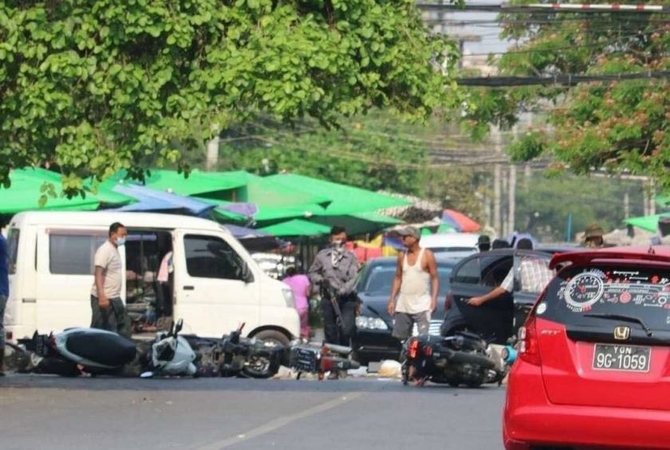
As people were gathering for the medical protest column in Mandalay on April 15, security forces arrived to disperse them. A person was also shot dead after within the Sule Mosque compound afterwards.

The military and the police arrived at the gathering spot located at the corner of  76th and 34th street, shooting and dispersing the crowd getting ready to leave. After the shootings there, the Sule Mosque compound located between the 74th/37th street and 38th street also saw shootings by security forces and a man was shot in the chest.

Including the man, at least five others were injured and multiple arrests were made. 

Despite crackdowns by security forces in Mandalay, guerilla tactics have been adopted by protest columns. 

India expresses concern over US troops’ withdrawal from Afghanistan #SootinClaimon.Com

#SootinClaimon.Com : ขอบคุณแหล่งข้อมูล : หนังสือพิมพ์ The Nation.

https://www.nationthailand.com/ann/30404947

India expresses concern over US troops’ withdrawal from Afghanistan

Apr 16. 2021An Afghan army soldier takes part in a military operation in Kunduz Province, Afghanistan, (File Photo: IANS)An Afghan army soldier takes part in a military operation in Kunduz Province, Afghanistan, (File Photo: IANS)

By The Statesman/ANN

Chief of Defence Staff (CDS) General Bipin Rawat said on Thursday that India is concerned about the vacuum that will be created after the withdrawal of the US and NATO troops from war-torn Afghanistan.

General Bipin Rawat said that the main concern should not create “space for other disruptors” and therefore see violence continue in Afghanistan.

India wants to see peace and tranquillity returning to the region, he added.

“We would be very happy to provide whatever support we can in the development of Afghanistan and making sure peace returns to that nation. People have got tired and are looking at peace,” General Rawat said speaking in a virtual discussion at the ongoing Raisina Dialogue 2021.

Asked whether it was Iran and Pakistan that could exploit the situation, the Chief of Defence Staff said there are many nations that would like to step into Afghanistan.

“Many people are looking at the opportunity to exploit the vacuum that is being created. Afghanistan is a nation which is rich in resources,” he said.

Noting there are nations “that tend to exploit resources for their own benefit without the benefit going to the community of that nation”, he said, “The international community must step in to ensure Afghanistan is for the Afghans.”

President Joe Biden announced in Washington on Wednesday that he will withdraw remaining US troops from the “forever war” in Afghanistan. His plan is to pull out all US forces—numbering 2,500 now—by September 11, the 20th anniversary of the 9/11 attacks.

The UN, together with Turkey, and Qatar, announced on Tuesday that a high-level conference aimed at ending decades of conflict in Afghanistan will go ahead beginning on April 24. There would be representatives from both the Afghan government and the Taliban.

(With IANS inputs)

China’s quarterly GDP growth may reach record high #SootinClaimon.Com

#SootinClaimon.Com : ขอบคุณแหล่งข้อมูล : หนังสือพิมพ์ The Nation.

https://www.nationthailand.com/ann/30404946

China’s quarterly GDP growth may reach record high

Apr 16. 2021This undated photo shows a bird's eye view of Beijing's central business district. (PHOTO / VCG)This undated photo shows a bird’s eye view of Beijing’s central business district. (PHOTO / VCG)

By Zhou Lanxu
China Daily/ANN

China’s economy is likely to see close to 20 percent growth year-on-year in the first quarter, but the foundation of recovery is “not yet solid” and makes the continuity of supportive macro policy necessary, experts said on Wednesday.

They commented as the National Bureau of Statistics is expected to release key economic data for the first quarter on Friday, among which the GDP growth may reach between 15 and 20 percent on a yearly basis. The highest quarterly growth since the NBS began keeping records in 1993 was 15.3 percent.

Kang Yong, chief economist at KPMG China, said he expects China’s first-quarter GDP growth to stand at 19.5 percent on a yearly basis, up from 6.5 percent in the last quarter of 2020, mainly thanks to last year’s extremely low comparison base amid the country’s lockdowns to curb COVID-19 outbreaks.

Moreover, industrial production and exports have remained buoyed amid the global recovery in demand, while consumer spending and offline services picked up as the virus got further contained, Kang said.

Official data showed that China’s exports in goods soared by 38.7 percent on a yearly basis to 4.61 trillion yuan (US$706 billion) in the first quarter, while manufacturing activity has been strong, with the purchasing managers index remaining well above the boom-bust line of 50 in the first three months of the year.

“Friday’s data will provide fresh evidence that China’s economic recovery is gaining momentum. But we don’t expect policy normalization to be accelerated upon the readings, as policymakers are fully-aware that the jump was mainly attributable to the base effect while the economy still needs continuous, targeted support,” Kang said.

Though the recovery in domestic consumption coupled with resilient exports will help China achieve a forecast 8.8 percent growth for the whole year, headwinds like the rising costs of commodities could eat away enterprise profits and complicate the recovery, he added.

Amid rising international prices of commodities like oil and metals, China’s producer price index, which gauges factory-gate prices, rose 4.4 percent year-on-year last month, the highest level in more than two years, according to the NBS.

Moreover, the job market has yet to be fully stabilized. While polled manufacturers have hired more employees in March, employment in the non-manufacturing sector continued to contract, the NBS said.

“The economy is steadily recovering but the foundation of recovery is not yet solid. The resurgence of domestic investment and consumption has remained sluggish and can be further boosted,” said Xu Hongcai, deputy director of the China Association of Policy Science’s economic policy committee.

Policymakers should not rush into backpedaling on support for small enterprises and distressed businesses and should take measures to ease the cost pressure facing market entities by helping expand supply, Xu said.

Policy stance

Premier Li Keqiang reiterated at a symposium with experts and entrepreneurs on Friday the need to maintain the continuity, stability and sustainability of macro policies.

While concerns are rising that a spike in commodity prices could lead to policy tightening ahead of schedule, experts said imported inflationary pressure is unlikely to derail the Chinese central bank’s “no sharp policy shift” stance.

Cheng Shi, chief economist at ICBC International, said imported inflationary pressure is expected to continue for some time, but China’s prudent policy stance has helped cushion the impact, while rising commodity prices have only passed through to consumers in a limited way.

With major risks regarding consumer inflation at bay, monetary policy is expected to stay true to the “no sharp policy shift” commitment, Cheng said, adding that the country’s annual economic growth may land at about 9 percent after surging to 18 percent in the first quarter.

Iris Pang, chief China economist at Dutch bank ING, said China’s economic momentum is expected to stay solid this year, with quarter-on-quarter economic growth to stabilize between 1 and 2 percent, though year-on-year readings will slow as the base effect fades.

Domestic consumption will remain the stabilizer for the economy, while digital infrastructure investment is expected to be the growth engine, Pang said.

Ouyang Shijia contributed to this story.

Toshiba president resigns amid controversy over CVC buyout offer #SootinClaimon.Com

#SootinClaimon.Com : ขอบคุณแหล่งข้อมูล : หนังสือพิมพ์ The Nation.

https://www.nationthailand.com/ann/30404906

Toshiba president resigns amid controversy over CVC buyout offer

Apr 15. 2021Nobuaki Kurumatani (Yomiuri Shimbun file photo)Nobuaki Kurumatani (Yomiuri Shimbun file photo)

By The Japan News/ANN

Toshiba Corp. President and Chief Executive Officer Nobuaki Kurumatani resigned on Wednesday, and Chairman Satoshi Tsunakawa was appointed to succeed him, according to a company announcement.

The resignation comes amid controversy over a takeover bid this month from British investment fund CVC Capital Partners. Kurumatani once served as chairman of the fund’s Japanese subsidiary.

Toshiba hopes the change in leadership will bring an end to the tumult.

The leadership reshuffle was decided at an extraordinary board of directors meeting on Wednesday. According to the company, Kurumatani offered to step down. He also resigned from the post of director. Outside board members had called for Kurumatani’s dismissal at the meeting.

Recently, Kurumatani had been at odds with Toshiba’s major shareholder over appointments of board members and business strategies.

At the annual shareholders’ meeting last summer, only about 57% of shareholders voted in favor of reappointing Kurumatani as director, an unusually low percentage, and his reappointment at this summer’s shareholders’ meeting had been in doubt.

Frustration had also been growing within the company. Every year, a committee of outside directors conducts a confidence survey on the president among senior management members. In the latest survey, a majority of respondents said they had no confidence in Kurumatani as president, according to sources.

The initial proposal presented by CVC on April 6 was to acquire all of Toshiba’s shares for about ¥5,000 per share, subject to the approval of Toshiba’s management and government authorities.

The proposal stated that Toshiba would have more management freedom as it would no longer be subject to pressure from activist shareholders, who impose strict orders on the company.

Kurumatani served as the chairman of CVC’s Japanese subsidiary until March 2018. The proposal could have been interpreted as a helping hand to Kurumatani, who was in a tight spot.

Critics have cited concerns about a potential conflict of interest as Kurumatani might have been in contact with CVC officials to protect himself.

Kurumatani also served as vice president of Sumitomo Mitsui Banking Corp., Toshiba’s main creditor.

Following the post of chairman at CVC Japan, Inc., he was appointed as Toshiba’s chairman and CEO in April 2018 and as president and CEO in April 2020.

Toshiba has proceeded with management restructuring through measures such as liquidating unprofitable businesses and cutting costs.

In January this year, the company returned to the Tokyo Stock Exchange’s First Section.

Toshiba’s business performance deteriorated sharply after accounting irregularities came to light in 2015 and its U.S. nuclear power subsidiary filed for bankruptcy. Turmoil has rocked the company ever since, with several changes at the top over a short period.