India’s Manipur withdraws previous order to ‘politely turn away’ Myanmar refugees #SootinClaimon.Com

#SootinClaimon.Com : ขอบคุณแหล่งข้อมูล : หนังสือพิมพ์ The Nation.

https://www.nationthailand.com/ann/30404311

India’s Manipur withdraws previous order to ‘politely turn away’ Myanmar refugees

Mar 30. 2021

By The Daily Star / ANN

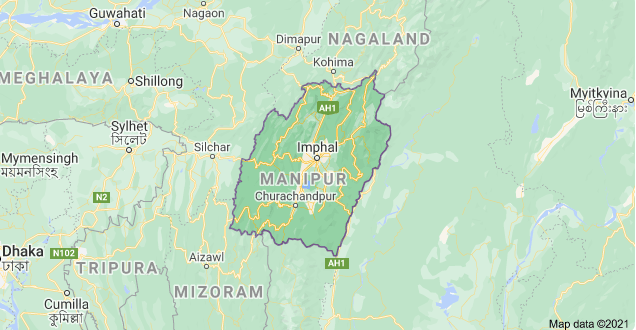
Sensing potential public anger, India’s Manipur government yesterday withdrew an earlier order directing authorities in districts bordering Myanmar to “politely turn away” nationals of the neighbouring country who are trying to enter India.

The fresh letter was issued by H Gyan Prakash, special secretary (home), the government of Manipur, to deputy commissioners of Chandel, Tengnoupal, Ukhrul, and Churachandpur districts.

The letter mentions that the earlier order issued on March 26 has been misconstrued and interpreted differently. It also states that the Manipur government has been providing aid to Myanmar nationals who have entered India via the shared borders.

In the circular, which had been issued, on March 26 to the DCs of Chandel, Tengoupal, Kamjong, Ukhrul, and Churachandpur districts, H Gyan Prakash said, “District administration should not open any camps to provide food and shelter. The civil society organisations should also not be allowed to open any camps to provide shelter/food.”

However, it added that medical attention “may be provided on humanitarian considerations” in case of severe injuries sustained by Myanmar nationals.

There was widespread resentment in the neighbouring Mizoram state against the Indian government’s March 26 advice to stop the entry of refugees from Myanmar.

Mizoram Chief Minister Zoramthanga had recently written to Prime Minister Narendra Modi urging him to provide asylum to the refugees, saying a “human catastrophe of gigantic proportions” is happening in Myanmar and innocent citizens are being killed by the military, which is supposed to protect them.

Yesterday’s order stated that to avoid misunderstanding, the earlier letter has been withdrawn.

Health experts want longer lockdown in Metro Manila, 4 adjacent provinces #SootinClaimon.Com

#SootinClaimon.Com : ขอบคุณแหล่งข้อมูล : หนังสือพิมพ์ The Nation.

https://www.nationthailand.com/ann/30404293

Health experts want longer lockdown in Metro Manila, 4 adjacent provinces

Mar 30. 2021NO ID, NO ENTRY A policeman in personal protective equipment checks the identification card of a motorist at the border of San Jose del Monte City in Bulacan province and Caloocan City as the government regulates the movement of people to and from Metro Manila while the national capital and four other provinces are on lockdown due to a surge in COVID-19 cases. —NIÑO JESUS ORBETANO ID, NO ENTRY A policeman in personal protective equipment checks the identification card of a motorist at the border of San Jose del Monte City in Bulacan province and Caloocan City as the government regulates the movement of people to and from Metro Manila while the national capital and four other provinces are on lockdown due to a surge in COVID-19 cases. —NIÑO JESUS ORBETA

By Leila B. Salaverria
Philippine Daily Inquirer/ANN

MANILA, Philippines — Health experts have recommended an extension of the one week hard lockdown in Metro Manila and four nearby provinces to really bring down the number of COVID-19 cases in the country, and Malacañang says the recommendation will be considered along with its implication on the economy and the health of the people.

Metro Manila, Bulacan, Cavite, Laguna and Rizal have been placed on enhanced community quarantine until April 4 in a bid to curb the fast rising number of COVID-19 cases, which the government has attributed to the more transmissible variants of the coronavirus.

Not enough

At a briefing in the Palace on Monday, Alethea de Guzman, director of the epidemiology bureau of the Department of Health (DOH), presented a graph showing the projection of the number of COVID-19 cases in Metro Manila based on different scenarios.

It showed that a one-week lockdown would not be enough to continuously bring case numbers down.

De Guzman said there would be a slowdown in the increase of cases after one week, but this could rise again after lockdown was lifted.

“Which is why one of the things proposed, one of the things recommended by our experts, is we might need to extend, because with the extension of the [lockdown], we would be able to see the continuous decline in cases,” she said.

De Guzman said she understood the economic implication of extending the lockdown.

“This is not a decision we will make hastily. We will look at the data in the following week to determine if this would really be necessary,” she added.

The graph, which was also presented by presidential spokesperson Harry Roque during his briefing, showed that imposing the hard lockdown until April 4 could bring cases in Metro Manila to 550,000 to 600,000 by the end of the month.

If it is extended to April 18, the number would be lower.

But Roque said the resulting numbers would not be too different should the lockdown end on April 4 and should it be extended.

“This means we would not be able to bring down by much the number of cases even if we extend the [enhanced community quarantine]. Which is why we are balancing it now, we are taking into consideration the total health of our countrymen, the cost-benefit analysis in terms of the additional number of Filipinos who would go hungry and die from reasons other than COVID-19,” he said.

Death from hunger

He said this was a sensitive decision-making process, because if the government would be guided only by the need to bring down the number of coronavirus infectious, more people might die from hunger.

The government will also take into account its ability to provide assistance on a significant scale, because many will need help for each week that lockdown is imposed, he added.

Sergio Ortiz-Luis Jr., president of the Philippine Exporters Confederation, said lockdown was not the solution.

“It has been shown that after we had the longest lockdown in the world, our situation has not improved,” he said. “The solution there is to try what the government has not tried before,” he added, suggesting that the private sector be allowed to import COVID-19 vaccines.

Ebb Hinchliffe, executive director of the American Chamber of Commerce of the Philippines, said the logic behind the lockdown was understandable, but “if extended very long, it will definitely be the end for some [small businesses].”

The Philippine Chamber of Commerce and Industry did not immediately respond to a request for comment, but recently it urged the government to allow the private sector to import COVID-19 vaccines without any conditions.

The DOH said the government would assess at the end of the week whether the hard lockdown had eased hospital congestion then decide whether to extend the restriction.

“Our major objective for a stricter community quarantine is to have our health care capacity be manageable enough . . . We are choking, we are having full capacity in [emergency rooms] and [intensive care units],” Health Undersecretary Maria Rosario Vergeire said on Monday.

“We will do an assessment after a week and try to see if we can manage, then we will decide,” she said.

14 days to 1 month

Dr. Jonas del Rosario, speaking for Philippine General Hospital, recommends the extension of the lockdown to 14 days to one month to really contain the spread of the coronavirus.

“I’m hoping that is enough, but realistically if you look at the numbers, I don’t think [one week is] enough. . . We cannot move forward if we don’t have good control of this [coronavirus] transmission,” Del Rosario said in a television interview on Monday.

As the hard lockdown took effect on Monday, new COVID-19 cases hit 10,016, pushing the number of confirmed coronavirus infections in the country to 731,894 overall.

The DOH reported 16 more deaths, raising the death toll to 13,186. It said 78 more patients had recovered, bringing total recoveries to 603,213.

That left the country with 115,495 active cases, of which 95.9 percent were mild, 2.4 percent asymptomatic, 0.41 percent moderate, 0.7 percent severe, and 0.7 percent critical.

De Guzman also said the country could avoid a situation where it would have to keep on reverting to lockdown if people would strictly adhere to minimum public health standards—wearing masks and face shields, observing physical distancing, and frequent hand-sanitizing.

This means people should always observe these standards whether at work, on public transportation, or at home, and they should avoid nonessential travel and congregating outside their homes, she said.

They should also cooperate with contact tracing and isolation efforts.

Those who are symptomatic or are close contacts of COVID-19 patients should have themselves tested and isolated, she added.

Sony EV prototype makes Japan debut #SootinClaimon.Com

#SootinClaimon.Com : ขอบคุณแหล่งข้อมูล : หนังสือพิมพ์ The Nation.

https://www.nationthailand.com/ann/30404292

Sony EV prototype makes Japan debut

Mar 30. 2021Sony’s VISION-S prototype vehicle is seen in Setagaya Ward, Tokyo, on Sunday. (The Yomiuri Shimbun)Sony’s VISION-S prototype vehicle is seen in Setagaya Ward, Tokyo, on Sunday. (The Yomiuri Shimbun)

By The Japan News/ANN

Sony’s prototype electric car, the VISION-S, was publicly unveiled in Japan for the first time on Sunday at the EV: Life Futakotamagawa event held in Setagaya Ward, Tokyo.

Equipped with Sony’s signature high-performance image sensors, the vehicle uses artificial intelligence and other technologies to detect people and objects in its surroundings for an extra layer of safety. The VISION-S also features Level 2 driver assistance, which enables the vehicle to automatically perform multiple operations, such as steering and braking.

First presented at CES, a consumer electronics and information technology trade show in the U.S., in January 2020, the prototype underwent public road testing in Austria in December 2020.

Sony plans to begin conducting road tests in Japan by the end of this year.

Although the company does not plan to mass-produce the vehicle at this time, Izumi Kawanishi, Sony’s executive officer, said, “We intend to continue enhancing how we create mobile spaces, encompassing their relationship with the cloud and other networks.”

Malaysia pays S’pore $102.8 million for costs incurred in terminated HSR project #SootinClaimon.Com

#SootinClaimon.Com : ขอบคุณแหล่งข้อมูล : หนังสือพิมพ์ The Nation.

https://www.nationthailand.com/ann/30404290

Malaysia pays S’pore $102.8 million for costs incurred in terminated HSR project

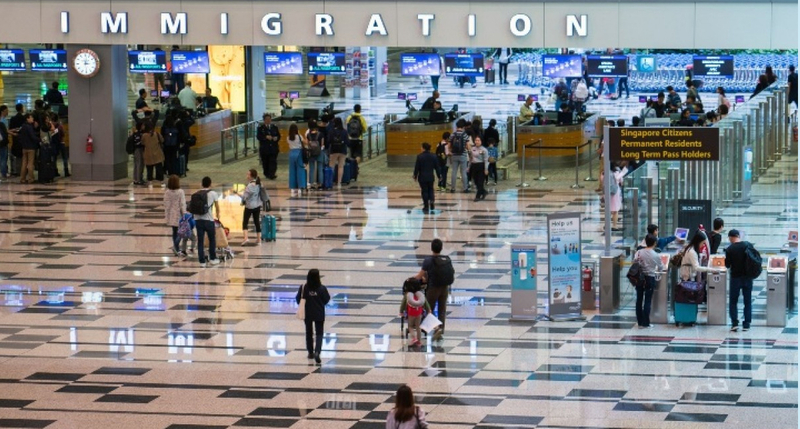
Mar 30. 2021Singapore and Malaysia have finalised the settlement of compensation for the terminated HSR project. PHOTO: EDELMANSingapore and Malaysia have finalised the settlement of compensation for the terminated HSR project. PHOTO: EDELMAN
By Hariz Baharudin
The Straits Times/ANN

SINGAPORE – Malaysia has paid Singapore about $102.8 million as compensation for the costs it incurred in the failed high-speed rail (HSR) project.

In a joint statement on Monday (March 29), Singapore’s Transport Minister Ong Ye Kung and Malaysia’s Minister in the Prime Minister’s Department (Economy) Mustapa Mohamed said the two countries have finalised the settlement of compensation for the terminated project.

Malaysia has made a payment of $102,815,576 (RM320,270,519.24) to reimburse Singapore for costs incurred for the development of the project, and for a further extension of the initial two-year suspension.

“The two countries reached an amicable agreement on the amount following a verification process by the Government of Malaysia. This amount represents a full and final settlement in relation to the termination of the Bilateral Agreement,” said the joint statement.

“Both countries remain committed to maintaining good relations and fostering close cooperation for the mutual benefit of the peoples of the two countries.”

In a Facebook post, Mr Ong said: “I am glad that we were able to close this chapter amicably, without affecting the good bilateral relations between our two countries.

“Looking ahead, there are many areas that we have opportunities to cooperate on. These include the issues Minister Vivian Balakrishnan discussed with leaders in Malaysia last week, such as the restoration of some air travel, which the Ministry of Transport (MOT) will be very involved in, and also commuting via the Causeway.”

On Jan 1, Prime Minister Lee Hsien Loong and his Malaysian counterpart Muhyiddin Yassin issued a joint statement to announce the termination of the HSR project. Malaysia had allowed the bilateral agreement to lapse on the deadline of Dec 31, 2020, after both sides could not agree to changes it had proposed.

Mr Ong had said in Parliament on Jan 4 that with the project’s termination, Malaysia has to compensate Singapore in accordance with the HSR agreements, noting that the Republic has spent about $270 million on the project so far.

This compensation would include various abortive costs such as for consultancy services, design of infrastructure and manpower to deliver the HSR project. It would not cover land acquisition costs as the value of the land can be recovered, he said then.

In response to queries about the compensation, an MOT spokesman noted that the $270 million includes land acquisition costs. 

“Because the Singapore Government can recover value from the land we acquired, we are not seeking compensation for it. For example, one piece of land acquired will be used to develop the Integrated Train Testing Centre, which broke ground recently,” she said, referring to the former Raffles Country Club site. 

“For the final compensation amount of $102 million, the bulk of it was computed and determined when we acceded to Malaysia’s request to suspend the project, and was stipulated in the HSR agreements.”

The planned 350km rail line, which both sides agreed to build in 2013, was to have run from a terminal station in Bandar Malaysia in downtown Kuala Lumpur to a terminal in Jurong East.

The HSR was slated to have seven stations, and would have cut travel time between Kuala Lumpur and Singapore to 90 minutes, compared with over four hours by car and about five hours end-to-end by air.

Both countries signed a legally binding bilateral agreement on the project in December 2016, witnessed by PM Lee and then Malaysian Prime Minister Najib Razak.

Singapore commenced work on the project, including appointing a firm to design its HSR infrastructure and later calling an international joint tender with Malaysia for an assets company.

But the project was later suspended at Malaysia’s request, after a change in the Malaysian government following the May 2018 General Election.

Then Malaysian Prime Minister Mahathir Mohamad, whose coalition defeated Mr Najib’s in the election, said the country made “a final decision” to drop plans for the HSR. He later backtracked on his earlier comments and said the HSR was temporarily shelved due to its high costs.

The two countries agreed in September 2018 to suspend the project for about two years, and Malaysia reimbursed Singapore $15 million for costs incurred by the deferment. 

On May 31 last year, Singapore agreed to Malaysia’s request to further suspend the HSR project for seven more months till Dec 31.

Last November, Singapore’s MOT said Malaysia had proposed changes to the HSR, and Singapore was discussing them in good faith.

The project was terminated after both sides failed to reach an agreement by the final deadline of Dec 31 last year.

In January, Mr Ong told the House that Singapore could not accept Malaysia’s proposal to remove the project’s systems supplier and network operator.

Singapore saw the assets company as necessary to ensure that the interests of both countries are protected, and its removal “constituted a fundamental departure from the HSR bilateral agreement”, he said then.

S’pore says mulling launch of air travel bubble with Hong Kong #SootinClaimon.Com

#SootinClaimon.Com : ขอบคุณแหล่งข้อมูล : หนังสือพิมพ์ The Nation.

https://www.nationthailand.com/ann/30404289

S’pore says mulling launch of air travel bubble with Hong Kong

Mar 30. 2021

By China Daily/ANN

SINGAPORE – Singapore’s Minister for Transport Ong Ye Kung said Monday that the city-state has received a proposal from China’s Hong Kong Special Administrative Region (HKSAR) to re-open borders safely, saying it is studying the situation.

According to a press release in response to comments from the HKSAR on the Singapore-Hong Kong Air Travel Bubble (ATB), the minister said that Singapore is very happy that Hong Kong has in recent weeks kept the pandemic under good control.

“This is a very positive development,” he added.

Singapore and Hong Kong agreed to launch designated flights under the ATB in November 2020 in an effort to resume cross-border travel and orderly restart economic activities. But the launch of the ATB was later deferred due to worsened epidemic situation in Hong Kong.

S. Korea to increase tax incentives W3tr this year amid pandemic #SootinClaimon.Com

#SootinClaimon.Com : ขอบคุณแหล่งข้อมูล : หนังสือพิมพ์ The Nation.

https://www.nationthailand.com/ann/30404288

S. Korea to increase tax incentives W3tr this year amid pandemic

Mar 30. 2021(Yonhap)(Yonhap)

By The Korea Herald/ANN

Tax exemptions and incentives are expected to rise almost 3 trillion won ($2.6 billion) on-year this year as the country seeks to help vulnerable people cope with the fallout of the pandemic.

The value of the country’s subsidies offered via tax exemptions and credit is estimated at 56.8 trillion won this year, up from last year’s 53.9 trillion won, according to the Ministry of Economy and Finance.

The percentage of tax subsidies against total tax revenue is likely to reach 15.9 percent this year, up from 15.4 percent the previous year.

The country has increased tax exemptions or credit programs to smaller merchants and vulnerable groups to help them cope with the economic fallout from the COVID-19 pandemic.

Last year, the country saw tax revenue decline 7.9 trillion won as the collection of corporate taxes fell amid the new coronavirus outbreak.

The ministry said it will provide tax subsidies to the needy to help revitalize the economy, but also make efforts to reduce unnecessary tax incentives. (Yonhap)

[Indonesia] Several hurt in church bombing #SootinClaimon.Com

#SootinClaimon.Com : ขอบคุณแหล่งข้อมูล : หนังสือพิมพ์ The Nation.

https://www.nationthailand.com/ann/30404244

[Indonesia] Several hurt in church bombing

Mar 29. 2021Investigators standing outside the gate of the church.Investigators standing outside the gate of the church.

By The Star/ANNA suicide bomber blew himself up outside a packed Roman Catholic cathedral on the country’s Sulawesi island during a Palm Sunday Mass, wounding at least 14 people, police said.

A cellular video obtained by The Associated Press showed body parts scattered near a burning motorbike at the gates of the Sacred Heart of Jesus Cathedral in Makassar, the capital of South Sulawesi province yesterday.

The attack came as Indonesia was on high alert following the arrest of Aris Sumarsono, known as Zulkarnaen, the leader of Jemaah Islamiyah (JI) in December.

Wilhelmus Tulak, a Catholic priest who led the Mass when the bomb exploded at about 10.30am, told reporters that a loud bang shocked his congregation who had just finished the Sunday service marking the beginning of the Holy Week before Easter.

The first batch of churchgoers was walking out of the church while another group was coming in when the blast happened, he said.

He said that security guards suspected two motorists who wanted to enter the church.

One of them detonated his explosives and died near the gate after being confronted by guards.

The wounded included four guards and several churchgoers.

National Police spokesperson Argo Yuwono told a news conference in the capital, Jakarta, that police were still trying to identify two attackers on a motorbike who used powerful explosives.

“There were two people riding on a motorbike when the explosion happened at the main gate of the church – the perpetrators were trying to enter the compound, ” he said.

“The bike was destroyed and there are body parts… We’re still collecting parts and trying to identify the sex of the perpetrators.”

He added that police were investigating whether they were linked to a local affiliate of the banned JI network or were acting independently.

Meanwhile, President Joko Widodo urged people to remain calm and said everybody could worship “without fear”.

“I strongly condemn this act of terrorism and I have ordered the police chief to thoroughly investigate the perpetrators’ networks and tear down the networks to their roots, ” he said in an online broadcast following the attack.

A policeman directing traffic after the explosion.

A policeman directing traffic after the explosion.A policeman directing traffic after the explosion.

“I call on everyone to fight against terror and radicalism, which go against religious values.”

At least 64 suspects had been detained by Indonesia’s counterterrorism squad, known as Densus 88, in several provinces, including 19 last month in Makassar.

The arrests followed a tip-off about possible attacks against police and places of worship.

Amnesty International said the bombing showed “complete contempt” for human rights.

A member of the national bomb squad collecting evidence at the site of the bombing.

A member of the national bomb squad collecting evidence at the site of the bombing.A member of the national bomb squad collecting evidence at the site of the bombing.

In his Mass for Palm Sunday yesterday, Pope Francis said he prayed for all the victims of violence “especially those of this morning’s attack in Indonesia, in front of the Cathedral of Makassar”.

Indonesia, the world’s most populous Muslim-majority nation, has been battling militants since bombings on the resort island of Bali in 2002 killed 202 people, mostly foreign tourists.

Attacks aimed at foreigners have been largely replaced in recent years by smaller, less deadly strikes targeting the government, police and anti-terrorism forces and people militants consider as infidels. — Agencies

‘Minimal wastage’ of Covid-19 vaccine doses in Singapore: MOH #SootinClaimon.Com

#SootinClaimon.Com : ขอบคุณแหล่งข้อมูล : หนังสือพิมพ์ The Nation.

https://www.nationthailand.com/ann/30404242

‘Minimal wastage’ of Covid-19 vaccine doses in Singapore: MOH

Mar 29. 2021Take-up rates are carefully monitored through appointment bookings. ST PHOTO: GAVIN FOOTake-up rates are carefully monitored through appointment bookings. ST PHOTO: GAVIN FOO

By Clara Chong
The Straits Times/ANN

SINGAPORE – There is “minimal wastage” of Covid-19 vaccine doses in Singapore as the vaccination programme is ramped up, with take-up rates carefully monitored through appointment bookings.

The monitoring enables advance planning of vaccine needs to facilitate shipment and delivery of an appropriate number of doses to vaccination sites, the Health Ministry was quoted as saying in a CNA report on Friday (March 26).

“Vaccination site providers also dilute and start a new vial only when they have checked that there are individuals awaiting vaccination, to avoid vaccine wastage,” said MOH.

“Should there be additional doses of vaccine left, there are pre-planned lists of individuals who will be invited to be vaccinated.

“These could be staff who are working at the vaccination sites or front-line volunteers who have an active role in engaging seniors on vaccinations,” MOH told CNA.

Demand for vaccines globally has been high, and Singapore has been running on a very tight vaccine supply situation, Health Minister Gan Kim Yong has said.

Currently, the Republic has two approved vaccines – Pfizer-BioNTech and Moderna. Both require two doses to complete the vaccination regimen.

Each vial of the Pfizer-BioNTech vaccine contains up to six doses, while each Moderna vial contains up to 10 doses.

For both vaccines, vials must be kept chilled and used within six hours after dilution. After six hours, any remaining vaccine should be discarded, said the United States Centres for Disease Control and Prevention.

Infectious diseases expert Leong Hoe Nam said: “Since each vial contains more than one dose and you cannot keep it beyond a day, vaccines will have to be thrown away once it has exceeded its shelf life as there is a risk of lost efficacy and contamination.”

“Vaccine wastage can be a result of poor planning, people not turning up for their appointment slots or forgetting that they have appointments. With worldwide supply of vaccines being so tight, each drop of the vaccine is very precious,” Dr Leong added.

In some countries such as India, about 6.5 per cent of doses are wasted, according to its Health Ministry, making it vital for health workers to coordinate the flow of recipients.

Early this month, Japan said that an investigation would be launched after more than 1,000 Pfizer-BioNTech vaccine doses had to be discarded when a freezer storing them malfunctioned.

Japan plans new trading market for greenhouse gas emissions #SootinClaimon.Com

#SootinClaimon.Com : ขอบคุณแหล่งข้อมูล : หนังสือพิมพ์ The Nation.

https://www.nationthailand.com/ann/30404241

Japan plans new trading market for greenhouse gas emissions

Mar 29. 2021(The Yomiuri Shimbun)(The Yomiuri Shimbun)

By The Japan News/ANNTo help achieve net-zero greenhouse gas emissions by the year 2050, the government is working to create a market in which companies can trade CO2 emissions, The Yomiuri Shimbun has learned.

The aim is to put the envisaged system into operation in fiscal 2022, allowing companies that successfully cut emissions beyond their reduction target to sell the surplus to companies that fail to meet their goal, according to sources.

The government will compile guidelines to make it easier to set reduction targets and sales prices, among other elements, encouraging the public and private sectors to jointly strive for decarbonization, the sources said.

Companies that make efforts to cut their greenhouse gas emissions will be paid for their achievements in the planned trading market, so this is expected to heighten their motivation to reduce their emissions even further.

The government hopes the trading system will particularly prompt cuts by the companies whose greenhouse gas emissions account for more than 90% of the nation’s total.

The Economy, Trade and Industry Ministry will announce the outline of the envisaged market sometime before this summer and incorporate it in the government’s Growth Strategy, the sources said.

Under the plan, companies participating in the market will set their own reduction targets, and the government will give appropriate goals its seal of approval.

Decarbonization is gaining momentum in many countries and regions. There have been increasing calls for the government to create a new market, as participating in such a system would help firms develop their businesses globally.

In Japan, there is a growing trend among large corporations, such as Toyota Motor Corp. and Sony Corp., to publicize their decarbonization strategies and measures to combat climate change. The government therefore expects these big firms to participate in the new market.

Japan already has a system called the J-Credit Scheme in place, under which the government certifies as credits the amount of emissions cut by entities that are active in decarbonization efforts, making it easier for them to sell their credits to others.

However, J-Credit is not widely used, mainly because the price of credits is determined through negotiations among the parties concerned. As a result, it is difficult for these reduction efforts to be recognized domestically or internationally.

The European Union introduced the EU Emissions Trading System in 2005 to set a cap on CO2 emissions by industry for companies in its member states. Companies that exceed their emissions allowance must purchase quotas from others that do not use their full allowance.

However, investment funds and others are also participating in the EU market, causing transaction prices to soar. In Japan, the government plans to limit market participants to companies that have voluntarily set their own CO2 reduction targets and devise a mechanism to prevent excessive price fluctuations.

S. Korea blanketed by extremely powerful yellow dust storm #SootinClaimon.Com

#SootinClaimon.Com : ขอบคุณแหล่งข้อมูล : หนังสือพิมพ์ The Nation.

https://www.nationthailand.com/ann/30404240

S. Korea blanketed by extremely powerful yellow dust storm

Mar 29. 2021A man looks at the sky of Seoul thick with yellow dust from an observatory of Mount Inwang on Monday. (Yonhap)A man looks at the sky of Seoul thick with yellow dust from an observatory of Mount Inwang on Monday. (Yonhap)

By The Korea Herald/ANN

An extraordinarily strong yellow dust storm originating from the inland deserts in northern China blanketed all of South Korea on Monday, prompting authorities to issue a yellow dust warning for Seoul and almost all parts of the country.

The density of fine dust particles smaller than 10 micrometers in diameter, known as PM 10, surged to the “very bad” level in the greater Seoul area and almost all other regions, authorities said.

As of 7 a.m., the hourly average concentration of PM 10 reached 452 micrograms per cubic meter in Seoul, 681 micrograms in Daejeon, 653 micrograms in the central administrative city of Sejong, 522 micrograms in Gangwon Province, 421 micrograms in Ulsan and 401 micrograms in Gwangju, according to the state-run National Institute of Environmental Research’s Air Quality Forecasting Center.

The weather authorities here categorize concentrations of PM 10 between zero and 30 micrograms as “good,” between 31 and 80 as “normal,” between 81 and 150 as “bad” and more than 151 as “very bad.”

The PM 10 level reached a peak of 545 micrograms in Seoul on Monday morning, the center said, noting Busan and the southern resort island of Jeju registered bad levels of PM 10 reaching 98 and 109 micrograms, respectively.

The center explained that the latest onset of yellow dust here originated in the Inner Mongolian region in northern China and the vicinity of the Gobi Desert on Friday and moved south by riding the northwesterly winds.

It forecast the PM 10 reading will remain at the very bad level across the nation throughout Monday and at the bad level Tuesday due to residual yellow dust and atmospheric stagnation.

The Korea Meteorological Administration issued a yellow dust warning for Seoul as of 7:10 a.m., asking citizens with respiratory or cardiovascular problems, children and other vulnerable people to refrain from going outdoors.

A fine dust warning is issued when the PM 10 figure is forecast to stay above 800 micrograms per cubic meter for longer than two hours.

According to the air quality center, the density of ultrafine dust particles smaller than 2.5 micrometers in diameter, known as PM 2.5, also soared to the very bad level in almost all parts of the country, including the greater Seoul area.

As of 7 a.m., the hourly concentration of PM 2.5 rose to 96 micrograms in Seoul, 107 micrograms in Gyeonggi Province, 105 micrograms in North Chungcheong Province, 91 micrograms in Daejeon and 95 micrograms in North Jeolla Province.

South Korea’s authorities have classified levels of PM 2.5 above 35 micrograms per cubic meter as “bad” and above 75 micrograms as “very bad,” while the World Health Organization recommends keeping levels below 25 micrograms. (Yonhap)