All parties in Myanmar urged to handle differences via talks
Feb 28. 2021
By China Daily / ANN
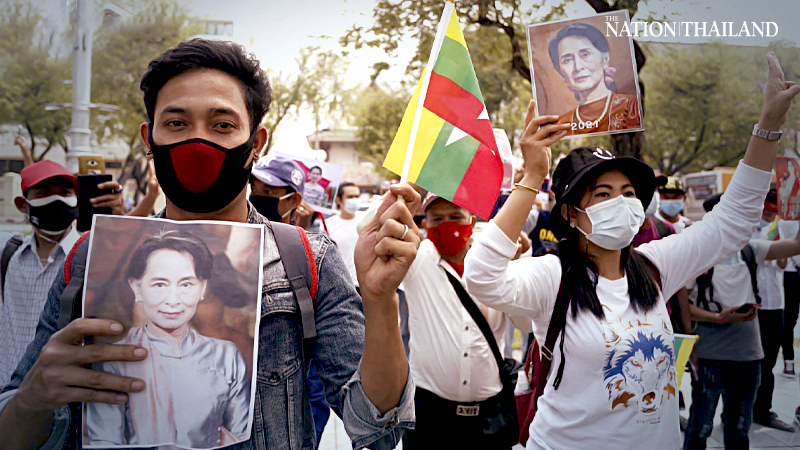
UNITED NATIONS – A Chinese envoy on Friday urged all parties in Myanmar to handle differences through dialogue and consultation.
“We hope that all parties in Myanmar will act in the fundamental and long-term interests of the country, properly handle differences through dialogue and consultation under the constitutional and legal framework, maintain political and social stability, peacefully solve problems that have occurred, and continue to promote the domestic democratic transformation process in an orderly manner,” Zhang Jun, China’s permanent representative to the United Nations, told an informal meeting of the UN General Assembly on the situation in Myanmar.
Under the current circumstances, all parties should maintain calm and restraint, refrain from intensifying tensions, escalating the situation and using violence, so as to prevent bloodshed, he said.
“China is engaging and communicating with relevant parties in Myanmar to further facilitate de-escalation of the situation and return to normalcy at an early date,” the ambassador added.
Speaking of the situation in this Southeast Asian country, Zhang said that what happened in Myanmar is, in essence, “Myanmar’s internal affairs.”
“The international community should, on the premise of respecting Myanmar’s sovereignty, political independence, territorial integrity and national unity, help relevant parties in Myanmar conduct dialogue and reconciliation in accordance with the wishes and interests of its people,” he said.
“The voice and measures taken by the international community should help the parties in Myanmar bridge their differences and solve problems, and avoid intensifying tensions and further complicating the situation,” said the envoy.
Zhang noted that Myanmar is a member in the family of the Association of Southeast Asian Nations (ASEAN). China supports ASEAN in playing an active role in easing the current state of affairs in Myanmar in the ASEAN way.
“China appreciates the mediation efforts of ASEAN countries. ASEAN countries are discussing the setting up of an informal special meeting of their foreign ministers, and we look forward to its early convening on the basis of consensus, thus providing a useful platform and opportunity for promoting problem solving,” the envoy said, adding that “we believe that ASEAN, as a mature regional organization, has enough political wisdom to help Myanmar tide over the difficulties.”
On the mediation efforts of the UN special envoy on Myanmar Christine Schraner Burgener, Zhang said that China “hopes that she will keep the communication channels with all parties in Myanmar open, make extensive engagements, and actively promote peace and talks.”
“The international community should create favorable conditions and leave necessary space for her work,” said the Chinese ambassador.
“The problem of Rakhine State in Myanmar, in essence, should be resolved by Myanmar and Bangladesh through bilateral dialogue and consultation. We do not hope to see new difficulties in solving this problem due to the domestic situation in Myanmar,” Zhang concluded.
Hashimoto: Spectator-free Tokyo Games ‘not envisioned’
Feb 28. 2021Seiko Hashimoto, the new president of the Tokyo Games organizing committee
By The Japan News by The Yomiuri Shimbun / ANN
Seiko Hashimoto, the new president of the Tokyo Games organizing committee, said a spectator-free option is not currently envisioned for the Games in an interview with The Yomiuri Shimbun and other media outlets on Friday.
“It depends on the coronavirus pandemic situation, but as spectators have been allowed at other events, some people might think, ‘Why not at the Olympics and Paralympics?’” Hashimoto said.
As international tennis tournaments and other sporting events have been held with spectators both in Japan and abroad, Hashimoto said the committee aims to hold the Tokyo Games with spectators.
“If measures against the coronavirus are taken thoroughly, events can be held safely without resulting in infection clusters,” she said.
Hashimoto also said she would consult with the International Olympic Committee and other entities about allowing spectators, aiming to decide on a course of action by late March.
The ongoing pandemic is hampering the training of some athletes overseas and the selection process to decide which athletes will compete at the Tokyo Games has not been completed yet for some sports, raising questions over whether all events can be held.
However, Hashimoto, a former Olympian who has participated in seven Games, struck a positive tone.
“Even though there have been training disruptions, athletes are finding ways to train online through which they can maintain their performance levels. I think new ways of doing sports may be created due to the pandemic,” she said. “I want international sports federations [IFs] to work closely with athletes and ensure the qualifying process is fair. We also want to share accurate information with the IOC, IFs and other related organizations.”
Hashimoto was less upbeat regarding calls to reschedule the Games again.
“The one-year postponement has cost a lot of money. The public would not accept further postponement. With the Beijing Winter Olympics coming up in a year, the IOC has not said anything about another postponement,” she said.
“When Tokyo was chosen to host the Games in 2013, support ratings were very high. I think the ratings have fallen because of public concerns over the coronavirus,” Hashimoto continued. “We will implement virus measures to reassure people that it is safe to hold the Games.”
Even though the IOC does not intend to make COVID-19 vaccinations mandatory for athletes and others participating in the Tokyo Games, Hashimoto said, “I’ve heard that the support rating for the Games rose in a survey conducted after vaccinations began. I think vaccines have given the public a sense of security and made them think that the Tokyo Games can be held. By taking all possible measures against the coronavirus, I believe we can start preparing for the Games with certainty.”
Hashimoto assumed the presidency for the Tokyo Organizing Committee of the Olympic and Paralympic Games on Feb. 18 after her predecessor, Yoshiro Mori, came under fire for making remarks widely seen as discriminatory against women.
“Such remarks are unacceptable, but President Mori retracted the remarks, showed deep remorse when he apologized and resigned from the post. I believe that only he could have made the organizing committee what it is today,” she said.
“I’ll take the remarks as an opportunity to raise the issue of gender equality, and I’ll take responsibility for what needs to be done going forward.”
Local travel rules eased but Metro Manila, 9 other areas still under GCQ
Feb 28. 2021
By Inquirer / ANN
MANILA, Philippines — As the country marks one year of quarantine restrictions in March, Metro Manila and nine other areas will remain under general community quarantine (GCQ) amid the continuing threat of the coronavirus pandemic and a spike in new reported cases.
The government, however, relaxed the rules for domestic travelers. Instead of being mandatory, it’s now up to individual local governments if they still want to require COVID-19 testing and a 14-day isolation period for incoming travelers.
Malacañang on Saturday said President Rodrigo Duterte had decided to keep the capital region, the provinces of Apayao, Kalinga, Mountain Province, Batangas and Lanao del Sur, along with Baguio City, Davao City, Iligan City and Tacloban City, under GCQ up to March 31.
The rest of the country will remain under the least restrictive modified general community quarantine (MGCQ).
The technical advisory council of the Department of Health (DOH) in Manila earlier recommended that Cebu be placed under the most stringent ECQ, or enhanced community quarantine, citing the recent rise in local cases and the detection of the UK variant of the coronavirus in the province. But the DOH Central Visayas office was able to convince the council to reconsider its decision.
‘Good decision’
The government’s economic managers earlier supported moves to finally place the entire country under modified general community quarantine (MGCQ), stressing the need to reopen more businesses and revive the economy.
At Saturday’s Laging Handa briefing, OCTA research fellow and University of the Philippines professor Guido David said that “it’s a good decision that Metro Manila has not yet eased into MGCQ.”
David cited the “upward trend” in cases in the capital region, warning that it could be a “sustained event.”
The DOH on Saturday reported 2,921 new COVID-19 cases—the highest daily count since the 3,139 reported on Oct. 16, 2020. The figure was also higher than OCTA’s projection that Metro Manila’s daily tally could reach 2,500 new cases by the end of March if restrictions are further eased.
Travel restrictions eased
“It’s a genuine increase and the rate of increase, the trajectory is similar to what we saw in Cebu, Mountain Province and Benguet. This is actually very concerning,” David said.
Also on Saturday, the Inter-Agency Task Force for the Management of Emerging Infectious Diseases (IATF) approved uniform travel protocols that dispensed with coronavirus testing and quarantine for travelers.
Reservations
“Travelers shall no longer be required to undergo COVID-19 testing except if the LGU (local government unit) of destination will make testing as a requirement prior to travel,” presidential spokesperson Harry Roque said.
Swab testing is the only approved mode for local governments, Roque added.
The IATF also eased documentary requirements for travelers. “The travel authority issued by the Joint Task Force COVID Shield and health certificates shall no longer be required,” Roque said.
OCTA’s David, however, expressed reservations over the decision to ease travel requirements.
“We have to be careful about our border controls,’’ he said. “We sometimes have a second wave or another increase because we are not as strict as border controls. I hope they would evaluate the measures.” “There are areas that are OK, like Bacolod and Iloilo, but we don’t want to add to their cases. At least if it’s just certain areas, we can focus our efforts there,” he added.
Mekong Delta farmers get bumper harvest, high prices for winter-spring rice
Feb 28. 2021Farmers harvest the winter-spring rice in Tiền Giang Province’s Gò Công Tây District. — VNA/VNS Photo Minh Trí
By Vietnam News / ANN
HCM CITY — Farmers in the Cửu Long (Mekong) Delta, the country’s rice granary, are having a bumper winter-spring harvest and getting high prices for their grain.
In Tiền Giang, farmers in the Gò Công freshwater zone have harvested around 4,000ha and got an average yield of 6.5 tonnes per hectare, 1.2 tonnes more than last year, according to the province Department of Agriculture and Rural Development.
The zone, which comprises Gò Công Đông, Gò Công Tây and Chợ Gạo districts and Gò Công Town, is well known for growing fragrant and high-quality rice varieties for export.
Nguyễn Văn Mẫn, the department director, said farmers there sowed more than 21,800ha of rice, or 96 per cent of the target, almost all of it with fragrant and high-quality varieties.
Traders have been buying at the field at VNĐ8,600 per kilogramme, VNĐ1,900-2,000 higher than last year, enabling farmers to earn nearly VNĐ32 million (US$1,520) per hectare, VNĐ13.3 million ($580) higher, according to the department.
The delta’s 12 provinces and Cần Thơ City had sowed the crop about one month earlier than normal to escape the impacts of saltwater intrusion and lack of freshwater during harvest.
Farmers grew 1.5 million hectares, slightly down from last year since in some places they were worried about possible saltwater intrusion and drought.
However, they have had sufficient water for irrigation.
In Cà Mau Province, they have harvested more than 2,000ha of the 36,000ha grown so far, according to its Department of Agriculture and Rural Development.
In Trần Văn Thời District, which has large areas under the rice-shrimp farming model, many farmers have started growing high-quality rice varieties like ST 24 and ST 25.
Both the rice and shrimp farmed under this model are clean since little chemical is used.
In Trần Văn Thời District, farmers are getting a high price of VNĐ9,000 for ST 25, which ranked first in the 2019 World’s Best Rice Contest.
In Hậu Giang Province, farmers are selling their rice at VNĐ500-800 a kilogramme higher than last year.
Trần Chí Hùng, director of its Department of Agriculture and Rural Development, said local authorities and farmers had been regularly warned about saltwater intrusion so that they would take proactive measures to protect themselves.
A salinity level of 0.39 per cent or more has been recorded in Vị Thanh City since the middle of this month while 0.24 per cent has been found in Long Mỹ District.
Most rice varieties can only cope with a salinity level of up to 0.1 per cent.
The peak saltwater intrusion in the delta this year is forecast between February 25 and March 4.
Farmers are expected to complete harvest of the rice crop by May, according to the Ministry of Agriculture and Rural Development’s Plant Cultivation Department. — VNS
In the first month of his presidency, Joe Biden has worked hard to reach out to longtime allies of the US that were slighted during the Trump years. The US counts South Korea and Japan as two of its most trusted allies and has signaled to them that it hopes to work with the two nations to develop a trilateral strategy to deal with North Korea’s nuclear and missile programs. Biden also hopes for more trilateral cooperation in dealing the with growing power of China on the world stage.
For South Korea, they are an opportunity, but also a challenge. The deterioration of relations with Japan since President Moon Jae-in took office in 2017 appears to be the biggest challenge, but it pales in comparison to the challenge posed by growing competition between the US and China. Trade figures for 2020 explain why. China was the leading destination for South Korean exports, absorbing 25.8 percent of the total. The US was next at 14.5 percent. Next were Vietnam and Hong Kong, followed by fifth-placed Japan, which absorbed only 4.9 percent of South Korea’s exports. China is also the largest source of imports, but Japan rises to second place, with the US in third. South Korea runs a trade surplus with China and the US, but a deficit with Japan.
As a nation dependent on trade for its survival, South Korea cannot ignore China, its largest trading partner. It cannot ignore the US, its next largest trading partner with whom it has a close military alliance. Nor can it ignore Japan, which remains an important source of advanced technology. As a smaller percentage of South Korea’s trade, Japan’s importance continues to shrink. South Korea may not be able to ignore, it but it is not as important as China or the US.
The rise of China as an economic partner since the 1990s coincided with a slow but steady decline in the importance of Japan. This dynamic has played out in many other nations around the world. It has also affected the US, reducing its dominance in trade with many nations. The top trading partner for most nations in the world today is one of three places: China, the US, and the EU.
For South Korea, a collapse in the US-China relationship poses the most serious challenge to its prosperity and security. It needs amicable relations with both countries to keep trade flowing. The military alliance with the US has worked successfully for both nations, complaints from political fringes in both countries notwithstanding. The best approach for South Korea is to muddle through, hoping that relations between the US and China begin to warm or, at least, do not degenerate into a new cold war.
If the past is any guide, relations between the US and China will get worse before they get better. One way for South Korea to deal with the situation is to mediate between the two. This risks drawing the ire of both countries, but South Korea is too important to push away. The problem, rather, is that mediation is difficult because the conflict is structural. Chances of success are low.
Another way for South Korea to deal with the situation is repair relations with Japan and expand relations with a range of emerging countries. For all the tension between South Korea and Japan, both nations find themselves in a similar position. Both have strong economic relations with China and military alliances with the US. Politicians in both countries are loath to admit that they need each other, but cooler heads should push them to admit the obvious. They should do so because it is good for both, not because of pressure from Biden.
Among the top 15 export destinations, besides the US, only three others are outside Asia: Germany, Mexico, and Russia. Mexico, ranking 11th, is the only developing nation outside of Asia to rank in the top 15. As economic growth shifts away from China to developing nations with young and growing populations, South Korea will find new opportunities to reduce its dependence on the Chinese and, to a lesser extent, the US markets. Brazil, Colombia, Egypt, Iran, Nigeria, Pakistan, South Africa, and Turkey all have large populations and potential to grow into important economic partners for South Korea.
New initiatives may be difficult in the little more than a year left in President Moon’s term. Setting the stage for South Korea to expand and deepen its relationship with nations of growing importance would be a valuable accomplishment for his successor to build on.
Robert J. Fouser
Robert J. Fouser, a former associate professor of Korean language education at Seoul National University, writes on Korea from Pawtucket, Rhode Island. He can be reached at robertjfouser@gmail.com — Ed.
Everything you need to know about Nepal’s carbon trade deal
Feb 28. 2021
By The Kathmandu Post / ANN
Nepal will receive $5 for every tonne of carbon dioxide emission reduced as country embarks on earning up to Rs5 billion by selling 9 million tonnes of CO2 by 2025.
On Thursday, the government signed a multi-million dollar agreement with the World Bank’s Forest Carbon Partnership Facility (FCPF), a global partnership of governments, business organisations, civil society, and indigenous groups’ organisation for reducing emissions by protecting forests.
For reducing emissions, countries implement a collection of actions (commonly referred to as REDD+).
The REDD+ is a framework created by the UN Framework Convention on Climate Change’s Conference of the Parties (COP) to guide activities in the forest sector to reduce emissions from deforestation and forest degradation, and to enhance forest carbon stock, adopt sustainable land use management in developing countries.
In exchange for their contribution to bringing down emissions, countries such as Nepal are given a certain amount of money.
“Nepal’s Emission Reductions Program builds on more than three decades of successful community forestry,” said Fris Hadad-Zervos, the World Bank’s Nepal Country Director. “The emissions reduction purchase is one pillar of a strategic program on forest landscapes and climate action in Nepal. This innovative financing agreement will address the drivers of deforestation and forest degradation, helping incentivise further community action across the country.”
Nepal had submitted a proposal for its project, ‘People and Forests: A Sustainable Forest Management-Based Emission Reduction Program in the Terai Arc Landscape, Nepal’ to the Forest Carbon Partnership Facility (FCPF) Carbon Fund in 2018.
Why does it matter?
Nepal is the fifth country in the Asia-Pacific and 12th in the world to sign such a milestone agreement with the FCPF. The agreement has been touted as a landmark achievement for the country as this would be the first financial support for Nepal for keeping its emissions low.
“This scale of results-based payments for emission reductions is a first for Nepal,” said Finance Secretary Sishir Kumar Dhungana.
Nepal, home to 6.61 million hectares of forests and other wooded lands (44.74 percent of the total area), has the potential to generate revenue from carbon financing by participating in the REDD+ programme. Nepal has been working for several years to become eligible for carbon trading or generate revenue by selling carbon stored in its forests.
“Nepal had been working on it for at least ten years as part of the preparation for carbon trading. The signing of the agreement is a landmark event in our pursuit of carbon trade, a significant achievement,” said Buddi Sagar Poudel, chief of the REDD Implementation Centre under the Ministry of Forests and Environment. “A lot of work has happened in the last ten year; therefore, we could reach this level and make our claims for carbon trade.”
What are the works Nepal has done to be eligible for carbon trading?
According to Poudel, preparations have been made mainly in four sectors. First, the government prepared a REDD+ Strategy in 2018 to guide the development of a set of policies and programmes that address the drivers of deforestation and forest degradation. For the implementation of the REDD+ Strategy, various 75 activities were outlined.
The government also developed the Emission Reduction Program Document (ERPD), a 253-page proposal, which will be a guiding document for implementing activities under the new agreement. It also prepared the Safeguards Information System for meeting social and environmental safeguards for promoting gender and indigenous issues as well as preserving indigenous knowledge while implementing the REDD, among others. The government also completed the national forest reference emissions level and measurement, reporting, and verification of carbon stocked in its forests.
How will Nepal reduce emissions to access benefits as per the carbon trade agreement?
The government will implement various activities at a sub-national scale in 13 districts of the TeraiArc Landscape (TAL), west of the Bagmati.
“Forests in the Terai region provide ecosystem services that are critical for climate resilience, including watershed protection, and drought and flood mitigation,” said Bishwa Nath Oli, Secretary at the Ministry of Forests and Environment. “This programme will help protect forests that are inextricably linked to the well-being of many communities here and across the country.”
For accessing revenues, Nepal needs to either cut down emissions or increase carbon stock in the forest.
“We have two ways to reduce carbon-dioxide levels. Either we control activities that increase the emission of gases or speed up carbon sequestration, the process of removing carbon dioxide from the atmosphere and capturing it elsewhere, for example, forests,” said Poudel. “Only then can we get the revenue for reducing carbon-dioxide emissions. Carbon trade is not alike giving or receiving money for selling any commodity, but it’s about incentivising our efforts to reduce carbon-dioxide emissions.”
For estimating the national forest reference emission level, a baseline study was conducted to measure the carbon-dioxide emissions from forests in the country. According to Poudel, the net carbon-dioxide emission of the country was 1.2 million tonnes every year.
“We can either control emissions through afforestation or by controlling deforestation and degradation of forest areas,” said Poudel. “Therefore, as per the existing mechanism, we would get revenue from emission reduction from activities like not letting wildfire incidents occur or increasing carbon stock by increasing forest cover or improving our degraded forests. Both ways work.”
What are the targets under the new agreement?
With this Emission Reductions Payment Agreement (ERPA) in place, Nepal is expected to reduce 9 million tons of carbon dioxide emissions in the Terai Arc Landscape. For each tonne of carbon-dioxide emission reduced, Nepal will receive $5 in return.
According to estimates, forest cover in 13 districts can reduce 34 million tonnes of carbon-dioxide between 2018-2028. Out of which, 23 percent (7.9 million tonnes) can not be sold as they are kept as a buffer.
“In case there is a forest fire, then we may end up releasing more carbon dioxide as well as losing the stocked carbon,” said Poudel. “Therefore, we can not commit to selling all the carbon.”
Of the remaining 26 million tonnes, which is estimated to be reduced between the 2018-2028 period, only 10 million tonnes are likely to be available between 2018-2025 when the agreement ends. Hence, the government has signed the agreement to only trade 9 million tonnes of carbon-dioxide for now.
How does Nepal plan to achieve the target?
For achieving the targets, Nepal has outlined seven activities. The country will work towards improving management practices in existing community-based forest management. Likewise, officials plan to transfer national forests to communities that can work on restoring them. It shall also support and promote private sector forests. According to Poudel, nearly 30,000 hectares of private forests exist in 13 districts. The government also aims to encourage the use of alternative energy resources as well as work on leasehold forests. Likewise, it plans to improve integrated land use planning to reduce forest conversion for infrastructure development and promote better management of existing protected areas in the country.
“The government will also work towards minimising haphazard development which ends up adversely impacting forests,” said Poudel. “Also, we can’t forget the protected areas. The government can not only focus on protecting forests outside while protected parks experience degradation of forests.”
When and how the carbon stock will be measured?
For receiving the revenue from carbon financing, the stock of carbon will be measured twice—once in 2021 and then in 2025, the final year of the agreement—for determining how Nepal has reduced its carbon-dioxide emissions through the REDD programme.
According to Poudel, the carbon absorbed in the forests does not equal carbon-dioxide emissions, as a ton of carbon can produce 3.67 tonnes of carbon dioxide.
“We have sold one tonne of carbon dioxide, not carbon, at $5,” said Poudel.
Will Nepal get all the $45 million revenue by 2025?
Although the government and the World Bank have signed the agreement unlocking the potential to get $45 million in revenue from carbon trade, the country may not get the whole amount. The amount quoted is maximum Nepal can receive under the programme.
“This is completely a result-based trade and depends upon how much we can deliver,” said Poudel. “For example, one is paid as much as they produce. But with business as usual, it will be difficult to secure the entire funds.”
What will happen to the rest of the carbon stored then?
The World Bank’s Forest Carbon Partnership Facility (FCPF), launched in 2008, has worked with 47 developing countries across Africa, Asia, and Latin America, and the Caribbean, along with 17 donors that have made contributions and commitments totalling US$1.3 billion. But this setup will be phased out in 2025. Then, countries like Nepal will have to find another buyer for their stock of carbon.
“Either we have to find new buyers to sell our carbon absorbed through REDD or wait for the same mechanism to continue so that we can again trade with the World Bank’s Forest Carbon Partnership Facility (FCPF),” said Poudel.
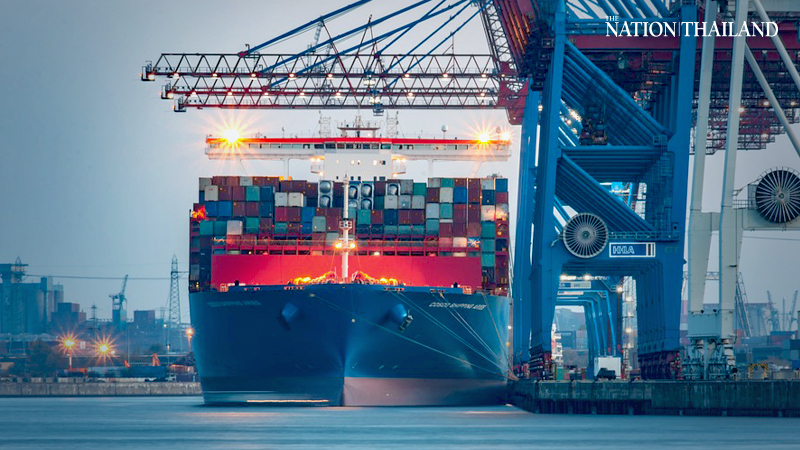
Global container shipping rates are high, but unsustainable: Fitch
Feb 28. 2021
By The Daily Star / ANN
Global container shipping companies’ performance will be strong in 2021 after a profitable 2020, according to credit rating agency Fitch Ratings.
Spot freight rates will remain high in the short term, which will flow through to contracted rates for 2021.
“However, we consider the current rates unsustainable in the medium term, as the sector is susceptible to rate volatility and risks of weak economic recovery and trade protectionism, requiring constant prudent capacity management,” Fitch said on its website.
A combination of rebounding demand for goods in the second half of 2020, supply chain disruptions – such as container box shortages and port congestion – and more strategic capacity management drove container freight rates up, especially on the routes from China to Europe and the US.
Shipping one 40-foot container from China to Europe or the US West Coast now costs over $8,000 and $4,000, respectively, from well below $2,000 a year ago, according to Freightos Baltic Index.
Trade volume recovery was fuelled by a change in consumer spending habits during the pandemic – ordering more manufactured goods while saving by spending less on services, such as leisure and restaurants. It was further supported by inventory re-stocking by businesses that faced acute supply chain disruptions and increased demand for personal protective equipment.
Total volumes shipped from Asia to North America exceeded 2019 levels by over 7 per cent in 2020, according to Container Trade Statistics. A decline in volumes on the Asia-Europe route by about 5 per cent in 2020 indicates growth potential in 2021 as demand recovers.
Container box shortages and port congestion due to pandemic-related operational disruptions have extended container ships’ turnaround times, further increasing freight rates. A usually quiet period during the Chinese New Year could have eased some congestion, but demand remained strong as China maintained its production levels.
The ongoing virus outbreaks in many regions and mobility restrictions are likely to keep freight rates abnormally high in the short term.
These higher-than-usual spot rates will translate into higher contract freight rates in the ongoing spring contracting season.
“However, we view rate volatility as an inherent sector risk, and we expect rates to reduce once supply disruptions related to the pandemic are addressed,” Fitch said.
Container shipping companies’ performance improved in 2020 due to higher freight rates in the second half of 2020, despite lower volumes year-on-year and to prudent capacity deployment during the strictest lockdowns in the second quarter last year.
“We expect the 2021 sector performance to remain sound, with performances of individual container-shipping companies varying depending on their route mix, their proportion of contracted volumes and exposure to chartered fleet, and any further spending on container inventory. Improved profitability led to stronger leverage metrics in 2020.”
“Although container shipping companies performed strongly during the pandemic, we believe that the current shipping rates are unsustainable and expect them to moderate in the medium term once supply chain disruptions ease, as the industry is highly competitive.”
As with the rise of any technology and its use for industrial development, there are bound to be misapplications and misuse, said Minister of Transport and Infocommunications Dato Seri Setia Awang Abdul Mutalib bin Pehin Orang Kaya Seri Setia Dato Paduka Haji Mohd Yusof.
“The utilisation of big data presents cybersecurity threats and invasion of privacy, as well as the rise of Deep Fakes, posing great threats to society in general. From policy and regulatory perspectives, we are now working on the necessary legal frameworks to address these concerns. This includes the Cyber Security Order to ensure the protection of our Critical Information Infrastructures (CII), as well as the Personal Data Protection Order to prevent unauthorised and unconsented sharing of personal data and information,” he added.
The minister made these comments while delivering a keynote speech as the guest of honour at the 13th edition of the Brunei Chevening Youth Forum (BCYF) yesterday.
The forum held at The Core, Universiti Brunei Darussalam (UBD), was hosted by Chevening Alumni Brunei, the Brunei Youth Council and the Young Professionals Network Brunei.
Dato Seri Setia Awang Abdul Mutalib said the Fourth Industrial Revolution (IR 4.0) is paving the way for digitalisation and smart automation through the increased use of cyber-physical technologies such as the Internet of Things (IoT) and artificial intelligence (AI).
The minister said, “The impacts of each industrial revolution cannot be understated. The improvement in information technology has dramatically changed how we work, live and play. “Globally, the transition to the IR 4.0 has driven innovation with the increasing adoption of AI and IoTs, such as smart devices (mobile phones, smart watches, online transactions), the rise of collaborative robots and 5G networks, to name a few.
“Digital transformation is also making its mark regionally, where during the recent first ASEAN Digital Ministers meeting last month, saw the launch of the ASEAN Digital masterplan 2025. This masterplan serves as the roadmap towards secure and transformative digital services, technologies and ecosystem in ASEAN.”
The minister noted that at the national level, Brunei Darussalam recently launched its first national Digital Economy Masterplan 2025 with the vision of ‘Smart Nation through Digital Transformation’.
“This has always been a priority for Brunei, with the steer, guidance and wisdom from His Majesty Sultan Haji Hassanal Bolkiah Mu’izzaddin Waddaulah ibni Al-Marhum Sultan Haji Omar ‘Ali Saifuddien Sa’adul Khairi Waddien, Sultan and Yang Di-Pertuan of Brunei Darussalam. Throughout 2018 and 2019, His Majesty had on several occasions shared his wisdom and encouragement on the need to explore the benefits of digital economy, which befits and supports our aspirations of Vision 2035.”
“Encouraged by the development in digital transformation towards elevating Brunei as a Smart Nation, His Majesty in a 2021 New Year’s Eve titah emphasised on continuous strategic collaboration among all stakeholders in providing skilled resources to realise the progress towards a Smart Nation and a Smart City,” the minister said.
He noted that under the Digital Economy Masterplan 2025, three flagship projects have been identified for immediate implementation: Digital Identity or Digital ID; Digital Payment Hub – to support interoperable mobile payments; and National Information Hub – to support data sharing among government agencies in a more secured manner.
“While all three are critical to enabling the Smart Nation, the Digital ID is truly at the core of delivering our vision, Insya Allah. Your identity is the key that will enable each and every one of us to access all the services that we are entitled to.
“When you interact with the government, for example, you need to prove who you are. The same goes for the opening of a bank account or signing up for a mobile subscription. Your identity is key. To implement this solution, we are looking at the feasibility of a blockchain-based solution that will increase the resilience of our systems, as well as creating new opportunities for innovation,” added the minister.
Taking these into account, His Majesty’s Government has implemented and is actively pursuing key policy directions to further support the country’s digital transformation journey.
The minister noted the information and communications technology (ICT) industry restructuring in the country, which started on January 24, 2020 with the formation of Unified National Networks (UNN) as the sole network infrastructure provider, as well as the emergence and rebranding of retail service providers.
“As a result of this industry restructuring, Alhamdulillah, we have recorded very positive growth,” said the minister. “To sustain such positive growth and momentum, current works have started to trial and study into the development of 5G technologies in Brunei Darussalam. Insya Allah, by April 2021, a series of pilot projects showcasing the 5G experience will be deployed at several strategic locations in the country. With this initiative, it is certainly hoped that we will be able to stimulate interests among our youth to come up with innovative new ideas leveraging on 5G technologies.”
Infections keep dropping in Tokyo, but rate of decline slows
Feb 27. 2021Tokyo Gov. Yuriko Koike
By The Japan News/ANN
The number of people newly infected with the novel coronavirus continues to fall, but the pace of decline is slowing, keeping Tokyo from meeting its goal of reducing the weekly average number to 70% of the previous week.
The Tokyo metropolitan government is concerned that the state of emergency may not be able to be lifted on March 7 as scheduled.
The number of new COVID-19 patients in Tokyo reached a record 2,520 on Jan. 7, the day a state of emergency was declared, with the weekly average also hitting a record 1,861.1 four days later on Jan. 11. Since then, the number has been on a downward trend to reach an average of 279.7 over the week until Thursday, reaching the same level as in mid-November.
However, the pace of decline has slowed.
Tokyo Gov. Yuriko Koike announced on Feb. 2 that if each weekly average could be kept below 70% of the previous week, the number of patients per day would be less than 140 by early March. Tokyo had met this 70% goal steadily until mid-February, but the percentage rose to 76.3% on Feb. 18 and has remained around 80% and 90% since then. What is behind the increase is likely more people going out compared to when the state of emergency was declared.
The slowdown in the decreasing infection rate is a national trend. The Health, Labor and Welfare Ministry’s advisory body said Wednesday that the decline in the number of infections among young people seems to have bottomed out. The trend is noticeable in the Tokyo metropolitan area as an increasing number of patients have been reported in Chiba Prefecture over the past few days, and the panel is warning of a rebound.
The state of emergency will be lifted in the Kansai and Chukyo regions ahead of the Tokyo metropolitan area, and Tokyo is wary that this move could cause people to let down their guard. The metropolitan government will close parking lots for public parks and sports facilities from Saturday.
“We must avoid extending the state of emergency as that would have a huge impact, but it is necessary to thoroughly contain the number of infected people on time to realize the Tokyo Olympics,” a senior metropolitan government official said.
Vietnam aims for GDP per capita of $5,000 by 2025, developed country status by 2045
Feb 27. 2021Party delegates voted to adopt the Resolution of the 13th National Party Congress at the final session of the Congress held on February 1, 2021. — VNA/VNS Photo
By Viet Nam News/ANN
HÀ NỘI — The Communist Party is aiming for Việt Nam to reach GDP per capita of $5,000 by 2025 and to be a developed country by 2045.
The goals are part of the Resolution of the 13th National Party Congress held from January 25 to February 1, the entirety of which has just been released by the Office of the Party Central Committee.
The Resolution noted the highlight of the 12th tenure was the successful handling of the COVID-19 pandemic resulting in significant economic achievements – including stable macroeconomics, controlled inflation and high GDP growth, while people’s living standards were improved. The fight against corruption, loss and waste was intensified, while the socio-political situation remained stable, foreign relations deepened and Việt Nam’s profile on the international stage grew.
However, numerous shortcomings – including slow modernisation and industrialisation, shifting in the growth model, limited competitiveness and quality and productivity of the economy, inadequate adaptation to climate change and environment protection demands, drawbacks in Party building and rectification, that science and technology has not been the driving engine of socio-economic growth and the lives of certain groups of people remain difficult – of the 12th tenure have been identified in the Resolution.
The achievements of 35 years of implementation of đổi mới (Reform), 30 years of implementing the 1991 Party Platform and in the 10 years of implementing the 2011 Revised Party Platform have proved that the country’s path towards socialism is consistent with Việt Nam’s practical situation and the times’ development trends, with the Party’s righteous leadership the leading factor in Việt Nam’s revolutionary victories, the Resolution reads.
Amid rapidly shifting and complex developments in the global scene, the Party Platform continues to serve as the ideological flag to gather the collective strength of united peoples for the goal of a “prosperous-people, strong-nation, democratic, equitable, and civilised” Việt Nam.
Development vision and orientations
In the coming years, the challenges and opportunities of a complicated world demand the entire Party and Vietnamese people to “unite” and continue to have major changes in mindset and make correct and timely forecasts of the situation to prepare and deal with any circumstance, to “bring the country forward on the path of rapid, sustainable development” and the attainment of many orientations, goals, and tasks.
The Resolution lists major guiding orientations of the years forward, including “persistent and innovative” implementation of Marxist-Leninism and Hồ Chí Minh ideology, persistent pursuit of socialism and independence and upholding national interests based on the principles of the United Nations’ Charter and international law and the spirit of equal and win-win co-operation, with national defence and security in mind.
It also aims to enhance patriotism, the spirit of resilience, national unity and people’s aspirations to develop a prosperous and happy nation, promoting socialist democracy, enhancing the quality of human resources and promoting innovation and science and technology – especially the achievements of the Fourth Industrial Revolution – in service of the country’s sustainable and rapid development.
In addition, Party building and governance are goals, working towards a streamlined and effective Party system with quality cadres and civil servants.
The “general objectives” are identified as improving the Party’s leadership and ruling capacity; building a pure, strong and comprehensive Party and political system; consolidating and raising people’s confidence in the Party, the State and the socialist regime; fomenting aspirations to develop a prosperous and happy country; promoting the will and strength of national solidarity; promoting comprehensive and synchronous đổi mới (reforms), industrialisation, and modernisation; building and firmly defending the Fatherland, maintaining a peaceful and stable environment; and striving to become a developed country with socialist orientations by the middle of the 21st century.
The “particular objectives” are set on Việt Nam becoming a developed nation with a modern industrial base and leaving the ranks of lower-middle-income countries by 2025 – the year marking the 50th anniversary of the liberation of the south and national reunification. By 2030, when the Party celebrates its 100th founding anniversary, Việt Nam is hoped to become a developing country with a modern industrial base and upper-middle incomes. By 2045, the 100th anniversary of the establishment of the Democratic Republic of Việt Nam, now the Socialist Republic of Việt Nam, Việt Nam is hoped to become a developed, industrialised nation with high income.
In 2021-25, the Resolution sets a target for average GDP growth of 6.5-7 per cent, GDP per capita by 2025 reaching $4,700-5,000, the contributions of total factor productivity (TFP) in economic growth reaching 45 per cent, the labour productivity increase hitting 6.5 per cent a year, urbanisation reaching 45 per cent, the ratio of processing and manufacturing industries in the GDP exceeding 25 per cent, and the digital economy accounting for 20 per cent of the country’s GDP.
In this time frame, the Resolution aims for agricultural labour ratio staying at 25 per cent, the ratio of trained labour reaching 70 per cent, urban unemployment kept at below 4 per cent, the rate of multidimensional poverty maintaining a decrease of 1-1.5 per cent year-on-year, aiming for 10 doctors and 30 hospital beds for every 10,000 people, striving towards 95 per cent of the Vietnamese population being covered under the State’s health insurance, life expectancy reaching 74.5 years, and the ratio of communes obtaining new rural standards reaching at least 80 per cent, including 10 per cent meeting the requirements of exemplary new rural standards.
In terms of environment, by 2025, the goals are to have 95-100 per cent of the urban population and 93-95 per cent of rural population having access to clean and hygienic water, 90 per cent of urban waste properly collected and treated, 92 per cent of active industrial-processing zones outfitted with proper wastewater treatment facilities; 100 per cent of all businesses polluting the environment punished; and upholding the national forest coverage at 42 per cent.
The 13th tenure has “six central tasks”, with the first being Party building, building rules-based socialist State, with effective, corruption-free governance. The second task is controlling the COVID-19 pandemic, ensuring COVID-19 vaccination coverage, while engaging in economic recovery, pursuing the transformation of growth model and economic restructuring, implementing national digital transformation strategy, raising labour productivity and innovation, and third is upholding independence, improving the effectiveness of foreign affairs and international integration, building modern and elite armed forces, and maintaining peaceful and stable environment for development.
The fourth central task is inspiring patriotism among the people to develop a prosperous and happy nation, promoting the role of cultural values and the strength of Vietnamese people in nation-building and defence, with detailed policies to develop the culture of ethnic minority groups, carrying out social policies and ensuring social security for the people, raising living standards and happiness indexes of the Vietnamese people. Fifth is perfecting the legal system, institutions, and policies to promote socialist democracy. The final central task is to strictly manage, reasonably and effectively use land and natural resources, protecting the environment, and implementing adaptation measures to cope with climate change and natural disasters.
Breakthrough strategies
To achieve the goals, the Party sets three major breakthrough strategies – completing development institutions, developing human resources, and building modern infrastructure.
Regarding institutions, the Party identifies the need to improve development institutions for a socialist-oriented market economy; reforming State governance towards modernity and competitiveness; improving the legal system and institutions to create a favourable, healthy, and fair business and investment environment for all sectors of the economy where innovation can foster; mobilising, managing and using all resources – especially land, finance, public-private partnership – for development purposes; bolstering reasonable decentralisation, while enhancing inspections and keeping powers in check via the legal system.
For human resources, the Party wants a priority on high-quality human resources for leadership and management and key positions, based on “comprehensive and radical transformation of education and training quality in tandem with recruitment and incentive policies”; promoting research, transfer, application and development of science and technology, innovation; promoting the aspirations for national development, people’s sense of unity and national pride in nation-building and defence efforts.
The Resolution also states the demand for “modern and synchronous” social and economic infrastructure, with a focus on national key transport projects, climate adaptation projects, and information and communications projects to serve national digital transformation and the development of a digital economy and society. — VNS
 Seiko Hashimoto, the new president of the Tokyo Games organizing committee
 Farmers harvest the winter-spring rice in Tiền Giang Province’s Gò Công Tây District. — VNA/VNS Photo Minh Trí
 President Moon Jae-in

 Tokyo Gov. Yuriko Koike
 Party delegates voted to adopt the Resolution of the 13th National Party Congress at the final session of the Congress held on February 1, 2021. — VNA/VNS Photo
