CE says 4th coronavirus wave ‘worrying’, mulls more stimulus #SootinClaimon.Com

#SootinClaimon.Com : ขอบคุณแหล่งข้อมูล : หนังสือพิมพ์ The Nation.

CE says 4th coronavirus wave ‘worrying’, mulls more stimulus (nationthailand.com)

CE says 4th coronavirus wave ‘worrying’, mulls more stimulus

Dec 08. 2020Chief Executive Carrie Lam Cheng Yuet-ngor holds a press conference before the Executive Council meeting at the Central Government Office on Dec 8, 2020. (PARKER ZHENG / CHINA DAILY)Chief Executive Carrie Lam Cheng Yuet-ngor holds a press conference before the Executive Council meeting at the Central Government Office on Dec 8, 2020. (PARKER ZHENG / CHINA DAILY) 

By China Daily

HONG KONG – Hong Kong Chief Executive Carrie Lam Cheng Yuet-ngor said on Tuesday that the government is mulling to roll out more stimulus aid to bail out affected businesses as her administration further tightened social distancing rules to curb the city’s fourth wave of COVID-19 infections, which she described as “worrying”.

Meeting the press before an Executive Council meeting on Tuesday, Lam said dine-in service at restaurants would be prohibited after 6 pm while fitness clubs, sports venues, as well as massage and beauty salons would be closed.

Chief Executive Carrie Lam Cheng Yuet-ngor said dine-in service at restaurants would be prohibited after 6 pm while fitness clubs, sports venues, as well as massage and beauty salons would be closed

ALSO READ: 29 untraceable cases among 78 new virus infections in HK

Lam said the fourth wave is “very worrying”, citing health data showing that a total of 661 new cases were recorded over the past week, nearing the peak reached during the third wave.

Worse, more patients, who are relatively younger, are in critical condition, she added.

Lam said the measures rolled out last week, including the closure of leisure venues and the ban on groups of more than two people from gathering, did not have a satisfactory effect as many people were seen together on the streets during the weekend.

Citing data on the use of Octopus cards, the city’s major means of transport payment, Lam said there were more people on the streets last weekend than during the height of the third wave.

Many of these people visited restaurants and shopping malls, and therefore, tougher measures are needed, she added.

READ MORE: HK: Free testing for residents at virus-hit public housing block

Sector-targeted handouts will be rolled out to avoid widespread layoffs after the secretary discusses with players from impacted sectors, and details will be later disclosed.

Carrie Lam, HKSAR Chief Executive

Lam said the government was considering a new tranche of subsidies to bail out affected businesses, especially entertainment venues that were closed due to the pandemic. 

“The Financial Secretary will be instructed to introduce support measures as some premises are to be shut down under the latest social-distancing guidance,” Lam said. “Sector-targeted handouts will be rolled out to avoid widespread layoffs after the secretary discusses with players from impacted sectors, and details will be later disclosed.”

As the government continues to pump money into financial rescue packages, it now forecasts the budget deficit in this fiscal year will soar from the original HK$139.1 billion to a record high of over HK$300 billion (US$38.7 billion).

The government has already allocated more than HK$300 billion to shore up the beleaguered economy roiled by the novel coronavirus outbreak, accounting for 11 percent of the city’s gross domestic product. Fiscal reserves have dwindled to HK$800 billion, equivalent to 13-14 months of government spending, the same level as during the SARS outbreak in 2003, Chan told the Legislative Council’s Panel on Financial Affairs on Monday.

While the city’s economic recession may still linger for some time, US-based credit rating company Fitch Ratings said the Hong Kong economy will gradually recover due to the strong growth of the mainland economy.

“Economic activities in Hong Kong will be supported by strong growth in the Chinese mainland. Export and import activities will resume growth and certain segments of the tourism sector will recover through the implementation of travel bubbles. The city’s economic recovery will also be supported by its prudent public finances,” Fitch Ratings said.

ALSO READ: HK reports 100 new virus cases, revives ban on evening dine-in

Regarding the new cluster in Kwai Shing West Estate, Lam said the Executive Council would amend government regulations so that people subject to mandatory testing will not be allowed to leave designated areas. 

A total of 15 cases involving eight units on the fifth floor of the public housing estate’s Block 8 had already been reported as of Monday. 

Residents living on the same floor will be issued quarantine orders and will be transferred to quarantine centers to stop the spread of the virus, the government said in statement on Monday night. Other Block 8 residents can still get free specimen bottles from a mobile station set up by the government at the estate.
VN promotes digital transformation to develop ASEAN into a start-up centre #SootinClaimon.Com

#SootinClaimon.Com : ขอบคุณแหล่งข้อมูล : หนังสือพิมพ์ The Nation.

VN promotes digital transformation to develop ASEAN into a start-up centre (nationthailand.com)

VN promotes digital transformation to develop ASEAN into a start-up centre

Dec 08. 2020

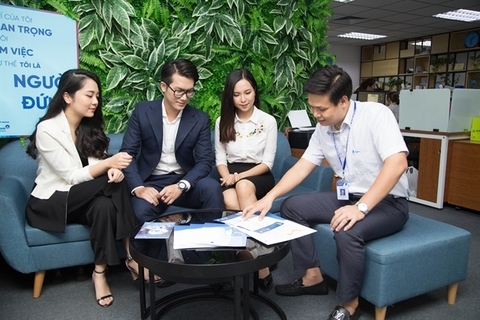
VNPT and VCCI have signed a deal to support the domestic enterprises in implementing digital transformation. — Photo courtesy of VNPT

VNPT and VCCI have signed a deal to support the domestic enterprises in implementing digital transformation. — Photo courtesy of VNPT 

By Vietnam News

Viet Nam has carried out digital transformation programmes for enterprises and dialogues between companies and senior leaders of ASEAN countries to turn the bloc into a hub for innovative and sustainable start-up development.

These activities also accelerate digital transformation and technology start-up development in ASEAN, according to the Ministry of Information and Communication.

ASEAN countries have an advantage with about 60 per cent of the population under 35 years old, promising strong start-up potential. Therefore, as Chairman of ASEAN 2020, Viet Nam has organised the ASEAN Startup Forum to discuss promoting start-up co-operation in the bloc.

Ngo Dien Hy, general director of VNPT Information Technology Company (VNPT-IT), said the Viet Nam Post and Telecommunication Corporation (VNPT) and the Viet Nam Chamber of Commerce and Industry (VCCI) have signed a deal to support the domestic enterprises in implementing digital transformation.

Per the agreement, VNPT will work with VCCI and the ASEAN Business Advisory Council (ASEAN BAC) to implement the Digital STARS Showcase 2020 project, which aims to build a network connecting technology start-ups in ASEAN to create opportunities to exchange experience, expand partnerships and promote digital transformation.

Pham Dinh Doan, an ASEAN BAC member, said Digital STARS Showcase 2020 also includes innovative and practical digital transformation solutions for firms to upgrade their business models and participate in the digital economy, especially micro, small and medium-sized enterprises.

The Digital STARS Showcase 2020 has had more than 100 solutions from large companies and potential start-ups since it was launched in September.

The system of those solutions is expected to expand to other ASEAN countries to build a common database on regional digital transformation.

At present, digital transformation models are creating convenient services. However, this kind of model also brings difficulties for local start-ups because it fundamentally changes the traditional business model and poses new challenges.

To survive and thrive in an age of constantly changing technology, domestic start-ups must change because they could be eliminated if they are slow to carry out digital transformation.

Deputy Minister of Science and Technology Bui The Duy said they should choose small projects for digital transformation. That would reduce damages and take experiences to implement the digital transformation for larger projects.

Besides smart technology, the key of digital transformation is to change the people, mindset and culture of a start-up, Duy said.

The COVID-19 pandemic is still complex and harming business activities in the ASEAN region.

However, according to a report on digital transformation supporting enterprises amid COVID-19 published by the VCCI and VNPT, the pandemic is driving domestic enterprises to promote digital transformation.

Meanwhile, the National Assembly has requested the Government to issue a plan to ensure cyber information security for 2021-2025.

The Government is also required to strictly manage foreign digital platforms, promote the development of social networks in the country and issue an e-Government Development Strategy.

By 2021, Viet Nam is hoped to have basically complete national databases and build platforms to promote national digital transformation.

The Ministry of Information and Communications will issue solutions to support and accelerate digital transformation, especially digital transformation in enterprises.

Over the past time, Vietnamese enterprises have mainly applied digital transformation for management, logistics and marketing activities but not much for production, according to some experts.

Enterprises have gradually improved to carry out digital transformation, but the transformation is basic. The digitalisation rate in products and services is still low due to barriers like high cost, lack of infrastructure for digital transformation, corporate data leakages and a lack of qualified workers.

Therefore, besides developing infrastructure, the Government needs to give financial support for local enterprises in implementing digital transformation and justify rules about data management. — VNS

Singapore to host World Economic Forum in May next year #SootinClaimon.Com

#SootinClaimon.Com : ขอบคุณแหล่งข้อมูล : หนังสือพิมพ์ The Nation.

Singapore to host World Economic Forum in May next year (nationthailand.com)

Singapore to host World Economic Forum in May next year

Dec 08. 2020The World Economic Forum will be held in Singapore from May 13-16, 2021.PHOTO: EPA-EFE
The World Economic Forum will be held in Singapore from May 13-16, 2021.PHOTO: EPA-EFE 

By Straits Times

SINGAPORE – Singapore will host the World Economic Forum’s (WEF) annual meeting next May, which will see top political, business and academic leaders gather to discuss pressing global issues.

Announcing its decision to shift the annual forum from Switzerland in view of the Covid-19 situation in Europe, the WEF said last night that the meeting in Singapore “will be the first global leadership event to address worldwide recovery from the pandemic”.

The WEF said it decided Singapore was best placed to host the meeting in the light of the current Covid-19 situation worldwide.

Singapore’s Ministry of Trade and Industry (MTI) said on Monday (Dec 7) that the WEF’s decision reflects its confidence in the country’s management of the Covid-19 pandemic and will also boost the Republic’s meetings and conferences sector.

Singapore had two community cases in the past week.

Said WEF founder and executive chairman Klaus Schwab: “A global leadership summit is of crucial importance to address how we can recover together.

“The Special Annual Meeting 2021 will be a place for leaders from business, government and civil society to meet in person for the first time since the start of the global pandemic. Public-private cooperation is needed more than ever to rebuild trust and address the fault lines that emerged in 2020.”

Hosting the WEF will give a boost to Singapore’s meetings, incentives, conferences and exhibitions (Mice) sector and other sectors like hospitality, said MTI.

The annual forum saw about 3,000 participants gather in Davos in January.

It will be held from May 13 to 16 next year, before returning to Davos, Switzerland, in 2022.

The annual forum will – in a first – include a virtual component to allow greater participation amid the Covid-19 pandemic, said MTI.

This is only the second time the WEF meeting will be held outside of Switzerland since it began in 1971, and the first time it will be held in Asia. The 2002 edition was held in New York, to show solidarity with the United States and the people of the city after the Sept 11 terror attacks the year before.

During the usual “Davos week” next year, the forum will hold a virtual event from Jan 25 to 29. It will also host a global technology governance summit in Tokyo in April, said the WEF.

The MTI stressed that the health and safety of the local community and event attendees will be its “foremost priority”.

Singapore has successfully rolled out new protocols at large-scale meetings and conferences like the Singapore International Energy Week, it noted. These protocols include on-arrival tests, pre-event and periodic antigen testing, as well as contact tracing.

“All international conferences held in Singapore will similarly adhere to strict public health and safety measures,” MTI said.

In a Facebook post last night, Trade and Industry Minister Chan Chun Sing said the WEF’s decision “speaks volumes of the international community’s trust and confidence in Singapore’s handling of the pandemic thus far”.

Singapore looks forward to supporting the WEF in its efforts to effect positive change globally via dialogue and engagement, he added.

“May we be a positive example of how to resume economic activities safely and sustainably,” Mr Chan said. “Successful execution of such high-level meetings will help re-establish ourselves as a premier global business hub.”

Suga Cabinet’s approval rating falls to 61% amid virus surge, Go To woes #SootinClaimon.Com

#SootinClaimon.Com : ขอบคุณแหล่งข้อมูล : หนังสือพิมพ์ The Nation.

Suga Cabinet’s approval rating falls to 61% amid virus surge, Go To woes (nationthailand.com)

Suga Cabinet’s approval rating falls to 61% amid virus surge, Go To woes

Dec 08. 2020

By The Yomiuri Shimbun
The approval rating for Prime Minister Yoshihide Suga’s Cabinet has fallen by 8 percentage points to 61% from the previous month, while the disapproval rating has risen by 5 points to 27%, apparently influenced by a sharp increase in the number of people infected with the novel coronavirus, a nationwide poll conducted by The Yomiuri Shimbun between Friday and Sunday showed.

Asked about Go To Travel, the government’s domestic travel support campaign, respondents who said that the campaign “should continue” stands at 21%, while 57% said it “should be suspended temporarily” and 20% said it “should be ended,” showing nearly 80% of respondents consider the campaign in a negative light.

About 49% of respondents said the government’s overall handling of the coronavirus is unfavorable, up 10 percentage points from the previous poll taken between Nov. 6-8, while 42% of them viewed it favorably, down 14 percentage points.

The poll also found that 67% of respondents said that former Prime Minister Shinzo Abe’s responsibility is “grave” for his explanation made in the Diet that there were no expenses whatsoever made by his support organization in connection with the allegation that the organization covered part of the expenses for a dinner party it hosted on the eve of cherry-blossom viewing events hosted by Abe.

It also found that 72% of respondents said Abe should explain himself regarding this matter, while 24% said he does not have to do so.

Regarding the effort made by mobile phone operators that have announced their lowered fee plans in response to the government’s request, 50% of respondents said their effort is “insufficient,” while 39% said it is “sufficient.”

When asked which party respondents support, 42% said the Liberal Democratic Party, down from 48% previously, 5% said the Constitutional Democratic Party of Japan, up from 4% previously, while 40% said no particular party, up from 36%.

In response to a question about people taking trips or visiting relatives in their hometown during the New Year’s period, 75% of respondents said “people should refrain from doing so as there is a danger of spreading infections,” considerably surpassing the 23% who said “there would be no problem as long as people thoroughly take measures to prevent the infection.”

In the poll taken from Aug. 7 to 9, when the country was hit by a second wave of infections, 76% of respondents said people should refrain from making similar visits to hometowns during the Bon Festival holidays, while 22% said there was “no problem” in doing so.

By region, the percentage of respondents who said people should refrain from taking New Year’s trips or visits stands in the 80% range in the Chugoku, Shikoku and Kyushu regions, and in the 70% range for other regions. By age, 65% of respondents 18-39 said so, 72% of respondents 40-59 said likewise, and 85% of respondents 60 and over said so.

After the passage of a vaccination-related law on Dec. 2, residents are eligible to be administered with a free vaccine, when one becomes available. When respondents were asked whether they want to be vaccinated, 15% said they want to be vaccinated immediately, while 69% said they would like to but not in a hurry, and 15% said they do not want to be vaccinated.

Asked about respondents’ fear of becoming infected with the virus and developing serious symptoms by taking trips or making hometown visits during the New Year’s period, 23% said they are worried about it greatly, while 50% said they are to some degree. The combined 70% is almost unchanged from the poll taken in August.

Responses were obtained using the random digit dialing method from 536 of 917 randomly selected households with eligible voters and 538 of 1,194 mobile phone numbers called for a total of 1,074 responses.

Trump’s defense chief to visit Manila for ‘meet and greet’ with PH execs #SootinClaimon.Com

#SootinClaimon.Com : ขอบคุณแหล่งข้อมูล : หนังสือพิมพ์ The Nation.

Trump’s defense chief to visit Manila for ‘meet and greet’ with PH execs (nationthailand.com)

Trump’s defense chief to visit Manila for ‘meet and greet’ with PH execs

Dec 08. 2020

MANILA, Philippines—Acting US Secretary of Defense Christopher Miller will visit the Philippines on Tuesday (Dec. 8) in an apparent attempt to highlight Southeast Asia’s importance to the United States.

Miller was appointed by outgoing US President Donald Trump to replace Mark Esper last Nov. 9 following a fallout between Trump and Esper over the use of soldiers to quell protests in the US.

The Philippines will be Miller’s next stop after Indonesia. It would be his first trip as acting US defense chief to Manila.

He is also scheduled to visit the US-Indo Pacific Command headquarters in Hawaii, according to reports.

Philippine Defense Secretary Delfin Lorenzana said he and Foreign Affairs Secretary Teodoro Locsin Jr. would meet Miller. “It’s just a meet and greet,” Lorenzana told INQUIRER.net partly in Filipino.

A Philippine official privy to the meeting said the Visiting Forces Agreement (VFA) and the South China Sea will be on the agenda of the meeting with Miller.

The Philippines suspended the effectivity of its termination of the VFA with the United States last month, but negotiations continue for a long-term arrangement.

Locsin and Lorenzana, who pushed for a review of the VFA rather than its outright termination, earlier said that the Philippines’ other bilateral agreements with the US cannot be implemented without the VFA, which provides the legal framework.

President Rodrigo Duterte scrapped the VFA last February in response to the revocation of the US visa of Sen. Ronald Dela Rosa, his former police chief who led his war on drugs.

In June, the Philippines backtracked from the termination that was supposed to take effect in August due to “political and other developments in the region.” The suspension “shall continue for 6 months.”

But in November, the Philippines said the suspension of the termination will be extended by another six months. This will give the new US administration under Joe Biden, who will assume on Jan. 20, more time to negotiate a more stable arrangement.

The Philippines and US share concerns on China’s increasingly assertive behavior in the South China Sea.

Miller’s trip to Manila follows other senior US officials’ visit in the past weeks—National Security Adviser Robert O’Brien and Secretary of the Air Force Barbara Barrett.

O’Brien had promised that the Philippines could count on the US when push comes to shove in the South China Sea.

“We got the Philippines’ back when it comes to the South China Sea,” he said, reiterating a statement made by Secretary of State Mike Pompeo’s during his Manila visit in 2019.

O’Brien said his visit to the Philippines meant that US foreign policy would stay the same regardless of who occupies the White House.

“We’re here to let people in Asia know, especially our close friends like the Philippines know, America’s not leaving, we’ve got your back,” O’Brien had said.

“We’re here and whatever happens in the domestic politics of the United States, this is a critical alliance for us,” O’Brien added.

Joint efforts urged to mend Sino-US ties #SootinClaimon.Com

#SootinClaimon.Com : ขอบคุณแหล่งข้อมูล : หนังสือพิมพ์ The Nation.

Joint efforts urged to mend Sino-US ties (nationthailand.com)

Joint efforts urged to mend Sino-US ties

Dec 08. 2020

By China Daily

Foreign minister emphasizes that the door for dialogue between Beijing, Washington is open

China and the United States should work together to seek a resumption of dialogue, put bilateral ties back on track and rebuild mutual trust in the next phase, and Beijing expects and believes that Washington’s China policy will regain objectivity and rationality sooner or later, State Councilor and Foreign Minister Wang Yi said.

Wang made the remark in a videoconference on Monday with board members of the US-China Business Council, which includes executives of some leading US businesses such as General Motors, FedEx, Visa and Qualcomm.

The top priority for both sides is to rule out various disturbances and resistance and to achieve a smooth transition for China-US ties, Wang said when noting the serious difficulties clouding the relations in recent years.

The bilateral relationship is at a critical historical juncture, Wang said, and he mentioned President Xi Jinping’s recent congratulatory message to US President-elect Joe Biden, which highlighted the significance of promoting the healthy and stable growth of ties.

The root problem of the relations’ serious situation is that some people in the US cannot break from an outdated Cold War mentality and ideological prejudice, meaning they view China’s development and China-US relations as part of a zero-sum game, he said.

Such people regard China as a rival or even an enemy, and they attack the system and path chosen by the Chinese people, attempt to contain China in every way, and even agitate for “decoupling” and a “new cold war”, which is a mistake in terms of history, direction and strategy, Wang added.

China has always adhered to peaceful development, he said. It is determined to embark on a path of revitalization that features win-win cooperation with other countries, and this is why it expects and believes that US policy toward China will shift back to objectivity and rationality sooner or later, he added.

Wang said the door for dialogue is always open. Beijing and Washington should begin to have talks at all levels, with the ability to put any issue on the table, whether it be a strategic, an overall or a long-term one, or a need to discuss a specific issue, so as to seek breakthroughs and solutions and build trust, Wang said.

In view of possible bilateral cooperation in the next stage, Wang named three promising areas: the response to the COVID-19 pandemic, economic recovery and climate change.

China is ready to further its support for the fight against the virus in the US within its capabilities, and the two sides can strengthen economic and trade cooperation, restart macroeconomic policy dialogue and coordination, consider resuming negotiations on a bilateral investment treaty, jointly keep the global industrial and supply chains afloat and contribute to the economic recovery of the two countries and the world, Wang said.

In response to allegations that China takes advantage of the US in trade and economic areas, Wang pointed to the fact that there are more than 70,000 US enterprises investing in China, 97 percent of which are profitable.

Most of these enterprises are more profitable in China than their branches outside China, he added.

Economic cooperation has created about 2.6 million jobs for the US, he added.

Wang urged the two countries to ensure mutual respect in three areas. They should respect each other’s historical and cultural heritage, respect each other’s core interests and major concerns, and respect the system and path adopted by their peoples.

Both countries should seek and expand consensus through proactive communication, and problems that cannot be solved in a short time should be controlled first in a constructive manner to avoid escalation and negative impacts on overall relations, Wang said.

Myanmar to get Covid vaccine only for 20% of population in 2021 under COVAX plan #SootinClaimon.Com

#SootinClaimon.Com : ขอบคุณแหล่งข้อมูล : หนังสือพิมพ์ The Nation.

Myanmar to get Covid vaccine only for 20% of population in 2021 under COVAX plan (nationthailand.com)

Myanmar to get Covid vaccine only for 20% of population in 2021 under COVAX plan

Dec 08. 2020

By Eleven Media

Myanmar is due to get a Covid-19 vaccine only for 20 percent of its population in 2021 under the COVAX programme and all doses will not come at a one time, said the Union Minister for Health and Sports during the meeting (2/2020) of the COVAX National Coordinating Committee – CNCC on December 5.

The minister discussed matters related to stages of immunization from the second quarter of 2021 to the second quarter of 2021 to be reported to Gavi, the Vaccine Alliance, on December 7 under the COVAX plan, immunization of prioritized groups, cost sharing between Gavi and Myanmar, type of vaccine Myanmar is willing to have and logistics, and immunization plans.

He said it was a final and detailed discussion by CNCC and National Immunization Technical Advisory Group-NITAG. He also stressed the need to consider infrastructure and human resource situations of Myanmar in its immunization plan.

He expressed his belief that Myanmar would be successful in its Covid-19 vaccination programmes as it has had long-term experiences in vaccinating the citizens against 13 diseases. But he stressed the need to be cautious about cold storage system. The minister said preparations were also being made for that. 

The minister also said the maximum amount of the Covid vaccine Myanmar will get in 2020 is just 20 percent of its population. And the amount will not come either in full swing, he added. 

However, Myanmar ambassadors are having contacts with the United States, the United Kingdom, China and India to purchase an additional amount of vaccine as required by the nation, the union minister promised.

The National Committee for Covid-19 Prevention, Control and Treatment has also given the instruction to buy the required amount of vaccine with the State fund and World Bank loans, the minister said.

Pakistan Govt in talks with China, Russia to get vaccines, says Dr Faisal Sultan #SootinClaimon.Com

#SootinClaimon.Com : ขอบคุณแหล่งข้อมูล : หนังสือพิมพ์ The Nation.

Pakistan Govt in talks with China, Russia to get vaccines, says Dr Faisal Sultan (nationthailand.com)

Pakistan Govt in talks with China, Russia to get vaccines, says Dr Faisal Sultan

Dec 08. 2020

By Dawn

National Health authorities are negotiating with China and Russia, among others, to procure coronavirus vaccines, prime minister’s aide Dr Faisal Sultan said on Monday.

“We are in talks with China, Russia and some other countries for procurement of the [Covid-19] vaccine after narrowing down our priority list,” Dr Sultan, the special assistant to the prime minister on health (SAPM), told Anadolu Agency.

The vaccine, he said, would be available in Pakistan sometime between January and March next year, and administered to health workers and senior citizens in the first phase.

“There is nothing final yet; however, I can tell you that we have to rely on more than one source,” the SAPM said. “We will procure the vaccine only after its efficacy and safety is proven.”

While Russia has started the distribution of its Sputnik V Covid-19 shot nationwide, China is testing its vaccines in many countries, and supply deals are being signed.

Other vaccines seeking emergency use authorisation are produced by Pfizer-BioNTech, Moderna and Oxford-AstraZeneca.

Islamabad has already earmarked an initial sum of $150 million to purchases the doses. In a press conference earlier this month, Dr Sultan had said that the authorities will request the government to approve more funds if required.

Last week, Nausheen Hamid, the parliamentary secretary for health, said all citizens would be administered Covid-19 vaccines free of charge, and the drive will begin in the second quarter of 2021.

According to Dr Sultan, the vaccine will be administered to citizens in stages: frontline healthcare workers will be the first priority; in the second stage, the elderly and at risk-population, in addition to other healthcare workers, will get the vaccine; and the common public will receive the vaccine in the third stage.

Pakistan has witnessed a spike in Covid-19 cases and deaths in recent weeks. The country recorded 3,795 new infections today, the highest single-day tally since July 3.

The total caseload in the country of 220 million people has reached 420,294, including 8,398 related deaths. Pakistan has tested about 5.8 million people for the virus to date.

South Korea faces ‘biggest crisis’ in fight against COVID-19 #SootinClaimon.Com

#SootinClaimon.Com : ขอบคุณแหล่งข้อมูล : หนังสือพิมพ์ The Nation.

South Korea faces ‘biggest crisis’ in fight against COVID-19 (nationthailand.com)

South Korea faces ‘biggest crisis’ in fight against COVID-19

Dec 08. 2020Citizens line up to undergo COVID-19 tests on Monday. (Yonhap)Citizens line up to undergo COVID-19 tests on Monday. (Yonhap) 
By Ock Hyun-ju
Korea Herald

President Moon Jae-in ordered the government Monday to step up its contact-tracing and testing capacities in the Seoul metropolitan area as the country battles “the biggest crisis” since the beginning of the coronavirus outbreak.

Despite a fall in the number of coronavirus tests carried out over the weekend, South Korea added 615 coronavirus cases — 580 locally transmitted and 35 imported from overseas — in the 24 hours ending Sunday at midnight, according to the Korea Disease Control and Prevention Agency.

Moon called for mobilizing “all available resources,” including civil servants, military personnel and police officers, to assist health authorities’ epidemiological work in the Seoul metropolitan area starting this week, according to senior presidential secretary for public communication Chung Man-ho.

His instructions come at a time when stricter social distancing measures have done little to contain the spread of the coronavirus, and the surge in infections puts an increasing strain on the country’s health system.

With a third wave of coronavirus infections in full swing across the country, health officials said the Seoul metropolitan area, home to half of the country’s population, is already in a “quasi-war” state and that coronavirus cases could top 750 this week and 900 next week.

“We are facing the biggest crisis since the onset of the coronavirus in Korea, and the current wave is neither temporary nor regional, but steady and nationwide,” Na Seong-woong, a senior official from the KDCA, said at a briefing Monday.

To improve contact-tracing capacity and alleviate the heavy workloads faced by epidemiological officials, the government is drawing up a detailed plan to mobilize military and police personnel, he said.

To expand COVID-19 testing, the government will introduce a saliva test and adopt antigen tests, which are cheaper and faster than RT-PCR tests in diagnosing the coronavirus. Given that antigen tests are not as sensitive as RT-PCR tests, they will be used in circumstances requiring urgent and extensive testing, as well as on populations that are at higher risk, he added.

The country’s daily case count surpassed 600 for the second consecutive day on Monday after 631 cases were announced Sunday, 583 cases on Saturday and 629 on Friday. The seven-day average number of coronavirus cases from Nov. 29-Dec. 5 was 487.9, up 87.8 from the previous week.

As of Monday, the transmission routes were unknown for 17.8 percent of the cases reported for the past two weeks.

The R number — the average number of secondary infections produced by a single infected person — was estimated at about 1.23 last week. The virus curve starts to flatten out when the R number falls below 1.

Hospital beds and other resources are quickly running out. Currently, only 45 beds out of 550 that can immediately accommodate critically ill patients, or 8.2 percent, are available nationwide. In Greater Seoul, only 13 beds are left for patients in serious condition. If the country continues to see daily increases in infections in numbers over 600, hospital beds will run out in a week or two, officials said.

The average number of patients in serious or critical condition was 101 for the past week, up 26.3 percent from a week earlier, according to the KDCA.

Starting Tuesday, the government will further tighten antivirus restrictions nationwide — raising the level of social distancing to Level 2.5 in the Seoul metropolitan area and to Level 2 outside the region — until Dec. 28 at midnight.

Under Level 2.5 restrictions, the second-toughest in the country’s five-tier social distancing system, gatherings of more than 50 people are banned, indoor facilities cannot operate and establishments such as malls, stores, internet cafes and theaters must be closed after 9 p.m. These are in addition to Level 2 restrictions such as banning indoor dining at cafes all day and at restaurants after 9 p.m.

Of Monday’s locally transmitted cases, some 66 percent of them were posted from Greater Seoul — 231 in Seoul, 154 in Gyeonggi Province, which surrounds the capital, and 37 in Incheon. Outside the Seoul metropolitan area, cases were registered in all cities and provinces except in Sejong and on Jeju Island.

Of the 35 imported cases reported Monday, 10 were detected at the border, while the other 25 were identified in individuals under mandatory self-quarantine in Korea. Fourteen cases were from elsewhere in Asia, 12 were from the Americas and nine came from Europe.

Thirteen of those cases involved foreign nationals.

The number of COVID-19 patients in serious or critical condition here stood at 126.

Four more people died from the virus, bringing the death toll to 549, with the overall fatality rate at 1.44 percent. 

So far, of the 38,161 people confirmed to have contracted the new coronavirus here, 29,301 have been released from quarantine upon making full recoveries, up 173 from a day earlier. Some 8,311 people are receiving medical treatment while under quarantine.

The country carried out 14,509 tests in the past day. A total of 68,010 people were awaiting results.

Asia News Network begins new chapter as legal entity in Singapore #SootinClaimon.Com

#SootinClaimon.Com : ขอบคุณแหล่งข้อมูล : หนังสือพิมพ์ The Nation.

Asia News Network begins new chapter as legal entity in Singapore (nationthailand.com)

Asia News Network begins new chapter as legal entity in Singapore

Dec 08. 2020

By Shefali Rekhi
Asian Insider & Asia News Network editor

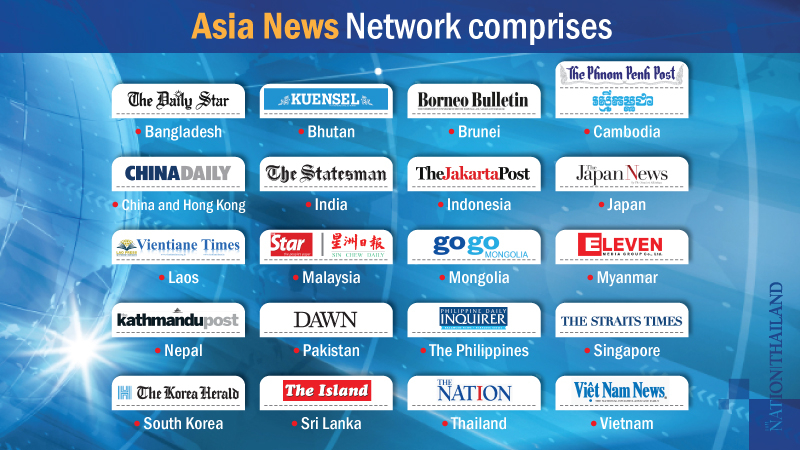
Twenty-one years after a group of regional editors sealed an agreement in Bangkok to form a voluntary alliance, Asia News Network (ANN) has taken a major step forward with its formal registration as a legal entity, based in Singapore.

The new company, Asia News Network Ltd, will strive to bring Asia closer through an active sharing of news content on developments in the region between the 23 members of the alliance.

Becoming a formal legal entity was also considered necessary to enable the grouping to take a step forward in working on joint projects, such as hosting conferences and the syndication of content.

Born as a grouping of nine media titles, ANN now includes 23 leading titles of the region, based in major locations in the region.

The network’s members hail from the 10 Southeast Asian economies, China, Japan and South Korea as well as India, Bangladesh, Pakistan and other countries in South Asia.

The Straits Times is a founding member of the alliance.

Said Warren Fernandez, editor-in-chief of Singapore Press Holdings’ English/Malay/Tamil Media Group and editor of ST, who is also chairman of the network: “After 20 years of working together, all of us felt it was time for us to take things forward, by forming a company limited by guarantee, based in Singapore.

“This opens up new opportunities for us to collaborate on editorial projects, working with partners and sponsors, and other initiatives, all with a view to promoting good journalism and credible content on the region, across the ANN grouping.”

The registration means the “institutionalisation as an entity whose permanence is guaranteed by the commitment of its members,” added Ravindra Kumar, editor and managing director of The Statesman in India.

The change in ANN’s status is “an opportunity for the alliance to seek new partners and sponsors, opening up a whole new dimension for the grouping”, said Esther Ng, chief content officer for Malaysia’s Star Media Group.

“This is new territory, so it is exciting,” she added.

The founding members of the network aimed to promote coverage of Asian affairs through regional journalists for an Asian audience, at the time of inception.

The rising costs of subscribing to international wire services in the years after the 1997 Asian financial crisis weighed among considerations of the editors to establish the grouping.

The alliance’s members now see bringing Asia closer as their key challenge as the grouping begins a new chapter as a company limited by guarantee in Singapore.

“Given the many challenges facing the media industry, there is much scope, and need, for media organisations to work more closely together, from training and developing our journalists, to working on joint editorial projects and events,” Fernandez said.

“It is my hope that in the coming years we will really be able to bring Asia closer through a more intense exchange of news and views to create a partnership of growth and prosperity that will make the coming Asian Century truly remarkable,” added Mahfuz Anam, editor and publisher of Bangladesh’s The Daily Star.

The process of transforming the voluntary alliance into a legal entity commenced soon after the network marked its 20th anniversary in Seoul in April last year.

Members of the alliance debated two other prominent locations –Tokyo and Perth – recommended by international professional services firm KPMG before voting in favour of moving the alliance from Bangkok to Singapore.

Readers can expect “a projection of an Asia bound together by ideas, greater cooperation and collaborative projects that concern the region”, Kumar said.

“In coming years, ANN will establish a global footprint as Asia’s most authoritative media voice.”

Over the years, members have collaborated on several editorial projects, hosted conferences in different countries and engage heads of government in conversation, including Singapore’s Prime Minister Lee Hsien Loong, Chinese Premier Li Keqiang and former Japanese prime minister Junichiro Koizumi.

ANN members also exchanged views with South Korean President Moon Jae-in at the Blue House during its 20th anniversary celebrations in Seoul.

ANN can offer more original news analyses and there will be more organisational collaboration between members to offer in-depth analyses on issues affecting the region, Ng said.

“For example, a new partner could fund an in-depth coverage of the South China Sea conflict or how Covid-19 is affecting the region,” she noted, adding that “readers would want to get an insight into Asia through the eyes of Asians”.