Hong Kong tech firms pitch in to fight COVID-19 #SootinClaimon.Com

#SootinClaimon.Com : ขอบคุณแหล่งข้อมูล : หนังสือพิมพ์ The Nation.

Hong Kong tech firms pitch in to fight COVID-19 (nationthailand.com)

Hong Kong tech firms pitch in to fight COVID-19

Dec 07. 2020This undated file photo shows Rice, the delivery robot, using an elevator. Rice can navigate through different floors of a building and even use the lift by itself. (PHOTO / HKSAR GOVT)This undated file photo shows Rice, the delivery robot, using an elevator. Rice can navigate through different floors of a building and even use the lift by itself. (PHOTO / HKSAR GOVT) 

By Wang Zhan
China Daily/ANN

HONG KONG -Technology firms at the Science Park are using their know-how to help fight the pandemic.

One company has developed a compact little robot called Rice that is proving useful during these times of social distancing while another has come up with a real-time monitoring system that detects abnormalities in people’s body temperature, pulse rate and blood oxygen level.

Hong Kong reported 101 new COVID-19 cases on Saturday, including 92 locally transmitted infections, bringing the city’s tally to 6,802

Technology company founder & CEO Victor Lee said Rice can help minimize staff contact with travelers who are required to undergo quarantine in hotels under the COVID-19 regulations.

“We provide the robots to some of the local hotels that provide a quarantine service to some of the guests in Hong Kong. Our robots also contribute to provide contactless delivery to the guests,” Lee said.

Rice can deliver documents and food automatically, as long as the destination address is input properly. It can navigate through different floors of a building, even using the lift by itself. When a task is completed, it goes straight back to the charging station.

Brilliant duo

Rice is equipped with a camera and an ultrasound sensor. Together with the light detection and ranging as well as the simultaneous localization and mapping technologies, it can detect objects and avoid obstacles in its path.

It is not the only robot playing a role in the epidemic fight. There is another robot with a spraying function that can be used to deposit a fine mist of disinfectant into the air. It is usually deployed to busy shopping malls.

“To hotels, our robots can provide the value of bringing a contactless solution to the guests. In shopping malls, the value is very different. The robots can greet the guests, can take a Q&A, and can provide air disinfection,” said Lee.

Real-time monitoring

Another medical technology company at the Science Park has developed a real-time monitoring system to check people’s body temperature, pulse rate and blood oxygen level.

The system alarm is triggered when it detects abnormalities and enables medical staff to promptly check on their patients.

 Technology company CEO Lydia Leung (right) explains that the real-time monitoring system is useful for checking the health condition of those under quarantine or confirmed cases of COVID-19 in hospitals. (PHOTO / HKSAR GOVT)

Technology company CEO Lydia Leung (right) explains that the real-time monitoring system is useful for checking the health condition of those under quarantine or confirmed cases of COVID-19 in hospitals. (PHOTO / HKSAR GOVT)

Technology company CEO Lydia Leung explained that this is particularly useful for monitoring the health condition of those under quarantine or confirmed cases of COVID-19 in hospitals.

“The real-time monitoring system mainly makes use of a cellular connected device,” she said.

“We can send data to our cloud and have a real-time display for doctors or caregivers, such that they can in real time, whether in hospitals, in canteens or even in their homes, monitor the situation of patients or users,” she added.

Leung added that the Hospital Authority has conducted trials of the system in public hospitals and a quarantine centre.

She hopes the technology can help limit doctors and healthcare workers’ direct contact with COVID-19 patients and relieve the pressure on local frontline healthcare professionals.

This synergy between technology and creativity has enabled Hong Kong’s entrepreneurs to contribute in a variety of ways to help fight the COVID-19 epidemic and support the public during this unprecedented situation.

Korean Air to charge additional fees on emergency exit seats #SootinClaimon.Com

#SootinClaimon.Com : ขอบคุณแหล่งข้อมูล : หนังสือพิมพ์ The Nation.

Korean Air to charge additional fees on emergency exit seats (nationthailand.com)

Korean Air to charge additional fees on emergency exit seats

Dec 07. 2020In the Oct. 4, 2020, file photo, airplanes of Korean Air Lines Co. arrive at Gimpo International Airport in western Seoul. (Yonhap)In the Oct. 4, 2020, file photo, airplanes of Korean Air Lines Co. arrive at Gimpo International Airport in western Seoul. (Yonhap) 

By The Korea Herald/ANN

Korean Air Lines Co. said Monday it will begin charging additional fees on emergency exit row seats when booking international flights next year.

South Korea’s biggest carrier said on its website that optional fees will be charged on exit row seats with extra legroom, which are located in the front row of each section of the economy class, starting Jan. 14.

Emergency exit row seats will be limited to passengers that satisfy the official safety requirements, and those who book the seats will be required to follow crews’ instructions during emergencies, the airline said.

Additional fees range from 20,000 won to 150,000 won ($18.5-$138) depending on the place of departure.

Seats for handicapped people and pregnant women, as well as passengers with infants, will be available without additional fees, it noted.

Korean Air’s price policy change is seen as a way to improve its revenue as airlines are grappling with weak passenger demand amid the pandemic. 

The company swung to an operating loss of 11.74 billion won in the first nine months, and its sales declined 40 percent to 5.7 trillion won, its financial statement showed. (Yonhap)

China’s Chang’e 5 set to start journey to Earth #SootinClaimon.Com

#SootinClaimon.Com : ขอบคุณแหล่งข้อมูล : หนังสือพิมพ์ The Nation.

China’s Chang’e 5 set to start journey to Earth (nationthailand.com)

China’s Chang’e 5 set to start journey to Earth

Dec 07. 2020Technicians at the Beijing Aerospace Control Center monitor the docking of the Chang'e 5 lunar probe's ascender with its orbiter-reentry capsule combination on Sunday. JIN LIWANG/XINHUATechnicians at the Beijing Aerospace Control Center monitor the docking of the Chang’e 5 lunar probe’s ascender with its orbiter-reentry capsule combination on Sunday. JIN LIWANG/XINHUA 

By ZHAO LEI
China Daily/ANN

Lunar samples collected by China’s Chang’e 5 robotic probe will soon start their journey toward Earth, according to the China National Space Administration.

The rocks and dust from the moon have been delivered from Chang’e 5’s ascender to their final host-the probe’s reentry capsule, which will later bring them to Earth.

The 400-kilogram ascender docked with the 2.3-metric ton orbiter-reentry capsule combination early on Sunday morning and then transferred a sealed container holding 2 kilograms of lunar samples into the capsule.

The operation was the first automated rendezvous and docking of any spacecraft in lunar orbit.

The last time two components of a spacecraft docked with each other in lunar orbit was in December 1972 during the final Apollo mission, and that was monitored and controlled by astronauts.

One of the most crucial devices during the highly sophisticated docking maneuver on Sunday morning, a microwave radar, which is mounted on the orbiter, worked with its transponder on the ascender to measure the rapidly changing distance and provided communication between the two traveling vehicles to allow them to adjust their position during the docking.

Engineers at the 25th Institute of China Aerospace Science and Industry Corp Second Academy designed and built the devices. They applied multiple advanced technologies to the apparatus, making them the best of their kind in the world, said Sun Wu, the equipment’s chief designer at the institute.

Several hours after the docking, the ascender departed from the orbiter-reentry capsule combination around noon, while the combination continued orbiting the moon before its journey back to Earth, the space administration said in a statement on Sunday afternoon.

After arriving in Earth orbit, the pair will separate in due course, and the reentry capsule will conduct a series of complicated maneuvers to return to a preset landing site in North China’s Inner Mongolia autonomous region in mid-December.

Chang’e 5, China’s largest and most sophisticated lunar probe, has four main components-an orbiter, lander, ascender and reentry capsule. The spacecraft was launched by a Long March 5 heavy-lift carrier rocket on Nov 24 at the Wenchang Space Launch Center in Hainan province, setting out on China’s most challenging lunar adventure and the world’s first mission since 1976 to bring lunar samples to Earth.

The probe separated into two parts-the orbiter-reentry capsule combination and the lander-ascender combination-while in lunar orbit on Nov 30.

Late on Tuesday, the lander-ascender combination landed on the moon, becoming the world’s third spacecraft to touch down on the lunar surface this century after its predecessors-Chang’e 3 and 4.Shortly after the landing, it began to use a drill to obtain samples from 2 meters beneath the lunar surface.

It finished the underground operation on Wednesday morning, and then started to use a mechanical arm to recover surface dirt.

All collection and packing processes were completed on Wednesday night, much sooner than expected. Samples were packed into a vacuum container inside the ascender.

The ascender activated an engine on Thursday night to lift itself into an elliptical lunar orbit to prepare for docking with the reentry capsule, marking the first time a Chinese spacecraft has blasted off from an extraterrestrial body.

If this mission is successful, it will make China the third nation to bring samples back from the moon, after the United States and the former Soviet Union.

A total of about 382 kilograms of lunar rocks and dust were recovered by the US Apollo mission astronauts and the Soviet Luna robotic landers from 1969 to 1976.

Aeon creates UV-based shopping basket sanitizer #SootinClaimon.Com

#SootinClaimon.Com : ขอบคุณแหล่งข้อมูล : หนังสือพิมพ์ The Nation.

Aeon creates UV-based shopping basket sanitizer (nationthailand.com)

Aeon creates UV-based shopping basket sanitizer

Dec 07. 2020An Aeon Retail Co. official shows an automated shopping basket sanitizer. (The Yomiuri Shimbun)An Aeon Retail Co. official shows an automated shopping basket sanitizer. (The Yomiuri Shimbun) 
By The Japan News/ANN

Aeon Retail Co. has developed an automated shopping basket sanitizer that disinfects baskets with ultraviolet light.

The device supplements the retailer’s precautions against the spread of the new coronavirus and promotes safer shopping practices. It can sterilize a batch of 60 shopping baskets in about 12 minutes, the firm said.

When switched on, the device lifts each shopping basket and disinfects it — including the back of the handle — using ultraviolet light.

At Aeon outlets, store employees have been wiping each basket one by one to sterilize them. But as the number of used baskets totals about 10,000 per day at large stores, sanitizing baskets by hand is an extreme burden for employees.

The device was developed jointly with a manufacturer in Kyoto. It has already been installed in some stores in Kyoto and Saitama prefectures, and will be expanded to 14 of its stores by the end of this year.

Vietnam to begin human trials of COVID-19 vaccine this week #SootinClaimon.Com

#SootinClaimon.Com : ขอบคุณแหล่งข้อมูล : หนังสือพิมพ์ The Nation.

Vietnam to begin human trials of COVID-19 vaccine this week (nationthailand.com)

Vietnam to begin human trials of COVID-19 vaccine this week

Dec 07. 2020

Việt Nam will begin the first stage of human trials of a COVID-19 vaccine from December 1. Photo for illustration. — baochinhphu.vn

Việt Nam will begin the first stage of human trials of a COVID-19 vaccine from December 1. Photo for illustration. — baochinhphu.vn 

By Viet Nam News/ANN

HÀ NỘI — Việt Nam will begin the first stage of human trials of a COVID-19 vaccine from December 10, according to the Ministry of Health.

The vaccine was produced by the Nanogen Pharmaceutical Biotechnology company, said deputy minister of health Nguyễn Thanh Long at a meeting with COVID-19 vaccine producers in Việt Nam on Saturday.

The company will work with the Military Medical Academy to recruit volunteers to participate in the first phase of human trials on Thursday. The volunteers will be given the first test shots of the vaccine a week later.

The ministry said about 20 volunteers, aged 18-40, are expected to be injected with the vaccine during the first phase.

Long asked agencies to get ready for the second phase of human clinical trials.

He said the ministry would create all favourable conditions for vaccine production units, including relaxing administrative procedures and speeding up registration and licensing of products. The ministry will report the investment policy for vaccine production to the Government and co-ordinate with related institutions to help them access capital for research and production, he added.

“We need to be proactive in all phases in order to be able to get the vaccine as soon as possible,” he said.

Việt Nam has four COVID-19 vaccines produced by Nanogen, Vabiotech, Polyvac and the Institute of Vaccines and Medical Biologicals (IVAC) currently under research.

The health ministry earlier assessed Nanogen’s COVID-19 vaccine candidate as among the most promising, having been successfully produced it on a laboratory scale and provoking immunogenicity during animal testing.

IVAC and Vabiotech have completed their laboratory-scale production process and are evaluating the safety and immunity of their vaccines on animals.

The ministry has asked Polyvac to work with producers in Russia and China to get access to their vaccines.

Long said the ministry has promoted COVID-19 vaccine research and production activities while at the same time increasing co-operation, exchanges and negotiations with foreign vaccine producers to soon get access to sources of vaccine to meet domestic demand. — VNS

Singapore’s first digital banks: What services can you expect #SootinClaimon.Com

#SootinClaimon.Com : ขอบคุณแหล่งข้อมูล : หนังสือพิมพ์ The Nation.

Singapore’s first digital banks: What services can you expect (nationthailand.com)

Singapore’s first digital banks: What services can you expect

Dec 06. 2020

By Straits Times

SINGAPORE – The winners of Singapore’s first digital bank licences were revealed on Friday (Dec 4). This means that for the first time here, non-banks will be allowed to provide banking services.

Digital full bank licences went to the Grab-Singtel consortium and tech giant Sea. 

The Monetary Authority of Singapore also granted digital wholesale bank licences to Jack Ma’s Ant Group as well as a consortium comprising Greenland Financial Holdings, Linklogis Hong Kong and Beijing Co-operative Equity Investment Fund Management. 

The eagerly awaited announcement, expected in June, was delayed after the assessment period for the award was extended due to the Covid-19 pandemic.

At stake were five digital bank licences, which included up to two full bank licences and up to three wholesale bank licences.

1. What’s a digital full bank?

A digital full bank can serve both retail and corporate customers.

Like any traditional bank, it can provide ordinary Singaporeans with services like having an account, deposits, loans, debit and credit cards, payments and investment products.

But all banking services will be done online, with the digital bank not having a physical branch or ATMs.

This is different from having traditional banks put some banking services online via the Internet or mobile apps.

2. What’s a digital wholesale bank?

They will serve non-retail customers only, like small and medium-sized enterprises.

3. How were the winners chosen?

A total of 21 applications were submitted for the licences and 14 were shortlisted.

The bidders included e-commerce companies, tech and telco firms, and fintechs such as crowdfunding platforms and payment services providers.

The winners were judged on the following criteria:

– Their value proposition and business model

– The sustainability of their digital banking business

– Their innovative use of technology

– Growth prospects and other contributions to Singapore’s financial centre

4. How will Singaporeans benefit from digital banks?

Higher interest rates: With less overhead, branchless digital banks may offer higher rates on deposits.

Lower fees for financial products are also likely, as there will be no middleman used.

Under-served groups in Singapore like entrepreneurs and micro enterprises can be better reached with the lower costs of digital banks. They may offer the opening of deposit accounts without a minimum amount, for example, or adopt a different credit risk assessment approach.

More convenience for customers, with all banking services at their fingertips 24/7.

More personalised services, for example with product recommendations, can also be provided, with the use of technology to gather and mine data.

More innovative services can also be offered due to more competition, with banking opened up to non-bank players.

5. Any downsides?

Possible drawbacks include:

– Technology and service interruptions

– Security and identity theft concerns

– Lack of personal banker relationship

6. Do other countries have digital banks?

They are not new. Here are some examples around the world:

– Alibaba’s MYbank and Tencent’s WeBank in China

– SBI Sumishin Net Bank in Japan

– Kakao Bank in South Korea

– Neat in Hong Kong

– Timo in Vietnam

– Up Bank in Australia

– Starling Bank in Britain

– Chime in the United States

– Doconomy in Sweden

Suga positions carbon goal, digitization as pillars for economic revitalization #SootinClaimon.Com

#SootinClaimon.Com : ขอบคุณแหล่งข้อมูล : หนังสือพิมพ์ The Nation.

Suga positions carbon goal, digitization as pillars for economic revitalization (nationthailand.com)

Suga positions carbon goal, digitization as pillars for economic revitalization

Dec 06. 2020

By The Japan News

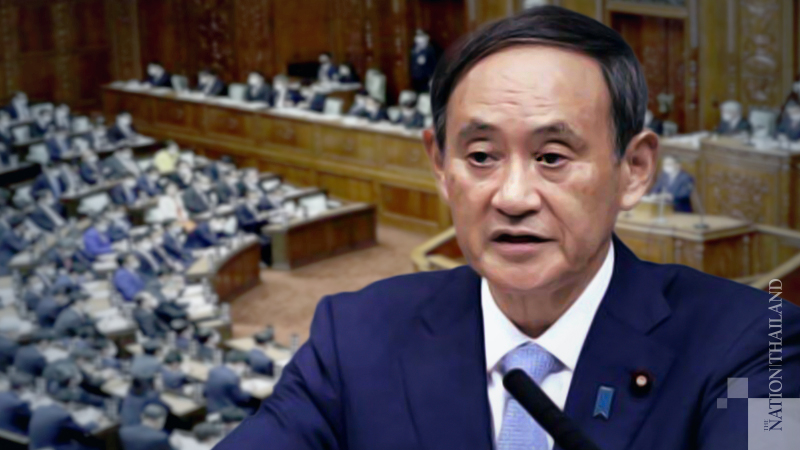
Prime Minister pledged to work on measures to combat global warming and digitization as the central pillars of economic revitalization efforts at a press conference on Friday ahead of the end of the extraordinary Diet session.

With the coronavirus pandemic not yet under control, Suga apparently aims to revitalize the economy with signature policies, ahead of a dissolution of the House of Representatives for a general election.

“What our nation needs are sources of growth for the post-coronavirus era. Green [initiatives] and digital policies are key,” Suga said at the press conference. He expressed a commitment to realizing the development of large-scale hydrogen production equipment, low-cost storage batteries and 6G, the successor to the high-speed, large-capacity 5G telecommunications standard.

Concerning a digital agency to be established as the headquarters for digitization, Suga expressed his intention to appoint about 100 experts from the private sector, saying that he would create a model for personnel who can advance their careers while moving back and forth between the public and private sectors.

■ Resumption of economic activities

Since the start of the Suga Cabinet in September, the prime minister has attached importance to promoting the resumption of economic activities while taking measures against the coronavirus. However, experts of a government subcommittee on coronavirus measures have been increasingly cautious about the Go To Travel tourism promotion campaign amid a spike of infections in winter.

Nevertheless, Suga has told his aides that the campaign should be promoted resolutely. He plans to propose an extension to the government’s additional economic measures to deal with the coronavirus to the end of June next year. He mentioned the significance of the campaign during the press conference, saying: “There are about nine million people involved in the tourist industry in Japan. The government has made decisions based on what will be most useful for regional economies.”

The prime minister is also focusing on environmental measures and the digitization of public administration as part of long-term steps to strengthen the economy.

He probably believes that it would be easy for the administration to achieve results in fields concerning the environment and digitization, “unexplored areas” that were not prioritized by the administration of former Prime Minister Shinzo Abe.

Suga’s leadership within the administration is expected to be tested by an increase in out-of-pocket medical expenses for people aged 75 years and older, one of the major issues in the reform of “social security for all generations” that will review the structure of burdens and benefits for elderly people and working generations.

Suga said to his aides that unless this issue is resolved, the reform cannot be said to be a reform for all generations in the true sense. At the press conference, Suga said, “It’s important to decrease the burdens of younger generations as much as possible.”

However, Liberal Democratic Party coalition partner Komeito is cautious about expanding the target of those whose out-of-pocket expenses would increase, because of concerns about the impact it would have on the general election, which will take place in autumn next year at the latest.

A meeting to discuss a draft for the reform was abruptly canceled just before it was to start on Friday as the coalition parties could not reach a consensus on the issue.

“The future handling of the government will depend on whether Komeito gets its way or the prime minister stands firm,” an LDP member with ministerial experience said.

■ Lower house dissolution

The decision to dissolve the lower house for a general election will be a focal point for the future management of the government.

Asked about the timing of the dissolution at the press conference, Suga indicated that economic revitalization and measures to prevent the spread of the coronavirus are the main priorities. “I’d like to devote all my efforts to these issues for the time being,” he said.

“I will think it over carefully,” he added, with an eye seemingly on the expiration of the term of lower house lawmakers in October next year.

Suga has been cautious about dissolving the lower house early next year, but reportedly is considering the idea as one of his options. Many within the LDP have called for an early dissolution while the Cabinet’s approval rating remains strong. But, in addition to the sudden increase in coronavirus cases, scandals on money and politics involving former Prime Minister Abe and former agriculture minister Takamori Yoshikawa have come to light, dampening the momentum.

The government plans to convene the ordinary Diet session on Jan. 18 and submit proposals for a third supplementary budget for fiscal 2020 and a fiscal 2021 budget.

The prime minister intends to focus on realizing the early passage of budget plans and implementing a series of measures.

For that reason, the lower house is more likely to be dissolved in spring or later after the passage of the fiscal 2021 budget, or after the Tokyo Olympics and Paralympics scheduled for next summer.

Key policies of the Suga Cabinet have begun to produce results. Regarding the lowering of mobile phone fees, NTT Docomo Inc. unveiled Thursday the lowest-price large-capacity mobile plan in the industry. Meanwhile, preparations are underway for a digital agency, which is expected to be launched in September next year.

A mid-ranking LDP lawmaker said that if dissolution is delayed, there could be a dissolution immediately before the expiration of the term of lawmakers, which tends to work against ruling parties.

However, achieving tangible results ahead of a general election appears to be Suga’s basic strategy. He is expected to determine the timing of the dissolution, taking into consideration the infection situation and other factors.

Indonesia greenlights adoption of major COVID-19 vaccines #SootinClaimon.Com

#SootinClaimon.Com : ขอบคุณแหล่งข้อมูล : หนังสือพิมพ์ The Nation.

Indonesia greenlights adoption of major COVID-19 vaccines (nationthailand.com)

Indonesia greenlights adoption of major COVID-19 vaccines

Dec 06. 2020

By The Jakarta Post

As countries begin taking the leap by approving the use of candidate vaccines to fight the pandemic, the Indonesian government issued on Friday a decree to allow for the use of vaccines currently being developed by certain drugmakers.

In a decree signed by Health Minister Terawan Agus Putranto on Dec. 3, the government has stipulated that the vaccines that can be used for vaccination programs in Indonesia must come from local pharmaceutical company PT Bio Farma, United Kingdom-based AstaZeneca, China’s Sinopharm or Sinovac Biotech, or US pharma Moderna. The vaccine being jointly produced by US firm Pfizer and German company BioNTech also made the list.

The decision came after the UK’s major step of approving the use of the Pfizer-BioNTech vaccine last week. In Indonesia, the candidate vaccines being produced by the companies are either entering or completing phase three clinical trials.

There have been disputes among regulators in various countries surrounding emergency authorization for the vaccines, since all of them have just finished or are in the early stage of human trials.

UK regulators in particular have been criticized for the Pfizer-BioNTech vaccine approval, with critics claiming that they compromised safety by skipping several parts of the process to speed up the authorization.

But the Medicines and Healthcare products Regulatory Agency (MHRA) has rebuffed the accusations, saying that it had used overlapping trials and “rolling reviews” since June to reach the determination in record time.

“That doesn’t mean any corners have been cut – none at all,” June Raine, its chief executive, said at a press conference. “The safety of the public will always come first.”

The Indonesian Food and Drug Monitoring Agency (BPOM) said earlier it would not grant emergency use authorization (EUA) to a candidate vaccine from Sinovac in December because of a lack of data on its effectiveness.

“We have explained to the President that we cannot meet the deadline for emergency use authorization in the second or third week of December,” said BPOM head Penny Kusumastuti Lukito in a hearing at the House of Representatives last month. She said that approval could come in the third or fourth week of January 2021.

Read also: No emergency vaccine approval this year in Indonesia, says BPOM

The latest decree from the Health Ministry also stipulates that each candidate vaccine should obtain an EUA from the agency before it can be used for a vaccination program.    

The government has also identified the priority groups for receiving the vaccine once it arrives in the country.

The first priority group comprises 3.5 million frontline workers, including health workers, contact-tracing paramedics, and military and law enforcement personnel.

The second priority group consists of religious and community leaders and local authorities at district, village, community and neighborhood units, who altogether comprise over 5 million individuals.

The third priority group includes more than 4 million teachers at various levels of education. The fourth group is government officials and legislatives council members with more than 2 million individuals.

The fifth group includes members of the Health Care and Social Security Agency (BPJS Kesehatan) whose fees are paid by the government. Their number exceeds 86 million individuals. The last group of more than 57 million is the general public. (wit)

Editor’s note: This article is part of a public campaign by the COVID-19 task force to raise people’s awareness about the pandemic.

Chinese patrols in PH waters getting brazen despite pandemic, says US think tank #SootinClaimon.Com

#SootinClaimon.Com : ขอบคุณแหล่งข้อมูล : หนังสือพิมพ์ The Nation.

Chinese patrols in PH waters getting brazen despite pandemic, says US think tank (nationthailand.com)

Chinese patrols in PH waters getting brazen despite pandemic, says US think tank

Dec 06. 2020

By Global News

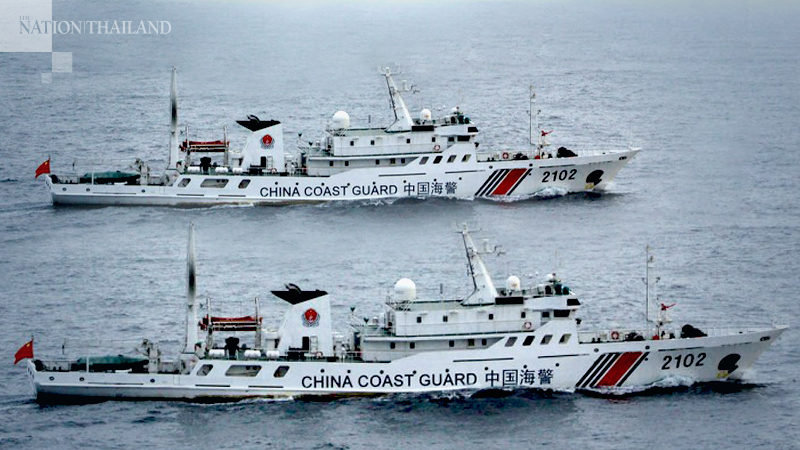
MANILA, Philippines—The COVID-19 pandemic did not stop or slow China’s deployment of coast guard ships “around symbolically important features” in the West Philippine Sea, including those lying inside the Philippines’ exclusive economic zone (EEZ) like Panatag (Scarborough) and Ayungin (Second Thomas) shoals.

An analysis of data from automatic identification systems (AIS), which track vessel position at sea, gathered by the website MarineTraffic showed that China was apparently intending to make its presence felt in these reefs, according to Asia Maritime Transparency Initiative (AMTI) of the US think tank Center for Strategic and International Studies.

From Dec. 1, 2019 to Nov. 30, 2020, the China Coast Guard not only kept a “persistent presence” in Ayungin Shoal, Panatag Shoal and Luconia Shoal, but appeared to have “increased the frequency of patrols” during the pandemic, AMTI said.

For 287 of the last 366 days, at least one and often two China Coast Guard (CCG) ships broadcast from Panatag Shoal, it said. This was a “substantial increase” from 162 days in 2019, said AMTI.

CCG ships patrolled Ayungin Shoal for 232 days and 279 days in Luconia.

“That CCG vessels so frequently broadcast AIS from these reefs, which are not physically occupied by China, suggests that they want to be seen signalling China’s claims,” AMTI said.

The AIS is a real-time tracking system that transmits a ship’s position so its presence would be known.

Chinese vessels patrolling Ayungin Shoal “often made loops” around Hasa-Hasa (Half Moon) Shoal, a submerged geological feature, which is located some 60 nautical miles of Palawan, well within the Philippines’ EEZ. AMTI said 11 Chinese fishermen had been arrested for poaching in the area in 2014.

Chinese vessels deployed around Luconia “occasionally challenged” Malaysian oil and gas exploration activities.

AMTI also reported the “noteworthy addition to the regular CCG patrol route” of Vanguard Bank off Vietnam’s southeast coast, site of the months-long standoff between Vietnam and China over oil and gas drilling in 2019.

The number of CCG ships in the contested areas could be “likely an undercount” as many coast guard ships conceal their presence by not broadcasting their AIS signals.

AMTI said one instance when a Chinese vessel muted its broadcast was last May 14 when AIS data indicated there were no vessels around Scarborough but “high-resolution satellite image” revealed two Zhaoyu-class patrol vessels in the area.

Analysts have been saying that the COVID-19 pandemic has become a smokescreen for China’s aggressive enforcement of its claim to own nearly the entire South China Sea, including Philippine territory in the West Philippine Sea.

Southeast Asian claimants, however, often refrain from sending law enforcement or naval vessels to confront Chinese patrols.

“This suggests that China is successfully normalizing its presence,” AMTI said.

Aside from frequent CCG patrols and intimidation of fishing boats, government vessels, oil and gas rigs of other countries, China has upped its game in the South China Sea this year by creating two new administrative districts, naming all geographical features as if to claim ownership, launching two new research centers, among others.

The Philippines, China, Brunei, Vietnam, Malaysia and Taiwan have overlapping claims in the South China Sea, one of the world’s most important waterways.

Defense chief to attend virtual Asia-Pacific defense ministers’ meeting this week #SootinClaimon.Com

#SootinClaimon.Com : ขอบคุณแหล่งข้อมูล : หนังสือพิมพ์ The Nation.

Defense chief to attend virtual Asia-Pacific defense ministers’ meeting this week (nationthailand.com)

Defense chief to attend virtual Asia-Pacific defense ministers’ meeting this week

Dec 06. 2020Defense Minister Suh Wook (Ministry of National Defense)Defense Minister Suh Wook (Ministry of National Defense) 

By Korea Herald

Defense Minister Suh Wook will join his counterparts from the United States, China, Japan and other countries in an annual Asia-Pacific defense ministers’ meeting this week, officials said Sunday.

The 7th Association of Southeast Asian Nations (ASEAN) Defense Ministers’ Meeting-Plus (ADMM-Plus) will be held via video link on Thursday, which will bring together top defense officials from 18 countries, also including the 10 ASEAN member states, Russia, India, Australia and New Zealand.

This year’s event was supposed to take place in Vietnam, but the organizer and participants decided to hold the multilateral meeting online due to the global COVID-19 situation, according to the officials.

“Major international and regional security issues are expected to be on the table. This year’s event will also serve as a venue to discuss both traditional and non-traditional security challenges such as the new coronavirus,” a ministry official said.

Last month, the countries held working-level ADMM talks, and South Korea sought support for efforts for a lasting peace on the Korean Peninsula and shared the military’s role in fighting the new coronavirus, according to the defense ministry.

Last year, South Korea’s defense minister held one-on-one meetings with his counterparts from major countries, such as the US, China, and Japan, on the sidelines of the ADMM-Plus meeting in Bangkok.

Since taking office in September, Suh has held dialogues with US and Chinese defense ministers but not with his Japanese counterpart amid frayed diplomatic ties between the neighbors.

Launched in 2010, the ADMM-Plus has been a venue for consultations on major regional security issues, counterterrorism and humanitarian assistance and disaster relief. It had been held every two or three years but became an annual event from 2018. (Yonhap)