Divisive Citizenship Law in India: Protests rage on for fourth day

#ศาสตร์เกษตรดินปุ๋ย : ขอบคุณแหล่งข้อมูล : หนังสือพิมพ์ The Nation

https://www.nationthailand.com/ann/30379466?utm_source=category&utm_medium=internal_referral

Divisive Citizenship Law in India: Protests rage on for fourth day

Dec 15. 2019
By The Daily Star

457 Viewed

Protests against a divisive new citizenship law raged in India for the fourth day yesterday as Washington and London issued travel warnings for northeast states following days of violent clashes.

Many in the far-flung, resource-rich northeast fear the new legislation will grant citizenship to large numbers of immigrants from neighbouring countries, who they accuse of stealing jobs and diluting the region’s cultural identity.

Though a relatively calm day in the northeast region, protests turned violent in West Bengal state, a hotbed of political unrest.

Protesters torched five empty trains, 10 buses and a rail station and continued to block road and disrupt rail services in different parts of the state for the second day, reported our New Delhi correspondent.

The five trains were set on fire at Lalgola rail station in Murshidabad district. No one was injured. Protesters also blocked railway tracks at a number of stations in Murshidabad and Howrah districts disrupting service.

The National Highway 34, which connects north and south Bengal, was also blocked. A number of vehicles were seen burning on roads during the agitation.

Concerned over the escalating violence, state Chief Minister Mamata Banerjee, herself a severe critique of the Citizenship Act, appealed for calm and warned tough action against those indulging in violence.

Prime Minister Narendra Modi’s government says the he amended citizenship law will save religious minorities such as Hindus and Christians from persecution in neighbouring Bangladesh, Pakistan and Afghanistan by offering them a path to Indian citizenship. But critics say the law, which does not make the same provision for Muslims, weakens the secular foundations of India.


Barring a peaceful 10-hour flash strike in Nagaland that crippled normal life, the situation in northeastern states yesterday remained largely peaceful leading to easing of curfew in Guwahati and Shillong, Meghalaya state capital.

In Guwahati, which saw violent protests against the contentious law, curfew was relaxed from 9:00 am to 4:00 pm local time, a police spokesperson said. Schools and offices, however, remained shut.

Anticipating further unrest, authorities extended an internet ban across Assam till Monday. Most shops were shut and anxious residents were seen stocking up supplies yesterday.

Schools and colleges in Nagaland remained closed and markets were shut and most vehicles remained off the roads as the Naga Students’ Federation (NSF) enforced a six-hour strike.

Several thousand protesters rallied in the capital New Delhi yesterday evening, urging Modi’s government to revoke the law, some holding signs reading: “Stop Dividing India”.

In India’s most populous Uttar Pradesh state, in the north of the country, students at the Aligarh Muslim University (AMU), a prominent institution set up in 1920, protested against the citizenship law and were mobilising Muslims via doorstep invitations for a bigger protest today.

Protests were also staged in several other towns and cities of Uttar Pradesh, including in the Hindu holy city of Prayagraj, whose former name Allahabad was changed by the state’s Hindu nationalist government in 2018.

The protests has already postponed a summit between Modi and his Japanese counterpart Shinzo Abe. Yesterday, the United States, Britain and Canada warned their nationals to “exercise caution” if travelling to the wider northeast region.

Islamic groups, the opposition and rights organisations say the law is a part of Modi’s Hindu nationalist agenda to marginalise India’s 200 million Muslims.

He denies this and says that Muslims from the three countries are not covered by the legislation because they have no need of India’s protection.

Assam has long been a hotbed of ethnic tensions. In 1983 some 2,000 people, mainly Bengali Muslims, were butchered in what became known as the Nellie massacre.

This year a citizenship registry left off 1.9 million people — many of them Muslims — unable to prove that they or their forebears were in Assam before 1971, leaving them to face possible statelessness.
N. Korea conducts ‘another crucial test’ at satellite launch site

#ศาสตร์เกษตรดินปุ๋ย : ขอบคุณแหล่งข้อมูล : หนังสือพิมพ์ The Nation

https://www.nationthailand.com/ann/30379465?utm_source=category&utm_medium=internal_referral

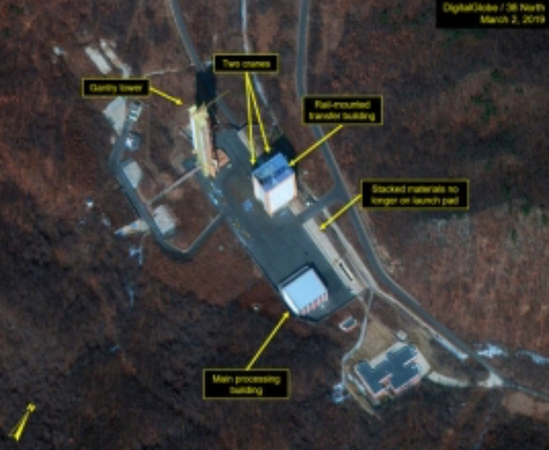
N. Korea conducts ‘another crucial test’ at satellite launch site

Dec 15. 2019
By The Korea Herald

530 Viewed

North Korea said Saturday that it will use the new technologies it recently tested to develop a strategic weapon to counter the US nuclear threat, escalating tensions with the US ahead of its year-end deadline.

Pak Jong-chon, chief of the North Korean military’s General Staff, also said North Korea has “stored up a tremendous power” and the military is fully ready to put into action any decision of leader Kim Jong-un.

m”The priceless data, experience and new technologies gained in the recent tests of defense science research will be fully applied to the development of another strategic weapon of the DPRK for definitely and reliably restraining and overpowering the nuclear threat of the US,” Pak said in a statement carried by the North’s official Korean Central News Agency.

The statement came hours after North Korea said it successfully carried out “another crucial test” at its satellite launch site in a possible sign of further provocations unless its year-end deadline is met.

North Korea has pressed the US to come up with a new proposal by the year’s end, warning that otherwise, it could give up on negotiations with the US and take a “new way.”

North Korea did not elaborate on its seven-minute test on Friday night at the Sohae Satellite Launching Ground, better known as the Dongchang-ri site on the west coast. But experts said the North appears to have conducted another engine test for long-range rockets.

The test came six days after North Korea conducted what it called a “very important test” at Dongchang-ri. South Korea has confirmed that the North tested a rocket engine last week.

Asked about the military’s analysis of the latest test, a South Korean Joint Chiefs of Staff officer said that no projectiles were detected being fired from the North on Friday and the South Korean and the US intelligence authorities are analyzing exactly what the North tested.

“We have been closely monitoring activities at and around the Dongchang-ri site and are looking into the intelligence related to the latest test and the North’s announcement, along with the US,”

he said, adding that “many of the circumstances this time” are similar to those surrounding last week’s test.

North Korea has increased pressure on the US to come up with a new proposal in their stalled nuclear talks, strongly suggesting that it could restart testing nuclear weapons and intercontinental ballistic missiles if none is forthcoming.

The North has recently said that it is entirely up to Washington what “Christmas gift” it wants to get.

“In the situation of the acute confrontation, the US and other hostile forces will spend the year-end in peace only when they hold off any words and deeds rattling us,” Pak said.

An ICBM launch or a nuclear test would represent a blow to US President Donald Trump ahead of next year’s presidential election as he has boasted of the North’s suspension of such weapons tests as one of his key diplomatic achievements.

Trump has warned North Korean leader Kim Jong-un not to interfere with his re-election bid, saying the communist nation could lose “everything.” The North said in response that the country has nothing more to lose.

Leif-Eric Easley, associate professor of international studies at Ewha Womans University in Seoul, said the North Koreans clearly want the world to believe that these tests at Sohae will improve the range, accuracy and survivability of their long-range missiles.

“This suggests they want the world to recognize their claimed nuclear deterrent rather than cling to the idea of denuclearization,” he said in an emailed comment to Yonhap News Agency.

The latest test came two days before US top nuclear envoy Stephen Biegun’s planned visit to Seoul in an apparent bid to keep up the dialogue momentum with the North.

Speculation is growing that he could visit the inter-Korean border truce village of Panmunjom for possible contact with North Korea, though it remains to be seen whether such contact will materialize.

The North has used the Dongchang-ri site to test rocket engines and launch vehicles to deliver satellites, and such technology could be diverted to develop and launch long-range weapons.

In March 2017, North Korea successfully tested a new high-thrust engine at the station, which was employed to launch ICBMs, such as the Hwasong-14 and Hwasong-15, later that year.

Amid stalled denuclearization talks, North Korea has carried out a series of weapons tests in recent months mostly involving short-range missiles. The latest one took place on Nov. 28, when Pyongyang tested its super-large multiple rocket launcher.

Separately, South Korea’s Deputy National Security Adviser Kim Hyun-chong tweeted on Friday that he held in-depth discussions with US Forces Korea commanderGen. Robert Abrams and US Marine Corps Maj. Gen. Thomas D. Weidley on the situation on the Korean Peninsula as well as sharing the costs for the upkeep of American troops in South Korea. Kim did not provide details. (Yonhap)

Vietnam promises to create optimal conditions for US enterprises

#ศาสตร์เกษตรดินปุ๋ย : ขอบคุณแหล่งข้อมูล : หนังสือพิมพ์ The Nation

https://www.nationthailand.com/ann/30379412?utm_source=category&utm_medium=internal_referral

Vietnam promises to create optimal conditions for US enterprises

Dec 13. 2019
Vietnam's Prime Minister Nguyen Xuan Phuc, centre, first role, with delegates from the US-Asean Business Council in Hanoii on Thursday. Photo: VNA/VNS Photo Thong Nhat

Vietnam’s Prime Minister Nguyen Xuan Phuc, centre, first role, with delegates from the US-Asean Business Council in Hanoii on Thursday. Photo: VNA/VNS Photo Thong Nhat
By Viet Nam News
Asia News Network
Hanoi

540 Viewed

Vietnam has affirmed the government’s determination to reform the country’s business environment and provide all possible support to foreign enterprises, including those from the US, to do business in Vietnam.

During a reception in Hanoi on Friday, for a delegation from the US-Asean Business Council (USABC) led by its chairman Keith Williams, Vietnam Prime Minister Nguyen Xuan Phuc said he himself and ministers had always paid attention to approving and accelerating the implementation of major US projects in Vietnam.

Mentioning Vietnam’s goal of achieving a balanced trade with the US, the PM suggested the USABC should play a greater role in promoting bilateral ties and the flow of US investment into Vietnam.

He asked the USABC to continue serving as an important bridge between the two governments to strengthen the comprehensive partnership, with economic-trade ties being a foundation.

The government leader also urged US firms to continue paying attention to the Vietnamese market, directly and indirectly invest in fields of Vietnam’s demand such as infrastructure, aviation and finance-banking.

He wished that the USABC would continue helping major US enterprises to make business trips next year when Vietnam will assume the role of Asean chair, thus further bolstering US-Asean trade and investment ties.

Williams expressed optimism about Vietnam’s gross domestic product growth and exports, and hoped the USABC would partner with Vietnam in increasing exports.

The guest said the USABC highly valued Vietnam’s successes in foreign direct investment attraction and wanted to boosting a balanced trade between the two nations.

The USABC members said the US is ready to assist Vietnam in fulfilling the role of Asean chair next year. They expressed support for the US to intensify ties with Asean member states, including Vietnam.

The USABC agreed to assist Asean in workforce, digital transformation and capacity improvement for Asean small and medium-sized enterprises, they said.

Hun Sen: Kingdom’s economy to grow 7.1%

#ศาสตร์เกษตรดินปุ๋ย : ขอบคุณแหล่งข้อมูล : หนังสือพิมพ์ The Nation

https://www.nationthailand.com/ann/30379349?utm_source=category&utm_medium=internal_referral

Hun Sen: Kingdom’s economy to grow 7.1%

Dec 12. 2019
Workers worked on a high-rise building in Phnom Penh. Photo credit: Heng Chivoan

Workers worked on a high-rise building in Phnom Penh. Photo credit: Heng Chivoan
By Thou Vireak
The Phnom Penh Post

710 Viewed

Cambodia’s economic growth is projected at 7.1 per cent this year or about $24 billion thanks to the good performance of the industrial sector that is creating strong domestic revenue.

Speaking at the graduation ceremony of Cambodia University of Specialties on Wednesday, Prime Minister Hun Sen said that based on the valuation from the National Bank of Cambodia’s advisory council in late November, the country’s economic growth will achieve 7.1 per cent this year. The figure is higher than other countries in Asean.

“The rate of economic growth translates to $24 billion this year and will reach around $30 billion in 2020,” said the prime minister.

He said revenue generated from customs, excise and taxation has contributed a lot to the Kingdom’s economic growth.

By November 9, the revenue from customs and taxation reached $4.54 billion which exceeded the target set last year.

“The revenue collection target from our customs and excise for this year was $2.26 billion, but now we have collected some $3.01 billion which is $758 million more or a 33.5 per cent increase.

“While the revenue collection from taxation that we planned for this year is at $2.29 billion and now we have collected some $2.63 billion which exceeded the target by $345 million,” he said.

The latest economic report from the International Monetary Fund (IMF) in October said Cambodia’s growth remains strong at seven per cent this year and will dip to 6.8 per cent in 2020.

The growth is a bit higher than many other Asean member states. For example, Vietnam’s GDP growth is projected at 6.5 per cent this year and 2020, which is a drop from 7.1 per cent last year.

Thailand’s economic growth was projected at 2.9 per cent this year and three per cent next year, while Laos’ was projected at 6.4 per cent this year. It is expected to be 6.5 per cent next year.

Cambodia exported more than $7.97 billion worth of garment, textile and footwear products in the first nine months of this year – up 13.18 per cent year-on-year from $7.044 billion – a report from the Ministry of Economy and Finance’s General Department of Customs and Excise said in mid-November.

China’s economy to rebound in first half of 2020: JP Morgan economist

#ศาสตร์เกษตรดินปุ๋ย : ขอบคุณแหล่งข้อมูล : หนังสือพิมพ์ The Nation

https://www.nationthailand.com/ann/30379246?utm_source=category&utm_medium=internal_referral

China’s economy to rebound in first half of 2020: JP Morgan economist

Dec 09. 2019
A bird's-eye view of the central business district in Beijing. [Photo/VCG]

A bird’s-eye view of the central business district in Beijing. [Photo/VCG]
By China Daily/ANN

684 Viewed

BEIJING – China’s key economic barometers are likely to rebound in the first half of 2020, JP Morgan’s Chief China Economist Zhu Haibin has said, advising against market pessimism.

Attributing China’s downward economic pressure in 2019 mainly to cyclical factors, Zhu said manufacturing and infrastructure investment will possibly start driving up the economy next year.

The manufacturing sector is looking at more investment amid the estimated recovery of the producer price index that may boost profit for companies in the industry, said Zhu.

The growth rate for infrastructure investment is expected to climb to between 5 to 6 percent next year as the government is purposing the issuance of special local government bonds toward financing for infrastructure, according to Zhu.

While consumption may be partially dented by consumer price index (CPI) hikes due to soaring pork prices in the coming year, Zhu said the ascending CPI is merely structural and is unlikely to trigger shifts in monetary policy.

Instead, major policy undertakings next year to stabilize consumption may be subsidizing middle-to-low income households and restoring hog production, Zhu suggested.

China comes out better with job creation despite slower economic growth

#ศาสตร์เกษตรดินปุ๋ย : ขอบคุณแหล่งข้อมูล : หนังสือพิมพ์ The Nation

https://www.nationthailand.com/ann/30379244?utm_source=category&utm_medium=internal_referral

China comes out better with job creation despite slower economic growth

Dec 09. 2019
College graduates at a job fair in Fuyang Normal University in East China's Anhui province, March 16, 2019. [Photo/IC]

College graduates at a job fair in Fuyang Normal University in East China’s Anhui province, March 16, 2019. [Photo/IC]
By China Daily/ANN

558 Viewed

BEIJING – Despite external uncertainties and concerns of a softening economy, China has kept delivering impressive job gains with a resilient economy and nimble governance.

According to the National Bureau of Statistics (NBS), 11.93 million new urban jobs were created in the first 10 months this year, meeting the annual target of creating more than 11 million new jobs ahead of schedule.

Before 2019, China has created more than 13 million new urban jobs annually for six consecutive years even though its GDP growth slowed.

The country’s economy expanded 6.2 percent in the first three quarters, within the government’s annual target of 6 to 6.5 percent.

Every percentage point increase of the country’s GDP growth can be translated into around 2 million new jobs, said Liu Aihua, spokesperson of the NBS.

Buoyed by the steady economic growth, China’s job market is getting stronger support from the tertiary industry.

In recent years, China’s economic structure has shifted from an industry-led one to a service-led one. The output of the tertiary industry in 2018 reached 46.96 trillion yuan ($6.66 trillion), up 7.6 percent year by year, accounting for 52.2 percent of the total GDP.

The tertiary industry’s contribution to job creation is about 20 percentage points higher on average than the second industry in 2018, according to the Ministry of Human Resources and Social Security.

Moreover, new business models are also creating jobs. About 75 million people are providing services for the sharing economy in 2018, up by 7.1 percent from the previous year and accounting for 9.7 percent of the people who were employed in the country, according to the State Information Center.

Three Squirrels, a snack food company, is transforming from an e-commerce brand on Alibaba’s Taobao to a digital supply chain platform. The company has developed into a company with over 3,800 employees in seven years from a five-person founding team.

“The recruitment of talent can also further strengthen our innovative capability,” said Yin Xiang, an official with the company.

Employment first

“The stable labor market is not only a result of the expanding economy but also benefits from an improved implementation of the employment-related policies,” said Zhang Ying, an official with the Ministry of Human Resources and Social Security.

China has elevated the status of employment-first policy to a macro policy for the first time this year. China’s policymakers not only attached great importance to employment, but also tailored the policies to boost employment.

Starting from May 1, the government lowered the share borne by employers for urban workers’ basic aged-care insurance down to 16 percent from 20 percent, saving employers 272.5 billion yuan in social insurance contributions in the first nine months of this year, according to the State Taxation Administration.

As small and medium-sized enterprises have contributed more than 80 percent of the job opportunities in China in 2018, reducing the burden for them can further unleash the vitality of the labor market.

Meanwhile, about 27.5 billion yuan of partial reimbursement of unemployment insurance contributions were returned to employers who keep their payrolls, benefiting 750,000 firms and 39.93 million employees.

“Our staff felt assured when we received the 6.61 million yuan of reimbursement,” said a human resource official with the Cangzhou Julong Chemical Co Ltd.

The company, which used to be a big tax contributor to the city of Cangzhou, northern China’s Hebei province, has encountered a difficult time in the past two years because of cash flow problems and a stagnant market.

The government’s policy has saved the company in a critical moment, said the official, adding that the reimbursement will be used for paychecks and social insurance for the employees.

According to the NBS, the urban unemployment rate at the national level in October was 5.1 percent, 0.1 percentage point lower than the previous month.

Tapping the potential

The decision adopted at the fourth plenary session of the 19th Communist Party of China Central Committee on Oct 31 stressed the importance of improving the mechanism that promotes full employment with better quality.

While the employment is stable now, it must not be taken lightly from a long-term perspective, especially considering the trade uncertainties and the influence of moving out of some downstream businesses, said Su Hainan, a researcher with the Chinese Association of Labor Science.

A State Council’s executive meeting chaired by Premier Li Keqiang Wednesday decided a host of steps to scale up support for flexible employment, boost job opportunities for people with disabilities and tackle the stubborn issue of wage arrears affecting migrant workers with legal means.

In April, the Ministry of Human Resources and Social Security released 13 new occupations such as farming manager, AI project technical personnel and e-sports player.

The country’s needs for farming managers in the coming five years will reach 1.5 million people, which is another indicator of the potential of the job market.

“Nothing big would go wrong next year if we could keep employment stable,” said the premier.

China still looking for satisfactory trade solution

#ศาสตร์เกษตรดินปุ๋ย : ขอบคุณแหล่งข้อมูล : หนังสือพิมพ์ The Nation

https://www.nationthailand.com/ann/30379243?utm_source=category&utm_medium=internal_referral

China still looking for satisfactory trade solution

Dec 09. 2019
The nature of Sino-US economic and trade cooperation is mutually beneficial.[Photo/VCG]

The nature of Sino-US economic and trade cooperation is mutually beneficial.[Photo/VCG]
By China Daily/ANN

927 Viewed

China hopes to settle trade issues with the United States as soon as possible in a way that satisfies both sides, an assistant commerce minister said on Monday.

Assistant Commerce Minister Ren Hongbin said China hopes the two sides will advance trade consultations in line with the principles of equality and mutual respect, take into account each other’s core concerns and achieve satisfactory results as soon as possible.

The nature of Sino-US economic and trade cooperation is mutually beneficial,  Ren said during a press briefing in Beijing.

Since early October, China and the US have been negotiating a phase one dealaimed at de-escalating the prolonged trade dispute.

The US planned to impose another round of tariffs against Chinese goods on

Dec 15.

North Korea intensifies pressure on US as it tries to exact concessions

#ศาสตร์เกษตรดินปุ๋ย : ขอบคุณแหล่งข้อมูล : หนังสือพิมพ์ The Nation

https://www.nationthailand.com/ann/30379219?utm_source=category&utm_medium=internal_referral

North Korea intensifies pressure on US as it tries to exact concessions

Dec 09. 2019
North Korean leader Kim Jong-un cuts a ribbon during a ceremony for the completion of the Yangdok County Hot Spring Cultural Recreation Center in North Korea in this undated picture released by North Korea's Central News Agency on Saturday. (KCNA)

North Korean leader Kim Jong-un cuts a ribbon during a ceremony for the completion of the Yangdok County Hot Spring Cultural Recreation Center in North Korea in this undated picture released by North Korea’s Central News Agency on Saturday. (KCNA)
By The Korea Herald/ANN

393 Viewed

North Korea has intensified pressure on the United States both in words and action in an apparent attempt to exact concessions from Washington before it returns to the negotiating table for nuclear talks.

On Sunday, the North’s state-run Korea Central News Agency reported that the country had successfully conducted a “very important test” at the Sohae Satellite launching ground Saturday, quoting a statement issued by a spokesman for the Academy of National Defense Science. “The results of the recent important test will have an important effect on changing the strategic position of the DPRK once again in the near future,” it said, referring to the North’s official name, Democratic People’s Republic of Korea.

The three-sentence statement did not elaborate on details of the test.

The Sohae Satellite launching station is also known as the Dongchang-ri site on the North’s western coast, a main facility for developing intercontinental ballistic missiles capable of striking the continental US.

Given that Pyongyang said the test will change the North’s “strategic position,” it is likely to have been an engine test for a new solid fuel for intercontinental ballistic missiles, according to Kim Dong-yub, an analyst at Seoul’s Institute for Far Eastern Studies.

North Korea has been developing rocket engines that burn solid fuel, meant to be capable of faster launches compared to liquid fuel.

The North has dismantled some parts of the Dongchang-ri site after its relations with the US improved following the first Trump-Kim summit in Singapore in June last year.

In September 2018, South Korean President Moon Jae-in and the North Korean ruler signed an agreement to permanently dismantle the Dongchangri engine testing site and launch pad and allow international inspectors to observe the process.

But some signs of recovery at the site have been detected recently as nuclear talks have stalled.

Negotiations between the US and North Korea have been stalemated since a second summit between Trump and Kim broke down in Hanoi, Vietnam, in February, failing to narrow a gap between North Korea’s demand for economic sanctions relief and Washington’s demand to first dismantle nuclear and biochemical weapons and missiles.

Working-level talks in Stockholm, Sweden in October also failed to make headway.

Over the weekend, North Korea criticized the Trump administration for dragging its feet on the stalled nuclear talks for the sake of domestic politics, while Trump warned the North against interfering in next year’s US presidential election.

According to the Associated Press, North Korea’s ambassador to the United Nations Kim Song released a statement criticizing the US’ pursuit of “sustained and substantial dialogue” as a “time-saving trick” to benefit a “domestic political agenda.”

“We do not need to have lengthy talks with the US now and the denuclearization is already gone out of the negotiation table,” he said.

With a series of statements from high-ranking officials, Pyongyang has been urging Washington to put forward measures for security guarantee and sanctions lifting ahead of resumption of denuclearization negotiations.

On Saturday, Trump said he did not think the North Korean leader wanted to interfere in next year’s US presidential election and said he would be surprised if Pyongyang acted in a hostile manner.

“We’ll see about North Korea,” Trump told reporters.

“I’d be surprised if North Korea acted hostilely,” Trump said at the White House. “He knows I have an election coming up. I don’t think he wants to interfere with that, but we’ll have to see … I think he’d like to see something happen. The relationship is very good, but there is some hostility, there’s no question about it.”

http://www.koreaherald.com/view.php?ud=20191208000149

Korean investors turn to real estate, less interested in stock market

#ศาสตร์เกษตรดินปุ๋ย : ขอบคุณแหล่งข้อมูล : หนังสือพิมพ์ The Nation

https://www.nationthailand.com/ann/30379218?utm_source=category&utm_medium=internal_referral

Korean investors turn to real estate, less interested in stock market

Dec 09. 2019
(Yonhap)/On top of that, the total volume of mortgages extended by financial institutions gained 9.5 trillion won in the third quarter compared to 4.3 trillion won in the first quarter of this year,

(Yonhap)/On top of that, the total volume of mortgages extended by financial institutions gained 9.5 trillion won in the third quarter compared to 4.3 trillion won in the first quarter of this year,
By The Korea Herald/ANN

531 Viewed

Korean investors have been turning their attention toward the real estate market, reflected in an increase in mortgage lending, while cash flows in the equity market have been overall stagnant, recent data showed.

According to data released by the Bank of Korea last month, the outstanding balance of mortgage loans held by banks and other financial institutions here came to a combined 830.3 trillion won ($700.5 billion) as of September. The latest data is a noteworthy jump from the corresponding figures of 808 trillion won in 2018 and 770 trillion won in 2017, respectively.

On top of that, the total volume of mortgages extended by financial institutions gained 9.5 trillion won in the third quarter compared to 4.3 trillion won in the first quarter of this year, separate data from the central bank showed. The BOK cited a rise in the purchase of apartments and borrowers’ need for capital to pay for “jeonse” — a home lease system unique to South Korea that requires tenants to pay a large sum of money as a deposit instead of submitting monthly fees — behind the rise in numbers.

http://www.koreaherald.com/view.php?ud=20191208000147

Both the combined assets held by institutions and increase in mortgage lending work as important barometers for local investors’ interest in the real estate market.

Meanwhile, combined deposits in brokerage accounts – including dormant ones where investors have yet to claim profits from investments – in Korea came to 24.8 trillion won as of last week, a Korea Financial Investment Association data showed. The figure has remained overall flat for nearly a year, indicating a lack of fresh investments amid a sluggish stock market, weighed on by risks stemming from global issues including the US-China trade war.

The outstanding balance of margin loans extended to investors for purchase of stocks traded on the benchmark Kospi and the secondary Kosdaq came to 9.3 trillion won as of Thursday. Though the figure hovered above the 10 trillion-won mark from February to early July, it fell below the line in late July. It has remained below the mark since.

“There’s a belief among South Korean investors that there’s a safety net on real estate prices — that it won’t drop below a certain level,” said Hwang Se-woon, a senior researcher at Korea Capital Market Institute.

“Due to the belief, coupled with the sluggish stock market, the nation’s investment has been flowing into the real estate market,” he added.

The data comes as the government has adopted a slew of measures to tame soaring apartment prices here, including tighter lending rules and higher property taxes for expensive homes.

PMI rebound a good sign, analysts say

#ศาสตร์เกษตรดินปุ๋ย : ขอบคุณแหล่งข้อมูล : หนังสือพิมพ์ The Nation

https://www.nationthailand.com/ann/30378977?utm_source=category&utm_medium=internal_referral

PMI rebound a good sign, analysts say

Dec 02. 2019
An engineer checks machines in Weifang of Shandong province, China, August 31, 2019. [Photo/VCG]

An engineer checks machines in Weifang of Shandong province, China, August 31, 2019. [Photo/VCG]
By China Daily/ANN

775 Viewed

China’s manufacturing activity rebounded to expansionary territory in November after a six-month streak of contraction. This indicates that growth is stabilizing and business confidence is improving in light of supportive government policies, analysts said on Sunday.

The purchasing managers index for the manufacturing sector bounced back to 50.2 in November from October’s 49.3, according to the National Bureau of Statistics. The growth beat many analysts’ expectation for a below-50 reading.

A reading above 50 indicates expansion, while a reading below reflects contraction.

Analysts said the official factory gauge’s return to the expansion zone indicated that the decelerating economic growth has shown sign of stabilizing and that the business outlook is brightening.

But they warned that the government needs to step up supportive policies to stimulate demand and shore up growth, as the manufacturing sector still faces downward pressure amid uncertainties surrounding the trade talks between Beijing and Washington.

The subindex for production gained 1.8 points to 52.6 in November, while the subindex for new orders rebounded by 1.7 points to 51.3, both of which were in the expansion zone, the NBS reported.

NBS senior statistician Zhao Qinghe said the data showed that both production and demand in the manufacturing sector had improved in November. The two indexes stood at their highest level since the start of the second half of the year.

High-tech manufacturing and the manufacturing of equipment and consumer goods also saw expansion over two consecutive months, showing that the economy is on a transformative track toward high-quality growth and a consumption-driven model, Zhao said.

Meanwhile, China’s nonmanufacturing sector registered faster expansion in November. Its PMI stood at 54.4, up from 52.8 in October, the NBS reported.

“The rebound of both manufacturing and nonmanufacturing PMI showed that downward pressure has been released to some extent in the fourth quarter. But it remains to be seen whether the trend will be sustainable, as the risk of weakening demand still exists,” said Liu Xuezhi, a senior researcher at the Bank of Communications’ Financial Research Center.

Top policymakers in Beijing will gather at the Central Economic Work Conference later this month. The meeting is expected to lay out the country’s growth targets and set the tone for the coming year.

The country’s monetary policy has become more accommodative to prevent a broader economic slowdown, with a focus on guiding more bank lending to smaller and private businesses.

In terms of fiscal policy, the Ministry of Finance has announced a new quota of 1 trillion yuan ($142 billion) of local government special bonds for 2020 and urged that the bonds be issued and used “as early as possible” to boost infrastructure investment.

Looking into 2020, economists predict that Chinese policymakers will maintain stable credit growth and a supportive fiscal policy to stabilize growth. The probability of Beijing and Washington reaching their phase-one trade deal could help reduce external uncertainties.

“The reduced external uncertainty and accommodative policy should lend some support to exports and corporate confidence, which in turn stimulate inventory restocking, manufacturing capital expenditures and private consumption,” Robin Xing, chief China economist at Morgan Stanley, wrote in a research note.

Hu Yifan, chief China economist of UBS Global Wealth Management, said that the country’s consumption remains resilient, and the government is likely to announce more tax and fee cuts to boost consumption in the coming year.