Malaysia to send Cambodian opposition leader to a third country

ศาสตร์เกษตรดินปุ๋ย : ขอบคุณแหล่งข้อมูล : หนังสือพิมพ์ The Nation

https://www.nationthailand.com/ann/30378208?utm_source=category&utm_medium=internal_referral

Malaysia to send Cambodian opposition leader to a third country

Nov 10. 2019
By THE STAR
ASIA NEWS NETWORK
PUTRA JAYA, MALAYSIA
644 Viewed
Cambodian opposition leader Mu Sochua, who was detained in Malaysia will be sent to a third country, Malaysian Prime Minister Mahathir Mohamad said.

Mahathir said Malaysia does not want to interfere with the politics of its neighbouring countries as it is not its policy.

“Our principle, for Asean in particular, is that we do not interfere in the internal affairs of other countries.

“We do not want others to use Malaysia as a base for their struggle in other countries.

“We wanted to deport her back, but people are asking her to stay here.

“Now we are looking for another country that can take her.

“We do not want to be at odds with other governments. This is not our affair, it is their affair,” said Mahathir at a press conference.

It was reported that Sochua was earlier detained by the Malaysian Immigration Department at the Kuala Lumpur International Airport here.

Immigration Department director-general Khairul Dzaimee Daud then confirmed that Sochua, the vice president of the banned opposition Cambodia National Rescue Party, is now permitted to enter Malaysia.

He, however, declined to share more details such as why she was detained by the authorities.

“She has been permitted to enter,” said Khairul Dzaimee in a text message on Thursday.

Six wounded as knife attack caps day of Hong Kong political chaos

ศาสตร์เกษตรดินปุ๋ย : ขอบคุณแหล่งข้อมูล : หนังสือพิมพ์ The Nation

https://www.nationthailand.com/ann/30378040?utm_source=category&utm_medium=internal_referral

Six wounded as knife attack caps day of Hong Kong political chaos

Nov 04. 2019
By The Straits Times/Asia News Network

1,744 Viewed

Another weekend, another protest in Hong Kong with violence perpetrated by alleged triads against demonstrators.

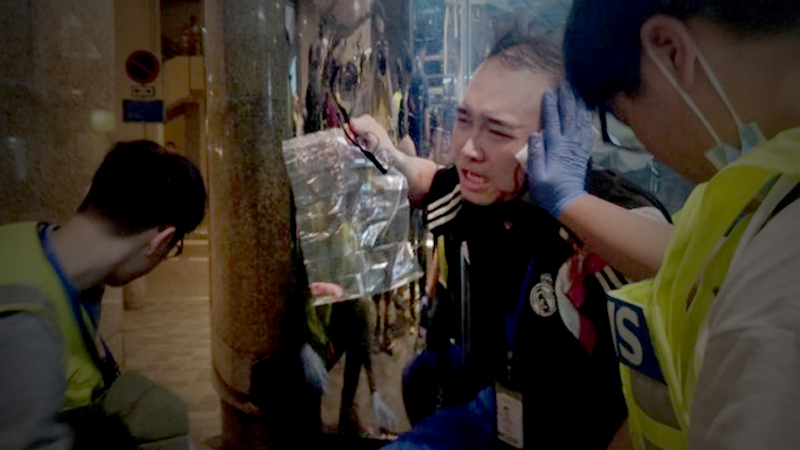
A man went on a knife rampage in Hong Kong late Sunday (Nov 3) leaving at least six people wounded, including a local pro-democracy politician who had his ear bitten off, capping another chaotic day of political unrest in the city.

Flash-mob rallies erupted inside multiple shopping centres across the international finance hub over the afternoon, sparking frequent clashes with riot police.

The violence was less sustained than Saturday when police and protesters fought hours of cat and mouse battles after thousands took the streets for an unsanctioned march.

But the day ended with a knife attack taking place outside a shopping mall in Tai Koo Shing, a middle-class neighbourhood on the main island where protesters had gathered for much of the afternoon.

Eye-witnesses told local media that a Mandarin-speaking man attacked people shortly after shouting pro-Beijing slogans.

Live footage showed Andrew Chiu, a local pro-democracy councillor, had his ear bitten off after trying to subdue the attacker, while a second man was seen unconscious in a growing pool of blood as bystanders desperately tried to stem wounds to his back.

The alleged assailant, wearing a grey t-shirt, was then beaten bloody by the crowd.

Police told AFP that six people in total were wounded – four men and two women – and that three people were arrested, without detailing whether the alleged attacker was among those counted as injured.

Masked protesters returned on Sunday afternoon following clashes with police in several Hong Kong districts a day earlier that resulted in more than 200 people arrested and at least 54 injured.

Protesters gathered in seven districts on Sunday afternoon, heeding online calls for people to take to the streets to protest against alleged police brutality, local broadcaster RTHK reported.

At New Town Plaza shopping centre in the New Territories town of Sha Tin, some protesters targeted facilities at the Sha Tin MTR station connected to the mall.

Using fire extinguishers, the protesters vandalised turnstiles and smashed up glass panes of a customer service centre at the station. Within minutes, the protesters fled to other floors of the mall. Some protesters also threw objects from height at police officers who arrived at the scene, said police in a statement.

Police fired pepper spray at a number of people at the mall and arrests were made. They also subdued several people outside Sha Tin Town Hall, RTHK reported.

At Trend Plaza in Tuen Mun, another town in the New Territories, a large group of masked protesters vandalised and threw paint at shops at the mall. Protesters also blocked the main exits of the shopping centre with umbrellas and cable ties, said police in a statement.

Meanwhile, people who gathered at Tamar Park in Admiralty earlier in the afternoon were cleared out by police who said that the park was closed due to concerns of an illegal assembly there, local broadcaster TVB reported.

Hong Kong has been mired in five months of escalating protests that are showing no signs of abating. Protesters are angry at perceived Chinese meddling with Hong Kong’s freedoms since the city returned from British to Chinese rule in 1997, a charge which China denies.

On Sunday morning, cleaners swept up broken glass at the Hong Kong office of China’s official news agency Xinhua, one of the buildings vandalised in a violent day of protests which also saw activists hurl petrol bombs and set fire to metro stations.

While protesters have previously vandalised buildings of mainland Chinese companies or those perceived as pro-Beijing, the targeting of Xinhua is one of the most direct challenges to Beijing yet. Protesters daubed China’s Liaison Office, the key symbol of Chinese sovereignty, with graffiti in July.

Xinhua condemned the attack by what it said were “barbaric thugs” who broke doors and security systems and threw fire and paint bombs into the lobby.

“The practice of the black rioters once again shows that ‘stopping the violence and restoring order’ is Hong Kong’s most important and urgent task at present,” a spokesman for Xinhua said in a Facebook post.

Chinese state media, including the official People’s Daily, have condemned the vandalism, saying that it was an attack on laws that protect press freedom. The newspaper also said that the attack had crossed the bottom line of any civilised country, RTHK reported.

In an editorial, the Communist Party tabloid, Global Times, said the vandalising of Xinhua’s Hong Kong office shows a new escalation in violence and destruction on the island.

It said that Xinhua’s Hong Kong branch, founded in 1947, is not an ordinary news agency as it had unique contributions in the process of Hong Kong’s return to China.

“Due to the symbolic image of Xinhua, the vandalising of its branch is not only a provocation to the rule of law in Hong Kong, but also to the central government and the Chinese mainland, which is the rioters’ main purpose,” said Global Times.

When Reuters visited the building housing the Xinhua news agency on Sunday, a handful of cleaners could be seen through shattered glass doors and windows sweeping the floor, watched over by staff members speaking on their phones.

Outside, some tourists and other media curiously eyed the destruction.

Cambodia: Ministry bans use of Google Translate for signboards

ศาสตร์เกษตรดินปุ๋ย : ขอบคุณแหล่งข้อมูล : หนังสือพิมพ์ The Nation

https://www.nationthailand.com/ann/30378029?utm_source=category&utm_medium=internal_referral

Cambodia: Ministry bans use of Google Translate for signboards

Nov 03. 2019
By The Phnom Penh Post /Asia News Network(ANN)

723 Viewed

An interministerial meeting led by the Environment Ministry has decided to ban property developers from using Google Translate for their signboards and trademarks.

The meeting was held to carry out consultation and a full assessment of the environmental and social impact caused by poor translations at condominium and apartment development projects.

The meeting also decided to instruct developers to have discussions with specialists before making their signboards or trademarks, so there will be no mistakes in the translated Khmer language content.

Developers and owners now have to engage with language specialists and the relevant authorities to check the Khmer language before it is used.

Khmer wording on signboards has to be given precedence over foreign languages and be written above them.


This will ensure that the accuracy and standard of the Khmer translation is professionally done and not an insult to the language.

The meeting was attended by representatives from investment companies and E&A Consultant Co.

Ministry secretary of state and spokesman Neth Pheaktra, who led the meeting, said it banned project owners and companies from using Google Translate to obtain the Khmer translation of their names and signboards.

He said it was not only about the impact on the environment but also society, including national culture and tradition. “We have urged [developers] to do something about the signboards. They are foreign investors.

“We want them to discuss and seek the counsel of specialists for translation of their signboards. In the past, many translations were meaningless and cannot be used.”

Lim Pheaktrey, the municipal administration official in charge of public administration and environment, told The Post last week Sihanoukville now has fewer cases of using the wrong signboards.

In the first six months of this year, the municipal administration had taken down nearly 400 signboards, which contained the wrong meaning and letters.

“But in the last one month, we have taken down less than 20 signboards, which is an improvement. We will continue to run regular checks and remove meaningless signboards,” he said.

Pheaktrey said the reason foreigners and Chinese nationals alike had made their signboards incorrectly is that they were unfamiliar with the regulations in Cambodia.

“They were also not aware of where to have their signboards made, so they made them on their own or brought them from China. And they used the Google Translate app, which is why there were such mistakes,” he added.

73 killed in train fire in Pakistan

ศาสตร์เกษตรดินปุ๋ย : ขอบคุณแหล่งข้อมูล : หนังสือพิมพ์ The Nation

https://www.nationthailand.com/ann/30377950

73 killed in train fire in Pakistan

Oct 31. 2019
Fire was caused by a cylinder blast, says  Railways Minister Sheikh Rashid.-photo provided by Adnan Sheikh

Fire was caused by a cylinder blast, says Railways Minister Sheikh Rashid.-photo provided by Adnan Sheikh
By Dawn/ANN

454 Viewed

The death toll from a fire in three bogies of a Tezgam train near Liaquatpur city jumped to 73 around 1pm, while many remain under critical condition, Rahim Yar Khan district government said on Thursday.

About 40 people, including women and children, were injured, Punjab Health Minister Dr Yasmin Rashid told AFP earlier.

The dead and injured are being shifted to DHQ Hospital in Liaquatpur. Some of the injured have also been shifted to Bahawal Victoria Hospital in Bahawalpur due to their critical condition.

The train was bound for Rawalpindi from Karachi. The fire was caused by a cylinder blast that occurred in the morning when some passengers were preparing their breakfast, Railways Minister Sheikh Rashid said, adding that they belonged to a tableeghi jamaat and were headed towards Raiwand.

Many people saved their lives by jumping off the train, the minister said.

In a video message, Railways Minister Rashid announced that a compensation of Rs1.5 million will be paid to the heirs of the deceased while Rs500,000 will be provided to those who are injured. He travelled to the scene of the incident and will meet families of the victims and the injured.

He said that two of the coaches that caught fire were booked under the name of the tableeghi jamaat’s emir Hussain. The ministry, he said, was preparing a list of the victims. Rashid said that it was a “failure” on the part of the Railways authorities since they failed to carry out thorough checking of the passengers’ luggage.

Later, in a press conference, the railways minister said that 134 trains had been making a minute-long stop for passengers in Raiwind. “The whole world earns from freight and we are the only ones who earn from passengers,” he said, adding that the ministry was now earning upto Rs180-190 million versus the previous Rs130 million figure. “And then this tragedy unfolded.”

Speaking about the tragic incident, Rashid said that the passengers who had been using the cylinder had been stopped by a guard and the driver from doing so. “In front of the guard they turned off the stove, but when he left, they turned it back on.”

The railways minister thanked all those who participated in rescue operations especially Pak Army ambulances who saved many lives by transporting them quickly to hospitals.

Rashid rejected the impression that there was a non-availability of “pull chains” to alert the driver to stop the train. “The train stopped due to the chain being pulled, otherwise the whole train would have been on fire.”

When asked about whether he will resign from the ministry, Rashid said he will speak about the matter on Sunday. He said an inquiry will be conducted within 15 days and the parties responsible punished.

The minister also paid a visit to the Shaikh Zayed Hospital in Rahim Yar Khan where some of the injured were being treated. He instructed the hospital staff to ensure the best possible treatment to all those wounded.

The minister will also pay a visit to Combined Military Hospital (CMH) in Multan.

Railways Minister Sheikh Rashid Ahmed asking after a patient at the Sheikh Zayed Hospital in Rahim Yar Khan on Thursday. — Photo provided by Adnan Sheikh

Railways Minister Sheikh Rashid Ahmed asking after a patient at the Sheikh Zayed Hospital in Rahim Yar Khan on Thursday. — Photo provided by Adnan Sheikh

Nabila Aslam, a railways official, told DawnNewsTV that the passengers must have “hidden the gas cylinder in their clothes” while boarding the train, as carrying one was strictly against the rules.

Rescue 1122 teams have extinguished the fire and are now carrying out a cooling and search operation under the supervision of Rashid. Army troops including doctors and paramedics were also dispatched to assist rescue teams in the operation, a statement by the Inter-Services Public Relations said.

An Army helicopter was also dispatched from Multan in order to rescue the injured, the ISPR statement added further.

https://www.dawn.com/news/1514002/73-killed-in-tezgam-train-inferno-near-rahim-yar-khan-officials

Li Keqiang trip eyes closer neighborhood, better trade ties

ศาสตร์เกษตรดินปุ๋ย : ขอบคุณแหล่งข้อมูล : หนังสือพิมพ์ The Nation

https://www.nationthailand.com/ann/30377949

Li Keqiang trip eyes closer neighborhood, better trade ties

Oct 31. 2019
Chinese Premier Li Keqiang speaks at the closing ceremony of the International Horticultural Exhibition 2019 Beijing in Yanqing District of Beijing, China, Oct 9, 2019. (PHOTO / XINHUA)

Chinese Premier Li Keqiang speaks at the closing ceremony of the International Horticultural Exhibition 2019 Beijing in Yanqing District of Beijing, China, Oct 9, 2019. (PHOTO / XINHUA)
By China Dailyhk/ANN

421 Viewed

BEIJING – Chinese Premier Li Keqiang will on Friday embark on a five-day trip to Uzbekistan and Thailand for multilateral meetings and official visits, a key diplomatic move of China to build stronger ties and forge ahead with its neighbors for long-term stability and common development.

Besides visits to Tashkent and Bangkok, Li is scheduled to attend the 18th meeting of the Council of Heads of Government of the Shanghai Cooperation Organization (SCO), as well as the 22nd China-ASEAN (10+1) leaders’ meeting, the 22nd ASEAN-China, Japan and South Korea (10+3) leaders’ meeting, and the 14th East Asia Summit (EAS).

The trip is widely seen as a fresh effort to better align China’s Belt and Road Initiative (BRI) with other national and regional development plans to enhance cooperation and work with its partners to defend multilateralism and promote free trade.

As neighborhood diplomacy serves as a key pillar of China’s foreign policy, Li’s trip will further cement political trust and grow ties between China and its neighbors, so as to build a closer and mutually beneficial community with shared prosperity.

Alignment of development strategies

Both the SCO and ASEAN (the Association of Southeast Asian Nations) are important platforms in the cooperation within the framework of the BRI, a vision initiated by China in 2013 to enhance regional connectivity and boost common prosperity by creating a network linking Asia with Europe, Africa and beyond. Meanwhile, Uzbekistan and Thailand, as traditional friends of China, also play vital roles in regional integration.

Six years on, the initiative has been widely recognized by and gained positive responses from SCO and ASEAN members. With concerted efforts, cooperation under the initiative has been fruitful.

According to China’s Ministry of Commerce, two-way trade between China and other SCO members — Kazakhstan, Kyrgyzstan, Russia, Tajikistan, Uzbekistan, India and Pakistan — went up to 255 billion U.S. dollars in 2018 with a 17.2 percent year-on-year increase. China has invested over 87 billion dollars to those countries by April this year.

For China-ASEAN ties, the 10-nation organization became China’s second-largest trading partner in the first half of 2019 with a total volume of 288 billion dollars. It demonstrated the increasing will of both sides to work together to expand cooperation and broaden partnerships.

People-to-people exchanges between the two sides also blossomed. As major tourist destinations for each other, there are around 4,000 flights traveling between China and ASEAN countries every week.

After years of joint efforts, cooperation under the BRI is now on the path of advancing high-quality development, said Deng Hao, a senior researcher of the Department for European-Central Asian Studies in China Institute of International Studies (CIIS).

Deng noted that better alignments between BRI and other development strategies, such as Kazakhstan’s “Bright Road” new economic policy and the Master Plan on ASEAN Connectivity 2025, will greatly foster high-quality growth in various areas and lift cooperation to new heights.

More open economy

As the world is facing increasing uncertainties and the global economic recovery remains weak, China and its partners’ choice to champion multilateralism and open markets wider is the right way to encounter protectionist measures that have threatened sustainable growth.

Negotiators for the 16-nation Regional Comprehensive Economic Partnership (RCEP) in the Thai capital are trying to finalize the free trade agreement, which is expected to create an integrated market of about half of the world’s population.

If it succeeds, RCEP will become the world’s largest free trade zone that accounts for nearly 30 percent of the world trade as well as about a third of global gross domestic product.

RCEP will be a spotlight during the East Asian leaders’ meeting this year. Li Chenggang, assistant minister of commerce, told reporters ahead of the trip that the meeting will promote regional common prosperity and development, and send out a positive signal of building an open world economy.

At the RCEP-related ministerial meetings in October, 10 ASEAN countries and six Asia-Pacific countries — China, Japan, South Korea, India, Australia and New Zealand — reaffirmed their commitment to the conclusion of the negotiation by the end of this year.

Ruan Zongze, CIIS’s executive vice-president, said it is noticeable that RCEP countries have sped up talks on the giant trade deal, which represented their common interests and the need to facilitate cooperation and safeguard the international order under the current circumstances.

As for the SCO, Deng said that the member countries are upholding multilateralism with concrete actions. He expected that the Chinese premier’s trip to Tashkent will further invigorate trade ties in the SCO and make the region more interconnected.

For better surroundings

A stable and prosperous region is in the interest of all. As the biggest country and an influential player of Asia, China puts neighborhood diplomacy as a priority in its foreign policy and has stayed committed to building closer partnerships and jointly creating a community with a shared future with its neighbors.

The past few months have seen even frequent visits by the Chinese leaders to neighbor countries. President Xi Jinping travelled to India and Nepal less than one month ago, and Vice President Wang Qishan just wrapped up his tour to Indonesia and Japan this month.

During Li’s first official visit to Uzbekistan, the two sides will sign a series of agreements covering economy and trade, investment, science and technology, according to Assistant Foreign Minister Chen Xiaodong.

And the visit to Thailand, the first by Li in six years, will be a big boost to all-round cooperation between the two countries and bring their already-close relations to a higher level, Ruan said.

He highlighted the significant role of the BRI in helping build a community with a shared future for mankind, saying that Li’s trip, by enriching the BRI cooperation, will solidify China’s relations with its neighbors.

Under the principle of amity, sincerity, mutual benefit and inclusiveness, China has cooperated and will always cooperate with other countries and within multilateralist mechanisms such as the SCO and ASEAN for a more stable, peaceful and developed region, Deng said.

https://www.chinadailyhk.com/articles/29/1/174/1572497579574.html

HK falls into first recession in 10 years

ศาสตร์เกษตรดินปุ๋ย : ขอบคุณแหล่งข้อมูล : หนังสือพิมพ์ The Nation

https://www.nationthailand.com/ann/30377947

HK falls into first recession in 10 years

Oct 31. 2019
This undated photo shows the Victoria Harbour in Hong Kong. (PHOTO / IC)

This undated photo shows the Victoria Harbour in Hong Kong. (PHOTO / IC)
By China Dailyhk/ANN

435 Viewed

HONG KONG – Hong Kong slid into recession for the first time since the global financial crisis in the third quarter, advance estimates showed on Thursday, weighed down by increasingly violent anti-government protests and the protracted China-US trade war.

The economy shrank 3.2 percent in July-September from the preceding period, contracting for a second straight quarter and meeting the technical definition of a recession, according to the preliminary government data.

From a year earlier, the economy contracted 2.9 percent. The readings were the weakest for the Asian financial hub since 2008/2009.

With no end to the protests in sight, the city’s leader Carrie Lam Cheng Yuet-ngor warned on Tuesday that full-year growth could contract. Retail sales and tourism have plummeted.

In a press release issued by the Hong Kong government on Thursday, a government spokesman said the city’s growth “showed an abrupt deterioration recently due to the severe impacts of the local social incidents.”

“With the local social incidents taking a heavy toll on inbound tourism, exports of services recorded the biggest year-on-year drop since the second quarter of 2003,” the spokesman said.

Domestic demand also worsened significantly as the weakening economic conditions dampened consumer sentiment, according to the spokesman. The fall in overall investment expenditure steepened amid sagging economic confidence, he added.

The spokesman said in the statement that Hong Kong’s exports are unlikely to show improvement in the near term with global economic growth expected to remain soft.

Further details from the release

  • Compared to the same period a year earlier, GDP contracted 2.9% versus the median estimate of -0.3%
  • Hong Kong’s economy is “very likely to record a negative growth for 2019 as a whole”
  • The data are a preliminary assessment; revised 3Q GDP figures will be released on Nov 15

The Hong Kong economy will still face notable downward pressures in the rest of the year as “the adverse impacts of the local social incidents have yet to show signs of abating,” and private consumption and investment sentiment “will continue to be affected.”

The spokesmand said that economy is very likely to record a negative growth for 2019 as a whole considering the year-on-year contraction of 0.7 percent in the first three quarters and the lack of any signs of improvement in the near term.

The economic debate now is focused on how long the downturn will last, if recent glimmers of stabilization point to a bottom, and if the China-US trade war and the protests have done lasting damage. The city’s Financial Secretary Paul Chan said this week that a full-year economic contraction is “very likely.”

The city’s economy has shown the faintest of positive glimmers since the protests’ initial impact this summer, when tourists began staying away. Small business sentiment has ticked higher, as has a gauge of the outlook among purchasing managers, though both remain close to their record lows. The real estate and financial services sectors have remained fairly resilient.

The MSCI Hong Kong Index tumbled as much as 18 percent from an April high, before recently clawing back some gains in October as relative calm descended on financial markets; the index remains positive for 2019. While property prices have slipped about 5.5 percent since June, the Centaline Property Centa-City Leading Index is up for the year, hanging on to gains after a February low.

https://www.chinadailyhk.com/articles/248/163/72/1572516631697.html?newsId=111147

Scientists triple their estimates of the number of people threatened by rising seas

ศาสตร์เกษตรดินปุ๋ย : ขอบคุณแหล่งข้อมูล : หนังสือพิมพ์ The Nation

https://www.nationthailand.com/ann/30377900

Scientists triple their estimates of the number of people threatened by rising seas

Oct 30. 2019
A man stands in a flooded street as Hurricane Irma hits the area on September 10, 2017 in Miami, Florida. Photo: Washington Post/Matt McClain

A man stands in a flooded street as Hurricane Irma hits the area on September 10, 2017 in Miami, Florida. Photo: Washington Post/Matt McClain
By Chris Mooney
The Washington Post

758 Viewed

Rising seas will be much worse and more expensive to deal with than previously supposed, new research finds, not because of faster changes in sea levels but because of a boost in estimates of the number of people already living on low ground.

The upshot of the study is that 110 million people around the globe live below the current high tide level, including many partially protected by existing sea walls or other infrastructure, as in New Orleans. Even under a scenario of very modest climate change, that number will rise to 150 million in 2050 and 190 million by 2100.

If climate change and sea level rise follow a worse path, as many as 340 million people living below the high tide level could be in peril, to say nothing of how many could be affected in floods and extreme events.

Such figures are three times, or more, higher than earlier estimates.

“We’ve had a huge blind spot as to the degree of danger, and that’s what we’ve been striving to improve,” said Benjamin Strauss of Climate Central, who authored the new study in Nature Communications with colleague Scott Kulp.

The reason for the big change is that prior research has relied on data about coastal elevations that comes from radar measurements from the 2000 space shuttle Endeavor mission. But that data set has problems. The instrument detected the height not only of the coastal land surface but anything else that was on it, such as houses or trees. This introduced error into land elevation estimates averaging about six and a half feet globally, the new study says.

“For all of the resources we have rightly invested in improving our sea level projections, we didn’t know the height of the ground beneath our feet,” Strauss said.

Some wealthy countries, such as the United States, have used laser-based coastal measurements to gain more accuracy, but most have not been able to do so.

The new study uses the more accurate US measurements as a guide, training an algorithm to apply similar adjustments to the global data set from the space shuttle. This is where the much higher numbers for exposed populations come from, with the biggest changes in exposure coming for countries in Asia.

“In terms of global estimates, I think the analysis convincingly shows that the situation is probably even worse than previous studies suggested,” said Stephane Hallegatte, an economist at the World Bank who studies climate change and disaster exposure. “We are talking about hundreds of millions of people who will be directly exposed.”

The changes are certainly very large. The study estimates that 110 million people live below the current high tide level, vs an estimated 28 million for the older data set. About 250 million people would fall below the level of the worst yearly flood, the study says, up from the previous estimate of 65 million.

Projections illustrate how exposed people will be as seas continue to rise.

The study considers a scenario that would lead to 2 degree Celsius, or 3.6 degrees Fahrenheit, of global warming by 2100, the temperature rise that world leaders have set as an absolute limit. The study projects that 150 million would live below the high tide line by 2050 and 200 million by 2100. Those exposed to an annual flood in that year would be 360 million.

The world is on course to warm considerably more than 2 degrees Celsius, however, so there are more dire scenarios.

If key instabilities kick in in Antarctica, 480 million people would be exposed to an annual flood in 2100.

The findings are worst for Asia, notably in China, Bangladesh and India. In the worst-case scenario, these countries would see 87 million, 50 million and 38 million people below the high tide level, respectively, in 2100.

The situation is, if anything, more ominous than these figures suggest, according to the World Bank’s Hallegatte. That’s because in addition to high tide and annual worst-case flood events, there are major floods from hurricanes and other storms and disasters to take into consideration, even if they do not occur every year. The impact of these severe events will be worsened and affect larger populations as seas continue to rise.

“Most dykes and protection systems have been built for the sea level of 50 years ago or more, and will be increasingly ill-designed to protect people against floods, leading to rapidly increasing coastal flood losses in the absence of large upgrades,” Hallegatte said. “Upgrading those systems will be expensive, but is unavoidable if one wants to avoid unacceptable economic losses in large cities.”

Several other researchers said the new estimates are a step forward, though some criticised the work.

“This study is an important step towards a more accurate estimation of population at risk from global sea level rise,” said Pinki Mondal, a University of Delaware researcher who uses satellite and other remote-sensing tools to study climate change risks and impacts. “With advancements in technology, computing resources and machine learning, it is becoming increasingly possible to have highly accurate estimates of say, elevation, as shown in this study.”

Athanasios Vafeidis, a sea-level expert at the University of Kiel in Germany, agreed that the research presents “new, improved information on coastal elevation”.

“However,” he said, “important factors such as socioeconomic development and adaptation are not considered in these estimates. Physical processes are represented in a rather simplistic manner.”

Vafeidis noted that it is not clear that the algorithm, trained on the US coastline, performs equally well in other countries. He also said that the way populations grow and adapt to rising seas are more complex than the study was able to account for and that the impacts of floods, too, depend on much more nuanced factors than the sheer elevation of the land.

Climate Central’s Strauss acknowledges that the study does not give any “explicit consideration” to current adaptation measures, like sea walls, in assessing present day exposure; it is merely measuring the elevation of the land itself and the number of people living upon it.

That might actually be good news, Strauss argues, an indication that humans are already capable of adapting to threats from the sea.

“We infer that there must be coastal defences protecting those 100 million plus people below today’s high tide line,” said Strauss. “Because only a handful of them can be living in houseboats or homes on stilts.”

Still, whatever their current defences, people already living below high tide lines are likely to be increasingly tested in coming years.

“This new study suggests that a lot of the assessments published on climate change risks are underestimated and would need to be revised,” Hallegatte said.

Hong Kong bars activist Joshua Wong from running in election

ศาสตร์เกษตรดินปุ๋ย : ขอบคุณแหล่งข้อมูล : หนังสือพิมพ์ The Nation

https://www.nationthailand.com/ann/30377899

Hong Kong bars activist Joshua Wong from running in election

Oct 30. 2019
Hong Kong pro-democracy activist Joshua Wong speaks during a news conference in Hong Kong on October 29. Photo: Paul Yeung/Bloomberg/Washington Post Syndication

Hong Kong pro-democracy activist Joshua Wong speaks during a news conference in Hong Kong on October 29. Photo: Paul Yeung/Bloomberg/Washington Post Syndication
By Bloomberg
Washington Post Syndication

462 Viewed

Hong Kong has disqualified activist Joshua Wong from running in District Council elections next month, in a blow to protesters’ efforts to win greater electoral influence in the former British colony.

Wong confirmed on Tuesday that he was barred from seeking a seat in the November 24 poll. The government said in a separate statement, without naming any candidates, that support for “self-determination” was inconsistent with Hong Kong’s Basic Law and affirmed its support for the official who made the decision.

“I become the only candidate banned from running in November’s District Council Election,” Wong said in a tweet. “It proved how Beijing manipulate the election with political censorship and screening.”

Wong, a former student activist who gained international recognition for his leadership role in the 2014 Occupy protests, has supported Hong Kong’s “self-determination” — a position city officials equate with advocating independence. He was among several activists seeking to take the more traditional political path and convert Hong Kong’s street protests into an electoral victories in the November vote.

Although Wong has played a more peripheral role in the current protest movement — testifying in Washington for congressional action to support Hong Kong — he was among several prominent activists arrested since the unrest began. Wong was released on bail and faces his next court hearing November 8.

Wong “has immense symbolic significance for young people” in Hong Kong and disqualifying him is likely to worsen the ongoing unrest, said Willy Lam, an adjunct professor at the Chinese University of Hong Kong’s Centre for China Studies.

“The disqualification of Joshua could become another cause celebre for the opposition to rally people and ensure that the confrontation will continue and even be exacerbated,” Lam said. “It’s a very stupid move on the part of the SAR administration.”

Wong was banned because while he did not associate himself with the Demosisto party in his application, he was a founding member of the group, Radio Television Hong Kong reported, citing a notice from an electoral official. Demosisto advocates self-determination for the city, an idea enshrined in the first article of the United Nations’ charter.

The decision to bar Wong from running follows a pattern by the Hong Kong government to prevent more radical pro-democracy activists from seeking office on the grounds that their views violate the Basic Law’s assertion that Hong Kong “is an inalienable part” of China. In 2016, the government prevented some “localist” lawmakers from running for the Legislative Council, and subsequently ousted others who secured seats in the chamber.

Pro-democracy hopeful Lau Siu-lai — who once advocated self-determination — last October became what was then the ninth person since 2016 disallowed from contesting an election because of a political view, according to the South China Morning Post newspaper. Authorities also banned Demosisto activist Agnes Chow from running in a special election last year.

Some 83 per cent of 1,038 respondents disagreed with the idea of Hong Kong being independent, according to a survey released Tuesday by the Hong Kong Public Opinion Program. It said 11 per cent agreed with independence, with the poll targeting Cantonese-speaking Hong Kong citizens ages 18 or above.

The latest move came shortly after the city’s embattled chief executive, Carrie Lam — selected by a 1,200-member committee dominated by Beijing loyalists in 2017 — dismissed reports that Chinese leaders were planning to replace her next year. Carrie Lam called a Financial Times report on the discussions “very malicious and maybe politically driven speculation”, citing similar comments last week by China’s foreign ministry.

“The central government has been very supportive and remains confident that I, myself, my political team, and the Hong Kong SAR government — particularly the police — will be able to handle the situation and end violence and return Hong Kong to normal as soon as possible,” Carrie Lam said.

Carrie Lam’s introduction of legislation that would allow extraditions to mainland China sparked the months of protests against Beijing’s tightening grip over the former British colony. The Beijing-appointed chief executive’s decisions to withdraw the bill and invoke a colonial-era emergency law to ban face masks have so far failed to stop the protests.

Lam’s approval rating fell to a record low in late October, with just 11 per cent expressing confidence in her performance, according to a separate survey released Tuesday by HKPOP.

At a media briefing, Wong encouraged people to protest over the coming weekend — and to vote.

“Whether it’s sending me to jail or disqualifying me from running in elections, it will not deter me from participating in the democratic movement,” Wong said. “This will only motivate more Hong Kong people to join the resistance.”

2-year-old TN boy stuck in borewell dies, body taken out after 80 hrs of rescue efforts

ศาสตร์เกษตรดินปุ๋ย : ขอบคุณแหล่งข้อมูล : หนังสือพิมพ์ The Nation

https://www.nationthailand.com/ann/30377862

2-year-old TN boy stuck in borewell dies, body taken out after 80 hrs of rescue efforts

Oct 29. 2019
By The Statesman/ANN
342 Viewed
The two-year-old boy, Sujith Wilson, who was stuck in a borewell in Tamil Nadu’s Tiruchirappalli district since October 25, has died. His body was taken out early Tuesday after over 80 hours of rescue efforts.

Sujith’s body was taken straight to the cemetery for a funeral after doctors at the Manaparai Government Hospital conducted an autopsy.

The National Disaster Response Force (NDRF) and State Disaster Response Force (SDRF) have been working relentlessly since Saturday to save the boy who fell into the abandoned borewell at around 5.30 pm on Friday and got stuck at 30 feet. Later that night, he went further down the tube and got stuck at about 70 feet.

The rescue operation had got delayed because of the rocky terrain. However, the teams continued their efforts to save the toddler.

J Radhakrishnan, Principal Secretary, Revenue Administration, Disaster Management and Mitigation department had on Monday said that it might take another 12 hours to rescue the child.

However, in the wee hours of Tuesday, Radhakrishnan told reporters that the toddler’s body was now in a decomposed state as foul smell had started emanating from the borewell.

“The two-year-old boy’s body is now in a decomposed state. We tried our best to rescue him but unfortunately foul smell has started coming from the borewell in which the child had fallen. As of now, digging process has been stopped,” he said.

Till then, a pit had been dug up to 65 feet near the borewell.Earlier on Monday, Prime Minister Narendra Modi had hoped for the speedy rescue of the boy and said that he has spoken to Tamil Nadu Chief Minister Edappadi K Palaniswami regarding the rescue efforts underway to save Sujith.

Initially, earthmoving equipment was pressed into service to dig a pit near the borewell to reach the boy. But, it was stopped midway as the terrain was rocky. Besides, it was felt that this process could cause vibrations that may loosen the soil inside the borewell, thereby slipping the boy further down.

Later, the rescue team used a special equipment ‘borewell robot’. But that too was not successful.

Several teams with their own technologies tried to rescue the boy, but all of that failed.

‘Diwali in America important reminder of religious liberty’: Trump celebrates festival at Oval Offic

ศาสตร์เกษตรดินปุ๋ย : ขอบคุณแหล่งข้อมูล : หนังสือพิมพ์ The Nation

https://www.nationthailand.com/ann/30377785

‘Diwali in America important reminder of religious liberty’: Trump celebrates festival at Oval Offic

Oct 27. 2019
US President Donald Trump (File Photo: IANS)

US President Donald Trump (File Photo: IANS)
By The Statesman

57 Viewed

Sending Diwali greetings to Hindus, Jains, Sikhs and Buddhists, US President Donald Trump on Friday said that the observance of the festival of lights throughout America is an important reminder of the significance of the country’s core tenets – religious liberty.

A day earlier, Trump celebrated Diwali in the Oval Office with a small group of Indian-Americans. The event was closed for the press. It a low-key celebration, attended by the Indian-American members of Trump administration.

“The observance of Diwali throughout America is an important reminder of the significance of one of our Nation’s core tenets – religious liberty,” Trump said in a statement ahead of the Diwali celebrations in India, the US and across the world.

The US President said his administration will defend the rights enshrined in the country’s Constitution that enable people of all faiths to worship according to their beliefs.

“My Administration will continue to defend the rights enshrined in our Constitution that enable people of all faiths to worship according to their beliefs and conscience,” he said.

“As Diwali commences, Melania and I wish those observing the Festival of Lights a blessed and happy celebration,” said the US President.

For many Hindus, Jains, Sikhs, and Buddhists in the US and around the globe, this sacred period is an opportunity to commemorate the victory of light over darkness, good over evil, and knowledge over ignorance, he said.

“Throughout this holy time, members of these faiths engage in prayer, light diyas and lanterns, and partake in traditional feasts and other festivities with friends and family,” Trump said. Diwali is being celebrated in India on October 27 this year.

Trump first hosted Diwali celebrations at the White House in the Oval Office in 2017 in the presence of the members of his administration and a few Indian American community members.

The tradition of Diwali celebration was first started by former President George Bush.

During his term it was celebrated mostly in the India Treaty Room of the adjacent executive office building, which is part of the White House Complex.

Bush never personally participated in the White House Diwali celebrations.

In the first year of his presidency, his successor Barack Obama, lit the ceremonial Diya in the East Rook of the White House. Thereafter he made it a point in celebrating the festival of lights in one way or the year.