More than 1.2 million people could be displaced due to climate change
Sep 25. 2019
Greenpeace called 2020 presidential candidates to propose policies covering sustainable energy and actions on climate change (Courtesy of the Greenpeace)
By By Lai Chih-chang
The China Post/ANN
100 Viewed
TAIPEI (The China Post) — Climate change is expected to have a severe impact in Taiwan by 2050, affecting more than 1.2 million people due to rising sea levels, Greenpeace spokesperson Tang An said on Sept. 22.
About 1,398 square kilometers of land could be under the sea level, which is equal to 5,377 Daan Forest Parks, Tang said.
Based on an analysis published earlier by Greenpeace, the land temperature has increased over the past decades by 1.3 degrees. Accordingly, Greenpeace estimates that the temperature will continue to rise between now and the end of the 21st century, by up to 3 degrees.
Tang said the rising sea levels caused by global warming would affect the coastal areas in southwestern Taiwan the most. Tainan City would see around 310 square kilometers of land flooded.
Tang stressed that in this fight against climate change, Taiwan should take more progressive actions before it is impacted by rising sea levels, high temperatures, drought, and floods.
Greenpeace, along with more than 60 youths and volunteers, called for authorities, including the 2020 presidential candidates, to propose policies covering sustainable energy and actions on climate change.
23 dead, more than 300 injured as 5.6-magnitude quake rocks northern Pakistan
Sep 25. 2019
By Dawn/ANN
97 Viewed
Emergency response units are trying to determine the scale of damage.
A powerful 5.6-magnitude earthquake jolted several cities and northern parts of the country on Tuesday afternoon, leaving at least 23 people dead and over 300 others injured, officials said. At least 100 of those injured are in a critical state.
The tremors lasted for 8-10 seconds and were felt strongly, DawnNewsTV reported.
Prime Minister Imran Khan, who is currently in the US to attend the United Nations General Assembly, has expressed his grief over the loss of human life. Both he and Army Chief Gen Qamar Javed Bajwa have issued directives to civilian and military agencies for emergency rescue and relief efforts.
The epicentre of the shallow quake, which hit just after 4pm, was near the Azad Kashmir city of Mirpur, roughly 20 kilometres north of Jhelum in Punjab, according to data released by the US Geological Survey.
“The quake was 10 kilometres deep and was felt in most of Punjab province and some parts of Khyber Pakhtunkhwa. The worst hit was Mirpur, Azad Kashmir,” chief meteorologist Muhammad Riaz told AFP.
Other cities where tremors were felt included Islamabad, Mirpur, Peshawar, Rawalpindi, Lahore, Sialkot, Sargodha, Mansehra, Gujrat, Chitral, Malakand, Multan, Shangla, Bajaur, Swat, Sahiwal and Rahim Yar Khan.
Mirpur Deputy Inspector General of Police Sardar Gulfraz Khan said at least 23 people, three of them young children, were reported to have died and more than 300 others wounded due to the quake. The casualties were shifted to Divisional Headquarters Hospital Mirpur. At least 10 people died in Jatlan village alone.
Mirpur Divisional Commissioner Chaudhry Muhammad Tayyab said among the people being treated for their wounds, at least 35 have sustained critical injuries. The chief of the National Disaster Management Authority later put the number of critical injuries at around 100.
According to the NDMA chief, the nearby Mangla Dam, one of the country’s two main water reservoirs, was unaffected by the quake.
Earlier, AJK Minister for Sports, Youth and Culture Chaudhry Mohammad Saeed had told Dawn that a state of emergency had been declared in state-run and private hospitals in Mirpur.
Saeed, who had returned from Mirpur city, said most of the injured were from the outskirts of Mirpur, such as Afzalpur, Jatlan and New City.
“People were panicked in the beginning, but they have gradually started adjusting themselves with the situation,” he added.
He revealed that pharmacies in Mirpur are offering free medicines to the victims, in a gesture of humanity.
AJK Prime Minister Raja Farooq Haider, who was in Lahore since Monday to attend Kashmir-related events, cut short his visit and rushed to Mirpur “to supervise rescue, relief and rehabilitation services”, his office said in a statement.
“The prime minister has directed all government departments to leave no stone unturned in helping out victims of this […] natural disaster,” the statement added.
‘Devastating earthquake’
Photos and video carried by TV channels showed dozens of collapsed buildings and homes, uprooted trees and cracks in roads large enough to swallow cars in Mirpur.
Muhammad Safdar, 60, who lives near Mirpur, said he was in his house when it suddenly started shaking. “We saw walls and the roof developing cracks and ceiling fans and other articles falling down, and we rushed out into an open field,” he told Reuters by telephone. “I have never seen such a devastating earthquake in this area in my life.”
Ramzan Ahmad, 65, who suffered a head injury and bleeding nose, said that he was with his family of seven when his house collapsed.
“We all got injuries,” he said. “I saw dozens of houses razed on my way to hospital.”
Mirpur, a city known for its palatial houses, has strong ties to Britain with the majority of its 450,000 residents carrying both British and Pakistani passports.
A spokeswoman at the British High Commission told AFP they were monitoring the reports, while the US embassy offered its sympathies to those affected via Twitter.
Tremors felt in India
Tremors were felt as far as New Delhi, while the Press Trust of India reported that panicked people rushed out of their homes and offices in panic in several places, including in Rajasthan, Punjab and Haryana. According to DNA India, the quake was also felt in parts of Indian-occupied Kashmir and Uttar Pradesh.
“The earthquake was felt but there are no reports of any damage,” Amir Ali, from the disaster management department in occupied Kashmir, told AFP.
With occupied Kashmir’s mobile and internet services mostly cut off after the region’s autonomy was stripped by New Delhi in early August, people used social media to express fears about not being able to get in touch with their families in the valley.
“Dear @AmitShah (Home Affairs Minister) please restore mobile services in Kashmir I do not know any update since Aug 5 about my family. We are now feeling so anxious about our family in aftermath of Earthquake,” Faizan Peer tweeted.
Rescue efforts
The military’s media wing had tweeted soon after the quake that Army Chief Gen Qamar Javed Bajwa has issued directions for troops to conduct an “immediate rescue operation” in aid of the civil administration for victims.
Army troops with aviation and medical support teams have been dispatched to the area, the statement had said.
In a later update, Inter-Services Public Relations said Pakistan Army aviation helicopters had completed aerial reconnaissance for damage assessment in Mirpur, Jarikas and Jatlan areas. Army troops have also reached these areas. “Relief and rescue efforts [are] underway,” it added.
Prime Minister Imran, in a statement from New York, “expressed his profound sorrow over the damage and loss of precious lives” caused by the earthquake.
People stand outside a building in Lahore after the earthquake. — DawnNewsTV
The premier also instructed the relevant departments to provide all possible assistance for relief in the disaster-struck areas.
The National Disaster Management Authority has also been instructed to speed up its relief operations in all areas hit by the earthquake.
Mangla Dam ‘safe’
A Wapda spokesperson said Mangla Dam and its powerhouse have not suffered any damage in the quake.
“A team of experts has reached the site to conduct a detailed damage assessment and will prepare a report. They have, in the meanwhile, declared the site as safe and have reported no damage,” DawnNewsTV quoted him as saying.
According to the spokesperson, the earthquake caused the turbine water to become polluted which is why it was turned off.
Power generation will resume as soon as the water and turbines are cleaned, he said.
Pakistan’s vulnerability
Pakistan straddles part of the boundary where the Indian and Eurasian tectonic plates meet, making the country particularly susceptible to earthquakes.
In October 2015, a 7.5-magnitude quake in Pakistan and Afghanistan had killed almost 400 people, flattening buildings in rugged terrain, which impeded relief efforts.
The country was also hit by a 7.6-magnitude quake on October 8, 2005, which killed more than 73,000 people and left about 3.5 million homeless, mainly in AJK.
Social media updates
People in the capital and other cities took to social media to share how they experienced the earthquake.
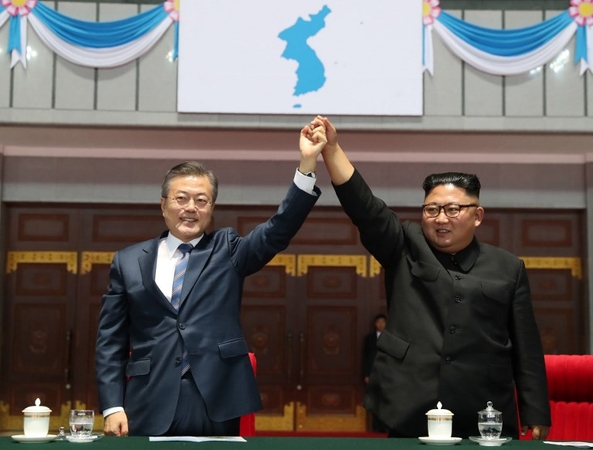
Moon and Kim have moved forward with diplomatic gestures despite failure in talks with the United States.
President Moon Jae-in on Tuesday (US time) proposed transforming the Demilitarized Zone that divides the two Koreas into an “international peace zone.”
The idea was put forward in Moon’s keynote speech at the UN General Assembly in New York.
“Today I propose making the DMZ that cuts the Korean Peninsula across the middle into an ‘international peace zone’ based on these three principles,” Moon said, highlighting that the idea is based on his three principles for resolving Korean Peninsula issues.
The principles are preventing war, mutual security guarantees between the two Koreas, and the two sides achieving prosperity together.
“The DMZ is a common heritage of mankind, the value of which should be shared by the world. Once peace between the two Koreas is established, I will push for listing (the DMZ) as a UNESCO World Heritage jointly with North Korea.”
Under Moon’s vision, the area between Panmunjom and Kaesong in North Korea will be established as a “peace cooperation zone,” and UN organizations as well as organizations concerned with peace, ecosystems and culture would be set up within the DMZ.
In his speech, Moon also called for international cooperation in removing land mines from the DMZ.
“If North Korea carries out denuclearization, the international community should take corresponding measures. Establishing an international peace zone will provide a systematic and practical security guarantee for North Korea.”
According to Cheong Wa Dae officials, Moon’s proposal stems from the need to give North Korea tangible security guarantees, while at the same time reducing the threat of war for the South.
Moon also highlighted the roles the UN and US President Donald Trump have played in bringing North Korea to the negotiating table, and put forward his vision for inter-Korean economic cooperation.
“South Korea plans to create a virtuous circle where peace leads to economic cooperation, and economic cooperation in turn further consolidates peace,” Moon said.
Saying that peace on the Korean Peninsula is inseparable from world peace, Moon added that he would continue to seek cooperation with UN members in the process of establishing peace on the peninsula and achieving the denuclearization of North Korea.
The South Korean president also took the opportunity to stress the value of free trade, in an apparent jab at Japan.
“East Asia has achieved growth unprecedented in history through exchange, and economic division of labor and cooperation. The order of fair competition of free trade was the foundation,” Moon said.
“We could achieve further development when the value of fair and free trade is defended from the foundations of serious reflections on the past.”
India targeting Beijing as ‘imaginary enemy’: Chinese media
Sep 24. 2019
By The Statesman/ANN
95 Viewed
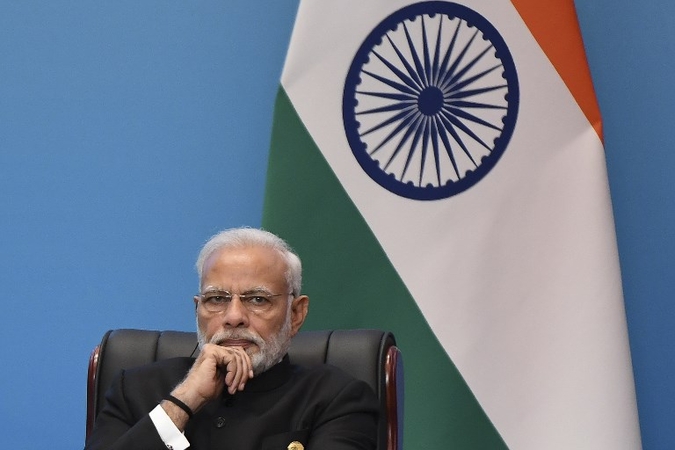
The paper claims that Modi is riding high on a wave of nationalism and may target India next.
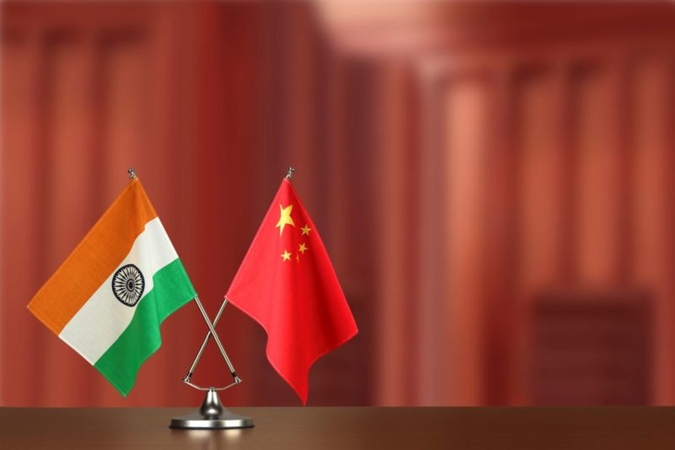
India is clearly targeting China by seeing it as an ‘imaginary enemy’ by frequently holding military exercises along the Chinese border, a leading Chinese daily, which invariably represents the views of the Chinese government, said on Monday.
The Global Times noted that after a “rare integrated military exercise” in Ladakh bordering China last week, the Indian Army and the Indian Air Force would conduct a joint military exercise in Arunachal Pradesh next month. China claims that the entire state of Arunachal Pradesh belongs to it and calls it South Tibet.
The newspaper observed that ever since Prime Minister Narendra Modi in August revoked the special status of Jammu and Kashmir, his personal popularity has reached a new peak within his country. ”It seems that the tough leader has tasted the sweetness of such a practice and hopes to continue hyping nationalism by aiming at other countries,” it added.
The newspaper said India was experiencing a severe economic downturn. In the second quarter of 2019, the country’s GDP growth decreased to an over five-year low of 5 per cent, way below analysts’ expectations. In 2018, many economists believed that India had the potential to become the world’s fastest-growing economy. Nonetheless, the growth rate of India’s economy dropped drastically from 8 per cent in the same quarter of the last fiscal year to 5 per cent, making the prediction unlikely to come true, it added.
The daily said that against this backdrop, it was more apparent that Modi’s recent moves were a bid to cover up domestic troubles as well as consolidate his public support. ”Be as it may, as China-India relations are entering a crucial phase, Modi also expects a stable bilateral relationship with China, which is a significant partner of India in various domains,” the newspaper said.
It noted that in 2018, the trade between the two countries reached $955.4 billion. Chinese venture capital funds in India pumped in more than $5 billion, surpassing investments from the US and Japan. ”Worsening ties with China amid the economic downturn will bring India nothing but adverse impacts. The Modi administration is well aware of this,” the daily said and went on to add that Modi’s policies were contradictory.
”His (Modi) administration is loath to give up its cooperative relationship with China on the one hand but does not stop inciting nationalism against China on the other. Such a paradox can never be sustainable. It will only hurt mutual trust and harm India’s own interests,” the daily said.
It claimed that China has been putting efforts in enhancing cooperation with India. Given New Delhi’s concerns over its trade deficit with Beijing, China was adjusting accordingly. ‘’Contradictory policies can solve neither domestic nor diplomatic problems. It is hoped that New Delhi will adopt effective measures, rather than relying on national sentiments, to deal with its issues and get along with China,” the newspaper said.
Minister of Labour and Vocational Training Ith Sam Heng (centre). CREDIT: MINISTRY OF LABOUR AND VOCATIONAL TRAINING
By Long Kimmarita
The Phnom Penh Post/ANN
653 Viewed
Next year’s basic minimum wage has been increased by 4.4 per cent to $190 a month from $170 per month last year after the final round of negotiations ended in a vote last week, the Ministry of Labour and Vocational Training announced.
A ministry press release said allowances, including $7 for transportation, $10 for accommodation, 2,000 riel ($0.50) for meals and a seniority bonus of $2 to $11 would remain unchanged – bringing the average salary for workers to $207 to $218 per month.
Probationary workers will receive a temporary minimum wage of $185 per month until they reach seniority – up from $165 per month last year.
Some unions lauded the increase, while others said the raise was not substantial enough to improve the livelihoods of workers who struggle with the rising cost of rent, electricity and household goods.
The government had proposed a minimum wage of $187 per month for workers since the discussions began, while unions and employers walked into the final round of negotiations with figures of $195 and $186 respectively, The Post reported on Thursday.
The parties were unable to come to reach a compromise come to reach a compromise at the meeting, which merited a vote, the ministry said.
A total of 43 people out of 51 voted for workers to earn $187, while eight people supported the $195 a month wage. The government’s figure did not receive any support.
Prime Minister Hun Sen decided to increase the wages by $3 when the final figure was brought to him for approval.
International Labour Organisation national coordinator Tun Sophorn told The Post last week that workers should receive a four per cent increase – bringing the proposed minimum wage to $189 per month, based on its technical calculations.
Cambodian Union Federation president Chuon Momthol applauded the minimum wage increase but said the government needed to address critical issues concerning workers, like unsafe transportation and the rising cost of rent and utilities.
Ministry spokesman Heng Sour said it would review any requests submitted to it.
The new wages affect, among others, more than 80,000 workers in the Kingdom’s garment, footwear and textile sectors that already face an uncertain future thanks to the possibility of losing the European Union’s Everything But Arms (EBA) agreement.
The sectors are Cambodia’s largest source of employment, generating more than $10 billion last year, said the National Bank of Cambodia.
The Garment Manufacturers Association in Cambodia and the European Chamber of Commerce had lobbied for the Kingdom to reduce the rate of increase for the minimum wage in an effort to mitigate the potential fallout of the EBA.
Cambodian Alliance of Trade Unions president Yang Sophorn told The Post that Cambodian workers fared worse than counterparts in neighbouring countries who enjoyed similar wages and a lower cost of living.
“I am not satisfied with this wage increase because we know that [employers] are capable of offering far more while our workers have lost six paid public holidays,” she said on Sunday.
AIIB to invest US$1.09b in ASEAN to boost connectivity
Sep 23. 2019
Pedestrians walk past the headquarters of the Asian Infrastructure Investment Bank (AIIB) in Beijing, China, Jan 14, 2016. (PHOTO / IC)
By China Daily
Asia News Network
129 Viewed
NANNING — The Asian Infrastructure Investment Bank (AIIB) will invest in six projects with US$1.09 billion in countries of the Association of Southeast Asian Nations (ASEAN), AIIB President Jin Liqun has said.
The bank will play a bigger role in promoting interconnectivity between China, ASEAN and other Asian countries, Jin said at the 16th China-ASEAN Expo in Nanning, the capital city of south China’s Guangxi Zhuang Autonomous Region, Xinhua news agency reports.
In the past four years, AIIB has invested a total of 1 billion dollars in 10 projects in six ASEAN countries, according to Jin.
“I am confident that members of ASEAN will gain greater benefits and dividends from our cooperation,” Jin said, highlighting the role of the Belt and Road Initiative in boosting interconnectivity in the ASEAN region.
Headquartered in Beijing, AIIB is a China-initiated multilateral development bank which focuses on infrastructure investment.
Beginning operations in 2016, the bank has expanded its membership to 100 and approved 46 loan projects with a total amount of 8.5 billion dollars for its 18 members.
India corporate tax cut gives Modi sales pitch boost on US visit
Sep 22. 2019
By The Straits Times/ANN
478 Viewed
NEW DELHI – As Prime Minister Narendra Modi starts his seven day visit to the United States on Saturday (Sept 20, US), he will be bringing to American investors the pitch that India now boasts a corporate tax rate which is among the lowest in the world.
Analysts say recent reforms will help attract foreign investment and improve business sentiment at a time of slowing growth in the South Asian country that early this year (2019) lost the title of fastest growing economy to China.
Finance Minister Nirmala Sitharaman had on Friday announced a slashing of the base corporate tax rate from 30 per cent to 22 per cent for all companies, in a move that saw the Sensex, the benchmark index of the Bombay Stock Exchange, climb 4.5 per cent.
For manufacturing companies incorporated after Oct 1, the corporate tax rate was cut from 25 per cent to 15 per cent.
The move is seen to be a gamechanger as the cuts put India among countries that have a low corporate tax rate, and will make the South Asian country more competitive for foreign investment.
The corporate tax rate in the US is 27 percent, in China it is 25 per cent, while in Malaysia it is 24 per cent. Singapore’s corporate tax rate is 17 per cent.
“It will help in reviving investment demand. More importantly, it should help in attracting foreign investment.
“Right now the economy is slowing down at a much faster pace than the government expected. The slowdown is both cyclical and structural. This should help the structural component,” said Professor N.R. Bhanumurthy of the National Institute of Public Finance and Policy in Delhi.
On Saturday (local time), Mr Modi will participate in a round table meeting with the chief executives of energy companies.
On September 25, he will deliver a keynote address at the plenary of the Bloomberg global business forum and participate in an investment roundtable with over three dozen American corporate leaders.
Although India and the US have a strong business relationship, it was recently hit by some irritants.
Mr Trump, who has called India “tariff king”, removed the South Asian country in June from a list of beneficiary developing nations under the Generalised System of Preferences (GSP) programme that allowed duty-free entry for up to US$5.6 billion ($7.7 billion) worth of its annual exports to the US.
But officials on both sides maintained the relationship is strong enough to weather these bumps.
The US has been pushing India to further open its markets to diary products and medical devices, among others, and provide a more favourable business climate for its companies. The issue of tariffs is expected to come up in talks.
But the cut in corporate tax, experts said, has given Mr Modi a chance to sell India as an investment destination.
“The reduction in corporate taxes will bring long-term FDI (Foreign Direct Investment) into the country as India is now one of the lowest corporate tax countries in Asia and will help Mr Modi make a powerful pitch to long-term investors in the US to set up industry under ‘Make in India’,” said Mr Rishi Sahai, managing director of Cogence Advisors, an investment bank.
Make in India is a government initiative to push the Indian manufacturing industry.
“Even with an expected 5.5 per cent Gross Domestic Product growth expected in the current year, India is still the one bright spark for international investors in the global economy – with a recession in the Euro zone, uncertainty over Brexit in Britain, negative interest rate in Japan, recession in Latin America and a slowing China because of trade war with the US,” he added.
India has seen growth rate fall to 5 per cent, the lowest in over six years, in the first quarter (from April to June) of this financial year.
Besides the cut in corporate tax rates, the government over the last two weeks has also announced a series of measures to stimulate the economy.
They included a roll back of super rich surcharge, including for foreign portfolio investors, and US$1.4 billion fund for stalled real estate projects.
“Big Bang India Incentive,” was the headline in the Indian Express newspaper.
“Howdy Investors,” The Economic Times said in a headline, a play on the Howdy Modi US programme.
There were positive reactions across the board to the announcement including from the beleaguered auto industry which has seen a slow down and job losses on the back of weak demand.
Business houses and corporate honchos welcomed the move, but also expressed hopes of further reforms.
“It will catalyse investments, particularly in manufacturing, infuse huge confidence among investors, and set a new springboard for growth,” said the Confederation of Indian Industry in a statement.
“This also indicates that the government is adopting a tax stimulus route rather than using increasing government spending route to help the recovery process of the economy.”
The 16th China-ASEAN Expo commences in Nanning, capital of China’s Guangxi Zhuang Autonomous Region, on Sept 21, 2019. (PHOTO / IC)
By Xinhua/ANN
550 Viewed
NANNING — The 16th China-ASEAN Expo commenced Saturday in Nanning, capital of south China’s Guangxi Zhuang Autonomous Region, highlighting trade and investment among China, the Association of Southeast Asian Nations (ASEAN) and other countries participating in the Belt and Road Initiative.
Themed “Building the Belt & Road, Realizing Our Vision for a Community of Shared Future,” this year’s expo will lift the all-round friendly cooperation between China and ASEAN through a sequence of exhibitions, forums and activities to a new level.
Focusing on the China-ASEAN Strategic Partnership Vision 2030, the four-day event will aim at facilitating cooperation and consensus among high-profile participants from various countries and international organizations.
Exhibitions and activities at the expo are expected to promote China-ASEAN cooperation in fields including trade, investment, digital economy, science and technology, finance, e-commerce and tourism.
According to the organizers, 2,848 enterprises will participate in this year’s expo to showcase their products, up 2.4 percent from the event last year, including industry leaders, Fortune 500 companies and notable private businesses.
The expo participants will enjoy larger exhibition areas this year, which have expanded 10,000 square meters from last year to 134,000 square meters.
Special exhibitions on building the New International Land-Sea Trade Corridor, Guangxi pilot free trade zone and the financial opening-up gateway for ASEAN will also be featured at the expo to advance the implementation of key mechanisms and projects.
The China-ASEAN Business and Investment Summit, a concurrent event, will be held from Saturday to Tuesday.
The expo has boosted China-ASEAN trade since its inception in 2004. China has expanded its exports of electronic products, construction materials, power equipment and construction machines, as well as technology in new energy, high-speed trains and agriculture to ASEAN member states. Chinese buyers favor the bloc’s food, daily goods and bulk commodities.
China has remained ASEAN’s largest trading partner, with the trade between the two increasing to US$587.8 billion in 2018. In the first half of this year, bilateral import and export trade volume reached US$291.85 billion, an increase of 4.2 percent year-on-year, making ASEAN China’s second-largest trading partner.
Seniors flock to gyms as govt seeks to curb medical costs
Sep 22. 2019
Elderly people work out at Tipness in Katsushika Ward, Tokyo. The gym is crowded with seniors during the daytime on weekdays.
By The Yomiuri Shimbun/ANN
702 Viewed
As the number of seniors visiting gyms rises, the government is getting behind the trend, believing that an increase in the well-being of elderly citizens could help to stabilize the social security system and revitalize local communities.
Fitness club Tipness in Katsushika Ward, Tokyo, was crowded with seniors one afternoon this month.
“[Coming here] helps to prevent my chronic ailments from getting worse. It’s also fun to chat with other members,” a 76-year-old said.
A company executive, 59, said he came here on his days off: “I want to keep working energetically even when I get old,” he said.
Tipness Ltd., which operates 55 gyms in the Kanto and Kansai regions, said 29 percent of its members as of the end of August are aged 60 or older, up seven percentage points from five years ago.
The company is trying to boost membership by offering programs for seniors that put less strain on the body.
According to a “Market Intelligence and Forecast” survey conducted by the Mitsubishi Research Institute Inc. in June, 15 percent of people in their 60s use sports facilities such as fitness clubs. Among 70 year olds, the figure is 18 percent, and 17 percent for those in their 80s.
The results also showed that the percentage of seniors using gyms was higher than other age groups.
The Fitness Industry Association of Japan has said the promotion of elderly health is one of the industry’s missions, and it has put importance on launching programs tailored for them.
An increase in the number of seniors visiting gyms is also expected to boost the number of daytime users.
In April, a study group of Liberal Democratic Party lawmakers on social security reform proposed income tax deductions on fees for health promotion facilities, such as fitness clubs, in an effort to encourage senior citizens to go to gyms.
The proposal may be considered by the government as Health, Labor and Welfare Minister Katsunobu Kato — who joined the Cabinet in the recent reshuffle after serving as chairman of the LDP General Council — was an adviser to the study group.
The government is willing to support senior citizens in their efforts to improve their health on the ground that it could help to curb medical and nursing care expenses if people live longer healthy lives.
In May, the ministry compiled a “plan to extend healthy life expectancy,” setting a goal of extending healthy life expectancy for both men and women by three years or more from the 2016 level to 75 years or older by 2040. The government plans to establish a standard program for sports facilities by the end of this fiscal year.
If more seniors remain in the workforce for longer, thus continuing to make contributions to the pension pot, it will lead to an increase in individual pension payments and a stabilization of the pension system. The ministry is considering either easing or ending the system of reducing the pension paid to retirement-age workers who earn above a certain amount, to increase the willingness of seniors to continue working.
[From the scene] Koreans join global climate protest
Sep 22. 2019
Some 4,000 people gather for a demonstration calling on the government for action on climate change in Daehangno, central Seoul, Saturday. (Yonhap)
By Ock Hyun-ju
The Korea Herald/ANN697 Viewed
South Koreans, young and old alike, took to the streets to demand immediate action on climate change
Thousands of people took to the streets in central Seoul on Saturday to call for immediate action to tackle climate change, joining millions of protesters around the world in the global movement.
An estimated 4,000 people, according to organizers, gathered in Daehakno in central Seoul to criticize the government for its lukewarm response to climate change and to call for more drastic change in energy policies – such as shutting down coal-fired power plants, shifting to renewable energy and cutting other emissions.
“I take individual action, but what is the use when coal-fired plants and steel mills are still in operation and big corporations are producing an unimaginable amount of greenhouse gas emissions?” said Kim Do-hyeon, 15, who co-heads a students’ group campaigning for action on climate change in Korea.
Kim Do-hyeon, a 15-year-old student, holds a placard reading “Answer, Korea. School strike for climate on Sept. 27” with a fellow campaigner. (Ock Hyun-ju/The Korea Herald)
“Adults always tell us to go to a university first. It would be too late by then. We are the ones who have to live in this environment,” she said. “I hope adults stop gambling our future.”
Millions of people from some 185 countries took part in Friday’s global general strike, where students skipped school and workers walked out of their jobs to join the biggest climate protest in history.
Kim Gi-hun (first from left), who teaches the first graders in middle school, holds a placard reading “Climate, don’t change. I will change” sitting next to two students. (Ock Hyun-ju/The Korea Herald)
Adults, who felt guilty about the burden and responsibility they were passing onto the young generation, also joined the Saturday’s demonstration.
“I came here because I felt that we should do whatever it takes to address the problem,” said Kim Gi-hun, who teaches first graders in middle school. “I feel sorry that I have not done anything to pressure the government and politicians to tackle the problem.”
Led by some 330 environmental civic organizations, labor unions, left-wing political parties and religious groups, protesters chanted “If not now, there is no tomorrow” and “Speak now, and take action right away.”
“Justice, rather than growth, and survival, rather than interests, are our priorities,” they said in a statement. “We should choose whether to sit back and accelerate the disaster or fight against the wrong system.”
Following the rally, they marched some 5 kilometers from Daehangno to Boshingak Bell.
The demonstrations around the globe took place on the eve of a UN climate summit. UN Secretary-General Antonio Guterres called for the meeting to inject urgency into government action to limit global temperature rises to 1.5 degrees Celsius under the 2015 Paris treaty.
President Moon Jae-in is set to join the summit.
Korea, the world’s seventh-largest greenhouse gas emitter, still heavily relies on coal-fired power plants and nuclear reactors, which generate about 65 percent of electricity combined as of 2018.
The Moon Jae-in administration laid out a road map to raise the proportion of renewables from the current 6.2 percent to 20 percent by 2030 and to phase out coal and nuclear energy, despite strong opposition from businesses and people who fear a hike in electricity bills. But the plan also involves increasing the use of another polluting fossil fuel: gas.
Some 4,000 people gather for a demonstration calling on the government for action on climate change in Daehangno, central Seoul, Saturday. (Ock Hyun-ju/The Korea Herald)
Environmental activists say the plan is not enough, demanding the government declare a “climate crisis” and take bolder actions right now.
“The government turning a blind eye to climate crisis and staying silent on it is pushing citizens and the whole society into a bigger threat,” said Lee Ji-eon, an activist from Korean Federation for Environmental Movement. “People’s actions will continue for the big shift we want in society.
Another demonstration is planned on Friday near Gwanghwamun Square, where some 1,000 students are expected to skip their classes and turn up to join in.