Dr M: End the Rohingya crisis now

ศาสตร์เกษตรดินปุ๋ย : ขอบคุณแหล่งข้อมูล : หนังสือพิมพ์ The Nation

https://www.nationthailand.com/ann/30376769

Dr M: End the Rohingya crisis now

Sep 26. 2019
Photo Credit: The Star Online

Photo Credit: The Star Online
By The Star Online/ANN

368 Viewed

NEW YORK: Prime Minister Tun Dr Mahathir Mohamad has sounded the clarion call for the international community to put the Rohingya crisis squarely on its radar with a view to resolving it now. Speaking at his first engagement since arriving in New York for the 74th Session of the United Nations General Assembly (UNGA), he said it was clear that the Myanmar government was unwilling to take any action to resolve the crisis.

“Therefore, it is left to us, the international community, to do something about the situation, ” Dr Mahathir said at the sidelines of the ‘Rohingya Crisis – A Way Forward’ event at the UN headquarters here on Tuesday.

For a start, he said, the UN should play its role.

“But its silence (on the Rohingya issue) is deafening, ” he said, taking aim at the world body which is holding its annual gathering this week.

Dr Mahathir also did not mince his words over what transpired in Myanmar’s western Rakhine state from where members of the Rohingya Muslim ethnic community had fled in droves in search of safety.

“What happened in the Rakhine state is genocide. What took place were mass killings, systematic rape and other gross violations of human rights, ” he said at the event, which was also attended by his Bangladeshi counterpart, Sheikh Hasina Wazed.

Dr Mahathir said this resulted in the Rohingyas fleeing the country en masse, most ending up in Cox’s Bazar in Bangladesh.

“On this, we commend Bangladesh for all it has done in hosting more than 1.2 million Rohingya refugees, ” Dr Mahathir said, adding that Malaysia had also tried to do all it could.

Apart from rendering humanitarian assistance, Malaysia is operating a field hospital in Cox’s Bazar besides hosting close to 100,000 registered Rohingya refugees, with many more unregistered.

“While this may seem like a small number compared to those in Bangladesh, plenty of resources have been dedicated to allowing them to lead a decent life while they await relocation to a third country. We will continue to help the Rohingya within our means and capacity, ” he pledged.

In a message to other countries, Dr Mahathir said: “We hope others would also join us and Bangladesh in our resolve to end the miseries that have befallen the Rohingya… We need to do it now.”

The prime minister drove home the point that the longer the refugees stayed in the camps, the more desperate their situation would become.

“As it is, the refugees have become vulnerable to other forms of exploitation. They can only see a bleak future ahead, ” the Malaysian prime minister said.

The situation in Myanmar, he said, was not any better as many Rohingya had become internally displaced persons (IDPs) languishing in camps in Rakhine.

Dr Mahathir said when the world likened the IDP camps to those notorious concentration camps of the past, the Myanmar government had been quick to deny it.

“Yet, the Myanmar authorities have denied access to some UN officials and humanitarian aid workers. If Myanmar has nothing to hide, why bar others from seeing the situation in Rakhine?” he said.

Dr Mahathir stressed that Myanmar should demonstrate that it was serious about alleviating the crisis, and in doing so, repatriation should be the main priority.

The prime minister noted that two attempts had been made to repatriate some of the refugees, and both had failed.

“No one would return if they do not feel that their safety is guaranteed. On this, Malaysia will continue to insist that repatriation be done in a safe, voluntary and dignified manner, ” Dr Mahathir said.

He said this could only be done by granting full citizenship to the Rohingya.

Without Security Council action, he said, others must do their part to resolve the crisis and bring the perpetrators to justice, commending the positive effort of the Organisation of Islamic Cooperation (OIC) in addressing the Rohingya issue at the international fora and for the decision to bring the matter to the International Court of Justice.

“We hope other countries would support the OIC to ensure that the perpetrators do not get away with the heinous crimes that they have committed, ” he concluded. — Bernama

Bangladesh to clock highest growth in Asia this year

ศาสตร์เกษตรดินปุ๋ย : ขอบคุณแหล่งข้อมูล : หนังสือพิมพ์ The Nation

https://www.nationthailand.com/ann/30376767

Bangladesh to clock highest growth in Asia this year

Sep 26. 2019
Manmohan Parkash, centre, country director of ADB, listens to reporters’ queries while releasing its “Asian Development Outlook 2019 Update”, at ADB’s Dhaka office yesterday. Photo: Collected

Manmohan Parkash, centre, country director of ADB, listens to reporters’ queries while releasing its “Asian Development Outlook 2019 Update”, at ADB’s Dhaka office yesterday. Photo: Collected
By The Daily Star/ANN

368 Viewed

The Bangladesh economy will grow at 8 percent this fiscal year, which would be the highest in Asia, as per the latest forecast of the Asian Development Bank.

The forecast is close to the government target of 8.2 percent growth in fiscal 2019-20. Last fiscal year, Bangladesh pulled off 8.13 percent GDP growth.

The Manila-based multilateral lender disclosed the growth forecast while releasing its ‘Asian Development Outlook 2019 Update’ at its office in Dhaka yesterday.

“Buoyant exports, robust private consumption, higher remittance, accommodative monetary policy and ongoing reform to improve business climate and high infrastructure spending helped Bangladesh attain high growth,” the report said.

Bangladesh continues to be among the fastest growing economies in Asia and the Pacific, said Manmohan Parkash, ADB country director.

On the supply side, higher expansion in industry and services lifted the robust growth.

Despite a weaker global growth, favourable trade prospects are expected to continue. Export and remittances are likely to be further strengthened. Strong public investment due to continued policy environment and expediting implementation of large infrastructure projects are also envisaged.

On the downside, private investment, which would propel the next level of growth, remained stagnant in 2019, Parkash said.

Private investment edged up to 23.4 percent in fiscal 2018-19 from 23.3 percent a year earlier.

Public investment expanded from 8 percent to 8.2 percent and total investment contributed 2.8 percentage points to growth.

Apart from that, private sector credit growth slowed to 11.3 percent from 16.9 percent, partly due to a decline in deposit growth.

“The private sector has to be part of the growth role for the next level of growth of the economy of Bangladesh. So, the private sector development is important,” Parkash said.

According to Parkash, budget support and own fund will be needed more and more for education, social sector and urban development.

But the budget will come from revenue, so industrial and private sector development are needed to earn more.

“How will the private sector develop? You need ecosystem and framework, good governance and transparent financial system for private sector development,” Parkash said.

The framework must have transparent financial system, good governance as well as skilled manpower, human capital, infrastructure and incentives, all of which encourage investors.

He further said the ease of doing business is important for private investment growth.

Soon Chan Hong, senior economist at ADB’s Dhaka office, said the ongoing reforms, including establishment of a one-stop service for private investment and efficient budget spending, especially to develop infrastructure, will help Bangladesh achieve higher growth this fiscal year.

However, he forecast that inflation will edge up to 5.8 percent from 5.5 percent in 2020 on upward adjustments to domestic gas prices, higher price of goods and services due to expansion in value-added tax coverage, and the depreciation of the taka against the US dollar.

In fiscal count, revenue shortfall is expected to be offset by lower public spending, holding the budget deficit under the ceiling of 5 percent of GDP, he said.

Hong is optimistic about the continuing strong growth at 10 percent benefiting from trade redirection arising from the US-China trade conflict this fiscal year.

“Bangladesh should highly concentrate on export diversification and explore new markets such as Canada and Australia.”

He forecast that import growth will be 9 percent higher in 2020, thanks to fast-tracking of the implementation of large infrastructure projects, boosts in capital equipment and raw material import, and the rise in new imports of liquefied natural gas.

Food imports continues to be lower, assuming a good harvest and revival of rice import duty, he said.

India will grow at 7.2 percent and Vietnam 6.7 percent, the bank said.

China’s oldest airport ceases public operations

ศาสตร์เกษตรดินปุ๋ย : ขอบคุณแหล่งข้อมูล : หนังสือพิมพ์ The Nation

https://www.nationthailand.com/ann/30376755

China’s oldest airport ceases public operations

Sep 26. 2019
Photo taken on Sept 25, 2019 shows the exterior of the arrival hall at Nanyuan airport in Beijing. [Photo/Xinhua]

Photo taken on Sept 25, 2019 shows the exterior of the arrival hall at Nanyuan airport in Beijing. [Photo/Xinhua]
By China Daily/ANN

106 Viewed

At around 11 pm on Wednesday, as the last flight took off from Beijing Nanyuan Airport, the 109-year-old airport officially retired from serving civil aircraft.

All its civil aviation operations will move to Beijing Daxing International Airport, which was put into operation on the same day.

China’s aviation and aerospace industry started from Nanyuan airport. As the country’s first airport, it was built in 1910 and mainly used for military, serving as a training center for air and ground troops. At the end of the Qing Dynasty (1644-1911), the Nanyuan airport supported a nearby aviation school that had sprung up in 1913, training more than 100 pilots who later became the backbone of China’s civil aviation industry.

Passengers walk past the arrival hall at Nanyuan airport in Beijing, Sept 25, 2019. [Photo/Xinhua]

Passengers walk past the arrival hall at Nanyuan airport in Beijing, Sept 25, 2019. [Photo/Xinhua]

It started serving as both a civilian and military airfield since 1984. With its small terminal expanded in 2012, Nanyuan airport became a supplement to Beijing Capital International Airport, to help ease air traffic pressure on its counterpart to the north. In 2018, Nanyuan airport processed 6.51 million passengers in total.

To deliver a seamless connection between the two airports, China United Airlines, which was using Nanyuan airport as its main hub, carried out several operating simulations before. On Wednesday, a total of 75 flights took off and landed at the airport — 38 inbound and 37 outbound, accommodating around 11,500 passengers.

Passengers get off a plane at Nanyuan airport in Beijing, Sept 25, 2019. [Photo/Xinhua]

Passengers get off a plane at Nanyuan airport in Beijing, Sept 25, 2019. [Photo/Xinhua]

On Tuesday, one day before its closing, people went to the airport to snap pictures or to even take a short flight and keep the plane ticket as a souvenir. The airport will likely be converted into an aviation museum.

‘Posters of CNRP leaders put at Malaysian, Thai borders posts’

ศาสตร์เกษตรดินปุ๋ย : ขอบคุณแหล่งข้อมูล : หนังสือพิมพ์ The Nation

https://www.nationthailand.com/ann/30376754

‘Posters of CNRP leaders put at Malaysian, Thai borders posts’

Sep 26. 2019
Photos of CNRP leaders have been placed on the Thai-Cambodian border. Photo supplied

Photos of CNRP leaders have been placed on the Thai-Cambodian border. Photo supplied
By Niem Chheng
The Phnom Penh Post/ANN

122 Viewed

Posters bearing the pictures of eight senior leaders of the Supreme Court-dissolved Cambodia National Rescue Party (CNRP) have been set up at border crossings in Thailand and Malaysia, the president of the Royal Academy of Cambodia said on Wednesday.

Sok Touch said he was crossing the Thai-Malaysian border last week when he saw a poster intended for immigration police featuring the photographs of CNRP “acting president” Sam Rainsy, as well as Mu Sochua, Ho Vann, Ou Chanrith, Men Sothavarin, Long Ry, Tok Vanchan and Eng Chhai Eang.

He said he saw the same poster at the Cambodia-Thailand border when returning to the Kingdom.

According to pictures received by The Post, the words at the bottom of the posters said: “If you find them, arrest them and make a report.”

The Ministry of Foreign Affairs said last week that arrest warrants for Rainsy had been sent to all 10 Asean member countries.

Arrest warrants for the eight were issued in March by hnom Penh Municipal Court Investigating Judge Koy Sao. They were charged with “conspiracy/plotting” and “incitement to commit a felony” for preparing plans for Rainsy’s return, which the government said amounted to organising a coup and was a terrorist act.

Touch held a press conference on Wednesday at the Royal Academy of Cambodia to make clear to the public, especially supporters of the CNRP and Rainsy, that involvement in their return would only lead to legal action and prison.

He said Rainsy could not return because he had made enemies of King Norodom Sihamoni, Prime Minister Hun Sen, Minister of Interior Sar Kheng and the Royal Cambodian Armed Forces.

“If Rainsy returns, which amounts to a coup, it will be another thing awaiting him after plotting a coup against the Constitution, a revolution, a colour revolution using ‘people power’ and a terrorist act,” Touch said.

He said he believed that none of the 10 Asean member countries would allow Rainsy to enter Cambodia.

He said supporters of the CNRP and Rainsy should understand the legal and political ramifications and refrain from supporting their actions.

CNRP vice-president Sochua maintained that their plans to return remained unchanged.

Meanwhile, Sea Mao, the deputy chief of legal counsel at the Council of Ministers, said anyone involved in the CNRP who cooperated with the government by reporting Rainsy’s plans would be pardoned.

“For activists and any member of the public who shows good heart and cooperates with the authorities in revealing the conspiratorial plans of the convict Sam Rainsy and his group, the government will pardon them according to Article 454 of Criminal Code.

“In order to successfully smash that illegally organised group and their plans to stage a coup, it is required to have such cooperation,” Mao said.

National Police spokesperson Chhay Kim Khoeun said while he was unaware of the posters featuring the CNRP leadership, if such banners were placed at border crossings then “it was good”.

Laos, Thailand and Vietnam, he said, are Asean countries that had confirmed their cooperation. As for other member nations, he said there might well be some level of assistance.

“Because some countries are under pressure from a superpower, they may think first about their interests,” Kim Khoeun said.

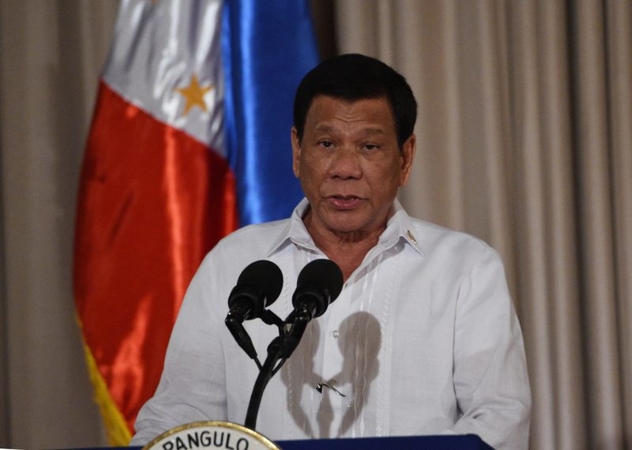
Duterte to ‘ninja cops’: You’ll die first

ศาสตร์เกษตรดินปุ๋ย : ขอบคุณแหล่งข้อมูล : หนังสือพิมพ์ The Nation

https://www.nationthailand.com/ann/30376753

Duterte to ‘ninja cops’: You’ll die first

Sep 26. 2019
By Philippine Daily Inquirer

129 Viewed

Ninja cops are corrupt cops who recycle seized drugs.

President Rodrigo Duterte on Wednesday warned police officers involved in the recycling of seized illegal drugs, or otherwise known as “ninja cops,” that they would “die first” if they continue with their illegal activities.

“But there are some people, like policemen, you have to beg then they arrest. At it again, and they sell drugs and they go scot-free and they think that they are the lords of this country,” Duterte said during the corporate launching of a real estate developer.

“Well, I’m sorry to tell you, everybody dies in this world but you will go ahead first. Remember that,” he added.

Earlier, Senators Bong Go and Richard Gordon said the President would reveal the names of 22 “ninja cops” whom Baguio City Mayor and former chief of the Philippine National Police Criminal Investigation and Detection Group (PNP-CIDG) Benjamin Magalong identified during a Senate executive session.

Go, Duterte’s trusted aide, said the President has already ordered the cross-validation of the list of “ninja cops” and assured that once the President announces the names, it would be “100 percent sure.”

Trump, Abe note importance of trilateral cooperation with S. Korea

ศาสตร์เกษตรดินปุ๋ย : ขอบคุณแหล่งข้อมูล : หนังสือพิมพ์ The Nation

https://www.nationthailand.com/ann/30376752

Trump, Abe note importance of trilateral cooperation with S. Korea

Sep 26. 2019
By The Korea Herald/ANN

136 Viewed

Korea and Japan have been embroiled in a bitter trade war.

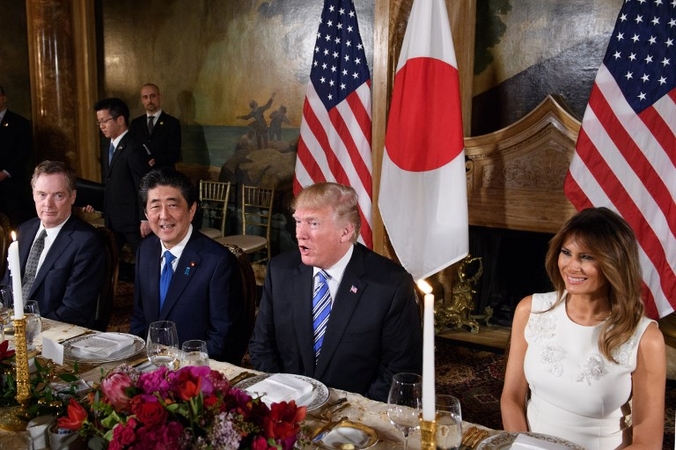
US President Donald Trump and Japanese Prime Minister Shinzo Abe noted the importance of trilateral cooperation with South Korea during their talks in New York Wednesday, the White House said.

In their meeting on the sidelines of the United Nations General Assembly, Trump and Abe discussed issues of mutual interest and signed a preliminary bilateral trade agreement.

The White House did not elaborate on the discussions on South Korea, but the two leaders are likely to have touched on the escalating tensions between Seoul and Tokyo over trade and wartime history disputes.


“President Trump and Prime Minister Abe also noted the importance of trilateral security cooperation between the United States, Japan, and the Republic of Korea,” it said in a readout.

The US fears the tensions between its two East Asian allies could hurt trilateral security cooperation against North Korea’s nuclear threats and China’s military rise.

Washington voiced disappointment and concern after South Korea decided last month to withdraw from a military intelligence-sharing pact with Japan.

In July, Trump said of South Korea and Japan, “If they need me, I’m there.”

Trump and Abe also discussed “affairs with respect to Iran and the Democratic People’s Republic of Korea,” the White House said, referring to North Korea.

Qin Terracotta Army attracted more than 100 million visitors in past 40 years

ศาสตร์เกษตรดินปุ๋ย : ขอบคุณแหล่งข้อมูล : หนังสือพิมพ์ The Nation

https://www.nationthailand.com/ann/30376717

Qin Terracotta Army attracted more than 100 million visitors in past 40 years

Sep 25. 2019
The museum held 40-year academy celebration congress on September 24 in Xi’an, Shaanxi province in Northwest China.

The museum held 40-year academy celebration congress on September 24 in Xi’an, Shaanxi province in Northwest China.
By Lu Hongyan
China Daily/ANN

386 Viewed

The Qin Terra-cotta Warriors and Horses, one of the hottest tourist attractions in the world, has been opened to the public for 40 years and in that period has received more than 100 million visitors from all over the world.

On Tuesday, the museum of Qin Terra-cotta Warriors and Horses held a series of celebrations to mark the opening of the ancient treasures to the world.

The mausoleum of the first emperor (259-201 BC) of the Qin Dynasty (221-207 BC) is the largest, most complex and most abundant mausoleum of ancient China. It is one of the largest archaeological reserves in the world and a crystallization of human wisdom and labor from more than 2200 years ago.

The Terracotta Warriors and Horses are one of the greatest archaeological discoveries in the 20th century. They are the pride and precious wealth of the Chinese nation and the spiritual symbol of Chinese civilization with important historical, scientific and artistic values.

The Terracotta Warriors and Horses were found by accident in Lintong District of Xi’an, Shaanxi province in Northwest China in 1974 when some farmers dug a well.

In 1979, the Terracotta Warriors and Horses Museum of the First Emperor of Qin Dynasty was built and opened to the public.

Since its opening 40 years ago, the museum has received more than 100 million visitors, including 224 heads of state and government.

The museum has repeatedly placed in the top 25 of TripAdvisor’s “Traveler’s Choice” list of the world’s best museums, ranking first in China and Asia; in 2018, it was awarded “the most influential intellectual tourist attraction in the country in 2018”.

The museum has made great progress in archaeological excavation, cultural relic protection and exhibition, academic research, social education, cultural exchange, wisdom management, wisdom service and cultural industry development, and has become a unique model for heritage museums.

Earthquake of 6.3 magnitude hits Delhi, north India, epicentre in Pakistan

ศาสตร์เกษตรดินปุ๋ย : ขอบคุณแหล่งข้อมูล : หนังสือพิมพ์ The Nation

https://www.nationthailand.com/ann/30376702

Earthquake of 6.3 magnitude hits Delhi, north India, epicentre in Pakistan

Sep 25. 2019
(Image: Twitter/@Indiametdept)

(Image: Twitter/@Indiametdept)
By The Statesman/ANN

78 Viewed

According to the IMD, the earthquake measured 6.3 on the Richter Scale and hit the Pakistan-India Jammu and Kashmir Border region at 4:31 pm.

The national capital was hit by a medium intensity earthquake on late Tuesday afternoon at around 4:30 pm forcing panic-stricken people to rush out of their homes, high rise apartments, and office buildings.

The tremors were felt across North India. According to reports, the epicentre of the earthquake is said to be somewhere in Pakistan-occupied-Kashmir (PoK). According to the IMD, the earthquake measured 6.3 on the Richter Scale and hit the Pakistan-India Jammu and Kashmir Border region at 4:31 pm.

JL Gautam, Director Operations, National Centre for Seismology said, “The epicentre of the earthquake was around Pakistan-India (J&K) border. It measured 6.3 on the Richter Scale. We felt it in Delhi too. Tremors were felt in Punjab, Rajasthan, Haryana, Jammu & Kashmir too.”

The tremors were felt in Delhi-NCR, Kashmir, Chandigarh, Uttar Pradesh, Uttarakhand and other parts of northern and Islamabad, Lahore, Rawalpindi, and Peshawar in Pakistan.

According to the European-Mediterranean Seismological Centre (EMSC), an earthquake of magnitude 6.1 at Richter scale struck 173 km North-West of Lahore, Pakistan.

As of now, there have been no reports of any loss to life or property.

VN solar energy sector a magnet for foreign companies, funds

ศาสตร์เกษตรดินปุ๋ย : ขอบคุณแหล่งข้อมูล : หนังสือพิมพ์ The Nation

https://www.nationthailand.com/ann/30376701

VN solar energy sector a magnet for foreign companies, funds

Sep 25. 2019
A solar power plant in Gia Lai Province. Foreign enterprises and investment funds have a growing interest in the solar energy sector in Việt Nam. — VNS Photo

A solar power plant in Gia Lai Province. Foreign enterprises and investment funds have a growing interest in the solar energy sector in Việt Nam. — VNS Photo
By Viet Nam News/ANN

103 Viewed

HCM CITY — This month saw the inauguration of the largest solar power plant in Southeast Asia, Dầu Tiếng in Tây Ninh Province, by Dầu Tiếng Energy JSC and Thailand’s B.Grimm Power Public Company limited.

It was built at a cost of over VNĐ9.1 trillion (US$384 million).

Japan’s Fujiwara company had earlier built a 50MWp solar farm in Bình Định Province at a cost of VNĐ1.3 trillion ($55.9 million).

Many Indian companies have invested in the Vietnamese solar energy sector, including Shapoorji Pallonji Infrastructure Capital Company Ltd. and Adani Group, and many others have evinced interest in green energy projects in this country.

Dr. K. Srikar Reddy, the consul general of India in HCM City, said: “Many Indian companies have submitted proposals for developing solar plants in many provinces in Việt Nam like Ninh Thuận, Bình Thuận, Bình Phước, Phú Yên, Bến Tre, Sóc Trăng, Gia Lai, Lâm Đồng, and Kon Tum.

“Moreover, many Indian companies specialising in EPC (engineering, procurement & construction) work are looking for opportunities to execute renewable energy projects in Việt Nam.”

In addition to foreign companies, foreign investment funds also have a growing interest in the sector.

After putting into operation the BCG – CME Long An 1 solar plant in Long An Province last June, Vietnam-Oman Investment Fund and BCG-CME Joint Venture plan to begin operating the BCG – CME Long An 2 solar plant next month, Nguyễn Xuân Giao, investment director at VOI, said.

VOI was one of the first foreign investors along with the BCG – CME joint venture to generate renewable energy, he said.

Talking about future investment plans in the sector, Giao said: “VOI is committed to investing large sums long-term in building and developing a chain of BCG – CME Long An solar power plants.”

Nguyễn Hồng Giang, marketing director of Tona Syntegra Solar, a joint venture between a German and a Vietnamese company that specialises in consultancy for solar equipment procurement and installation and connects local and foreign investors, said: “I see a great investment trend among foreign investors in solar energy in Việt Nam. We have worked with many foreign funds, including from Australia, Malaysia and Germany, and they target investments of hundreds of millions of dollars in solar energy.”

Considering that Việt Nam has high demand for electricity to drive economic growth, and the Government offers incentives to encourage investors in the sector, including high feed-in tariffs, it is understandable that foreign investors are eager to invest in the country’s power sector, particularly renewables, according to experts and businesses.

Ingmar Stelter, project director at GIZ Energy Support Programme, said around 4,500MW of mainly large solar power plants went on stream in the three months between April and June 30, when feed-in tariffs were reduced.

“In Germany, we installed half of that in six months. That is the massive dynamic we have seen in the solar market in Việt Nam.”

Giang said investors were waiting for the new feed-in tariffs for solar projects, and if they are as high as they expect, there would be a new boom in the solar energy sector.


Challenges

Despite the great potential, investment in the solar energy sector still faces challenges related to capital, land, electricity purchase price policies, and grid connection.

Giao said: “According to experts’ calculations, to generate 1MW of solar power requires 1- 1.5ha of land (2ha for 1MW of wind power). The central and southern provinces which have potential for solar power are limited in land availability.

“For infrastructure projects, solar in particular, the bank loan interest is still too high. Very few banks have special lending programmes for renewable energy projects.

“It takes three years to build a 500kV transmission line and two years for a 220kV transmission line. A solar power project with a capacity of 50-100MW just takes six to eight months to build.

“Therefore, the development of grid and transmission infrastructure cannot keep up with the progress of solar power projects.”

Stelter said the high concentration of renewable energy projects in Ninh Thuận and Bình Thuận caused grid congestion there, and solar and wind plants had to reduce their power output.

“Indian investors are worried that they have to now operate below capacity due to insufficient transmission infrastructure,” Reddy said.

“To augment the transmission system for evacuation of large-scale renewable energy, Việt Nam could consider developing high-voltage transmission lines similar to the ‘green energy corridor’ in India.”

To develop solar energy, Giao said the Government should develop “a consistent feed-in tariff policy for the medium term (10-15 years), which would reassure investors.”

“The private sector has great potential in solar energy development. Therefore, the Government needs to have mechanisms to encourage banks, foreign funds and international and domestic organisations to participate in the Vietnamese solar energy market.”

The economy is expected to grow at 6.5-7.5 per cent annually until 2030, and requires 90,000MW and 130,000MW of power by 2025 and 2030.

The Government plans to increase solar power from virtually nothing at the end of 2017 to 850MW by 2020, accounting for 1.6 per cent of power output, and 12,000MW by 2030 or 3.3 per cent. — VNS

Hyundai to start mass production of driverless cars in 2024

ศาสตร์เกษตรดินปุ๋ย : ขอบคุณแหล่งข้อมูล : หนังสือพิมพ์ The Nation

https://www.nationthailand.com/ann/30376700

Hyundai to start mass production of driverless cars in 2024

Sep 25. 2019
Hyundai Motor Group Executive Vice Chairman Chung Euisun (fourth from left) speaks at a luncheon with Korean correspondents in New York on Monday. (Yonhap)

Hyundai Motor Group Executive Vice Chairman Chung Euisun (fourth from left) speaks at a luncheon with Korean correspondents in New York on Monday. (Yonhap)
By Cho Chung-un
The Korea Herald/ANN

111 Viewed

Heir to world’s fifth-largest carmaker sees Africa, ASEAN as next big markets

South Korean carmaker Hyundai Motor Group will start mass production of self-driving cars within the next five years, said Chung Euisun, the heir to the auto giant, as he made a hefty investment in a joint venture the company established with Aptiv on Monday (local time).

At a luncheon session held in New York with Korean correspondents on the same day he signed the $4 billion deal with the US software developer, Chung said the company would apply the autonomous driving technology to be developed jointly with Aptiv to Hyundai cars starting in 2024. The executive vice chairman, who holds the second-highest position in the carmaker — his father, Chairman Chung Mong-koo, is No. 1 — said the company had decided to hold the same number of shares as Aptiv, rather than be a minority shareholder in the venture, in an effort to transform itself from a mere car manufacturer into a future mobility solutions provider.

“We expect the era of autonomous vehicles to come early but it will be possible for customers to go anywhere they want in a driverless car after 2030,” said Chung, who has taken the lead in the absence of his ill father.

“We (formed a joint venture) because then we can provide (autonomous technology) to other carmakers. (The joint venture) can open all possible opportunities,” he said, indicating that there would be additional partnerships with other carmakers in what he called an era of driverless cars.

Chung sat down for a group interview after the company announced the joint venture. Later in the afternoon, he attended a signing ceremony held at Goldman Sachs’ head office in New York.

Under the deal, the Seoul-based carmaker expects to make bold moves in future mobility and to consolidate Hyundai’s position as “a pathfinder in the field of autonomous technology,” breaking from its previous position as a fast-follower, the company said in a statement.

The group’s three subsidiaries — Hyundai Motor, Kia Motors and Hyundai Mobis — will inject a combined $1.6 billion in cash and $400 million worth of engineering services, research and development capabilities and intellectual property rights.

Aptiv’s leadership in self-driving automation technologies — certified by the Society of Automotive Engineers International as Level 4 and 5 — will generate synergies when matched with Hyundai’s engineering and R&D capabilities, particularly considering the carmaker’s strength in hydrogen technology, Chung said.

A Level 4 vehicle can drive itself under limited conditions, while a Level 5 vehicle is fully autonomous and can operate under any conditions.

Noting that Level 4 and 5 self-driving vehicles consume significant amounts of power, he said Hyundai’s hydrogen-powered cars, which can go more than 600 kilometers on a single charge, would be a great match.

“(Electric) cars powered by (rechargeable) battery has limitation (in realizing such level of autonomous technology). Fuel-cell electric vehicles that can travel longer range is eligible for self-driving cars,” he said. “Self-driving cars will be interlinked to development of hydrogen-powered cars. Hydrogen vehicle is a good platform for autonomous cars.”

On Hyundai’s strategy of tapping into new markets after its apparent withdrawal from China, the 49-year-old businessman said Africa holds great potential as a market for car sales but also as market for sharing services.

Admitting that the company had excessive supply to China, Chung said he hopes to see balanced growth in the world’s largest auto market in near future. He also suggested Hyundai’s entry into Southeast Asia, adding that he sees business potential in the region, which has been dominated by Japanese carmakers.

Hyundai Motor is reportedly planning to build a new manufacturing factory in Indonesia with a $1 billion investment.

The plan is expected to be unveiled when Korea hosts Korea-ASEAN summit in Busan in November.

The company has been denying the reports, saying nothing has been confirmed yet.