Big four banks’ interest margins down

ศาสตร์เกษตรดินปุ๋ย : ขอบคุณแหล่งข้อมูล : หนังสือพิมพ์ The Nation

https://www.nationthailand.com/ann/30375742

Big four banks’ interest margins down

Sep 03. 2019
The booth of Bank of China during an exposition in Chongqing. [Photo by Wen Hua / for China Daily]

The booth of Bank of China during an exposition in Chongqing. [Photo by Wen Hua / for China Daily]
By China Daily
Asia News Network

138 Viewed

Net interest margins of China’s four largest State-owned commercial banks fell 8 basis points year-on-year on average in the first half of 2019, as a result of the increase in deposit costs triggered by interest rate liberalization and the lowering of lending rates in support of the real economy, bankers and analysts said.


During this period, the decline in the net interest margin, the ratio of net interest income to interest-earning assets, of the country’s “big four” banks ranged from 1 basis point to 19 basis points.

The NIM of Bank of China Ltd dropped by five basis points year-on-year to 1.83 percent. To stabilize the margin, BOC has optimized the structure of its assets and liabilities and taken measures to control deposit costs, said Wu Fulin, executive vice-president of the bank.

“On one hand, we will optimize our bank’s assets structure, offer different pricing strategies to our clients, and realize refined loan pricing management. On the other hand, we will adopt a customer-centric approach, accelerate our push for innovation of a full suite of products, increase customer stickiness, and reduce the cost of funds,” Wu said at a news conference announcing the bank’s 2019 interim results on Friday.

Over the same period, China Construction Bank Corp’s NIM fell 7 basis points to 2.27 percent. Xu Yiming, chief financial officer at CCB, said the NIM decline was mainly caused by increasing deposit costs. He expects that the net interest margin will drop further by 1 or 2 basis points in the second half.

During the process of China’s interest rate liberalization, banks’ margins will inevitably narrow as competition becomes more intense, said Zeng Gang, deputy director-general of the National Institution for Finance and Development.

He noted that the current policy of the country is to encourage banks to lower financing costs of the real economy by pursuing less profits in the short run. Surrendering part of the bank profits will certainly affect the short-term profitability of banks. The decline in banks’ net interest margins showed that the policy prompting Chinese financial institutions to better serve the real economy is taking effect.

“With a long-term perspective, the drop in bank yields will promote better development of the real economy and therefore help reduce long-term risks faced by banks. The lowering of risks may form a situation for the financial sector and the real economy to give better mutual support to each other. It will help promote steady financial development in the long run,” he said.

To cut financing costs for the real economy, China’s central bank unveiled a plan to reform the country’s loan prime rate mechanism, pushing commercial lenders to use the loan prime rate rather than benchmark lending rate, as a reference to price new loans.

The newly revised LPR will be linked to the central bank’s medium-term lending facility, which is determined by broader financial system demand for central bank liquidity.

On Aug 20, the new one-year LPR was set at 4.25 percent, down 6 basis points from the previous 4.31 percent. It was also 10 basis points lower than the existing benchmark one-year lending rate.

“The implementation of the new LPR mechanism is a further step forward for China’s interest rate liberalization. If the LPR continues to drop, NIMs of banks will still face downward pressure. It means that banks will keep increasing their efficiency and improving their risk-based pricing capability, in addition to the asset and liability management capability,” said Zeng.

According to the estimates of China Construction Bank, the LPR reform will reduce the bank’s interest income by less than 100 million yuan ($14 million) this year.

“This will undoubtedly affect our management of the NIM and rate of return to a certain extent,” said Xu with CCB.

Over the same period, the net interest margin of Industrial and Commercial Bank of China Ltd decreased by 1 basis point to 2.29 percent. Gu Shu, president of ICBC, said: “We do see that our NIM is under pressure but I don’t think we can make an assertion that the NIM has reached its upper limit.”

Speaking of the implementation of the new LPR mechanism, he said the impact on the bank’s net interest margin will be limited for two reasons.

First, ICBC is familiar with the LPR mechanism. In the first half, the new loans the bank issued by using the LPR as a reference to price loans accounted for 48 percent of its total new loans.

Second, the bank emphasized on arranging its asset structure in accordance with the trends of market interest rate and expanding the sources of low-cost funds by enlarging its client base. Adopting this strategy, ICBC will be less affected by the LPR reform than other banks, said Gu.

Kula: Govt will study MTUC’s retirement age, COLA suggestions

ศาสตร์เกษตรดินปุ๋ย : ขอบคุณแหล่งข้อมูล : หนังสือพิมพ์ The Nation

https://www.nationthailand.com/ann/30375703

Kula: Govt will study MTUC’s retirement age, COLA suggestions

Sep 02. 2019
Photo by The Star

Photo by The Star
By The Star
Asia News Network

230 Viewed

IPOH: The government will study the suggestion by the Malaysian Trades Union Congress (MTUC) to raise the mandatory retirement age to 65, says M. Kulasegaran.

The Human Resources Minister said MTUC’s suggestion for a monthly RM500 cost of living allowance (COLA) for all workers would also be discussed.

“The suggestions will be discussed in detail with the Finance Ministry before we make any decisions.

“My ministry has given our views to the Finance Ministry on the matter, and thus in-depth discussions will be carried out soon, ” he told reporters at a tree-planting event at D.R. Seenivasagam Park here on Monday (Sept 2).

Present at the event were Kepayang assemblyman Dr Ko Chung Sen and Ipoh Mayor Datuk Ahmad Suaidi Abdul Rahim.

On Sunday, MTUC secretary-general J. Solomon had made the suggestions, stating it was the government’s responsibility to lower the cost of living to enable a decent living as commodity prices continued to go up and never came down.

In calling for higher retirement age, he had cited the lack of sufficient income to sustain life after retirement due to the expected increase in life expectancy in the future to 80.

Kulasegaran added that Singapore had recently announced the retirement age to 65

“There will be some announcements made during the Budget next month, ” he added.

He said the unemployment rate stood at 3.3%, and that the graduate and youth unemployment must be addressed.

“I keep emphasising that our younger generation who are unemployed should take the opportunity to get vocational training at the various Technical and Vocational Education and Training (TVET) centres.

“With such skills in hand, plenty of jobs are waiting for them, ” he added.

Kulasegaran said recently seven Orang Asli youth, who joined a TVET centre in Ipoh, went back for the holidays to their village, and got three more of their friends to join the centre.

“Usually when they go back for holidays, the chances of them returning is slim, but this is a success story.

“To give a chance to working adults to get skills training, the ministry has asked TVETs to schedule classes after 5.30pm as well, ” he added.

Island sets its sights on free trade future

ศาสตร์เกษตรดินปุ๋ย : ขอบคุณแหล่งข้อมูล : หนังสือพิมพ์ The Nation

https://www.nationthailand.com/ann/30375702

Island sets its sights on free trade future

Sep 02. 2019
By China Daily
Asia News Network

212 Viewed

Known as a test bed for many of the country’s innovations, the province has been given the green light to further open up


Editor’s note: As the People’s Republic of China prepares to celebrate its 70th anniversary on Oct 1, China Daily is featuring a series of stories on the role regions have played in the country’s development and where they are today.

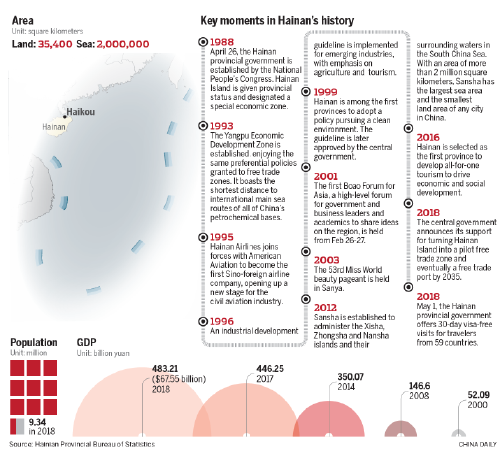
Since the central government declared Hainan Island a pilot free trade zone in April last year, provincial authorities have taken great strides to try to ensure its success.

The Hainan government has introduced more than 40 measures to promote further opening-up and facilitate a sound international business environment, said Liu Cigui, Party secretary of Hainan.

Under the central government plan, Hainan has been given the tasks of completing important development steps by next year, establishing a basic free trade port system by 2025 and having a world-class free trade port by 2035.

Established in 1988 as the country’s largest special economic zone-Hainan, covering an land area of 35,400 square kilometers-has long been at the forefront of China’s reform and opening-up.

The island has piloted 100 reforms over the past 31 years, according to the provincial government.

They include the joint-stock system in public companies, the introduction of the “small government, big society” administrative system, and an integrated planning strategy to protect ecological resources while promoting social and economic development.

Despite the reforms, Hainan still lags behind developed countries and regions, Liu said.

Future reforms should give full play to the role of the market in allocating resources, promoting liberalization of investment and trade, the free flow of funds and people, and accelerate the development of a unified market environment.

Liu said Hainan has made institutional reform a central plank of high-quality development of the Hainan FTZ, the nation’s 12th such zone and 32 times the size of Hong Kong.

Sun Dahai, deputy secretary-general of the Communist Party of China Hainan Provincial Committee, said to date 42″institutional innovations” have “proven original, effective and able to be copied by other areas in the country”.

One cited by the State Council as a model reform is the simplification and speeding up of business registration. Using a smartphone, registration can be completed in about 30 minutes with no need to go to commercial registration offices.

Health reforms

Reforms at the Boao Lecheng International Medical Tourism Pilot Zone in eastern Hainan are helping to attract the latest technology, equipment, medicine and top doctors from home and abroad.

The progress has meant many local people with serious illnesses no longer have to travel elsewhere for treatment, according to pilot zone officials.

Wang Meimei said her 9-year-old son’s hearing difficulties had dramatically improved after receiving a cochlear implant from the Boao Super Hospital recently.

The hospital is one of eight in the pilot medical tourism zone that offers treatments raging from the removal of tumors to plastic surgery.

Boao Super Hospital has attracted 19 academicians and their teams to sign up.

Since setting up in March last year, they have achieved 10 landmarks in the medical field.

Lin Ping, an official with the zone, said it had attracted 24 foreign medical technology companies and 36 overseas doctors from countries including the United States, Germany, Japan and South Korea. A total of 55,000 patients have been treated at hospitals in the zone since last year.

Li Lanjuan, president of the Boao Super Hospital, said due to the preferential policies and advanced medical technology, equipment and medicine from overseas, the hospital was “three to five years ahead of other places in the country”.

Sailing ahead

Hainan boasts 1,944 kilometers of coastline, 68 natural bays and more than 600 islands-providing a lucrative environment for sailing tourism.

But the policy of leveling high security deposits of 7.6 million yuan for yachts valued by customs at 20 million yuan or over has scared many tourists away.

Hainan recently became the nation’s first province to introduce tariff-guarantee insurance for overseas yachts to reduce the cost of visits. Owners of foreign yachts now only need to pay about 10,000 yuan to an insurance company upon entering Hainan’s territory.

Every winter, Hainan’s warm climate and subtropical vegetation attract about one million “migratory birds”-retirees and skilled professionals escaping the cold weather in other parts of China.

An innovative program intended to make up for a shortage of qualified talented people sees Hainan authorities pay the skilled visitors-some of them are highly qualified academics-a modest stipend to meet their living expenses for the length of their stay.

In return, they train and educate university students majoring in key sectors such as tourism, agriculture and the service industry.

More than 1,500 experts-including scholars with national honors and teachers from abroad-have joined the program with 100,000 students benefiting, said Cao Xiankun, director of the provincial Education Department.

“The new mechanism has also led to about 100 joint scientific research projects, bringing in the latest information and high-end talent that are much needed in Hainan,” she said.

Chi Fulin, president of the China (Hainan) Development and Reform Institute, said as an important “field of experiment” for the country, Hainan needs to pursue reform and innovation, especially in the fields of taxation and finance, to attract international business and allow the free flow of goods, funds and talented people.

In the past year, many major international and local companies such as PricewaterhouseCoopers, Ernst & Young, Alibaba, Tencent, China Tourism Group, Temasek, General Electric and Qualcomm, have established businesses in Hainan.

Thirty Chinese and overseas companies have taken a step further and established their headquarters on the tropical island.

BreadTalk to buy food-court operator Food Junction for $80m

ศาสตร์เกษตรดินปุ๋ย : ขอบคุณแหล่งข้อมูล : หนังสือพิมพ์ The Nation

https://www.nationthailand.com/ann/30375695

BreadTalk to buy food-court operator Food Junction for $80m

Sep 02. 2019
BreadTalk announced that its wholly owned subsidiary, Topwin Investment Holding, had entered into a sale and purchase agreement for the proposed acquisition of FJM from Food Junction Holdings.( Photos: BREADTALK/ SHIN MIN DAILY NEWS)

BreadTalk announced that its wholly owned subsidiary, Topwin Investment Holding, had entered into a sale and purchase agreement for the proposed acquisition of FJM from Food Junction Holdings.( Photos: BREADTALK/ SHIN MIN DAILY NEWS)
By THE STRAITS TIMES
ASIA NEWS NETWORK
SINGAPORE

103 Viewed

Food and beverage (F&B) player BreadTalk Group is looking to buy the entire stake in Food Junction Management (FJM), which operates food courts and F&B outlets in Singapore and Malaysia, for $80 million in cash.

BreadTalk announced this morning that its wholly owned subsidiary, Topwin Investment Holding, had on August 30 entered into a sale and purchase agreement for the proposed acquisition of FJM from Food Junction Holdings.

The total consideration of $80 million will be paid in cash and funded through BreadTalk’s internal resources, including available cash on hand, and debt facilities.

For illustrative purposes only, assuming that a loan of $49.6 million was drawn down on January 1, 2018 to fund the proposed acquisition, and that the transaction had been completed on December 31, 2018, BreadTalk’s gearing for fiscal 2018 would have increased to 0.7 times, from 0.25 times before the acquisition.

The consideration amount may be subject to further adjustments to take into account the actual cash, debt and working capital of FJM as at completion of the acquisition.

BreadTalk said the consideration was arrived at after arms’ length negotiations. It took into account factors such as the quality of the assets being acquired, the strategic value of FJM’s existing network of food courts and F&B outlets to BreadTalk, the financials of FJM for the year to date, as well as the earnings quality and future potential of FJM.

FJM operates 12 food courts in Singapore and three in Malaysia, with an additional one scheduled to open next year at The Mall, Mid Valley Southkey, in Johor Bahru.

Meanwhile, BreadTalk operates food courts under the Food Republic and Food Opera brands in Singapore, Malaysia, China, Hong Kong, Taiwan, Cambodia and Thailand. As at June 30, the group runs 14 food courts in Singapore and two in Malaysia.

BreadTalk said the proposed acquisition will allow it to obtain additional revenue streams and benefit from the synergies with its existing food court and F&B outlet business through the “streamlining of costs” and sharing of resources.

The seller, Food Junction Holdings, is 98.1 per cent owned by Auric Pacific Group Limited (APGL), a Singapore-incorporated investment holding firm involved in a diverse range of businesses including food manufacturing and retailing, restaurants, and food court management.

APGL is 50.3 per cent owned by Lippo China Resources (LCR), which is in turn 74.99 per cent held by Lippo Limited. The remaining 49.7 per cent of APGL is held by tycoon Stephen Riady – the chairman and executive director of Lippo and LCR – and his son-in-law, Andy Adhiwana, through companies owned by each of them. Riady is also executive chairman and controlling shareholder of property developer OUE.

The proposed acquisition is conditional upon, among other things, approval by shareholders of BreadTalk, LCR and Lippo.

BreadTalk has close to 1,000 retail stores across 16 markets with its bakery, restaurant, food atrium and 4orth food concepts. Its portfolio comprises direct-owned brands such as BreadTalk, Toast Box and Food Republic, as well as partner brands such as Din Tai Fung, Nayuki, and Song Fa Bak Kut Teh.

The FJM purchase was announced about two weeks after BreadTalk said its group chief executive officer Henry Chu Heng Hwee had quit for personal and health reasons.

Shares of BreadTalk closed at $0.68 on Friday, down 0.5 cent or 0.73 per cent.

Romeros eye control of AirAsia

ศาสตร์เกษตรดินปุ๋ย : ขอบคุณแหล่งข้อมูล : หนังสือพิมพ์ The Nation

https://www.nationthailand.com/ann/30375690

Romeros eye control of AirAsia

Sep 02. 2019
Photo by The Nation

Photo by The Nation
By Philippine Daily Inquirer
Asia News Network

127 Viewed

Family in talks to acquire 15% stake held by Cojuangco


The family of businessman and Rep. Michael “Mikee” Romero is in talks to buy out the remaining Filipino co-founder of AirAsia Philippines, cementing its control over the budget airline, the Inquirer learned.

The discussions come as AirAsia Philippines, which is part of the AirAsia Group of Malaysia, undergoes a major recapitalization effort ahead of a planned $200-million initial public offering.

A source with direct knowledge of the matter said Romero-controlled F&S Holdings was negotiating with businessman Antonio “Tonyboy” Cojuangco’s TNR Holdings, which owns about 15 percent of AirAsia Philippines’ operator, AirAsia Inc.

A successful deal will increase F&S Holdings’ almost 45-percent stake to about 60 percent. The remaining 40 percent of AirAsia Inc. is held by AirAsia Group CEO Tony Fernandes and the company’s executive chair, Kamarudin Meranun.

The source said the parties were in talks over pricing and that an agreement could be sealed within September. Officials from F&S and TNR could not be immediately reached for comment.

Cojuangco and Romero are co-founders in AirAsia Philippines, which was established as a joint venture with the AirAsia Group almost a decade ago.

The talks are the latest in the family’s bid to gain a controlling stake in the airline, which competes with bigger domestic players Philippine Airlines (PAL) and Cebu Pacific Air for local and regional market share.

The Romero family last June bought out the shares of another co-founder, Marianne Hontiveros, and Zest-O owner Alfredo Yao. Yao entered the company in 2013 after his airline, Zest Air, was acquired by AirAsia.

Romero, who holds the reputation as the richest member of the House of Representatives with a 2018 net worth of more than P7.8 billion, has businesses in logistics and power. He also owns the professional NorthPort Batang Pier basketball team.

There were also changes in the board composition of AirAsia Inc. to reflect the Romero family’s increased holdings, a source said, citing a meeting last Aug. 26.

Hontiveros, who was company chair, retired and was replaced by Romero lawyer Jomar Castillo. Another family lawyer, Ronald Policarpio, was named director while Romero’s spouse, Sheila, was named vice chair.

On the Malaysian side, Fernandes stepped down in favor of AirAsia chief financial officer Pattra Boosarawongse, the source said.

The Romeros’ move to consolidate their holdings is unfolding as AirAsia Philippines is poised for a financial turnaround this year. Its second quarter 2019 earnings showed that the budget airline reported a net income of P593 million—a gain of 777 percent. Revenues jumped 38 percent to P7.5 billion as it ramped up flight operations.

At the same time, AirAsia Philippines is undergoing an P18-billion recapitalization involving the issuance of common and preferred shares.

The company earlier set aggressive growth targets moving forward. Romero said the airline was targeting to grow its fleet of 23 Airbus A320s to 50 aircraft in the next few years. Revenue for 2019 is forecast at P30 billion, higher by half than 2018, and could reach P50 billion in three years, he said.

Work clothes with built-in cooling fan popular casual wear

ศาสตร์เกษตรดินปุ๋ย : ขอบคุณแหล่งข้อมูล : หนังสือพิมพ์ The Nation

https://www.nationthailand.com/ann/30375681

Work clothes with built-in cooling fan popular casual wear

Sep 01. 2019
By The Yomiuri Shimbun

360 Viewed

A jacket with a built-in cooling fan in the back has become a must for workers engaging in physical labor in Japan’s scorching summer.

A jacket with a built-in cooling fan in the back has become a must for workers engaging in physical labor in Japan’s scorching summer.

The jacket has already gained favor in workplaces such as construction and logistics sites, and now unisex designs that can be worn on casual occasions are also increasingly popular.

“Whether this item is supplied [by employers] will be a decisive factor in the number of responses to job offers,” a workwear retailer said.

A removable fan and battery can be attached to the jacket to cool the body by blowing air into it and evaporating the wearer’s sweat. Most batteries have a large capacity, with a charge that can last throughout the workday. The set is priced at around ¥20,000 ($188) and can be purchased online.

The creator is Kabushikigaisha Kuchofuku — literary translated as “air-conditioning clothing company” — based in Itabashi Ward, Tokyo. Originally a gauge manufacturer, the company released in 2004 its first built-in fan, which ran for only three to four hours and would often break down. After a series of improvements, the company launched in 2009 a model that can perform for eight hours straight. Around that time, the number of people wearing the clothing started to increase rapidly thanks to word of mouth.

The special clothing has been bought in bulk by construction companies. Due partly to Japan’s increasingly hot summers, the jacket has seen a big boom for the last couple of years, a Kuchofuku employee said.

Casual lines have become available at stores this summer, in addition to the conventional workwear designs.

“We aimed for developing something that would look just fine on anybody,” a company spokesperson said.

Thanks to a recent trend of loose-fitting casual fashions, a puffy silhouette created by blowing air inside the jacket won’t make the wearer look strange. The jacket also seems to be easy to coordinate with other clothes.

The leading force behind this casual workwear is Burtle Co., known as a stylish workwear manufacturer. The company, based in Fuchu, Hiroshima Prefecture, uses camel color, herringbone patterns or other unusual fabrics for workwear, and releases slender motorcycle rider jacket-looking workwear. The jackets have gained popularity, as they can be worn outside work.

Burtle entered the built-in fan clothing market in spring 2017. The company’s jackets look slim even when their fans are working, and their designs make them suitable both for work and casual wear.

“They sell well in summer in the Kansai region, where Koshien Stadium is located,” a Burtle spokesperson said, referring to the National High School Baseball Championship that the ballpark hosts every mid-summer.

Prepare for Olympics

This spring, major workwear retailer Workman Co., based in Isesaki, Gunma Prefecture, released its Wind Core brand.

The company, known as a casual workwear lines retailer, has adopted for its new brand designs and hues that are often used for outdoor clothing, aiming to “appeal to outdoor events and sports watching wear.”

Major sporting goods manufacturers and other companies have asked Workman to jointly develop products for spectators at next summer’s Tokyo Olympics and Paralympics.

https://the-japan-news.com/news/article/0005975526

Train to Hong Kong airport suspended after violent protests

ศาสตร์เกษตรดินปุ๋ย : ขอบคุณแหล่งข้อมูล : หนังสือพิมพ์ The Nation

https://www.nationthailand.com/ann/30375678

Train to Hong Kong airport suspended after violent protests

Sep 01. 2019
(photo credit: Hong Kong Free Press)

(photo credit: Hong Kong Free Press)
By The China Post/ANN

362 Viewed

The China Post reported that operator of the express train to Hong Kong’s airport has suspended service as pro-democracy protesters gathered there following a day of violent clashes with police.

MTR Corp. said Sunday trains from the airport on Chek Lap Kok island into the city still are running.

Several hundred protesters have gathered at the airport following online calls to disrupt travel.

While Hong Kong Press Freedom reported that hundreds of protesters briefly stormed Hong Kong’s airport on Sunday, despite attempts to heighten security in anticipation of a planned demonstration.

At around 1:20pm, a group of masked protesters stormed the ground floor of Terminal 1, shattering a glass door blocking their path. They were chased off by airport police officers soon after.

ANN: Muay Thai is gradually gaining momentum in Nepal

ศาสตร์เกษตรดินปุ๋ย : ขอบคุณแหล่งข้อมูล : หนังสือพิมพ์ The Nation

https://www.nationthailand.com/ann/30375674

ANN: Muay Thai is gradually gaining momentum in Nepal

Sep 01. 2019
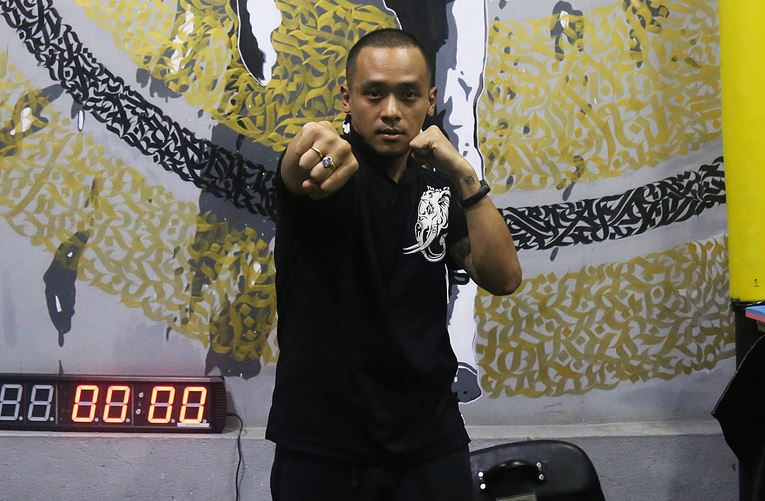
Ashish Tamang during a training session at Gymkhana.  Kabin Adhikari/TKP

Ashish Tamang during a training session at Gymkhana. Kabin Adhikari/TKP
By Sailendra Adhikari
Kathmandu Post/ANN

937 Viewed

Gymkhana, with the help of Nepal National Muay Thai Association, organised the first semi-professional competition and plans more in the future. Muay Thai is gradually gaining momentum in Nepal

Uses of hyperbole or over-exaggeration are quite common for parents to impress or soothe their kids. While still a child Rahul Moktan took one such statement from his father literally which paved his way to pursue Muay Thai. “Muay Thai fighters are so strong, they can knock down a tree with a single kick,” Moktan recalls his father as saying.

Upon hearing his father’s words, a young Moktan wanted to become a Muay Thai fighter himself possessing such massive power. Moktan now has over 10 years of Muay Thai playing experience. “Yes, a Muay Thai fighter can bring down a tree. But it has got to be a lean banana tree. Not the big ones I believed during my childhood,” Moktan says with a big laughter.

At the end of 2008, Moktan was in India pursuing his studies where he found himself with the freedom he never had. “I had no one to control me. I was not in a position to distinguish right or the wrong. I could do whatever I wanted to do and go wherever I wanted to go. I actually loved that new-found freedom,” he recalls.

But as time passed, Moktan realised he wandered off too much without any purpose or meaning in life. He says he lacked discipline in his life but fortunately, he realised his mistakes. He knew he was not very good at studies. So he turned his attention on martial arts. “I didn’t plan to go pursue Muay Thai but I was good at sports and was fascinated especially by the martial arts,” Moktan said. He looked for a proper training centre to realise his martial arts dream but could not find one.

A few months later he came in contact with Edgar Noosdanus, a Dutch national married to an Indian woman. Edgar, a Muay Thai trainer, for the first time, introduced Moktan to the sport. He trained Moktan and also suggested him to go to Thailand—the country of origin of Muay Thai—for proper training. Moktan duly took the suggestion and went to Thailand. There was no turning back ever since.

Moktan came back to India after completing his training and upon the suggestion of his gym owner, started to train others too. In 2014, he returned to Nepal and started Gymkhana Muay Thai in 2017. Moktan now trains Muay Thai fighters at Gymkhana. His fitness centre recently organised its first Muay Thai and boxing competition and received rave reviews. Twelve fighters took part in three different weight categories-60, 65, 70 kg-in semi-professional rules in five rounds. Players were invited to take part in the fight and their opponents were chosen based on their past performance.


Trainer Rahul Moktan at Gymkhana Muay Thai training facility in Maharajgunj, Kathmandu.  Kabin Adhikari/TKP

Trainer Rahul Moktan at Gymkhana Muay Thai training facility in Maharajgunj, Kathmandu. Kabin Adhikari/TKP


“Any combat sports in dangerous so we thought about getting permission from the governing body. We informed about our intention to the sports governing body—Nepal National Muay Thai Association—and got the green signal,” said Moktan. But Moktan still believes there is a lot that needs to be done in the sport. “What always pinches me is that I am in this sport for over a decade and it took me so long to organise a tournament. “But I feel really proud knowing that we were able to organise such an event in just two years since establishing the Gymkhana,” said Moktan. Moktan said they will try to make up for the lost time and, encouraged by the reviews their first tournament received, plan to organise a fight every three months. He hopes such tournaments will give a proper platform to aspiring Muay Thai fighters.

Moktan, however, believes it’s still tough to give Muay Thai a professional touch in Nepal. “Whatever tournaments are organised in the country, they are amateur events. Such amateur tournaments won’t help much in the popularity of the sport,” said Moktan. Moreover, fighters don’t have a financial incentive or motivation to pursue it for long. However, Moktan praised the support of national association for keeping the game alive and vibrant by organising tournaments—be it amateurs though—on regular basis. “The association take athletes to Thailand which helps grow their game. The sport is gradually finding it’s foothold across the country,” he added.

President of Nepal National Muay Thai Association Ganesh Lal Kakshyapati says Muay Thai needs greater fan base to help it gain greater heights. “We see fans flocking the airport every time the Nepali football or cricket teams fare well abroad at international tournaments. But whenever we (Muay Thai athletes) win big and return home, we hardly see anyone at the airport to welcome us back. We may lag behind in terms of infrastructure but what we lack is the support from the public,” laments Kakshyapati. “People still don’t understand Muay Thai well. They believe it a kind of karate or taekwondo. There is a need to clear this misconception about the sport,” he added.

Raju Rai, a participant in the competition organised by Gymkhana recently, is a professional Muay Thai fighter. Rai, who is from Budanilkantha in Kathmandu, started his training in 2009. “I was in grade 10 when I had a fight with another guy. Coincidently, a Muay Thai trainer saw the brawl and suggested me to attend his Muay Thai training,” recalls Rai. Rai says he was also fascinated by actor Tatchakorn Yeerum, popularly known as Tony Jaa, and wanted to copy his fighting styles.

Actor Jaa was a big reason for Rai to take up the sport. “I had some sort of training in martial arts but knew nothing about Muay Thai. I just wanted to be like Tony Jaa as his action movies were very popular among my circle,” he said. Rai initially found training tough yet fascinating and soon started to love it. Ten years on and Rai, now 26, is now a so-called veteran Muay Thai fighter. He has been to Thailand on a number of occasions to take part in training and fights. “I have sacrificed a lot for this sport. I am what I am now just because of Muay Thai,” he said.

Despite being in the sport for a decade and living a good life, Rai believes there is a lot to be done in this sport in Nepal to help players like him make a better living. “Don’t expect big in Muay Thai anytime soon. Larger expectations can often lead to frustration,” he said. Rai says taking part in competitions can help a player earn a decent amount to earn his living. “Muay Thai is slowly growing in Nepal. We also get opportunities to go to a foreign land and take part in fights,” said Rai.

Trainer Moktan says he enjoys coaching fighters like Rai more than his fighting days in India and Thailand. But like the association president Kakshyapati, what also worries him the most is the support the sport gets from the people and the government. “Common people and the government still don’t take us seriously. They think we cannot do anything in the sport,” said Moktan. According to Moktan, one has to understand the training well and train accordingly. “Focus on recovery, rehabilitation and nutrition. One thing is for sure, you cannot become a Muay Thai fighter by training and eating like a sprinter,” he said.

https://kathmandupost.com/sports/2019/08/31/muay-thai-is-gradually-gaining-momentum-in-nepal

Northern resistance allies in Myanmar set fire to three vehicles and a motorcycle on union road – El

ศาสตร์เกษตรดินปุ๋ย : ขอบคุณแหล่งข้อมูล : หนังสือพิมพ์ The Nation

https://www.nationthailand.com/ann/30375673

Northern resistance allies in Myanmar set fire to three vehicles and a motorcycle on union road – El

Sep 01. 2019
By Eleven Myanmar for ANN

346 Viewed

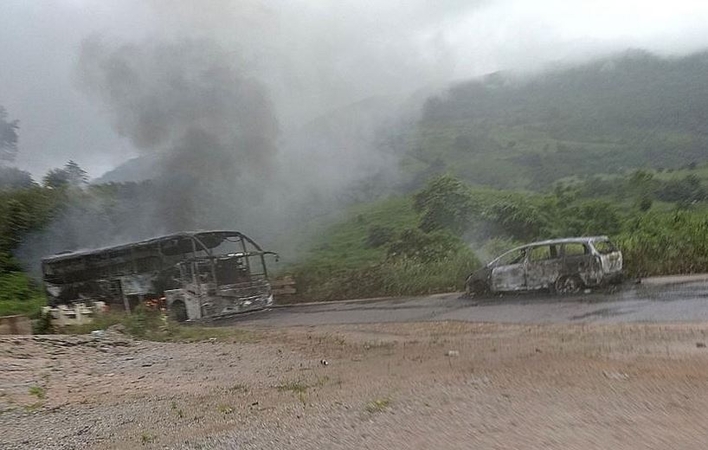
Armed men from northern allies set fire to three vehicles and a motorcycle including a passenger bus on a portion of Union Road between Lashio and Hsenwi in early morning of August 30, sources said.

A passenger bus, a mini truck, a minivan and a motorcycle were burnt down.

“I am trying to catch up with two vans at that time. However I saw armed men run down from the mountain and stopped our car. They told me to park the bus across the road. They ordered us including the passengers to leave the bus. And they set fire to the bus using blankets. We cannot take any belonging. A minivan is also stopped and the mini truck driver turned back when he saw the armed men. However one armed man stopped his truck and told them to leave the car. They also set fire to the motorcycle,” said Hlaing Min Aung, the driver of the passenger bus.

A total of 19 passengers are included in the bus and only 11 of them are on the bus at that time. They are traveling from Yangon to Muse.

“We saw armed men running down from the mountain and we thought they wanted to check our NRC cards. We left the bus without taking any of our belongings. They drove us away and we don’t understand their language. And they set fire three vehicles. We are afraid as they have guns. We are coming from Yangon to Muse as my father is hospitalized in Muse,” said Zaw Myo Oo.

A total of three out of 11 passengers went to Muse themselves.

“Eight passengers arrived in Hsenwi and we are arranging to send them to Muse. All their belongings are set fire,” said an official from general administrative department from Hsenwi.

A 12-wheeled truck and a 22-wheeled truck had been also set fire on Lashio-Muse Union Road on August 29 separately.

https://elevenmyanmar.com/news/northern-allies-set-fire-to-three-vehicles-and-a-motorcycle-on-union-road

Five ways to be a savvy art collector

ศาสตร์เกษตรดินปุ๋ย : ขอบคุณแหล่งข้อมูล : หนังสือพิมพ์ The Nation

https://www.nationthailand.com/ann/30375672

Five ways to be a savvy art collector

Sep 01. 2019
By Ria Prieto
Inquirer for ANN

345 Viewed

If you’ve been following me for a while, you’d know that I love art. I love discovering new styles through emerging artists, admiring works of the masters through various fairs here and abroad, and purchasing a few pieces for my home.

I understand how collecting art can be intimidating. I believe it shouldn’t. I think that art, in the end, is made to help us make more connections. An artwork should bring a sense of joy and even a piece of history. It can tell stories too: Ours and that of the artist. In art, we also support an industry that shapes creativity.


Aside from that, having a few pieces of art we enjoy makes for a long-term commitment. They become centerpieces of our homes, a part of our heritage, or just simply something we look at that always makes us stop and smile.

One art exhibit that’s caught my attention is SM Supermalls’ Art for Everyone. Happening until the second week of September, the exhibition aims to help bring art closer to people. It’s an excellent place to start building your own collection.

If you’re set to visit Art for Everyone and make that first purchase, if not another to add to your collection, I’ve put together some tips.

#1 Go with what you truly like

Your love for the art piece should be real. Instead of listening to how other people would respond to it, go for an artwork that speaks to you. An excellent purchase, whether it’s for your first one or your nth one, is on an art piece that you love. It may be uncanny for others, it may be a little against the grain. Who cares? To find an art piece that speaks to you on an individual level is all that matters.

#2 Set a budget

I think it’s a misconception that you must spend big to get great art. Like all shopping trips, it’s always wise to set aside a budget. This applies even if you are a casual art collector or if you have a habit of going to every art fair in town. Learn how to accurately set aside money in your monthly or yearly budget for art. This way, your decisions will be informed, and you get more value from what you get.

#3 Always be on the lookout

Part of art collecting is educating yourself. Don’t be afraid to read up on the styles you like and the artists you fancy online. It’s through this you will refine your taste, and you’ll spot the best ways you can score their works.

Go to as many art fairs as you can. Keep going back if it’s a week-long event even if its to just keep looking at the same thing until you know precisely what you like.


Another great thing about being an art collector is the knowledge and the stories you collect by learning more about the art and who made it. It makes for great conversations with fellow collectors and artists!

#4 Be a supporter

Art fairs are great places to discover budding artists. Don’t discredit the value in getting pieces from them. In fact, you may be one smart art collector to be able to pick out the future masters before they hit the mainstream.

At the very least, if you like works by newbies in the industry, you’re supporting their passion. Plus you got something unique that you can treasure.

#5 Don’t be afraid to ask questions

When it comes to art, the more questions you ask the gallerists and artists, the more it shows that you have appreciation over their works. This also gives you new insight into the kind of art that you should purchase.

Your curiosity over their craft and what it took to get the artwork done will let people know you really value the craftsmanship. Plus you get to know more why you like certain masterpieces over others. Asking questions also gives you good leads in the art world. For example, you can get a clue for the next fairs or who to visit for specific collections.

Art for Everyone 2019 presents a multitude of paintings, photographs, and sculptures across 18 SM malls all over the country. Check out the one nearest you on the following dates:

SM Megamall (Aug. 20 – Sept. 1)

SM Sucat (Aug. 18-31)

SM Angono (Aug. 19-30)

SM San Jose Del Monte (Aug. 19-31)

SM Cebu (Aug. 26 – Sept. 4)

SM Lanang Premier (Aug. 26 – Sept. 7)

SM Legazpi (Aug. 26 – Sept. 8)

SM Marikina (Aug. 26 – Sept. 8)

SM Novaliches (Aug. 26 – Sept. 8)

SM CDO Downtown Premier (Sept. 1-7)

The Podium (Sept. 2-15)

You can also catch it at SM Mall of Asia, SM Aura Premier, SM Batangas, SM Bacolod, SM Molino, SM San Pablo, and SM Telabastagan until Sep. 1.