Indonesia to use “night market” concept for Dubai Expo 2020 exhibition

ศาสตร์เกษตรดินปุ๋ย : ขอบคุณแหล่งข้อมูล : หนังสือพิมพ์ The Nation

https://www.nationthailand.com/ann/30374214

Indonesia to use “night market” concept for Dubai Expo 2020 exhibition

Aug 05. 2019
The Burj Khalifa in Dubai, United Arab Emirates, is the world's tallest building. Indonesia is hoping to attract 2.5 million people to its exhibition at the Dubai Expo 2020 next year. 
(Photo: Shutterstock /Mo Azizi)

The Burj Khalifa in Dubai, United Arab Emirates, is the world’s tallest building. Indonesia is hoping to attract 2.5 million people to its exhibition at the Dubai Expo 2020 next year. (Photo: Shutterstock /Mo Azizi)
By THE JAKARTA POST
ASIA NEWS NETWORK

69 Viewed

Indonesia will use a night market concept for its exhibition at the Dubai Expo 2020 in the United Arab Emirates (UAE) in October next year, allowing visitors not only to see Indonesia’s products and commodities but also experience its culture.

Indonesia’s stand will display popular handcrafts, textiles and other industrial products and also stage cultural performances, Arlinda Imbang Jaya, the export development director general at the Trade Ministry, said.

“We will use the night market concept. Our stand will not only display products but also feature Indonesian cuisine and films,” she said in Jakarta on Thursday. “We believe this will attract many visitors”.

The Dubai Expo 2020 is a prestigious exhibition that is expected to draw millions, Arlinda said, adding that the expo is scheduled to take place between October 2020 and April 2021

The ministry is hoping that as many as 2.5 million people will visit Indonesia’s exhibition during the expo.

“We are preparing the exhibition so that it will be interesting to visit, [because] 190 countries will participate and 25 million people are expected to attend,” said Arlinda.

The Trade Ministry will cooperate with PT Wijaya Karya, a state-owned construction company, to build the exhibition space, which will occupy a 1,680-square metre area within the expo complex. PT Samudra Dyan Praga, a subsidiary of publicly listed event organiser PT Dyandra Media International, has been hired by the government to design the exhibition space.

Arlinda said it would cost about Rp 400 billion [Bt8.7 million) to build the exhibition space, adding that the government was hoping private companies would contribute to the event.

Arlinda said that several companies including PT Astra International and PT Gajah Tunggal had agreed to provide funds for the exhibition, adding that the event was a huge opportunity for businesses. She also invited other companies to take part, pointing out that the event was a rare opportunity for Indonesian companies to promote their products to foreign buyers especially in the Middle East.

Xayaboury dam has not hindered water flow, officials say

ศาสตร์เกษตรดินปุ๋ย : ขอบคุณแหล่งข้อมูล : หนังสือพิมพ์ The Nation

https://www.nationthailand.com/ann/30374213

Xayaboury dam has not hindered water flow, officials say

Aug 05. 2019
By VIENTIANE TIMES
ASIA NEWS NETWORK

83 Viewed

Government officials have dismissed social media reports that the Xayaboury dam is slowing the flow of water to downstream sections of the Mekong.

The dam is built on the run-of-river model, which does not require water to be stored, unlike the Nam Theun II and Nam Ngum I dams, the director general of the Department of Energy Business, Somphith Keovichith, told local media last week.

Water inflow equals water outflow, which is the concept behind a run-of-river dam, officials said.

Due to unseasonal low rainfall, the level of the lower Mekong and other rivers in Laos has fallen significantly, and rice farmers have been suffering the effects, Somphith said, adding that the low level of the Mekong has been attributed to unusually low rainfall in Luang Prabang and Xayaboury provinces and in areas north of the Xayaboury dam.

From January to July this year, the amount of rain recorded was the lowest in the last 10 years, Somphith noted.

A dam in China also resulted in less water flowing into the lower Mekong region, according to CK Power Plc.

According to an announcement issued by the company, which operates the Xayaboury dam, a trial run of electricity generation was conducted from July 15-29 ahead of engaging in full-scale electricity production for the Electricity Generating Authority of Thailand (Egat) by the end of this year.

It has largely been assumed that water retention was needed for this test and this had a knock-on effect downstream.

CK Power denied that the throughput of water has altered and suggested lack of rain was the reason for the low river levels, the Bangkok Post reported.

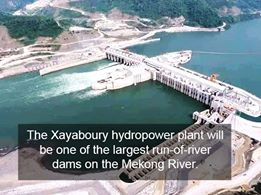
The Xayaboury 1,285-MW river hydropower project will be one of the largest run-of-river hydropower dams on the Mekong.

Construction of the dam began in 2012 after the government completed a consultation process with other countries through which the Mekong flows, in line with the 1995 Mekong Agreement.

The government expects to earn US$3.9 billion (Bt119.88 billion) from the operation of the dam throughout the 29-year concession period, including US$1.897 billion in royalties and US$637 million in taxes.

The government has pledged to use this money to fund poverty reduction programmes and infrastructure development so that Laos can catch up with other countries in terms of overall development.

Agriculture experiences slow growth rate

ศาสตร์เกษตรดินปุ๋ย : ขอบคุณแหล่งข้อมูล : หนังสือพิมพ์ The Nation

https://www.nationthailand.com/ann/30374211

Agriculture experiences slow growth rate

Aug 05. 2019
(Photo: FAO.ORG)

(Photo: FAO.ORG)
By VIENTIANE TIMES
ASIA NEWS NETWORK

75 Viewed

The agriculture sector has not grown as anticipated as a result of weather extremes, according to a recent report from the Lao government.

The government has forecast that the sector will grow by 2.8 percent this year so long as there is no flooding, drought or other extreme weather event.

Economists are concerned that Laos will suffer a shortfall in agricultural production this year due to the prolonged dry season, disease outbreaks, and flooding.

Noting that agriculture underpins the country’s economy, Dr Phouphet Kyophilavong, an economist with the Faculty of Economics and Business Management at the National University of Laos, told Vientiane Times that the sector is far from achieving planned growth rate.

“Growers are not only suffering from the high cost of production but also face the problem of producing crops of sufficiently high quality to meet market needs,” he said. “If we want the agriculture sector to grow more quickly, we need to attract more domestic and foreign investors in this sector.”

A clear agriculture promotion policy is required to help growers overcome their hurdles and challenges and boost productivity. The government also needs to regulate the use of pesticides and other chemicals to avoid impacts on the environment.

Although some 70 per cent of Lao people rely on agriculture for their livelihood, this sector has grown at a rate of only 3 per cent over the past two decades. Last month, thousands of hectares of crops died when the rains failed to materialise and diseases attacked, sparking greater concerns about a further decline in agricultural production and food security.

In Xayaboury province, 30 percent of 35,000 hectares of sweetcorn was destroyed by a plague of fall armyworm (Spodoptera frugiperda). In addition, a high percentage of the country’s 800,000 hectares of wet-season rice has not been transplanted.

Growers are also encountering hurdles in accessing finance, and lack technical know-how and the equipment needed to produce quality products that meet market needs.

Agriculture is a much more expensive undertaking in Laos than in Vietnam and Thailand, meaning that the end products are uncompetitive in the regional market.

As a result, many farmers have been forced to abandon their dry-season rice crop as they don’t make any profit from it because of the high cost of irrigation.

Many irrigation systems have been left unused and are ineffective, with some becoming damaged due to lack of maintenance. Deputy Minister of Agriculture and Forestry, Dr Bounkhuang Khambounheuang said his ministry has instructed local authorities to diversify and not to rely on one particular crop.

He said farmers will be encouraged to grow other crops that result in higher economic returns. This is aimed at helping farmers to overcome their challenges and boost overall yields.

S. Korea to invest in 100 key strategic items for stable supply

ศาสตร์เกษตรดินปุ๋ย : ขอบคุณแหล่งข้อมูล : หนังสือพิมพ์ The Nation

https://www.nationthailand.com/ann/30374205

S. Korea to invest in 100 key strategic items for stable supply

Aug 05. 2019
Minister of economy and finance Hong Nam-ki (Yonhap)

Minister of economy and finance Hong Nam-ki (Yonhap)
By The Korea Herald
Asia News Network

99 Viewed

South Korea said Monday it will invest 7.8 trillion won ($6.47 billion) in 100 key strategic items to create a stable supply by 2024, in the latest move to cope with Japan’s economic retaliation

“We will upgrade the competitiveness of the materials, parts and equipment industries,” Hong Nam-ki, minister of economy and finance, said in a meeting with officials in Seoul

Last week, Japan decided to remove South Korea from a list of countries subject to preferential trade status in apparent anger against last year’s South Korean Supreme Court rulings ordering Japanese firms to compensate South Korean victims of forced labor.

In July, Japan also imposed tighter regulations on exports to South Korea of three materials — resist, etching gas and fluorinated polyimide — that are critical for the production of semiconductors and flexible displays.

Japan’s export curbs have prompted South Korea to diversify supplies of key industrial materials and boost their localizations to reduce heavy reliance on Japan. South Korean companies have also been scrambling to find alternative suppliers of key items.

Of the 100 key strategic items, the industry ministry said it plans to secure supplies of 20 items within a year by reaching out to suppliers in other countries, including the United States and China.

The government will lower barriers for imports of such materials, including the three materials whose imports were restricted by Japan last month.

Fluorine polyimide is used to make flexible organic light-emitting diode displays, resist is a thin layer used to transfer a circuit pattern to a semiconductor substrate, and etching gas is needed in the semiconductor fabrication process.

In addition to diversifying efforts, South Korea will spend some 7.8 trillion won for R&D to help local industries beef up its own competitiveness, according to the Ministry of Trade, Industry, and Energy.

The government will ease various regulations, including labor rules, to help local industries to speed up the development of key technologies as well.

South Korea will also prod local firms to seek acquisitions of foreign rivals that hold high-level technologies, by providing them with financial and tax incentives.

“(The blue print) focuses on finding solutions for South Korea’s weakness in the materials, parts, and equipment industries, including its heavy dependency on a certain country,” Industry Minister Sung Yun-mo said in a briefing.

South Korea’s trade deficit with Japan reached $24.1 billion in 2018, with most of that amount — an estimated $22.4 billion — coming from industrial materials, parts, and equipment sector, according to the ministry.

Tech firms expand mobile payment services offline

ศาสตร์เกษตรดินปุ๋ย : ขอบคุณแหล่งข้อมูล : หนังสือพิมพ์ The Nation

https://www.nationthailand.com/ann/30374204

Tech firms expand mobile payment services offline

Aug 05. 2019
By The Korea Herald

99 Viewed

Seeking to introduce a series of advanced mobile payment services targeting the offline market this year, tech companies are up for heated competition over the smartphone-based payment market in Korea.

Dominant Korean internet portal Naver said last month that it would soon launch a mobile payment system available at local stores and restaurants. Combined with its incumbent Naver Pay mobile payment platform, offline service “Table Order” is expected to launch in the third quarter of this year.

Messenger app service Kakao is seeking to incorporate Kakao Pay into an automated chatting service, where consumers can order food and make payments. The advanced chatbot service is expected to become available for commercial service by the end of this year.

“In order to expand the service into every corner of daily life, we are going to work with various partners to diversify user experience,” Kim Yoo-mi, who leads the chatbot business at Kakao, said at a press conference in Seoul last month.

The moves came amid the growing expansion of the mobile payments market in Korea, where an increasing number of consumers use smartphones to purchase items. From a phone manufacturer to internet companies, efforts are underway to make the payment easier with smartphones both offline and online.

According to data from the Financial Supervisory Service, about 80 trillion won ($66 billion) was transacted via mobile payment systems last year, up 60 percent from a year prior.

Still, mobile payment services in Korea appear to be much more frequent in online markets than offline stores like street shops and restaurants. Among the 80 trillion won transacted via mobile payments in 2018, just 19 trillion won was spent at offline markets.

ANN: ‘Praise freedom’ is the new press freedom

ศาสตร์เกษตรดินปุ๋ย : ขอบคุณแหล่งข้อมูล : หนังสือพิมพ์ The Nation

https://www.nationthailand.com/ann/30374188

ANN: ‘Praise freedom’ is the new press freedom

Aug 05. 2019
By Mahfuz Anam, Editor-publisher
The Daily Star, Bangladesh

246 Viewed

In the era of alternative facts, who needs the truth?  | Part one of two

Press freedom was a fundamental pillar of modern civilisation. Nearly all countries, save the communist bloc and the dictatorial regimes, ensured special protection for the media in their constitutions.

There used to be a competition of sorts to highlight media freedoms in developing countries to gain respectability in the international fora. Jailing a newsperson was quite rare and closing down a media outlet even rarer.

Sadly, not anymore.

In the age of populism, ultra-nationalism, rising authoritarianism, post-truth and the emergence of leaders who can commit no wrong, there is a new incarnation of press freedom. It is “praise freedom”, whereby the press is fully free but only to praise, and the more the press can praise the freer it is certified to be.
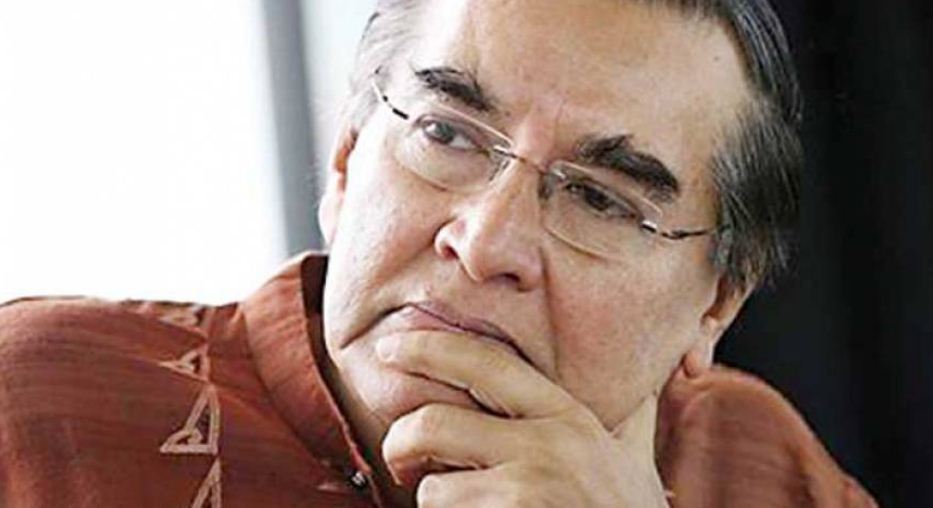
 

Mahfuz Anam / Photo credit: Dhaka Tribune

Mahfuz Anam / Photo credit: Dhaka Tribune

Any alternative view is fake news, a conspiracy, unpatriotic, anti-progress and, in some instances, an act of treason.

In the fairy tale “Snow White”, in reply to the queen’s well-known question, the mirror replies, “My queen, you are the fairest in the land.” In today’s world more and more governments and political leaders want the media to be the mirror in that fairy tale that only sings praise and not be the “mirror” that reflects the reality of society.

As in George Orwell’s famous novel “1984”, in which “War is Peace”, “Freedom is Slavery” and “Ignorance is Strength”, so also in the world of “praise freedom”. Truth is false, facts are non-facts, to dissent is to sow the seeds of chaos, to oppose the official narrative is to mislead the public, to give space to the opposition is to foment divisiveness and, God forbid, to reveal corruption in the highest echelons of power is nothing short of trying to destroy the country.

Since it is the free press that does all this, it is “the enemy of the people”.

A new misplaced nationalistic zeal is now destroying the space for tolerance, multiplicity of views and challenging the very existence of the free press.

Suddenly not to speak the truth that hurts is “patriotic” and “facts” are no longer sacrosanct.

The late US senator Daniel Patrick Moynihan’s famous refrain that “everybody is entitled to their own opinion but not to their own facts” is now replaced by a different ethos – if facts don’t support a particular contention, then invent them.

Over the last several years we have been witnessing a deliberate discrediting of democracy as a political system. This is the view that it is “cumbersome”, “chaotic”, the view of those who “don’t know enough or see far enough” and “time-consuming”. The belief is that development requires quick decisions and centralised authority.

After all, when the leader knows everything, people’s views merely distract and confuse things. Built into this mentality is a disdain for public opinion, accountability and transparency and media that raise too many questions.

Such a mindset in time inevitably leads to a culture of impunity with mega-corruption becoming its natural bedfellow.

The decline of parliament as an oversight body has been a tragic development of recent times. In the past, governments dreaded facing parliaments because of the grilling and drubbing that they would get from well-informed and researched questioning by highly committed and motivated elected leaders determined to serve their electorate.

The decline of the role of the opposition within the parliaments has greatly added to the accountability deficit we notice all over.

The judiciary’s position is not very different either with its eyes not so much on people’s rights and protection of all forms of freedom but more on government’s wishes.

Tragically, the check-and-balance system involving the judiciary and the legislative and the executive branches of the state, enshrined in every democratic constitution, has collapsed.

Over time, and for different historical reasons, the power balance shifted in favour of the executive branch, leading to the emergence of authoritarian rule and elected “autocrats” and “demagogues” who project themselves as “demigods”.

+++

Part Two

The rise of the all-powerful executive branch – meaning governments – has directly led to the increased pressure on the press to “toe the line”, thereby impinging on the media’s freedom to function, since it is the press that scrutinises the government.

When press freedom is being curtailed, freedom of speech can hardly remain unaffected. Democracy’s precondition is individual freedom and freedom of speech that the free media embody as an institution.

It thrives by allowing multiple views, especially the dissenting ones, to be freely articulated forming a crucial part of public discourse.

By reflecting these divergent views, media bring the multifaceted thinking process into the public domain and thereby create that vital intellectual ferment that allows a society to pick and choose ideas that benefit the majority.

Just as body cells die without the blood bringing a fresh supply of oxygen, so also a society dies without the oxygen of the latest information and fresh ideas that are brought to fore through a free media and other institutions like academia, think tanks and civic society.

Idi Amin, the former Ugandan military strongman, is reputed to have said, “There is freedom of speech, but I cannot guarantee freedom after the speech.” It is that “freedom after the speech” which is now of highest concern for global journalism.

The number of journalists killed, injured, jailed, driven out of the country, intimidated and forced to indulge in self-censorship paints a grim picture.

Yet it is only a part of the whole picture, which can only be gauged if we can know how many have been silenced. This missing intellectual ferment is the real loss for society and for our future.

Just as the digital revolution brought new challenges and opportunities for the media, it has, unfortunately, also opened up a new avenue for government control.

In many countries under the pretext of preventing the misuse of the digital space, sweeping laws – framed mainly to stem, rather than enhance, the flow of news, views and ideas – are being enacted with an eye on the digital and mainstream media that governments increasingly find difficult to control.

US President Donald Trump perhaps epitomises this new era of “praise freedom”. From the start he embraced only the media outlets that praised him and called all others the “enemy of the people”. He had nothing but loathsome words for them. Though he is not the first leader or head of government to hate the free press, he definitely gave the trend its most powerful boost.

Leaders from many parts of the world are now ardent followers of Trump and they all want news media not to play their traditional watchdog role but be more that of the lapdog variety.

Populism and ultra-nationalism, coupled with the rise of religious extremism, have made prejudice and hatred an everyday affair, leading to a new height in intolerance that now seriously affects the functioning of free media – one of whose fundamental roles is to bring to light unpleasant truths, question the high and the mighty, and uphold all forms of rights and freedoms.

These usually make for critical stories that populism, extremism and authoritarianism abhor. In Orwell’s words, “If liberty means anything at all, it means the right to tell people what they do not want to hear.”

What the media is fighting for today – and doing so ever more strongly and unitedly – is to preserve perhaps the greatest achievement of human civilisation: the right to freedom of thought and right to freedom of speech.

The battle is for nothing less.

+++

This article is part of a new series of the Asian Editors Circle, a weekly commentary by editors from the Asia News Network (ANN), which will be published by members of the regional media group. The ANN is an alliance of 24 media titles across the region.

Innovation drives high-end development

ศาสตร์เกษตรดินปุ๋ย : ขอบคุณแหล่งข้อมูล : หนังสือพิมพ์ The Nation

https://www.nationthailand.com/ann/30374201

Innovation drives high-end development

Aug 05. 2019
Xiamen Shimao Haixia Mansion. [Photo provided to chinadaily.com.cn]

Xiamen Shimao Haixia Mansion. [Photo provided to chinadaily.com.cn]
By China Daily
Asia News Network

445 Viewed

Fujian is striving to create a sterling climate for innovation and entrepreneurship, two arch drivers behind its economic growth.

Official statistics show that the industrial output above the designated size in the province expanded by 8.6 percent in the first half of this year.

The rate for high-tech industries was 13.9 percent, 5.3 percentage points faster than the provincial average.

The results are largely due to efforts made by the provincial government to spur innovation among local businesses.

In order to bolster its advanced manufacturing sector, the government has established a special fund to subsidize research and development for local companies and a fund to help companies facing financial problems in the process of transformation.

Since January, the provincial authorities have issued subsidies worth 300 million yuan ($44.77 million) to support R&D among local enterprises, benefiting 1,243 companies with an accumulative R&D investment of 16.389 billion yuan over the period, according to the Fujian provincial department of science and technology.

Meanwhile, it also ramped up financial support to promote the technical transformation and upgrading of companies. On top of the 8.035 billion yuan it provided last year, the government also set up an additional fund of four billion yuan this year. So far, investments in this regard total 68 billion yuan.

These efforts are showing strong results. Tsingtuo Holding Group, a domestic leader in crude stainless steel manufacturing, has generated tremendous benefits due to its advanced techniques in producing nickel alloys and stainless steels, making Fujian a world manufacturing hub for rust-proof metals.

By virtue of its robust R&D capabilities, Tsingtuo has become the first private enterprise in the province with an annual output value exceeding 100 billion yuan.

In Quanzhou, a coastal city in Fujian, shoes and clothing brands also saw handsome profit growth from January to June thanks to their mounting innovation capabilities.

Products producted by local brands such as Anta, Peak and Xtep, featuring cutting-edge technology and industrial designs were not only favored by domestic consumers, but also those from abroad.

Official data show that the exports of shoes from Quanzhou doubled in the first half of this year.

Sudden heat wave takes toll nationwide

ศาสตร์เกษตรดินปุ๋ย : ขอบคุณแหล่งข้อมูล : หนังสือพิมพ์ The Nation

https://www.nationthailand.com/ann/30374200

Sudden heat wave takes toll nationwide

Aug 05. 2019
Air conditioners are displayed at a BicCamera Inc. store at the west exit of Shinjuku Station in Tokyo.

Air conditioners are displayed at a BicCamera Inc. store at the west exit of Shinjuku Station in Tokyo.
By The Japan News
Asia News Network

364 Viewed

The Japanese archipelago has been suffering under extreme heat since the end of the rainy season in late July, which has led to a spike in deaths and people being taken to the hospital due to heatstroke.

This is believed to be partly because bodies that were accustomed to the cool rainy season have been unable to adapt to the sudden change in temperature.

Triple the casualties

A 28-year-old man dressed in a costume at the Hirakata Park amusement facility in Hirakata, Osaka Prefecture, died of heatstroke while rehearsing a show on the evening of July 28, four days after the end of the rainy season in the Kinki region. Temperatures in the city reached 33.2 C that day.

There has been a nationwide increase in the number of people collapsing due to heatstroke.

According to the Tokyo Fire Department, the number of people taken to the hospital per day in July in Tokyo, excluding Inagi and the islands, was in the single digits up to July 17.

However, the figure soared to more than 100 on July 29, the day the rainy season was declared over in the Kanto and Koshin regions. The numbers have continued to grow, with 333 people being taken to the hospital on Thursday and 341 people on Friday.

Fire and Disaster Management Agency statistics show that only one person died of heatstroke from July 1 to 23, but deaths have since risen rapidly, with 11 occurring in the five days from July 24.

There were 5,664 people taken to the hospital in the week ending July 28, triple the previous week’s figure. Of these, more than half were elderly people aged 65 or older.

No end this month

Why has the impact been so severe? According to the Japan Meteorological Agency (JMA), it may be because people’s bodies, which did not sweat much in cooler weather, have been unable to cope with the sudden rise in temperature.

A seasonal rain front lingered over Honshu from late June to mid-July. A high pressure system in the Sea of Okhotsk also brought cold winds from the north, resulting in cloudy, cool weather across the country.

The number of hours of sunshine per day in July was about 30 percent to 50 percent lower than the average year, resulting in a long, cool rainy season. However, temperatures have risen sharply since late July.

Central Tokyo has seen consecutive hot days with maximum temperatures of at least 30 C since July 24. Nearly 90 percent of observation points nationwide recorded 30 C or higher on Friday and Saturday. On Friday, 236 observation points, the largest number this year, recorded at least 35 C.

According to the JMA, the intense heat has been caused by a “two-story effect” of overlapping high pressure systems, which cause fair weather.

The Pacific high pressure system, which is at an elevation of about 6,000 meters and brings warm air in summer from the east, has combined with the Tibetan high pressure system, which is at about 10,000 meters and comes from the Asian continent to the west. Together, the two have brought strong sunlight.

High temperatures are expected to continue until September.

Trying to beat the heat

Since the end of the rainy season, customers seeking air conditioners and fans have swarmed to outlets of BicCamera Inc., a major appliance retailer based in Tokyo.

Though the peak sales period was delayed by about half a month compared to normal years due to the long rainy season, the number of air conditioners sold nationwide from July 27 to Thursday was about double that of the same period last year, according to BicCamera.

A movement has been spreading among local governments to designate public facilities, shops and other places as “temporary rest areas” where people can get a break from the heat.

Chiyoda Ward, Tokyo, has designated 35 locations aimed at people such as the joggers who run around the Imperial Palace and is encouraging people to take breaks. Similar initiatives have been started by local governments in places such as Oita Prefecture and Kumagaya, Saitama Prefecture.

Sports venues are also taking action. Water breaks of about three minutes were taken during boys’ and girls’ soccer games in the national high school athletic meet that ended in Okinawa Prefecture on Thursday. The tournament’s awards ceremony was conducted with players sitting on roofed benches on the field.

For the first time this summer, the Japan High School Baseball Federation established a subsidy system to provide regional tournaments with up to ¥150,000 to prevent heatstroke. Funding has been used for things like purchasing fans for benches.

At the National High School Baseball Championship, which will begin Tuesday, plastic bottles filled with cold water will be available at all times near team benches for players to keep cool.Speech

ANN: South Korean FM Kang says Japan’s export curbs could pose ‘serious threat’ to regional prosperi

ศาสตร์เกษตรดินปุ๋ย : ขอบคุณแหล่งข้อมูล : หนังสือพิมพ์ The Nation

https://www.nationthailand.com/ann/30374187

ANN: South Korean FM Kang says Japan’s export curbs could pose ‘serious threat’ to regional prosperi

Aug 04. 2019
Foreign Minister Kang Kyung-wha (Yonhap)

Foreign Minister Kang Kyung-wha (Yonhap)
47 Viewed

Foreign Minister Kang Kyung-wha said Saturday that Japan’s recent export restrictions, including its removal of South Korea from a list of trusted trade partners, could pose a “serious threat” to regional prosperity.

Kang made the remarks during a meeting with her counterparts from five countries around the Mekong River — Cambodia, Laos, Myanmar, Thailand and Vietnam — on the last day of her four-day trip to Bangkok for multilateral talks involving the Association of Southeast Asian Nations (ASEAN).

“While pointing out the unreasonable nature of Japan’s unilateral, arbitrary export control measure against our country, including the exclusion from the whitelist, Minister Kang voiced serious concerns,” her ministry said in a press release.

“(She) stressed that such measures could become a serious threat to prosperity in the region,” it added.

The ministry also pointed out that all sides voiced their opposition to any measure that would undermine free trade in any context and put a top priority on the values of free trade.

In a widely expected step, Tokyo’s Cabinet approved plans to drop South Korea from a whitelist of 27 countries given preferential treatment in purchasing Japanese dual-use goods that can be diverted for military use.

The latest move came less than a month after Japan imposed tighter restrictions on exports to South Korea of three key high-tech materials vital to the production of semiconductors and displays.

Seoul casts the export restrictions as a political retaliation for last year’s Supreme Court rulings against Japanese firms over wartime forced labor.

During the meeting with the five countries, Kang stressed the importance of the Mekong region, which has recently emerged at a crucial economic player in the world based on its rich resources, young population and high growth potential.

Kang also expressed her expectation for the countries’ continued support for Seoul’s efforts for denuclearization and a lasting peace on the Korean Peninsula.

Before the talks with the Mekong countries, Kang held a bilateral meeting with her Thai counterpart, Don Pramudwinai.

At the meeting, she also stressed that Japan’s export control measures could undermine shared prosperity in the region.

Pramudwinai shared the view that it is important to respect the free, transparent trade order and pursue common prosperity, the ministry said.

Upon her arrival at Incheon International Airport after wrapping up her visit to Bangkok, Kang told reporters that South Korea would continue to make efforts for talks with Japan to address the matters of wartime forced labor and the trade dispute.

“There are official and non-official schedules” for talks withJapan, Kang said.

South Korea has hinted that it could review whether to renew the bilateral military intelligence-sharing deal with Japan, named the General Security of Military Information Agreement (GSOMIA).

Asked about the US reaction to Seoul’s potential review of the GSOMIA during talks in Bangkok, Kang replied that there was no specific reaction from the US side. (Yonhap)

Typhoon Francisco forecast to pass through Korean peninsula

ศาสตร์เกษตรดินปุ๋ย : ขอบคุณแหล่งข้อมูล : หนังสือพิมพ์ The Nation

https://www.nationthailand.com/ann/30374181

Typhoon Francisco forecast to pass through Korean peninsula

Aug 04. 2019
By The Korea Herald
Asia News Network

138 Viewed

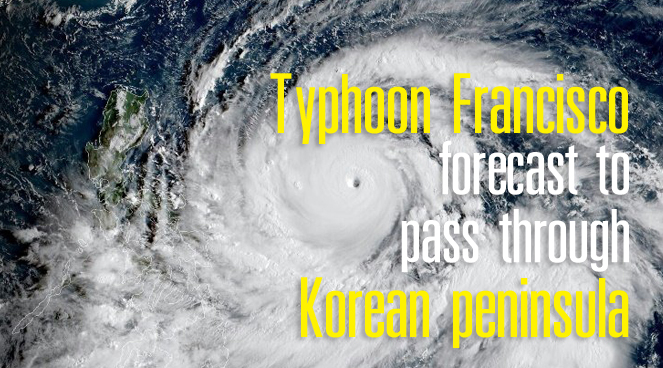
Typhoon Francisco, the season’s eighth typhoon, is forecast to land on South Korea’s southern coast on Tuesday night, the weather agency said Sunday.

The typhoon was moving northwest at a speed of 25 kilometers per hour from about 1,310 kilometers east-southeast of Kagoshima, Japan, as of 9 a.m., the Korea Meteorological Administration (KMA) said.

Francisco was classified as “small” with a central pressure of 990 hectopascals (hPa). The maximum sustained wind speed near its center was 86 kilometers per hour or 24 meters per second.

The tropical storm is expected to be about 560 kilometers east-northeast of Kagoshima at 9 a.m. Monday, about 140 kilometers northwest of Kagoshima at 9 a.m. Tuesday and to land on South Korea’s southern coast at night.

It is then forecast to be about 70 kilometers north-northeast of the southwestern city of Jeonju at about 9 a.m. Wednesday before exiting the peninsula toward the East Sea near Sokcho, Gangwon Province, according to weather officials.

But they said Francisco could be somewhat weakened by relatively lower water temperatures in the ocean and friction from land areas in Japan and South Korea.