HK urged to oppose violence, focus on growth

ศาสตร์เกษตรดินปุ๋ย : ขอบคุณแหล่งข้อมูล : หนังสือพิมพ์ The Nation

https://www.nationthailand.com/ann/30373858

HK urged to oppose violence, focus on growth

Jul 30. 2019
Citizens gather outside a police station in Hong Kong on Monday to show their support for the Hong Kong police in fulfilling their law enforcement duties. CHINA DAILY

Citizens gather outside a police station in Hong Kong on Monday to show their support for the Hong Kong police in fulfilling their law enforcement duties. CHINA DAILY
By China Daily
Asia News Network

262 Viewed

Central government firmly supports authorities of SAR adhering to rule of law, spokesman says

People from all walks of life in Hong Kong should oppose and resist violence, stand firm in defense of the rule of law and concentrate on developing the city’s economy and improving livelihoods, Yang Guang, a spokesman for the Hong Kong and Macao Affairs Office of the State Council, said on Monday.

The recent violent attacks have had a severe impact on the rule of law, public order, economy and global image of Hong Kong, Yang said at a news conference on the central government’s view of the recent situation in the Hong Kong Special Administrative Region.

“We hope that Hong Kong will move past the political contentiousness as soon as possible and instead concentrate on developing its economy and improving people’s livelihoods,” he said.

Xu Luying, a spokeswoman for the office, said maintaining a sound business environment in Hong Kong is crucial. Recent violence has had a serious impact on the city’s social order and international reputation.

Xu added that most members from the Hong Kong Retail Management Association have seen significant declines in sales in the past month. City University of Hong Kong said consumer confidence in the city is now at its lowest level in half a decade.

The number of Southeast Asian tour groups visiting Hong Kong has been falling and Hong Kong’s tourism industry predicts that number could fall by as much as 70 percent, she said, without providing a time frame.

“As a small, globally linked economy like Hong Kong in the complex and volatile international economic environment, if the business environment and business confidence decline, it will naturally increase the external risks faced by its financial sector,” Xu said.

“Therefore, the top priority for Hong Kong now is to punish the violent acts, restore social order as soon as possible and maintain a sound business environment,” she added.

Yang said that the central government firmly supports Chief Executive of the Hong Kong SAR Carrie Lam Cheng Yuet-ngor in leading the HKSAR government’s administration under the rule of law.

The central government also supports the Hong Kong police in strict law enforcement, and stands by HKSAR government agencies and judiciary bodies in handing out punishment to violent criminals according to law, he said.

Yang also said that the principle of “one country, two systems” is the best institutional arrangement for maintaining long-term prosperity and stability in the SAR.

The Democratic Alliance for the Betterment and Progress of Hong Kong — the largest political party in the Legislative Council — welcomed the Hong Kong and Macao Affairs Office’s remarks.

Holding this news conference showed the importance the affairs office attaches to the HKSAR, as well as support for the SAR government and the police force, said the party’s Chairwoman Starry Lee Wai-king.

The central government’s expectations are in line with those of most Hong Kong people, Lee said.

The HKSAR government on Monday strongly denounced escalated and repeated violence by protesters and vowed to give full support to police to strictly enforce the law.

MIER: Local company to invest RM5b in electric vehicle project

ศาสตร์เกษตรดินปุ๋ย : ขอบคุณแหล่งข้อมูล : หนังสือพิมพ์ The Nation

https://www.nationthailand.com/ann/30373856

MIER: Local company to invest RM5b in electric vehicle project

Jul 30. 2019
KUALA LUMPUR: Plan are afoot to set up an electric vehicle smart manufacturing plant on a 161.87-hectare site at the Enstek Industrial Park in Negeri Sembilan with an investment of RM5bil.

KUALA LUMPUR: Plan are afoot to set up an electric vehicle smart manufacturing plant on a 161.87-hectare site at the Enstek Industrial Park in Negeri Sembilan with an investment of RM5bil.
By The Star

97 Viewed

Malaysian Institute of Economic Research (MIER) chairman Tan Sri Dr Kamal Salih said the project will be developed by a local investor, partnering with Elenvi Otomotif Sdn Bhd.

“MIER has been tasked by Elenvi and the investor to conduct a feasibility study and business, investment and financial plan which will be presented to the Prime Minister for his consideration.

“This is a private sector investment and it will be up to him (Tun Dr Mahathir Mohamad) to decide if it should be our third national car,”  he told reporters at the MIER’s 34th National Economic Briefing here, today.

MIER did not provide any details of the private funder for the investment.

Kamal said the first electric car showcase will be launched in October by Prime Minister Tun Dr Mahathir Mohamad and the vehicles will be designed and manufactured for both local and export markets.

MIER earlier signed several memorandums of understanding (MoUs) with 20 strategic partners, including Elenvi for the electric vehicle smart manufacturing project.

The MoUs highlighted seven technologies, including the electric car, solid state hydrogen, 5G and biojet fuel from palm oil.

The signing of the MoUs was part of MIER’s new research plan for the period of 2019-2023 dubbed “Crouching Tiger Plan” which was inline with the new government’s aspiration to achieve “shared prosperity 2030”.

Kamal said the plan consisted of three main objectives, namely tackling income and wealth disparity, creating a progressive economy that is of high value and knowledge-based, as well as for the country to emerge as a leading economy in Asia.

“We hope that the proposed concept and planning can be further scrutinised by people at all levels and groups.

“And it will be brought to the grassroots level for feedback and to garner better ideas before it is included in the 12th and 13th Malaysian Plans in order to achieve shared prosperity by 2030,” he added.

Global chipmakers spur investments while Samsung suffers

ศาสตร์เกษตรดินปุ๋ย : ขอบคุณแหล่งข้อมูล : หนังสือพิมพ์ The Nation

https://www.nationthailand.com/ann/30373854

Global chipmakers spur investments while Samsung suffers

Jul 30. 2019
EUV scanner by ASML (Samsung Electronics)

EUV scanner by ASML (Samsung Electronics)
By The Korea Herald

145 Viewed

While production of high-computing chips at Samsung Electronics, the world’s top memory chip business, is expected to suffer in the wake of a trade dispute between South Korea and Japan, other global chipmakers are aggressively expanding investments to spur production, according to the industry on Monday.

TSMC, the world’s third-biggest chipmaker based in Taiwan, has announced a plan to hire more than 3,000 engineers by the end of this year, along with plans to invest in new extreme ultraviolet technology-based manufacturing facilities in the southern and northern parts of the country in order to ramp up production of chips on 3-nanometer, 5-nanometer and 7-nanometer processes.

The Taiwanese company is planning to spend a total of $11 billion on construction of the new facilities.

Samsung has been in a neck-and-neck race with TSMC in advancing the progress of EUV-based production.

The Korean semiconductor giant has tried to get ahead of the Taiwanese rival by announcing completion of the 5-nanometer EUV process in April and mass commercialization of chips on 7-nanometer earlier than TSMC.

However, as the Japanese government is highly likely to remove Korea this week from its whitelist of export countries, Samsung is expected to suffer from limited imports of high-tech chipmaking materials like photoresists from Japan.

Samsung has a plan to construct another EUV line in Pyeongtaek, Gyeonggi Province, after completing the first one in Hwaseong in the next few months.

“We need to consider the timing of the new EUV line investment, considering the ongoing situation,” said a high-ranking official at Samsung.

Imports of Japan-made photoresists, which are essential for the EUV-based production of chips, are key to Samsung’s goal of retaining the global top position in the memory, fabless and foundry sectors by 2030.

If Samsung’s EUV production sputters due to the tight supply of photoresists, the global semiconductor industry landscape could see a change, according to industry experts.

Including fabless and foundry players, US-based Intel topped the entire semiconductor market in the first quarter of 2019 in terms of revenue, followed by Samsung and TSMC in that order, according to data from IC Insights.

The US company regained the No. 1 position from Samsung, which had been No. 1 for two straight years.

Samsung has suffered memory price falls for the past six months and raised 30 trillion won ($25 billion) in estimated sales as of June, while Intel posted $32.6 billion in sales during the same period of this year, raising expectations that the US chipmaker would maintain the top position throughout the year.

“Foreign chipmakers are apparently expanding investments in terms of advancing facilities and developing technologies, while Samsung is stranded in a diplomatic spat,” said an industry official. “If the situation is protracted, TSMC could catch up with Samsung in overall revenue.”

Meanwhile, Toshiba Memory is seeking to secure funds for new investments in the fields of chips for artificial intelligence and the fifth-generation telecom network by planning to go public on the stock market.

The Japanese company recently rebranded itself as Kioxia and announced the IPO plan. It is the second-biggest player in the global NAND Flash market, after Samsung.

Softbank invests another $2 billion in Grab, pledges more for EV projects

ศาสตร์เกษตรดินปุ๋ย : ขอบคุณแหล่งข้อมูล : หนังสือพิมพ์ The Nation

https://www.nationthailand.com/ann/30373851

Softbank invests another $2 billion in Grab, pledges more for EV projects

Jul 29. 2019
A GrabBike driver smiles as he greets his customer. Sofbank announced on Monday another US$2 billion investment for the Indonesian operation of the Singapore-based ride hailing company. (Photo Courtesy of JP/ Arief Suhardiman )

A GrabBike driver smiles as he greets his customer. Sofbank announced on Monday another US$2 billion investment for the Indonesian operation of the Singapore-based ride hailing company. (Photo Courtesy of JP/ Arief Suhardiman )
By The Jakarta Post
Asia News Network

171 Viewed

Japan-based Softbank Group has pledged to invest in renewable energy and the electric vehicle ecosystem in Indonesia as well as announcing another round of investment for the Indonesian operation of the Singapore-based ride-hailing company Grab.

Softbank’s founder and CEO Masayoshi Son said on Monday the company was seeking opportunities to commit more investments in Indonesia, particularly in the electric vehicle sector as well as the country’s renewable energy sector.

“We are definitely interested in electric vehicles, the batteries and the charging system. We will invest in the ecosystem,” said Son following a meeting with President Joko “Jokowi” Widodo at Merdeka Palace, Jakarta. “We would like to get the blue sky back to Jakarta.”

Jakarta’s low air quality took center stage recently as the capital’s residents filed a civil lawsuit with the Central Jakarta District Court, demanding that the central and regional governments fight air pollution in the capital city.

Coordinating Maritime Affairs Minister Luhut Binsar Pandjaitan said the government would set up a pilot project in the electric vehicle ecosystem in Jakarta and he expected the supporting infrastructure for the pilot project to be completed in the next three years.

Such a move came amid the government’s plan to issue a presidential regulation that will provide fiscal incentives to spur the development of electric vehicles in the country, as it has set a goal of exporting 200,000 electric cars by 2025, or 20 percent of the overall export target.

In addition, Son also announced that Softbank would invest US$2 billion to expand the Indonesian operation of ride-hailing firm Grab, which would include the establishment of Grab’s second headquarters in Jakarta, as well as increased investment in homegrown marketplace Tokopedia.

The latest pledge to invest in Grab was an addition to the $1.5 billion Softbank invested in the ride-hailing company in March.

Son added that Softbank would also seek to add more investments to local start-ups in a bid to create more unicorns – technology start-ups with a valuation of at least US$ 1 billion  – in Indonesia with a particular focus on artificial intelligence.

Such a focus was in line with the recent unveiling of Softbank’s $108 billion Vision Fund 2, launched with the financial backing of technology giants Apple and Microsoft, among other investors, with the aim of investing in technology firms.

In a statement, Grab said the company’s second headquarters in Indonesia would be home to its research and development center as well as its food delivery service GrabFood.

“We will expand our food [delivery] service and we also would like to develop research and development [facilities] as well as artificial intelligence in Indonesia,” said Grab Indonesia president Ridzki Kramadibrata.

ASIAN EDITORS CIRCLE: New chapter emerging, as East meets West again

ศาสตร์เกษตรดินปุ๋ย : ขอบคุณแหล่งข้อมูล : หนังสือพิมพ์ The Nation

https://www.nationthailand.com/ann/30373839

ASIAN EDITORS CIRCLE: New chapter emerging, as East meets West again

Jul 29. 2019
By Warren Fernandez of The Straits Times of Singapore
Asia News Network

260 Viewed

I

And so we have come to the end of the End of History.

Remember Francis Fukuyama? He was the American professor who declared in a book of that title, that the ferocious competition of political “isms” – capitalism, socialism, communism, fascism – which so plagued the world and ravaged societies for much of the 20th Century was over, with the end of the Cold War in the early 1990s.

Liberal democracy had triumphed. Mankind had reached the final stage of socio-political evolution, with political and economic liberalism as the ultimate system for governing modern societies.

That triumphalist view, however, is now dead. Globalisation is in retreat. Nationalism, populism, nativism, and religious fundamentalism are on the march.
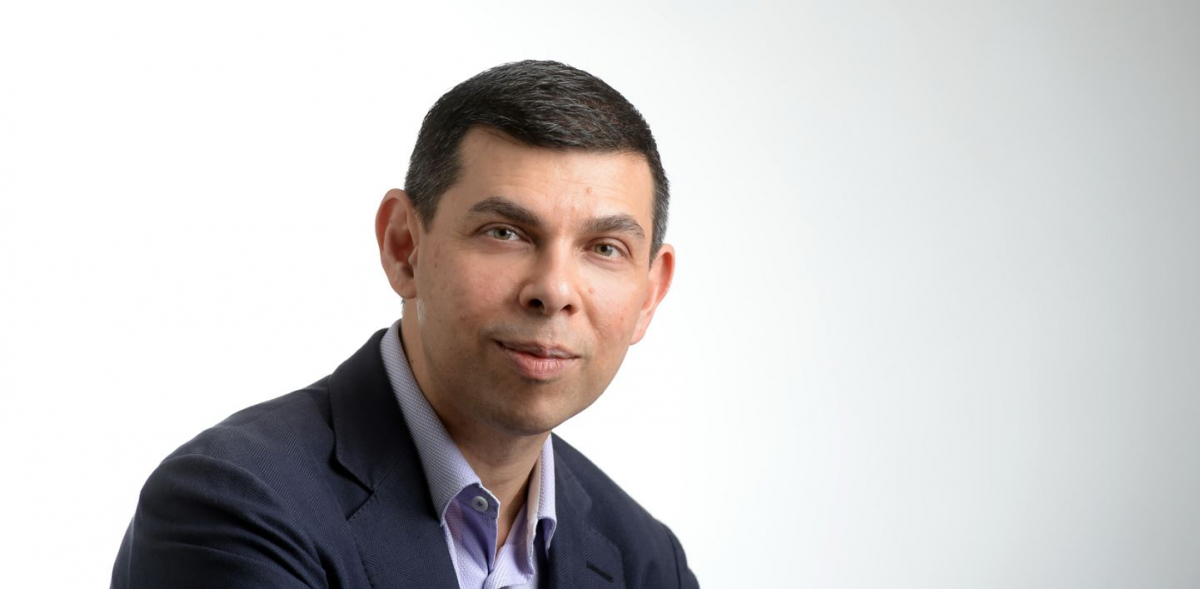
Warren Fernandez, Editor-In-Chief of The Straits Times of Singapore/Asia News Network

Warren Fernandez, Editor-In-Chief of The Straits Times of Singapore/Asia News Network

Indeed, Financial Times columnist Rana Foroohar recently cited a study by the Swiss Economic Institute that showed “globalisation peaked and began plateauing several years before the current trade wars began.

“The current headwinds to it – from lower cross-border capital spending to the localisation of supply chains due to populism, tariffs and the push for national champions – are not going away anytime soon.”

Significantly, as the New York Times reported last week, Chinese investment in the US has plummetted nearly 90 per cent since President Donald Trump took office. The fall, it said, reflected a growing distrust and how “world’s two largest economies are beginning to decouple after years of increasing integration”.

The implications of all of this are enormous and ominous. A world split into halves, with technology and trade, people and ideas, unable to flow freely, will not only be the poorer for it, but also more fractious and less stable. The youth of today will have to brace themselves for a very different geopolitical reality.

This grim backdrop set the stage for a public forum I chaired last Wednesday, titled “Wisdom of the East and West: A global future”. Singapore’s former Foreign Minister George Yeo, citing a line from British poet Rudyard Kipling, noted that, while East will be east and West will be west, “the twain is now meeting again, and creating a new chapter in history”.

Turning to China, he said he did not believe that it wished to be like the West, especially the United States, exporting its values and political system everywhere.

China was one of the most homogeneous societies in history, and wished to keep it that way. It therefore feared contact with foreigners, as “the outside world can cause them to lose control”. So while it was ready to associate with them as outsiders, this has long been done through “portals and outposts”, with outsiders never quite accepted as “one of us”.

In contrast, he cited the example of how, as an alumnus of Harvard University, he was entitled to vote, or even stand for election, for key positions to help shape its future. It was inconceivable, he said, that universities in Beijing – or even Singapore, for that matter – would allow foreigners to play such a role.

Similarly, he doubted that China’s capital markets would ever be opened fully to the world, for fear of losing internal control.

II

These contrasting world views between East and West reflected their differing cultures and past experiences, which were never going to converge around a simplistic end of history norm.

Joining in this discussion, Harvard Professor of Chinese History Michael Puett said that the grandiose talk of a “globalised” world reflected the hubris of his generation, which had concluded that the end of the Cold War was not just a significant political moment, but rather marked the end of history – or contest of political ideas – for all time.

This view, he lamented, was “horribly ethnocentric”. For it assumed that the political values and systems prevailing in the US, which had emerged then as the dominant hyper power, was the perfect way to organise societies, across the globe.

The new “global” world would be one connected by technology, from the likes of Apple, Google and Facebook, and underpinned by the neo-liberal belief in the free flow of goods, information, people and ideas.

This gave rise to a “dangerous complacency” among thinkers and leaders of his generation, he said. It caused them to shun “big ideas” and debates, since they assumed these were unnecessary as, after all, history had ended. They could leave it to free markets and democracies to throw up solutions to social and economic problems, if indeed they could be addressed. Some were just inevitable side-effects that had to be accepted, or managed.

The upshot of this was that major global challenges went unheeded, from rising economic inequality to global warming.

The result, he said, was predictable – a populist backlash to stagnating incomes and widening economic disparities at home, and challenges from countries abroad which did not feel their interests or cultures were reflected in the so-called globalised order

He posed this challenge to the young people in the audience: Build a better, more cosmopolitan global future, drawing on the rich diversity of ideas and wisdoms from East and West. To do so, they would have to grapple with the big questions of their time, and they had to do so urgently, given the many pressing challenges now looming.

The big ideas in these two speeches sparked many big questions in my journalist’s mind. So, as moderator, I posed them: how might the conflicting world views they mentioned be prevented from degenerating into a “clash of civilisations”, as another Harvard man, Prof Samuel Huntington, had famously warned about?

Worse, are these two powers “destined for war”, as the title of the best-selling book by Harvard Professor Graham Allison has stated darkly? In it, he argued that, as has happened over and again in the past, a rising power such as China inevitably stokes anxiety in an incumbent one, like the US, thereby making a conflict likely.

Yet, to be fair, I pointed out that when I had met Prof Allison in Harvard in March, he was at pains to say that his book was by no means predicting a war to come. Rather, he was seeking ways to avert a conflict by preventing a historical pattern repeating itself, he said.

As an alternative way forward, he pointed to the Chanyuan Treaty of 1005, when China’s Song dynasty leaders made a pact with their neighbours, the Liao tribe, pledging to be “rivalry partners”. Or, in today’s parlance, “frenemies”.

Both Yeo and Puett said they shared this view, and suggested that the US and China should find ways to work together, and by doing so, build relations and trust.

As an example, Yeo noted how China had congratulated India on the successful launch of the Chandrayaan-2 mission to the moon last week, adding that it was ready to work with New Delhi to explore outer space.

Other countries, including Singapore, should give such collaborations a nudge, by stepping up to also contribute in whatever ways they could, he said.

Indeed, I would go further to argue that with world marking the 50th anniversary of the Apollo 11 lunar landing in July 1969, rather than countries rushing to outdo each other to return to the moon, a joint “moonshot” mission into space would represent a much greater “giant leap for mankind”.

Besides, as Puett went on to add, there is no shortage of challenges that China and the US, could – and should – work on together, not least the clear and present danger posed by climate change, now wrecking weather havoc around the world.

Both speakers made the point that Singapore is in a unique position to play a positive role in fostering greater trust all round, given its historic links to both East and West, which was reflected in its diversity and shaped its multi-layered identity.

“There must be a humility to see in the other person an identity with as old a history as my own, which has its good points and its own wisdom, and from which I can learn. Then, we will have a better world,” Yeo said.

///

This article is part of a new series of the Asian Editors Circle, a weekly commentary by editors from the Asia News Network (ANN), which will be published by members of the regional media group. The ANN is an alliance of 24 news media titles across the region.

Warren Fernandez is Editor-in-Chief of The Straits Times

ANN: Myanmar to consider Rohingyas as foreigners

ศาสตร์เกษตรดินปุ๋ย : ขอบคุณแหล่งข้อมูล : หนังสือพิมพ์ The Nation

https://www.nationthailand.com/ann/30373838

ANN: Myanmar to consider Rohingyas as foreigners

Jul 29. 2019
By THE DAILY STAR

370 Viewed

Myanmar foreign affairs permanent secretary tells reporters in Cox’s Bazar

The Myanmar government will consider Rohingyas as foreign nationals, said Myanmar Foreign Affairs Permanent Secretary Myint Thu to reporters after a meeting with hindu Rohingyas at the Kutupalong D-4 camp in Cox’s Bazar’s Ukhia yesterday.

Detailing his government’s position on the issue of Rohingya repartition from Bangladesh, Myint Thu said there were three types of citizenships in the Myanmar Citizenship Act 1982.

According to it, whoever has been living in Myanmar for three generations would be entitled to get “naturalised citizenship”.

Even if the Rohingyas are not direct Myanmar citizens, they will be allowed to live legally in Myanmar as foreign citizens according to clause three of the citizenship act, Myint Thu said, adding that in this process they will get a national ID card.

The foreign secretary, who is leading a 10-member team to Bangladesh, also had a meeting with Muslim Rohingyas at Camp-4 in the morning.

But his meetings over the last two days with Rohingya leaders failed to make any headway on the issue of repatriation.

Arakan Rohingya Society for Peace and Human Rights Chairman Mohibullah, who led a 30-member team in the meeting, said after Saturday’s unsuccessful meeting with the Myanmar delegation, they met again yesterday morning.

Mohibullah said the Myanmar delegation had come up with the same old proposals that they rejected before.

“They said we will have to live in ADP camps. We don’t agree with that proposal,” the Rohingya leader said.

He also said that not a single Rohingya would return to Myanmar if they were not guaranteed citizenship.

Mohibullah said they proposed that the Myanmar delegation, who reached Cox’s Bazar on Friday, return after two months after taking recognition of their rightful demands.

Bangladesh and Myanmar signed the repatriation deal on November 23, 2017.

On January 16, 2018, Bangladesh and Myanmar signed a document on “Physical Arrangement”, which was supposed to facilitate the repatriation of the Rohingyas.

The “Physical Arrangement” stipulates that the repatriation would be completed preferably within two years from the start.

The first batch of Rohingyas was scheduled to return on November 15 last year but it did not happen amid unwillingness of the Rohingyas due to a lack of congenial environment in the Rakhine State.

A brutal campaign by Myanmar’s military in 2017 drove 730,000 Rohingya Muslim to flee to Bangladesh’s Cox’s Bazar, where they live in camps, fearing further persecution if they return.

A UN investigation has said Myanmar’s operation mass killing, gang rape and arson was executed with ‘genocidal intent’.

Myanmar, however, denies the allegations.

https://www.thedailystar.net/backpage/news/myanmar-consider-rohingyas-foreigners-1778449

2 to 4 tropical cyclones expected in August – Pagasa

ศาสตร์เกษตรดินปุ๋ย : ขอบคุณแหล่งข้อมูล : หนังสือพิมพ์ The Nation

https://www.nationthailand.com/ann/30373833

2 to 4 tropical cyclones expected in August – Pagasa

Jul 29. 2019
Photo by: Philippine Daily Inquirer  

Photo by: Philippine Daily Inquirer
By Philippine Daily Inquirer
Asia News Network

221 Viewed

MANILA, Philippines — Two to four tropical cyclones are expected to hit the country in August, the state weather bureau said Monday.

The storms are all expected to mostly affect Northern Luzon, said Philippine Atmospheric, Geophysical and Astronomical Services Administration (Pagasa) weather specialist Ariel Rojas.

Meantime, a low- pressure area (LPA) has formed over the West Philippine Sea and is expected to intensify into a tropical cyclone while moving farther away from the country.

Pagasa last spotted the LPA 380 kilometers west of Dagupan City, Pangasinan.

The LPA will enhance the prevailing southwest monsoon or “hanging habagat”, which is affecting the whole country.

The Mimaropa (Mindoro, Marinduque, Romblon, Palawan) region and the provinces of Cavite, Batangas, Bataan and Zambales will experience monsoon rains.

Rojas warned of possible flashfloods and landslides in these areas due to light to moderate and at times heavy rains.

Cagayan Valley will have isolated rains due to localized thunderstorms.

Metro Manila and the rest of the country will have cloudy skies with isolated rain showers and thunderstorms due to the southwest monsoon.

Chinese satellites help record global disasters

ศาสตร์เกษตรดินปุ๋ย : ขอบคุณแหล่งข้อมูล : หนังสือพิมพ์ The Nation

https://www.nationthailand.com/ann/30373831

Chinese satellites help record global disasters

Jul 29. 2019
China sends two satellites into orbit on a single carrier rocket for its domestic BeiDou Navigation Satellite System (BDS) in Xichang, Southwest China's Sichuan province, Feb 12, 2018. [Photo/Xinhua]

China sends two satellites into orbit on a single carrier rocket for its domestic BeiDou Navigation Satellite System (BDS) in Xichang, Southwest China’s Sichuan province, Feb 12, 2018. [Photo/Xinhua]
By China Daily
Asia News Network

279 Viewed

Clear pictures of 24 catastrophic events shared with other countries and regions

China has deployed its satellites to monitor more than 30 major natural disasters around the world since the start of last year, offering help to affected nations and regions, according to a key figure in the project.

Guo Chaohui, a senior engineer at the China Center for Resources Satellite Data and Application, said on Sunday that the center arranged for Chinese satellites to take pictures and collect data from places that suffered from disasters upon receiving notification from the International Charter on Space and Major Disasters system and then provided the images to related nations and regions.

Chinese satellites took clear pictures in 24 of the disasters, including an earthquake in Indonesia last year and a cyclone that ravaged South Africa and Mozambique in April. In the other cases, the satellites failed to generate images due to natural interference such as thick clouds, he said.

“Currently, there are five Chinese satellites-the Gaofen 1, 2, 3 and 4 high-resolution Earth-observation satellites as well as the weather satellite Fengyun 3C-that are available for duties under the charter,” Guo said.

Over the past two weeks, China’s satellites took photographs of flood-stricken regions in India. China provided those images, together with previously taken pictures of the same places, to the Indian Space Research Organization to assist with the neighboring nation’s recent flood relief efforts.

Vivek Singh, a spokesman for the space research group, told Xinhua on Thursday that India appreciated China’s help in the disaster-relief efforts and that such mutual assistance was a good example of international cooperation.

As of Sunday, the death toll in India’s flood-hit states had risen to more than 200. At least 11 million people have been directly affected.

The International Charter on Space and Major Disasters is a worldwide collaboration platform, through which satellite data are made available for the benefit of disaster management. It has 61 contributing satellites operated by 17 charter members, including the European Space Agency and United States Geological Survey.

China signed the charter in May 2007 and first called for assistance under the charter in July of that year when devastating floods ravaged central and eastern parts of the country, according to the China National Space Administration.

To date, China has invoked the charter 24 times and obtained a significant amount of satellite data for post-disaster relief efforts, according to information published on the charter’s website.

The most recent time China activated the charter was in June last year when it asked for assistance to monitor a serious forest fire in the Inner Mongolia autonomous region.

For its part, China has offered satellite images that have helped in many natural disasters, such as the forest fires in southeast Australia in 2009, floods afflicting Pakistan in 2010 and the earthquake and tsunami that hit Japan in 2011. The nation also assisted multinational efforts to search for the missing Malaysia Airlines Flight MH370 in 2014, the Chinese space administration said.

Xi calls for turning more deserts green

ศาสตร์เกษตรดินปุ๋ย : ขอบคุณแหล่งข้อมูล : หนังสือพิมพ์ The Nation

https://www.nationthailand.com/ann/30373830

Xi calls for turning more deserts green

Jul 29. 2019
An aerial drone catches Qixing Lake Resort in the Kubuqi Desert, Ordos, the Inner Mongolia autonomous region. [Photo/Xinhua]

An aerial drone catches Qixing Lake Resort in the Kubuqi Desert, Ordos, the Inner Mongolia autonomous region. [Photo/Xinhua]
By China Daily
Asia News Network

312 Viewed

China will continue to pursue green development, President Xi Jinping said in a congratulatory letter to the Seventh Kubuqi International Desert Forum on Saturday.

China has placed great emphasis on building an ecological civilization and made great headway in the prevention and control of desertification, Xi said in the letter to the opening ceremony to the two-day forum, which was held in Ordos, the Inner Mongolia autonomous region.

Containing desertification in the Kubuqi Desert allows the world to see China’s experience in environmental treatment as well as the country progressing toward the United Nations 2030 Agenda for Sustainable Development goals, he said, adding that China actively promoted alignment between international cooperation on the Belt and Road Initiative and the implementation of the 2030 Agenda.

“The Earth is the only home to human beings, and anti-desertification is a great cause closely related to human development,” Xi said. “China also stands ready to work with all sides to push forward global environmental governance and protection, and contribute to making the world a place with a well-preserved ecology.”

To implement the agenda, Xi called for concerted efforts from the international community to enhance cooperation in combating desertification and promote global environmental governance.

Antonio Guterres, secretary-general of the United Nations, sent a congratulatory letter to the forum in which he commended China for its enormous contribution to the governance of ecology and the environment. He said that the forum is an opportunity to share success stories in and beyond China.

China is a country that has been threatened by the encroachments of deserts. The country has the world’s largest area of desert, covering 2.61 million square kilometers, accounting for a quarter of its total land.

“However, China is also the country that witnessed the miracle of turning sandy land into green land. As the world’s biggest contributor to the increase of planted forests, China has achieved the UN goal of stopping desertification expansion by 2030,” said Vice-Premier Sun Chunlan at the forum.

Sun also announced China’s anti-desertification goal, which is to bring half the country’s reversible desert land under control by next year and turn all reversible desert land into green land by 2050.

The success of turning desert land into green in portions of the Kubuqi Desert — China’s seventh-largest desert, covering 13,900 sq km, illustrates the wisdom of Chinese people and our great determination in areas of environmental protection, Sun added.

In the past decades, more than 6,000 sq km of desert in the Kubuqi has turned green due to collective efforts from local governments, enterprises and other organizations. The greening campaign created total ecological wealth of more than 500 billion yuan ($72.69 million) and provided about 1 million jobs to locals.

She said China’s workable solutions to combat desertification have gained recognition from the international community. Now those experiences are bringing green hopes to those countries along the Belt and Road Initiative through international cooperation.

“China will spare no effort to provide help to other developing countries and contribute our efforts to combat desertification,” Sun said.

As the only large international forum in the world dedicated to promoting global desertification control and green economic development, the event has been recognized by the UN Convention to Combat Desertification as a platform for exchange and the promotion of ideas on global desertification control and green economic development.

ANN: Korean police accelerate probe into collapse of club balcony in Gwangju

ศาสตร์เกษตรดินปุ๋ย : ขอบคุณแหล่งข้อมูล : หนังสือพิมพ์ The Nation

https://www.nationthailand.com/ann/30373826

ANN: Korean police accelerate probe into collapse of club balcony in Gwangju

Jul 28. 2019
By The Korea Herald
Asia News Network

273 Viewed

Police on Sunday are speeding up the investigation into a collapse of a balcony inside a nightclub in Gwangju, which killed two people and injured 16, including eight foreign athletes competing at the world swimming championships a day earlier.

A task force dedicated to investigating the accident called in one of the three co-owners of the club for questioning to see whether there was any professional negligence, according to Gwangju Seobu Police Station.

Two of the co-owners and a club official have already been booked on charges of professional negligence.

Two Korean men died while 16 others were injured as the balcony at the club next to the athletes’ village collapsed at around 2:40 a.m. on Saturday, police said. Among the injured were 10 foreigners, including eight athletes participating in at the 18th FINA World Championships.

None of the injured were in life-threatening condition, according to the organizing committee of the competition.

Authorities suspect the loft space inside the club was illegally expanded and modified without the municipality’s authorization. Police investigated 15 people, including club officials, victims and government officials, following the collapse.

Police are looking into whether Gamma Hydroxybutyrate, which is commonly referred to as a “club drug” or “date rape” drug, was used at the nightclub. Officers sent alcohol bottles and glasses they collected to the National Forensic Service.

When the collapse occurred, there were about 370 people inside the nightclub.

Among the injured athletes were three Americans, two New Zealanders, one Dutch, one Italian and one Brazilian, according to police. They are all water polo players except the Brazilian, with six of them women.

USA Water Polo confirmed that players from its men’s and women’s teams were at the club celebrating the women’s world title from Friday evening.

Among foreigners on the injured list were two Uzbek men.

The competition began July 12 and was set to conclude Sunday night.