Level of Mekong, tributaries forecast to rise in coming weeks

ศาสตร์เกษตรดินปุ๋ย : ขอบคุณแหล่งข้อมูล : หนังสือพิมพ์ The Nation

https://www.nationthailand.com/ann/30373523

Level of Mekong, tributaries forecast to rise in coming weeks

Jul 24. 2019
Photo by: Bangkokbiznews

Photo by: Bangkokbiznews
By Vientiane Times
Asia News Network

129 Viewed

The level of the Mekong River – the longest river in Southeast Asia – will increase gradually in the coming weeks after falling to a record rainy-season low that is affecting farmers and businesses.

The Meteorology and Hydrology Department issued the forecast on Monday, suggesting that there will be more rainfall at the end of this month and early next month. The rainfall will result in a gradual rise in the level of the Mekong and its main tributaries.

This prediction is expected to ease concerns about the abnormally low water levels in the Mekong, which runs through China, Myanmar, Laos, Thailand, Cambodia and Vietnam.

Already, this exceptionally low water level has affected livelihoods, production and businesses.

Some hydroelectric dams have not been able to generate electricity due to the lack of rainfall in catchment areas, meaning there is insufficient water in reservoirs to generate power, the department said, citing reports from hydropower plants.

In addition, the Vientiane Water Supply Enterprise has informed the public that the low level of the Mekong means it is unable to supply water at full capacity, which could affect supply to households and businesses.

The low river levels and the lack of rain over so many months has also affected crops because of insufficient water for farmland, the Meteorology and Hydrology Department said.

In June, the level of the Mekong recorded at many stations between Vientiane and Pakxe in Champassak province was down by 10 to 40 percent compared to the levels measured from 2006 to 2018, according to the department.

This month the level dropped further on average as measured at stations located between Luang Prabang province and Pakxe and was down by 21 to 74 percent compared to the levels recorded from 2006 to 2018.

Statistics show that rainfall recorded since early July at various stations along the Mekong River was down by as much as 75.2 percent compared to the same period in previous years.

The Mekong River Commission (MRC), the international body whose members comprise the four lower Mekong countries of Laos, Thailand, Cambodia and Vietnam, said last week the level of the Mekong had fallen to an all-time low this rainy season.

The Commission, whose mandate is to push for sustainable development of the Mekong, reported that the river level during the early flood season from June to July was lower than that recorded in 1992, which saw the lowest flow on record.

The Commission observed that rainfall has been exceptionally low in the Mekong basin since the start of this year.

Drought destroying the future of Lao farmers

ศาสตร์เกษตรดินปุ๋ย : ขอบคุณแหล่งข้อมูล : หนังสือพิมพ์ The Nation

https://www.nationthailand.com/ann/30373512

Drought destroying the future of Lao farmers

Jul 24. 2019
Photo by: Vientiane Times

Photo by: Vientiane Times
By Vientiane Times
Asia News Network

114 Viewed

Low rainfall and high temperatures are destroying the crops of Lao farmers across the country against the backdrop of an ongoing drought in the Southeast Asian region.

Analysts say the lowest seasonal rainfall in decades will not only have a severe impact on farmers’ livelihoods but will also affect food security.

Deputy Minister of Agriculture and Forestry Dr Bounkhuang Khambounheuang told Vientiane Times yesterday that wet season rice transplantation is only 40 percent complete.

He acknowledged that the lack of rain had delayed rice production in the country’s 800,000 hectares of wet-season rice fields, but said exact figures concerning damaged crops had not been reported.

“Our ministry has told provincial and district authorities to send officials to help farmers immediately, not wait for official advice from the ministry,” Dr Bounkhuang said.

Regions that have water resources must help farmers to pump it into their fields. Meanwhile, provincial agriculture and forestry departments have been told to prepare fast growing rice varieties for farmers while they wait for the rains.

“It will be quite late to grow rice if the rains do not come in the next few weeks,” Dr Bounkhuang said.

“Our agriculture officials might encourage farmers to grow other crops that result in higher economic returns. Farmers who have borrowed money from banks need to report to authorities regarding the amount of damaged crops so the government can help negotiate with the banks.”

In Xayaboury province, a steering committee has been established to work closely with farmers in different districts.

Provincial Deputy Governor Mrs Bounphak Inthapanya said the province has encouraged both the public and private sectors to help pump water for farmers.

“We have asked private companies that have water pumps to give our authorities access to them so that we can pump water for farmers in affected areas,” she said.

At present, only 45 percent of 34,000 hectares of wet-season rice fields have been transplanted. Farmers in the province also grow other crops on 112,000 hectares of land.

Director of Xayaboury province’s Agriculture and Forestry Department, Mr Somvang Keolaysack, said that if there is no rain in the next few weeks these crops and rice will die.

“I’m very concerned about the rice crop in our province this year. If the drought continues our crops will die because there is no water and we could face a rice shortage in the year to come,” he said.

Elsewhere, Borikhamxay province has also been badly affected by the lack of rain.

A local farmer, Mr Ngeun, said “My rice seedlings are about to die due to a lack of water. Normally, I would have finished transplanting by this time of the year. I don’t know what has happened this year and why the rains are so late,” he added.

AI tech used to battle spycam video crimes

ศาสตร์เกษตรดินปุ๋ย : ขอบคุณแหล่งข้อมูล : หนังสือพิมพ์ The Nation

https://www.nationthailand.com/ann/30373511

AI tech used to battle spycam video crimes

Jul 24. 2019
By The Korea Herald

44 Viewed

The South Korean government has begun to use artificial intelligence technology in its fight against illegal sex videos.

The state agencies said Monday that they have started applying the AI technology to search and delete illicit sex videos shared on the internet. The technology has been adopted by the Gender Equality Ministry’s center for supporting victims of cybersex crimes.

The center expects the new AI solution to help shorten the time in finding and removing sex crime videos, also known as “spycam videos,” from the internet.

In the past, once a victim reports a spycam video to the center, its staff would check and compare video files on file-sharing websites with images extracted from the reported footage.

The AI technology is designed to automate the search-and-match process, cutting down the time taken to delete illegal videos and preventing further spread of such files.

The technology, currently available to monitor 10 file-sharing sites, will cover a total of 45 websites until the end of this year.

ANN: Asian economies suffer mixed results as trade war continues

ศาสตร์เกษตรดินปุ๋ย : ขอบคุณแหล่งข้อมูล : หนังสือพิมพ์ The Nation

https://www.nationthailand.com/ann/30373450

ANN: Asian economies suffer mixed results as trade war continues

Jul 23. 2019
By Ishan Joshi and Cod Satrusayang/Asia News Network

86 Viewed

In the years before the current trade war, China and the developing countries in Asia enjoyed sparkling growth rates as a result of the region’s intertwined free trade and special economic zones and relatively cheap labour.

But as the United States, has increasingly under President Donald Trump, looked inward with protectionist and mercantilist policies, the region’s growth rates have come under threat.

A trade war between the United States and China have made the headlines but economic data from around the region points to struggling economies and a scramble to find alternative outlets for exports.

The China Factor

China has had to reinvent its economy and seek new trade partners as Trump continues to yo-yo between inflammatory rhetoric and rapprochement centered around his personal diplomacy.

While China’s Belt and Road Initiative has yet to fully take off, its diplomats have made overtures to both the European Union and the African Economic Community, respectively.

China has also courted the United Kingdom, lining itself to be the UK’s predominant trade partner in a post Brexit world.

The US’s decrease in trade with China has also seen other regions step in to fill the void.

According to statistics put out by the Chinese customs authority, ASEAN has replaced the United States as China’s second largest trade partner behind only the European Union.

Chinese exports fell in the first quarter of 2019 by over 8% while American exports to China dropped 31% compared to the same period from the previous year.

This has been made up, in-part, by China’s increasing trade with Southeast Asia.

Beijing has also tried to stimulate growth with packages and propaganda campaign designed to increase domestic consumption. By some measures, it appeared to be working with domestic retail sales up 9.8 percent in June of this year.

However, these moves do not fully fill the void that has been left vacant as a result of the trade war.

Economic growth slumped to a near three-decade low in Q2 of 2019, the weakest rate since at least 1992, when the National Bureau of Statistics (NBS) started to publish quarterly data.

Despite, Beijing’s media putting on a brave face, it is clear that the trade war has affected China’s economy and has brought it to the negotiating with the US.

ASEAN

While ASEAN countries have done its best to fill in the void left by the United States in the Chinese market, the trade war has undoubtedly left its mark on the more mature economies in the region.

Singapore’s economy, as the most developed country in the region, performed worse than expected in the second quarter of 2019, its lowest rate since the global financial crisis in 2008.

Estimates by the Ministry of Trade and Industry (MTI) pegged Singapore’s economic growth at 0.1 per cent in the second quarter of this year, well below analysts’ expectations of 1.1 per cent according to a Bloomberg forecast.

Indonesia’s annual economic growth eased to 5.07 per cent in the first quarter of 2019 from 5.18 percent in the previous three-month period and below market expectations of 5.18 per cent. This was the weakest growth rate in one year, as both private consumption and fixed investment rose at a lower pace.

The developing countries, however, continue their strong growth filling the manufacturing void left by China while seeking Chinese investments for infrastructure and development.

Vietnam’s economy continues to be one of the fastest-growing economies in ASEAN. Economic growth was maintained in the second quarter at 6.7% while manufacturing growth sored into the double digits.

The Philippines, Cambodia and Laos also maintained solid growth rates, fueled in part by Chinese investments and infrastructure projects.

Analysts say that these investments, while fueling enviable growth rates in the short term, may lead nations into debt traps to the mega Chinese projects like the Belt and Road Initiative and the AIIB.

North East Asia

South Korea, as the most economically developed country to be integrated with China in Asia, undoubtedly felt the pains of the trade war.

The South Korean economy expanded 1.7 per cent year-on-year in the first quarter of 2019. It was the weakest growth rate since the third quarter of 2009, amid a slowdown in manufacturing and a sharp contraction in construction.

South Korea’s major business groups, meanwhile, are shifting to emergency mode, setting detailed contingency plans for a variety of scenarios amid concerns that the restrictions on exports of key tech materials from Japan to Korea could stay in place for a long time.

Leaders of the country’s five biggest conglomerates — Samsung Electronics, Hyundai Motor Group, SK Group, LG Group and Lotte Group — are tightening their reins on the groups’ operations, bracing for possible ripple effects on the economy and business environment as a result of Japan’s decision.

Japan meanwhile is doing better than expected despite low domestic demand. The Japanese economy expanded for the second consecutive period in the first quarter of 2019, defying market expectations.

GDP expanded 2.1% in seasonally-adjusted annualized terms (SAAR) in Q1, above the 1.6% (SAAR) expansion registered in Q4 and comfortably beating market analysts’ expectations of a 0.2% drop.

However, like China, Japan has come under sharp US criticism over its trade imbalance and Shinzo Abe’s government will likely have to navigate President Trump’s mercurial trade policies to continue Japan’s unexpected growth.

https://asianews.network/2019/07/23/asian-economies-suffer-mix-results-as-trade-war-continues/

Govt takes active steps to penetrate Chinese market

ศาสตร์เกษตรดินปุ๋ย : ขอบคุณแหล่งข้อมูล : หนังสือพิมพ์ The Nation

https://www.nationthailand.com/ann/30373442

Govt takes active steps to penetrate Chinese market

Jul 23. 2019
By Vientiane Times
Asia News Network

49 Viewed

The government has given the green light for Chinese companies to develop trade-facilitation related infrastructure and invest in agriculture with a view to bolstering exports to China.

The move is part of the government’s preparations to capitalise on the US$5.9-million Laos-China railway, which is slated for completion in 2021.

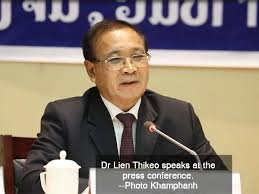
Minister of Agriculture and Forestry Dr Lien Thikeo told Vientiane Times recently that Laos is currently building the nation’s biggest modern warehouse, located in Vientiane.

“The cost of this project amounts to hundreds of millions of US dollars. The first phase of construction will cost as much as US$140 million,” he said.

“We have met with the developers of the railway to discuss the possibility of building a 2-km rail track to connect to the warehouse.”

The government signed a Memorandum of Understanding with a Chinese company to carry out a feasibility study regarding the construction of the warehouse during Chinese President Xi Jinping’s state visit to Laos in 2017.

This company is in the process of sourcing funding to build the warehouse which would store goods made in Laos before export to China and Asean countries.

China has also agreed to help Laos build a rubber research centre in the Dongmakkhay area of Vientiane’s Xaythany district to certify the quality of rubber produced in Laos before export to China.

This would ensure that all the rubber tapped from the country’s 130,000 hectares of rubber trees was certified and granted a quota for export to China, Dr Lien said.

The government has also partnered with Chinese companies to build a plant and animal quarantine station in Luang Namtha province to ensure that crops grown in Laos can be certified and are acceptable to the Chinese market.

Meanwhile the Ministry of Agriculture and Forestry in cooperation with the Ministry of Industry and Commerce is working to define areas for rice production in Khammuan and Savannakhet provinces.

They are in the process of developing the necessary infrastructure for rice production and processing for export to China. Modern rice mills will be built in Vientiane and the provinces of Borikhamxay, Khammuan, Savannakhet and Champassak. This will ensure that good quality rice is produced before export to China.

The Ministry of Agriculture and Forestry has adjusted its policy on farming and has moved away from merely encouraging people to grow crops for domestic consumption. It is now urging crop diversification so that more crops are available for export.

“We will not just grow one particular crop but will grow several crops concurrently based on market demand,” Dr Lien said.

Chinese entrepreneurs are flocking to Laos to explore business opportunities, particularly in relation to the cultivation of crops for export to China.

This process will see investors providing funding, technical advice, markets or buyers for crops while villagers will provide the necessary labour and land.

The government is also carrying out surveys and identifying the needs of the Chinese market to identify which crops are required by Chinese consumers.

Duterte: ‘I will end my term fighting’

ศาสตร์เกษตรดินปุ๋ย : ขอบคุณแหล่งข้อมูล : หนังสือพิมพ์ The Nation

https://www.nationthailand.com/ann/30373441

Duterte: ‘I will end my term fighting’

Jul 23. 2019
IT AIN’T OVER YET President Duterte delivers his fourth State of the Nation address before a joint session of Congress, revisiting old issues of illegal drugs and corruption, and vowing “not to coast along” or “while away his time” during his remaining three years in office. —JOAN BONDOC/Philippine Daily Inquirer 

IT AIN’T OVER YET President Duterte delivers his fourth State of the Nation address before a joint session of Congress, revisiting old issues of illegal drugs and corruption, and vowing “not to coast along” or “while away his time” during his remaining three years in office. —JOAN BONDOC/Philippine Daily Inquirer
By Philippine Daily Inquirer
Asia News Network

45 Viewed

MANILA, Philippines — Delivering his State of the Nation address on Monday, his fourth since taking office in 2016, President Rodrigo Duterte stood his ground on the controversial issues hounding his presidency — his brutal war on drugs that has drawn international condemnation because of the thousands of lives lost and his embrace of China in the country’s territorial dispute with the Asian giant in the South China Sea.

But the toughest stand he made in his speech that lasted more than an hour and half was pursuit of his seemingly singlehanded fight against official corruption, stressing he had the will and the courage to do it.

“Few men imbued with the will and the courage to do what he believes is right and just and whatever be the opposition in terms of numbers and noise, make a majority. For it is not the eagle in the fight, but the fight in the eagle that matters,” the President said as he addressed the opening session of the 18th Congress.

“Believe me, I will end my term fighting,” he vowed.

On the road leading the House of Representatives in Quezon City, where the joint session was held, thousands of Mr. Duterte’s critics marched in the rain to blast his seemingly single-minded focus on drugs and corruption and defeatist stand on the South China Sea row.

Organizers claimed 40,000 people joined the protest, but the Quezon City police estimated the crowd at 5,500.

Thousands of policemen were deployed to the area to keep order. No untoward incidents were reported.

Mr. Duterte demanded more action against illegal drugs and corruption in the second half of his term.

‘Period of consequences’

At the same time, he vowed that the last three years of his presidency won’t see him sit back and fade away.

According to Mr. Duterte, the next few years will be the “period of consequences.”

“The consequences of what we did and did not do but should have done during the first half of my term,” he added.

He made a specific call for death for drug peddlers and plunderers to deal with the problems wrought by illegal drugs and corruption.

He also spoke at length of his disdain for corruption in government and ranted against selfishness, characterizing it as the main driving force behind the problem.

“To borrow the language of F. Sionil Jose, who said, we have not risen above and beyond the parochial interests. Our warped loyalty to family, friends and tribal kin continue to exact a heavy toll on our programs designed to uplift the poor and reassure our investors, our foreign investors, and the business sector in this country,” he said.

‘Corruption is pervasive’

The recent allegations of massive fraud that hounded the Philippine Health Insurance Corp. showed that “corruption is pervasive,” he said.

He noted that huge amounts of medical funds were disbursed to pay padded claims and imaginary treatments of fictitious patients.

“I am grossly disappointed. The government is conned of millions of pesos, which could be used to treat illnesses and possibly save the lives of many,” he said.

Mr. Duterte also said he would remove Bureau of Customs employees who are under investigation for corruption.

If he cannot fire them, he would ask them to report to Congress, he said. Anything to take them out of the premises of the customs bureau, he added.

The President said he wanted to see results.

‘We talk too much’

“We, in [the] government, talk too much, act too little, and too slow,” he said.

He said he had aired the same complaint when he was mayor of Davao City, and little had changed since.

“We are long on rhetoric but short on accomplishments. It’s either you, Congress, or even the executive department and maybe me. So I am here to rectify my own error,” Mr. Duterte said.

“That is why, I implore those who occupy positions of power and authority, to let your deeds and accomplishments do the talking. Lead by example. Words ring hollow when not followed by positive and prioritized action,” he added.

The people must do their part by not tolerating corrupt officials as well, the President said. “Be assertive,” he stressed.

File complaints

They could make a scene or file a complaint using the government hotline if an official asked them for a bribe. He himself has not held back on hitting people, he said.

“And I have done that. I will be prank with you. I am the only President who up to now mauls people inside Malacañang,” he said.

Mr. Duterte also told five government agencies—the Land Transportation Office, Social Security System, Bureau of Internal Revenue, Land Registration Authority, and Pag-Ibig Fund—to improve their services.

They, along with local governments, must make things easier for the the public, he said.

His directive was simple: simplify their processes.

“I’ve been asking that from you since three years ago. If you’re unable to do that now, I will really kill you,” he said.

Things not done

Mr. Duterte said he assumed full responsibility for the things that were not done in his first three years.

“Though we cannot change the past, we will not squander the future,” he said.

He would push harder for programs he had started, but he would do this within the parameters of the law.

His goal is a comfortable life for all Filipinos and a Philippines better than the one he grew up in, he added.

“I will not merely coast along or while away my time during the remaining years of my administration. It ain’t my style. But I will not stop until I reach the finish line. Then and only then shall I call it a day,” he said.

Revenue raisers

Mr. Duterte did not skimp on praises in his speech.

He commended Philippine Amusement and Gaming Corp. chief Andrea Domingo for contributing P16 billion of the P61 billion collected from government-owned and -controlled corporations as of this month.

“Allow more gambling, Ma’am,” he added, drawing laughter from the crowd.

He also noted that the customs bureau was able to collect P585 billion despite being ridden with corruption. The figure would be higher if the agency were cleaner, he said.

Mr. Duterte likewise sang the praises of the team that headed the cleanup of Boracay Island, particularly Environment Secretary Roy Cimatu, Interior Secretary Eduardo Año, Tourism Secretary Berna Romulo-Puyat, Labor Secretary Silvestre Bello III, Public Works Secretary Mark Villar, and Technical Education and Skills Development Authority chief Guiling Mamondiong.

Education Secretary Leonor Briones also got a special mention for her “exceptional leadership,” with Mr. Duterte noting that there are 27 million students, from kindergarten to senior high school.

Urgent legislation

The President called on Congress to pass important legislation, including the second package of the Comprehensive Tax Reform Program, or the “Trabaho” bill, to spur job generation.

The bill would reduce the corporate income tax to 20 percent and make tax incentives timebound, targeted and performance-based.

Another bill that the President asked the lawmakers to immediately pass is a new version of the Salary Standardization Law that would raise the pay of government employees, including teachers and nurses.

The President stressed the inclusion of a raise for teachers in the proposal.

“It’s not that big, but it will tide you over during this hard time. A little bit bigger than before,” he said, addressing himself to public school teachers who have been demanding he keep his campaign promise to raise their pay.

Mr Duterte also asked Congress to pass a law that would create a Department of Water Resources and a Water Regulatory Commission to deal with water problems, such as the shortage that his Metro Manila in recent weeks. —With reports from Nestor Corrales and Gabriel Pabico Lucy

Court rejects 58 legislative election petitions

ศาสตร์เกษตรดินปุ๋ย : ขอบคุณแหล่งข้อมูล : หนังสือพิมพ์ The Nation

https://www.nationthailand.com/ann/30373439

Court rejects 58 legislative election petitions

Jul 23. 2019
Security measures: Police personnel stand guard outside the Constitutional Court in Central Jakarta ahead of the court’s ruling announcement on the disputed presidential election result recently. (The Jakarta Post/Dhoni Setiawan )

Security measures: Police personnel stand guard outside the Constitutional Court in Central Jakarta ahead of the court’s ruling announcement on the disputed presidential election result recently. (The Jakarta Post/Dhoni Setiawan )
By The Jakarta Post
Asia News Network

47 Viewed

The Constitutional Court has rejected 58 of the 260 petitions filed against April’s legislative election results.

The rejections were submitted by all three panels of the court. Of the 58 rejected petitions, 14 were handled by panel one, 23 by panel two and 21 by panel three.

Additionally, the court chose not to dismiss 80 petitions but would not review them further in the preliminary hearing.

Justice Aswanto said the court would immediately hand down its rulings regarding such petitions in the final hearing in August.

“To those who filed petitions that were neither dismissed nor brought into the preliminary hearing, please await an official summons from the court to a final hearing,” Aswanto said on Monday as quoted by kompas.com.

Meanwhile, the court has decided to continue reviewing the remaining 122 lawsuits. Of the 122 remaining lawsuits, 48 were handled by panel one, 33 by panel two and 41 by panel three.

Earlier this month, 260 cases, comprising 250 petitions filed by political parties and 10 filed by individual candidates, were registered by the court.

General Elections Commission (KPU) representative Hasyim Asy’ari said in a statement that the preliminary hearing would likely result in three possible outcomes.

The first outcome was to hold a recount of election votes. The second outcome is a final rejection, meaning that the petitioner’s case has not been proven in court. The third outcome is to accept the petitioner’s case, based on the evidence.

China passes US on Fortune Global 500 for first time

ศาสตร์เกษตรดินปุ๋ย : ขอบคุณแหล่งข้อมูล : หนังสือพิมพ์ The Nation

https://www.nationthailand.com/ann/30373437

China passes US on Fortune Global 500 for first time

Jul 23. 2019
People in front of a Sinopec Group stand during a conference in Shanghai on April 1, 2019. (PHOTO / IC)

People in front of a Sinopec Group stand during a conference in Shanghai on April 1, 2019. (PHOTO / IC)
By China Daily Hong Kong
Asia News Network

128 Viewed

The number of Chinese companies which made it on the Fortune Global 500 reached 129, surpassing the US for the first time as the latter country had 121 companies on the list, the magazine reported on Monday.

China’s largest State-owned oil and gas company Sinopec Group climbed one spot on Fortune’s Global 500 list, reaching second place due to sharp gains in both revenue and profits last year.

Behind Walmart — whose revenue was US$514.41 billion — Sinopec Group saw a 26.8 percent growth in revenue to US$414.65 billion last year, and profits in 2018 reached US$5.85 billion, a year-on-year growth of 280.1 percent.

The strong results were driven largely by robust domestic demand for gas and chemical products, according to the report.

Another Chinese company, China National Petroleum, grabbed the fourth spot with revenue of US$392.98 billion in 2018, followed by State Grid with US$387.06 billion.

With revenue of US$69.85 billion, JD.com continues to lead Chinese internet companies, reaching the 139th spot on the list.

Alibaba Group Holding, whose revenue reached US$56.15 billion, was the company with the fastest growth rate, jumping 118 spots to 182.

A bird view of Beijing's central business district, which is home to the headquarters of a great number of companies on the Fortune Global 500. (PHOTO / VCG)

A bird view of Beijing’s central business district, which is home to the headquarters of a great number of companies on the Fortune Global 500. (PHOTO / VCG)

Gree Electric Appliances Inc and Xiaomi Corp were newcomers to this year’s list, and 9-year old Xiaomi was the youngest company among the Global 500.

Three Chinese companies were included in the top 10 of the Fortune Global 500, and are mainly involved in natural resources.

Pro-establishment lawmakers call for inquiry into violence

ศาสตร์เกษตรดินปุ๋ย : ขอบคุณแหล่งข้อมูล : หนังสือพิมพ์ The Nation

https://www.nationthailand.com/ann/30373435

Pro-establishment lawmakers call for inquiry into violence

Jul 23. 2019
Pro-establishment lawmakers hold a joint press briefing condemning the attack on the liaison office and the beating up of suspected protesters in Yuen Long. (CALVIN NG / CHINA DAILY)

Pro-establishment lawmakers hold a joint press briefing condemning the attack on the liaison office and the beating up of suspected protesters in Yuen Long. (CALVIN NG / CHINA DAILY)
By China Daily Hong Kong
Asia News Network

55 Viewed

More than 20 pro-establishment lawmakers on Monday held a joint press briefing condemning the attack on the liaison office by radical protesters and the beating up of suspected protesters by a group of men in white shirts at Yuen Long MTR station.

The legislators urged police to launch a major investigation into both incidents on Sunday.

In a joint statement, the lawmakers stressed that the radical acts were in defiance of the nation’s sovereignty and an insult to all Chinese people. In besieging the liaison office and defacing the national emblem, the protesters had committed a grave violation of the constitution, the statement added.

The protesters had also defied the Basic Law and the “one country, two systems” principle, undermining social order to the detriment of the people of Hong Kong, the statement added.

On Sunday, a group of radical protesters left a peaceful rally against the now-suspended extradition law amendment and marched to the Liaison Office of the Central People’s Government in the HKSAR, one of the three central government institutions in the city.

In besieging the building by setting up makeshift barriers, the protesters spray-painted derogatory graffiti, threw eggs at the walls and smeared black paint on the national emblem.

The lawmakers urged an end to violence and criticized those who condone aggressive protests and provoke confrontations with the police.

The legislators said they are urging others to join their cause against violence.

Wong Kwok-kin, former chairman of the Hong Kong Federation of Trade Unions, said the defacing of the national emblem was “a serious political matter” as the perpetrators were advocating “Hong Kong independence”.

Wong called on the city to engage in rational and peaceful discussions to resolve differences and set a new direction for the future of Hong Kong.

According to the city’s laws, any person who desecrates the national flag or national emblem by publicly and willfully burning, mutilating, scrawling on, defiling or trampling on it commits an offense that is liable to a significant fine and imprisonment for up to three years.

Lo Wai-kwok, chairman of the Business and Professionals Alliance for Hong Kong, the city’s political party representing the business sector, said any violence that causes injuries to police, demonstrators, or any other residents should be rejected and condemned.

Chairwoman of the New People’s Party Regina Ip Lau Suk-yee expressed concern that the violence would continue to spread and become a new normal. She urged people from all social and economic sectors, regardless of their political views, to condemn and renounce violence.

Joining the condemnation was social dignitaries in the city. Vice-Chairman of the National Committee of the Chinese People’s Political Consultative Conference Tung Chee-hwa said he was saddened by the desecration of the national emblem, which is the symbol of a nation.

A small fraction of the community has taken advantage of an inclusive society and deliberately sabotaged Hong Kong’s economy and social order, undermining the relations between the central government and the SAR, Tung said.

The Hong Kong General Chamber of Commerce also stressed in a statement its strong condemnation against the violence and called for a swift resolution to the current impasse that has polarized Hong Kong community.

HK officials condemn multiple violent incidents

ศาสตร์เกษตรดินปุ๋ย : ขอบคุณแหล่งข้อมูล : หนังสือพิมพ์ The Nation

https://www.nationthailand.com/ann/30373429

HK officials condemn multiple violent incidents

Jul 23. 2019
The Chief Executive, Carrie Lam, together with the Secretaries of Department and Directors of Bureau, and the Commissioner of Police, meet the media at the Chief Executive's Office, July 22, 2019. [Photo by Calvin Ng/chinadaily.com.cn]

The Chief Executive, Carrie Lam, together with the Secretaries of Department and Directors of Bureau, and the Commissioner of Police, meet the media at the Chief Executive’s Office, July 22, 2019. [Photo by Calvin Ng/chinadaily.com.cn]
By China Daily
Asia News Network

93 Viewed

Hong Kong Chief Executive Carrie Lam Cheng Yuet-ngor sternly denounced on Monday what she called the unprecedented violence in the city on Sunday, saying violence will never be a solution but will only breed more violence.

Lam was condemning the violence during the siege of the Liaison Office of the Central People’s Government in the HKSAR in Sai Wan, Hong Kong Island-Beijing’s top representative authority in the city-and the attacks in Yuen Long in the New Territories on Sunday night.

Lam and all principal officials of the Hong Kong Special Administrative Region government and the commissioner of police met with the media on Monday afternoon.

She said such violent acts are vicious and have caused citywide indignation. She also promised punishment for anyone involved in such acts.

A peaceful protest against the now-suspended extradition amendment bill on Sunday afternoon turned ugly at night as radical protesters besieged the Liaison Office.

They defaced the national emblem mounted at the entrance of the office and painted offensive graffiti on the office’s exterior.

Lam said the vandalism is in blatant defiance of the nation’s sovereignty and an open challenge to the “one country, two systems” principle. It has caused great harm to the SAR, which is governed under the principle, and it hurt the sentiments of people in Hong Kong and on the Chinese mainland.

Lam also strongly denounced the “astonishing and outrageous” attacks in Yuen Long in the New Territories. Late on Sunday night, attackers in white shirts, some wearing masks, assaulted bystanders and commuters at the Yuen Long subway station with bamboo sticks and metal poles. They said they were targeting radical protesters who have disrupted local order.

The attackers completely disregarded law and order as they indiscriminately assaulted innocent people, she said, adding that what they did was appalling and totally unacceptable. She requested that the police chief conduct an extensive and in-depth investigation into the incidents and punish those who violated the law.

The SAR government has zero tolerance for any kind of violence at any time, anywhere and toward anyone.

Commissioner of Police Lo Wai-chung pledged that the police investigation will begin immediately, and the force will pursue offenders at all costs in order to bring them to justice.

He also dismissed allegations that the police force acted leniently when facing the violent attackers at the Yuen Long subway station. The police force is against any kind of violence, Lo stressed.

Wang Zhimin, director of the Liaison Office, made the “strongest condemnation” of the vandalizing of the office on Sunday night.

Saying that Hong Kong has seen a series of radical protests that exceeded the boundaries of peaceful demonstration, Wang said these acts have challenged the city’s rule of law and seriously undermined the fundamental interests of Hong Kong residents.

He said he believed the Hong Kong government and its law-enforcement bodies will punish those responsible according to the law.

Tung Chee-hwa, vice-chairman of the National Committee of the Chinese People’s Political Consultative Conference, said he was saddened by the desecration of the national emblem.

Tung said a small fraction of the community has taken advantage of an inclusive society and deliberately sabotaged Hong Kong’s economy and social order in an attempt to undermine relations between the central government and the SAR.

More than 20 pro-establishment lawmakers issued a joint condemnation on Monday of the Liaison Office attack and the Yuen Long violence.