US Ambassador celebrates Independence Day in Brunei

ศาสตร์เกษตรดินปุ๋ย : ขอบคุณแหล่งข้อมูล : หนังสือพิมพ์ The Nation

http://www.nationmultimedia.com/ann/30372248

US Ambassador celebrates Independence Day in Brunei

Jul 04. 2019
By Aziz Idris Borneo Bulletin (Brunei) Asia News Network

54 Viewed

Brunei’s Minister of Education Dato Seri Setia Awang Haji Hamzah bin Haji Sulaiman was the guest of honour at the country’s Independence Day reception held at the Royal Berkshire Hall in the Royal Brunei Polo and Riding Club in Jerudong.

Senior government officials, members of the diplomatic community, business executives, US exchange programme alumni, media representatives, and other invited guests also attended the celebrations.

The ceremony began with the national anthems of Brunei and the US being played by Jerudong International School (JIS) student Shana Holmes and the JIS Saxophone Chamber Group.

The US Ambassador spoke of how people-to-people connections had energised and added special meaning to the relationships between Brunei and the US. These ties were illustrated by the many Bruneians who raised their hands when the ambassador asked who had studied in the US, participated in exchange programmes, or trained with the US military.

The night also saw US Ambassador present a State University of New York at Albany T-Shirt to the Minister of Education, who earned his Master’s Degree there.

A special exhibition on Bioinspired Sensing Technologies, a collaborative project between Universiti Brunei Darussalam and Virginia Polytechnic Institute and State University in the US was also showcased.

Indonesia to impose duties on plastic bags

ศาสตร์เกษตรดินปุ๋ย : ขอบคุณแหล่งข้อมูล : หนังสือพิมพ์ The Nation

http://www.nationmultimedia.com/ann/30372212

Indonesia to impose duties on plastic bags

Jul 03. 2019
A man holds a plastic bag containing a globe. (Shutterstock/Vikentiy Elizarov)

A man holds a plastic bag containing a globe. (Shutterstock/Vikentiy Elizarov)
By The Jakarta Post/Asia News Network

187 Viewed

The government will impose duties on plastic bags to reduce waste.

The Finance Ministry’s Customs and Excise Directorate General said it would slap a plastic bag duty of Rp 200 (US 1.4 cents) per sheet.

“The duty has considered many factors,” Heru Pambudi, the customs and excise director general, told reporters at the House of Representatives building on Tuesday.

“[The duty] could not be too high or too low as we need to balance many factors,” he added.

Earlier that day, the ministry held a hearing with House Commission XI overseeing finance on plastic bag duties. At the hearing, Minister Sri Mulyani Indrawati said that the duty on plastic bags will be set at Rp 30,000 per kilogram, assuming that a kilogram of plastic bags contains 150 sheets. Hence, plastic bags will cost Rp 450 to Rp 500 per sheet after duties. The imposition of duties on plastic bags is expected to cause inflation of 0.045 percent.

Heru said the ministry had paid attention to industry players, people’s purchasing power, manpower and the environment. He said the duties could not be set too high because it would disrupt industries.

Heru added that the imposition aims to reduce plastic consumption, especially bags made from resin or non-recyclable materials. In addition, the government plans to set lower rates for recyclable plastics.

Indonesia is not the only country to impose duties on plastic bags. Denmark, South Africa, Taiwan, Ireland and Malaysia have imposed duties of Rp 40,000 to Rp 100,000 per kilogram of plastic bags.

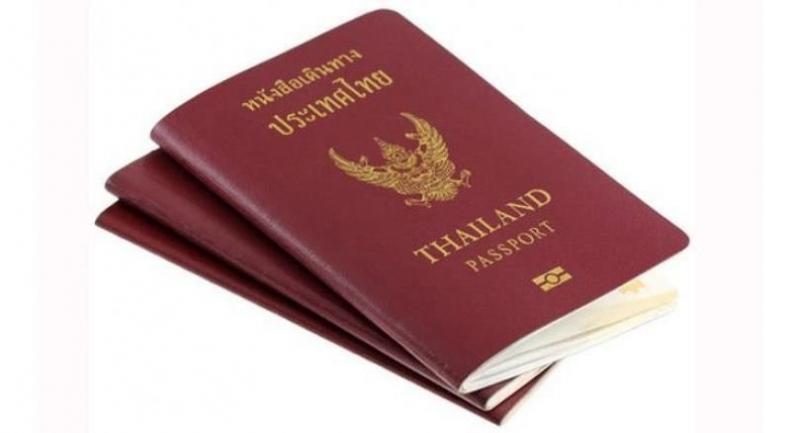
New Thai passports may not be secure, claim production bid losers

ศาสตร์เกษตรดินปุ๋ย : ขอบคุณแหล่งข้อมูล : หนังสือพิมพ์ The Nation

http://www.nationmultimedia.com/detail/asean-plus/30372092

New Thai passports may not be secure, claim production bid losers

Breaking News July 01, 2019 19:05

By The Nation

4,147 Viewed

The three companies that lost the bid for producing e-passports called on the Foreign Ministry on Monday to reveal exactly which security measure is being adopted to prevent the counterfeiting of passports, because they believe the bid winner will not be able to offer the required technology.

Representatives of WIN, TIM and Chanvanitch companies told the press on Monday that DGM Consortium Co, which won the Bt7.4-billion bid in May to produce 15 million Thai passports over seven years, may not be able to make the documents secure.

For instance, DGM may not be able to include image perforation using laser technology as required by the International Civil Aviation Organisation (ICAO), Manop Kulprakoblarp, representative of WIN group, said.

He said that since the Foreign Ministry has lowered its specifications for safety, the new e-passport will not contain biometric data such as iris and image identification technology inserted into a contactless integrated circuit inside.

The ministry, however, has dismissed allegations that it has cut down on passport security features in order to save costs, saying the new passports meet the required standards.

Thananchai Sae-chua of the Chanvanitch Co, meanwhile, questioned such claims and called on the ministry to disclose details of the security technology being used.

He said there are two kinds of technology used in travel documents: facial images engraved by laser and image perforation using laser technology for making visual facial images.

“We want to know exactly which technology the Foreign Ministry claims the winner has offered that is better than the ICAO requirement to prevent counterfeiting,” said Thanachai, whose company was the previous producer of passports.

Laos’ Plain of Jars, Myanmar’s Bagan considered for World Heritage inscription

ศาสตร์เกษตรดินปุ๋ย : ขอบคุณแหล่งข้อมูล : หนังสือพิมพ์ The Nation

http://www.nationmultimedia.com/detail/asean-plus/30372085


Laos’ Plain of Jars, Myanmar’s Bagan considered for World Heritage inscription

ASEAN+ July 01, 2019 17:56

By The Nation

3,347 Viewed

Laos’ Plain of Jars and Myanmar’s ancient city of Bagan will be considered for World Heritage status at the World Heritage Committee’s meeting in Azerbaijan, the United Nations said on Monday.

The meeting runs from June 30 to July 10.

The Plain of Jars – a megalithic archaeological site in the Laos province of Xiengkhuang – and Bagan city in Myanmar have both received positive evaluations from the International Council on Monuments and Sites for inscription, Unesco said.

During its 43rd session, committee members comprising 21 states party to the Unesco 1972 Convention on the Protection of World Cultural and Natural Heritage Sites will examine reports on the state of conservation of the nominated properties before deciding on whether they should be included in the World Heritage List.

The Plain of Jars in the Xiengkhuang Plateau, containing 1,325 large stone jars that have been associated to funerary practices during the Iron Age (between 500BC to 500AD), is considered a “serial property” consisting of two or more unconnected but related areas.

Located on the slopes and spurs surrounding the central plateau, the well-crafted jars required high technological skills for production and transport from quarries to the funeral sites.

The property has been proposed for World Heritage inscription because it is an exceptional testimony to an Iron Age civilisation. The distribution of the megalith jars on the site is thought to be associated to the overland routes at the historical crossroads between the Mool-Mekong and Red River or Gulf of Tonkin systems, the UN said.

Myanmar’s Bagan city, meanwhile, is a sacred landscape featuring an exceptional array of Buddhist art and architecture, demonstrating centuries of the tradition of Theravada Buddhist practice of merit-making. The monuments also provide dramatic evidence of the Bagan Period from the 11th to the 13th centuries.

The town, located in the central dry zone of Myanmar, comprises 3,595 recorded monuments.

Bagan’s complex, layered cultural landscape also incorporates living communities and contemporary urban areas. It was proposed for inscription as an exceptional living testimony to the Buddhist cultural tradition and as the peak of Bagan civilisation under criteria (iii), for containing an extraordinary ensemble of Buddhist monumental architecture under criteria (iv), and for being an exceptional example of living Buddhist beliefs and tradition of merit-making under criteria (vi), Unesco said.

Though Laos already has two World Heritage Sites – the ancient city of Luang Prabang inscribed in 1995 and the Hindu temple of Vat Phou in southern Champasak province in 2001 – Myanmar has so far not had any inscribed sites.

Duterte-Xi fishing deal verbal — Palace

ศาสตร์เกษตรดินปุ๋ย : ขอบคุณแหล่งข้อมูล : หนังสือพิมพ์ The Nation

http://www.nationthailand.com/ann/30372099

Duterte-Xi fishing deal verbal — Palace

Jul 02. 2019
Presidential spokesperson Salvador Panelo described as word of honor the verbal understanding for the Chinese to be allowed to fish in Philippine waters reached by President Duterte and Chinese President Xi Jinping during a bilateral meeting in 2016. —MALACAÑANG PHOTO

Presidential spokesperson Salvador Panelo described as word of honor the verbal understanding for the Chinese to be allowed to fish in Philippine waters reached by President Duterte and Chinese President Xi Jinping during a bilateral meeting in 2016. —MALACAÑANG PHOTO
By Julie M. Aurelio/Philippine Daily Inquirer – ANN

MANILA, Philippines — There is no written agreement between President Rodrigo Duterte and Chinese President Xi Jinping that allows the Chinese to fish in Philippine waters, Malacañang said on Monday.

Presidential spokesperson Salvador Panelo said the agreement referred to last week by the President was just a verbal understanding reached by the two leaders during a bilateral meeting in 2016.

“I think there was no signing involved. They only talked. You know, heads of state have their word of honor. There was no need for that,” Panelo said.

The President mentioned the deal on Monday last week in explaining why he could not bar the Chinese from fishing in the West Philippine Sea, the waters within the Philippines’ 370-kilometer exclusive economic zone (EEZ) in the heavily disputed South China Sea.

Exchange for Panatag access

He said the agreement allowed Filipinos to fish again at Panatag Shoal, also known as Scarborough Shoal, which China blockaded after seizing it from the Philippines in 2012.

“Remember we weren’t allowed in Scarborough (Shoal) before. They were being shooed away. But after that (the agreement), things were OK,” Panelo said.


Asked whether the agreement was legally binding, Panelo replied: “Why not? What’s wrong with that?”

He added: “Even in law, even it’s verbal, it’s still valid and binding, as long as there is mutual consent between the two parties. That’s why it’s an agreement.”

Lawmakers and maritime law experts said the deal was a violation of Article XII, Section 2 of the Constitution, which requires the state to protect Philippine territory and reserves the use of the country’s marine resources for Filipinos.

They said that such a deal needed congressional approval and that the President could be impeached for violating the exclusivity clause.

Arrest threat

Their comments angered the President, who on Saturday threatened to arrest those who would bring a complaint for his impeachment.

Gen. Oscar Albayalde, the Philippine National Police chief, on Monday said he would obey a presidential order for the arrests, but stressed that there should be investigations first.

Told that filing an impeachment complaint against the President was not a crime, Albayalde said other offenses could be cited, such as sedition and libel.

Vice President Leni Robredo, speaking on her radio program on Sunday, called for transparency from Malacañang on the deal with Xi.

“[W]e do not know the terms of [the] agreement. If this is… a treaty, then it has to be approved by Senate,” Robredo said.

The Vice President insisted that the government must defend Philippine waters and ensure that only Filipinos would benefit from resources found in the country’s seas.

But Panelo said he agreed with the President that forcing the implementation of the exclusivity clause would be “courting danger.”

“China would not want that,” Panelo said.

China claims nearly the entire South China Sea, including the greater part of the Philippine EEZ and waters close to the shores of other Southeast Asian claimants in the strategic waterway — Brunei, Malaysia and Vietnam.

In 2016, however, the UN-backed Permanent Court of Arbitration in The Hague, ruling on a challenge brought by the Philippines, declared China’s claim had no basis in international law and said it violated the Philippines’ sovereign right to fish and explore resources in its own exclusive economic zone.

China ignored the ruling and went on to build artificial islands on seven Philippine-claimed reefs in the South China Sea that it later developed into military outposts.

The President also set aside the ruling in exchange for aid, loans and investment from China.

Last week, after drawing flak for his refusal to enforce the exclusivity clause, the President said the proviso was meant only for the “senseless” and “thoughtless” among his critics.

The Palace defended the President’s remarks, saying he was actually going beyond the provision and carrying out the government’s prime duty of protecting the nation.

“What use is that provision if you aggressively enforce the arbitral ruling and it will precipitate and trigger armed conflicts between the two sides?” Panelo said.

Just for now

President Duterte said Xi had warned that China would go to war if the Philippines insisted on its claim over the South China Sea.

Panelo on Monday said the exclusivity clause was the basis of the verbal understanding with Xi.

He dismissed Bayan Muna’s criticism that the agreement was disclosed only last week, saying it had been mentioned a couple of times in the past.

“We’ve been saying that even before, even myself. There was a deal, that’s why Scarborough Shoal was resolved,” Panelo said.

He, however, said the deal did not mean the Philippines would no longer assert its rights in the South China Sea.

“That’s the modus vivendi. We’re giving way as of now. But it doesn’t mean that we won’t invoke it in due time,” Panelo said, referring to the Hague court’s ruling.

Joint exploration

Besides the fishing deal, the President also spoke last week about the apparent falling through of a proposal for joint exploration for oil in the West Philippine Sea between China and the Philippines.

“Since I cannot assert jurisdiction, I then said, ‘So let’s split it.’ They agreed. They said, ‘For you, mayor, we will agree to 60-40.’ Now nobody’s talking about it,” the President said in an interview.

He also recalled how China warned of “trouble” if the Philippines insisted on drilling for oil at Recto Bank.

Panelo, however, said on Monday that the Palace remained hopeful that the joint exploration would still push through.

“We can still talk about it. Friends are able to talk about anything,” Panelo said.

Read more: https://globalnation.inquirer.net/177292/duterte-xi-fishing-deal-verbal-palace#ixzz5sTeaPKfB

Follow us: @inquirerdotnet on Twitter | inquirerdotnet on Facebook
Serena Williams to wear Nike’s Swarovski-studded brooch for Wimbledon

ศาสตร์เกษตรดินปุ๋ย : ขอบคุณแหล่งข้อมูล : หนังสือพิมพ์ The Nation

http://www.nationthailand.com/ann/30372074

Serena Williams to wear Nike’s Swarovski-studded brooch for Wimbledon

Jul 01. 2019
The Broosh', a brooch in the shape of the Nike logo made with Swarovski crystals, to be worn by Serena Williams in the Wimbledon Championships. (Nike/File)

The Broosh’, a brooch in the shape of the Nike logo made with Swarovski crystals, to be worn by Serena Williams in the Wimbledon Championships. (Nike/File)
By The Jakarta Post Asia News Network

American sports brand Nike has created a special Swarovski-studded brooch to complement Serena Williams’ outfit for this year’s Wimbledon Championships.

Designed in the shape of the Nike logo also known as Swoosh, the brooch is nicknamed “The Broosh”.

It is adorned with 34 Swarovski crystals, to symbolize William’s age when she won the Wimbledon women’s singles tournament in 2016.

This marks the first time the Nike logo is decorated with Swarovski crystals.

Read also: Serena Williams to take Bumble’s woman-first message to Super Bowl

Director for NikeCourt global design Abby Swancutt said that she wished to express nostalgic feelings through the brooch, as reported by Kompas.com. (

“I also wanted her to feel like it was something her grandmother could have worn, but of course give it a modern spin and make it just right for Serena,” Swancutt said in a post by Nike.

In the competition, Serena will wear a white knitted outfit from Nike, as stipulated by the tournament’s all-white dress code.

Previously, Serena wore a black-and-white Nike outfit at the French Open 2019 competition. Designed by Off-White founder Virgil Abloh, the outfit comprised of a crop top, skort and midriff.

Malaysia’s Health Ministry pulls two bottled water brands off shelves

ศาสตร์เกษตรดินปุ๋ย : ขอบคุณแหล่งข้อมูล : หนังสือพิมพ์ The Nation

http://www.nationthailand.com/ann/30372071

Malaysia’s Health Ministry pulls two bottled water brands off shelves

Jul 01. 2019
By The Star Asia News Network

PETALING JAYA: Two brands of bottled water have been pulled from the shelves after several samples were found contaminated with bacteria commonly found in faeces, soil and sewage.

The Health Ministry said that the Starfresh and Waterfuns brands were found to contain pseudomonas aeruginosa, which contravenes the Food Act 1983 and the Food Act Regulations 1985.

The products recalled were the 500ml and 1500ml bottles with expiry dates of May 11,2021 and May 13, 2021.

The Ministry also told the company to recall its products and the company’s license was suspended on Friday (June 28).

“The Ministry would like to advise those who have purchased the bottled water with the brands and expiry dates not to consume them,” said its director general Datuk Dr Noor Hisham Abdullah in a statement on Monday (July 1).

On Saturday (June 29), the Singapore Food Agency (SFA) noted that the import of all bottled drinking and mineral water from the manufacturer was not permitted with immediate effect, following the detection of the pseudomonas aeruginosa bacteria for the second time.

Southeast Asia in the wind of change

ศาสตร์เกษตรดินปุ๋ย : ขอบคุณแหล่งข้อมูล : หนังสือพิมพ์ The Nation

http://www.nationmultimedia.com/detail/asean-plus/30372018

x

Southeast Asia in the wind of change

ASEAN+ July 01, 2019 08:23

By KAS CHANWANPEN,
SUPALAK GANJANAKHUNDEE
THE NATION

AS SOUTHEAST Asian nations navigated geo-political changes over the past half-century, the status quo has been maintained in the ruling structures and the elites continue to play a leading role in their societies.

A research study by Chulalongkorn University’s Mekong Studies Centre has found that the elites – a tiny group of people who control the power and wealth of a nation – in the countries of this region continue to resist the winds of change.

The team of researchers led by the scholar and centre head, Ukrist Pathmanand, spent 2018-2019 studying the politics of the elites in Southeast Asian nations, including Indonesia, Cambodia, Laos, Malaysia, Myanmar and Vietnam. They found the nature of the regional elites in general, along with their approach to governance, to be authoritarian – and that they will use all available means to retain their power.

The terms oligarchy and crony capitalism are appropriate for describing the politics of these countries. They all have elections, but tended to pervert the polls to justify their perpetuation of power, as we’ve recently seen in Cambodia and Thailand.

Crony capitalism is a model of economic development in which networks of big national conglomerates cooperate with the powers that be to exploit national wealth for their mutual benefit. Development of these countries could progress more smoothly if the oligarchic elite compromised their self-interest.

Reforms in Vietnam since the 1986 Doi Moi Renovation has created a new elite from the resulting business boom. Some of the nouveau riche of Vietnam were indeed born from the privatisation of state-owned enterprises. However, some of the Vietnamese billionaires such as the executives of “bikini” airline VietJet accumulated their wealth due to their strong connections within the ruling party, according to the study.

In Laos, family politics has dominated the country since the communist regime liberated it in 1975. Power and wealth in the tiny, communist country are circulated only within a few elite families in the ruling party. The children of the party’s leaders run most of the major businesses in Laos.

Cambodia’s ex-insurgent Hun Sen, the longest serving prime minister in this region, is a role model who has inspired the elite in many countries to follow in his footsteps. Hun Sen and his cronies have monopolised power and wealth in the country since he managed to get rid of his opposition in the royalist Funcinpec late last century, as well as Sam Rainsy’s Cambodia National Rescue Party more recently. His Cambodian’s People Party managed to control 100 per cent of the House of Representatives after the last poll in 2018.

Aung San Suu Kyi won a landslide victory in the 2015 general election, yet failed to bring significant change to Myanmar as the Tatmadaw (military) maintained its power by embedding itself in the constitution. Military cronies made the most of the minor liberalisation and foreign investment moves. Civil society there is growing but does not yet play a significant role.

Meanwhile, Dr Mahathir Mohamad returned to power in Malaysia in April 2018, toppling his former party, the United Malays National Organisation, which had ruled the country since its independence in the middle of the 20th century. But despite promises, Mahathir was not serious about reform, the research indicated, seeing the return of his cronies.

Real reform has been seen in Indonesia over the past two decades after the Asian financial crisis brought down the Suharto regime in 1998. That reform kept the military away from politics and decentralised power to the local level, Ukrist’s team of researchers found.

Myanmar’s federal union dream fades as peace talks falter

ศาสตร์เกษตรดินปุ๋ย : ขอบคุณแหล่งข้อมูล : หนังสือพิมพ์ The Nation

http://www.nationmultimedia.com/detail/asean-plus/30372017

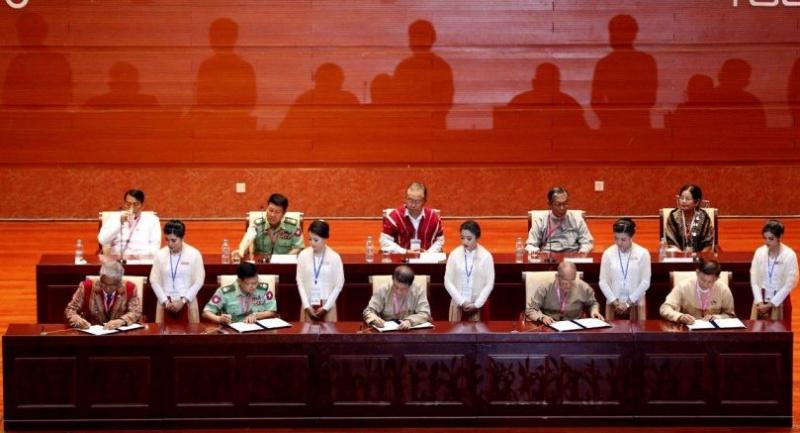
Deligates sign the Union Accord during the closing ceremony of the third session of the 'Union Peace Conference - 21st century Panglong' in Naypyitaw, Myanmar, 16 July 2018.EPA-EFE/HEIN HTET
Deligates sign the Union Accord during the closing ceremony of the third session of the ‘Union Peace Conference – 21st century Panglong’ in Naypyitaw, Myanmar, 16 July 2018.EPA-EFE/HEIN HTET

Myanmar’s federal union dream fades as peace talks falter

ASEAN+ July 01, 2019 08:19

By KHINE KYAW
THE NATION
YANGON

MYANMAR’S hopes of becoming a federal union are fading amid the ongoing struggle to build trust with ethnic armed organisations (EAOs), stakeholders in the nation’s peace process say.

The country has struggled to unite ever since it gained independence from Britain in 1948 and ethnic groups took up weapons against the authorities. Despite negotiations, clashes have broken out several times over the past few decades, under both military-led and elected governments. The ongoing peace process began after the Nationwide Ceasefire Agreement (NCA) was signed in 2015 by eight of the 16 ethnic armed groups. This led to the first round of peace talks known as the 21st Century Panglong Conference, held in 2016 under the auspices of Aung San Suu Kyi. It made little progress.

P’doh Saw Tah Doh Moo, general secretary of the Karen National Union (KNU), told The Nation that the EAOs want to be able to openly discuss key issues and actively participate in Myanmar’s journey towards a democratic federal union.

The KNU has even submitted a four-point proposal to help Myanmar achieve federalism, he said, adding that the Karen hope to discuss this with top government leaders and the Tatmadaw (army) later this year.

“We need frank, open discussions with no restrictions because we consider trust-building to be the biggest challenge in the peace process,” he said.

He added that the government should also have a strong political will to ensure peace and stability across the country. “It’s really difficult at present to build trust between the government and the ethnic groups,” he said, adding that the government should have come up with a detailed road map for the journey to federalism.

To date, 10 EAOs have signed the NCA, while the remaining 11 have voiced doubts about the authorities’ political will.

Tah Doh Moo said there should be no discrimination between the NCA signatories and non-signatories, referring to the cancellation at the request of Myanmar of a planned meeting of EAOs in Chiang Mai.

“The obstruction of this dialogue-based meeting makes us wonder whether they [the Myanmar authorities] have any faith in dialogue,” he said.

Every stakeholder – whether a signatory or not – should be responsible in ensuring a successful peace process, he adds.

“We have the right to meet and discuss with whomever we wish. Clearly there is no way of accepting any disturbance in our informal meetings with other EAOs, whether they have signed the NCA or not,” he said.

“There is no clause in the NCA that prohibits signatories from meeting with non-signatories. Our definition of federalism may be different, as different EAOs have different perspectives. But we have one thing in common – our vision for a federal state.”

He also stressed the need for a concrete, transparent and practical benchmark in the peace process. “Without the improvement that would emerge from this benchmark, it will be really difficult to reach common ground,” he said.

Sai Kyaw Nyunt, joint secretary of Shan National League for Democracy, said some EAOs were not satisfied with the outcome of the previous three sessions of the Union Peace Conference, also known as the Panglong Conference.

“There were a lot of restrictions. For instance, the EAOs were not allowed to discuss certain issues,” he said. “Basically, their expectation was that the National Ceasefire Agreement would lead to moves to amend the 2008 constitution, but the government decided to focus on other issues of lesser importance. So, it was just a waste of time and resulted in the fourth session being delayed.”

Due to the lack of transparency and freedom, EAOs now have growing concern over peace talks, he said. “With this [concern] in mind, some EAOs began looking for other ways to achieve their goals if the meetings don’t work,” he added.

Sai Kyaw Nyunt said the government should review the process if big ethnic organisations like the KNU decide to withdraw from peace talks. He also called on the government to get things on the right track to allow open, unrestricted discussion.

“There will be no success unless they [the government] are really serious about addressing these problems,” he warned.

Aung Naing Oo, executive director of the Joint Ceasefire Monitoring Committee, said the only way to end the deadlock was to build trust, and to do this government negotiators will need to fill the information gap.

“It is no wonder there is so much distrust and misunderstanding between Myanmar’s peace partners,” he said. “There’s a huge gap between EAOs on the one side, and the government and Tatmadaw on the other.”

Roads seized as Hong Kong braces for rally on handover anniversary

ศาสตร์เกษตรดินปุ๋ย : ขอบคุณแหล่งข้อมูล : หนังสือพิมพ์ The Nation

http://www.nationmultimedia.com/detail/asean-plus/30372012

A protester waves a
A protester waves a “Black Bauhinia” flag as others set up barricades at Lung Wo road outside the Legislative Council in Hong Kong before the flag raising ceremony to mark the 22nd anniversary of handover to China early on July 1, 2019./AFP

Roads seized as Hong Kong braces for rally on handover anniversary

ASEAN+ July 01, 2019 07:31

By Agence France-Presse
Hong Kong

Police in Hong Kong used pepper spray and batons against anti-government protesters who had seized highways early Monday ahead of what is expected to be a huge pro-democracy rally on the anniversary of the city’s handover to China.

The semi-autonomous city has been shaken by huge demonstrations in the past three weeks, when protesters have demanded the withdrawal of a bill that would allow extraditions to the Chinese mainland.

Tensions spiked once more in the financial hub as dawn broke on Monday after small groups of mainly young, masked protesters seized three key thoroughfares, deploying metal and plastic barriers to block the way.

Riot police with helmets and shields faced off against protesters in the Admiralty and Wanchai districts of the city.

Shortly before a flag-raising ceremony to mark the handover, police swooped on protesters who had blockaded one street, an AFP reporter at the scene said, with at least one female protester seen bleeding from a head wound after the clashes.

The ongoing rallies are the latest manifestation of growing fears that China is stamping down on the city’s freedoms and culture with the help of the finance hub’s pro-Beijing leaders.

Although Hong Kong was returned from British to Chinese rule on July 1, 1997, it is still administered separately under an arrangement known as “one country, two systems”.

The city enjoys rights and liberties unseen on the autocratic mainland, but many residents fear Beijing is already reneging on that deal.

Pro-democracy activists have organised a march every handover anniversary, calling for greater democratic freedoms — such as the right to elect the city’s leader.

They have mustered large crowds in recent years — including a two-month occupation in 2014 — but have failed to win any concessions from Beijing.

This year’s rally comes against the backdrop of unprecedented anti-government protests over the past three weeks that have drawn millions and anger over police using tear gas and rubber bullets to clear crowds.

– ‘Resistance is long term’ –

The spark for the current wave of protests was an attempt by chief executive Carrie Lam to pass the Beijing-backed extradition law, which she has now postponed following the huge public backlash.

But the demonstrations have morphed into a wider movement against Lam’s administration and Beijing.

Lam — who has kept out of the public eye since her climbdown and has record low approval ratings — attended a flag-raising ceremony on the harbourfront early Monday, marking the moment the city returned to Chinese ownership 22 years ago, but she and other dignitaries observed from inside due to “inclement weather”.

The event had been scaled back and barriers erected around the square over fears that anti-government protesters might try to disrupt the event.

Protesters have multiple demands including that Lam permanently abandon the extradition bill and that police drop any charges against demonstrators arrested in recent weeks.

Sam Mu, an artist, was with a small group of friends waving black flags on Monday morning close to where the ceremony was due take place.

“It’s a symbol of how are city is falling,” he told AFP. “Our city’s freedoms are shrinking, it’s going in a more authoritarian direction.”

Activists, who are mainly young students, have vowed to keep up their civil disobedience campaign in the coming weeks.

“Whatever happens we won’t lose heart, that’s why we’ll keep taking to the streets,” Jason Chan, a 22-year-old accountant added. “Resistance is not a matter of a day or a week, it is long term.”

The pro-democracy rally is scheduled to take place on Monday afternoon, following the same route the two mass rallies last month took — from a park to the city’s legislature.

Permission for a separate pro-Beijing rally has been granted to start at the same time in the same park — raising fears of confrontations.

On Sunday, tens of thousands of pro-establishment protesters rallied in support of Hong Kong’s police.

Many waved Chinese flags and hurled insults at anti-government demonstrators camped nearby, highlighting the deep ideological fissures now dividing the finance hub.