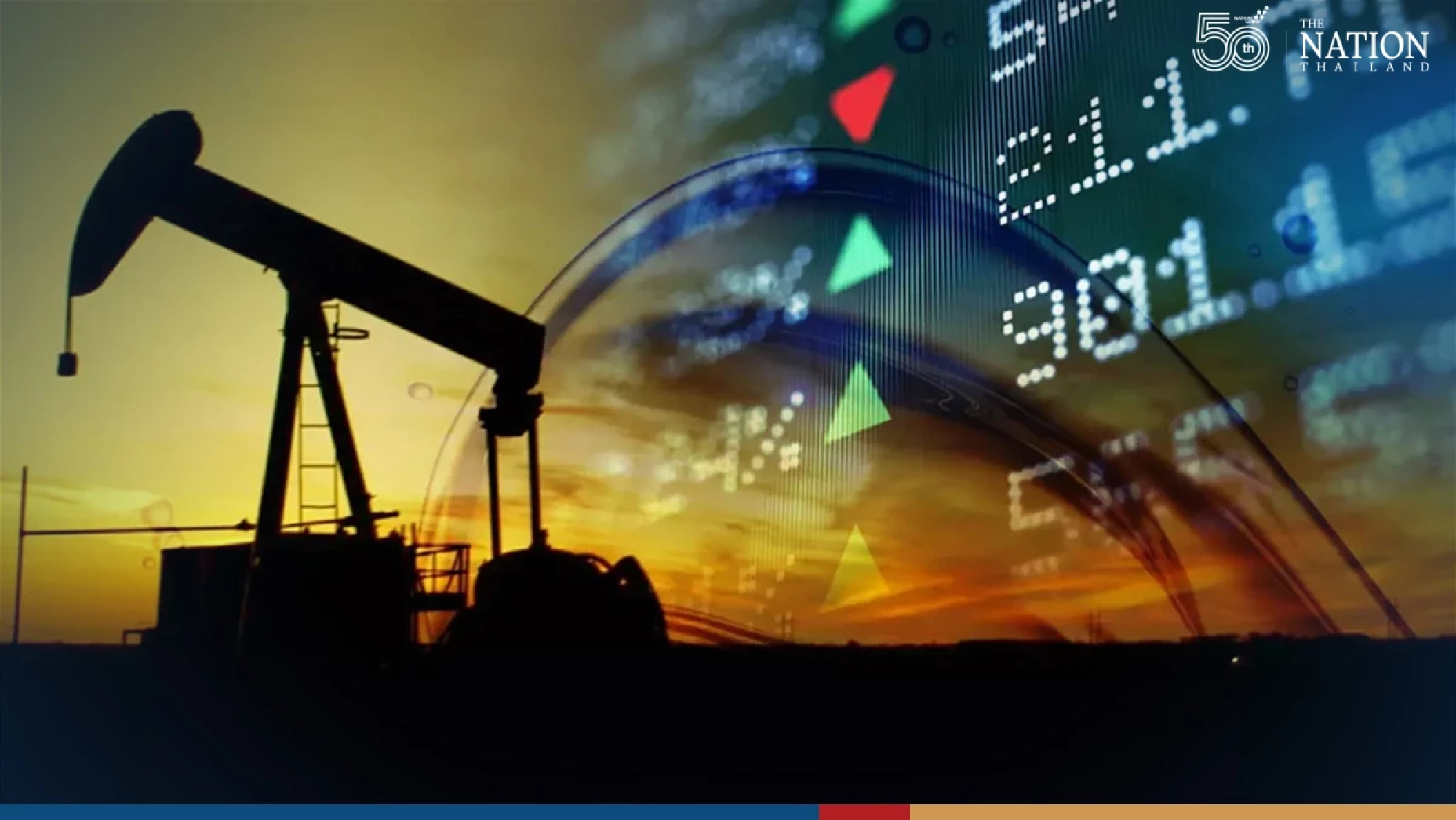
The Energy Policy and Planning Office (EPPO) has proposed cutting the fuel tax to reduce pressure on the Oil Fund.
EPPO director Wattanapong Kurowat said the urgent proposal was sent to the Energy Ministry after the global oil price rose to nearly US$87.50 per barrel.
“We have to discuss this issue with the Finance Ministry as soon as possible,” he said.
He added that the Finance Ministry had previously rejected a proposal to cut oil tax by up to two baht from the current level of Bt5.99 per litre.
Oil Fund director Wisak Watthanasap wants the energy and finance ministries to agree on reducing fuel excise tax quickly as the rising oil price is draining the fund’s liquidity.
Wisak said about 6 billion baht in subsidies is flowing out from the Oil Fund each month. Despite being given permission to borrow 20 billion baht in January, the fund can only maintain retail fuel prices at their current level for a few months, he added.
“So cutting oil excise tax would help reduce cash outflow.”
The Energy Ministry forecasts that prices will drop in March as energy usage declines, but Wisak said international politics would trigger volatility in the global price, impacting fuel prices in Thailand.
The Federation of Thai Industries this week voiced concern that global oil prices may reach US$100 a barrel.
Wisak said banks would submit loan proposals to the Oil Fund before the end of January and the debt would be repaid within three years.
Krungthai Bank, Government Savings Bank and Kasikorn Bank have contacted the Oil Fund office to request additional information.
The Oil Fund was 8.78 billion baht in the red as of January 16. The fund is currently paying out 6.5 billion baht each month – 4.6 billion baht to subsidise the diesel price and 1.9 billion baht to subsidise the LPG price.
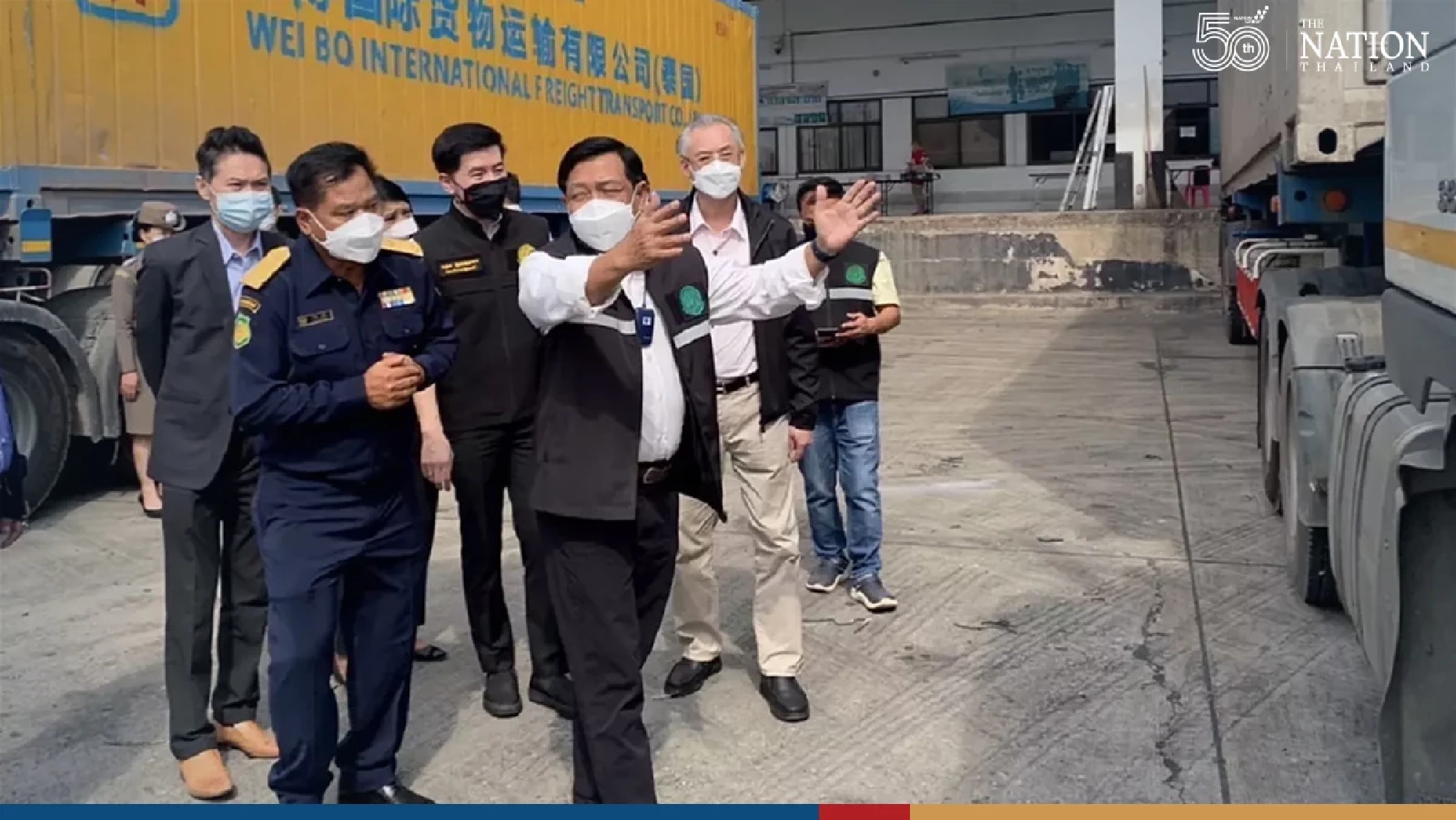
A shipment of 500 tones of broken sticky rice will leave Thailand for Chongqing in China on Wednesday via the new Laos-China railway system, Alongkorn Polabutr, adviser to the agriculture and cooperatives minister, said on Saturday.
He said the delivery will take only three or four days, about four times faster than maritime transport.
Alongkorn went on to say that another cargo train containing 1,000 tonnes of Thai rice has arrived in Laos’ Thanaleng Station and is awaiting approval from the Laos Agriculture and Forestry Ministry’s approval.
He added that the Thai ministry has called on Vientiane Logistics Park CEO Chan Sittichai and Thanaleng Station to cooperate on this issue.
“We have been told that the cargo will be delivered to the Southern Vientiane station on Monday before heading for Chongqing on January 26,” he said.
“We are meeting the Laos ambassador and other related agencies on Saturday to discuss the export of other agricultural goods, like fruit, via the Laos-China railway. Fruits will be ready for harvest from March,” he said.
Alongkorn said that Agriculture and Agricultural Cooperatives Minister Chalermchai Sreeon has spoken to the Laos government and Chinese ambassador on what can be done to solve export issues amid the Covid-19 crisis.
He added that the agriculture ministries of Thailand and China will be officially meeting in the latter part of this year.
Charoen Pokphand Foods Plc (CP Foods) said the shift from coal to renewables will reduce greenhouse gas emissions by more than 70,000 tons of carbon dioxide annually.
Thailand’s largest food business has announced it will stop using coal for its operations in the country this year, and transition towards greener and sustainable energy. Charoen Pokphand Foods Plc (CP Foods) said the shift from coal to renewables will reduce greenhouse gas emissions by more than 70,000 tons of carbon dioxide annually. The “CPF Coal Free 2022” initiative will switch from coal to sources such as biomass energy from waste including wood chips, sawdust and corncobs, said a CP Foods press release. All 12 of the company’s livestock feed mills have stopped using coal, while two aqua-feed mills and a duck-fowl feather processing plant will phase out coal by the fourth quarter, it added.
The company said eliminating coal will also help CP Foods achieve its target of net-zero carbon emissions to support the United Nations Sustainable Development Goals (SDGs). CP said its 10-year target is to reduce direct and indirect greenhouse gas emissions per unit of production by 25 per cent in 2025.
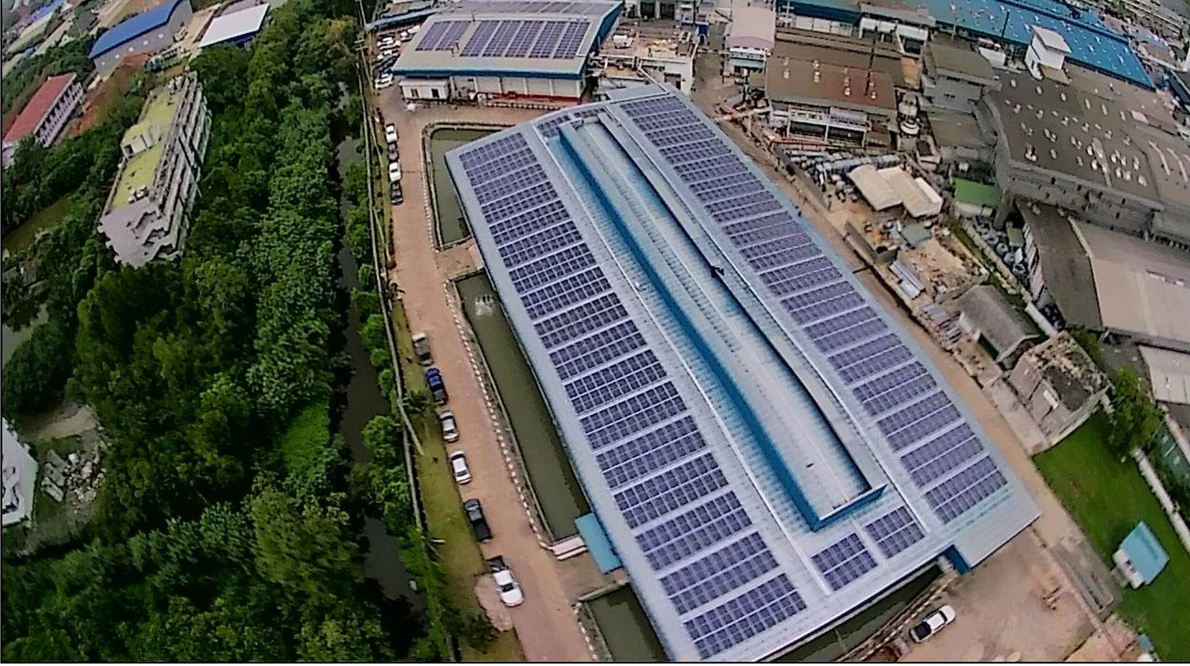
Biomass, biogas and solar energy currently accounts for 26 per cent of its total energy consumption, reducing CO2 emissions by 575,000 tons, according to the press release. It said solar rooftops have been installed at 23 plants and office buildings, while CP Foods has also set up four solar farms and two solar floating sites.
Another 60 solar rooftops, solar farms and floating solar sites are scheduled for 2023, generating a total of 43 megawatts, equivalent to 62 million units of electricity per year. This green-energy project will reduce greenhouse gas emissions by 26,000 tons per year, equivalent to planting 2.8 million trees annually, said CP foods. The company also recently initiated its Working Group on Climate Change Management Water and Waste to drive sustainability.
Gulf Energy Development Plc (GULF) has won the award for best brand value in the energy and utilities category at the 12th ASEAN and Thailand’s Top Corporate Brands 2021.
The event, which was recently organised by Chulalongkorn Business School (Master’s in Branding and Marketing Programme) in cooperation with the Stock Exchange of Thailand (SET) and Manager Media Group Plc, awards organisations with strong corporate reputations and excellent business performance in line with the principles of good governance.
“It was an honour to be recognised as having the ‘highest corporate brand value’ in energy and utilities among Thai brands in 2021,” said GULF’s chief corporate affairs officer, Tanon Tantisunthorn. “Receiving such an award reaffirms our first-class brand image and also that our operation has demonstrated social and environmental responsibilities while achieving sustainable business growth. This will also reinforce the confidence of investors and stakeholders in the company.”
ASEAN and Thailand’s Top Corporate Brands uses the Corporate Brand Success (CBS) valuation to evaluate candidates each year, explained Prof Guntalee Ruenrom of the Department of Marketing, Faculty of Commerce and Accountancy at Chulalongkorn University.
“The CBS valuation is based on figures from the financial statements of SET-listed companies from the past three years,” she said. “Our valuation mechanics systematically integrates marketing, financial, and accounting concepts, making it possible to calculate a corporation’s brand value into objective financial numbers.”
To be eligible for the CBS valuation required for this award, companies must achieve a score of at least 4 on the Institute of Directors (IOD)’s Good Governance Index, have been publicly listed for at least three years and have a corporate brand value of at least 5 billion baht.
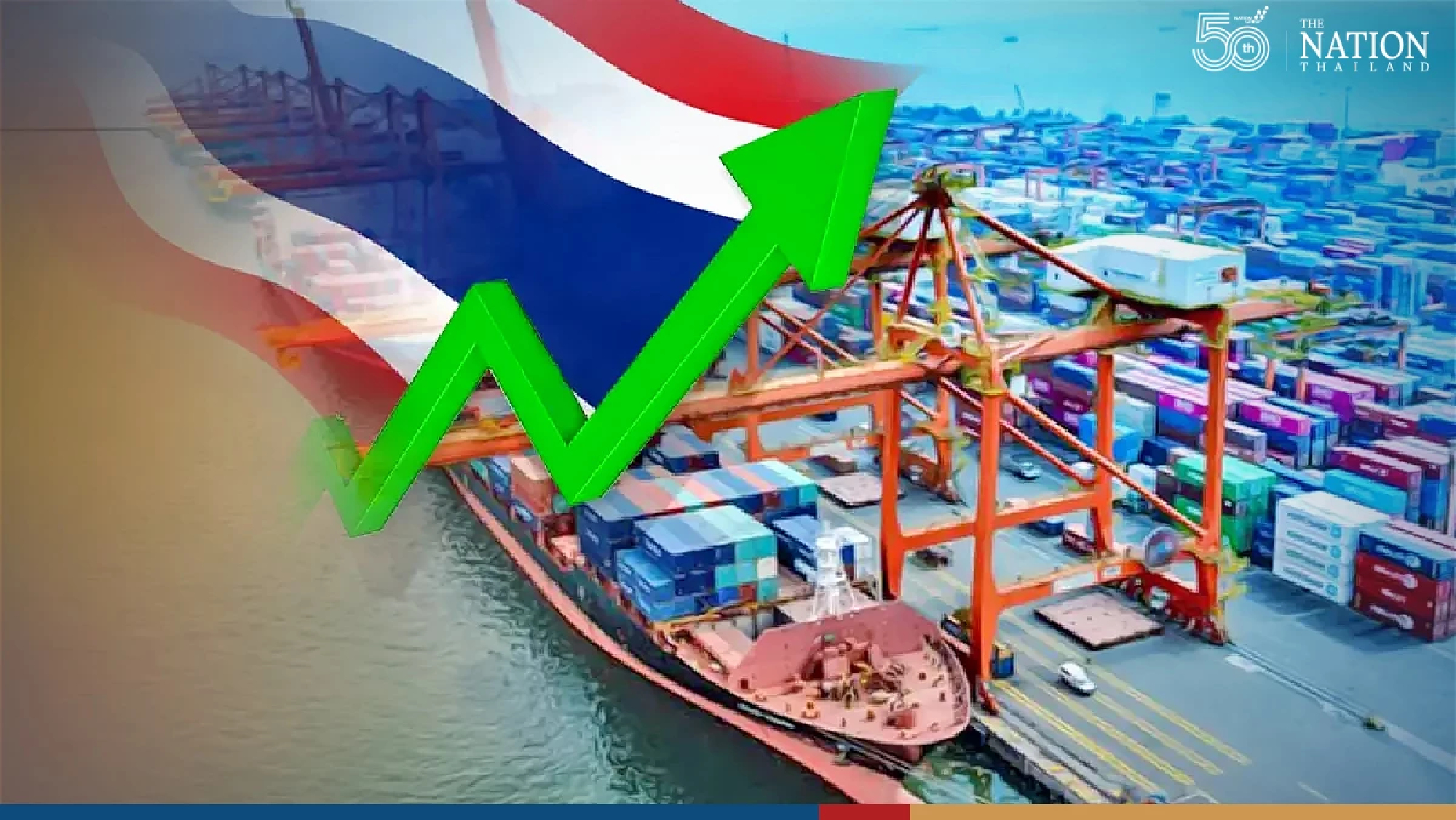
Thailand’s export growth in December soared by 24.2 per cent year on year, Commerce Minister Jurin Laksanawisit said on Friday
The growth keeps up last year’s momentum when overall export growth was 17.1 per cent, exceeding by four times the original target of 4 per cent.
He said the Commerce Ministry expected the country’s exports to continue growing, at around 3-4 per cent this year.
Exports in December were valued at US$24.9 billion (Bt821.7 billion), while imports were up 33.4 per cent to $25.2 billion (831.6 billion), resulting in a trade deficit of $354.2 million (Bt11.6 billion).
Thailand’s exports in 2021 totalled $271.1 billion (Bt8.94 trillion), a 17.1 per cent rise over the previous year. Imports jumped 29.8 per cent year on year to $267.6 billion (Bt8.83 trillion), for a trade surplus of $3.57 billion (Bt11.78 billion), said Jurin, who also doubles as a deputy prime minister.
The commerce minister attributed the “success” to various factors, including close coordination between his ministry and the private sector, economic recovery in many importing countries, global economic expansion, increased competitiveness resulting from a weaker baht, and higher oil prices.
Thailand’s exports of major products have seen increases last year — 21.1 per cent in agricultural products, 24.1 per cent in processed farm products, and 24 per cent in industrial products.
Among Thailand’s key export markets that saw a high growth last year were Australia (increasing by as much as 54.4 per cent), Russia and CIS countries (up 45.8 per cent), the United States (36.5 per cent), Latin America (36.5 per cent), Asean (35 per cent), and Africa (34.1 per cent).
Thailand’s food-products exports totalled Bt819.8 billion last year, up 23.5 per cent. Durian, rubber and mango were among the major export products, with mangosteen being a “rising star”.
Exports of processed agricultural products totalled Bt607.2 billion last year, increasing by 6.7 per cent. Among the major goods were chilled and frozen fruit, dried and canned fruit, and animal feed.
Industrial products accounted for Bt6.79 trillion worth of exports last year, a 16 per cent increase, including oil-related products, steel, gems and jewellery, cars and parts, and air-conditioners.
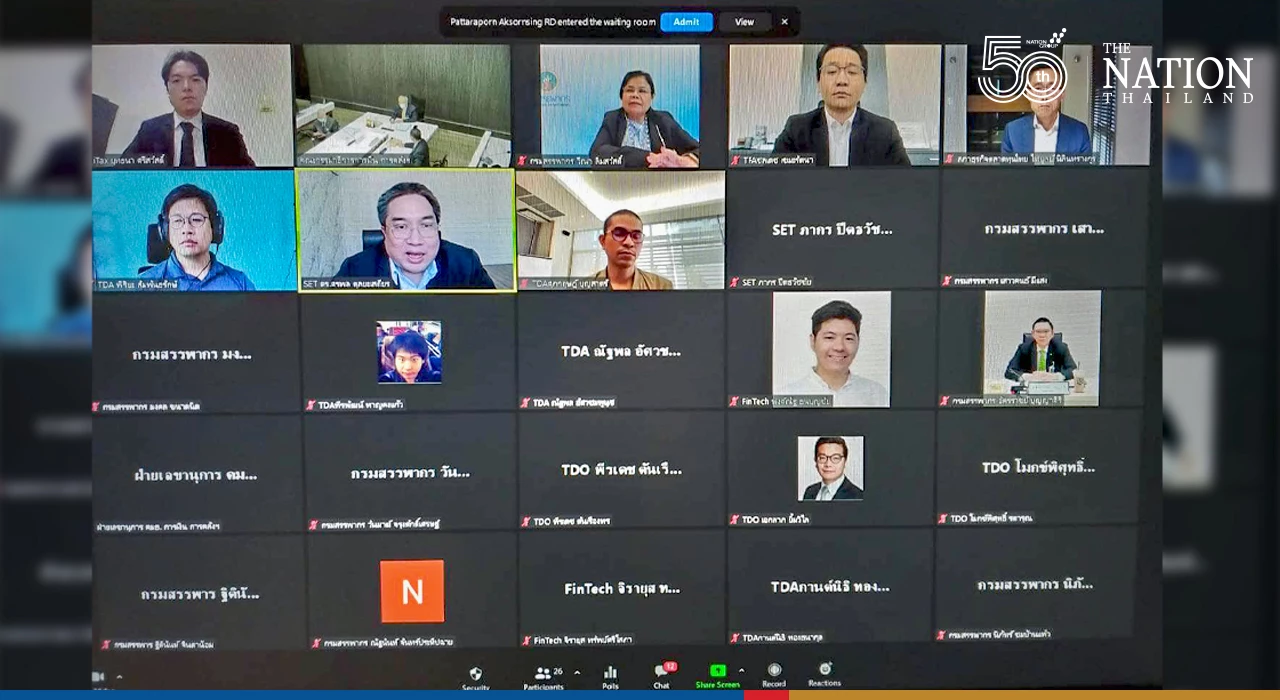
Palang Pracharath MP Watanya Wongopasi has suggested that the Excise Department study every aspect carefully before imposing taxes on cryptocurrency trading and sales of stocks.
Watanya on Wednesday attended a meeting of the Committee on Monetary Affairs, Finance, Financial Institutions, and Financial Market that discussed taxing stock trading and digital assets.
In a post on Thursday on her Facebook page, she summarised important discussions that took place at the meeting.
Paiboon Nalinthrangkurn, chairman of the Federation of Thai Capital Market Organisations, made the point that a tax on stock trading would decrease liquidity in the market by at least 40 per cent. Paiboon said that large numbers of foreign investors and short-term investors would stop trading as the cost of trading would become unviable for them, especially for foreign investors. He said liquidity is important to attract institutional investors and foreign investors to invest in Thailand.
Pakorn Peetathawatchai, president of The Stock Exchange of Thailand (SET), and Soraphol Tulayasathien, SET senior executive vice president, suggested that the government raise funds for infrastructure so it could save 250 billion baht last year. They agreed that liquidity in the Thai stock market was important to maintain the Thai economic system.
Yutthana Srisavat, the CEO and founder of iTAX, said that these proposed tax collections could not be implemented in the 2021 taxation year because investors were not prepared and had not collected the necessary evidence. He said people trade in cryptocurrency in a digital exchange, which makes it impractical to identify the buyer or seller to file taxes.
He also added that Thai digital asset operators would be able to compete with other countries only if we allow them to grow. The department would be able to collect corporate tax and value-added tax from trading, which would be more beneficial than collecting a tax from investors, which would be an obstacle for development, he said.
Peeradej Tanruangporn, president of Thai Digital Asset Association, said that operators had not deployed personnel and a system to collect evidence for taxes. He said it will take at least one year to develop such a system. Also, there was the likelihood of some people faking their identities to avoid paying high taxes, which will be an obstacle for tax collection and detecting money laundering.
Chonladet Khemarattana, president of Thai Fintech Association, suggested fair calculation of the capital gains tax, but the problem would be that a trader could use another person’s account to avoid tax. He said the industry is currently growing. He urged the department to see the impact on business growth from levying a tax.
The committee’s adviser, Prinn Panitchpakdi, suggested that the Excise Department explain to investors before imposing the tax. He asked the department to study the short-, medium-, and long-term effects. He wanted a comparative study on letting Thai operators grow which also benefits the country versus collecting the tax when operators are not ready, which would cause the industry to shrink.
The Excise Department said that it has to collect the tax for the Treasury but it admitted that it had not studied the impact of its move on liquidity. The department said it had been studying only a tax on stock trading. It said there was a problem with the cryptocurrency tax and it would be implemented only after careful consideration. The department said that it was studying the effects of imposing a cryptocurrency tax.
Regarding the tax on stocks, the department argued that there had been no tax for 30 years and in that same period, from 1991 to 2021, the SET had grown 22 times. The department said a 0.1 per cent tax is not much. According to Asian Development Bank, 97 per cent of Financial Transaction Tax collection was from big investors or people with high revenue.
The department compared the fee and tax on brokers was 90 per cent of transaction cost, which is not high when compared to Malaysia. It cited the example of Hong Kong, which collected tax from both buyer and seller. The department thought that the cost of trading at around 0.22 per cent is lower than in some countries.
The department added that almost every country collected one of these taxes. The Philippines and Vietnam, for instance, collect both capital gains and transaction taxes. The department assured that the impact would be lower when compared to other countries.
Meanwhile, the department is discussing with the private sector about the cryptocurrency tax. They were studying and incorporating the suggestions.
Watanya said in her post that the meeting was a good starting point for every sector to present information to the Excise Department for further deliberations.
The baht opened at 32.95 to the US dollar on Friday, weakening from Thursday’s closing of 32.92, though it’s likely to move between 32.85 and 33.05 during the day.
Krungthai Bank market strategist Poon Panichpibool said the baht is volatile and likely to move sideways despite the government easing prevention measures and reopening the country under the Test & Go scheme. The baht is also supported by the selling of gold.
However, the market is in a risk-off state causing the dollar to strengthen, while foreign investors are expected to continue selling Thai stocks.
The key support level for the baht would be from 32.80 to 32.90 – a level that importers are waiting for so they can buy dollars. Meanwhile, the baht’s key resistance level would be from 33.10 to 33.30 – a level eyed by exporters so they can offload their dollars, he added.
Krungsri Securities has forecast that the Stock Exchange of Thailand (SET) Index will fall to between 1,645 and 1,650 points on Friday.
It said the index is being pressured by uncertainty over whether the US Federal Reserve will raise the interest rate to tackle inflation and rising initial unemployment claims.
However, it said mass buy-ups of company shares whose business turnover is expected to grow and those that have gained positive sentiment will help boost the index.
It recommends the purchase of the following as an investment strategy:
• AOT, MINT, CENTEL, ERW and AAV will benefit from the government’s move to relaunch the Test & Go scheme from February 1 and the fourth phase of the “Rao Tiew Duay Kan” (We Travel Together) travel subsidy from next week.
• PTTEP, TOP, PTTGC, IVL and SPRC will benefit from the rising price of oil and gross refining margin.
• BBL, TTB, KBANK, KTB and BLA will benefit from news of the US interest rate hike.
The SET Index closed at 1,656.96 on Thursday, down 1.28 points or 0.08 per cent. Transactions totalled 80.86 billion baht with an index high of 1,666.60 and a low of 1,656.47.
The Covid-19 crisis has not affected jewellery sales, despite it being a luxury item, an industry expert said.
Sumed Prasongpongchai, director of the Gem and Jewellery Institute of Thailand, revealed that Thai gems and jewellery were an important export product and had generated top value for the country for a long time.
Total gold exports from January to November 2021 was valued at $9.215 billion. He said there were signs of a steady increase in demand due to the economic recovery in many countries.
Even though the pandemic continues to cast a shadow, it has not affected trading, Sumed said. Past gemstone auctions have seen price increase by 20-30 per cent, including the participation of entrepreneurs in various activities with both offline and online trading.
However, entrepreneurs have to adapt to global trends, such as the Sustainable Development Goals of the United Nations that requires ethical business practices and a tracing system for the origin of coloured gemstones, he said.
The Bank of Thailand (BOT) will issue 20-baht polymer banknotes in order to have new and clean notes in circulation that can last longer.
The central bank chose the 20 baht banknote for the polymer version as this currency denomination is the mostly widely circulated, and hence more affected by wear and tear.
The use of polymer banknotes will reduce the number of new banknotes printed to replace damaged banknotes and they are also more environmentally friendly.
Central banks in many countries have issued polymer banknotes, including the UK, Canada, Australia, Malaysia, Singapore and Vietnam.
The 20-baht polymer banknote has the same visual and overall appearance as the current 20 baht paper banknote, except that it uses advanced anti-counterfeiting technology. An additional anti-counterfeit feature of the polymer banknote is a transparent compartment. An opalescent red colour has been incorporated for identification. More detail for the visually impaired has been added to the teardrop-shaped transparent top, with a small, embossed “20” number to make it easier to touch.
Polymer banknotes in the denomination of 20 baht will be circulated from March 24. People can get these notes at all branches of commercial banks and specialised financial institutions.