Krungsri Securities expected the Stock Exchange of Thailand (SET) Index on Friday would rise to between 1,645 and 1,650 points before falling.
It said the index gained positive sentiment from rising oil price in line with tight oil supplies, as well as mass buy-ups of stocks that benefit from the country reopening after the government planned to ease lockdown measures and allow foreign travellers to enter the country on November 1.
“However, the index would be under pressure as some investors would sell their stocks to cope with risk of US Federal Reserve signalling it would taper its quantitative easing programme this year,” Krungsri Securities said.
It also recommended buying of the following companies’ shares as an investment strategy:
▪︎ AOT, AAV, BA, MINT, KBANK, SCB, CPN, CRC, HMPRO, CPALL, AMATA, WHA, MAJOR, BTS and BEM, which benefit from the country reopening.
▪︎ PTT, PTTEP, TOP, PTTGC, SPRC and BCP, which benefit from rising oil price and gross refining margin.
The SET Index rose by 9.04 points or 0.55 per cent to 1,650.01 on Friday morning, witnessing a high of 1,650.47 and a low of 1,645.17 in opening trade.
29 foreign companies have been allowed to conduct businesses in Thailand under the Foreign Business Act by Commerce Ministrys foreign business committee in September, said Sinit Lertkrai, deputy commerce minister on Thursday.
“These foreign companies have invested over 559 million baht in Thailand and generated up to 742 jobs for local people,” he said. “Most of these companies are from Japan, Singapore and South Korea respectively.”
“Allowing more foreign companies to invest in Thailand will help promote knowledge and technology transfers especially in the areas of diesel fuel desulfurization using hydrogen, carrier gas attraction, IT system for hospital, and laboratory statistics analysis,” he added.
Sinit further added that in the nine months of 2021, the committee have allowed a total of 161 companies to conduct businesses in Thailand, with total investment value of over 9.94 billion baht.
“Most of the allowed businesses are those that comply with government’s investment promotion policy and support the country’s target industries,” he said. “The Commerce Ministry expected that more foreign companies will apply for investment in Thailand in the last quarter of 2021 due to improving Covid-19 situation and strong disease control measures that will help restoring the confidence among foreign investors.”
Stuck at home – and now, accustomed to being stuck at home – Americans are buying too much stuff. But factories are still struggling to produce and deliver amid the pandemic: There arent enough people and parts to make stuff, enough ships to get it across the seas, enough port workers to unload it, enough space in ports to store it, enough truck drivers and railroad workers to transport it, enough warehouse workers taking jobs to sort it – and no one really knows how long this backup will last or how to fix it.
That’s the very complex global-supply-chain problem, in a paragraph. It means the world is facing a backlog of goods never seen before in the modern economy, right before the holiday season. That is manifesting in months-long delays, empty shelves and higher prices.
The nexus of the global economy and American politics has become clearer: If people don’t get their gifts in time, voters could blame President Joe Biden and his party for it.
Let’s take a look.
A hectic and overcrowded Port of Los Angeles in September. PHOTO CREDIT: Washington Post photo by Melina Mara
A little more about what’s going on
Most economists agree that the pandemic is the driving force behind all this. The world is nowhere near being fully vaccinated against the coronavirus, and that means factories in, say, Vietnam are still having trouble keeping up with demand as workers keep getting sick, or ports in China are having to shut down because of infections. In addition, there’s a worker shortage in the United States.
“We are opening up a global economy all at once,” said economist Diane Swonk. “You’re going to get problems. It is much easier to turn the lights off in a factory than turn them back on again.”
That’s created a backlog in manufacturing and shipping goods, and economists we talked to don’t think it’s going away any time soon. An added problem is that there just aren’t enough containers in the world right now to get things back to normal.
“This backlog really reflects the fact that we have a lot more volatility in the world,” said Betsey Stevenson, an economist who advised President Barack Obama. “You might be at a factory in another country, somebody gets covid, and it shuts down for two weeks. That puts all your orders behind. Now, does the container ship it’s supposed to go on wait for your orders? And then we see container ships stuck in the wrong ports. . . . There is a giant logistics crisis going on.”
The United States is helping drive this problem as the largest economy in the world. Amid all the delivery woes, Americans’ product demands are shifting – bye-bye, skinny jeans and plastic toys; hello, home gyms – and manufacturers have to pivot.
Containers are moved around at the Port of Los Angeles recently. PHOTO CREDIT: Washington Post photo by Melina Mara
How this supply chain backlog is causing economic problems for Americans
The Federal Reserve says this is all contributing to inflation lasting longer than it otherwise would, and some prominent economists have lowered their forecast for growth in the United States – right as the delta variant is subsiding and public health experts are cautiously hopeful the worst is over, report The Washington Post’s David Lynch and Rachel Siegel.
And that means two things Americans hate: longer waits for products and higher prices once they finally arrive in stores.
– – –
How the supply chain backlog is causing political problems for Biden
Voters blame presidents for all sorts of pocketbook problems that presidents can’t fix, like high gasoline prices (which are also happening right now).
Biden is trying to get out in front of it all. He appointed a port envoy. He held a meeting Wednesday with labor and business groups and announced that the Port of Los Angeles will start operating 24 hours a day to get goods out of containers and into trucks on highways.
He knows this is going to matter for the midterm elections, Stevenson said. Americans rate the economy as an important issue, right up there with the coronavirus, according to an August NBC News poll, which also showed that Americans were largely pessimistic about the economy – even before these supply chain issues really started getting attention.
“People don’t like volatility and they definitely don’t like not being able to get what they want,” she said. “So I do think it is a political problem, and I do think Biden has to solve it.”
Republicans are trying to pin this on Biden, too. Talking about the backlogs ties in nicely with their arguments that Democrats in Congress are big spenders and thus causing prices to go up.
– – –
But Biden doesn’t have much control over the global supply chain
There are much bigger economic forces at work than one president can wrangle, said Phil Levy, an economist who advised George W. Bush.
Many economists favor lifting the Trump-era tariffs on China to ease international trade, a move Biden has so far resisted. But overall, this is a private-sector problem, and as Lynch points out in his extensive reporting on this, no one knows how to unclog it.
Biden is trying to pressure American companies to at least fix the short-term backlog. On Wednesday, he lauded Walmart and other major retailers, as well as FedEx and UPS, for their efforts to start moving goods overnight, at their own expense.
“For the positive impact to be felt all across the country and by all of you at home,” Biden said, “we need major retailers who ordered the goods and the freight movers who take the goods from the ships to factories to the stores to step up as well.”
Long-term, Congress has appropriated billions to expand ports in the bipartisan infrastructure bill. But that bill is being held up by liberal Democrats as leverage for another bill.
Biden also needs to be careful how he talks about this. While White House officials want to set expectations that Americans may not get all their Christmas gifts on time, they don’t want to cause them go out and panic-buy everything.
“That will create its own supply problem,” Stevenson said, “because there really will be empty shelves. One of the things Biden has to do is convince people that everything is under control, and we will have enough toilet paper and turkeys, and you will be able to buy what you want this holiday season.”
The stock market had its best day since March as better-than-estimated corporate earnings and economic reports outweighed fears that inflation pressures and supply-chain snarls could crimp growth.
All major groups in the S&P 500 advanced. The KBW Bank index – which has surged almost 40% in 2021 – pushed higher as results from some of the largest financial institutions beat Wall Street’s estimates. UnitedHealth Group Inc. led gains in the Dow Jones Industrial Average as the health-care giant raised its outlook for the year, while chipmakers climbed on a bullish forecast from Taiwan Semiconductor Manufacturing Co.
Corporate profits have been a boon for the equity market throughout the pandemic. Since March 2020, the S&P 500 has risen each quarter, advancing 4% on average over the six-week stretch. Pent-up demand should drive revenue growth, while pricing power and operating leverage should help offset inflationary pressures, according to Mark Haefele, chief investment officer at UBS Global Wealth Management.
“Even though there are cost pressures and supply concerns, the other side of this is that business is strong,” said Kevin Caron, senior portfolio manager at Washington Crossing Advisors. “To the extent that producers can pass on to consumers higher prices — which it seems like they’re able to do — we’re seeing stronger profits, which is helping to give a boost to stocks.”
Applications for U.S. state unemployment benefits fell to the lowest since March 2020, showing employers are hanging onto their workers in a tight labor market. Prices paid to American producers rose at the slowest pace of the year amid cooling costs of services.
Some corporate highlights:
– Bank of America Corp. beat earnings projections as fees climbed at its dealmaking unit. Wells Fargo & Co.’s profit topped estimates, but expenses were higher than anticipated and loans fell. Morgan Stanley’s investment bankers scored their best quarter ever amid a torrid pace of dealmaking. Citigroup Inc.’s stock-trading revenue surged 40%.
– Walgreens Boots Alliance Inc.’s earnings and sales beat estimates as the pandemic and the immunization campaign continued to have a powerful effect on the drugstore giant’s results.
– Jana Partners, which has pushed for Macy’s Inc. to spin off its online operations, has taken a stake in the department-store operator, according to a news report.
Here are a few events to watch this week:
– Goldman Sachs Group Inc. reports earnings on Friday
– U.S. business inventories, University of Michigan consumer sentiment, retail sales on Friday
Some of the main moves in markets:
– – –
– The S&P 500 rose 1.7% as of 4 p.m. New York time
– The Nasdaq 100 rose 1.9%
– The Dow Jones industrial average rose 1.6%
– The MSCI World index rose 1.4%
– – –
– The Bloomberg Dollar Spot index was little changed
– The euro was little changed at $1.1596
– The British pound rose 0.1% to $1.3673
– The Japanese yen fell 0.4% to 113.67 per dollar
– – –
– The yield on 10-year Treasuries declined two basis points to 1.51%
– Germany’s 10-year yield declined six basis points to -0.19%
– Britain’s 10-year yield declined five basis points to 1.04%
– – –
– West Texas Intermediate crude rose 1.2% to $81.40 a barrel
The number of Americans filing initial unemployment claims fell below 300,000 for the first time since the pandemic began, the Labor Department reported Thursday.
The 36,000 drop brought the weekly count to 293,000 and strikingly close to the pre-pandemic mark of 256,000. The four-week moving average fell by 10,500 to 334,250, its lowest level since March 2020.
The new numbers reflect an economy that has improved significantly from the pandemic-imposed doldrums of 2020, but remains racked by supply-chain bottlenecks, labor shortages and the coronavirus, which saw a resurgence this summer as the highly contagious delta variant took hold.
The White House lauded Thursday’s report as more progress on the heels of September jobs data showing the U.S. unemployment rate fell from 5.2% to 4.8%.
“With wages rising and our unemployment rate back below 5% for the first time since the pandemic struck, it is clear that our economy is getting back to normal despite the global challenges posed by the delta variant, President Joe Biden said in a prepared statement.
But the September report also revealed tepid job growth – just 194,000 positions were added, well below the 500,000 expected – and that the lower unemployment rate was partly due to the large number of people – primarily women – who left the labor force. Lingering safety concerns about the coronavirus, child-care worries, burnout and other factors are keeping many workers on the sidelines.
Still, having the weekly number fall below 300,000 is a key psychological threshold. Daniel Zhao, lead data scientist on Glassdoor’s economic research team, predicted on Twitter that the pre-pandemic low “could be reached later this year as the delta wave recedes and hiring improves.” Rep. Ted Lieu, D-Calif., tweeted that the jobless claims numbers show the country is “on the right track.”
The report added to the feel-good vibe on Wall Street, where strong earnings results from big banks lifted investors’ economic outlook. The Dow Jones industrial average jumped 534.75 points, or 1.6%, to close at 34,912.56. The S&P 500 added 74.46 points, or 1.7%, to settle at 4,438.26. The tech-heavy Nasdaq surged 251.79 points, or 1.7%, to end the session at 14,823.43.
Biden underscored the connection between coronavirus vaccination rates and the economy in his statement Thursday, noting that “we cannot fully bring our economy back unless we beat the pandemic.”
As vaccination requirements have gone into effect, he said, more Americans are getting coronavirus shots. Some 66 million people remain unvaccinated in the United States, compared with nearly 100 million in July. “We are making important progress against the delta variant, and our economy is gaining strength in turn,” Biden said.
Labor Secretary Marty Walsh said the last several Bureau of Labor Statistic reports show that the U.S. is still grappling with the pandemic-related head winds.
“I think we’re seeing people still living with the concern and maybe fear of the pandemic. Maybe their health is not necessarily the best and then they’re worried about their personal health,” Walsh told the Chicago Tribune.
Betsey Stevenson, an economist at University of Michigan, told CNBC that most economists “feel very comfortable saying that we’re going to see better news in the October jobs report than we did in the September jobs report, and these unemployment insurance claims numbers that we’re seeing today supports that idea.”
In March and April of 2020, more than 20 million U.S. workers lost their jobs ― at one point totaling more than a million a day ― as pandemic-inflicted closures took their toll on the country’s service-centric economy. In the 18 months since, the jobless ranks have shrunk significantly.
But the biggest economic driver of the labor market appears to be workers’ own decisions to leave their jobs. Americans are quitting their jobs at historically high rates, as about 4.3 million left their jobs in August, according to Labor Department data reported Tuesday. That makes about 2.9% of the total U.S. workforce.
ZP Therapeutics deeply understands the public’s desire for clarity around delivery dates. We reiterate that we are doing all we can to accelerate delivery of COVID-19 Vaccine Moderna to Thailand.
We expect 1.9 million doses of COVID-19 Vaccine Moderna to arrive in Thailand within the fourth quarter of 2021. Based on the latest schedule provided by Moderna, delivery is anticipated to begin in November. The remaining 6.8 million doses are expected to be delivered in the first quarter of 2022.
Given the unprecedented global demand for COVID-19 vaccines, ZP Therapeutics, with Moderna, is exploring all possible avenues to secure the earliest delivery of the COVID-19 Vaccine Moderna to Thailand. We have been working closely with the government to open alternative sources of supply from the US, including working with Thai FDA to add Moderna’s US manufacturing site to the Thai FDA’s list of approved sourcing site on top of currently approved manufacturing site from EU.
ZP Therapeutics has been supporting the government of Thailand, the Government Pharmaceutical Organization (GPO), and the Private Hospital Association (PHA) in achieving their mass COVID-19 vaccination goals by providing an COVID-19 Vaccine Moderna to the people of Thailand. We put utmost importance in ensuring that the vaccines that will be delivered to the Thai people meet the required safety and manufacturing standards expected under the supply agreement and Thai regulations. We remain fully committed to working with these partners to ensure that we bring adequate supply of vaccines to the people of Thailand as soon as possible.
hai Airways International Public Company Limited (THAI), recently said that in support of the Governments policy to welcome international visitors to Thailand as of 1st November and in response to increasing demands for air travel on international routes
Mr. Nond Kalinta, Chief Commercial Officer, Thai Airways International Public Company Limited (THAI), recently said that in support of the Government’s policy to welcome international visitors to Thailand as of 1st November and in response to increasing demands for air travel on international routes, THAI, as a national flag carrier aiming at reviving the country’s economy and travel and tourism industry, has arranged and adjusted its flight schedules and offered full inflight services as per the latest COVID-19 control measures for its Winter Flight Programme during 31 October 2021 – 26 March 2022 with details as follows:
Flight operations in support of the Phuket Sandbox campaign:
1. Bangkok – Phuket – London (v.v.): three flights per week every Wednesday, Friday and Sunday.
2. Bangkok – Phuket – Frankfurt (v.v.): three flights per week every Tuesday, Thursday and Saturday.
3. Bangkok – Munich – Phuket – Bangkok: one flight per week every Friday, starting 1 January 2022.
4. Bangkok – Phuket – Paris (v.v.): twice weekly flights every Tuesday and Thursday.
5. Bangkok – Phuket – Copenhagen (v.v.): one flight per week every Thursday.
6. Bangkok – Phuket – Stockholm (v.v.): one flight per week every Friday.
7. Bangkok – Zurich – Phuket – Bangkok: one flight per week every Friday.
Intercontinental (return flights):
1. Bangkok – London: four flights per week every Tuesday, Wednesday, Friday and Sunday.
2. Bangkok – Frankfurt: four flights per week every Monday, Wednesday, Friday and Sunday.
3. Bangkok – Munich: one flight per week every Sunday, starting 1 January 2022.
4. Bangkok – Paris: one flight per week every Sunday.
5. Bangkok – Brussels: twice weekly flights every Wednesday and Friday.
6. Bangkok – Milan: twice weekly flights every Thursday and Saturday, starting 1 January 2022.
7. Bangkok – Copenhagen: twice weekly flights every Wednesday and Sunday.
8. Bangkok – Stockholm: twice weekly flights every Tuesday and Thursday.
9. Bangkok – Zurich: twice weekly flights every Monday and Wednesday (operating one flight per week during 31 October – 31 December 2021).
10. Bangkok – Sydney: twice weekly flights every Wednesday and Sunday.
Regional (return flights):
1. Bangkok – Manila: five flights per week every Monday, Tuesday, Thursday, Friday and Saturday.
2. Bangkok – Osaka: four flights per week every Thursday, Friday, Saturday and Sunday.
3. Bangkok – Tokyo (Narita): four flights per week every Monday, Tuesday, Thursday and Saturday.
4. Bangkok – Tokyo (Haneda): three flights per week every Tuesday, Thursday and Saturday, starting 1 January 2022.
5. Bangkok – Nagoya: four flights per week every Wednesday, Thursday, Friday and Sunday.
6. Bangkok – Taipei: four flights per week every Tuesday, Wednesday, Friday and Saturday.
7. Bangkok – Hong Kong: three flights per week every Wednesday, Friday and Sunday.
8. Bangkok – Seoul: daily flight.
9. Bangkok – Singapore: four flights per week every Wednesday, Thursday, Friday and Saturday.
10. Bangkok – Jakarta: one flight per week every Wednesday.
11. Bangkok – Delhi: daily flight, starting 1 January 2022.
12. Bangkok – Mumbai: five flights per week every Monday, Tuesday, Thursday, Saturday and Sunday, starting 1 January 2022.
13. Bangkok – Bengaluru: three flights per week every Monday, Friday and Sunday, starting 1 January 2022.
14. Bangkok – Hyderabad: three flights per week every Monday, Friday and Sunday, starting 1 January 2022.
15. Bangkok – Chennai: four flights per week every Monday, Tuesday, Thursday and Saturday, starting 1 January 2022.
16. Bangkok – Dhaka: three flights per week every Tuesday, Thursday and Saturday, starting 1 January 2022.
17. Bangkok – Karachi: four flights per week every Monday, Wednesday, Friday and Saturday, starting 1 January 2022.
18. Bangkok – Lahore: three flights per week every Tuesday, Thursday and Saturday, starting 1 January 2022.
19. Bangkok – Islamabad: four flights per week every Monday, Wednesday, Friday and Saturday, starting 1 January 2022.
THAI strictly complies with the COVID-19 preventive measures of the Centre for COVID-19 Situation Administration (CCSA) and the Civil Aviation Authority of Thailand (CAAT) for flight operations. All THAI flights are also operated in accordance with the COVID-19 control measures regulated by each destination country. For more information about flight schedules, reservations and ticketing services, please visit our website at www.thaiairways.com, call THAI Contact Center at (+66) 2-3561111, 24 hours a day, send email to contact@service.thaiairways.com, or contact THAI local ticketing offices.
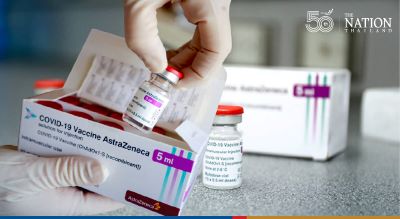
AstraZeneca’s COVID-19 vaccine manufactured in Thailand has been authorised under the World Health Organization (WHO) Emergency Use Listing (EUL) procedure, with immediate effect.
In February 2021, the WHO granted EUL to AstraZeneca’s COVID-19 vaccine, enabling global access during the pandemic. This EUL authorisation has been extended to now include doses manufactured by Siam Bioscience, AstraZeneca’s production partner in Thailand, and recognises that COVID-19 Vaccine AstraZeneca or Vaxzevria is the same product wherever it is made.
James Teague, Country President, AstraZeneca (Thailand) Ltd., said: “We welcome the World Health Organization’s emergency listing because, even though many governments already consider people given our Thailand-made doses to be fully vaccinated and eligible for international travel, it will make it easier for more governments to recognise the vaccine and allow people to travel again.”
Nualphan Lamsam, Honorary Director of Corporate Communications, Siam Bioscience Co., Ltd., said: “Siam Bioscience is proud to have been selected by AstraZeneca as its local manufacturing partner. We take great pride in producing high-quality COVID-19 vaccine, now recognised by the World Health Organization. All batches of AstraZeneca’s COVID-19 vaccine produced at Siam Bioscience, undergo stringent quality testing and are also authorised by regulators and international laboratories in Europe and the U.S. Siam Bioscience and AstraZeneca continue to work closely and produce vaccine doses for the wellbeing of the Thai people and region, to help a quick return to normalcy.”
All manufacturing of COVID-19 Vaccine AstraZeneca around the world is conducted using the same stringent manufacturing process and each batch passes over 60 quality tests as part of a robust global quality assurance process.
From the 585 million individuals who had received at least one dose of COVID-19 Vaccine AstraZeneca as of September 2021, COVID-19 Vaccine AstraZeneca prevented over 105,000 deaths and over 620,000 hospitalisations worldwide.
In clinical trials, COVID-19 Vaccine AstraZeneca demonstrated 100% efficacy against severe disease and hospitalisation after two doses, and real-world evidence shows the vaccine is around 80 – 90% effective against severe disease due to WHO-identified variants of concern.
To date, more than 1.5 billion doses of AstraZeneca’s vaccine have been released for supply to more than 170 countries globally, and approximately two-thirds of these doses have been delivered to low- and lower-middle income countries.
The IFM Award 2021 is another back-to-back win for BGRIM’s solar power development abroad. The company’s 257-MW Phu Yen TTP solar power project in Vietnam was also honoured the Best Power Plant Project Developer in Solar Energy category in 2019 by the IFM.
B.Grimm Power PCL (BGRIM)’s solar farm in Cambodia is named the best new utility of its kind by the UK-based International Finance Magazine (IFM) this year.
The prestigious IFM 2021 Award bestowed to the company’s 39-megawatt solar photovoltaic facility in Banteay Meanchey Province recognises its cutting-edge technology and an important role it plays in economic and social development.
“The award underscores BGRIM’s commitment in developing clean energy as part of its mission to deal with the global warming,” said Dr Harald Link, Chairman and President of BGRIM.
The Cambodian solar farm is operated by Ray Power Supply Co Ltd, a wholly-owned subsidiary of B.Grimm Solar Power 1 Co. Ray Power is the only recipient of the IFM Award in the New Solar Energy Project category in 2021.
B.Grimm Power’s Cambodia solar farm project wins “International Finance Award– IFM Award 2021: Best New Solar PV Project”
The IFM Award 2021 is another back-to-back win for BGRIM’s solar power development abroad. The company’s 257-MW Phu Yen TTP solar power project in Vietnam was also honoured the Best Power Plant Project Developer in Solar Energy category in 2019 by the IFM.
Dr Link hailed the ground-mounted solar power facility in Cambodia as a success for it being completed on schedule amidst many restrictions, including the Covid-19 pandemic effects and severe floods in the construction area throughout 2020.
“This award reinforces BGRIM’s expertise in the solar power business that the company is prepared to expand to cover government and private sectors both at home and abroad,” Dr Link addressed.
BGRIM’s expanding solar power business is a concrete response to the adaptation of energy demand platforms as more and more organisations, especially international ones, are turning to renewable energy as a way to reduce carbon dioxide emissions.
This scheme also meets BGRIM’s goal to rapidly enhance the clean energy in its generation portfolio as well as fulfilling its mission of “Empowering the World Compassionately.”
The Cambodian solar farm’s output has begun to supply to the Electricite Du Cambodge (EDC)’s grid on 15 December 2020 under a 20-year agreement. It is the first solar energy project in Cambodia which has secured firm power supply guarantee from the Cambodian government.
Currently, B.Grimm Power has a total of 50 power plants in commercial operation. The company aims to ramp up its total installed capacity from 3,058 MW at the end of 2020 to at least 7,200 MW of secured PPA by 2025 and further to 10,000 MW by 2030 with an annual revenue of more than 100 billion baht being targeted. More importantly, B.Grimm Power is moving strenuously towards realising net-zero carbon emissions by 2050.
Apple, the worlds most valuable company, has finally joined a growing list of household names from Toyota to Samsung forced to cut back on business because of a global shortage of semiconductors.
Apple is now likely to slash its projected iPhone 13 production targets for 2021 by as many as 10 million units, Bloomberg News reported Tuesday.
For months, while supply chain shocks rocked the electronic, automaking, and even commodities industries, Apple remained the one company that could secure the chips needed to keep selling its latest range of products, due to its well-managed supply chain and the prestige of meeting its exacting standards.
But the recent setback for Apple has dashed any hopes that the supply-chain crisis was easing.
“If this is happening to the most powerful company,” it could happen to anyone, said Neil Campling, an analyst at Mirabaud Securities. Given “they have huge power in terms of their ability to source semiconductors as such a key customer, then everyone else will be having greater issues than they are.”
Apple’s scaleback is a clear sign that the supply disruptions that have wreaked havoc around the world are worsening, which may jeopardize the outlook for the post-pandemic economic recovery. Almost all major manufacturers have been impacted both by a lack of key materials such as semiconductors, but also an inability to get finished goods into the hands of consumers.
President Joe Biden is set to focus on transportation bottlenecks on Wednesday, with the congested Port of Los Angeles planning a 24 hours a day, seven days a week effort to confront the squeeze on goods. A.P. Moller-Maersk said it had to divert some ships from the U.K.’s largest container port because of congestion tied to a trucker shortage.
“Recent rumblings from chip producers suggest that the problems are expected to persist,” Deutsche Bank strategists including Jim Reid, global head of fundamental credit strategy wrote in a note. That “will make central bank decisions even more complicated over the coming weeks as they grapple with increasing supply-side constraints that push up inflation whilst threatening to undermine the recovery.”
Apple had expected to produce 90 million new iPhone models this year, but is now telling manufacturing partners that the total will be lower because Broadcom and Texas Instruments are struggling to deliver enough components, said the people, who asked not to be identified because the situation is private.
Japan Display Inc., which gets more than half of its revenue from Apple, fell as much as 5.6%, joining U.S. suppliers that fell in postmarket trading.
The shortage of semiconductors stems mainly from years of under-investment coupled with a failure to gauge the explosion in demand for connected devices. Even industry insiders were caught by surprise. ASML Holding CEO Peter Wennink, whose company sells the machines that enable most cutting-edge chipmaking, said in July it has underestimated the growth of the semiconductor industry over the past 15 years.
The amount of time that companies need to wait for chip orders to get filled has set records for nine straight months, signaling that semiconductor shortages will continue to plague businesses well into 2022 and likely beyond. AlixPartners, a global consulting firm, estimated last month that the global automotive industry will lose about $210 billion in sales for 2021 alone.
Earlier this year, Apple had already warned that it would face supply constraints of the iPhone and iPad during the quarter that ended September. But it held off from reducing its internal projections at the time.
The timing couldn’t be worse. The year-end quarter was expected to be Apple’s biggest sales blitz yet, generating about $120 billion in revenue. That would be up about 7% from a year earlier — and more money than Apple made in an entire year a decade ago.
In addition to facing tight iPhone availability, the company has struggled to make enough of the Apple Watch Series 7 and other products.
Separately, a protracted energy crisis in China may add to the iPhone maker’s headaches. Apple supplier TPK Holding Co. said last week that subsidiaries in the southeastern Chinese province of Fujian are modifying their production schedule due to local government power restrictions. That comes less than two weeks after iPhone assembler Pegatron Corp. adopted energy-saving measures amid government-imposed power curbs.
Some analysts however spot an opportunity for Apple.
“If Apple can’t meet near-term demand, the shortfall is likely to be even greater at competitors, creating an opportunity for share gains,” Morgan Stanley analysts wrote after Bloomberg’s report.




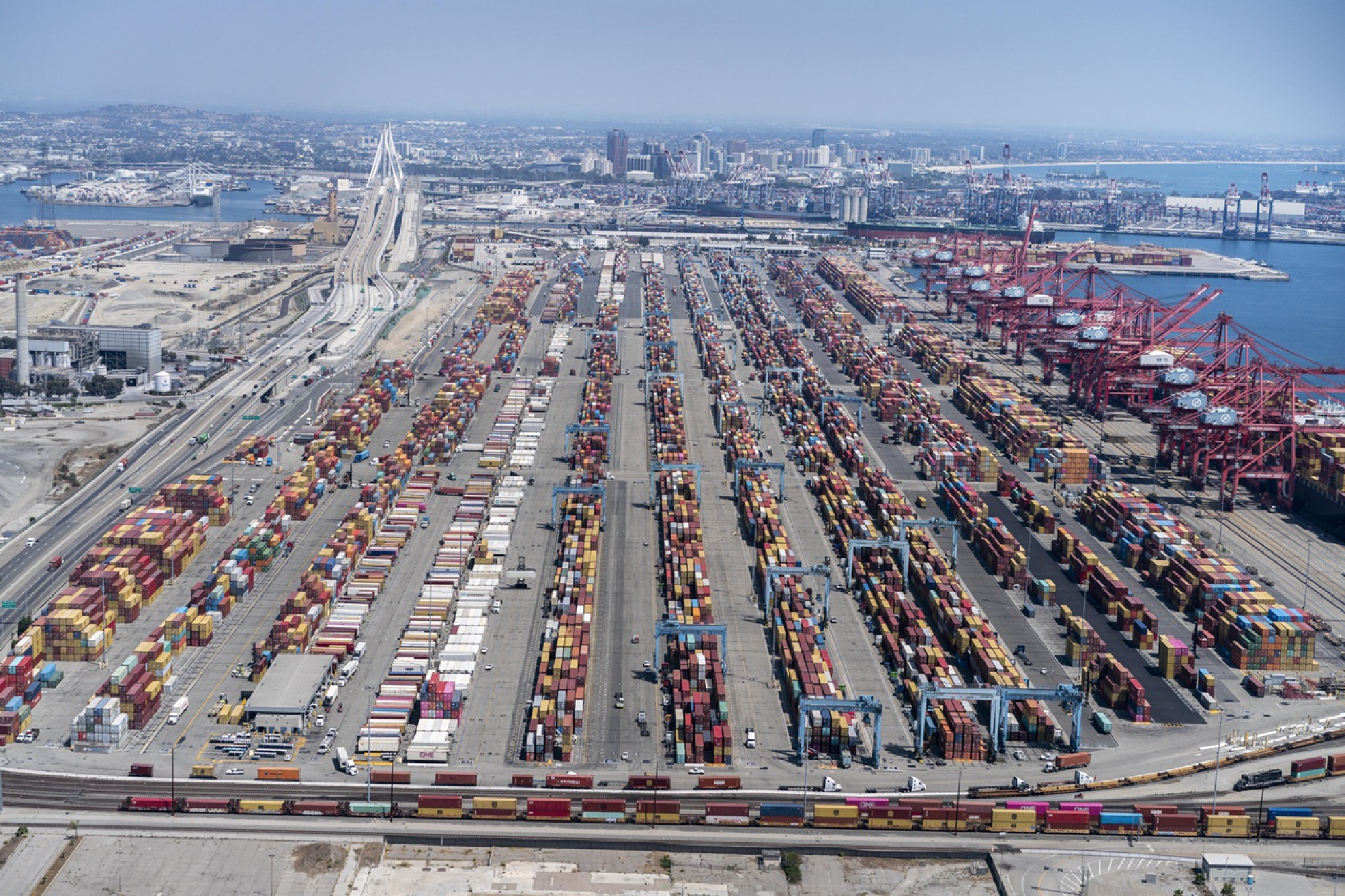 A hectic and overcrowded Port of Los Angeles in September. PHOTO CREDIT: Washington Post photo by Melina Mara
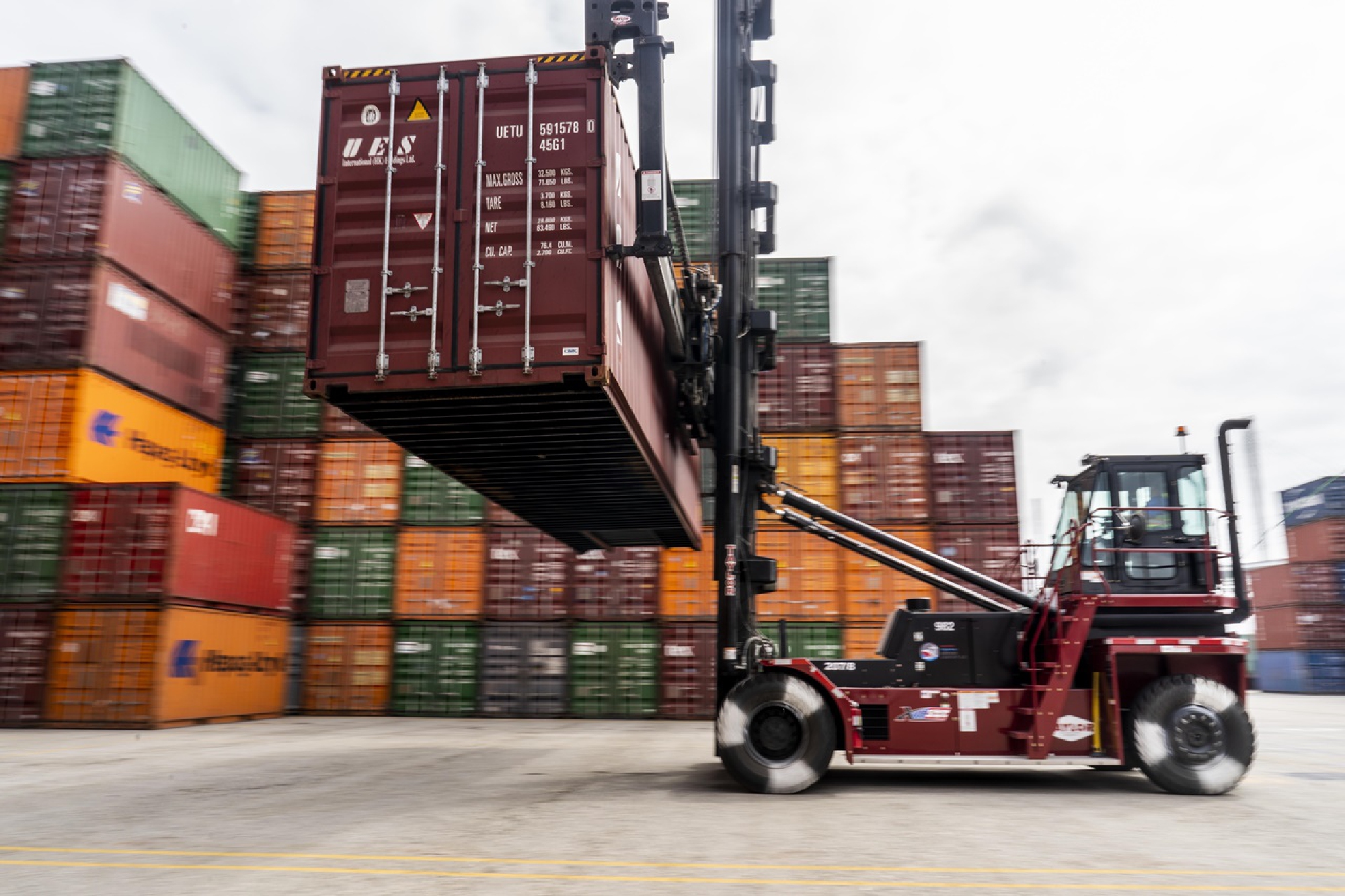 Containers are moved around at the Port of Los Angeles recently. PHOTO CREDIT: Washington Post photo by Melina Mara



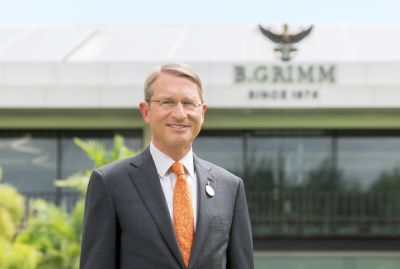
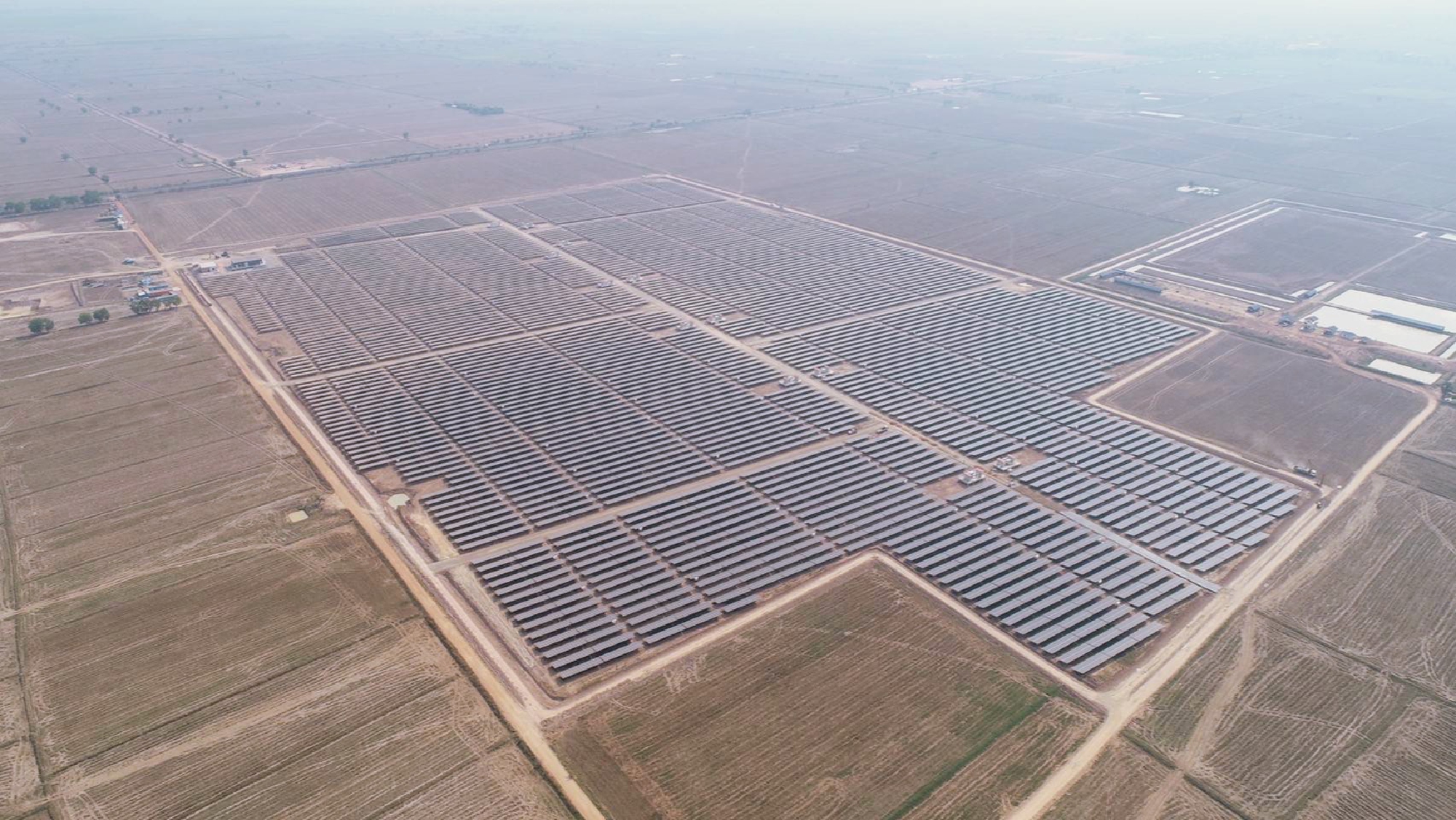 B.Grimm Power’s Cambodia solar farm project wins “International Finance Award– IFM Award 2021: Best New Solar PV Project”