Technology shares climbed amid lower Treasury yields after data showing inflation is running hot lifted companies seen as better equipped to pass on higher costs to consumers without harming their businesses.
Traders also assessed minutes of the Federal Reserve’s latest policy meeting, with officials broadly agreeing they should start reducing stimulus in mid-November or mid-December amid increasing concern over inflation. Central bankers discussed an illustrative tapering path featuring “monthly reductions in the pace of asset purchases, by $10 billion in the case of Treasury securities and $5 billion in the case of agency mortgage-backed securities.”
The tech-heavy Nasdaq 100 outperformed major equity benchmarks, while the NYSE FANG+ Index of giants such as Amazon.com Inc. and Google’s parent Alphabet Inc. climbed about 1%. The S&P 500 rebounded, following a three-day drop. Ten-year yields remained below 1.6%. The two-year rate — which is more sensitive to policy moves — rose. Delta Air Lines Inc. led losses in U.S. carriers after warning that rising fuel costs will threaten earnings this quarter.
Prices paid by U.S. consumers rose in September by more than forecast, underscoring inflationary pressures. The Biden administration is trying to relieve supply-chain bottlenecks ahead of the Christmas shopping season, but officials acknowledge their options are limited. Unprecedented shipping challenges, materials shortages, high commodities prices and rising wages have driven up costs for producers. Many have passed a portion of those costs to customers, leading to more persistent inflation.
“Wednesday’s still elevated consumer-price index marks about six-months worth of hot inflation data — suggesting that inflation is not as transitory as many investors previously expected,” said Nancy Davis, founder of the Greenwich, Connecticut-based firm Quadratic Capital Management. “The overall inflation story is being driven by supply-chain disruptions and a swift rise in prices, due to the labor shortage.”
Some corporate highlights:
– JPMorgan Chase & Co.’s dealmakers posted their best quarter yet, riding what’s on track to be a record year for mergers and acquisitions. Still, shares fell as consumer and commercial loan growth remained challenged.
– American Express Co. and other credit-card issuers tumbled as JPMorgan attributed weakness in its card business to rising costs on marketing and promotions, sparking concern over heightened competition.
Here are a few events to watch this week:
– Bank of America Corp., Morgan Stanley and Citigroup Inc. report earnings on Thursday
– U.S. initial jobless claims, PPI on Thursday
– Goldman Sachs Group Inc. reports earnings on Friday
– U.S. business inventories, University of Michigan consumer sentiment, retail sales on Friday
Some of the main moves in markets:
– – –
– The S&P 500 rose 0.3% as of 4 p.m. New York time
– The Nasdaq 100 rose 0.8%
– The Dow Jones industrial average was little changed
– The MSCI World index rose 0.5%
– The Russell 2000 index rose 0.3%
– – –
– The Bloomberg Dollar Spot Index fell 0.5%
– The euro rose 0.5% to $1.1593
– The British pound rose 0.5% to $1.3660
– The Japanese yen rose 0.3% to 113.29 per dollar
– – –
– The yield on 10-year Treasuries declined four basis points to 1.54%
– Germany’s 10-year yield declined four basis points to -0.13%
– Britain’s 10-year yield declined six basis points to 1.09%
– – –
– West Texas Intermediate crude fell 0.1% to $80.54 a barrel
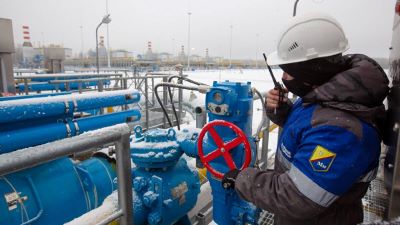
Fresh from crowing over Europes gas crisis, Russian President Vladimir Putin now sees a chance to capitalize on it.
Putin wants to press the European Union to rewrite some of the rules of its gas market after years of ignoring Moscow’s concerns, to tilt them away from spot-pricing toward long-term contracts favored by Russia’s state run Gazprom, according to two people with knowledge of the matter. Russia’s also seeking rapid certification of the controversial Nord Stream 2 pipeline to Germany to boost gas deliveries, they said.
Russia is prepared to supply as much gas as Europe needs and is ready for dialogue with the EU on stabilizing the market, Putin said Wednesday at the Russian Energy Week conference.
“We always meet our partners halfway and are ready to discuss additional actions,” Putin said. Russian energy projects including Nord Stream 2 seek “to ensure the stability and predictability of gas supplies in the volumes needed by European countries for years to come,” he said.
European gas futures gained on Wednesday. Amid record daily swings of as much as 40% in European gas prices, Putin made a calculated intervention to cool the market last week by saying Gazprom can boost supplies to help ease shortages.
Still, even as the Kremlin casts the president as Europe’s energy savior, Russia’s under no illusion that it will gain political concessions from the EU or ease strained relations as a result of the crisis, according to a government official and a policy adviser close to the presidential administration.
“Putin senses an opportunity from the crisis,” said Andrei Kortunov, head of the Kremlin-founded Russian International Affairs Council. “Russia wants to prevent the EU from dragging its feet on certifying Nord Stream 2 and start talks on long-term stable prices for gas.”
Russia long opposed giving the spot market greater weighting in pricing, preferring to rely on less volatile long-term contracts that may cap some of the windfall when prices are high but provide downside protection when they slump. However, liberalization of the EU’s gas market forced Gazprom to adjust its pricing formulas, linking the bulk of them to spot and futures prices.
“Buying gas at reasonable prices is, of course, good,” Gazprom Deputy Chief Executive Officer Elena Burmistrova told the St. Petersburg International Gas Forum on Oct. 7. “But it’s even better to know exactly in advance how much it will cost in a month, a quarter and a year.”
Putin has blamed the energy crisis partly on “snobbish” EU officials and advisers who he said had pushed for the shift to spot pricing “and do not want to hear anything else.”
EU leaders will discuss the gas price surge and measures to blunt its impact at a summit in Brussels next week.
Europe relies on Gazprom for about a third of its natural gas supplies. While gas storage on the continent is being rebuilt from record-low levels for this time of year, there are limited options for deliveries from other sources such as liquified natural gas. With winter fast approaching, that leaves the region potentially more dependent on Russia for extra supplies to avoid shortages when cold weather hits.
Russia is still injecting gas into domestic storage facilities and will complete the process by Nov. 1, Deputy Energy Minister Evgeny Grabchak told reporters in Moscow on Wednesday. The country now has enough gas in storage to get through the winter, and while it’s not expecting colder-than-average weather, it’s ready for it, he said.
Deputy Prime Minister Alexander Novak, who oversees Russia’s energy policy, said Tuesday that a hasty transition away from traditional power sources toward renewables had contributed to Europe’s supply crunch. Last week, he told Putin that swift European approval of Nord Stream 2 for delivery of gas would give “a positive signal” to markets.
For its part, the EU is hoping the gas crisis is a short-term phenomenon. It’s focusing on helping member states get through the tough winter — with prices set to stay high and a risk that Nord Stream 2 may not be ready to start for months. Energy Commissioner Kadri Simson said Tuesday that its underground storage of gas in the region was at around 75% of capacity, far lower than the last decade, but adequate to cover demand.
The EU is also set to explore the possibility of joint gas purchases by member states to strengthen buying leverage with third parties in a toolbox that’s set to be outlined Wednesday. It means the bloc is unlikely to take imminent action to heed any overtures from Putin, especially given ongoing tensions over issues like Belarus and Ukraine.
Currently, some 20% of Gazprom’s European gas supplies are linked to oil prices, while a little over 50% is priced on either day-ahead or month-ahead pricing, Ron Smith, senior oil and gas analyst at BCS Global Markets, wrote in a note Friday following a webinar with Gazprom managers.
Russia is keen to restore the link to oil prices in gas contracts and shift away from spot pricing that the EU has increasingly insisted on in recent years, said the two people familiar with the matter. Gazprom has already begun filling Nord Stream 2 with gas and wants European regulators to make it operational as soon as possible, they said.
Gazprom’s exports to Europe were near a record in the first half of this year, but fell in September just as the EU was struggling to refill stockpiles. Russia has been replenishing its own storage sites, sparking claims it’s withholding supplies.
The Kremlin rejected the allegation, insisting Russia was fulfilling all of its contracted obligations as a trusted energy partner. German Chancellor Angela Merkel offered backing last week, saying Russia “can only deliver gas on the basis of contractual obligations.”
Gazprom has started pumping gas from its reserves to ease soaring prices and wants to work with European countries to calm the market, Russian Deputy Foreign Minister Sergei Ryabkov said in a BBC interview Tuesday.
“Gazprom is celebrating a big victory,” said Stanislav Tsygankov, a former head of the company’s international business department. “This is the perfect time to capitalize on the situation.”
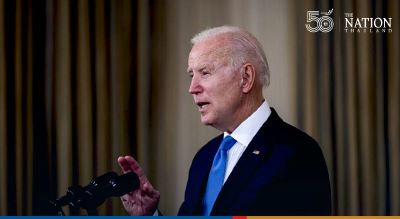
President Joe Biden said Wednesday that a new plan to keep a key U.S. port open “24 hours a day, seven days a week” would relieve pressure on an overworked supply chain that has frustrated Americans and blossomed into a major economic shortcoming.
Speaking at the White House, Biden also hailed commitments from top importers such as Walmart, FedEx and UPS to use the extended hours at the Port of Los Angeles to remove shipping containers that have slowed freight operations.
The president spoke following a 17-person “virtual roundtable” with port directors from Los Angeles and Long Beach, Calif., top officials from the Teamsters and AFL-CIO labor unions, the U.S. Chamber of Commerce, and other business groups.
As consumers confront random shortages of clothing, toys, groceries and cars, the disrupted supply lines that define the pandemic-era economy are evident in dozens of giant container ships anchored off the coast of Southern California. Some vessels wait two weeks for an unloading berth.
Similar delays await freight once it reaches the shore, where docks, rail yards and warehouses are jammed with goods, the fruits of an economic recovery the administration boasts is robust.
Administration officials promise a “90-day sprint” to clear a path for cargo. Several companies participating in the White House event, including Walmart, made “specific volume commitments” about containers they will remove from California docks. Leaders of the International Longshore and Warehouse Union have agreed to work longer hours, provided individual terminal operators pay up.
Biden said today’s announcement had “the potential to be a game changer” in unclogging the nation’s supply lines.
But the extended hours the administration is touting represent something less than the full around-the-clock operations that are typical of the world’s most advanced cargo-moving facilities.
The Port of Long Beach, which makes up one half of the nation’s chief import gateway, began a pilot program last month of late-night and predawn work. An administration official said Tuesday that Long Beach had “already gone to 24-7″ and Los Angeles would be “meeting that effort.” But only one of the Long Beach port’s six container terminals works 24 hours a day, and it does so only Monday through Thursday, according to Noel Hacegaba, the port’s deputy executive director of administration and operations.
Biden said the L.A. port, which is adjacent to the Long Beach facility, would be open for 60 additional hours each week. But Phillip Sanfield, a port spokesman, said he could not say how many L.A. terminals will now begin operating around-the-clock. And Gene Seroka, executive director of the L.A. port, said on twitter that “operational details are being discussed and worked out with the supply chain stakeholders.”
Some industry executives described the administration’s latest initiative, which the White House billed as “nearly doubling” the port’s cargo-handling hours, as incomplete. Matt Schrap, chief executive of the Harbor Trucking Association, whose members service the ports, said the measure will make a “big difference” only if terminals abandon requirements for truckers to return a specific type of empty shipping container before collecting a full one.
And Craig Grossgart, senior vice president for global ocean at SEKO Logistics, said: “It will accomplish zero. It’s just window dressing.”
Indeed, the administration said an additional 3,500 containers each week would move through the L.A. port during the new nighttime hours, thanks to promises from six companies – Walmart, FedEx, UPS, Target, Home Depot and Samsung.
The port expects to process 79,289 containers this week, according to its website.
The administration says the giant companies will set an example that will spur others to follow. But longer working hours at the neighboring ports, which operate as a single complex under dual management, will matter only if trains, trucks and warehouses all do the same. Already, truckers have been reluctant to show up at the Long Beach port during the 3 a.m.-to-7 a.m. slot known as the “hoot” shift – named for the hoot owl – because they have nowhere to take containers at that hour.
Major railroads “have long been 24/7 operations,” said Ian Jefferies, president of the American Railroad Association.
Supply headaches are posing a direct challenge to Biden’s hopes of a smooth economic recovery. Federal Reserve Chair Jerome H. Powell has said that logistics headaches are responsible for inflation lasting longer than he expected.
The mounting disruption, mirrored in multiple countries, is having an economic impact that extends beyond consumer and business irritation over delayed deliveries. Barclays economists this week lowered their growth forecast for the United States and Europe, citing enduring supply interruptions.
“These persistent supply disruptions are a stagflationary impulse to the global economy, as they now increasingly also affect activity, after having already caused stubbornly higher-than expected inflation,” Barclays wrote in a research note, referring to the 1970s phenomenon of soaring prices and anemic growth.
Fastenal, a Winona, Minn.-based industrial distributor, which has been struggling to move imported fasteners through clogged U.S. ports, told investors Tuesday that it is reducing its planned capital spending this year by $15 million to $25 million.
“Supply chain difficulties are limiting our purchases of vehicles, brand supplies and other products,” Holden Lewis, the company’s chief financial officer, said on an earnings call.
Bed Bath & Beyond’s share price fell 22% last month after higher freight costs and “unprecedented supply chain challenges” dented profits. The company does not expect any improvement in the supply chain situation through the end of November, chief financial officer Gustavo Arnal told analysts.
The White House is eager to demonstrate progress on a vexing host of supply chain snarls. Yet officials note that the cargo carriers, ports, terminal operators, trucking lines and warehouses involved are almost entirely private-sector entities, leaving the president with little power to command immediate improvement.
The federal government’s chief role is acting as an “honest broker” to bring together executives from each link in the globe-girdling supply chain, one official said.
In June, the president established a White House task force on supply chain issues, headed by Transportation Secretary Pete Buttigieg, Commerce Secretary Gina Raimondo and Agriculture Secretary Tom Vilsack.
This summer, Biden named John Porcari, a former Obama-era transportation official, as its “ports envoy.” (At Wednesday’s White House event, the president twice referred to Porcari as “Joe.”)
Porcari last month scored an early success by winning longer operating hours at the Ports of Los Angeles and Long Beach, the nation’s top import gateway. Yet the first night of longer hours at one Long Beach terminal did not draw a single truck, Grossgart said.
Since the experiment began three weeks ago, the number of ships at anchor in San Pedro Bay has dipped from 70 to 61. But that floating traffic jam – which was virtually unknown before the coronavirus pandemic – remains twice as big as it was in early August.
Ports are not a new concern for Biden. In 2014, while vice president, he described port improvements as “a passion of mine.” The administration’s bipartisan infrastructure package contains $17 billion to modernize the nation’s ports.
Administration officials acknowledge there is only so much they can do to solve the immediate supply crisis. Much of the nation’s freight-moving infrastructure relies on facilities that were built decades ago, long before the era of globalization and e-commerce.
“You can’t turn a light switch in this very complicated supply chain and have it change overnight,” one official said.
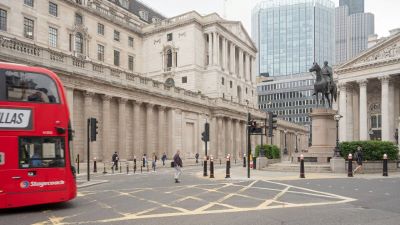
The guardians of the British economy are working to start reducing the supply of stimulus long before the fallout from the coronavirus crisis comes to an end.
After winning widespread praise for a quick, bold and coordinated response to the pandemic last year, the U.K. Treasury and the Bank of England now are preparing to be among the first among industrial nations to whip away that support.
Chancellor of the Exchequer Rishi Sunak is on course to raise taxes and cut spending to control the budget deficit, while BOE Governor Andrew Bailey has warned interest rates are likely to rise in the coming months to curb a rapid surge in prices. Together, those moves would mark a simultaneous major tightening of both policy levers just months after the biggest recession in a century — an unprecedented move since the BOE gained independence in 1997.
The action could leave the U.K. an outlier on the world stage after it suffered a greater economic loss than many of its peers during the pandemic. The speed of policy reversal also risks complicating what’s likely to be a difficult winter for Britain, which is facing up to slower growth, widespread labor shortages and a cost-of-living crunch for its poorest citizens.
Figures published on Wednesday show the economy grew less than expected in August following an unexpected drop in output in the previous month, raising doubt about whether output will return to pre-pandemic levels this year.
“We’re in a situation where both Rishi Sunak on the fiscal side and the BOE look like they are rushing to the exit,” said James Smith, a former BOE senior economist now serving as research director at the Resolution Foundation. “There are signs that momentum is fading, and you’re adding into that tightening from the chancellor and the bank, potentially.”
The result may further soften growth after post-lockdown euphoria fades. Britain’s economy may expand 6.8% this year, the fastest in the Group of Seven nations, according to the International Monetary Fund. But a comparison of 2024 forecasts and those made in pre-pandemic 2019 suggest the U.K. is at the bottom of the pack.
The twin tightening is being prompted by a shift in priorities for both the BOE and Treasury.
The central bank expects inflation to leap over 4% this year, more than double its target. That has prompted policy makers to shift away from stimulating growth and toward the risk of an upward spiral in prices setting in — a move economists say is part of an effort to would burnish the bank’s inflation-fighting credentials.
Bailey last month opened the door to raising borrowing costs this year. That would see the bank withdraw stimulus before the U.S. Federal Reserve at a time when the U.K. economy will probably remain smaller than before the crisis. Markets are pricing in the first move by December.
Sunak, who spent billions supporting jobs and incomes during the crisis, is shifting toward controlling debt. He’s closed the furlough program protecting wages for those out of work during the pandemic, scrapped a temporary increase in universal credit benefits and planned for a substantial tax increase in April, calling further largess “immoral.”
While that’s short of the kind of austerity that the Conservative government imposed after the financial crisis a decade ago, it’s still a rapid removal of support that will hit hardest for may of those on low incomes. It also will coincide with a surge in food and energy costs, driven by a series of global supply shortages.
Sunak will set out further plans in a budget and spending review scheduled for Oct. 27. The Institute for Fiscal Studies says he may need to make cuts of 2 billion pounds to spending just meet his existing commitments at a time when a public clamor is growing to add to funds for health and education.
The chancellor may be considering the political cycle, with strict limits now so he can offer giveaways around the time of the next election, which must be held by 2024, a lawmaker on the Treasury Committee said.
The risk is that the BOE and Treasury will removing support before the full impact of the Covid-19 crisis has passed, leaving business and consumers pushing for aid at a time when the government is taking it away. That dynamic is very much in play this week, with growing pressure from businesses for help to see them through a surge in energy prices.
What’s starting to unfold marks a sharp contrast with how David Cameron’s Conservative government handled the economy after the 2008 financial crisis, with the BOE’s loose monetary stance giving then Chancellor George Osborne room to tighten fiscal policy.
Sunak should be bolder in his approach because investors haven’t yet revolted, according to Jim O’Neill, a former Treasury minister and former chief economist at Goldman Sachs.
“I don’t think it’s going to happen,” O’Neill said. “We’ve reached levels of spending in this country and elsewhere in the world that conventional economic thinking wouldn’t have dreamt would have been possible without causing huge damage in the bond market. As of yet, there isn’t any.”
In both the monetary and fiscal spheres, the U.K. seems more worried than other nations about credibility, said Fabrice Montagne, an economist at Barclays.
“They have already made the mistake of rushing out of support measures thinking things are alright,” Montagne said.
According to the Prime Minister of Thailand, General Prayuth Chan-o-cha, today’s commitment underscores the fact that climate action could not be more urgent, and leadership by the private sector is crucial to Thailand’s efforts in successfully tackling climate change.
Business leaders representing Thailand’s major industries today joined the Global Compact Network Thailand (GCNT) Forum 2021 and United Nations in issuing a strong call to action by the private sector community on climate sustainability ahead of the United Nations Climate Change Conference COP26 in November in Glasgow. They committed to transition to more sustainable business models at the annual GCNT Forum, including net zero emissions by 2050 at the earliest.
According to the Prime Minister of Thailand, General Prayuth Chan-o-cha, today’s commitment underscores the fact that climate action could not be more urgent, and leadership by the private sector is crucial to Thailand’s efforts in successfully tackling climate change. The country must swiftly enhance its knowledge and capacity to create new innovations and technologies to tackle climate change and other environmental concerns and, at the same time, adapt and transition to a low-carbon economy and build resilience. In order to do so, it is necessary to leverage available international funds and mechanisms such as the bilateral exchanges of knowledge and technology and the joint credit mechanism (JCM).
Achieving just transition to net-zero economy key to building climate-resilience in Thailand
ADVERTISEMENT
At the same time, the Government has integrated climate change into national policies under the thirteenth National Economic and Social Development Plan (NESDP), i.e. the tenth milestone – Development of a Circular Economy and Low-Carbon Society, and the eleventh milestone – Reduction of Risks from Natural Disaster and Climate Change. Accordingly, the Government is currently drafting the Climate Change Act, which will ensure comprehensive coverage of all climate-change related issues. In addition, in November this year, Thailand will join the COP 26 Conference in Glasgow, which he hoped will reach conclusions to address the climate crisis and operationalize the Paris Agreement.
“Thailand places importance on a balanced and environmentally-friendly economic growth based on the Bio-Circular-Green Economic Model (BCG), and has to likewise intensify its efforts in addressing climate change. This is an opportunity for Thailand to transform towards a value-added economy that will lead to a more balanced, sustainable and environmentally friendly growth. Most importantly, it is an opportunity to create new dynamism in our economy, which will benefit all businesses,” Prime Minister General Prayuth Chan-o-cha explained.
Achieving just transition to net-zero economy key to building climate-resilience in Thailand
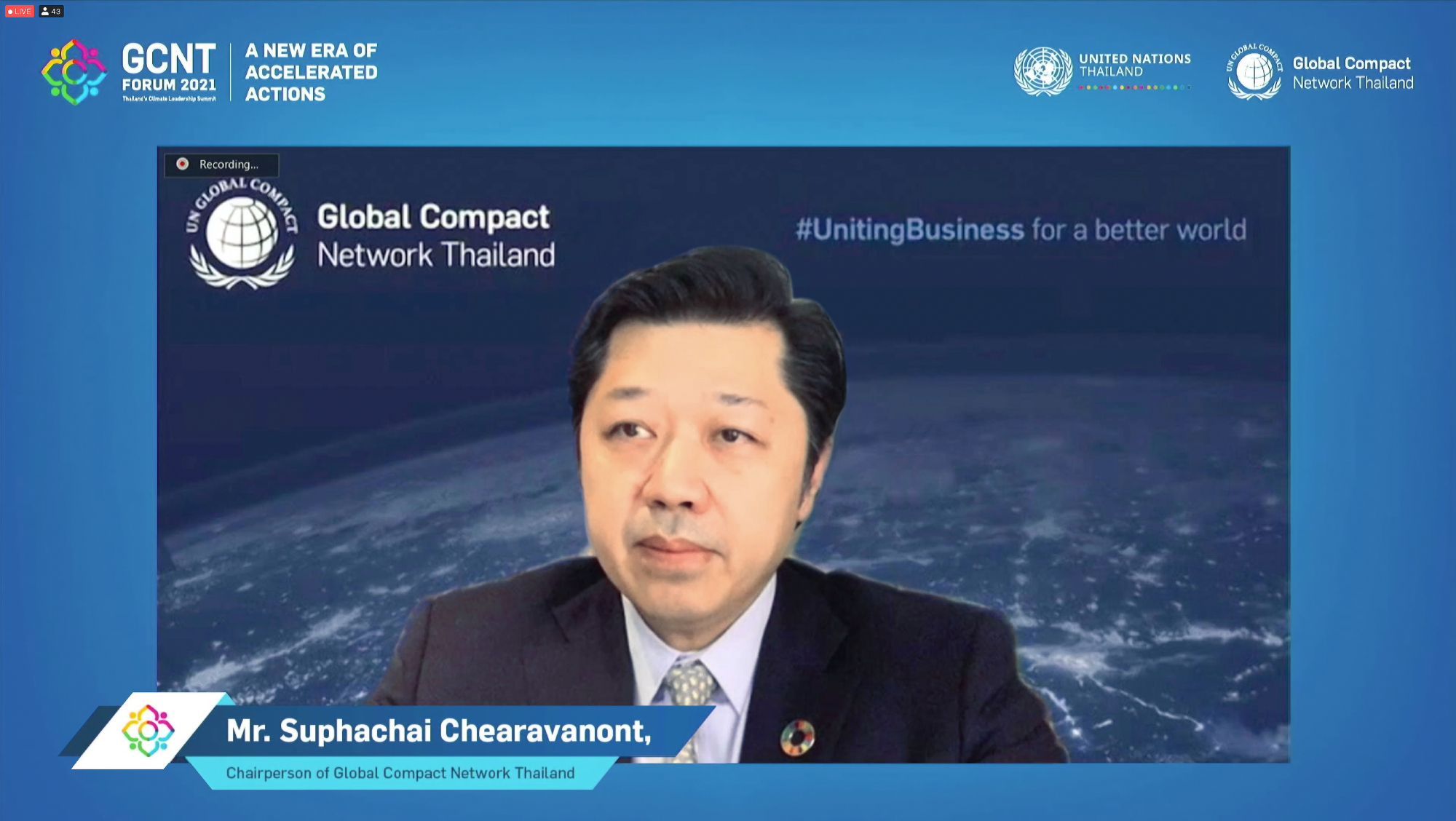
According to Mr. Suphachai Chearavanont, Chairperson of GCNT and Group Chief Executive Officer of Charoen Pokphand Group, said one-third of the network’s members have delivered on their commitment to integrating the 17 Sustainable Development Goals (SDGs) into business strategies through 510 projects in the pipeline, which partially amounts to 420 billion baht. These actions mobilize sustainability within the Thai context, and likewise, today’s commitment to prevent and mitigate climate change will support government efforts in line with the Bio-Circular-Green Economic Model (BCG) that is low-carbon economy, while prioritizing clean energy and high-value bio-based or “S-curve” industries. At the same time, this requires investing in new technologies and innovations with a focus on efficiency, design-thinking and building a new generation of sustainability leaders. Saving the environment starts with us and it is through transparency in corporate reporting that we can build greater awareness and resiliency to climate change.
“We must act swiftly and accelerate the Thai economy’s transformation for the net zero era, to truly embrace the ‘Race To Zero’ with the focus on a clean energy-driven economy and society. Achieving a just transition to a green economy that is fair, leaves no one behind and reduces all dimensions of inequality especially gaps in gender parity and economic and educational opportunities,” he said.
United Nations Resident Coordinator in Thailand, Ms. Gita Sabharwal pointed out that “the shift away from fossil fuel dependency and reducing carbon emissions are among the most pressing priorities, for which we have a finite window of opportunity to act.” She stressed the urgent necessity to expand carbon markets, increase innovation and investments in sustainable technologies, and provide more support for small and medium-sized enterprises in the transition to net-zero. “GCNT recognizes that while sustainability goals are universal, companies have to go at their own pace, to learn and unlearn, in a challenging environment. This period of creative disruption is the key commercial opportunity of our time,” she added. “The economy needs to move in unison, which makes platforms such as the GCNT all the more important.”
In her video message to the GCNT Forum, Ms. Sanda Ojiambo, Chief Executive Officer of the United Nations Global Compact, congratulated the GCNT members on advancing both the 2030 Agenda and the Paris Agreement. However, she also urged all participants to reduce their corporate carbon footprint and shift to renewable energy as well as a more circular economy of reuse and recycling. “These are challenging goals, but they are also opportunities for transformative change,” she said, in encouraging companies to join the United Nations Global Compact and become part of that change.
Achieving just transition to net-zero economy key to building climate-resilience in Thailand
The Minister of Natural Resources and Environment of Thailand, Mr. Varawut Silpa-archa emphasized the need for collective action on the converging global crises of climate change and the COVID-19 pandemic, saying this was a roadmap for sustainable recovery. “It is not the responsibility of any one individual, not the sole responsibility of the Government or the opposition or the private sector. It is a mutual obligation that requires collaboration because climate and environmental degradation will affect us all,” he said. “We must focus on greenhouse gas reductions and integrate environmental and green measures into all industrial operations and business sectors, to achieve a low-carbon society.”
Five high-level panel discussions were held during the Forum, during which the participants discussed responsible business practices, with the focus on pressing issues such as the state of sustainability, credible climate actions via sustainable finance, the role of innovation and technology in addressing climate impacts, and business leadership and investment in carbon markets.
Speaking on the role of market regulators in climate sustainability, the Secretary-General of the Thailand Securities and Exchange Commission (SEC), Ms. Ruenvadee Suwanmongkol, said her organization was determined to develop enabling ecosystems for Thailand’s sustainable capital market. This has already led to the introduction of the mandatory “56-1 One Report” annual reporting criteria, in which listed companies and all future IPO filing forms submitted to the SEC must disclose updated information on greenhouse gas emissions. “It is critical that the voices of all sectors are heard, and sustainability markets are supported. The SEC supports the issuance of investment products to promote that ambition,” she explained.
Against this backdrop, the Stock Exchange of Thailand (SET) has been working closely with the Thailand Greenhouse Gas Management Organization and the Federation of Thai Industries “to establish a carbon credit market as a fundamental infrastructure for efficient energy consumption,” according to the SET President, Dr. Pakorn Peetathawatchai. This follows the introduction of similar measures to enable innovation and development of environmentally-friendly businesses in Thailand.
Normally held in Bangkok, the Forum this year was virtual, organized by GCNT in partnership with the United Nations in Thailand. More than 800 participants attended the event, including members of the Thai private, public and social sectors as well as representatives from the United Nations Industrial Development Organization, United Nations Environment Programme and United Nations Development Programme. Business members of GCNT participating in the forum included Charoen Pokphand Group, Thai Bev, CP All, Charoen Pokphand Foods, HSBC, Huawei Technologies (Thailand), NR Instant Produce, True Corporation, Bangchak Corporation, BCPG, CP Intertrade, Charoen Pokphand Produce, IRPC, Ek-chai Distribution, Siam Makro, Oklin Thailand, Pranda Jewelry, PTTEP, PTT Global Chemical, PTT Group, Thai Oil, and Krung Thai Bank.
Fitch Ratings-Bangkok-12 October 2021: Fitch Ratings expects Thailands economic recovery to gain traction in 2022, supported by a significant improvement in Covid-19 vaccination rates, business reopening and a still-supportive global growth environment.
The return of tourism is likely to be gradual, and Fitch expects GDP to recover to pre-pandemic levels by early 2023. The ratings of most large Thai corporates have stabilised, although some sectors, such as banks, retail and hospitality, remain under earnings pressure due to the pandemic, according to the Fitch analysts that spoke at the annual conference on Thailand held via webinar today.
Mr Stephen Schwartz, Senior Director and Head of Asia-Pacific Sovereigns at Fitch, commented on the global economy, noting that strong external demand should continue to support Thailand’s exports. However, he noted that supply constraints are limiting the pace of global recovery and contributing to price rises in the US. Fitch expects the US Federal Reserve to begin tapering next month, but for interest rate increases to begin only in 2023.
ADVERTISEMENT
The regional outlook has been set back by a slowdown in China and the recent surge in the Delta Covid-19 variant. However, a significant improvement in vaccination rates for most Asian sovereigns over 2H21 should put their recovery from the pandemic shock on a firmer footing. We expect the region to average growth of 6.3% in 2021 and 5.3% in 2022 as pandemic-related restrictions are gradually lifted. This compares with our forecast growth in Thailand of just 0.8% and 4.8%, respectively, where vaccination rates are picking up after a slow start. Slower growth in China, together with US Federal Reserve tapering, could be negative for Asia’s emerging and frontier markets.
Mr Parson Singha, Senior Director of Financial Institutions at Fitch Ratings Thailand, highlighted that Thai banks’ asset quality remains obscured by ongoing regulatory measures; around 14% of commercial bank loans are under regulatory relief, and there is also forbearance on loan classifications. Fitch expects the SME segment, which accounts for around 23% of loans, to remain under particular pressure from weak business and economic activity. Fitch believes non-performing loans will continue to rise and profitability will remain challenged in 2022, but Thai banks have built up reasonable reserves and capital buffers. Credit losses should remain manageable across south-east Asian emerging markets, although loss absorption buffers differ by country.
Mr Obboon Thirachit, Director of Corporate Ratings at Fitch Ratings Thailand, said the recovery in the Thai economy should support continued earnings growth for domestic Fitch-rated corporates in 2022. Most sectors, including oil, gas and petrochemicals – which were hardest hit in 2020 – are now on Stable Outlook, with earnings recovering to pre-pandemic levels. The retail and hospitality sectors, which were heavily affected by the resurgence of Covid-19 cases and travel restrictions in 2021, should see a gradual improvement in 2022, although a recovery to pre-pandemic levels could take another two years.
Thai corporates are stepping up their investment and M&A to support medium-term growth, digitalisation and low-carbon business transformation. This will keep financial leverage elevated and constrain rating improvement.
Bangkok, Today (11 October 2021) – Princess Ubol Ratana Rajakanya Sirivadhana Barnavadi, as Honorary President, presided over the 13th Thailand Tourism Awards Ceremony for 2021, and presented the awards to entrepreneurs, local organisations, and communities in the tourism industry.
There was a total of 185 awards. This competition was organised by the Tourism Authority of Thailand (TAT) and accepted entries from March to May 2021. The competition aimed to raise the standards of Thai tourism products and services, as well as to build confidence and create a positive impression on tourists in a new form of tourism, which is safe from COVID-19. The event took place at the PM Studio, Bangkok and was live online via the Facebook fan pages of Thailand Tourism Awards and Amazing Thailand.
The 13th Thailand Tourism Awards Ceremony, 2021: Quality assurance of Thai tourism products and services to the world.
ADVERTISEMENT
H.E. Mr. Phiphat Ratchakitprakarn, Minister of Tourism and Sports, stated that under the COVID-19 pandemic situation, the tourism industry has been severely affected by travel restrictions for both Thai and foreign tourists. This includes travel behavior that takes safety into account. He continued that the Thailand Tourism Awards, therefore, was a mechanism for raising the standard of tourism products and services. This year, the standard for hygiene and safety that meets the criteria of the Amazing Thailand Safety and Health Administration (SHA) had been added. This was to create an image of Thailand’s tourism as “White Tourism” (clean, convenient, safe, fair, and environmentally friendly) and also to build confidence for both Thai and foreign tourists in a new way of tourism. This would lead to the creation of a safe and impressive travel experience, especially participation in social and environmental sustainability.
Miss Thapanee Kiatphaibool, Deputy Governor for Domestic Tourism, Tourism Authority of Thailand stated that TAT organised the Thailand Tourism Awards biannually, and these awards serve as a vital benchmark for guaranteeing the quality of the products and services within the tourism industry, as well as provide assurance that these products and services show sufficient social and environmental responsibility. The awards are also a way of promoting and supporting the development of products and services within the industry, as well as creating a healthy level of competition in order to achieve new levels of efficiency and quality, to ensure the industry conforms with the latest SHA hygiene and safety standards, and to emphasise the quality of Thai tourism on an international level. A team of experts from the industry analysed and judged the entries and awarded the prizes according to the five project criteria, which were as follows: 1. White Tourism, 2. Compliance with the BCG Model, 3. SHA Hygiene and Safety Standard, 4. Environmental Responsibility, and 5. Voice of the Customer.
There was a grand total of 346 entries in this year’s competition with 185 of those entries completing the criteria and receiving awards. The awards were divided into three categories: 1) Tourist Attraction, a total of 83 prizes, 2) Accommodation, a total of 69 prizes, and 3) Health and Wellness Tourism, a total of 33 prizes, with each category featuring Thailand Tourism Awards (Outstanding), Thailand Tourism Gold Awards (Excellence), and Hall of Fame Awards for entrants who had received three consecutive Thailand Tourism Gold Awards.
The 13th Thailand Tourism Awards Ceremony, 2021: Quality assurance of Thai tourism products and services to the world.
In this year’s competition, a total of 10 Hall of Fame awards were presented. Three awards were in the attractions category: Chiang Mai Night Safari (Chiang Mai), Tiffany Show Pattaya (Chon Buri), and Flying Hanuman (Phuket), one award in the accommodation category: Siam Bayshore Resort Pattaya (Chon Buri), and finally six awards in the Health and Wellness Tourism category: Banyan Tree Spa (Phuket), Banyan Tree Spa Samui (Surat Thani), Fah Lanna Spa (Chiang Mai), RarinJinda Wellness Spa Resort (Chiang Mai), Oasis Turquoise Cove Spa (Phuket), and Oasis Spa Pattaya (Chon Buri).
TAT hopes that the Thailand Tourism Awards project could achieve its purpose of acting as a tool, which would create and stimulate sustainable ethical interaction between the public and private sectors and local communities, as well as encourage the development of attractions within the tourism industry, thus creating a wider market for the products and services offered by the Thai tourism industry. It is also hoped that the awards would create opportunities for employment and income across the entire economy and help to maintain sustainable tourism in Thailand.
Scoot, the low-cost subsidiary of Singapore Airlines (SIA) and voted the World’s Best Long Haul Low-Cost Airline by SkyTrax in September 2021, has resumed three-times-weekly services between Phuket and Singapore from October 8, 2021.
Scoot, the low-cost subsidiary of Singapore Airlines (SIA) and voted the World’s Best Long Haul Low-Cost Airline by SkyTrax in September 2021, has resumed three-times-weekly services between Phuket and Singapore from October 8, 2021. The route, which had been suspended since late March 2020 due to the COVID-19 pandemic, is operated with Scoot’s Airbus A320-family aircraft.
Prior to COVID-19, Phuket was the second most popular international tourist destination in Thailand, hosting approximately 10 million foreign tourists each year . Low-cost carriers carried over 40 percent of international passengers in and out of the island, coined “the pearl of the Andaman”.
Amid a challenging time, Thailand launched the Sandbox scheme, making international travel possible. The Phuket Sandbox, the pilot destination of Thailand’s reopening, has already injected more than 1.634 billion baht into the economy. Scoot’s flight resumption between Phuket and Singapore will draw even more visitors to the Sandbox as Thai authorities gear up towards gradually reopening more provinces.
Scoot to Resume Flights Between Phuket and Singapore from 8 October 2021
ADVERTISEMENT
Mr. Calvin Chan, Scoot’s Chief Commercial Officer, said, “Thailand is one of Scoot’s key growth markets, and we are encouraged by the positive steps being taken to gradually reopen borders safely. Phuket has always been one of the top holiday destinations for travellers around the world, and we are excited to resume services to the island. Throughout the pandemic, Scoot has remained nimble in adjusting our network according to evolving developments, as well as implementing measures to safeguard the health of our customers and crew. As travel starts to resume, we will continue to deliver the highest standards to our customers, ensuring peace of mind when flying with Scoot.”
Since the start of COVID-19, Scoot has enhanced procedures and implemented measures across the customer journey, ranging from increased cleaning and distancing, deploying contactless check-in and inflight ordering, and trialling of digital pre-departure test verification tools amongst other initiatives. Scoot’s top-in-class health and safety measures have made it the world’s first low-cost carrier to attain the highest ratings for both the APEX Health Safety powered by SimpliFlying and SkyTrax COVID-19 Airline Safety Rating audits. Scoot was also recently crowned the World’s Best Long Haul Low-Cost airline by SkyTrax in the 2021 World Airline Awards.
Scoot to Resume Flights Between Phuket and Singapore from 8 October 2021
Scoot has been growing its capacity and resuming selected services in a calibrated manner. To date, Scoot has resumed services to 25 out of 68 destinations. Currently, Scoot is operating 11-times-weekly services between Bangkok (Suvarnabhumi) and Singapore.
Flight Schedule for Phuket-Singapore* services (Effective 8 October 2021)
SEATTLE – In 2019, a mid-level employee at Jeff Bezoss Blue Origin had grown fed up with the company, and as he left, he wrote a long memo that he sent to Bezos, chief executive Bob Smith and other senior leaders: “Our current culture is toxic to our success and many can see it spreading throughout the company.”
The problems at the spaceflight company were “systemic,” according to the memo, which was obtained by The Washington Post and verified by two former employees familiar with the matter, and “the loss of trust in Blue’s leadership is common.”
It was one of a number of warnings to Blue Origin’s leadership in recent years that the company’s culture had become dysfunctional, resulting in low morale and high turnover, significant delays across several major programs and a failure to successfully compete with Elon Musk’s venture SpaceX, current and former employees said.
ADVERTISEMENT
The new management’s “authoritarian bro culture,” as one former employee put it, affected how decisions were made and permeated the institution, translating into condescending, sometimes humiliating, comments and harassment toward some women and a stagnant top-down hierarchy that frustrated many employees.
As it quickly grew from a small start-up to a large corporation with nearly 4,000 employees, Blue Origin grappled with how to improve its culture. In 2019, the company fired its head of recruiting after employees complained of sexism. A consultant retained by Blue Origin conducted a review of the company’s leadership, finding that the primary challenge was Smith’s ineffective, micromanaging leadership style, said two former employees, including a top executive.
Bezos, who recently stepped down as chief executive of Amazon, also owns The Washington Post.
This account is based on interviews with more than 20 current and former Blue Origin employees and industry officials with close ties to the firm, who spoke on the condition of anonymity for fear of reprisal. The interviews and documents obtained by The Post reveal wide-ranging employee concerns about Smith’s leadership style, a bureaucracy that hampered innovation, and a lack of intervention from Bezos, who employees said was not giving the company enough attention during a crucial period.
“It’s bad,” said one former top executive. “I think it’s a complete lack of trust. Leadership has not engendered any trust in the employee base.”
Another said: “The C-suite is out of touch with the rank-and-file pretty severely. It’s very dysfunctional. It’s condescending. It’s demoralizing, and what happens is we can’t make progress and end up with huge delays.”
The company’s cultural issues came to light last month when Alexandra Abrams, the former head of Blue Origin’s employee communications, released an essay she said was written in conjunction with 20 other current and former Blue Origin employees. It said the company “turns a blind eye to sexism, is not sufficiently attuned to safety concerns and silences those who seek to correct wrongs.” The staffers were not identified in the essay, but three of them confirmed the allegations to The Post on the condition of anonymity for fear of reprisal.
In a statement to The Post, Mary Plunkett, Blue Origin’s senior vice president of human resources, said the company takes “all claims seriously and we have no tolerance for discrimination or harassment of any kind. Where we substantiate allegations of misconduct under our anti-harassment, anti-discrimination and anti-retaliation policy we take the appropriate action – up to and including termination of employment.”
Blue Origin, based in Kent, Wash., has an anonymous hotline that is staffed 24 hours a day, seven days a week for employees, “where any claims of this nature are registered and then investigated.” She said the company also encourages workers to contact human resources or senior leadership, ensuring that “these conversations are strictly confidential and we listen to any claims with empathy and concern.”
Bezos and Smith declined to comment for this story. Shailesh Prakash, The Post’s chief information officer who also sits on Blue Origin’s advisory board, declined to comment.
When Abrams’s essay was posted last month, Smith wrote in an email to the company, “It is particularly difficult and painful, for me, to hear claims being levied that attempt to characterize our entire team in a way that doesn’t align with the character and capability that I see at Blue Origin every day.”
After Blue Origin was notified that this story would publish soon, Bezos on Sunday night tweeted an image of Barron’s cover story from 1999 that was critical of Amazon, calling it “Amazon. Bomb.”
“Listen and be open, but don’t let anybody tell you who you are,” Bezos wrote. “This was just one of the many stories telling us all the ways we were going to fail. Today, Amazon is one of the world’s most successful companies and has revolutionized two entirely different industries.”
In response, Musk tweeted an emoji of a second-place medal.
– – –
Blue Origin, like many aerospace companies, has a male-dominated culture, and several current and former female employees said they faced condescending remarks and comments about their appearance.
“Two friends tried to talk me out of going to Blue because of how toxic it was,” one former employee said. There were “lots of comments on people’s bodies and appearance,” she said. “It was a dispiriting, chaotic experience working there. That behavior was modeled and not held accountable.” Younger men new to the company started to “mirror” this conduct, she added.
She said she reported the incidents multiple times to human resources but nothing was done.
In 2019, the company brought in the Perkins Coie law firm to investigate Walt McCleery, its vice president of recruiting, a longtime executive at the firm whose behavior had made several women uncomfortable. One former employee told The Post that in a meeting with an outside company, McCleery turned to the executives and said: “I apologize for [her] being emotional. It must be her time of the month.”
McCleery was terminated after the investigation, according to Blue Origin. In a brief interview with The Post last week, McCleery denied the allegations and said they were “not true as far as I’m concerned.”
Another top executive was coached by human resources on appropriate workplace behavior after he repeatedly referred to a group of female employees as “mean girls,” which continued even after they complained about it to management, according to multiple people familiar with the matter. (The comments ended eventually after counseling.)
These company problems took many new employees by surprise. One former engineer said that she was kneeling at a co-worker’s desk in 2016, while they went over engineering drawings together. She said her manager, an older man, walked by and said: “You’ve only been working here two weeks. You don’t have to get on your knees yet.”
The comment didn’t sink in immediately, the former employee said, partly because she expected Blue Origin to be a welcoming environment.
“I was naive and in denial, maybe,” she said. “It wasn’t until I thought about it later that it was obvious.”
Not everyone says the company culture has grown toxic. One employee who works outside the main headquarters said she has found the culture and leadership welcoming and respectful. Blue Origin’s human resources team took immediate action when she reported a claim of “highly inappropriate behavior” from another employee earlier this year, she said.
The company started investigating right away, and the other employee was terminated, further confirming her confidence in the company. “I’ve never felt like I couldn’t go to our leadership for support,” she said. “I’ve never felt like I couldn’t go to HR with a problem.”
The company said it has not had any inquiries from the U.S. Equal Employment Opportunity Commission (EEOC). (EEOC complaints are not made public unless the agency decides to file suit.) It also has not faced any lawsuits for harassment or hostile work environment. One senior manager said: “A lot of us put a lot of time into creating safe spaces for employees to share experiences and mentor each other. . . . We, I think, do the right thing every time we hear about a complaint. And when the claims have merit, we fire people.”
The company also has a diversity, equity and inclusion program, set up by Smith to help the company hire more women and minorities, and help support them once hired. It has nine groups designed to help specific populations, such as veterans and racial groups, feel welcome. One, called “New Ride,” is named for Sally Ride, the first female NASA astronaut to reach space, and is intended to help “create an authentic, inclusive, and equitable culture at Blue where LGBT+ employees and allies are empowered to become the greatest, truest version of themselves – both professionally and personally,” the company said.
If there is anyone who can get the company back on track, one industry official said, it’s Bezos. The company is his passion, the fulfillment of a lifelong dream. And now that he’s been to space and stepped down from Amazon, he’ll remain focused on Blue Origin: “I think Blue will be a phoenix here in a couple of years because Jeff will figure it out.”
– – –
When Bezos founded Blue Origin in 2000, it was to make real a science-fiction fantasy and to fulfill a dream of having “millions of people living and working in space.” For the first couple of years, it existed as a tiny start-up, more like a think tank than a space company, that would take a “step-by-step” approach to achieving its goal. For years, Bezos appeared content to move slowly and deliberately, like its mascot, the tortoise.
But in 2017, Bezos brought in Smith to be the company’s first CEO, taking over from Rob Meyerson, the company’s president, who had been running its day-to-day operations.
The selection of Smith, who has a PhD in aerospace engineering from the University of Texas and a master’s degree in business from the Massachusetts Institute of Technology, took many by surprise, especially because he served as a top executive at Honeywell Aerospace, a massive conglomerate with a corporate culture far different from Blue Origin’s small, intimate feel.
“When he was hired, everyone was asking, ‘Who’s Bob Smith?’ Nobody knew who he was,” one former Blue Origin executive said.
Under his leadership, the company has grown significantly, with facilities in Florida and Alabama, as it has pursued a number of ambitious projects, from building a massive rocket, called New Glenn, to a spacecraft that could land on the moon and even space stations.
The problems with the corporate culture have led to problems with performance, according to current and former employees, manifesting in the growing gap between SpaceX and Blue Origin. The latest defeat came in April, when Blue Origin lost a major NASA contract to build a spacecraft designed to land astronauts on the moon after bidding twice as much as SpaceX. It also lost out on a lucrative round of Pentagon launch contracts in 2019 that went to SpaceX and United Launch Alliance (ULA), a joint venture of Boeing and Lockheed Martin.
Blue Origin has yet to fly its New Glenn rocket, the massive vehicle Bezos originally vowed would reach orbit by last year. It has also suffered delays in the development of Blue Origin’s BE-4 engine, which would be used, too, in the new rocket under development by ULA. Because that rocket is to be used to fly national security satellites, the delay has caused concern in the Pentagon and among some members of Congress.
In late 2018, Blue Origin hired a consulting firm to assess why SpaceX was so successful and what it could do to catch up, according to multiple people. The resulting report led to a frank discussion among Blue Origin’s leadership regarding problems in the company’s culture, and work ethic, its lack of major customers and its presence on social media.
SpaceX “expects and gets more from their employees,” one executive concluded, according to minutes of a meeting to discuss the report, which were obtained by The Post. Another executive said Blue “is kind of lazy compared to SpaceX.” Musk’s venture had won several major government contracts by bidding low, another said. One executive noted: “We need an anchor [U.S. government] tenant to get us to profitability.”
There have been some notable successes, however. The company completed its first human spaceflight mission in July, with Bezos onboard, a testament to the safety of the spacecraft. On Wednesday morning, it plans another spaceflight mission, this time with actor William Shatner, best known for playing Captain Kirk on the original “Star Trek” series, Bezos’s favorite childhood TV show.
In another memo obtained by The Post, an employee complained about the company moving ahead with a rocket test launch last year at the beginning of the coronavirus pandemic. “I cannot in good conscience stand with an organization willing to consider putting its private mission ahead of the safety of the general community,” the person wrote. The issue was first reported by the Verge. A Blue Origin spokesperson told the publication at the time: “We hold safety as our highest value. Period.”
Smith and the executives he brought in, many from legacy aerospace companies, sat in an executive suite in a new office building, isolated from the rest of the staff. While that is not unusual for many large corporations, it was off-putting for many employees at Blue Origin who had been used to their leaders sitting and mingling among them.
“That wasn’t appreciated,” one former executive said. “It was an I’m-above-you message.”
This apparent aloofness persisted as the new management settled in. At a company town hall meeting, employees submitted a list of questions for Smith about the future of the company and his leadership style.
When he didn’t address any of them, one employee sarcastically submitted a softball, “What’s your favorite kind of ice cream?”
That one, Smith took. “Sorbet,” he said, according to multiple people at the meeting.
At one point, employees said they rebelled after the company announced it would end its long-standing practice of distributing free mission patches after launches, a cut made because the company was “trying to become profitable,” Abrams told The Post she was instructed to tell employees.
Since the days of NASA’s Apollo moon program, mission patches have been a way to commemorate spaceflight missions, and Blue Origin’s employees were angry, wondering how much could they really cost. Eventually the executives relented and agreed to distribute the patches, but the incident became known as “patchgate.”
Concerned about the company’s leadership, the head of human resources brought in an outside management consultant, who interviewed Smith and the members of his team in 2019 and concluded that Smith’s micromanaging style was often ineffective, according to a former senior executive and confirmed by another person familiar with the matter.
Smith bristled at the report, which was first reported by CNBC, and refused to meet on the subject again.
The troubles at Blue Origin happened to correspond with a period of personal upheaval for Bezos. “Jeff got divorced and he was distracted,” said one of the top former executives who left. “Blue’s workforce was going up and his net worth was going up, and there were a lot of things on his plate, like the climate fund that he wanted to do. Combined with his personal life . . . that gave Bob an opportunity to really turn Blue upside down. He was CEO, so Jeff gave him a lot of rope.”
The people interviewed for this story said Bezos was content to let Smith run the company. And Smith, one former executive said, “made it real clear the only conduit to Jeff was him. And so there was no check and balance.”
When Bezos did come in on Wednesdays, the day he set aside for Blue Origin, the visits and their aftermath could be “extremely disruptive,” a former executive said. Engineers at the company would pitch him ideas, and he would say they were good ones. Then, armed with Bezos’s tacit approval, they would try to make them reality.
“Jeff may have liked the idea, but guess what? We didn’t budget for it. It’s not in the schedule. It’s not in the design,” the person said. “He just said he liked an idea.”
One former machinist said he took Bezos up on his offer, made to the entire company, to approach with ideas to become more efficient. But after he pitched Bezos and returned to the factory floor, he said, “two of my managers chewed me out and said I was going behind their backs.”
In July, Bezos stepped down as CEO of Amazon and transitioned to a role as executive chair. That month, he also flew to the edge of space aboard Blue Origin’s first human spaceflight mission. It was a profound moment for him, he said at the time, and he vowed to spend more of his time focused on Blue Origin.
Over the past several months, he has and is also spending more of his own money to help the company compete, several people confirmed. He has been deeply involved in the fight over the NASA lunar lander contract that SpaceX won, those people said.
“He’s super jealous of SpaceX,” one industry official, who spoke anonymously to discuss private matters, said. “He’s really worried about them. That is very clear.”
One of the former Blue Origin executives said that even though Blue Origin teamed up with Lockheed Martin, Northrop Grumman and Draper on the lunar lander contract, it was no surprise that the company lost.
“We can’t manage ourselves,” the person said. “Not one of our programs is on cost and schedule. Yet you think we’re going to manage Lockheed Martin, Northrop Grumman and Draper? It’s just not going to happen.”
The industry official said his advice for Bezos would be to “start over. You should be the CEO if you really want to do something, but you basically need a new executive team and a totally new culture.”
The Stock Exchange of Thailand (SET) Index closed at 1,643.64 on Tuesday, up 10.20 points or 0.62 per cent. Transactions totalled 93.08 billion baht with an index high of 1,646.85 and a low of 1,637.49.
The index gained after dropping slightly by 0.36 per cent on Monday.
In the morning session, Krungsri Securities expected the day’s index would rise to the resistance line between 1,645 and 1,660 points after the government announced to allow fully vaccinated travellers from low-risk countries to enter the country without mandatory quarantine from November 1 this year.
ADVERTISEMENT
It added that the index also gained positive sentiment from the rising oil price of over US$80 per barrel.
“However, investors should beware of mass sell-off of shares to escape risk of uncertainty over the US Federal Reserve signalling it would taper its quantitative easing programme,” Krungsri Securities said.
The 10 stocks with the highest trade value today were AOT, CPALL, SVT, KBANK, TRUE, SCC, PAF, BANPU, SCGP and PTT.
Other Asian indices were down: Japan’s Nikkei Index closed at 28,230.61, down 267.59 points or 0.94 per cent. China’s Shanghai SE Composite closed at 3,546.94, down 44.77 points or 1.25 per cent, while the Shenzhen SE Component closed at 14,135.38, down 232.23 points or 1.62 per cent. Hong Kong’s Hang Seng Index closed at 24,962.59, down 362.50 points or 1.43 per cent. South Korea’s KOSPI Index closed at 2,916.38, down 39.92 points or 1.35 per cent. Taiwan’s TAIEX Index closed at 16,462.84, down 177.59 points or 1.07 per cent.



 Achieving just transition to net-zero economy key to building climate-resilience in Thailand
 Achieving just transition to net-zero economy key to building climate-resilience in Thailand
 Achieving just transition to net-zero economy key to building climate-resilience in Thailand

 The 13th Thailand Tourism Awards Ceremony, 2021: Quality assurance of Thai tourism products and services to the world.
 The 13th Thailand Tourism Awards Ceremony, 2021: Quality assurance of Thai tourism products and services to the world.
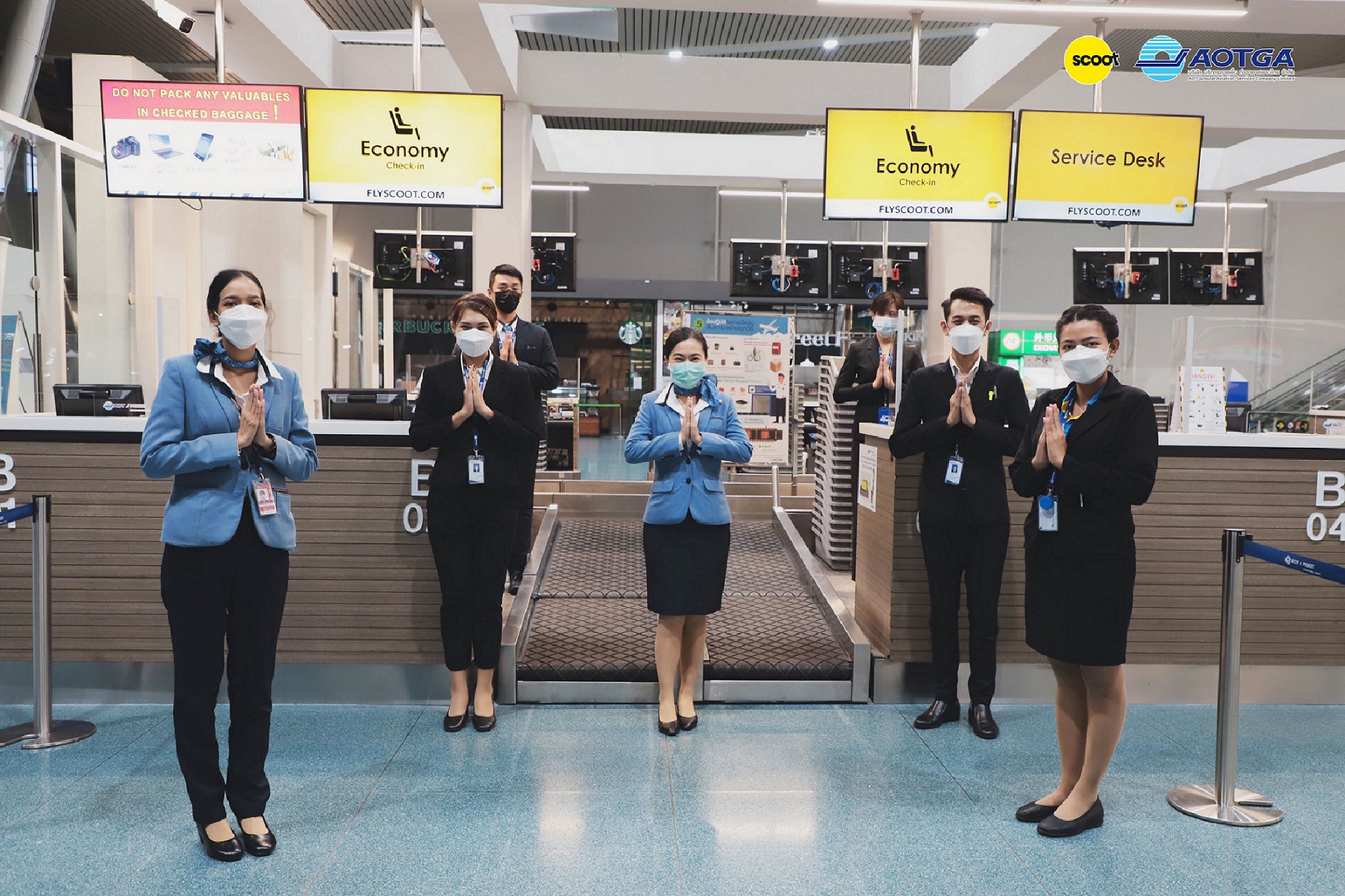 Scoot to Resume Flights Between Phuket and Singapore from 8 October 2021
 Scoot to Resume Flights Between Phuket and Singapore from 8 October 2021