Bitcoin climbed above $57,000 for the first time since May as speculators bet that the largest cryptocurrency will retest the record highs reached earlier this year.
It reached almost $65,000 in April, and has roughly doubled this year. The Bloomberg Galaxy Crypto Index increased as much as 2.4% on Monday.
As in past rallies, a myriad of reasons are being cited for the latest surge, from an easing of concern about regulatory efforts in the U.S. and China, as well as renewed optimism about a possible U.S. Securities and Exchange Commission approval of a Bitcoin exchange-traded fund. Investors are particularly excited that a Bitcoin futures ETF may be soon green-lighted by the U.S. regulator, as SEC chair Gary Gensler has signaled openness to a fund focused exclusively on the derivatives-based product.
ADVERTISEMENT
“A lot of investors and advisors have had crypto on their to do list, and are finally making the move with allocations that start with Bitcoin,” or crypto funds like the Bitwise 10 that invest heavily in Bitcoin, said Hunter Horsley, the chief executive of Bitwise Invest. Bitwise has seen “hundreds” of advisors make their first allocations to crypto over the last several weeks, with many flocking to the asset class amid macro-fears about inflation and low yields, he said.
Some strategists are also cheering the resilience of the Bitcoin as seen by the recovery in its so-called hash rate, a measure of computing power being contributed to the network, following China’s latest crackdown on mining earlier this year. As mining operations in China shut down, transaction processors across North America ramped up. A metric that tracks the hash rate’s power has jumped 103% since late June, according to a report from Luxor Technology.
“The time-honored FUD that China controls (or will attempt to control Bitcoin) is now moot. Hash rate is being distributed around the globe with North America emerging as the new dominant hub,” said the report.
Analysts who look at patterns in price charts say that $60,000 is the next level of resistance, though Bitcoin’s relative strength index above 70 suggests that its now in overbought territory.
Elsewhere, Shiba Inu — a Dogecoin-inspired meme cryptocurrency –climbed 20% after more than tripling over the last week, according to CoinMarketCap.
The Joint Standing Committee on Commerce Industry and Banking (JSCCIB) said that it will call on the PM as well as ministers of foreign affairs and commerce to reconsider the Comprehensive and Progressive Agreement for Trans-Pacific Partnership (CPTPP).
Sanan Angubolkul, chair of the Thai Chamber of Commerce and Board of Trade, said China, the United Kingdom and Taiwan have already started negotiating with CPTPP’s existing 11 members. He pointed out that if Thailand keeps putting off the decision, it may lose out on trade opportunities with neighbouring countries like Vietnam, Malaysia and Singapore.
CPTPP currently comprises Australia, Brunei, Canada, Chile, Japan, Malaysia, Mexico, New Zealand, Peru, Singapore and Vietnam.
The Joint Standing Committee on Commerce, Industry and Banking (JSCCIB) revised Thailand’s GDP growth for 2021 to between 0 and 1 per cent from its previous projection of -1.5 per cent.
The committee said there are several positive factors that will enhance the country’s economic outlook at the end of this year, including the vaccination rollout and clear moves toward reopening the country.
It also said that though schemes like co-payment subsidy Khon La Khrueng (Let’s Go Halves) and Rao Tiew Duay Kan (We Travel Together) campaign were good, more “money bag” schemes are needed to inject cash into the economy.
ADVERTISEMENT
The committee also said it is closely monitoring the pandemic to see if the number of infections rises once lockdown measures are eased. It is also keeping an eye on the impact of severe flooding.
Though flooding has eased in some areas, heavy rains have damaged large swathes of farming land, especially in the Northeast and Central regions. Damage has been estimated at 15 billion baht or 0.1 per cent of the GDP.
Meanwhile, exports are expected to grow 12 to 14 per cent thanks to a recovering global economy, a drop in freight price, a curb on infections in the industrial sector and mass vaccination of workers.
Headline inflation should be in the range of 1 to 2 per cent
The Stock Exchange of Thailand (SET) Index closed at 1,633.44 on Monday, down 5.97 points or 0.36 per cent. Transactions totalled 82.97 billion baht with an index high of 1,646.50 and a low of 1,629.95.
The index fell slightly after increasing by 0.35 per cent on Friday and 0.88 per cent on Thursday last week.
In the morning session, Krungsri Securities predicted the day’s index would fluctuate between 1,630 and 1,650 points despite rising oil price in response to tightening supply and hope over Thailand reopening after domestic Covid-19 cases have declined.
ADVERTISEMENT
The brokerage firm, meanwhile, said uncertainty over the US Federal Reserve signalling it would taper its quantitative easing and fund flow volatility would pressure the index.
The 10 stocks with the highest trade value today were TRUE, KBANK, STARK, BANPU, PTT, PTTEP, SCC, SVT, SCB and MONO.
Other Asian indices were mixed: Japan’s Nikkei Index closed at 28,498.20, up 449.26 points or 1.60 per cent. China’s Shanghai SE Composite closed at 3,591.71, down 0.46 points or 0.013 per cent, while the Shenzhen SE Component closed at 14,367.60, down 46.56 points or 0.32 per cent. Hong Kong’s Hang Seng Index closed at 25,325.09, up 487.24 points or 1.96 per cent.
South Korea’s KOSPI Index was closed for Hangeul Day, while Taiwan’s TAIEX Index was closed for National Day.
The pandemic has changed the way businesses and consumers are behaving. This combined with the already fast-pace developments of new digital technologies, means that businesses are constantly needing to change, reevaluate their strategy and refresh their business model.
While change in today’s day and age has always been increasingly rapid, recent challenges have accelerated this even more. The pandemic has changed the way businesses and consumers are behaving. This combined with the already fast-pace developments of new digital technologies, means that businesses are constantly needing to change, reevaluate their strategy and refresh their business model.
“All these changes have businesses revisiting how they manage their people; the nature of work has changed – many organizations are allowing their staff to work from home,” says Charoen Phosamritlert, Chief Executive Officer, KPMG in Thailand, Myanmar and Laos. “Needs of employees have also changed as they focus more on employee wellbeing and happiness. Therefore, efficiently navigating and successfully managing these changes as well as developing and retaining talents are key to successful people management in the era of the next normal.”
“There are a lot of challenges to HR management that businesses need to consider,” says Tidarat Chimluang, Advisory Partner, KPMG in Thailand. “First, businesses need to identify the objectives of HR management to align with the organization’s vision, mission and strategy for the next normal. Secondly, there needs to be a clear designation of roles and responsibilities as well as the qualifications of employees. It is also important to identify the HR Value Proposition or what is the main goal of the HR team, whether it’s employee development or increase employee engagement. Finally, organizations must revisit their HR Operating Model, which is the way they manage their HR strategy, including policy, mechanics, processes or using new digital technologies to manage their human resources.”
Charoen Phosamritlert, Chief Executive Officer, KPMG in Thailand, Myanmar and Laos.
ADVERTISEMENT
To increase business resiliency, a strong HR management strategy is needed. As part of building a robust HR strategy, businesses should consider these 4Rs:
1. Resilience: It is the ability to quickly react to change. Organizations need to design their business – whether through their organization structure or employee levels – to be agile, have a suitable span of organizational control, as well as promote collaboration among teams to create new innovations and to be able to efficiently and quickly answer clients’ needs and enhance agility.
2. Reshape: Reshaping the way human resources is managed, including hiring and workforce management. This is done under the concept of 4Bs.
a. Buy: Recruit and find new talented employees and skills into the organization.
b. Build: Enhancing the ability of employees and unleash their current capabilities in response to the changing needs of the organization.
c. Borrow: Apply outsourcing model and hire temporary employees to enhance organizational capabilities.
d. Bot: Use digital technology to support, enhance and manage the organization to become more efficient.
Tidarat Chimluang, Advisory Partner, KPMG in Thailand.
3. Reskill and Upskill: It is important that organizations increase their capabilities and their employees’ capabilities to support new goals, vision, mission and strategy. There are many aspects that employees need to improve on, such as digital technology, customer-centricity, design-thinking and ESG. All of this will allow employees to help their organization grow sustainably.
4. Retain: Whether in terms of recruiting talented employees or reskilling and upskilling current employees, if organizations cannot retain these employees, it will all be for nothing. Therefore, talent management to retain high performing employees is very important. Organizations need to be able to balance their employees’ happiness with good performance.
“After a company considers these aspects in HR management, it needs to build a roadmap for implementation,” continues Tidarat. “The roadmap will consider the HR Value Proposition in terms of the related operating model, defining gaps and closing the gaps. These all need to be aligned and be suitable for short-term and long-term strategies.”
Started in 2020, whyborder is an innovative web-based platform built to facilitate more cross-border real estate business opportunities for developers
Whyborder, a borderless property marketing platform, is opening the door to the region’s first international reverse bidding auction platform for properties. Global property buyers seeking purchase opportunities can connect with overseas developers who are offering premium discounted deals via whyborder. The first group of Thai properties to be listed for the auction are Maru Ladprao 15, Manor Sanambinnam, Hyde Sukhumvit 11, Supalai Oriental Sukhumvit 39, Supalai Elite Surawong & Supalai Prime Rama 9.
Started in 2020, whyborder is an innovative web-based platform built to facilitate more cross-border real estate business opportunities for developers, agents, sellers and buyers. Led by a team of experienced real estate professionals on a mission to transform the industry by providing greater transparency in property deals, whyborder opens up information that was previously difficult to access. The platform allows international buyers to view live virtual tours, videos, photos of interiors of properties, floor plans and construction documents, and to better understand districts and their proximity to mass transit, shopping malls, schools, and famous landmarks, so users can better assess and understand the property before making a purchase decision. Buyers can also liaise with agents and developers to address any specific concerns they may have or questions they want to ask. Already, there is a wide range of properties spanning 54 cities and covering 6,173 districts, 555 train lines, 9,537 train stations, and 9,649 landmarks listed on whyborder.com.
With travel restrictions still in place in many countries and the oversupply of properties in Thailand, whyborder offers a rare opportunity for investors and buyers to purchase properties at ideal prices directly from developers both from within and outside their home country.
ADVERTISEMENT
Prior to the pandemic the Thailand property market was booming with new developments popping up across the country with many eager buyers on hand to snap them up. But this all changed with the onset of the pandemic and the economic downturn it brought with it. Developers were left with a sizeable inventory of unsold units and buyers locked out of the country. This has led to a stockpile of available units sitting in the market, currently there are 30% unsold units in Thailand. The economic impact of the pandemic also saw a weakening of the Thai baht.
But the slowdown has given developers time to rethink and reassess what buyers are looking for, with one trend being a desire for low-rise condominiums. Located outside of the CBD, these units offer bigger living areas and more outdoor space, something that became a necessity in the work or study from home situation that came with the pandemic. Many analysts believe this trend will continue post-pandemic as people settle into a new way of living and working.
This of course does not signal an end to luxury high-rise condominiums in the CBD, far from it, they will still be the preferred choice for those seeking an urban life and the lifestyle these units provide, but what the changes in the market show is that there are now more choices emerging and that leaves keen buyers with more options. Moreover, with the Thai baht currently weaker, now is the perfect time for savvy international buyers to enter the market before a post-pandemic boom kicks off.
One of the unique highlights of whyborder is the whybid auction system which differs from any other in the market, the bids are in reverse order, going down to lower buying prices, not higher. The winning bid gets the featured condo, while all other bidders will be offered other recommended condos in the same property. There is consistently a high number of condos available in the system and the Thailand auctions will be available in 7 countries at the same time, giving access to a large number of motivated buyers and whyborder/whybid has a large database of buyers/investors in those 7 countries. Local agencies handle all purchase details and transactions – currently, Nexus is the Thai partner property agent.
As whyborder is a completely web-based service it makes the entire process easier and more streamlined easy for foreign buyers to bid on and buy the properties they want all from the comfort of their home outside of Thailand. Every aspect has been thought of, from viewing and comparing properties and researching districts, right down to providing local lawyers for immediate and free expert advice via the chat system, all of which ensures a seamless buying experience that gives confidence to the buyers. Once bidding closes the buyer who placed the highest bid above the seller’s reserve price will be the property owner. Due to the technology innovations employed by whyborder, the entire transaction will be completed in just two months, which is half the time it usually takes. The first whybid auction will be taking place from 08 to 15 October 2021.
Mr.Dave Loo, Founder and CEO of whyborder.com said “Buying properties is a major decision, our goal is to facilitate a better decision making process by offering transparency and a wealth of information and features to make buying and selling accessible to all, no matter where in the world they are located. Pre-pandemic, the Thailand real estate market was booming and had been on the rise for a long time. As a result, there was a surge in domestic and foreign investors all looking for a piece of the pie. The real estate market in Thailand offers a variety of opportunities for buyers from luxury high-rise condominiums to low-rise condominiums, houses, and villas in top tourist destinations such as Phuket and Koh Samui. Investors had been flocking to Thailand to purchase a holiday home or a piece for real estate for rental yield. This led to a solid Thai Baht pre-pandemic, and new developments were launching left, right and, centre. Top property developers brought massive land areas near major public transportations stations and new condos were rapidly launched, and it became overwhelming to buyers with so many condos to choose from. The onset of the pandemic saw the market plateau signalling a significant shift in buyer behaviour which required developers to pivot and align with new trends and demands. This called for a change, there needed to be some new thinking and approaches both to the types of properties being built and how to connect with buyers, especially those locked out of the country due to border restrictions. Developers have been quick to jump on the trend for low-rise condominiums outside of the CBD to cater to those seeking a new way of life, one that was triggered by the pandemic but shows all the signs of continuing once it passes. We created whyborder to be the conduit between motivated overseas buyers and developers keen to sell their properties as well as meet their need in all aspects.”
Ms.Butsarin Rungrattanakul, Director (Marketing and Sales) of Supalai Development said “This is good opportunity for us to collaborate with an innovative partner on the pulse of what is needed in the Thailand real estate market today and into the future. The pandemic had a significant impact when it came to foreign buyers and investors as they could not gain entry to Thailand to view properties and go through all the purchase requirements in person, whyborder’s offering now eliminates that roadblock and opens up a world of new opportunities for property developers like us. Thailand’s borders may be closed to prospective offshore buyers, but now we’re open for business and we’re ready to welcome them online through whyborder.”
#AnywhereAnytime and reemphasizing our commitment to being a hospital of innovation.
Chairat Panthuraamphorn, M.D., Managing Director and CEO of Samitivej and BNH Hospitals, remarked that, “Samitivej has a vision to innovate continuously in order to respond to the ever-changing situation in the present, especially during the COVID-19 pandemic whereby people are fearful of visiting the hospital but still require seeing their doctors. This has led to the Samitivej Virtual Hospital taking on greater prominence. As such, we have developed its functions and capabilities to reflect those changes.”
Samitivej Virtual Hospital offers a comprehensive range of services, including 24-hour access to consult doctors online in real-time. This enables patients to seek advice from our roster of 642 doctors representing 51 fields of specialty. In this way, patients can consult our doctors regarding general health concerns, such as a headache, fever or asthma, as well as more specialized issues, such as dermatological concerns, gastrointestinal issues, psychological problems, office syndrome, or pediatric concerns. Our patients are now also able to make insurance claims for these services as we have agreements in place with 13 leading insurance providers. Moreover, we offer Test@Home services for home blood testing, and medicine delivery through the Samitivej Virtual Hospital’s partnership with Save Drug, a pharmacy and health products store operating within the BDMS group. Because Save Drug has branches throughout Thailand, rapid delivery times can be achieved to ensure the utmost convenience to our patients.
Samitivej is a Virtual Hospital pioneer, giving patients 24-hour access to online teleconsultations with our 642 doctors
ADVERTISEMENT
You can quickly and conveniently access our services #AnywhereAnytime through the following channels:
● Samitivej Plus Application, which is the main channel
Samitivej is a Virtual Hospital pioneer, giving patients 24-hour access to online teleconsultations with our 642 doctors
Chairat Panthuraamphorn, M.D., added that, “The COVID-19 pandemic has led to a massive growth in the number of patients, with Samitivej Virtual Hospital statistics showing a 221% increase between August 2020 and August 2021. The most common health concerns brought up in teleconsultations were dermatological, gastrointestinal, and pediatric concerns. However, there has also been a significant upturn in the number of consultations being sought in regard to both adult and childhood mental health, as a result of the transformation of lifestyle habits brought about by the COVID-19 pandemic. Up to 95% of patients have stated their willingness to tell others about this service, showing how telemedicine technologies are set to continue growing in response to the evolving needs of our patients. Samitivej is therefore committed to future developments that will place us at the forefront of this evolution through the adoption of the latest innovations and technologies that will help create value for society and our community and reflect our focus on being an agile organization of value and our vision that ‘we do not want anyone to get sick.’”
Samitivej is a Virtual Hospital pioneer, giving patients 24-hour access to online teleconsultations with our 642 doctors
Samitivej Virtual Hospital was launched in March 2019 and has since undergone constant development. We provide a comprehensive range of healthcare services capable of improving the lives of our patients with utmost speed and convenience. This focus on innovation has seen Samitivej Virtual Hospital recognized at home and abroad, recently receiving the following 4 awards:
● Prime Minister’s Export Award 2021: Best Service Enterprise Award (Health & Wellness) for outstanding healthcare services offered through Samitivej Virtual Hospital, Samitivej Plus App and Precision Medicine.
It was the worst oil spill Marathon Petroleum had seen in years. A crack in a 60-year-old underground pipeline released 1,400 barrels of diesel fuel into an Indiana creek, staining the banks of the waterway and threatening a population of endangered freshwater mussels.
The incident barely registered, however, in the performance reviews of Marathon’s top executives, who earn part of their annual bonus by meeting environmental goals. Because these reviews account for the company’s number of significant oil spills in a year – not the total volume of oil – the Indiana spill counted as just one of 23 incidents in 2018.
The way Marathon evaluated its executives, 2018 was the company’s best environmental performance in at least eight years. The board of directors awarded chief executive Gary Heminger $272,251 for “excellence in environmental, personal safety and process safety improvement.”
ADVERTISEMENT
Many of the largest fossil fuel companies reward top executives for meeting environmental goals, a compensation tactic they adopted over the past two decades as a response to regulators and investors concerned with pollution and worker safety.
But the way some of these incentive programs are designed allows companies to award executives their full bonuses even in years when the firms cause major environmental damage or total emissions go up, according to a review of pay disclosures from six of the largest U.S. oil and gas companies and interviews with experts in compensation and environmental data.
Four of the companies – Chevron, Valero, Phillips 66 and Occidental Petroleum – have never missed their environmental targets in all the years they have publicly disclosed such goals, filings show. And yet, researchers who study environmental data for MSCI, an investment analytics firm, said three of the companies – Valero, Phillips 66 and Occidental – still lag behind the industry average for reducing toxic emissions, carbon emissions or both.
Marathon, which only missed its environmental targets once in the past decade, was rated average for toxic emissions and carbon emissions among oil and gas refining companies reviewed by MSCI.
“When you meet the metrics every year, that suggests that the metrics haven’t been sufficiently challenging,” said Rosanna Landis Weaver, executive pay program manager for As You Sow, a nonprofit group backed by foundation grants and individual donors that advocates for corporate social responsibility.
In some cases, experts say, companies are using metrics that don’t provide a full picture. Marathon’s focus on the number of environmental incidents across all of its operations means “very poor performance at one or two sites” – such as a large oil spill – “can be diluted by outperformance at other facilities,” Trillium Asset Management, an investor in Marathon that pressures companies to improve their social, governance and environmental practices, said in a letter to the company’s shareholders last year.
In emailed responses to questions, Marathon spokesman Jamal Kheiry said the company uses incentives to “measure the effectiveness of our environmental management system, and drive continuous improvement in environmental stewardship.”
Another oil giant, Occidental Petroleum, has given bonuses to executives for investing in carbon-capture projects even as the company’s total carbon emissions have gone up, filings and company emissions data show.
Occidental spokesman Eric Moses said the company has pledged to eliminate carbon emissions by 2050 and would soon begin evaluating executives on progress toward that goal. The carbon capture projects will “help both Occidental and businesses in other industry sectors to achieve shared net-zero goals.”
Lillian Riojas, a spokeswoman for Valero, said the company has “been able to meet our environmental targets because we have made very significant progress over the last decade” in areas including safety and toxic air emissions.
Chevron spokesman Sean Comey said the company’s board has updated its annual bonus program three times in the past three years to add incentives for reducing methane flaring, greenhouse gas emissions and investments in carbon offsetting.
Bernardo Fallas, a spokesman for Phillips 66, declined to comment.
Critics say climate goals are usually such a small portion of bonus plans that they have little influence over executive behavior. When Shell made emission reduction goals 10 percent of its executive bonus last year, some environmentally minded investors opposed the plan, arguing that over 50 percent of the annual bonus was still based on growing the company’s production of gas.
The pay package “encourages executives to chase higher levels of fossil fuel output,” said Simon Rawson, a director at ShareAction, a United Kingdom-based nonprofit that works to promote better corporate behavior and receives the majority of its funding through charitable grants.
This year, Shell said it would make emission reductions a greater portion of annual bonus incentives and remove natural gas production goals completely. Anna Arata, a Shell spokeswoman, said the pay packages of 16,500 employees partially depend on meeting companywide short-term emission goals.
The failure of some pay programs to promote better corporate behavior highlights a lack of oversight by corporate boards of directors, who approve executive pay at publicly traded companies and are tasked with managing long-term risks such as climate change, Rawson said. Even as many boards acknowledge this mandate – creating climate committees and designating sustainability chairs – they’ve failed to hold executives accountable for real action on environmental issues, he said.
The energy industry’s experience is a cautionary tale for the broader business world. Dozens of large companies, including Coca-Cola, Walmart, Ford Motor Co. and Procter & Gamble, have tied executive pay plans to environmental targets as they face pressure from investors to mitigate climate change, said Mindy Lubber, chief executive of climate advocacy group Ceres.
“CEOs do what they are paid to do,” said Lubber, whose Climate Action 100+ initiative pushes large companies to set carbon emission goals and have at least one senior executive’s pay tied to the company’s progress toward those emission goals.
But as evidence from oil and gas companies shows, executives can score highly on environmental goals even when their companies have mixed track records on the environment.
During Heminger’s tenure as Marathon CEO, from 2011 to 2020, climate advocates criticized the company for being slow to adopt a carbon reduction plan and for its role in orchestrating a Washington lobbying campaign aimed at loosening restrictions on vehicle pollution. Marathon says it was advocating for a review of the “feasibility” of current vehicle pollution standards and never took a position on whether changes to those standards were needed.
Pollution at Marathon refineries led to Clean Air Act violations and congressional scrutiny over toxic air emissions at a Detroit refinery, where local residents have complained for years about the facility’s release of toxic chemicals which they believe contribute to a high rate of respiratory illness in their community.
In Marathon’s annual pay disclosures, Heminger is credited with meeting or surpassing environmental targets during nine of his 10 years as CEO. He earned a total of $1.9 million for meeting these goals, including added payouts for exceeding expectations in five of those years, a Post analysis of energy company bonuses shows.
Heminger, who retired last year, declined to comment.
Marathon’s bonus system was questioned last year by Trillium Asset Management, which saw a disconnect between the way executives were rewarded and the way company facilities had harmed communities in places like Detroit. The investor asked Marathon to publish a report exploring how it could better incorporate community concerns into its bonus system.
In a proxy filing, Marathon’s board opposed the measure, saying unlike its current, quantifiable metrics, community concerns “would be difficult to measure and audit.” The board said it had the power “to reduce or completely eliminate awards” if it finds “our performance in any area, including our impact on the communities where we live and operate, has been unsatisfactory.”
Trillium has since sold its shares in Marathon, said Jonas Kron, Trillium’s chief advocacy officer.
Under its bonus system, Marathon classifies all spills, air emissions, permit violations and regulatory actions into four tiers, based on their severity, and only counts the most severe incidents in the annual bonus plan. Oil spills, for example, are only counted if they release 10 or more barrels into water or 100 or more barrels onto land.
By this measure, the company has been fairly consistent: Every year from 2013 to 2019, the company experienced one or two pipeline oil spills of over 100 barrels, according to data from the Pipeline and Hazardous Materials Safety Administration.
But these numbers fail to account for the larger impact of spills like the one at Indiana’s Big Creek – at the time, Marathon’s largest pipeline spill by volume in seven years. Marathon sent around 80 responders to clean up the site, according to Kevin Turner, an on-scene coordinator with the Environmental Protection Agency, and agreed to fund an effort to propagate the mussel population.
Kheiry, the Marathon spokesman, said the company continually updates its technology and procedures to prevent oil spills and that this spill represented an “unanticipated risk” because it was caused by bank collapse, which usually doesn’t happen on flat terrain. The company recovered most of the spilled oil and cleaned up the banks of the creek. He said one bird died as a result of the spill and “there is no evidence that mussels were impacted.” He added that Marathon does try to account for the severity of incidents by using its tier system; the Indiana oil spill counted in the highest tier.
Because Marathon has grown its operations, it’s hard to assess whether the company has reduced its overall environmental harm. In four different years, Marathon counted a higher number of environmental incidents than the year before, but Heminger got his full environmental bonus anyway, because the board set higher limits for the number of incidents those years.
Marathon’s Kheiry said the company has grown significantly over the past decade, including with its acquisition of oil refining rival Andeavor, in 2018. Because it has more pipelines, refineries, gas processing plants and other facilities, the company is exposed to more environmental risk, and therefore its board sometimes raises the limits, Kheiry said.
“We believe our record of reducing incidents at newly acquired assets and maintaining superior performance at our existing assets shows that the [compensation] program has been a success,” Kheiry said.
Marathon says its environmental metrics are checked by its internal auditing group but are not reviewed by any independent third party.
Some of the people who live near Marathon’s Detroit refinery say air pollution remains an ongoing problem in their community. Vicki Dobbins, who lives blocks away from the refinery, says her neighborhood still smells like “old garbage” due to gas emissions.
“You can sometimes ride through here and the air is so strong you have to hold your breath,” Dobbins said.
After a release of toxic air emissions at the refinery in 2019, dozens of residents called local health officials to complain of a noxious gas affecting their breathing, according to the Michigan Department of Environment, Great Lakes, and Energy, which cited the company for causing a nuisance. Rep. Rashida Tlaib, D-Mich., convened a field hearing in Detroit and the House Committee on Oversight and Reform asked the EPA to investigate the problem of chemical leaks at the refinery.
Earlier this year, Marathon settled with Michigan over 10 different environmental violations covering several incidents from the past four years, agreeing to take new precautions including a community air quality website visible to the public. Tim Carroll, an EPA spokesman, said the agency conducted an inspection of the refinery in July of this year and “will share more information about it when it becomes publicly available.”
Marathon, citing data from Michigan’s state pollution database, said air emissions at the Detroit facility have declined 80 percent over the past 20 years, and said the vast majority of air pollutants in that area of the city are now generated by other neighboring industrial facilities, such as steel and automobile plants and a sewage treatment center.
The company says it’s working with residents of southwest Detroit. As part of its settlement, Marathon agreed to install a new air filtration system at a public pre-k-8 school less than a mile from the refinery. Marathon says it also set aside $5 million this year to buy the homes of some residents who want out.
The threat of climate change has forced many companies to rethink their pay practices. Investors are pushing energy giants to go beyond pollution goals and incorporate carbon emission targets into CEO pay, claiming that may be the best way to motivate executives to take the drastic actions necessary to meet long-term carbon reduction goals.
The challenge, says U.K. researcher Dario Kenner, is that oil executives are already hardwired to grow profits and revenue from fossil fuels, which often means generating more carbon emissions. Kenner, who researches wealth and climate change, co-authored a study this year that found executives of BP, Chevron, ExxonMobil and Shell all have strong personal incentives to delay significant carbon reducing measures.
While Marathon, Occidental, Chevron and Valero all began linking executive bonuses to carbon emission goals within the past two years, these companies all still incentivize executives to grow financial or production metrics, such as earnings, cash flow or total oil production, filings show.
“If you have big chunky metrics that are linked to production and growth, that is going to drive executive behavior,” says ShareAction’s Rawson, who helped lead the opposition to Shell’s pay programs last year.
For the past three years, Houston-based energy giant Occidental has rewarded CEO Vicki Hollub a total of over $600,000 for meeting the company’s environmental, safety and sustainability goals, the Post analysis of bonuses shows. These goals encouraged Hollub to make investments in carbon capture technologies, which the company described as “an important feature of Occidental’s strategy to reduce its greenhouse gas emissions while growing its business.”
But scientists say capturing carbon is energy-intensive and not yet contributing to a meaningful reduction in carbon emissions. Rather than decreasing its emissions, Occidental’s total carbon emissions from its direct operations grew by 30 percent from 2017 to 2019, according to company data.
The company’s efforts in carbon capture “have not yet translated into quantitative evidence in terms of overall improvement in the company’s performance for carbon emissions,” said Antonios Panagiotopoulos, a vice president at MSCI.
Moses, the Occidental spokesman, says its emissions numbers reflect an increase due to its 2019 acquisition of Anadarko Petroleum.
The Agriculture and Cooperatives Ministry on Sunday released guidelines and strategies for the Thai rubber sector to penetrate the global market.
Alongkorn Ponlaboot, an adviser to the ministry, said the six guidelines and seven strategies have been devised to develop products, boost farmers’ income and open more trading channels.
He added that the strategies also cover income guarantees, application of new market mechanisms and projects, such as online auctions, rubber futures exchange market and the Rubber Valley project.
ADVERTISEMENT
“We are making changes in the rubber industry to meet market demands amid the Covid-19 crisis and to generate income for the 1.83 million rubber farmers nationwide,” he said.
He added that Asia was the world’s biggest rubber supplier, while Thailand is the largest rubber manufacturer in the region.
“Thailand is still the largest exporter of concentrated rubber latex and smoked rubber sheets in the world,” he said.
Alongkorn said he expects Thailand’s rubber production and exports to grow further as the country can produce 92-per-cent fresh rubber latex and hold almost 70 per cent of the global market share. He also pointed out that there is a rising demand for medical rubber products like gloves due to the Covid-19 crisis.
“Thailand has the opportunity to penetrate another 100 countries in addition to Malaysia, China and South Korea, which are the largest importers of Thai rubber,” he added.
The baht opened at 33.90 to the US dollar on Monday, weakening from the previous closing rate of 33.85.
The Thai currency is likely to move between 33.85 and 34.00 during the day and between 33.50 and 34.00, Krungthai Bank market strategist Poon Panichpibool predicted.
Poon said that investors should speculate on the upcoming bond auction. Foreign investors will invest in Thai stocks if the demand was more than expected, which caused the baht to strengthen.
ADVERTISEMENT
However, the baht will not strengthen soon because it was affected by many domestic factors such as floods and the Covid-19 situation.
Meanwhile, Poon said the dollar might weaken as the market opens for more risks which decrease the possession of the dollar as a safe-haven asset.
Moreover, the dollar might continue to weaken if the US Federal Reserve expressed its concern for economic recovery or does not decrease the quantitive easing (QE). The dollar’s momentum was supported by many risk factors such as stagflation or Evergrande’s crisis.
Poon said that the baht almost weaken past the level of 34.00 to the dollar many times. He said that the weakening momentum might slow down in the short term.
The key resistance level for the baht would be at 34.00 to the dollar, which is the level at which exporters might sell the US currency.
The baht’s key support level would be from 33.60 to 33.70, the level some importers are waiting for so they can buy dollars, he added.
In the previous week, the market opened for more risks after it eased its worries about the US debt ceiling negotiation. The market is waiting for the Fed’s economic statement and QE decreasing policy this week after the lastest Nonfarm Payrolls was worse than expected.




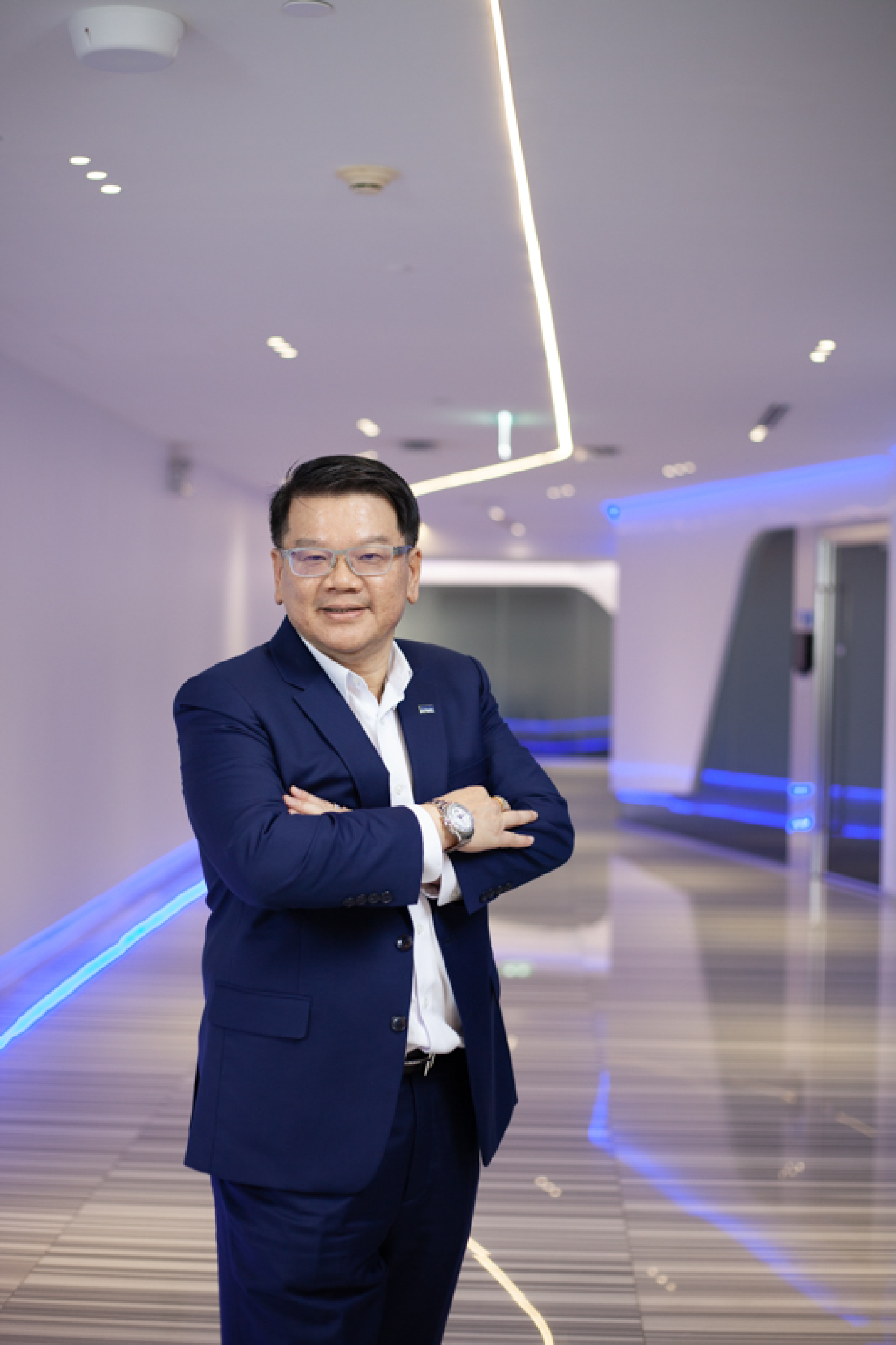 Charoen Phosamritlert, Chief Executive Officer, KPMG in Thailand, Myanmar and Laos.
 Tidarat Chimluang, Advisory Partner, KPMG in Thailand.

 Samitivej is a Virtual Hospital pioneer, giving patients 24-hour access to online teleconsultations with our 642 doctors
 Samitivej is a Virtual Hospital pioneer, giving patients 24-hour access to online teleconsultations with our 642 doctors
 Samitivej is a Virtual Hospital pioneer, giving patients 24-hour access to online teleconsultations with our 642 doctors