SET to launch “Live Exchange” market for SME fundraising
The Stock Exchange of Thailand (SET) is opening a new market on September 14 called “Live Exchange” to serve as a fundraising platform for small and medium enterprises (SMEs).
“Currently there are about 30 SMEs who have expressed interest in this market by joining SET’s training programme called “Scaling Up Platform”, which will help prepare them for the fundraising,” said Manpong Senanarong, SET senior executive vice president and head of issuer and listing division, on Thursday.
“We expect the fundraising in Live Exchange will actually start at the earliest before the year-end, or in early 2022 at the latest.”
Businesses who join the market before 2023 will be exempted from all the fees for three years, he added.
“Interested businesses will be allowed to submit their filings after the Securities and Exchange Commission has issued all related regulations of the market,” said Manpong.
“The consideration period of filings for the new market will be shorter compared to the SET and MAI [Market for Alternative Investment].”
Live Exchange will open only to SME operators who meet the asset requirements and not to retail investors. Trading will open one round per day and continuous trading is not allowed. Investors can only sell shares that they actually hold, while buyers of shares must use cash only.
Baht stable but sales by foreign investors could trigger volatility
The baht opened at 32.72 to the US dollar on Friday, unchanged from Thursday’s closing rate.
The Thai currency is likely to move between 32.65 and 32.80 during the day, Krungthai Bank market strategist Poon Panichpibool predicted.
Poon said the baht would drift sideways. The baht might be volatile and weaken during the day while many foreigners were selling Thai assets this week — stocks and bonds.
The key resistance level for the baht would be from 32.90 to 33.00 to the dollar, which is the level at which exporters might sell the US currency, Poon said.
Meanwhile, the baht’s key support level would be from 32.50 to 32.60, the level some importers are waiting for so they can buy dollars, he added.
Facebook smart glasses put cameras on your face. Everyone around you should be aware
Facebook is betting that the future of socializing online will involve high-tech face computers foretold by science fiction sages. But when it comes to “smart glasses,” the company isnt quite there yet.
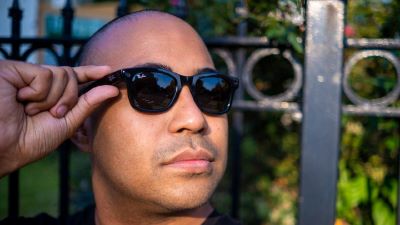
The social media company on Thursday unveiled a $300 pair of specs built in partnership with eyewear company EssilorLuxottica that lets wearers take photos and videos from their perspective. There are no fancy displays or built-in 5G connectivity – just a pair of cameras, a microphone, and some speakers, all wedged into a set of Wayfarer-inspired specs.
Facebook argues that wearing tiny computers with cameras on our faces while we interact with the world and people around us might be fun and will get us one step closer into its metaverse. But devices like these come with serious questions about your privacy, and the privacy of the people around you. They’re also a reflection of Facebook’s further expansion into our lives: Our phones, our computers and our livings rooms weren’t enough.
Facebook isn’t the only tech company with smart glass ambitions, and many early experiments weren’t successful. Google started selling early versions of its Glass headset in 2013, but it quickly flopped as a product for consumers – now it’s just a tool for businesses and software developers. Snap first started selling camera-laden Spectacles in 2016 but it had to write off nearly $40 million because of unsold inventory. (In fairness, later models seemed to fare better.) Within the past two years, Bose and Amazon jumped on the bandwagon with glasses of their own, each using built-in speakers to play music and podcasts. By comparison, Facebook’s first crack at consumer-ready smart glasses doesn’t seem all that novel.
I’ve spent the past few days in New York wearing Facebook’s glasses, and I’ve come to realize the most important thing about these might be that they just aren’t too smart.
– – –
There’s a pretty good chance you wouldn’t be able to identify these as smart glasses at all if you saw them on the street. People will be able to pay extra for different frame styles and even prescription lenses, but the pair I’ve lived with for the past week mostly just look like a pair of standard Ray-Ban sunglasses.
To Facebook and EssilorLuxottica’s credit, they feel like standard sunglasses, too – the arms are much thicker than usual to fit all the sensors and components inside, but they never felt cumbersome or uncomfortable. Even better, they weigh only a few grams more than the Wayfarers you might already own.
Facebook’s grand idea here is that, by putting a device that shoots photos, captures videos, and plays music right on your face, you get to spend more time living the present and less time fiddling with your phone. Ironically though, these glasses aren’t particularly great at any of those things.
Take the pair of 5-megapixel cameras next to each lens, for instance – they’re capable of snapping some decent still images when you’re out in broad daylight, but they pale in comparison to the 12-megapixel photos many common smartphones can capture. I could say the same about the video quality. The results generally look good enough to splash across TikTok and Instagram, but you’re limited to shooting 30-second clips. And since only the right camera records video – and square video, no less – the vantage point seen in your footage often feels a little off-kilter.
So much for capturing the world as you see it.
Facebook says all that imagery remains encrypted on the glasses until you transfer them to the Facebook View app on your smartphone, where you can edit and export them to your social media platform of choice. Facebook’s software offers you a few options for sprucing up your files, like stitching multiple clips together into neat little “montages,” but the offered tools sometimes feel too limiting to produce the results you want.
The fastest way to start taking photos or recording video is by reaching up and clicking a button on the right arm of the glasses. And once you start capturing the world in front of you, people around will know it, thanks to a single, bright white light that fires up when you’re recording. According to Facebook, people will be able to see that indicator from up to 25 feet away, which in theory gives them the opportunity to scoot out of your field of view if they want to.
But that assumes a sort of literacy with Facebook’s design that most people won’t have out of the gate. (These are, after all, pretty niche gadgets.) Word to the wise: If you see part of someone’s glasses light up, you might wind up in someone’s next social media post.
And those speakers? Well, they can’t drown the din of a subway car, but they were pleasant enough to keep me distracted during some long walks. They’re also just loud enough to be usable for phone calls, though you’ll have to deal with the embarrassment of talking aloud to no one in particular. There’s just one rub: These are open-air speakers, so if you can hear your music or the person on the other end of a phone call, chances are someone else might be able to as well. (That said, they’d need to be very close to you to eavesdrop effectively.)
The right arm of the glasses is touch-sensitive, so you can tap it to jump between music tracks. And Facebook’s new voice assistant is baked into the frames, so you can tell your sunglasses to take a photo or start recording a video.
Yes, that’s right: These glasses listen to you.
– – –
I’d be willing to bet that you – or someone you know – have wondered if companies like Facebook tap into your phone’s mic to listen to you. I mean, how else would the ads you get served feel so personal?
The real answer is that these companies don’t need our microphones; the behaviors we offer to them are enough to effectively target ads at us. But here’s a product you’re supposed to wear on your face, built in part by a company with a long, questionable history of privacy protection, with a microphone inside it. How could Facebook reasonably expect someone to buy these, let alone wear them for the five or so hours it takes to drain the battery?
The company’s answer, in a way, was to prevent smart glasses from acting too smart. In the case of the Facebook voice assistant , the company insists it only listens for the “Hey Facebook” wake word. And even then, there are only three things you can ask after that: Take a photo, record a video, and stop recording. Facebook will almost certainly teach its Siri rival new tricks soon enough, but turning off those listening features entirely is plenty simple, and probably a good idea.
The company’s intentional ignorance doesn’t end there. When you take a picture with your smartphone, there’s a pretty good chance your location is embedded into that image. The same can’t be said for these Ray-Bans, since they don’t contain a GPS or any other kind of location-tracking component. I checked the metadata of every photo and video I captured, and my location didn’t appear in any of them. Facebook confirmed that it won’t look at the photos and videos you’ve stored in the Facebook View app to target ads either – that can only happen once you’ve shared that media directly on Facebook.
These glasses also don’t know how to play nice with anything but your smartphone. And even if someone does figure out how to access your files, Facebook says they all stay encrypted until they’re transferred to your phone – and your phone only. For a nerd like me, who’d love to dump those videos onto my computer for editing, that’s a bit of a disappointment. Still, I understand why: More connectivity means more vulnerabilities, and Facebook can’t afford to put any of those in front of your eyes.
Whether these protection features are enough to comfort anyone is a deeply personal choice. If Facebook CEO Mark Zuckerberg’s grand plan is to get us all comfortable wearing powerful, augmented reality glasses, it can’t afford to freak people out this early on.
ECB slows crisis stimulus for next quarter as rebound takes hold
The European Central Bank will slow down the pace of its pandemic bond-buying program in the final three months of 2021, an acknowledgment that the euro areas recovery is strong enough to endure with less support.
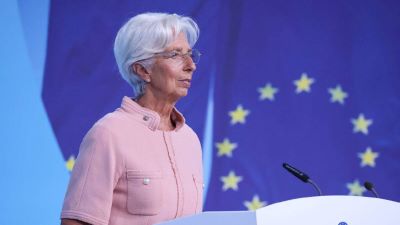
The Governing Council decided it will conduct purchases at a “moderately lower pace” than the roughly 80 billion euros ($95 billion) of monthly acquisitions deployed in the past two quarters. ECB President Christine Lagarde justified the decision by saying the economy’s “increasingly advanced” rebound could be maintained with less monetary help.
She also cautioned that the global spread of the delta variant could yet delay the full reopening of the economy. Officials, who revealed new forecasts showing inflation will still undershoot their target, reiterated a pledge to keep the 1.85 trillion-euro program running until March 2022 or later if needed, signaling they’re not yet ready to discuss ending the measure.
The ECB’s move to persist with stimulus contrasts with major central banks elsewhere, a stance Lagarde was keen to emphasize. The U.S. Federal Reserve and the Bank of England have signaled their intention to gradually unwind crisis-era aid.
“The lady isn’t tapering,” she said, describing the ECB’s decision on Thursday as “a recalibration of the pandemic emergency purchase program for the next three months.”
That timetable makes the December meeting a crucial one for the future of the central bank’s stimulus program.
New staff forecasts showed a stronger near-term outlook for prices and growth, though still insufficient to fulfill its mandate. Inflation will average only 1.5% in 2023, below its 2% target.
Lagarde’s balanced message to investors meant the ECB was able to dial down its level of stimulus without provoking an immediate market backlash. The euro trimmed gains as she spoke, trading little changed on the day at around $1.1821 as of 3:34 p.m. Frankfurt time.
“This is not a tapering decision, as ECB President Lagarde stressed,” Elga Bartsch, head of macro research at the BlackRock Investment Institute, said in an emailed comment. “Asset purchases look here to stay as the new policy framework paves the way for looser for longer monetary policy in the euro area.”
Follow the press conference on our live blog
With supply-chain disruptions and resurgent virus infections threatening to undermine the recovery and medium-term price pressures likely to remain well below its goal, officials have insisted in recent weeks that the euro-area economy is in a different state than the U.S. and remains reliant on ECB support.
Yet some governors have started to warn publicly that maintaining an ultra-accommodative stance for too long also carries risks. Austria’s Robert Holzmann and Klaas Knot of the Netherlands both told Bloomberg in separate interviews last week that emergency asset purchases should end in March, hinting at heated discussions about the policy path in the months ahead.
The ECB’s main guide will be financing conditions across the 19-nation bloc. Government bond yields and the euro slid over the summer months, before picking up again recently in anticipation of Thursday’s announcement.
Policymakers also took the following decisions:
– The deposit rate remains at -0.5%.
– Interest rates won’t rise until projections show inflation sustainably at 2% and underlying price pressures are consistent with that goal.
– An older asset-purchase program continues at 20 billion euros a month.
– Long-term loans to banks will continue to support lending.
Russian oil shipments to the U.S. set to surge in Ida wake
The prolonged shutdown of Gulf of Mexico oil production in the wake of Hurricane Ida is creating an opportunity for Russia to expand its share of the U.S. oil market.
Imports of Russian oil from the Urals to the U.S. are set to increase in September and October as 77% of U.S. Gulf offshore production remains shut 10 days after Ida made landfall on the Louisiana coast, according to people with knowledge of the situation. Gulf coast refineries looking for oil in the absence of supply from the Gulf are supporting higher prices for medium sour Russian oil that is similar to grades produced in the Gulf of Mexico.
Three cargoes of Urals crude have been bought by U.S. refiners over the past few days, said traders involved in the market. The shipments will be loaded in the second half of September and arrive in the U.S. by mid-October, they said.
While it’s not uncommon for U.S. fuel makers to buy Urals, the heightened interest in the aftermath of Ida is said to be supporting prices. Urals is trending at a 7-month high, with bids of $1.05 below the Dated Brent benchmark on Wednesday, compared with a discount of $1.95 per barrel before the hurricane hit. Prices strengthened even with the prospect of OPEC bringing more production online.
Ida has knocked out 20.6 million barrels of oil production so far, more than any other storm in the past 13 years. Royal Dutch Shell is still assessing damage to West Delta-143, a critical offshore transfer station that funnels a large portion of Gulf of Mexico crude to the coast. With the platform down, Shell shut the production of medium sour Mars. The company just declared force majure on a 2-million-barrel cargo of Mars crude to China’s Unipec, said people with knowledge of the matter.
As power is restored in Louisiana and refineries restart they will continue to need more crude to resume fuel production. Exxon Mobil’s refinery in Baton Rouge is awaiting more crude oil to restore normal operations. The U.S. Department of Energy is trying to soften the blow from Ida by loaning oil from its strategic reserves. It has loaned so far 1.8 million barrels to refiners including Exxon.
Alibaba sex crime suspect release shows China #MeToo woes
A decision by Chinese prosecutors to drop charges against a former Alibaba Group Holding manager accused of rape underscores the raft of challenges facing women who seek to navigate Chinas justice system.
Police had launched an investigation into the man, whose surname is Wang, on allegations of “forcible indecency” — a broad category that encompasses sexual assault and stops short of rape. But ultimately they said they couldn’t prove that his behavior following an alcohol-fueled dinner with clients amounted to a criminal offense. Wang was released after the maximum 15 days of detention on the lesser charge of “indecency.”
What’s more, the female employee will likely face a difficult time seeking recourse in civil courts. China’s system provides much stronger protection for the defendant than the U.S., for example, where the more likely version of events usually wins the day.
Some Chinese legal scholars have said the courts need 85% certainty the incident occurred, a standard that typically involves providing evidence like a video recording or screenshot, according to Darius Longarino, a senior fellow at Yale Law School’s Paul Tsai China Center who has worked extensively on China’s sexual harassment civil legal framework.
“Overall, Chinese courts tend to give little weight to testimony in general, which creates problems for survivors whose cases depend solely on testimony,” said Longarino, who added that companies also have a role to play.
“The Alibaba case shows that companies need to institutionalize their anti-sexual-harassment measures and not leave it up to individual managers, making ad hoc decisions without a guiding policy,” he added. “MeToo incidents in China will keep happening without a larger change in workplace cultures.”
China earlier this year revised its law on sexual harassment to better define areas such as speech, images or physical acts while also mandating that employers take reasonable measures to prevent, investigate and respond to complaints. But they still don’t clearly define what legal responsibilities are placed on companies, making it difficult to implement in practice.
In the Alibaba case, the female employee handed out leaflets and screamed in the cafeteria last month after company employees went a week without taking action on accusation of sexual assault against her boss. She also published an 8,000-word account of the ordeal that went viral on social media.
Alibaba responded by firing the accused manager. Two senior employees at the e-commerce giant resigned and Chief Executive Officer Daniel Zhang issued a mea culpa, calling the company’s handling of the incident a “humiliation.”
More people are turning to social media to publicize their cases to pressure judicial authorities, said Michelle Miao, associate professor who specializes in Chinese criminal law and human rights at the Chinese University of Hong Kong. “When the case gets national attention, it will be good pressure on the authorities to make sure that they will act fast,” Miao said.
China doesn’t disclose official statistics on sexual violence. The number of rape cases that went to trial in Chinese courts almost doubled to 2,881 in 2017 from 1,473 in 2014, according to a report from the China Family Planning Association, Tsinghua University and a non-government organization called Love Matters. As is the case globally, only a small fraction of sexual assaults or abuse are ever officially reported.
Officials have generally treated feminism and related activism like the #MeToo movement with suspicion. Chinese authorities detained — and later released without charges — five young women activists for planning a street campaign against sexual harassment in 2015. Three years later, an influential social media account called Feminist Voices with 180,000 followers on Weibo was banned.
The state has also used its power to erase accusations from public discourse. Three years ago, a former intern at state broadcaster China Central Television filed a sexual harassment lawsuit against a popular host, accusing him of making unwanted sexual advances. The anchor denied the charges, and a scheduled second court hearing was canceled and hasn’t been rescheduled. Meanwhile, the plaintiff’s social media accounts have been suspended, tens of thousands of supportive posts were scrubbed, and the case has been ignored by state media.
Still, the #MeToo movement has persisted, with an increasing number of women speaking out publicly about their experiences of sexual assault, braving a patriarchy culture that shames the victims. And occasionally the state will amplify claims that fit its political agenda.
After a widespread social media campaign, pop superstar Kris Wu was arrested on charges of sexual assault, which he denies. The government condemned Wu, and used the scandal as fodder for its campaign against the excesses of celebrity. The Alibaba case blew up just as Beijing was rolling out additional measures to tame the power of the country’s tech titans.
Lilian Shen, a volunteer who works with sexual harassment and domestic violence victims in Shanghai, said few people in China have the will or the means to take legal action, even though her group doesn’t advertise its services because “we wouldn’t be able to handle the demand.”
“For the authorities, feminism is scary,” she said. “They see it as radical, as a Western import and as involving half the population — it’s a fear of disorder.”
U.S. stocks drop with worries mounting over growth
U.S. stocks fell in volatile trading as mixed economic data kept investors on edge about the timing of stimulus tapering even as the relentless spread of the Covid-19 delta variant undermines global growth.
The S&P 500 notched a fourth straight decline after erasing an intraday gain that had brought it to within 0.4% of its all-time high. The dollar weakened and 10-year U.S. Treasury yields declined. European equities fell, with the Stoxx 600 erasing the initial advance it saw after the European Central Bank said it will slow its emergency support but keep policy accommodative.
Thursday’s volatility came as data showed initial unemployment claims in the U.S., where calls for the Federal Reserve to start reducing its asset purchases have been growing, fell to a pandemic-era low as the labor market continues to recover. At the same time, there’s increasing evidence that the delta variant may impede the recovery. More U.S. companies have been expressing concern about it. Microsoft Corp. on Thursday indefinitely delayed a full reopening of its offices. The Biden administration plans to order executive branch employees, federal contractors and millions of health-care workers to be vaccinated and require large private employers to mandate shots or testing.
Chris Zaccarelli, chief investment officer at Independent Advisor Alliance, pointed out that the afternoon swoon in stocks coincided with a Treasury auction and follow-on activity in the bond market where investors were buying Treasuries aggressively, pushing down yields.
“It looked like algorithms or other quick-moving traders were at work in the equities market following what happened in the bond market,” Zaccarelli said. Underlying that, “there’s a general feeling in the market that growth is slowing down in the U.S. There’s concern that what’s happening with the delta variant is impacting consumer behavior, potentially business behavior,” he said.
While Thursday’s jobs report showed a stronger-than-expected labor market, other recent readings on the economy have been mixed. The Federal Reserve’s Beige Book survey showed U.S. economic activity decelerated in the past two months as consumers pulled back on spending due to safety concerns. However, shortages meant inflationary trends remained stubborn, according to the findings. Further evidence of global price pressures came from China, where factory-gate inflation surged.
Still, calls for a reduction in bond purchases are strengthening. Fed Bank of New York President John Williams said it could be appropriate for policy makers to begin tapering this year. Dallas President Robert Kaplan said based on the current outlook he would back a September announcement of a tapering in bond purchases and a possible start in October.
Chinese technology stocks slid after officials told firms including Tencent Holdings Ltd. and NetEase Inc. to end their focus on profit in gaming. The selloff extended to the U.S., where NetEase and Alibaba Group Holding declined.
Digital Realty, which manages technology-related properties, tumbled 5% after entering into forward sale agreements with banks for 6.25 million shares at $160.50 each.
Stocks:
– The S&P 500 fell 0.5% as of 4 p.m. New York time.
– The Nasdaq 100 fell 0.4%.
– The Dow Jones Industrial Average fell 0.4%.
– The MSCI World index fell 0.4%.
Currencies:
– The Bloomberg Dollar Spot Index fell 0.2%.
– The euro was little changed at $1.1826.
– The British pound rose 0.5% to $1.3837.
– The Japanese yen rose 0.5% to 109.71 per dollar.
Bonds:
– The yield on 10-year Treasuries declined four basis points to 1.30%.
– Germany’s 10-year yield declined four basis points to -0.36%.
– Britain’s 10-year yield was little changed at 0.74%.
Commodities:
– West Texas Intermediate crude fell 1.9% to $67.97 a barrel.
Biden administration sets goal of replacing all jet fuel with sustainable alternatives by 2050
WASHINGTON – The Biden administration announced a goal Thursday of replacing all jet fuel with sustainable alternatives by 2050, setting forth a plan to dramatically boost production of fuels made from waste or plants to drive down the environmental cost of flying.
The use of what are called sustainable aviation fuels is in its infancy, with a handful of refineries in operation around the world. But airlines are banking on them as a major part of their efforts to cut emissions and become carbon neutral by the middle of the century.
In a fact sheet announcing the plan, the White House said speeding adoption of the new fuels and other steps to reduce emissions from flying “will transform the aviation sector, create good-paying jobs, support American agriculture and manufacturing, and help us tackle the climate crisis.” Aviation accounts for about 3% of U.S. greenhouse gas emissions.
The federal government’s new goal targets annual production of 3 billion gallons of the fuels by 2030 – a level the White House says would enable a 20% cut in carbon emissions from flying compared with doing nothing. Production on that scale would represent just over a tenth of the fuel airlines consumed in 2019 but would be a huge leap from the estimated 4.5 million gallons that is estimated to have been produced in the United States last year.
Currently, the alternative fuels have to be combined with conventional jet fuel, and eliminating fuel made from crude oil would require technological breakthroughs to allow engines to run entirely on the alternatives.
As part of the administration’s push, the Departments of Transportation, Energy and Agriculture have agreed coordinate their efforts to develop the fuels, carrying out research, developing fueling infrastructure and encouraging the production of raw materials.
In March, members of Airlines for America, a trade group for major carriers, set a 2030 target of producing 2 billion gallons of alternative fuels. On Thursday, Nicholas Calio, the group’s chief executive, said airlines had agreed to the administration’s more ambitious goal.
“To get there, we must work together – industry and government,” Calio said. “These goals are important, but they are meaningless without action. A4A and our members are taking and are committed to action, and we are committed to working together, across this industry and with Congress and the administration, to make these goals a reality.”
The Biden administration is pushing to dramatically cut emissions from the transportation sector, which is the biggest source of greenhouse gases in the United States. In August, the president signed an executive order calling for half of new cars and light trucks to be battery powered or plug-in hybrids by 2030, and has proposed fuel economy rules to start driving down emissions in the meantime.
But the prospects of improving fuel efficiency of jets or switching to electric-powered flights are limited, so the aviation industry is banking on alternative fuels to meet its emissions goals.
Sustainable aviation fuel refers to a number of different kinds of jet fuel made from ingredients other than crude oil. A refinery owned by World Energy in Paramount, Calif., for example, uses waste fat, oil and grease. While the alternative fuels can’t currently replace conventional jet fuel entirely, they can be mixed with it and used with existing engines and refueling systems.
Burning the fuels still produces carbon dioxide. The emissions savings come from either growing sources of carbon – which pulls carbon dioxide out of the atmosphere – or using waste as an ingredient. Determining the benefits requires a complicated analysis known as a life cycle assessment.
Using the fuel from the Paramount refinery cuts carbon emissions by 80% – a figure airlines have widely adopted in marketing materials – but Nikita Pavlenko, a fuels researcher at the International Council on Clean Transportation, cautioned that “the picture is much more complicated.”
A review by Pavlenko’s organization found that sustainable jet fuels produced by some methods could result in substantially smaller emissions savings, and in some cases lead to even higher emissions. It would probably fall to the Environmental Protection Agency or other government regulators to assure that fuels used by American carriers were actually cutting emissions.
At the same time, some research has concluded there are methods of making the fuels that could drive emissions below zero. United Airlines said Thursday it is planning to work on such an approach with Honeywell and biofuel firm Alder Fuels using forestry and crop waste.
“To scale SAF [sustainable aviation fuel] as quickly as necessary, we need to look beyond existing solutions and invest in research and development for new pathways like the one Alder is developing,” said Scott Kirby, the airline’s chief executive.
But there are also questions about how much waste or other ingredients are available to be turned into fuel.
“There’s not nearly enough used cooking oil to go around,” Pavlenko said.
In the short term, the cost of the alternative fuels is likely to hold back their adoption. Before the pandemic scrambled the industry, airlines paid about $2 per gallon for jet fuel. Airlines for America says the alternative fuels can cost at least three times as much.
Government subsidies could help bridge the gap. In May, a coalition of airline trade organizations and unions wrote to congressional leaders proposing a $1.50 per gallon tax credit for fuels that reduce emissions by half, rising to $2 for those that drive down emissions even further – an idea President Joe Biden endorsed in his budget.
The industry has also called for grants and loan programs to support investments in production facilities.
The Stock Exchange of Thailand (SET) Index closed at 1,629.12 on Thursday, down 11.33 points or 0.69 per cent. Transactions totalled THB91.09 billion with an index high of 1,646.07 and a low of 1,626.95.
In the morning session, Krungsri Securities expected Thursday’s index to fluctuate between 1,630 and 1,650 points due to a lack of fresh positive sentiment.
It also forecast slow trading as investors waited to see whether the European Central Bank would reduce its €80-billion monthly quantitative easing programme at its meeting on Thursday.
With higher inflationary pressure affecting fund flows, investors were advised to focus on high-profile stocks, said Krungsri Securities.
The 10 stocks with the highest trade value today were ADVANC, KBANK, INTUCH, CPALL, GULF, U, PTT, AOT, BANPU and LHFG.
Japan’s Nikkei Index closed at 30,008.19, down 173.02 points or 0.57 per cent.
China’s Shanghai SE Composite Index closed at 3,693.13, up 17.94 points or 0.49 per cent, while the Shenzhen SE Component Index closed at 14,698.53, up 10.45 points or 0.07 per cent.
Hong Kong’s Hang Seng Index closed at 25,716.00, down 604.93 points or 2.30 per cent.
South Korea’s KOSPI closed at 3,114.70, down 48.29 points or 1.53 per cent.
Taiwan’s TAIEX closed at 17,304.33, up 33.84 points or 0.20 per cent.
The price of gold dropped heavily, by THB200, in morning trade on Thursday.
AGold Traders Association report at 9.25am said the buying price of a gold bar was THB27,650 per baht weight and selling price THB27,750, while gold ornaments cost THB27,151 and THB28,250, respectively.
At close on Wednesday, the buying price of a gold bar was THB27,850 per baht weight and selling price THB27,950, while gold ornaments cost THB27,348 and THB28,450, respectively.
The spot gold price on Thursday morning was moving around US$1,790 (THB58,573) per ounce after Comex gold fell by $5 to $1,793.50 per ounce at close on Wednesday. This spelt the second consecutive day of decline, due to pressure over the appreciation of the dollar after the US announced that the number of job openings in July increased.
The Hong Kong gold price also dropped by a large margin – HK$70 – to $16,610 (THB69,910) per tael, the Chinese Gold and Silver Exchange Society reported.