The baht opened at 33.32 to the US dollar on Thursday, weakening from Wednesday’s closing rate of 33.30.
The Thai currency is likely to move between 33.25 and 33.40 during the day, Krungthai Bank market strategist Poon Panichpibool said.
The baht could be volatile as exporters continue to sell the dollar while investors short-sell the Thai currency as the Covid-19 situation has almost reached its worst point yet.
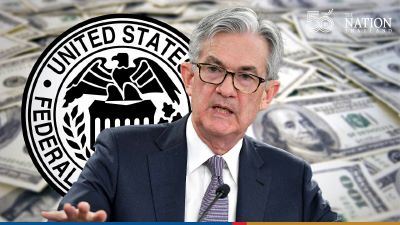
Poon said the baht was likely to fluctuate and weaken due to the Covid-19 crisis and the rising dollar, amid demand for safe-haven assets and the Federal Reserve’s decision to reduce quantitative easing this year.
He expected the key resistance level would be between 33.40 and 33.50 to the US dollar as exporters are waiting to offload the dollar.
ADVERTISEMENTx
Meanwhile, he said, the key support level would be around 33.00 to the dollar, which is the price range importers are waiting for before they make purchases.
Oil extends slump after surprise jump in U.S gasoline stockpiles
Crude futures extended the longest slide in five months after a surprise increase in U.S. gasoline inventories that signaled fuel demand may be under threat as Covid-19s delta variant menaces the economic recovery.
West Texas Intermediate dropped by almost 1% on Wednesday, the fifth straight daily decline. Domestic gasoline stockpiles inventories climbed by 696,000 barrels, the first increase in more than a month, according to data released by the Energy Information Administration on Wednesday. Meanwhile, crude stockpiles declined by a larger-than-forecast 3.23 million barrels.
“The surprise gasoline build is certainly weighing on the market,” said Matt Sallee, who helps manage about $8 billion at Tortoise.
The report followed an industry-funded American Petroleum Institute tally on Tuesday that saw a 1.16-million decline in crude inventories with supplies at the Cushing, Oklahoma, hub dropping by 1.74 million. The group also pegged the drop in gasoline stockpiles at almost 2 million.
ADVERTISEMENTx
Crude surged during the first half of the year as vaccination rollouts increased confidence about the pace of economic recovery. But the rally was knocked off course in recent weeks amid signals in the U.S. and China suggesting the spread of Covid-19’s delta variant may be hurting energy demand.
Despite the daily slump, there were positive signs emerging from the shape of the oil futures curve. Brent’s nearest timespread widened to a backwardation of 48 cents Wednesday. That structure – where the nearest contracts are more expensive than those at later dates – has started to indicate a stronger market in recent days, after slumping to an 11-week low on Monday.
WTI for September delivery rose 0.2% to $66.75 a barrel at 11:33 a.m. in New York. Brent for October settlement gained 18 cents to $69.21 a barrel.
There were also more positive signs emerging from the shape of the oil futures curve. Brent’s nearest timespread widened to a backwardation of 48 cents Wednesday. That structure – where the nearest contracts are more expensive than those at later dates – has started to indicate a stronger market in recent days, after slumping to an 11-week low on Monday.
“The $100-a-barrel predictions we saw earlier in the summer were rendered completely inaccurate as Asian demand continues to be muted,” said Jay Hatfield, chief executive officer of Infrastructure Capital Management. “Delta notwithstanding, an overall stockpile decline indicates some positive long-term fundamentals for oil.”
Published : August 19, 2021
By : Syndication Washington Post, Bloomberg · Ari Hawkins
Japan faster vaccine rollout is good news for the economy
Japan vaccine drive was slow to get going, but its on track now to beat the current U.S. inoculation rate within weeks — good news for an economy thats endured one virus emergency after another.
If the current pace is sustained, Japan will have 51% of its people fully vaccinated by Sept. 12. As soon as Sunday, the country should hit the 40% target that Prime Minister Yoshihide Suga set for month’s end, meeting a key milestone ahead of schedule amid widespread criticism Japan hasn’t done enough to rein in Covid-19 cases.
With vaccines being delivered more quickly than expected, an economic recovery seen accelerating mid-autumn could gather more momentum, say economists including Yuichi Kodama at Meiji Yasuda Research Institute. Much also depends on whether Japan can now bring a record wave of the virus to heel and scale back emergency guidelines.
“Vaccinations should have a big impact,” Kodama said. “Since case numbers should decline as more people get inoculated, we’re likely to see various restrictions lifted. And once that happens we should see consumer spending rebound.”
ADVERTISEMENTx
Japan managed to avoid a recession last quarter largely because shoppers shrugged off government warnings on the virus, but activity levels in Tokyo are still far lower than in New York and London, according to Apple Mobility Trends data.
A decision Tuesday to widen the latest state of emergency to more prefectures and keep it in place longer could cause consumers to retrench. Japan yesterday found about 20,000 new virus cases and recorded 47 more Covid-19 deaths, bringing the total to almost 15,500.
Suga on Tuesday said he expects 60% of the population to be fully vaccinated by the end of next month and plans to distribute enough doses to inoculate 80% of eligible people by early October. The vast majority of Japanese seniors have already gotten all their shots, but the overall rate is only about 38%.
Vaccination and growth rates are linked, which is a big reason the International Monetary Fund last month forecast 7% growth for the U.S. and U.K., where more than half the people are fully vaccinated, compared with a 2.8% expansion for Japan.
Conditions could improve more quickly than expected if Japan can keep delivering around 1.4 million jabs a day, the average over the last month, according to Bloomberg calculations based on government figures for completed vaccinations.
ADVERTISEMENT
“The key is to suppress the rate of contagion and keep the vaccine progress going,” said economist Keiji Kanda at Daiwa Institute of Research. “We’d be able to get the service sector back on the recovery path.”
The spread of the delta variant makes the recovery path harder, though, according to Haruka Sakamoto, a public health researcher at the University of Tokyo.
“The delta variant can cause infections even after two doses of vaccine,” Sakamoto said. “The government’s expert panel has been discussing the need for masks and social distancing even after 70% of the population has been vaccinated.”
Keeping the current pace also isn’t a given, according to Kenji Shibuya, Director of the Soma COVID Vaccination Medical Center in Fukushima and a former senior scientist at the World Health Organization.
Japan is nearing an inoculation rate where other countries have started to hit a wall, supply bottlenecks could slow deliveries, and the drive could start to meet more resistance from young people, who are less scared of the virus.
ADVERTISEMENT
“They don’t think Covid is a serious disease,” Shibuya said. “There should be some social incentive for them to get vaccinated.”
Published : August 19, 2021
By : Syndication Washington Post, Bloomberg · Yuko Takeo, Paul Jackson
Stocks slid as the Federal Reserve signaled that a decision on a reduction of its bond-buying program could happen in 2021. Treasurys and the dollar were little changed.
The S&P 500 extended losses into a second day after minutes of the Federal Open Market Committee’s July gathering said most officials agreed last month they could start slowing the pace of asset purchases later this year. While the record shows they don’t yet have agreement on the timing or pace of tapering, most had reached consensus on keeping the composition of any reduction in Treasury and mortgage-backed securities purchases proportional.
“The minutes reflect a Fed that is prepared to accelerate its taper timeline to perhaps the next few months,” said Sean Bandazian, an investment analyst at Cornerstone Wealth. “There is still reason to believe we will see volatility throughout areas of the market with high sensitivity to interest rates.”
Fed Chair Jerome Powell will have an opportunity next week to delve into the policy and economic outlook, during the Jackson Hole symposium — the central bank’s most prominent annual conference.
Earlier Wednesday, St. Louis Fed President James Bullard said he would like to see the tapering of the asset-purchase program done by the first quarter of 2022. Several other officials, including Robert Kaplan of Dallas and Esther George of Kansas City, have urged the central bank to begin removing stimulus as soon as the September meeting. Chair Powell and Vice Chairman Richard Clarida have suggested they would like to see further progress before considering a move to taper.
In late trading, Robinhood Markets Inc. — the pioneer of commission-free trading apps — sank after reporting its first results since going public.
Elsewhere, oil dropped below $65 a barrel for the first time since May 24 as new waves of covid-19 threatened fuel demand.
ADVERTISEMENTx
Some of the main moves in markets:
Stocks
– The S&P 500 fell 1.1% as of 4 p.m. EDT
– The Nasdaq 100 fell 1%
– The Dow Jones industrial average fell 1.1%
ADVERTISEMENT
– The MSCI World index fell 0.6%
Currencies
– The Bloomberg Dollar Spot Index was little changed
– The euro was unchanged at $1.1710
– The British pound rose 0.1% to $1.3756
ADVERTISEMENT
– The Japanese yen fell 0.2% to 109.80 per dollar
Bonds
– The yield on 10-year Treasurys was little changed at 1.27%
– Germany’s 10-year yield declined one basis point to -0.48%
– Britain’s 10-year yield was little changed at 0.57%
Commodities
– West Texas Intermediate crude fell 2.7% to $64.78 a barrel
– Gold futures were little changed
Published : August 19, 2021
By : Syndication Washington Post, Bloomberg · Rita Nazareth, Lu Wang
Weighing inflation and the labor market, Fed debates when to scale back support for the markets
Federal Reserve officials are sharpening their discussions for when to start scaling back support for the markets, reflecting optimism that the labor market and broader economic recovery will continue gaining steam.
For months, economists and Wall Street have been eager for any signs about when the Fed will begin to “taper” or slow down its $120 billion a month in asset purchases. Fed leaders have said they need to see “substantial further progress” on inflation and job growth before slowing their sprawling bond-buying program, which helps stimulate the economy and makes borrowing easier by holding down long-term rates.
Fed Chair Jerome H. Powell has repeatedly said that there will be plenty of warning before the Fed starts to unwind its asset purchases. Minutes released Wednesday from the Fed’s July policy meeting offered some insight into policymakers’ thinking.
Overall, most Fed officials said they felt that, as long as the economy kept growing as expected, “it could be appropriate to start reducing the pace of asset purchases this year,” according to the meeting minutes.
Some Fed officials believed it would be “prudent” for the Fed to get ready to scale back the purchases “relatively soon,” especially if high inflation proves “to be more persistent than they had anticipated.”
ADVERTISEMENTx
Still, others emphasized that there was “considerable uncertainty” around the labor market, supply chain issues, and the long-term influence the pandemic will have on the economy.
“Those participants stressed that the Committee should be patient in assessing progress toward its goals and in announcing changes to its plans on asset purchases,” the minutes stated.
The meeting minutes don’t name any Fed officials. But since the Fed’s July meeting, a growing number of policymakers have given their own opinions about when the central bank should start dialing back the asset purchases. Some have said the drawdown could begin this fall, thanks in part to encouraging job gains from June and July.
“We’ve had two months in a row where we’ve created more than 900,000 jobs and the unemployment rate dropped by half a% to 5.4 percent,” Boston Federal Reserve Bank President Eric Rosengren told CNBC on Monday. “If we get another strong labor market report, I think that I would be supportive of announcing in September that we are ready to start the taper program.”
As a group, the Fed’s policy board will pick up their discussions at their next meeting in September. But in the meantime, much depends on the coronavirus public health crisis – and any repercussions for the economic recovery.
ADVERTISEMENT
The spread of the delta variant has started a new phase of the pandemic and prompted some parts of the country to reimpose mask mandates and other restrictions. Consumer confidence plunged in the first half of August as the delta variant spread, according to a survey released last week by the University of Michigan. It’s too soon to tell whether hiring or consumer spending will suffer as a result.
Meanwhile, prices are on the rise, and they’re expected to keep climbing until supply chains can catch up with consumer demand. While Fed leaders have been waiting to see progress in the job market, some at the Fed argue that bar has already been met when it comes to inflation. (The Fed is responsible for both stable prices and maximum employment.)
Some Fed leaders have said that if the taper starts in the next few months, it could be wrapped up by next summer. That timeline suggests that Fed leaders could be ready to raise interest rates in late 2022 or 2023, since the taper would probably be complete before rates rise. (The Fed slashed rates to near zero at the beginning of the pandemic and are nowhere near considering a rate increase.)
There’s also open debate on how the Fed should structure and pace the taper. The monthly asset purchases are made up of $80 billion in Treasury securities and $40 billion in mortgage-backed securities. Surging home prices have some economists arguing that the Fed should reduce its purchases of mortgage-backed securities more quickly.
Others disagree, saying the mortgage securities aren’t meaningfully driving the hot housing market and that the two categories of asset purchases should be cut back at the same rate.
ADVERTISEMENT
“I think that Treasury and [mortgage-backed security] purchases affect financial conditions in very similar ways,” Powell said last month. “There may be modest differences in terms of contribution to housing prices. But it’s not something that’s big.”
Surge in Covid-19 cases will pull down earnings of listed firms, analysts predict
The turnover of Stock Exchange of Thailand (SET)-listed companies is expected to drop by about 40 per cent in the second half of this year from the first half due to the surge in Covid-19 cases, according to Asia Plus Securities (APS).
Therdsak Thaveeteeratham, a senior analyst with APS, said the second-quarter net profit of 501 listed companies, accounting for 96 per cent of market capitalisation, stood at 269.18 billion baht, up 116 per cent compared to 124.27 billion baht in the same period last year.
He explained that the second-quarter net profit was higher than expected due to large companies’ extra profit and low-profit margin in the previous year.
“Listed companies’ first-quarter net profit of 258.03 billion baht combined with that of the second quarter adds up to 527.21 billion baht for the first half of this year,” he said.
“Based on this, APS expects listed companies’ net profit for the entire year to stand at 845 billion baht or 73.60 baht per share.”
However, he believes listed firms’ turnover in the second half will drop by about 40 per cent compared to the first half if daily Covid-19 infections continue going beyond 20,000.
He said other securities companies are also expected to cut their forecast because the Bloomberg Consensus’ prediction of per-share earnings at 85.43 baht was too high.
The Stock Exchange of Thailand (SET) Index closed at 1,551.87 on Wednesday, up 7.65 points or 0.50 per cent. Transactions totalled THB81.90 billion with an index high of 1,557.08 and a low of 1,545.33.
In the morning session, Krungsri Securities forecast the day’s index would fluctuate between 1,535 and 1,550 points amid signs of a technical rebound and mass buy-ups of shares that gained positive sentiment.
However, it said the index would be under pressure from a rise in Covid-19 cases both in Thailand and abroad as well as ongoing anti-government protests in the country.
ADVERTISEMENTx
The 10 stocks with the highest trade value today were PTT, BCH, GULF, KCE, MTC, AOT, SAWAD, KBANK, SCC and CPALL.
Other Asian indices were on the rise:
Japan’s Nikkei Index closed at 27,585.91, up 161.44 points or 0.59 per cent.
China’s Shanghai SE Composite Index closed at 3,485.29, up 38.31 points or 1.11 per cent, while the Shenzhen SE Component Index closed at 14,454.11, up 103.47 points or 0.72 per cent.
Hong Kong’s Hang Seng Index closed at 25,867.01, up 121.14 points or 0.47 per cent.
South Korea’s KOSPI Index closed at 3,158.93, up 15.84 points or 0.50 per cent.
Taiwan’s TAIEX closed at 16,826.27, up 164.91 points or 0.99 per cent.
Zipmex Secures More than 300M THB Investment from Media Giants, Plan B and MACO
Zipmex was the first digital assets company to launch OOH ads last year in August and recently in 3D on Plan B’s innovative Out of Home Screen in the heart of Bangkok this past month. Zipmex also took over Bangkok and various provinces in Thailand with over 80 screens for its first online celebration of Zipmex Day.
Zipmex, Asia’s fastest growing digital asset platform, secures investment from media giants Plan B Media Public Company Limited (BKK: PLANB), one of the largest and most innovative media company in Thailand, which specializes in out-of-home media and engagement marketing, and Master Ad Public Company Limited (BKK: MACO), one of the media leaders for billboards and street furniture with an extensive media footprint across SEA.
Both investors are bullish on the digital asset revolution and have decisively backed Zipmex, the leading platform in Thailand. This marks the first time in Southeast Asia for listed multinational media companies to tap into the digital asset trend as it is set to transform the realm of financial landscape and lifestyle. Since its launch, Zipmex has recorded over 100 billion Thai Baht in trading volume over the last 12 months and scaled to over 300 people. Its exchange token, Zipmex Token (ZMT), has seen an explosion in growth from 15 baht to 180 baht at the all time high. This investment will provide a partnership for ZMT to be integrated into the advertising ecosystem across multiple platforms with the vision of bringing the highest utility token in Thailand. This is part of a large fundraising round of global high profile investors that will be announced in the coming weeks. The investment and partnership will help Zipmex reach millions of customers across Thailand and South East Asia effectively.
ADVERTISEMENTx
Zipmex Secures More than 300M THB Investment from Media Giants, Plan B and MACO
Apart from having an exchange and brokerage license in Thailand Zipmex, is also legally compliant in Indonesia, Singapore, and Australia. The platform has expanded its offerings to include earn and spend products and has recently launched ZipWorld (redemption of lifestyle products and services using crypto) and will soon be launching Z-Launchpool (early access to new investment tokens).
Zipmex has also recently armed up its blockchain capabilities as it leads the investment round into Atato, the region’s leading blockchain technology company, that serves South-East Asia’s financial institutions in their build out blockchain-powered digital assets solutions. For media companies, blockchain technology has industry-wide applications which can transform the way content is created, consumed and protected. As an industry that places a premium on protecting and monetizing intellectual property, it does not come as a surprise that Plan B and MACO have joined forces to invest in the most regulatory compliant digital assets platform in the region. Plan B is the leading provider of out-of-home media advertising services with a variety of innovative platforms and strong engagement marketing business including sports marketing, artist management, and gaming in Thailand and Master Ad Public Company Limited (“MACO”) together have one of the most comprehensive coverage of over 2,000 venues. The investments from both media firms represent confidence and trust in digital assets and the growth that digital assets will have on society.
Given the excitement around the many ways that Zipmex is thinking about building out its ecosystem beyond finance, this fundraise definitely provides positive momentum for their businesses and their new investor’s industry as a whole. Zipmex also took over Bangkok and various provinces in Thailand with over 80 screens for its first TVC in celebration of Zipmex Day, while viewers of the recent Tokyo Olympics would have seen Zipmex across their screens at home.
As for Zipmex, this synergy is set to widen the ecosystem powered by its native token, ZMT (Zipmex Token). ZMT provides holders with increased yield opportunities with their earn program, ZipUp, which currently provides up to 7% APY on USDC (USD-denominated stablecoin). ZMT holders will also earn additional benefits within the Zipmex ecosystem, including reduced fees, upgraded payment rewards, allocation of new tokens being listed on the company’s exchange, in-game rewards, as well as access to its upcoming global NFT platform. Additionally, this collaboration allows Zipmex to increase its brand awareness to wider audiences and makes crypto more accessible for everyone. The exchange’s trading volume for the first half of the year for Zipmex was over THB 62 billion, whereby business from the Thai instance accounts for over half and is expected to grow. This represents a 2,540% increase from the same time last year. The exchange is set to grow by 310% in trading volume for the remainder of 2021.
Dr. Akalarp Yimwilai, Chief Executive Officer and Co-Founder of Zipmex Thailand, is convinced that 2021 is the year of digital assets. Last year, Zipmex successfully raised more than US$ 6 million in funding led by Jump Capital, an American investment firm with portfolio companies including TradingView, a cloud-based charting and social-networking software for both beginner and advanced active investment traders.
“Zipmex has taken on an important role in facilitating transactions via crypto as well as increasing the use cases and utilizing crypto in our daily lives. We continue to expand to other products in order to bridge the gap between finance and lifestyle. We are extremely honored in the trust Plan B, and MACO has placed such an important trust in us,” Dr. Akalarp Yimwilai, Co-Founder and CEO of Zipmex Thailand.
“We believe Zipmex has one of the most promising teams of talent in the industry. They have a clear vision to ignite this digital asset revolution and have strong execution capabilities demonstrated by a solid track record since their launch. We look forward to supporting their growth with our network of integrated media and content portfolio. The digital asset space provides many opportunities for us to strengthen our ecosystem in the engagement marketing space including sports, artist management, and gaming. We are confident that this investment and partnership will secure Plan B’s vision to be a leader in innovation.” Pinijsorn Luechaikajohnpan, PhD, Managing Director of Plan B Media Public Company Limited (“Plan B”)
Other large corporations have also seen potential in partnerships with Zipmex. Earlier in February this year, Zipmex announced its payment partnership with Major Cineplex and Rapidz as well as Renazzo Motor Co., Ltd (“Renazzo Motor”), the official Lamborghini distributor in Thailand and WasuthaGroup, the first distributor of Tesla and one of the most popular and well-recognized distributors of luxury cars. Real estate companies such as One.Six Development (an MQDC Joint Venture) and Chaopraya Mahanakorn Plc. (CMC Group) are also involved in the payment program called ZipSpend. More recently, The Brooker Group, a publicly listed financial consultancy and capital management company which acts as an independent advisor to leading private sector clients have also partnered with Zipmex and provide employees with the option to receive salary and bonuses in digital assets in the future.
THAI Announces Six-Month Operational Performance Results for 2021 during its Business Rehabilitation
As of June 30, 2021, total assets of THAI and its subsidiaries were THB 168,582 million, a decrease of THB 40,715 million (19.5%) from December 31, 2020. Total liabilities were THB 285,066 million, a decrease by THB 52,896 million (15.7%) from December 31, 2020.
Thai Airways International Public Company Limited (THAI), announces consolidated financial statements for the first six months in 2021. THAI and its subsidiaries reported the operating loss of THB 14,335 million. The total revenue was 10,220 million, lower than last year’s THB 30,273 or 74.8%. A decrease in both passenger and cargo revenue was THB 30,486 million (84.2%) and a decrease of THB 1,417 million (35.5%) was from other services. Moreover, other incomes have increased to THB 1,630 million. Total expenses amounted to THB 24,555 million which was THB 34,246 million (58.2%) lower than the previous year, mainly due to the variable operating expenses. However, THAI and its subsidiaries had one-time transactions with net profit totalled THB 25,889 million consisting of profits following the Rehabilitation Plan such as profit from debt restructuring, sale of shares in its subsidiaries and adjustment of aircraft lease capital. Consequently, THAI and its subsidiaries reported THB 11,121 million of net profit. Profit attributable to owners of the parent company amounted to THB 11,125 million. Profit per share was THB 5.10.
As of June 30, 2021, total assets of THAI and its subsidiaries were THB 168,582 million, a decrease of THB 40,715 million (19.5%) from December 31, 2020. Total liabilities were THB 285,066 million, a decrease by THB 52,896 million (15.7%) from December 31, 2020. The shareholders’ equity of THAI and its subsidiaries amounted to THB -116,484 million, a negative decrease from December 31, 2020, amounting to THB 12,181 million.
Under the Business Rehabilitation plan, THAI is operating to resolve and improve its business structure as well as to generate revenue from non-air businesses and continually reduce expenses such as restructuring and downsizing the organization and cutting down operating costs in other areas. THAI aims to maintain financial liquidity and seek for new loans until the airline industry situation resumes to its normal operation.
China has agreed to buy longan from 56 Thai exporters provided they strictly follow set procedures of cleaning the fruit.
The country had initially banned longan imports from 75 Thai exporters because the fruit was found covered in mealybugs. Of the exporters, 66 had been banned in November last year and nine in March this year.
Deputy Agriculture and Cooperatives Minister Mananya Thaiset thanked China for the decision and hoped Thai exporters will improve their procedures in line with China’s requirements.
ADVERTISEMENTx
China okays longan shipments from 56 exporters“The Department of Agriculture will ensure exporters follow the measures set by China to prevent a recurrence of these problems in the future,” she said.








 Zipmex Secures More than 300M THB Investment from Media Giants, Plan B and MACO

 China okays longan shipments from 56 exporters“The Department of Agriculture will ensure exporters follow the measures set by China to prevent a recurrence of these problems in the future,” she said.
