Gold price surges amid rise in demand as safe-haven asset
The price of gold in Thailand rose by THB150 on Tuesday morning.
The Gold Traders Association report at 9.30am showed buying price of a gold bar at THB28,150 per baht weight and selling price at THB28,250, while gold ornaments were priced at THB27,636.68 and THB28,750, respectively.
At close on Monday, buying price of a gold bar was THB28,000 per baht weight and selling price THB28,100, while gold ornaments were priced at THB27,500.24 and THB28,600, respectively.
Spot gold on Tuesday morning rose to US$1,786 (THB59,743) per ounce after Comex gold price at close on Monday continuously rose by $11.60 to $1,789.8 per ounce, due to support for buying gold as a safe-haven asset after the US manufacturing index slowed to lower than expectation. In addition, the gold price was supported by the positive factor of a drop in the US government bond yield.
ADVERTISEMENTx
Hong Kong gold price, meanwhile, again rose sharply by HK$120 to $16,590 (THB71,280) per tael, the Chinese Gold and Silver Exchange Society reported.
The Stock Exchange of Thailand (SET) Index rose by 4.67 points, or 0.30 per cent, to 1,535.91 on Tuesday morning.
The SET Index closed at 1,531.24 on Monday, up 2.92 points or 0.19 per cent. Transactions totalled THB77.16 billion with an index high of 1,532.94 and a low of 1,512.28.
Krungsri Securities forecast the index on Tuesday would fluctuate between 1,520 and 1,540 points amid signs of a technical rebound and mass buy-ups of shares that gained positive sentiment.
It predicted the index, however, would be under pressure due to rising domestic and overseas Covid-19 cases and ongoing anti-government protests.
ADVERTISEMENTx
It recommended selective buying as an investment strategy:
▪︎ HANA, KCE, TU, CPF, GFPT, ASIAN, EPG and NER, which benefit from the weakening baht.
▪︎ PSL and TTA, which would benefit from a rise in the freight rate.
▪︎ ADVANC, BGRIM, GPSC and CKP, which are able to escape the impact from market volatility.
Baht stable but seen weakening, as markets await US Fed move on QE
The baht opened at 33.43 to the US dollar on Tuesday, unchanged from Monday’s closing rate.
The Thai currency was likely to move between 33.40 and 33.55 during the day, Krungthai Bank market strategist Poon Panichpibool said.
He said the baht was likely to fluctuate and weaken due to the Covid-19 situation and the rising momentum of the US dollar.
He expected the dollar to receive support from the US Federal Reserve move to reduce quantitative easing (QE) this year and the demand for safe-haven assets due to the Covid-19 situation worldwide.
However, the statement from the Fed’s chair this week might cause the dollar to fluctuate and weaken if the Fed chair does not announce a reduction in quantitive easing this year, and the US economy recovers strongly as Fed officials revealed earlier.
ADVERTISEMENTx
Poon said the resistance of the baht would be at 33.50 to the dollar, as exporters continued to sell the dollar. The baht could weaken past the resistance level if the pandemic situation in the country worsened, along with the strengthening of the dollar.
S&P 500 extends gain, doubles from pandemic bottom
The stock market wiped out earlier losses, with the S&P 500 extending its surge from a March 2020 low to 100%. Bonds climbed.
The benchmark gauge of American shares closed at another record — its 49th since the end of last year — led by health-care and utility companies. Apple Inc. also climbed to an all-time high. Equities fell in the first few hours of trading on Monday after softer economic data from the world’s two biggest economies. Tesla Inc. sank as the U.S. opened an investigation on the electric-vehicle firm’s Autopilot system.
Traders awaited signals from the Federal Reserve, with a town hall by Chair Jerome Powell Tuesday potentially acting as a precursor to the Jackson Hole symposium in late August. The market has viewed the event as a venue for the Fed to lay out the timing and contours of its expected move to taper the bond-buying program.
“The big question that’s hovering over the market is about the Fed — when the Fed is going to move, when the Fed is going to taper,” said Fiona Cincotta, senior financial markets analyst at City Index. “What we do know is that the recovery is going to be bumpy — it’s not going to be in a straight line.”
Halfway through August, the S&P 500 is on track for one of the calmest months ever. Under the surface, however, there’s still a degree of anxiety about what’s coming. A measure of implied volatility in VIX options has advanced for five out of seven weeks — even as the Cboe Volatility Index kept falling.
Citigroup Inc.’s Tobias Levkovich warned that investors should be bracing for more volatility as Fed tapering, the possibility of higher taxes, margin pressures and persistent inflation become forces “that the bond market has to respond to.”
“We’re a bit more cautious,” Citigroup’s chief U.S. equity strategist said in an interview on Bloomberg TV, adding that these four potential issues “could cascade onto each other around September” as valuation is extended.
ADVERTISEMENTx
Some of the main moves in markets:
Stocks
– The S&P 500 rose 0.3% as of 4 p.m. EDT
– The Nasdaq 100 was little changed
– The Dow Jones industrial average rose 0.3%
ADVERTISEMENT
– The MSCI World index fell 0.2%
Currencies
– The Bloomberg Dollar Spot Index rose 0.1%
– The euro fell 0.2% to $1.1778
– The British pound fell 0.2% to $1.3839
ADVERTISEMENT
– The Japanese yen rose 0.3% to 109.24 per dollar
Bonds
– The yield on 10-year Treasuries declined two basis points to 1.26%
– Germany’s 10-year yield was little changed at -0.47%
– Britain’s 10-year yield was little changed at 0.57%
Commodities
– West Texas Intermediate crude fell 1.5% to $67.44 a barrel
– Gold futures rose 0.6% to $1,789.20 an ounce
Published : August 17, 2021
By : Syndication Washington Post, Bloomberg · Rita Nazareth, Vildana Hajric
NESDC sees limited, gradual growth in Thai economy this year
The National Economic and Social Development Council (NESDC) released official figures for the Thai economy and its projection for the rest of the year.
The NESDC report showed that the economy is expected to grow between 0.7 and 1.2 per cent, showing a recovery from the 6.1 per cent contraction last year. However, the new projection is a downward revision from the 1.5 to 2.5 per cent growth predicted earlier this year.
Economic growth for the rest of this year will likely be subjected to the following limitations and risks, namely:
• Uncertainty over a new wave of Covid-19 infections
• Fragile financial condition of both households and businesses amid high unemployment rates and worries over the resurgence of Covid-19
• Risks faced by export and manufacturing sectors affected by outbreaks in factories, coupled with constraints in the global value chain and international logistics, and
• Volatility in the global economic and financial situation.
Nevertheless, the Thai economy in 2021 is likely to recover gradually, thanks to the following key supporting factors:
• Recovery of the world economy and global trade
• Support from government spending and stimulus measures
• Improvement of income in the agricultural sector
• Low growth base for the economy in the latter half of 2020.
NESDC expects the value of exports, private consumption, private investment and public investment to rise by 16.3 per cent, 1.1 per cent, 4.7 per cent, and 8.7 per cent, respectively. Meanwhile, headline inflation is expected to be in the range of 1 and 1.5 per cent, while the current account is leaning towards registering a deficit of 2 per cent of the gross domestic product.
Energy consumption up by 2.8% in first half, but only 0.1% rise projected for full year
Thailand’s primary energy consumption rose 2.8 per cent in the first six months of 2021, the Energy Policy and Planning Office (EPPO) reported on Monday.
Consumption of natural gas, lignite, hydropower and imported electricity increased as the global economy began to recover. However, oil us fell in the first half of the year due to lockdowns, travel restrictions and work-from-home measures which hit the transport sector.
ADVERTISEMENTx
The EPPO expects energy consumption to rise only 0.1 per cent in 2021, based on the National Economic and Social Development Council (NESDC)’s projection of 0.7-1.2 per cent economic growth this year.
The NESDC expects the Dubai crude oil price to range from US$62-72 per barrel in 2021.
The EPPO forecasts that use of natural gas and coal/lignite will increase by 3.5 and 1.8 per cent respectively this year.
Hydropower and imported electricity is expected to increase by 11.7 per cent while oil consumption is expected to drop 5.5 per cent due to the extension of lockdown measures. Household LPG consumption is expected to increase by 0.9 per cent. Energy use is expected to rise by 5.3 per cent in the industrial sector and 11.5 per cent as raw material in the petrochemical industry. Natural gas consumption is expected to increase by 3.5 per cent this year. Meanwhile, the transport sector is projected to see a 24 per cent drop in energy consumption while electricity use is forecast to fall slightly by 0.4 per cent.
Thai stocks defy downward Asian trend with slight rise
The Stock Exchange of Thailand (SET) Index closed at 1,531.24 on Monday, up 2.92 points or 0.19 per cent. Transactions totalled THB77.16 billion with an index high of 1,532.94 and a low of 1,512.28.
In the morning session, Krungsri Securities expected the index on Monday to fall to between 1,515 and 1,520 points amid negative sentiment on several fronts.
Foreign funds were likely to flow out due to surging Covid-19 infections, both domestic and overseas, ongoing anti-government protests in Thailand and the weakening baht, Krungsri Securities said.
ADVERTISEMENTx
The 10 stocks with the highest trade value today were BANPU, CBG, GULF, PSL, PTT, INTUCH, CPALL, AOT, KBANK and KCE.
Other Asian indices were down with one exception:
Japan’s Nikkei Index closed at 27,523.19, down 453.96 points or 1.62 per cent.
China’s Shanghai SE Composite Index closed at 3,517.34, up 1.05 points or 0.030 per cent, while the Shenzhen SE Component Index closed at 14,693.74, down 105.30 points or 0.71 per cent.
Hong Kong’s Hang Seng Index closed at 26,181.46, down 210.16 points or 0.80 per cent.
Taiwan’s TAIEX closed at 16,858.77, down 123.34 points or 0.73 per cent.
South Korea’s KOSPI Index was closed for National Liberation Day.
Thai Vietjet to open new and resume four Domestic Cross-regional Routes from just THB0
The new services Phuket (HKT) – Chiang Mai (CNX) and Phuket – Udon Thani will commence from September 15, 2021 and October 1, 2021
Reinforcing ‘Phuket Sandbox’ model, Thai Vietjet announced new and resumption of cross-regional services connecting Phuket to Chiang Mai, Chiang Rai, and Udon Thani, plus Hat Yai to Chiang Rai, offering additional convenience and valued choices to all passengers and further extending its success as the Fastest Growing Low-cost Carrier of the Year 2020 (by Global Business Outlook Magazine, London).
The new services Phuket (HKT) – Chiang Mai (CNX) and Phuket – Udon Thani will commence from September 15, 2021 and October 1, 2021, respectively. While Phuket – Chiang Rai (CEI) and Hat Yai (HDY) – Chiang Rai (CEI) services are scheduled to resume on October 1, 2021.
ADVERTISEMENTxFlight No.
Sector
Departure time
Arrival time
Day of OperationsADVERTISEMENT
VZ415
Phuket – Chiang Mai
09:50
11:55
Friday/SundayADVERTISEMENT
VZ414
Chiang Mai – Phuket
12:50
14:30
Friday/Sunday
VZ400
Phuket – Chiang Rai
08:15
10:20
Friday/Sunday
VZ401
Chiang Rai – Phuket
10:50
12:55
Friday/Sunday
VZ408
Hat Yai – Chiang Rai
08:55
11:05
Friday/Sunday
VZ409
Chiang Rai – Hat Yai
11:35
13:50
Friday/Sunday
VZ453
Phuket – Udon Thani
15:10
17:00
Friday/Sunday
VZ452
Udon Thani – Phuket
17:30
19:25
Friday/Sunday
In celebration of the new services, the airline launched exclusive promotion, offering special fares starting from just 0THB (not inclusive of taxes, fees, and add-on services) to fly on the airline’s entire domestic flight network. The special fares are available for booking from August 16 – 20, 2021, with travel period between September 15 – December 31, 2021 (terms and conditions applied) at www.vietjetair.com.
The promotional tickets are available on www.vietjetair.com, applied to Thai Vietjet’s domestic flights from Bangkok (Suvarnabhumi) to Chiang Mai, Chiang Rai, Phuket, Krabi, Udon Thani, Hat Yai, Khon Kaen, Nakhon Si Thammarat, Ubon Ratchathani, and Surat Thani, cross-regional flights from Phuket to Chiang Rai, Chiang Mai, and Udon Thani, also direct flights from Hat Yai to Chiang Rai. The tickets are also available on all other distribution channels including www.vietjetair.com, mobile app “Vietjet Air”, via Facebook at facebook.com/VietJetThailand by clicking “Booking” tab, as well as travel agencies and booking offices. Payment can be easily made with international debit and credit cards.
Currently, the airline still maintains its cargo flights operation and international semi-commercial flights as usual. Thai Vietjet is committed to providing the highest level of safety and has made continued efforts to provide all possible contact channels and policies to best support its passengers during the current COVID-19 outbreak.
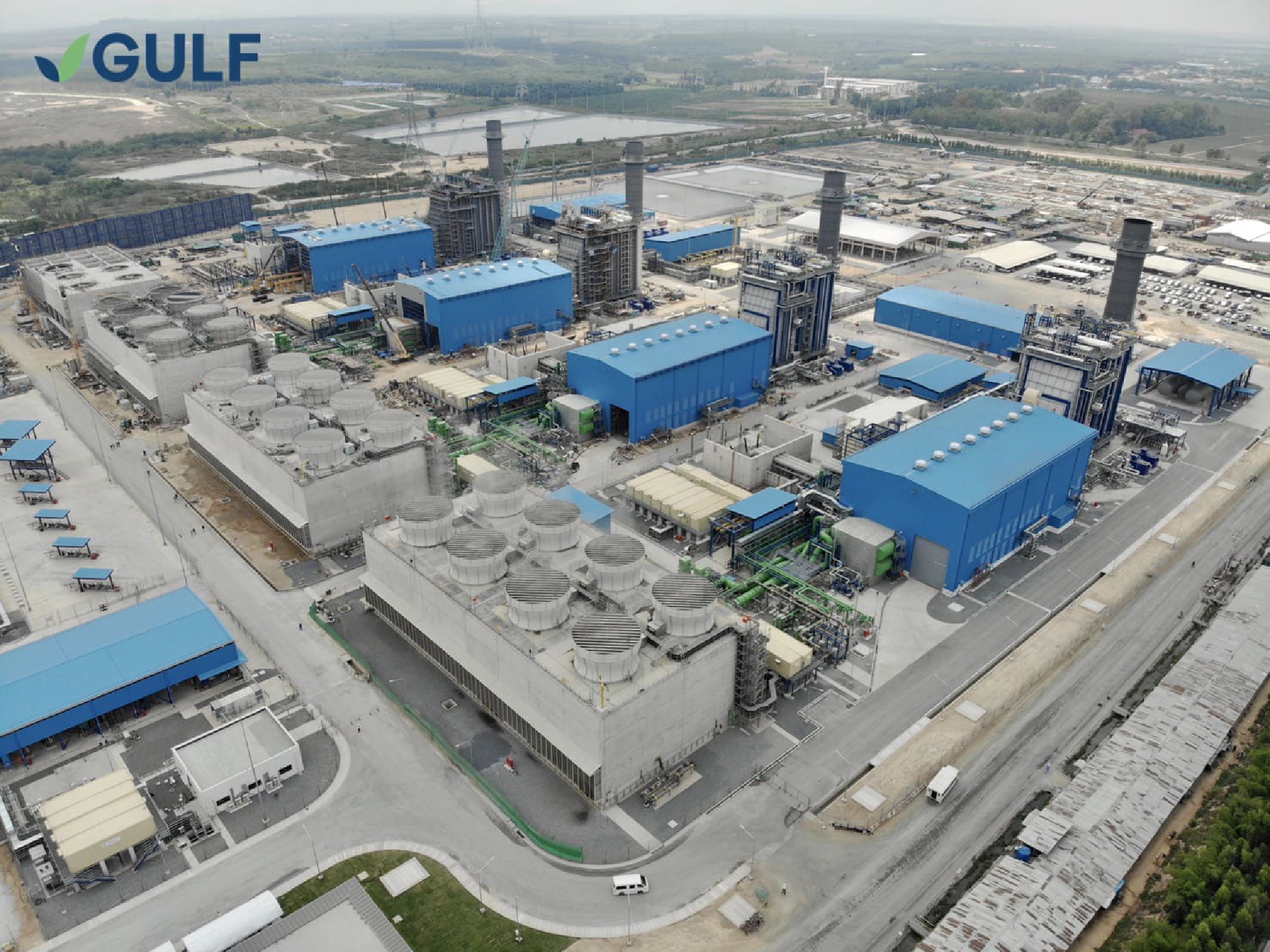
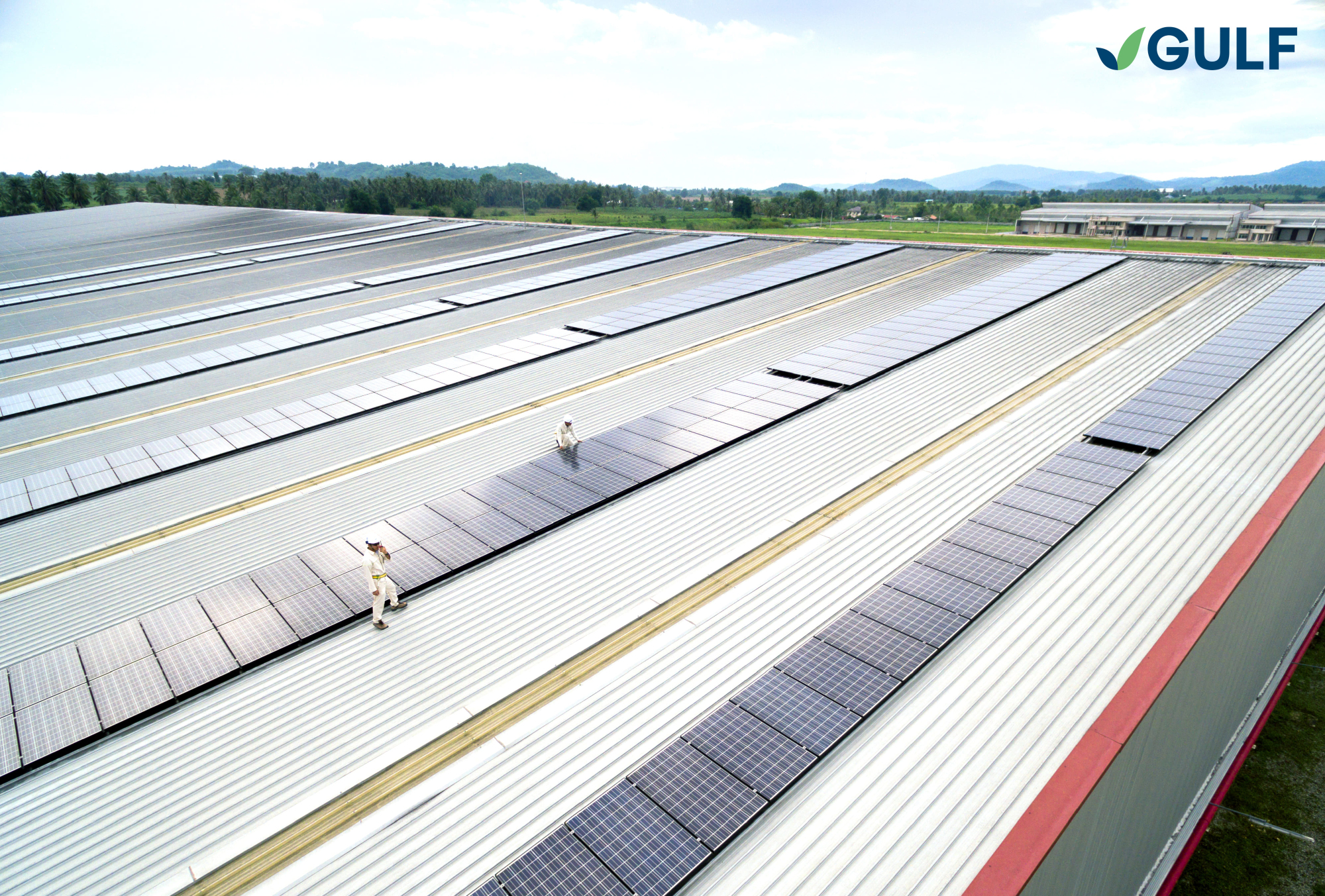
GULF Announces Q2’21 Core Profit Growth of 42% YoY after GSRC Unit 1 Begins Commercial Operation
GULF recorded net profit attributable to the parent company, which includes the impact from foreign exchange rate, of 1,407 million baht, a decrease of 25.2% YoY compared to net profit of 1,881 million baht in Q2’20.
Ms. Yupapin Wangviwat, Executive Director and Chief Financial Officer, Gulf Energy Development Plc. (GULF), revealed “For the second quarter of this year, GULF recorded a core profit of 1,401 million baht, an increase of 412 million baht or 42% year-on-year (YoY). The increase was mainly from the profit of Gulf SRC power project’s (GSRC) first unit following the commercial operation on March 31, 2021, with an installed power generation capacity of 662.5 megawatts (MW) and an average load factor of 88% in this quarter. The rise in core profit also comes from the higher volume of electricity sales of 12 SPPs under GMP group and 7 SPPs under GJP group to industrial customers from all industries, especially from the automotive, electronic components and steel industries. In Q2’21, the average load factor of industrial customers for the 12 SPPs was 63%, increasing from 51% last year, while the 7 SPPs had an average load factor of 66%, rising from 57% last year. Additionally, the volume of electricity sold to the Electricity Generating Authority of Thailand from the 2 IPPs under GJP group increased by 148% YoY, resulting in more plant efficiency. GULF also recorded share of profit from PTT NGD of 63 million baht from the company’s investment of 42% equity stake.
Compared to the previous quarter, core profit decreased by 989 million baht or 41.4% due to the absence of dividend income from Intouch Holdings Public Company Limited (INTUCH) in this quarter, as well as from Borkum Riffgrund 2 (BKR2) offshore wind power plant project’s lower volume of electricity sales due to seasonality, since Q2 and Q3 are low season while Q1 and Q4 are peak season for offshore wind power projects in Germany.
ADVERTISEMENTx
GULF Announces Q2’21 Core Profit Growth of 42% YoY after GSRC Unit 1 Begins Commercial Operation
Total revenue for Q2’21 was recorded at 11,845 million baht, an increase of 2,707 million baht or 29.6% YoY. The rise in revenue is mainly due to the revenue from GSRC Unit 1’s commercial operation in Q1’21, the revenue recognized from BKR2 offshore wind power project, which was recognized for the first time in Q4’20, and from the higher electricity and steam sales to industrial customers of the GMP group. Meanwhile, electricity sales from GTN1 and GTN2 solar power projects in Vietnam had a slight drop due to the temporary curtailment from the COVID-19 pandemic, affecting the nation’s electricity demand.
The EBITDA margin was 35.6%, an increase from 31.9% YoY. This was mainly due to a decrease in natural gas costs by 8.7% YoY, despite the decline in average Ft rate.
GULF recorded net profit attributable to the parent company, which includes the impact from foreign exchange rate, of 1,407 million baht, a decrease of 25.2% YoY compared to net profit of 1,881 million baht in Q2’20. This resulted from the unrealized gain of 892 million baht in the previous year, while there was unrealized gain of 6 million baht in Q2’21.
As of June 30, 2021, GULF had net interest-bearing debt to equity ratio of 1.75 times, which is still lower than the bond covenant level of 3.50 times.
GULF Announces Q2’21 Core Profit Growth of 42% YoY after GSRC Unit 1 Begins Commercial Operation
“Following the completion of the tender offer for INTUCH securities, GULF has 42.25% equity stake in INTUCH. The acquisition was financed by loans from Thai financial institutions of approximately 48,612 million baht. GULF plans to issue debentures totaling approximately 20 billion baht within this year. The proceeds will be used for future investments to support the company’s growth as well as partial loan repayment for the acquisition of INTUCH shares. In addition, the company will immediately book dividend income of approximately 1.6 billion baht in the third quarter this year,” Ms. Yupapin added.
GULF Announces Q2’21 Core Profit Growth of 42% YoY after GSRC Unit 1 Begins Commercial Operation
For the second half of 2021, GULF has a lineup of projects that will soon begin commercial operation such as the 128-MW ‘Mekong Wind’ offshore wind farm in Vietnam. Phase 1-3 will gradually start operating within Q3-Q4 2021, GSRC unit 2 with an installed capacity of 662.5 MW is scheduled for commercial operation in October 2021, the 326-MW gas-fired power plant in Oman (DIPWP) with an installed capacity of 40MW in the first phase will be in operation by the third and fourth quarter; and solar rooftop projects under Gulf1 with a total installed capacity of 20 MW will be gradually in operation by the end of the year, resulting in the company’s total gross installed capacity of 7,922 MW by the end of 2021.
China urged to review ban on Thai longan as oversupply pulls down price
The Commerce Ministry instructed agriculture and commerce attachés in Beijing on Sunday to urge Chinese authorities to reconsider the ban on longan shipments from Thailand.
The Department of Agriculture will monitor the fruit’s quality and ensure it meets Chinese standards, Commerce Minister Jurin Laksanawisit said.
He added that bilateral talks on the subject will be held towards the end of next week.
Before that, Vice Agriculture and Cooperatives Minister Naraphat Kaewthong will lead a team of officials to the North to deal with the drop in longan prices, Jurin said.
He explained that top-grade longan is currently going at 35 to 40 baht per kilo, while the second grade is priced at 30 baht per kilo and the domestic market grade at 20 to 25 baht per kilo.
Jurin said there is also a severe shortage of migrant workers, as they cannot return to their jobs in Thailand due to the Covid-19 crisis. This shortage in the workforce has also affected the operation of longan processing factories.
ADVERTISEMENTx
He added that the ministry is planning to sell the fruit at special prices via the government’s Blue Flag stores as well as via grocery trucks and at petrol stations in a bid to boost domestic consumption.








 GULF Announces Q2’21 Core Profit Growth of 42% YoY after GSRC Unit 1 Begins Commercial Operation
 GULF Announces Q2’21 Core Profit Growth of 42% YoY after GSRC Unit 1 Begins Commercial Operation
 GULF Announces Q2’21 Core Profit Growth of 42% YoY after GSRC Unit 1 Begins Commercial Operation