SET being squeezed by rising virus cases, fund outflows, but likely to rebound
The Stock Exchange of Thailand (SET) Index rose by 2.51 points or 0.16 per cent to 1,540.14 on Thursday morning.
Krungsri Securities predicted the index would fall to between 1,520 and 1,530 points despite the US Federal Reserve maintaining its interest rate at 0.25 per cent and continuing with its quantitative easing programme.
It also predicted that the index would be under pressure due to rising domestic Covid-19 cases and the outflow of foreign funds.
“However, the index would rebound from mass buy-ups of stocks which gained positive sentiment, such as export shares and shares whose second-quarter business turnover was expected to improve,” Krungsri Securities said.
ADVERTISEMENTx
It recommended investors buy:
▪︎ Hana, KCE, TU, CPF, Asian and EPG, which benefit from a weakening baht.
▪︎ BCH, CHG, BDMS, HMPro, Global, DoHome, BEM, CKP, CBG, OSP, Ichi, GPSC, BEC, Gunkul, JWD, Wice, Sonic and NER, whose second-quarter business turnover is expected to improve.
The SET Index closed at 1,537.63 on Tuesday, down 7.47 points or 0.48 per cent. Transactions totalled THB70.26 billion with an index high of 1,551.43 and a low of 1,531.81.
The index was closed on Wednesday for His Majesty the King Rama X’s birthday.
Worsening Covid-19 situation to weigh on baht: bank strategist
The baht opened at 32.82 to the US dollar on Thursday, strengthening from Tuesday’s closing rate of 32.97.
The Thai currency is likely to move between 32.75 and 32.90 during the day, Krungthai Bank market strategist Poon Panichpibool said.
Poon said the baht strengthened mostly due to a weakening US dollar. However, the Thai currency was unlikely to strengthen substantially soon due to the worsening Covid-19 situation in Thailand, he said.
Foreign investors were still offloading their assets, such as stocks in Thailand, which would lead to a weakening of the baht, he predicted.
But Poon believed the Thai currency would not weaken below 33 per US dollar if investors felt “safe” from the worldwide Covid-19 situation and hence did not need to hold onto safe-haven assets.
The price of gold rose by THB200 per baht weight in morning trade on Thursday.
AGold Traders Association report at 9.27am showed the buying price of a gold bar at THB28,150 per baht weight and selling price at THB28,250, while gold ornaments cost THB27,636.68 and THB28,750, respectively.
At close on Wednesday, the buying price of a gold bar was THB27,950 per baht weight and selling price THB28,050, while gold ornaments cost THB27,439.60 and THB28,550, respectively.
ADVERTISEMENTx
The spot gold price on Thursday was US$1,815 (THB59,663) per ounce after Comex gold on Wednesday dropped by 10 cents to $1,799.70 per ounce as investors delayed purchases to await results of a key US Federal Open Market Committee meeting.
The Hong Kong gold price meanwhile rose by HK$80 to $16,790 (THB70,980) per tael, the Chinese Gold and Silver Exchange Society reported.
Bloomberg Data Shows Record Number of ASEAN IPOs in 2021, Despite COVID-19
Singapore, July 29, 2021 – Companies in Southeast Asia raised a record $4.9 billion through initial public offerings (IPOs) in the first six months of 2021, based on Bloombergs latest equity capital markets data. $4.1 billion was raised through additional and rights offerings. The amount raised by these companies through the equity capital markets jumped 50% compared to the same period in 2019, prior to the Covid-19 pandemic.
By deal count, Indonesia led the region with 23 companies listing shares on the Indonesia Stock Exchange in the first half of 2021. Indonesia is on track for a record year, with its biggest listing in a decade, the $1.5 billion IPO of Bukalapak.com launching in July 2021.
By amount raised, Thailand topped the table, accounting for 57% of the amount raised from offerings in Southeast Asia at $2.8 billion, fuelled by the listings of PTT Oil & Retail Business PCL and microfinance lender Ngern Tid Lor PCL. The Philippines was in the second spot with $1.3 billion raised, followed by Indonesia’s $503 million.
These newly-listed Southeast Asian IPOs recorded an average return of 59% on their first month of trading. In comparison, the best performing index in Southeast Asia, the Straits Times Index, returned 11% in the first half this year.
Oil & Gas, Food and Diversified Financial Services were the top three sectors that raised funds through IPOs, contributed mainly by the two big IPOs in Thailand and Monde Nissin Corp in Philippines. These three companies raised about $1 billion each.
“About one third of companies declared that they will use part of the funds raised to repay debt or loans. This is a marked increase from less than 5% of companies using their proceeds for refinancing in the same period last year and 19% in 2019,” said Vatsan Sudersan, APAC Head of Global Data, Bloomberg.
ADVERTISEMENTx
Southeast Asian companies are poised to resume record bonds issuance that was disrupted by Covid-19 last year. $84.2 billion of corporate bonds were issued in the first six months this year, with Malaysia accounting for a third of the issuance.
“We continue to see companies tapping the debt markets to raise capital in this region. We have seen less bond defaults as government measures have helped businesses weather a liquidity crunch. Investors should monitor current restructured loans to see how much will be converted into banks’ Non-performing Loans (NPL) or be written off, post government support. Investors should continue to watch the debt-to-equity ratio of companies to gauge their ability to pay off or take on more debt. In the medium term, investors should review the investment in companies’ capital expenditures and the impact of that in revenue growth to determine their sustainability,” Sudersan added.
Stocks rally, bonds turn higher as Fed holds rates
U.S. equities advanced and Treasury yields fell after the Federal Reserve held interest rates near zero and Chairman Jerome Powell said that despite the economys progress he was still “a ways away” from raising them.
The Nasdaq 100 and S&P 500 advanced following the announcement, with Alphabet Inc. giving the biggest boost to both indexes after it reported sales that beat estimates. The Dow Jones industrial average fell, with a drop in McDonald’s Corp. weighing heavily after its earnings release. Ten-year Treasury yields fell 1 basis point to 1.23% after climbing to as high of 1.27%.
While strong earnings have been bolstering confidence in the corporate recovery, investors have remained nervous about the threat to global growth from the covid-19 delta variant and the potential for tighter monetary policy. The Fed, in its statement released after a two-day policy meeting on Wednesday, kept the benchmark policy rate near zero and repeated language that inflation had run persistently below its long-run 2% goal.
“While the economy appears to be inching closer, the Fed has not yet seen sufficiently outsized data to warrant a meaningful policy change,” said Greg Bassuk, chief executive officer at AXS Investments LLC. “As a result, we expect the markets to remain volatile in the near-term, driven largely by this season’s remaining corporate earnings announcements, key upcoming economic data reports and the pace of progress in curtailing the global pandemic.”
News that a bipartisan Senate group had agreed on a broad infrastructure deal for spending on projects like roads and bridges lifted stocks like Caterpillar Inc. and Vulcan Materials Co., which rose as much as 4%, the most since May.
Large-cap China stocks listed in the U.S. rebounded after Chinese state media attempted to reassure investors about the market’s stability. In Asia, the Hang Seng Index reversed losses after coming close to entering a bear market. China’s securities regulator held a video conference with executives of major investment banks on Wednesday in an attempt to ease market fears.
A five-day rally that pushed major U.S. equity indexes to all-time highs paused on Tuesday as Alphabet, Apple Inc. and Microsoft Corp. prepared to release their earnings. While Alphabet gave the biggest lift to the tech-heavy Nasdaq 100 on Wednesday, Apple weighed it down the most after the iPhone maker warned that its sales growth could be slowing. Microsoft was fluctuating between gains and losses after its report. Meanwhile, Facebook Inc. closed at a record high before its postmarket earnings release.
“This is the time, as we get past the pandemic, get past all of the fiscal and monetary support, that really you need to know which companies that you’re investing in,” Seema Shah, chief strategist at Principal Global Investors, said on Bloomberg TV. “Do they have very strong balance sheets? Do they have a strong customer base? And I think what we’re seeing with the big tech, they’re proving again this week is that’s exactly what they have.”
Earnings also drove moves in other major U.S. stocks. Boeing Co. climbed after its posting its first profit since 2019. Starbucks Corp. dropped on slowing China growth. Advanced Micro Devices Inc. climbed to an all-time high after the chipmaker raised its outlook for full-year revenue growth. McDonald’s fell for the first time in seven sessions on concern about its outlook for margins.
So far, almost 90% of the S&P 500 companies that have reported second-quarter results have exceeded analysts’ earnings estimates, according to data compiled by Bloomberg.
For more market analysis read our MLIV blog.
ADVERTISEMENTx
Here are the main moves in the markets:
Stocks
– The S&P 500 was little changed as of 3:52 p.m. EDT
– The Nasdaq 100 rose 0.5%
– The Dow Jones industrial average fell 0.3%
ADVERTISEMENT
– The MSCI World index rose 0.3%
Currencies
– The Bloomberg Dollar Spot Index fell 0.2%
– The euro rose 0.2% to $1.1845
– The British pound rose 0.2% to $1.3905
ADVERTISEMENT
– The Japanese yen was little changed at 109.88 per dollar
Bonds
– The yield on 10-year Treasurys declined one basis point to 1.23%
– Germany’s 10-year yield was little changed at -0.45%
– Britain’s 10-year yield advanced two basis points to 0.57%
Commodities
– West Texas Intermediate crude rose 0.8% to $72.22 a barrel
– Gold futures rose 0.4% to $1,811.40 an ounce
Published : July 29, 2021
By : Syndication Washington Post, Bloomberg · Richard Richtmyer, Vildana Hajric, Kamaron Leach
Biden proposes stronger Buy American rules for federal government, aiming to bolster U.S. industry
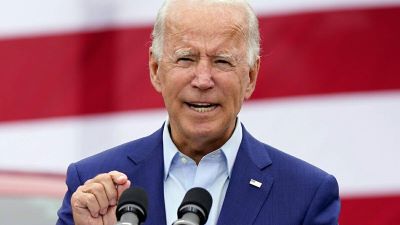
LOWER MACUNGIE TOWNSHIP, Pa. – President Joe Biden on Wednesday proposed strengthening the federal governments Buy American rules in what the administration is calling an effort to bolster domestic manufacturing.
The proposal, made public earlier Wednesday, would require that goods purchased with taxpayer dollars contain 75% U.S.-made content by 2029, up from a current threshold of 55%, according to a fact sheet released by the White House.
The threshold would rise to 60% once the rule goes into effect, and then gradually grow to 75%.
The president made his case to boost U.S. manufacturing at a truck manufacturing facility just outside Allentown, Pa., meeting factory workers and touting his administration’s new rules.
“In recent years, ‘Buy America’ has been a hollow promise,” Biden said in remarks at the Mack Trucks Lehigh Valley Operations center in this eastern Pennsylvania town, before a crowd of more than 100 people, including the facility’s employees and union members. “But my administration is going to make ‘Buy American’ a reality, and I’m putting the weight of the federal government behind that commitment.”
During his remarks, Biden said his administration was making the “biggest enforcement changes” to the Buy American Act – a 1930s-era law that calls on the federal government to purchase materials and products domestically – in seven decades.
The new rule would also enhance federal efforts to buy domestically produced goods deemed critical, such as semiconductors and medical supplies. And it would require contractors to report more data on the U.S.-made content of the goods they purchase.
“Instead of taking contractors at their word that they’ve hit the threshold, we’re going to start making them give us the details so that we can do more to support American” manufacturing, Biden said.
He added, “Today, I’m placing my bet on America.”
The proposal is subject to a 60-day comment period to allow industry and the public to weigh in, after which the administration will work on a final rule.
The federal government spends about $600 billion a year on goods and services, almost half of which is dedicated to manufactured products, including helicopter blades, trucks and office furniture.
Its massive budget makes it the single largest purchaser of consumer goods in the world, the administration said.
“Leveraging that purchasing power to shape markets and accelerate innovation is a key part of the Biden industrial strategy to grow the industries of the future to support U.S. workers, communities, and firms,” the administration said in its fact sheet.
“As the pandemic has demonstrated, federal procurement can strengthen the resiliency of domestic supply chains, and reduce the risk of Americans being adversely impacted by the actions of competitor nations during a time of crisis,” it said.
ADVERTISEMENT
In January, the Biden administration took additional steps to force the government to buy more domestically manufactured goods, via an executive order that tightened the definition of U.S.-made products and created a position in the Office of Management and Budget to oversee stepped-up purchases of domestic goods.
Published : July 29, 2021
By : The Washington Post · Seung Min Kim, Jeanne Whalen
Powell says waves of covid cases have had fewer economic repercussions as uncertainty rises around delta variant
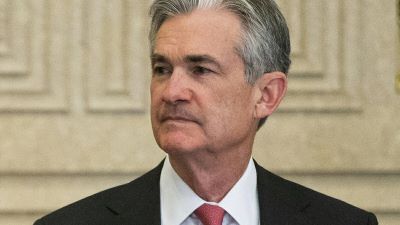
Federal Reserve Chair Jerome Powell on Wednesday said that the delta variant of the coronavirus could have fewer implications for the economy, if it follows the pattern of past waves of covid surges.
“With delta, we’re just going to have to watch,” Powell said at a news conference Wednesday. “With a reasonably high percentage of the country vaccinated, and the vaccine apparently being effective – we’re not experts on this but – it seems like a good, going-in estimate would be that the effects will probably be less. There probably won’t be significant lockdowns.”
Powell said it was “plausible” that the delta variant, which is rapidly spreading among unvaccinated people, could discourage people from dining out or traveling, or delay school reopenings. But Powell said that vaccinations, and society’s ability to adjust to life in a pandemic, may offer a cushion from harsh economic strain.
Powell said that the surge in covid cases last winter did have major effects on the labor market, especially in industries that depend on person-to-person contact.
But he added that businesses and consumers have found ways to continue on, saying “we’ve kind of learned to live with it.” He gave the example of businesses that can sell houses virtually, or restaurants that can fill no-contact takeout orders.
Powell’s comments come at a highly uncertain time for the economy. Public health officials, economic policymakers and others are grappling with the rapidly-spreading delta variant and the need to get more people vaccinated.
On Tuesday, the Centers for Disease Control and Prevention walked back recent recommendations for vaccinated Americans, saying they should wear masks indoors if they live in covid hotspots, or if they live with anyone immunocompromised, or with children who are not old enough for the vaccines. President Joe Biden will announce Thursday that all federal employees will be required to be vaccinated against the coronavirus or face repeated testing mandates.
Many parts of the economy appear to be headed in the right direction, and it is not yet clear if this recent wave of cases will thwart broader expectations for growth in 2021. Economists and policymakers hoped that more widespread vaccinations would help consumers unleash their pent-up savings, step back into their old routines and, in turn, bring back jobs in hard-hit industries.
ADVERTISEMENTx
Fed leaders also offered an early signal that progress was moving in the right direction for the Fed to eventually ease its support for the markets. In the coming months, the Fed may give more direct guidance on how and when it plans to scale back $120 billion a month in asset purchases, including $80 billion in Treasury debt and $40 billion in mortgage-backed securities. Any policy changes, including eventual interest rate hikes, will depend on how the economy and labor market heal from the recession’s depths.
Even with progress, Powell said “the labor market has a ways to go,” noting that the June unemployment rate of 5.9 person is an understatement. He said that caregiving needs, ongoing fears of the virus and unemployment insurance payments appear to be weighing on job growth, especially as people reevaluate what kinds of jobs they was altogether.
At the conclusion of its two-day policy meeting, the Fed also announced the establishment of two standing repurchase agreement facilities to serve as backstops in the markets.
Meanwhile, inflation is a particularly complicated feature of the economic recovery, and it’s posing a major test for Fed officials.
Fed leaders and the Biden administration say inflation is temporary and that it’s isolated to parts of the economy hurt by the pandemic. They say that as supply chains clear their bottlenecks, and consumer demand eases, prices will fall back down.
Yet Republicans and some prominent economists say inflation is already at worrisome levels. Their fear is that the Fed will be too late by the time it decides to raise interest rates, and that any sudden hikes could spur another recession.
While the Fed isn’t yet seeing widespread inflation pulsing through the whole economy, Powell has been clear that Fed leaders would change course, if they saw cause for concern.
“As the reopening continues, bottlenecks, hiring difficulties and other constraints could continue to limit how quickly supply can adjust, raising the possibility that inflation could turn out to be higher and more persistent than we expect,” Powell said.
Semiconductor shortage hammering automakers, costing billions in lost production and sales
The global shortage of computer chips continues to hammer automakers, forcing factory shutdowns and sapping sales and profits, with mixed views on when relief might arrive.
Seventeen auto factories in North America and Europe have halted or reduced production in recent weeks over the scarcity of the tiny components, according to Seraph Consulting, which is advising automakers on the shortages. The shutdowns have affected plants in Michigan, Kentucky, Kansas, Mexico, Canada and Germany.
Ford, General Motors, Tesla, BMW and Daimler are among the companies that have reported continuing difficulties in recent days. On Wednesday, Ford CEO Jim Farley said that while the company is seeing some signs of improvement in chip supply, the situation “remains fluid,” with continuing delays from a semiconductor factory in Japan that is recovering from a fire.
“We do see the chip issue running through this year, and we could see it bleeding into the first part of next year,” John Lawler, Ford’s chief financial officer, told investors on a conference call.
Overall, the global auto industry will produce nearly 4 million fewer vehicles than planned this year because of the shortages, losing about $110 billion in sales, according to the consulting firm AlixPartners.
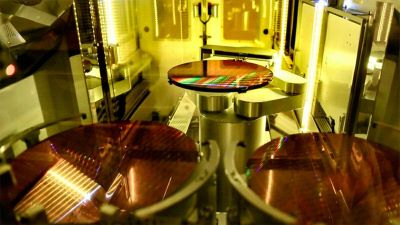
Global demand for computer chips is far outstripping supply, as an increasing number of electronic products require chips to function. While demand soars, supply is limited by a lack of semiconductor factories and by the months-long process needed to make chips.
Chip factories can cost $10 billion or more to construct because of their highly specialized machinery, an expense that few companies are willing to bear.
Estimates vary for when the semiconductor shortage will ease. Some say additional production of automotive chips from semiconductor makers including GlobalFoundries and Bosch is starting to help. Dan Hearsch, managing director of AlixPartners, said the picture for automakers could start to improve in eight to 10 weeks, allowing them to return to more normal production schedules.
“But that’s dependent on a lot of things continuing to go right, and covid variants have already had a bit of an impact on Malaysia,” causing slowdowns at factories there that conduct the final testing and assembly of chips, Hearsch said.
ADVERTISEMENTx
Pat Gelsinger, chief executive of chip-manufacturing giant Intel, has estimated the shortages could stretch beyond 2022.
Automakers and other manufacturers are also grappling with scarcity of other materials, including steel and plastics, as the coronavirus pandemic continues to cause gyrations in global supply and demand. Difficulty hiring enough workers is another obstacle for manufacturers, analysts say.
In some cases, the lack of computer chips and workers are related problems. When auto-parts makers couldn’t get enough semiconductors, some furloughed employees and then had a hard time getting them back amid booming demand for manufacturing workers, said Ambrose Conroy, founder of Seraph Consulting.
“You lay off people or you let people go home for a week, and then they don’t come back, the machines sit too long,” he said. “You lost your maintenance technicians, you lost your logistics people, you lost some quality people.”
In April, Ford predicted the chip shortage would cost it about half its planned production in the second quarter. On a conference call with investors on Wednesday, Farley said that worst-case scenario had not come to pass, though he didn’t say what the final production loss in the quarter had been.
ADVERTISEMENT
General Motors this week reported continuing production cutbacks, saying it has reduced or idled production at 10 factories in North America this month. The downtime is set to continue into August at several of the plants.
German automakers Daimler and BMW this month warned that chips would remain scarce through the end of the year.
In the past two weeks, BMW has had production interruptions at several factories in Germany and Austria and at one in Britain, either cutting shifts or ceasing production for up to a week, spokeswoman Martina Hatzel said by email.
“In the last week alone, we have not been able to build more than 10,000 vehicles,” Hatzel said.
“We ordered the required volumes [of semiconductors] for 2021 at the appropriate time and expect our suppliers to fulfill these orders as stipulated by the contract,” she added.
ADVERTISEMENT
Tesla, too, reported chip troubles this week, saying a lack of semiconductors is forcing it to choose between making cars or its Powerwall battery, which is used for home energy storage.
“We have a massive backlog in Powerwall demand,” chief executive Elon Musk said during an earnings call this week. “We use a lot of the same chips in the Powerwall as you do in a car. So it’s like, which one do you want to make? Cars or Powerwalls? So we need to make cars, so therefore, Powerwall production has been reduced.”
Thailand’s border and transit trade in June surged 41.68 per cent from same period last year, the Commerce Ministry reported on Wednesday. Total border-transit trade last month was worth 146.094 billion baht.
Trade with four neighbouring countries was topped by Malaysia with a rise of 15.33 per cent to 24.849 billion baht. Next came Laos (up 18.40% to 17.894 billion baht), Myanmar (31.79% to 17.139 billion) and Cambodia (20.99% to 13.494 billion).
China topped the list for transit trade with a rise of 86.56 per cent to 35.740 billion baht, followed by Singapore (81.65% to 10.158 billion) and Vietnam (16.91% to 6.082 billion).
The ministry expects border and transit trade to expand 3-6 per cent this year as it opens more checkpoints to speed the flow of trade. Forty-four border checkpoints were open in June, with another 11 set to open soon, starting with the Ban Pak Sang checkpoint linking Ubon Ratchathani province with Laos.
Total trade in the first half of 2021 has surpassed 800 billion baht, up 31.21 per cent.
Private spending slowed in June under impact from virus: FPO
The Thai economy in June continued to feel the impact of Covid-19, Fiscal Policy Office (FPO) revealed on Wednesday.
The impact was reflected in the slowdown in private spending, especially private investment. However, exports continued to expand at a high rate, the FPO added.
Private consumption indicators in June continued to expand from the same period last year, with car sales and newly registered motorcycles rising 20.6 per cent and 24.5 per cent respectively.
Meanwhile, VAT collection expanded at a slower rate of 5 per cent per year, and the Consumer Confidence Index dropped to 43.1 from 44.7 in the previous month as consumers worried about the unresolved virus crisis.
Exports in June recorded the highest yearly growth in 11 years, rising 43.8 per cent to US$23.699 billion.
The supply side of the Thai economy, including agriculture, also showed signs of expansion from the same period last year.
The Agricultural Production Index in June rose 3.9 per cent year on year and 4.5 per cent from the previous month after eliminating seasonal effects from rubber, oil palm, cassava and livestock production.
In the tourism sector, 5,694 foreign visitors arrived on Special Tourist Visas (STV) in June, including Thailand Privilege cardholders and business travellers. Most were from the United States, United Kingdom and Asean countries. The Phuket Sandbox scheme attracted 11,585 foreign tourists to Thailand from July 1-25.
Meanwhile, the Industrial Confidence Index for June dropped to 80.7 from 82.3 in May as operators worried over Covid-19 outbreaks in the manufacturing sector.
However, economic stability remained sound, the FPO said. This was reflected by a headline inflation rate of 1.2 per cent and core inflation of 0.5 per cent. The ratio of public debt to GDP at the end of May stood at 55.4 per cent, still below the 60 per cent financial safety threshold.
External stability remains stable and can accommodate risks from global economic volatility, the FPO stated.
This was reflected in international reserves which stood at a high level of $246.5 billion at the end of June.