Digital Justice: Solution to Inequalities in the New Normal #SootinClaimon.Com

#SootinClaimon.Com : ขอบคุณแหล่งข้อมูล : หนังสือพิมพ์ The Nation.

https://www.nationthailand.com/business/40002906

Digital Justice: Solution to Inequalities in the New Normal


The 18th National Symposium on Justice Administration, held on May 13-14, 2021, addressed the topic of “Enhancing Justice for People in the New Normal Era” with the aim of achieving inclusiveness and preparing a blueprint for justice administration in the new era

The COVID-19 pandemic has not only threatened public health, but also widened inequalities in Thai society. Reports on Thailand’s social outlook from 2019 to the fourth quarter of 2020 show the number of unemployed people in the country rose from 370,000 to 740,000. Many families have lost income and are facing growing pressures, which in many cases have manifested in domestic violence or violence against women. Hence, judicial processes need to adapt quickly to keep pace with problems arising from changing lifestyles, especially now that both adults and children spend more time online.

The 18th National Symposium on Justice Administration, held on May 13-14, 2021, addressed the topic of “Enhancing Justice for People in the New Normal Era” with the aim of achieving inclusiveness and preparing a blueprint for justice administration in the new era. Hosted by the Office of Justice Affairs, the symposium invited members of the Thailand Institute of Justice (TIJ) and the TIJ Executive Program on the Rule of Law and Development (RoLD) to share legal and judicial knowledge applicable to different sectors of society.

Digital Justice: Judicial Process That Respects Diversity, Pursues Inclusivity in COVID-19 Age

Dr. Kiratipong Naewmalee, a senior researcher at the Thailand Development Research Institute (TDRI) who studied mechanisms of the Justice Fund, said people with insufficient financial resources are the most likely to have difficulty accessing Thailand’s judicial process. Relevant authorities, after all, could not provide complete assistance in the face of legal constraints. For example, the Justice Fund can only help once the case has gone to court and only if applicants meet certain criteria. The criteria for eligibility are also not very clear. Dr. Kiratipong believes such problems lead to unequal access to Thailand’s judicial system despite the fact that every legal state must guarantee its people’s rights and liberties. The accused should always be presumed innocent and have equal access to the judicial process.

The Justice Ministry set up the Office of Justice Affairs in 2006 to promote equality and deliver assistance to the poor. Its key missions are:

• Providing financial assistance to people requiring access to the legal process;

• Requesting temporary release of accused persons/defendants;

ADVERTISEMENT

• Helping victims of human-rights violations who have been detained longer than required by law or scapegoats whose cases have been dismissed in court; and

• Providing legal knowledge to the public.

However, Dr. Kiratipong pointed out that “the Office of Justice Affairs has not been able to address requests filed by several people” due to legal constraints and criteria that need more legal interpretation. He recommended that the Justice Fund explore solutions to the following problems:

Digital Justice: Solution to Inequalities in the New NormalDigital Justice: Solution to Inequalities in the New Normal(1) Assistance with legal procedure is still restricted to people whose cases have already entered the legal system, thus making it impossible for poor people to seek any legal help before that stage;

(2) Lack of clear guidelines on helping secure temporary release or bail for defendants during trial. Currently, the basic criteria focus on whether the accused tends to flee or commit crimes that disrupt the peace. Owing to this, accused persons in border areas or those implicated in narcotics cases usually do not receive assistance.

ADVERTISEMENT

(3) To date, the Justice Fund has not delivered assistance to any victim of human-right violations, as no request has been approved due to problems with legal interpretation. Based on current criteria, only persons subject to persecution by state officials or those suffering at the hands of unauthorized state officials can seek help.

(4) Because, under the current framework, only projects from central agencies get support in distributing legal knowledge to people, approved projects lack diversity.

In response to these recommendations, the Office of Justice Affairs plans to improve relevant laws to accommodate more people’s access to the Justice Fund.

Digital Justice: Solution to Inequalities in the New NormalDigital Justice: Solution to Inequalities in the New NormalAs the COVID-19 outbreak has significantly limited access to the fund, the Office of Justice Affairs is developing digital systems, including mobile applications, to deliver services. The office has also set up a Digital Exchange Center and acquired Big Data for the fund.

These developments aim to help streamline the work process, remove the need for people and officials to travel, and decentralize the process to grant everybody convenient access to the justice system in a sustainable and equal manner.

“To reduce inequalities in the judicial process during the new-normal period, the first thing to do is to educate people about the role of the Justice Fund. The Justice Fund should also expand its scope of work. For instance, it should recruit lawyers specializing in different fields, so they can deliver legal assistance or facilitate mediation before legal battles escalate,” Dr. Kiratipong said.

Digital Justice: Solution to Inequalities in the New NormalDigital Justice: Solution to Inequalities in the New Normal

Assistance Methods to Curb Inequality for Women and Children during COVID-19

The symposium also discussed problems faced by vulnerable groups, such as children and women, affected both directly and indirectly by the COVID-19 outbreak. The discussion allowed various parties in Thai society to seek solutions and address the problems in a timely manner.

Mr. Surasek Yuthiwat, managing director of Toolmorrow, said in response to findings that the outbreak has pushed children deeper into the online world, the “You Change, Your Kids Change” project was launched. The increasing amount of time children spend online leaves them more vulnerable to online threats, while parents still lack adequate knowledge to protect them.

The “You Change, Your Kids Change” project offers parents lessons on how to deal with children/grandchildren who have “nomophobia”, or fear of going without mobile phones. Apart from teaching parents to deal with youngsters suffering from this condition, the project also monitors their performance via the LINE app. Results, so far, indicate the project has helped to reduce social inequalities. The project has also helped cut the expense of physically attending these classes and reduced spending on psychiatric help for the affected youngsters.

Toolmorrow has designed the course to suit “parents of all economic classes” hoping that such online lessons will serve as powerful tools in reducing social inequalities.

“Nowadays, media can inspire and educate the masses, while creative media can even perpetuate social changes… Do not just focus on raising awareness about an issue. Media should now deliver help, too, because they have the power to do so at this time,” Mr. Surasek concluded.

Ms. Montira Narkvichien, regional communications specialist for UN Women – Asia Pacific, presented “COVID-19 and Violence Against Women: The evidence behind the talk”, a research study by her agency. Conducted between September 2019 and November 2020, the study shows that women across the Asia-Pacific region were subject to violence during the spread of COVID-19. Backed by artificial intelligence, the research cited images of abused women posted on social media. During lockdowns, Twitter was also rife with derogatory, malicious, or aggressive comments about women. The use of misogynistic words online soared during lockdowns, especially in Thailand, where the usage was up to 22,384% higher than in other countries. Women also faced online shaming and violence from both their families and their communities during the lockdown.

The biggest concern from these findings is that women have been confined with their abusers during lockdowns and, as a result, have faced rising physical and emotional abuse. Moreover, access to the judicial process has been more difficult than usual during periods of lockdown.

Women should be included more in the policy-making process to ensure policies respond to their needs. It’s better to have women working for the right to express their honest opinions and needs. This mechanism is the critical success for involving women’s voices in the joint decision-making stage. Then, the equality place for everyone in society exists.” Ms. Montira concludes.

The symposium underlined that specialists from various fields, when brought together, can connect the dots and present a clearer picture of problems arising in Thai society during the COVID-19 outbreak. With everyone adapting to the new normal, all existing mechanisms must be adjusted to ensure they remain relevant, meaningful, and able to reduce social inequalities.

Digital Justice: Solution to Inequalities in the New NormalDigital Justice: Solution to Inequalities in the New Normal

Published : July 06, 2021

SET down almost 1% as oil falls and Thai infections rise #SootinClaimon.Com

#SootinClaimon.Com : ขอบคุณแหล่งข้อมูล : หนังสือพิมพ์ The Nation.

https://www.nationthailand.com/business/40002952

SET down almost 1% as oil falls and Thai infections rise


The Stock Exchange of Thailand (SET) Index closed at 1,576.60 on Wednesday, down 14.83 points or 0.93 per cent. Transactions totalled THB82.47 billion with an index high of 1,587.70 and a low of 1,574.14.

In the morning session, Krungsri Securities forecast the day’s index would drop to between 1,580 and 1,585 points in response to the falling oil price amid uncertainty over Opec+’s production policy.

The weakening baht, volatile foreign fund flows and the higher number of Covid-19 cases in Thailand are also pressuring the index, Krungsri Securities said.

The 10 stocks with the highest trade value today were MENA, BBL, KBANK, SCB, CPALL, PTTEP, PTT, IVL, AOT and CHG.

Other Asian indices were down except in mainland China:

Japan’s Nikkei Index closed at 28,366.95, down 276.26 points or 0.96 per cent.

China’s Shanghai SE Composite Index closed at 3,553.72, up 23.46 points or 0.66 per cent, while the Shenzhen SE Component Index closed at 14,940.05, up 272.40 points or 1.86 per cent.

Hong Kong’s Hang Seng Index closed at 27,960.62, down 112.24 points or 0.40 per cent.

South Korea’s KOSPI closed at 3,285.34, down 19.87 points or 0.60 per cent.

Taiwan’s TAIEX closed at 17,850.69, down 62.38 points or 0.35 per cent.

Published : July 07, 2021

By : The Nation

New national shipping firm will not boost Thailand’s competitiveness, warns TCC #SootinClaimon.Com

#SootinClaimon.Com : ขอบคุณแหล่งข้อมูล : หนังสือพิมพ์ The Nation.

https://www.nationthailand.com/business/40002941

New national shipping firm will not boost Thailand’s competitiveness, warns TCC


The Thai Chamber of Commerce (TCC) is advising the government against setting up a national shipping firm in a bid to boost Thailand’s competitiveness.

Phumin Harinsut, TCC’s vice-chairman, said Thailand had established a shipping company in the World War II era which was eventually closed in 2011.

“This company had to hire foreign shippers to deliver government products because it did not have its own vessels,” he said.

Instead, he said, the government should consider the services of maritime transport and freight forwarder, TMN Company, in which the government already holds a 30 per cent stake.

He said TMN has three vessels and has ordered a 240-meter-long oil tanker with a capacity of 105,000 tonnes, which will be delivered on July 14.

“TMN has been making oil deliveries for PTT and has the ability to generate revenue for Thailand,” he said.

Phumin also advised the government to establish a national fleet of ships, so it can boost its competitiveness.

“The government should also launch measures to help boost Thai shipping companies’ competitiveness against their foreign counterparts,” he added.

Published : July 07, 2021

By : The Nation

SET slips, under pressure from weakening baht, erratic foreign fund flows, virus situation #SootinClaimon.Com

#SootinClaimon.Com : ขอบคุณแหล่งข้อมูล : หนังสือพิมพ์ The Nation.

https://www.nationthailand.com/business/40002935

SET slips, under pressure from weakening baht, erratic foreign fund flows, virus situation


The Stock Exchange of Thailand (SET) Index fell by 6.09 points or 0.38 per cent to 1,585.34 on Wednesday morning.

Krungsri Securities predicted the index would drop to between 1,580 and 1,585 points due to a falling oil price amid uncertainty over the Opec+ bloc’s oil production policy.

A weakening baht, volatile foreign fund flows and a higher number of Covid-19 cases in Thailand are also pressuring the index, Krungsri Securities said.

It recommended investors buy:

▪︎ Hana, KCE, TU, CPF, Asian and EPG, which benefit from the weakening baht.

▪︎ BCH, CHG, BDMS, HMPro, Global, BEM, CKP, CBG and Ichi, whose second-quarter business turnover is expected to improve.

The SET Index closed at 1,591.43 on Tuesday, up 12.15 points or 0.77 per cent. Transactions totalled THB69.48 billion with an index high of 1,594.15 and a low of 1,585.34.

Published : July 07, 2021

By : The Nation

Covid-19 crisis, strengthening dollar pressure baht #SootinClaimon.Com

#SootinClaimon.Com : ขอบคุณแหล่งข้อมูล : หนังสือพิมพ์ The Nation.

https://www.nationthailand.com/business/40002934

Covid-19 crisis, strengthening dollar pressure baht


The baht opened at 32.29 to the US dollar on Wednesday, weakening from Tuesday’s closing rate of 32.20.

The Thai currency is likely to move between 32.25 and 32.40 during the day, Krungthai Bank market strategist Poon Panichpibool said.

Poon said the baht was still under pressure from the dollar and the Covid-19 situation especially in Thailand. Foreign investors have been selling their assets in the country as they are concerned about the virus crisis, he added.

Poon also said the financial market was in a risk-off state and this would increase demand for dollars in the short term. He explained that the demand comes in a bid to avoid market fluctuation. Meanwhile, the dollar is strengthening in this situation.

Poon predicted the baht would at maximum weaken to 32.50 per dollar after already reaching the 32 level.

He said exporters would sell their dollar holdings when the baht moved near 32.25-32.30.

Published : July 07, 2021

By : The Nation

Gold up as US bond yield slides #SootinClaimon.Com

#SootinClaimon.Com : ขอบคุณแหล่งข้อมูล : หนังสือพิมพ์ The Nation.

https://www.nationthailand.com/business/40002933

Gold up as US bond yield slides


The price of gold rose by THB50 per baht weight in morning trade on Wednesday amid a falling US bond yield.

AGold Traders Association report at 9.23am showed the buying price of a gold bar at THB27,450 per baht weight and selling price at THB27,550, while gold ornaments cost THB26,954.48 and THB28,050, respectively.

At close on Tuesday, the buying price of a gold bar was THB27,400 per baht weight and selling price THB27,500, while gold ornaments cost THB26,909 and THB28,000, respectively.

The spot gold price on Wednesday was US$1,802 (THB58,187) per ounce after Comex gold on Tuesday rose by $10.90 to $1,794.20 per ounce.

The Hong Kong gold price, however, dropped by HK$110 to $16,630 (THB69,130) per tael, the Chinese Gold and Silver Exchange Society reported.

Published : July 07, 2021

By : The Nation

OPEC+ crisis propels oil to six-year high as market tightens #SootinClaimon.Com

#SootinClaimon.Com : ขอบคุณแหล่งข้อมูล : หนังสือพิมพ์ The Nation.

https://www.nationthailand.com/business/40002918

OPEC+ crisis propels oil to six-year high as market tightens


Oil fell the most since late May as a stronger dollar spurred a broad sell-off across the commodities complex while uncertainty over OPECs next move loomed large in the markets.

Futures in New York slid 2.4% on Tuesday. The U.S. dollar rose, making commodities priced in the currency less attractive to investors. The pullback in crude is a stark reversal from earlier in the session when futures soared to a six-year high amid an escalating fight between Saudi Arabia and the United Arab Emirates that has pushed OPEC+ into crisis and blocked a potential increase in oil supplies next month.

“Lots of uncertainty is lying ahead about the group’s output policy in coming months and this will lead to increased volatility,” said Tamas Varga, an analyst at PVM Oil Associates Ltd. in London.

Oil prices have staged a massive rally this year as vaccination campaigns and economic reopenings have prompted a comeback in global fuel consumption. Tuesday’s volatility underscores how uncertain the supply picture has become while the world’s largest crude producers remain at a standstill over how to respond.

Discussions among the alliance dissolved acrimoniously as the United Arab Emirates blocked a proposal led by Saudi Arabia and Russia. While the situation is fluid and negotiations could be reactivated, the breakdown has damaged the group’s image as a responsible steward of the market.

“Demand has been the primary signal for the oil markets for the last year or so,” said Louise Dickson, oil markets analyst at Rystad Energy. “Now, we’ve started to reach this pivot where the supply uncertainty is driving the prices and this time, it’s actually been stoked by OPEC+ itself.”

Meanwhile, Biden administration officials have spoken with officials in Saudi Arabia and the United Arab Emirates in hopes of reaching an agreement to stem the rise in crude prices, White House press secretary Jen Psaki said Tuesday.

The U.S. hopes talks will lead to an agreement that “will promote access to affordable and reliable energy,” Psaki said during a briefing at the White House. The impact of talks on gas prices in the U.S. is of interest to the administration, she said.

WTI hit the highest since November 2014, as the breakdown in talks left the market without extra supplies for next month. Tuesday’s subsequent pullback in prices stems from concern or “skepticism that this is not the real oil price, and the last two or three days have reminded us that OPEC+ is holding this thing together,” said Christyan Malek, head of oil and gas research at JPMorgan Chase & Co., in a Bloomberg television interview.

The 23-nation OPEC+ coalition had been on the brink of an agreement to restore production halted during the pandemic, in monthly increments of 400,000 barrels a day. That plan could still be ratified, or members may choose to informally leak barrels to eager consumers.

The lack of OPEC+ unity could invite new barrels to the market and spell bearish news for current prices, said Tom Finlon of Brownsville GTR LLC, a trading and logistics firm based in Houston.

“I think if you have 23 oil-producing countries that are party to an agreement, and that agreement isn’t extended, and the price of crude is in the mid-70s, that’s an engraved invitation to overproduce,” said Finlon.

Oil and Dollars: Why the UAE Is Risking a Falling-Out With OPEC+

Traders will also look to crude and gasoline inventory data in the U.S. released by the industry-funded American Petroleum Institute on Wednesday for signals on how strong demand is in the midst of the summer driving season.

Published : July 07, 2021

By : Syndication Washington Post, Bloomberg · Jill R. Shah

Didi plunges below IPO price as China crackdown brings U.S. pain #SootinClaimon.Com

#SootinClaimon.Com : ขอบคุณแหล่งข้อมูล : หนังสือพิมพ์ The Nation.

https://www.nationthailand.com/business/40002917

Didi plunges below IPO price as China crackdown brings U.S. pain


Didi Global plunged in premarket trading after a Chinese regulator ordered the removal of the companys platform from app stores, days after a $4.4 billion initial public offering in the U.S.

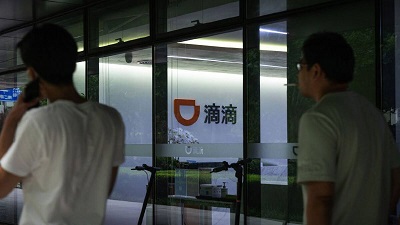
A logo inside the Didi Global headquarters in Beijing on July 5, 2021. MUST CREDIT: Bloomberg photo by Yan Cong

Shares of the China-based tech firm fell as much as 30% to $10.90, wiping out about $22 billion of market value and taking the stock below its $14 IPO price. They traded at $12.50 as of 8:06 a.m. in New York.

The Cyberspace Administration of China barred new users from Didi’s app, citing security risks and tightening its grip on sensitive online data. Didi, whose American Depository Receipts began trading in New York on June 30, said the move may have an “adverse impact” on its revenue in China.

In a statement released Tuesday, China’s State Council said it will improve regulations and laws regarding data security, cross-border data flow and management of confidential information. In addition, the council said it is increasing supervision and revising rules for overseas listings of Chinese companies.

“This is consistent with China’s broad strategy to encourage Chinese companies to list domestically on Hong Kong, Shanghai and Shenzhen exchanges,” said Benjamin Zhan, Vice President and Portfolio Manager at Dynamic Funds.

A crackdown on the nation’s big tech names has knocked about $42 billion off the market value of firms listed on the Nasdaq’s Golden Dragon China Index, which tracks Chinese ADRs, since the government derailed the planned IPO of giant Ant Group in November. Further moves included a record $2.8 billion fine on Alibaba Group Holding after an antitrust probe found it had abused its market dominance, sparking concern about the future of the sector.

“The Chinese government’s tactics appear to have the twin purposes of keeping its corporate leaders in check while also making sure the investor pain lands primarily in the U.S. more so than China,” said Michael O’Rourke, chief market strategist at JonesTrading.

While Didi’s half-billion existing users will still be able to order rides for now, China’s cybersecurity crackdown adds to the uncertainty surrounding all the nation’s internet companies. Tencent Holdings, which has a stake in Didi, is down 2.7% so far this week, after sliding 3.6% Monday and partially trimming losses on Tuesday. The onslaught of government announcements began on Friday after markets in Asia had closed.

Chinese regulators asked Didi as early as three months ago to delay its landmark U.S. IPO because of national security concerns involving its huge trove of data, according to people familiar with the matter.

Uber Technologies, the second-biggest Didi holder, fell 1.6% in premarket. The U.S. stock market was closed on Monday for a holiday.

Full Truck Alliance and Kanzhun, both of which recently went public in the U.S., plummeted 19% and 10%, respectively, after China expanded its probe on the technology industry to include the firms. Beijing ordered both to halt new user registrations, in addition to Didi.

The number of companies based in China filing for New York IPOs has climbed for a third straight quarter despite weakness in other U.S.-listed stocks that conduct most of their business in China and amid the broad antitrust probe into the nation’s internet firms. The Golden Dragon China Index is down about 8% for the year, lagging behind the 14% gain in the Nasdaq Composite Index.

“With Beijing now clearly seeking to make a political statement in the capital markets, it is unclear who, if anyone, will be there to invest in China’s next mega public offering in the U.S.,” said Charles-Henry Monchau, the chief financial and chief investment officer at FlowBank in Geneva. “The decision to crack down on Didi three days after the IPO looks very unfair to investors. It would have been better to prevent the company going public, as they did with Ant Group.”

Published : July 07, 2021

By : Syndication Washington Post, Bloomberg · Divya Balji, Filipe Pacheco

Stocks snap rally; yields drop to February lows #SootinClaimon.Com

#SootinClaimon.Com : ขอบคุณแหล่งข้อมูล : หนังสือพิมพ์ The Nation.

https://www.nationthailand.com/business/40002915

Stocks snap rally; yields drop to February lows


U.S. stocks fell, snapping a streak of seven consecutive closing record highs, as a plunge in Treasury yields to the lowest since February weighed on banks and small caps. A gauge of the dollar strengthened and crude oil dropped from a six-year high.

The benchmark S&P 500 was led lower by the energy and financial sectors. Amazon.com pushed the Nasdaq 100 to another all-time high. Ride-hailing firm Didi Global Inc. plunged after a Chinese regulator ordered the removal of its platform from app stores, days after its U.S. listing. Yields dropped earlier as a gauge of service-sector activity faltered.

The benchmark 10-year yield fell as much as 7.4 basis points to just under 1.35%, the lowest level since Feb. 24. The 30-year bond’s yield slid 5 basis points to 1.99%, testing its 200-day moving average and its first time below 2% since June 21. The session lows were reached shortly after the ISM Services Index for June fell more than expected from May’s record high.

“People start to get nervous when the 10-year gets below 1.45%,” said Sarah Hunt, a money manager at Alpine Woods. “People are worried that it signals that you’re going to have an economic slowdown.”

West Texas Intermediate futures for August fell as much as 3% in New York. The Bloomberg Dollar Spot Index rose, making commodities priced in the dollar less attractive to investors. Oil prices earlier surged to a six-year high after a bitter fight between Saudi Arabia and the United Arab Emirates plunged OPEC+ into crisis and blocked a supply increase. Investors are assessing the risk of the conflict escalating into a price war that could hamper the global economic recovery and add to inflationary pressures. That, in turn, may strengthen the Federal Reserve’s case for tightening policy.

“There’s still concerns about what happens with the Fed tapering and there’s lack of traction on the fiscal stimulus side,” said Keith Lerner, chief market strategist at Truist Advisory Services. “Those uncertainties are just injecting some volatility and then you throw in concerns about peak economic growth. That just feeds into the concerns about — is the best growth behind us?”

Minutes due Wednesday from the Fed’s latest meeting may provide further context on the central bank’s hawkish pivot last month.

The Chinese crackdown has knocked about $42 billion off the market value of firms listed on the Nasdaq’s Golden Dragon China Index, which tracks Chinese ADRs, since the government derailed the planned IPO of giant Ant Group Co. in November. Further moves included a record $2.8 billion fine on Alibaba Group Holding Ltd. after an antitrust probe found it had abused its market dominance, sparking concern about the future of the sector.

These are some of the main moves in markets:

Stocks

– The S&P 500 fell 0.2% at 4 p.m. EDT, the most since June 18

– The Nasdaq 100 rose 0.4% to a record high

– The Dow Jones industrial average fell 0.6%, more than any closing loss since June 18

ADVERTISEMENT

– The MSCI World index fell 0.3%, more than any closing loss since June 18

Currencies

– The Bloomberg Dollar Spot Index rose 0.4%, more than any closing gain since June 17

– The euro slipped 0.3%, more than any closing loss since June 18

– The British pound fell 0.3% to $1.3802

ADVERTISEMENT

– The Japanese yen rose 0.3% to 110.64 per dollar

Bonds

– The yield on 10-year Treasurys declined seven basis points, more than any closing loss since June 17

– Germany’s 10-year yield declined six basis points, more than any closing loss since March 1

– Britain’s 10-year yield declined eight basis points, more than any closing loss in more than 15 months

Commodities

– West Texas Intermediate crude fell 1.8%, the most since June 28

– Gold futures rose 0.8%, climbing for the fourth straight day, the longest winning streak since May 20

Published : July 07, 2021

By : Syndication Washington Post, Bloomberg · Claire Ballentine, Lu Wang

Govt sets aside THB2-bn to help Bangkok restaurants pull through crisis #SootinClaimon.Com

#SootinClaimon.Com : ขอบคุณแหล่งข้อมูล : หนังสือพิมพ์ The Nation.

https://www.nationthailand.com/business/40002909

Govt sets aside THB2-bn to help Bangkok restaurants pull through crisis


The Cabinet has earmarked 2 billion baht to help restaurants affected by regulations restricting patrons from dining on the premises.

The new remedy, called “Im Jai Loan”, will be limited to a maximum of 100,000 baht per applicant and will apply to established food and beverage businesses, such as restaurants and eateries or stalls in department stores’ food courts.

The loan will be granted at an annual interest rate of 3.99 per cent for no more than five years, with borrowers being given a payment respite for the first six months.

The loans will be granted by the Government Savings Bank until December 31 and the measure applies to businesses in Greater Bangkok and border provinces in the South.

It is expected that up to 40,000 businesses will seek to borrow about 50,000 baht each on average.

The government already has a similar measure for roadside food vendors, who can borrow up to 10,000 baht from the Government Savings Bank at a monthly interest of 0.35 per cent. This loan is for a term of three years and borrowers do not have to make any payments for the first six months. Applications for this loan will also be accepted until December 31.

Published : July 06, 2021

By : The Nation