A coronavirus vaccine rooted in a government partnership is fueling financial rewards for company executives #ศาสตร์เกษตรดินปุ๋ย

#ศาสตร์เกษตรดินปุ๋ย : ขอบคุณแหล่งข้อมูล : หนังสือพิมพ์ The Nation.

A coronavirus vaccine rooted in a government partnership is fueling financial rewards for company executives

Corporate

Jul 04. 2020

Insiders sold shares as vaccine news hit the market

Insiders sold shares as vaccine news hit the market

By The Washington Post · Christopher Rowland, Carolyn Y. Johnson · NATIONAL, BUSINESS, HEALTH, SCIENCE-ENVIRONMENT 

As shares of biotech firm Moderna soared in May to record highs on news that its novel coronavirus vaccine showed promise in a clinical trial, the nation’s senior securities regulator was asked on CNBC about news reports that top executives had been selling their stock in the company.

Jay Clayton, chairman of the Securities and Exchange Commission, responded that companies should avoid even the appearance of impropriety. “Why would you want to even raise the question that you were doing something that was inappropriate?” he said.

Notwithstanding Clayton’s statement, there is little public evidence that company leaders slowed their stock selling. Now, corporate governance experts and some lawmakers say the trades could cast a shadow over Moderna, one of the biopharmaceutical industry’s most remarkable stories. The questions come as the 10-year-old company is leading the race in the United States for a coronavirus vaccine – a feat rooted in a government partnership formed years ago that could change the path of a disease afflicting the world.

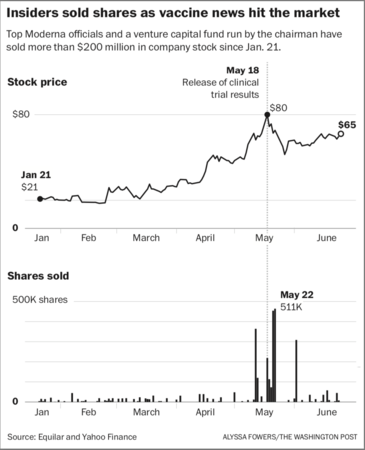
In total, seven corporate executives and board members as well as a venture capital fund run by Moderna’s board chairman collectively sold almost $101 million following Clayton’s comments. The trades were part of more than $200 million in sales by insiders since Moderna announced Jan. 21 that it was pursuing a vaccine in partnership with the National Institutes of Health. That’s according to an analysis of SEC filings that the national executive compensation research firm Equilar performed at the request of The Washington Post – the first such comprehensive examination of the company’s stock sales this year.

Insiders selling included Moderna Chief Executive Officer Stéphane Bancel, Chief Financial Officer Lorence Kim and Chief Medical Officer Tal Zaks. The trades were preprogrammed, according to the company’s required public disclosure filings, meaning they were made in accordance with a predetermined schedule or triggering event such as a share-price threshold. Moderna said it will not disclose any details of the preprogrammed trading rules for its executives.

On May 21 and 22, the co-founder and chairman of the company, Noubar Afeyan, reported selling $68 million worth of stock held by Flagship Pioneering, the venture capital fund he founded that is Moderna’s largest shareholder. Afeyan did not sell any of his personal stock holdings in Moderna, according to Flagship and public filings. These trades were not preprogrammed, according to the company’s public disclosures.

Moderna’s stock rose by 200 percent from January to June – as company news releases and news reports described early progress in its quest for a vaccine. In May, it was up as high as 300 percent after the release of the results of the clinical trial. The company made a public offering of stock on May 18 at the very peak of its share value.

Federal securities law requires officers, directors and large shareholders of publicly traded companies to report their trades in company stock to the SEC. Companies typically prohibit sales of stock by executives for 180 days after the initial public offering, specialists said.

The very first insider stock sales reported at Moderna occurred infrequently last fall, with the first in September 2019, 10 months after the company went public in a record-setting IPO in December 2018. Bancel began routinely selling shares starting in the fourth quarter of 2019 under his preprogrammed plan. The pace of selling picked up among Moderna’s other executives in 2020, according to the public filings.

“Executive sales are made under preplanned 10b5-1 plans, which are entered into during open trading windows in accordance with the company’s insider trading policy,’ ” said company spokesman Ray Jordan in an email. “As a matter of practice, Moderna does not intend to comment on any alleged or potential litigation or investigation; nor on purchases or sales by individual executives, investors or groups.”

Moderna did not make company officials available for interviews.

Bancel has a “long-term commitment to Moderna and to the development of the . . . technologies being developed by the company,” which he joined as its second employee nine years ago, Jordan added. “He has liquidated a small portion of his holdings each month through a planned 10b5-1 selling program. . . . Substantially all of his family’s assets remain invested in Moderna.”

The company has nearly 150 employees who operate under 10b5-1 plans, he added.

Flagship spokesman Gregory Kelley said in an email that the fund’s stock sales, which were not preprogrammed, “were made in accordance with [Moderna’s] policies and during an open trading window as determined by [Moderna’s] general counsel.”

Experts in securities law say the rules for preprogrammed stock trading plans are ambiguous enough that executives could gain unfair advantages, particularly when it comes to their control over the timing of release of market-moving data, and deserve scrutiny. The sales at Moderna in May raise potential concerns, the experts said.

“All of the activity in the days leading up to the announcement and the offering, and the days following the announcement, are ripe fodder for SEC investigation,” said Jacob Frenkel, a former top SEC investigator now in private practice as chair of government investigations and securities enforcement at the law firm Dickinson Wright. Frenkel said a likely subject of scrutiny would be what policies Moderna has for “blackouts” on executive trades during major news events and whether such policies were followed. The company said blackout dates are included in its insider trading policies, but the dates are not public.

The SEC said it would not comment. The agency typically does not publicly disclose whether it is investigating a company.

Nell Minow, an expert in corporate governance and vice chair at ValueEdge Advisors, said it is inadvisable for Moderna’s corporate insiders to be selling stock, particularly in the midst of major news about its leading product.

“It can send the market a signal that is opposite to all of the positive things that they are trying to communicate,” she said. “By definition, it is very concerning.

“Whether it is preprogrammed or not, it’s hard to believe that anybody who thought the company was going to be tremendously successful with this vaccine would be selling,” Minow said.

Harvey Pitt, a former SEC chairman who now heads Kalorama Partners, told CNN in May that the timing of the trades was “highly problematic” and that the SEC should review communications inside the company to find out “what was going on in people’s minds before all these transactions.”

Bloomberg in May estimated Bancel’s stake in the company as worth more than $2.2 billion, when measured at Moderna’s peak stock price. He has sold about $17 million worth of shares since Jan. 21, according to the Equilar analysis. Flagship’s 11 percent share of the company was worth $3.2 billion, Bloomberg said, and its sales of Moderna stock represented about 2 percent of that value. Given the large value of those holdings, the relatively small value of stock sales does not raise a major concern, said Jesse Fried, a Harvard Law School professor and expert on executive pay and insider trading.

“You don’t want to be exploiting a crisis to make money, but the truth is that any company that is going to sell the vaccine is going to be making money on the crisis,” Fried said, “and that’s great, because we want to incentivize people to wake up early in the morning and stay in their labs late at night coming up with something that will help us.”

But the Moderna sales are triggering political debate.

“Moderna executives used this opportunity to capitalize on the covid-19 crisis, and to add insult to injury, the value of their stocks increased based on the taxpayer-funded investment in the development of the vaccine,” Sen. Chris Van Hollen (D-Md) said in an email. Van Hollen is the sponsor of legislation that would require the SEC to revisit its rules for preprogrammed insider trades.

– – –

The enormous success of Moderna shows how pharmaceutical companies, often with help from the government, can achieve fantastic results even without delivering a product to market.

Its speedy response to the covid-19 pandemic was enabled by its vaccine technology based on messenger RNA, which carries genetic codes instructing human cells to produce what is known as a “spike protein” molecule. The spike protein, which was invented jointly by scientists at the National Institutes of Health and the University of Texas at Austin, triggers the immune system to create antibodies against the coronavirus. The technology allowed Moderna in March to become the first company to test a vaccine in a human, just 66 days after the coronavirus genetic code was published.

On May 18, Moderna announced partial clinical results from 45 human test subjects suggesting the vaccine was safe and triggered an immune response. It said it measured neutralizing antibodies in eight test subjects, which was seen as early evidence that its vaccine may work. The news release did not contain detailed data from the patients in the trial, and crucial test results on some subjects were not available at the time the release was issued.

The news drove the share price to a record peak of $80. On that day, the chief financial officer, Kim, who is leaving the company in a previously planned departure, sold $19.5 million in shares in preprogrammed trades, according to public filings. In all since Jan. 21, Kim sold $54 million in shares, according to the Equilar analysis. As of June 2, he still held $70 million worth of shares.

Minutes after the end of trading on May 18, Moderna announced it would issue $1.3 billion worth of new stock at $76 per share. The company said cash from the offering would be plowed into coronavirus vaccine manufacturing, including hiring 150 new production staff, as well as other company priorities. But as the stock dropped from its peak in subsequent days and weeks, plaintiff lawyers quickly announced that they would prepare class-action lawsuits, suggesting that the company’s news release overhyped the data.

Moderna said it “worked cooperatively” with NIH on the content of its news release and expects NIH to make detailed data from the Phase 1 trial public at a later date. NIH confirmed that it reviewed the data in the news release and said it was accurate.

The chain of events in the midst of the pandemic has generated negative attention for a company that is competing with much larger corporations – including Pfizer, Merck, Johnson & Johnson, and AstraZeneca – to develop the first coronavirus vaccine.

Unlike those companies, Moderna has no approved products and zero revenue stream from sales, according to the company’s disclosure reports. Fifteen drugs in its pipeline, ranging from virus vaccines to heart treatments and a cancer vaccine, are still in early or mid-stage development.

The company is built on the notion that cells inside the body can produce drugs and vaccines, if they are directed to do it by delivering the messenger RNA directly into the cells. Investors are wagering that Moderna’s technology will work for other medicines down the road, including more viral targets and a cancer vaccine, say drug industry specialists.

“If it works for this one virus, you can bet that it works for many, many others . . . and that kind of franchise will be incredibly valuable,” said Andrew W. Lo, the Charles E. and Susan T. Harris professor of finance at the MIT Sloan School of Management, who does not have holdings in Moderna but who has personal investments and financial ties to other biotechnology companies and biotech venture capital funds.

– – –

The Cambridge, Mass., company, founded in 2010, has attracted more than $5 billion in private-sector investment, according to company figures, including partnerships with Merck and AstraZeneca, multiple rounds of venture capital financing, and public stock offerings worth about $2.5 billion. The company has $483 million in government commitments to develop a coronavirus vaccine but said it has not tapped the money yet. Over its history, Moderna has received about $77 million in funding for various projects, the company said.

Moderna’s rapid response gave it a leg up in the markets. Older vaccines relied on deactivated or weakened virus, grown in chicken eggs, in a slow process. The new breed of RNA vaccines like Moderna’s can be designed on computers based on the genetic code of the virus and manufactured quickly. Pfizer also is working to develop an RNA-based coronavirus vaccine and began a Phase 1 trial in May.

Still, the delivery system needs to be proved safe and effective in large numbers of people.

“There is not a single drug approved with this technology. This is really the bet we are making, that all this is going to work,” said Otello Stampacchia, the founder and managing director of Omega Funds, a life sciences venture capital firm in Boston.

– – –

The foundation of the Moderna vaccine was laid years before a mysterious respiratory illness was reported in Wuhan, China. In 2012, another deadly coronavirus, Middle East respiratory syndrome, jumped from camels into humans. Barney Graham, the deputy director of the federal Vaccine Research Center, which is part of NIH, said in an interview that he wanted to use cutting-edge technologies that examined the precise shape of a virus – down to individual atoms – to design a vaccine against the threat.

But Graham and academic collaborators had to solve a problem. The target the scientists were interested in – the distinctive spiky protein on the virus surface – was unstable and tended to shape-shift.

Nianshuang Wang, a postdoctoral researcher then at Dartmouth, spent months trying to identify genetic mutations that would stabilize the shape-shifting spike protein, eventually finding a solution that worked in multiple coronaviruses. The paper, published in 2017, took persistence to publish – it was rejected five times.

“People generally at that time said, ‘Coronavirus is not a big concern,’ ” Wang said. “They didn’t get the idea that this can be a great technology in the future, to prevent another coronavirus pandemic.”

Graham was interested in using new technologies to speed up MERS vaccine development and in October 2017 began working with Moderna. The company’s technology could deliver messenger RNA to normal human cells that instructs them to churn out the spike protein with the crucial mutations. The presence of the spike protein in the body triggers the creation of antibodies against the virus. But with MERS sparking only small, occasional outbreaks, it wasn’t until January 2020 that the approach drew the world’s attention.

Even before anyone knew for certain what was causing a mysterious pneumonia in Wuhan, Graham and Bancel began talking about working together. Graham also called Wang’s boss, Jason McLellan, now at the University of Texas at Austin, to see if they could design a stabilized spike protein that could be used in a vaccine.

Researchers in Graham’s and McLellan’s labs designed the protein through computer modeling in a single weekend. Moderna scientists helped finalize the genetic sequence for the vaccine platform they had spent years developing. Within days, the company began producing the coronavirus vaccine in a factory south of Boston. The NIH and UT Austin teams filed a joint patent application on the mutated spike protein. Moderna has a “nonexclusive” license to the protein, which means that NIH can license it to other companies, NIH said.

In record time – 66 days after the genome of a never-before-seen virus was posted on an online server – the first doses were injected into human beings through a clinical trial supported by more than $700,000 in federal funding. Moderna announced the beginning of a Phase 2 trial in May and said its Phase 3 trial in 30,000 subjects is scheduled to start in July.

Bancel has said it may be known whether the vaccine works by Thanksgiving – a view echoed in an interview with Anthony Fauci, the director of the National Institute of Allergy and Infectious Diseases.

McLellan said that his laboratory has created a second version of the spike protein that is even more potent and that it has already signed an agreement with the Bill & Melinda Gates Foundation to ensure global access, which will enable companies with different technologies the ability to test and further develop potential covid-19 vaccines.

Two months after the first human subject was dosed with the Moderna vaccine, the public got its first glimpse of its potential effectiveness.

Before stock markets opened on May 18, Moderna issued a news release with positive but preliminary results of its Phase 1 safety trial. Eight trial subjects who received the vaccine had virus-fighting antibodies in their blood at levels similar or greater than people who have recovered from covid-19. Another 37 had promising immune responses, but tests were not available to see whether they had neutralizing antibodies.

As soon as markets opened on May 18, Moderna’s stock jumped. By the close of trading, it had risen more than 20 percent. But Moderna was criticized for releasing limited data by Fauci in an interview published by Stat on June 1.

“I didn’t like that. What we would have preferred to do, quite frankly, is to wait until we had the data from the entire Phase 1 – which I hear is quite similar to the data that they showed – and publish it in a reputable journal and show all the data,” he told Stat. “But the company, when they looked at the data, as all companies do, they said, wow, this is exciting. Let’s put out a news release.”

Two days later, Bancel offered an explanation for the company’s actions. A concern about leaks drove the decision to issue early information, he said in a June 3 video hosted by the Wall Street investment banking firm Jefferies that was publicly posted online.

Moderna had received preliminary data from NIH, which sponsored the Phase 1 trial, on May 14, Bancel said. The next day, Moncef Slaoui, a Moderna board member who had just left the company to go to the White House and assume leadership of President Trump’s Operation Warp Speed initiative to develop vaccines, expressed confidence in a Rose Garden news conference that a vaccine could be ready by the end of 2020. Slaoui said from the lectern that he had just seen positive data from a vaccine manufacturer. Slaoui did not identify the trial or manufacturer.

Moderna determined that too many people knew about the data, Bancel said, and that the company needed to publicly release limited results to level the playing field for all investors.

“I have no idea if tomorrow it’s going to be tweeted by somebody, it’s going to be mentioned at a conference, on TV,” he said. “That’s a risk our legal team said you cannot take.”

On Wall Street, adhering to an unwritten code on race #ศาสตร์เกษตรดินปุ๋ย

#ศาสตร์เกษตรดินปุ๋ย : ขอบคุณแหล่งข้อมูล : หนังสือพิมพ์ The Nation.

On Wall Street, adhering to an unwritten code on race

Corporate

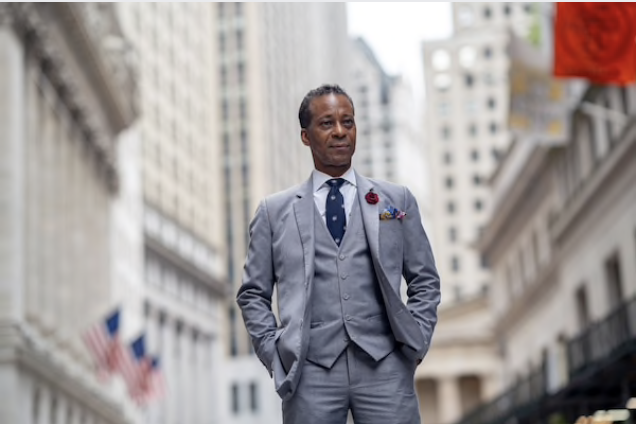
Jul 04. 2020If you keep your eyes open, you quickly pick up on those unwritten rules,  says Janessa Cox-Irvin, global head of diversity and inclusion at AllianceBernstein. MUST CREDIT: Bloomberg photo by Amir HamjaIf you keep your eyes open, you quickly pick up on those unwritten rules, says Janessa Cox-Irvin, global head of diversity and inclusion at AllianceBernstein. MUST CREDIT: Bloomberg photo by Amir Hamja
By Syndication Washington Post, Bloomberg · Michelle Davis · BUSINESS 
Here are 13 unwritten rules about being Black on Wall Street, according to people who’ve lived it:

1. Never forget: Despite all those promises about diversity, only about 1% of senior management is Black.

2. Be careful about pointing that out to the mostly White, mostly male trading desks.

3. Get used to hearing about the supposed lack of “qualified” Black applicants.

4. A 4.0 from Harvard isn’t enough. Assume some White Wall Streeters think Black colleagues are “diversity hires.”

5. Adopt a “White voice.”

6. Expect to hear complaints about bias training.

7. Put in long hours to combat stereotypes about “work ethic.”

8, Don’t ask for work assignments directly; expect to lose some to less-qualified White colleagues.

9. Hide anger or frustration.

10. Mind White colleagues’ personal space.

11. Don’t laugh too loudly.

12. Act as if all of this is normal.

13. Don’t talk about race.

Not everyone on Wall Street, Black or White, will agree with all those statements. These unwritten rules, and others like them, were gleaned from dozens of conversations with Black bankers and traders during the past month, as racism exploded into the national conversation.

We are expendable, says Dennis Creary, who runs a nonprofit called Blacks on Wall Street and sells software to big banks for Oracle. MUST CREDIT: Bloomberg photo by Amir Hamja

We are expendable, says Dennis Creary, who runs a nonprofit called Blacks on Wall Street and sells software to big banks for Oracle. MUST CREDIT: Bloomberg photo by Amir Hamja

The interviews cut across ages, titles and experience, but all reflect the same sobering reality: Despite the years of talk and now town halls, Wall Street has mostly failed its people of color.

Few rank-and-file Black workers will say this on the record. Fewer still foresee wholesale change anytime soon in the financial industry, even as Black Lives Matter reaches into every corner of America.

True, promises have been made. Since the death of George Floyd prompted collective demands for action, Morgan Stanley and Wells Fargo & Co. have vowed to elevate Black executives. Goldman Sachs Group Inc. has required more bias training. JPMorgan Chase & Co. has expanded its mentoring programs. Bank of America Corp. has pledged money to fight inequality.

Yet the privileged realms of American finance still look much the way they did a decade ago, or even two or three decades ago.

The numbers tell one story: Today not a single chief executive officer of a major U.S. bank is Black, and only one of the more than 80 people included among the elite executive teams atop the six largest U.S. banks is Black. By some estimates, Black professionals account for 8% of the finance industry’s total – the same as 15 years ago. But their representation within trading and investment-banking divisions is much smaller.

At JPMorgan, Bank of America and Citigroup, the percentage of Black workers overall has been falling, not rising, in recent years. At JPMorgan, the nation’s largest bank, that number has dropped to 13% from 19% in a little over a decade.

But the figures are only part of the story.

In this moment of reckoning about race in America, firms have urged Black employees to talk openly about their experiences. Some are. But many worry this will only make their jobs and lives harder.

“There are certain things you might want to do, but you can’t,” says Dennis Creary, who runs a nonprofit called Blacks on Wall Street and sells software to big banks for Oracle. “The anger is there, but the fear of losing that job that you have worked for is also there.”

Creary adds, “We are expendable.”

As if to place an exclamation point on the moment, a Black executive who spent 16 years as the global head of diversity at Morgan Stanley is now suing the bank for racial discrimination. Marilyn Booker says she was fired for pushing for more and better training for Black financial advisers.

Morgan Stanley has strenuously rejected the allegations.

Just about every Black person you talk to in finance can tell you stories about subtle and not-so-subtle racism in the industry. Some have been complimented for being “articulate.” Others have been paid less than non-Black co-workers. Still others have been told they lack “technical” skills for a job, only to see it offered to a White colleague with similar credentials. Not long ago, in the Manhattan lobby of a major firm, a group of White bankers mistook a Black colleague for a security guard.

One Black banker recalled spending hours courting a White CEO, only to be excluded from the final pitch meeting. His boss told him a White banker would have a better chance of closing the deal.

Others say some managers are particularly reluctant to shake up lucrative sales and trading divisions. They say some people of color get passed over for internships or key trading roles out of concern they won’t fit in with the “culture” of White traders.

Janessa Cox-Irvin, global head of diversity and inclusion at AllianceBernstein, says she learned early on to measure her words and actions to fit in.

“If you keep your eyes open, you quickly pick up on those unwritten rules,” says Cox-Irvin, who has worked in the financial industry for 16 years.

Cox-Irvin says she’s careful not to play into White stereotypes of the “angry Black woman.” That means dialing back even seemingly small things, like showing excitement or gesturing with her hands.

Privately, some Black traders and bankers worry that the Black colleagues who speak out could end up hurting the entire Black community on Wall Street. They’ve expressed anxiety over the new focus on race.

“It’s Black people like ourselves that are saying, ‘We appreciate what you’re doing, but if there’s blowback, it’s going to affect the whole community, even those that didn’t speak up,'” says Lekan Lawal, a leveraged-finance banker at Goldman Sachs.

Others are quick to note that on Wall Street, as in the rest of America, the rage and grief that’s fueled Black Lives Matter isn’t universal.

As the fury over police brutality spilled into the streets, one Black trader’s White colleague told him he’d never felt safer around law enforcement.

Many Black employees practice the work-life equivalent of code-switching, tailoring their language and behavior to White surroundings.

Some have looked to connect by taking up skiing or golf. One trader at a major firm bought an album by Mumford & Sons, the English folk-rock band known for its twangy banjo picking, to have something to talk about with a White manager.

Black workers describe being bound by Wall Street’s unwritten rules even when they’re not on the official clock.

Creary, whose clients are banks, sees himself as an activist on race. But he goes incognito to Black Lives Matter protests to avoid offending his clients or his employer. “That fear of being filmed is still with me,” he says.

Many Black employees say White colleagues often question their qualifications, regardless of their credentials or performance, or view them as diversity hires.

“I’ve been in environments where I’m questioned,” says Roxann Cooke, who is in charge of JPMorgan’s bank-branch expansion efforts in New England and greater Pennsylvania. “When you’re the only one, it’s hard to be vulnerable because you’re trying to justify your position.”

Cooke is more optimistic than many that now is the time for change.

“I look at people speaking out and look at my organization coming together and saying we’re in this together – I feel hopeful that we’re going to continue to make progress,” Cooke says.

Others acknowledge that, even now, speaking openly about on race carries risks on Wall Street.

Lawal, the Goldman vice president, has been warned he’s too outspoken. “I’ve been told, ‘Lekan, it feels like you’re on a kamikaze mission, that you’re willing to sacrifice yourself.'”

He says he doesn’t care.

“There are people who have come before me,” Lawal says. “Colin Kaepernick was blackballed because he dared to complain that Black people were being killed. We won’t have a solution if the affected people continue to remain silent.”

THAI speeds up rehab planning for bankruptcy court #ศาสตร์เกษตรดินปุ๋ย

#ศาสตร์เกษตรดินปุ๋ย : ขอบคุณแหล่งข้อมูล : หนังสือพิมพ์ The Nation.

THAI speeds up rehab planning for bankruptcy court

Corporate

Jul 04. 2020 Chansin TreenuchagronChansin Treenuchagron

By THE NATION

Thai Airways International is speeding up formation of the business rehabilitation plan it will propose to the central bankruptcy court on August 17, said acting president Chansin Treenuchagron.

The Central Bankruptcy Court accepted the carrier’s petition for restructuring on May 27. The court will begin hearing the case on August 17.

The newly appointed acting president added that the plan will incorporate short-, middle- and long-term measures for rehabilitation, but declined to elaborate.

He said that THAI might have to consider seeking partners for its less competitive business units.

He added that THAI was trying to resolve its problems as soon as possible and needed collaboration from all involved parties to achieve the goal.

The panel in charge of the rehabilitation plan announced on June 30 that the airline would only shed 5 per cent of its 20,000 employees as part of the reorganisation effort.

Central bank needs to offer more help to struggling SMEs: bankers #ศาสตร์เกษตรดินปุ๋ย

#ศาสตร์เกษตรดินปุ๋ย : ขอบคุณแหล่งข้อมูล : หนังสือพิมพ์ The Nation.

Central bank needs to offer more help to struggling SMEs: bankers

Corporate

Jul 04. 2020Payong Srivanich, president of Krungthai BankPayong Srivanich, president of Krungthai Bank
By The Nation

Bankers are calling on the central bank to provide more financial support to small businesses due to the lingering impact of the Covid-19 crisis.

Payong Srivanich, president of Krungthai Bank, voiced concerns about a slower recovery and called on the Bank of Thailand (BOT) to begin providing financial support to its corporate clients, especially small and medium-sized enterprises (SMEs). 

He pointed out on Friday (July 3) that the central bank’s soft loan scheme, which allows SMEs to delay debt repayment for up to six months, comes to an end in October. He was referring to the Bt500 billion soft-loan scheme implemented by the central bank via commercial and state-run banks in April. 

Despite this scheme, he said, there has not even been a partial economic recovery because businesses operating under the “new normal” are subject to far too many restrictions.

Payong added that he hopes extra measures will be in the pipeline soon so they can be enforced once this financial aid comes to an end. SMEs still need support, he argued. 

Commercial banks have been trying to help SMEs by participating in the central bank’s soft loans scheme, he said, adding that bankers and the Bank of Thailand regularly discuss the issue of supporting borrowers who are suffering from the Covid-19 crisis.

He said the central bank has recently implemented Phase 2 of a measure to support retail borrowers, but this does not cover corporate clients.

GET rebrands as Gojek Thailand #ศาสตร์เกษตรดินปุ๋ย

#ศาสตร์เกษตรดินปุ๋ย : ขอบคุณแหล่งข้อมูล : หนังสือพิมพ์ The Nation.

GET rebrands as Gojek Thailand

Corporate

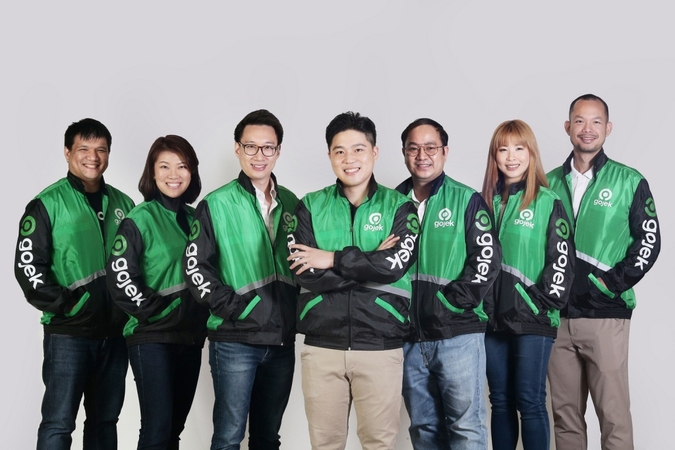
Jul 03. 2020Pinya Nittayakasetwat, centre, General Manager, Gojek Thailand
Pinya Nittayakasetwat, centre, General Manager, Gojek Thailand

By THE NATION

GET, the delivery and ride-hailing app, is rebranding as Gojek Thailand as its Indonesian parent company Gojek looks to merge Southeast Asia operations under one platform.

Under the rebrand, Thai users will be able to access Gojek services in Singapore, Indonesia and Vietnam. GoViet, the company’s brand in Vietnam, will also be updated to become Gojek.

“We are excited about this change, which demonstrates the strategic importance Gojek places on Thailand,” Pinya Nittayakasetwat, general manager of Gojek Thailand, said,

“Thailand is a highly competitive market, and the time is right for us to leverage Gojek’s strengths and scale to remain at the forefront.”

GET said it connects users in Bangkok to more than 50,000 drivers and more than 30,000 merchants, of which over 80 per cent are micro, small and medium enterprises.

Gojek boasts of being Southeast Asia’s leading technology group and a pioneer of the integrated Super App and ecosystem model, connecting users to over 2 million registered driver-partners, and 500,000 GoFood merchants across more than 200 cities in the region.

The firm says the new Gojek Thailand app will give users access to food delivery, ride-hailing, logistics and payment features.

SEC extends TMBAM Eastspring’s liquidation period #ศาสตร์เกษตรดินปุ๋ย

#ศาสตร์เกษตรดินปุ๋ย : ขอบคุณแหล่งข้อมูล : หนังสือพิมพ์ The Nation.

SEC extends TMBAM Eastspring’s liquidation period

Corporate

Jul 03. 2020

By The Nation

The Securities and Exchange Commission (SEC) has approved the proposal by TMBAM Eastspring to extend the liquidation period for another 90 days to enable sales of remaining assets worth Bt80 billion.

Boonchai Kiatthanawit, director of TMB Asset Management (TMBAM), said that after the TMBAM Eastsping closed four mutual bond funds at the end of March, the company had repaid Bt68.671 billion to bondholders, accounting for 34 per cent to 55 per cent of assets in each bond fund.

“The value of four assets at the end of last year was Bt246 billion, while the value after closing the bond funds in April this year was Bt149.069 billion,” he said.

“Currently, four bond funds still have assets worth Bt80 billion. If we accelerate the sale of assets inconsistent with the market liquidity, the value repayment to bondholders will drop significantly.”

He said that to maintain bondholders’ benefits and sell assets at a reasonable price, the SEC has approved the TMBAM Eastspring proposal to extend the repayment period for another 90 days until October 7 from the previous liquidation period on July 9.

“The company will sell assets at a reasonable price to maintain bondholders’ benefits within 90 days,” he said. “Meanwhile, we are still cooperating with partners on selling assets via various market channels to repay bondholders as soon as possible.”

He expected the bond market to recover in the second half of this year from the government’s supportive measures, adding that there was no abnormal behaviour among investors while redeeming fund units after the bond funds were closed.

“We have to monitor various factors that may affect the company amid the market volatility to gain confidence among bondholders,” he added. “Meanwhile, we will provide information about the market situation, funds under the company’s management, and investment guidelines for investors.”

Huge MSC Istanbul cargo ship docks at Laem Chabang Port #ศาสตร์เกษตรดินปุ๋ย

#ศาสตร์เกษตรดินปุ๋ย : ขอบคุณแหล่งข้อมูล : หนังสือพิมพ์ The Nation.

Huge MSC Istanbul cargo ship docks at Laem Chabang Port

Corporate

Jul 03. 2020Photo credit: Hutchison Ports ThailandPhoto credit: Hutchison Ports Thailand

By THE NATION

Hutchison Ports Thailand (HPT) said that the company had welcomed the MSC Istanbul cargo ship at its D1 dock in Laem Chanbang Port in Chonburi province on July 1.

“This is the first time that a cargo ship so grand in size has docked in Thailand. We are planning to open our docks to more ships in the same grade that come from Europe, Asia and western Americas every week,” said the company.

The MSC Istanbul is Mediterranean Shipping Company’s largest cargo ship with a capacity of 16,000 ETUs (equivalent twenty units, or 20-foot long containers). It is 399 metres long and 54 metres wide and can carry a maximum load of 176,490 tonnes.

“The ship is part of the 2M Lion-Jaguar weekly shipping line that links Thailand’s exporters to overseas markets in Europe, Asia and Americas and helps boost the economy in the Southeast Asian region,” added the company.

Hutchison Ports Thailand is a specialised cargo shipping operator located in Laem Chabang Port, Thailand’s largest port in Chonburi province, only 130km. southeast of Bangkok. The company provides one-stop cargo shipping services as well as operates dual-track transport routes to product distribution centres nationwide. HPT operates A2, A3, C1, C2 and D1 docks in Laem Chabang and is now developing the D2 and D3 docks, scheduled to open in the near future.

American Air will have 20,000 more employees than needed, it says #ศาสตร์เกษตรดินปุ๋ย

#ศาสตร์เกษตรดินปุ๋ย : ขอบคุณแหล่งข้อมูล : หนังสือพิมพ์ The Nation.

American Air will have 20,000 more employees than needed, it says

Corporate

Jul 03. 2020American Airlines employees wear take coronavirus precautions while checking in a traveler in June 2020. MUST CREDIT: Washington Post photo by Andrew Harrer
American Airlines employees wear take coronavirus precautions while checking in a traveler in June 2020. MUST CREDIT: Washington Post photo by Andrew Harrer

By Syndication Washington Post, Bloomberg · Mary Schlangenstein · BUSINESS 

American Airlines will have over 20,000 more employees than it needs to operate a deeply reduced flying schedule as travel demand slowly rebuilds amid the coronavirus pandemic.

The estimate represents about 20% to 30% of American’s expected workforce later this year. Not all would necessarily be furloughed after Sept. 30, however, because the carrier is continuing efforts to trim jobs through leave, early retirement and voluntary separation programs, the airline’s top executives said.

“We still have work to do to right-size our team for the airline we will operate,” Chief Executive Officer Doug Parker and President Robert Isom said in a memo to employees Thursday. “We are committed to resetting the airline using a different playbook than the one of past crises where last-in, first-out furloughs were the expected result.”

American’s sobering outlook illustrates the depth of the airline industry’s challenge to recover from the biggest collapse in travel demand. Carriers worldwide have parked jets, slashed flying, boosted borrowing, trimmed workforces and in many cases received billions of dollars in government aid. While leisure travel is slowly returning, passenger numbers are about a quarter of last year’s levels. A full rebound isn’t expected until at least 2023.

American has reduced its summer 2021 international schedule by 25% from pre-pandemic levels, signaling a limited recovery. The company has also notified flight attendants that it has as many as 8,000 more of them than it needs. American said it would cut staffing on some flights, close two bases for flight attendants and reduce the size of others.

In addition, American last month said its officer ranks would shrink by 30%. It was the first phase of changes under which almost a third of management and support staff will be cut.

U.S. carriers are prohibited from implementing mass involuntary layoffs through September under the terms of the government’s aid for payrolls, airlines’ largest expense.

American said Thursday that it signed a term sheet with the U.S. Treasury for an additional $4.75 billion loan, and expects to finalize the deal this quarter. The financing, in addition to the $5.8 billion in payroll support received earlier, brings liquidity to $15 billion, the Fort Worth, Texas-based carrier said. American has reduced its daily cash burn to less than $35 million at the end of June from $100 million in April.

The airline took in more than $1 billion in cash receipts in June, up from $11 million in April but far below the average of $4.2 billion monthly during the same periods of 2019, Parker and Isom said. American’s average number of filled seats has climbed to 63% last month from 15% in April.

The company flew 4.2 million customers in June, compared with between 17 million and 19 million a year earlier.

KBank deals with balancing act of helping borrowers and keeping shareholders happy #ศาสตร์เกษตรดินปุ๋ย

#ศาสตร์เกษตรดินปุ๋ย : ขอบคุณแหล่งข้อมูล : หนังสือพิมพ์ The Nation.

KBank deals with balancing act of helping borrowers and keeping shareholders happy

Corporate

Jul 03. 2020Patchara Samalapa, president of KasikornbankPatchara Samalapa, president of Kasikornbank

By The Nation

Kasikornbank assured shareholders on Thursday (July 2) that it will recover the cost it has incurred from putting a moratorium on debt repayment and from other financial aid extended to borrowers hit by the Covid-19 crisis. 

Kasikornbank, like other commercial banks, has been offering different types of assistance to borrowers, including a moratorium on debt repayment, reduction on interest rate and new liquidity injections. The bank implemented special financial packages to deal with the impact of Covid-19 outbreak since April, many of which allowed debt repayments to be put off by up to six accounting periods. 

Patchara Samalapa, president of Kasikornbank, said on Thursday that the bank has so far helped 650,000 borrowers, both individuals and corporates, by halting principal and interest repayment. Their combined outstanding loans are worth Bt828 billion. 

The bank also granted new loans to 94,000 borrowers worth Bt156 billion, up 30 per cent from last year, he said. 

Kasikorn has also allocated Bt1.5 billion for soft loans to help companies continue employing their workers. This package also covers zero-per-cent 10-year loans for small-sized businesses. The bank has so far given Bt1.14 billion to companies so they don’t have to lay off 49,000 employees. 

Patchara said the bank is not that concerned about individual borrowers but is instead focusing more on the Bt746 billion owed by businesses, principal repayment of which has been put on hold. The bank has suspended principal repayment for 293,000 businesses and granted new loans worth Bt143 billion to 60,000 businesses, he said. 

“It is impossible to predict how many of these businesses will be able to survive and come back after the crisis ends,” he admitted, referring to uncertainty stemming from fears of a second wave of infections or other new negative factors. “Maybe only 60 per cent of them will be able to rebuild their business.” 

However, he assured shareholders that they should not worry as most loans are backed by collaterals, while the average loan-to-value (LTV) ratio is 81 per cent – as in a debtor borrowing Bt100 will have to provide a collateral worth about Bt120.

He also conceded that the bank has taken money from shareholders’ pockets to help borrowers. “Thank you to those who have not sold our shares, but many did, which caused the bank’s shares to fall sharply,” he said. 

The Bank of Thailand’s and government’s financial aid measures have pushed commercial and state-run banks to provide support to both retail and corporate clients. 

The central bank has also recently told banks to stop paying interim dividends for 2020 and also prohibited them from buying back shares as it wants to ensure banks have enough capital needed to run their business. 

Patchara said Kasikornbank’s deposits have risen 13 per cent since early this year to Bt934 billion as of June 22. This suggests that corporates have cash in hand, though the new deposits come from those who are not participating int the loan-repayment moratorium, he added.

Gulf acquires 100MW wind farm project in Vietnam #ศาสตร์เกษตรดินปุ๋ย

#ศาสตร์เกษตรดินปุ๋ย : ขอบคุณแหล่งข้อมูล : หนังสือพิมพ์ The Nation.

Gulf acquires 100MW wind farm project in Vietnam

Corporate

Jul 02. 2020

By THE NATION

Gulf Energy Development Plc’s subsidiary, Gulf International Holding Pte Ltd (GIH), entered into a share purchase agreement with Vietnamese entrepreneurs Nguyen Tran Thao Nhi and Tran Thi Minh Trang to acquire a 100-per-cent stake in Dien Xanh Gia Lai Investment Energy Joint Stock Company (DGI), according to its filing with the Stock Exchange of Thailand today.

DGI is the developer and operator of two Onshore Wind Farm Projects – la Pech 1 and 2 – which have a contracted capacity of 50 megawatts each.

Both projectswill generate and sell electricity to Vietnam Electricity (EVN) for 20 years. Gulf is expected to spend approximately US$200 million (Bt6.2 billion) on building the project. Construction will begin in 2021 and the projects should start commercial operation by the fourth quarter of 2022.