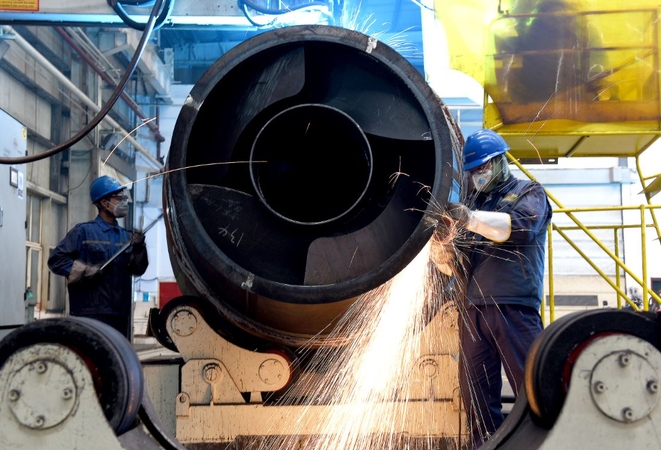
BGRIM posts 215 per cent leap in profits in Q4 of 2019 #ศาสตร์เกษตรดินปุ๋ย

#ศาสตร์เกษตรดินปุ๋ย : ขอบคุณแหล่งข้อมูล : หนังสือพิมพ์ The Nation

https://www.nationthailand.com/business/30382796?utm_source=category&utm_medium=internal_referral

BGRIM posts 215 per cent leap in profits in Q4 of 2019

Feb 25. 2020
By The Nation

B Grimm Power Plc (BGRIM) reported a hefty rise in profits in the fourth quarter of 2019, fuelled by higher capacity and additional customers.

BGRIM, a leading private power producer in Thailand, ended 2019 with a net profit from October-December of Bt816 million, with Bt409 million attributable to major shareholders, a 215 per cent jump. Normalised net profit in the period soared 118 per cent to Bt832 million, Bt428 million of which was attributable to major shareholders which represented a 94.5 per cent growth, according to BGRIM CEO Preeyanart Soontornwata.

 BGRIM CEO Preeyanart Soontornwata

BGRIM CEO Preeyanart Soontornwata

For the whole year, BGRIM’s consolidated net profit was Bt3.977 billion on a 20.6 per cent increase in revenue from sales and services to Bt44.132 billion.

Net earnings attributable to major shareholders were Bt2.331 billion, up 25.1 per cent from the previous year.

The robust 2019 results were driven by a 40 per cent rise in production capacity from both local and international projects which were acquired or newly developed, as well as the fuel efficiency improvement of gas turbines at two co-generation facilities, and the reduction of financial cost by loan refinancing, the CEO said.

BGRIM has put in place a water management to ensure maximum benefits from water utilisation in pursuance of conservation under the sustainability guidelines.

The company has also ensured that its generation is efficient to support effective water management in collaboration with the industrial estate operators, the company said.

The company has a large number of world-class creditworthiness customers, resulting in its overall power sales to industrial customers in January 2020 remaining strong at a stable level compared to the same period last year. There are new power-purchasing agreements with new industrial clients with total volume of 23 megawatts, scheduled to start over the first seven months of this year.

Meanwhile, there are still demands from more than 1,000 potential clients in industrial estates at sites under operation or development which could well become potential clientele of the company.

BGRIM said it was confident of exceeding the 5,000MW capacity target with joint venture investment in several projects being explored.

Among those being considered are gas-fired and renewable energy schemes in Thailand, Vietnam, South Korea, Malaysia, Cambodia, Laos and other countries.

There are also many merger plans both at home and abroad under scrutiny.

BRGIM’s combined capacity of facilities in operation and under development currently stands at 3,424MW.

Some of the projects under construction are the 16MW Bo Thong wind farm, the 39MW solar energy scheme in Cambodia, the 6MW solar rooftop project in the Philippines and a 30MW development for partners in Oman.

BGRIM has declared a dividend of Bt0.22 per share for the second half of 2019, payable on May 11, to shareholders with the record date on March 13, 2020.

Millions of Chinese firms face collapse if banks don’t act #ศาสตร์เกษตรดินปุ๋ย

#ศาสตร์เกษตรดินปุ๋ย : ขอบคุณแหล่งข้อมูล : หนังสือพิมพ์ The Nation

https://www.nationthailand.com/business/30382778?utm_source=category&utm_medium=internal_referral

Millions of Chinese firms face collapse if banks don’t act

Feb 25. 2020
File Photo of Shanghai street/Syndication Washington Post, Bloomberg

File Photo of Shanghai street/Syndication Washington Post, Bloomberg
By Syndication Washington Post, Bloomberg · No Author · BUSINESS

Brigita, a director at one of China’s largest car dealers, is running out of options. Her firm’s 100 outlets have been closed for about a month because of the coronavirus, cash reserves are dwindling and banks are reluctant to extend deadlines on billions of yuan in debt coming due over the next few months. There are also other creditors to think about.


“If we can’t pay back the bonds, it will be very, very bad,” said Brigita, whose company has 10,000 employees and sells mid- to high-end car brands such as BMWs. She asked that only her first name be used and that her firm not be identified because she isn’t authorized to speak to the press.

With much of China’s economy still idled as authorities try to contain an epidemic that has infected more than 75,000 people, millions of companies across the country are in a race against the clock to stay afloat.

A survey of small- and medium-sized Chinese companies conducted this month showed that a third of respondents only had enough cash to cover fixed expenses for a month, with another third running out within two months. Only 30% of such firms have managed to resume operations due to a complicated local government approval procedure as well as a lack of employees and financing, a government official said at a press conference on Monday.

While China’s government has cut interest rates, ordered banks to boost lending and loosened criteria for companies to restart operations, many of the nation’s private businesses say they’ve been unable to access the funding they need to meet upcoming deadlines for debt and salary payments. Without more financial support or a sudden rebound in China’s economy, some may have to shut for good.

“If China fails to contain the virus in the first quarter, I expect a vast number of small businesses would go under,” said Lv Changshun, an analyst at Beijing Zhonghe Yingtai Management Consultant Co.

Despite accounting for 60% of the economy and 80% of jobs in China, private businesses have long struggled to tap funding to help them expand during booms and survive crises. About two-thirds of the country’s 80 million small businesses, including many mom-and-pop shops, lacked access to loans as of 2018, according to China’s National Institution for Finance & Development.

President Xi Jinping over the weekend pledged a greater focus on reviving the economy, with a more proactive fiscal policy, accelerated construction projects and freer reserves for commercial lenders to unleash more funding.

Support from China’s banking giants in response to the outbreak has so far been piecemeal, mostly earmarked for directly combating the virus. Industrial & Commercial Bank of China Ltd., the nation’s largest lender, has offered relief to about 5% of its small business clients.

In an emailed response to questions from Bloomberg News, ICBC said it has allocated $770 million (5.4 billion yuan) to help companies fight the virus. “We approve qualified small businesses’ loan applications as soon as they arrive,” the bank said.

As a group, Chinese banks had offered about 794 billion yuan in loans related to the containment effort as of Feb. 20, according to the banking industry association, with foreign lenders such as Citigroup Inc. also lowering rates. To put that into perspective, China’s small businesses typically face interest payments on about 36.9 trillion yuan of loans every quarter.

Stringent requirements and shortlists restrict who can access special loans earmarked by the central bank for virus-related businesses, while local governments and banks have imposed caps on the amounts, according to people familiar with the matter. A debt banker at one of China’s largest brokerages said his firm opened a fast lane to ease debt sales by businesses involved in the containment effort, with borrowers required to prove they will use at least 10% of the proceeds to fight the disease.

That’s of little help to a car dealership. Brigita, whose firm owes money to dozens of banks, said she has so far only reached an agreement with a handful to extend payment deadlines by two months. For now, the company is still paying salaries.

Many of China’s businesses were already grasping for lifelines before the virus hit, pummeled by a trade war and lending crackdown that sent economic growth to a three-decade low last year.

At most risk are the labor-intensive catering and restaurant industries, travel agencies, airlines, hotels and shopping malls, according to Lianhe Rating.

Yang, a property manager of a seven-story mall in Shanghai, says a tenant who runs a 150-room hotel that’s usually busy has called asking for a month’s rent waiver after business dried up. She expects the massage parlor that rents space in the mall is also struggling and is open to extending some help.

A deputy financing director at a small developer in central Anhui province said his firm is even being denied loans under existing credit lines. A drop in sales has hurt the company’s credit profile and a dearth of new projects means there’s no collateral to put up. Without access to credit, the business can survive for about four months, or maybe longer if some payments can be delayed, he said.

Banks are hardly any better off themselves. Many are under-capitalized and on the ropes after two years of record debt defaults. Rating firm S&P Global has estimated that a prolonged emergency could cause the banking system’s bad loan ratio to more than triple to about 6.3%, amounting to an increase of 5.6 trillion yuan.

Wu Hai, owner of Mei KTV, a chain of 100 Karaoke bars across China, took to the nation’s premier outlet of discontent, social media platform WeChat, to voice his despair.

KTV’s bars have been closed by the government because of the virus, choking off its cash flow. The special loans from the authorities will be of little help and no bank will provide a loan without enough collateral and cash flow, he said on his official WeChat account earlier this month.

Wu couldn’t be reached for a direct comment, but on WeChat he gave himself two months before he has to shutter his business.

China pushes factories to reopen, risking renewed virus spread #ศาสตร์เกษตรดินปุ๋ย

#ศาสตร์เกษตรดินปุ๋ย : ขอบคุณแหล่งข้อมูล : หนังสือพิมพ์ The Nation

https://www.nationthailand.com/business/30382777?utm_source=category&utm_medium=internal_referral

China pushes factories to reopen, risking renewed virus spread

Feb 25. 2020
By Syndication Washington Post, Bloomberg · No Author · BUSINESS 

China is trying to get people back to work, risking a renewed spread of the coronavirus.

Central and local governments are loosening the criteria for factories to resume operations as they walk a tightrope between containing a virus that has killed almost 2,600 people and preventing a slump in the world’s second-largest economy.

The rush to restart has been propelled by China’s leader Xi Jinping and top leaders, who are urging companies to resume production so the country can continue to meet lofty 2020 goals for growth and economic development. At stake are the fates of millions of Chinese businesses facing collapse because of the shutdowns, and the ability of companies across the globe from Apple to Nissan to access crucial components.

Officials in China’s provinces have taken up Xi’s call, with one region after another relaxing rules that had kept more than half the nation’s industrial base idle following the Lunar New Year holiday. After weeks of empty streets and shuttered shops, signs of life are emerging along the manufacturing belt in the country’s coastal regions.

On Monday, at least six provinces lowered their emergency response levels from the highest rating.

Chinese authorities, however, reiterated that Wuhan — the epicenter of the outbreak — will stay locked down, retracting a statement sent earlier in the day that had announced partial easing of travel curbs. The conflicting messages underscore the dilemma China faces on how to spur its ailing economy and curb the deadly virus.

About 600 kilometers east of Wuhan, vendors and customers at the Yiwu wholesale market in Zhejiang province are having their body temperatures tested at the entrances after the vast complex that wholesales manufactured goods reopened last Tuesday, three days earlier than expected. Power demand has also started to pick up in China, with six major generators reporting that coal consumption — while still below pre-holiday levels — rose 7% on Feb. 20 from the previous day.

But labor is still a big issue for many.

“Our factory is still missing quite a lot of workers, so we can only resume limited production,” said Dong Liu, vice president of a textile manufacturer in Fujian, southeastern China, that employs more than 400 workers. Dong said he applied to the government on Feb. 17 to restart and the inspector came the next day and gave permission. “More and more factories are allowed to reopen this week,” he said.

The push to get production rolling again risks a renewed spread of the virus, about which much is still not yet known. While more than 79,000 people have been infected worldwide, the vast majority of those cases are in seven Chinese provinces, and mostly in the central province of Hubei, where restrictions on movement were imposed in a number of cities, but not before a lot of people had already left the region for the New Year break.

“A peak may come at the end of this month for the whole country but it won’t necessarily indicate a turning point,” Zhong Nanshan, a respiratory disease expert who led research into a treatment for SARS, told reporters in Guangzhou. “The epidemic could have a new peak after people travel back to work.”

China’s economy was likely running at about 50% to 60% capacity in the week to Feb. 21, according to a Bloomberg Economics report. Official statistics showed that more than 70% of plants in provinces such as Shandong and Jiangsu have now restarted, with the rate above 90% in Zhejiang, though most are running below capacity with many workers still missing. In Hunan, the province just south of Hubei, the restart rate was only 46% on Feb. 17 with fewer than a third of staff returning.

Cities that rely heavily on manufacturing such as Dongguan and Zhongshan are now saying they won’t require workers to be quarantined as long as they are healthy, and factories that meet new safety rules don’t need to wait for government approval to resume.

“It is extremely important to get factories back to operate at their normal capacity, otherwise, it will hurt workers’ wages, companies’ cash flows, and therefore external exports,” said Iris Pang, an economist with ING Bank NV in Hong Kong.

But it’s a risk.

“Imagine if a factory resumes work today but has a worker found to be a confirmed case a week later, then the factory has to close for another two weeks,” she said.

That’s making local governments and plant owners wary of how they proceed.

In Dongguan, a key manufacturing city in the Pearl River Delta, a government document sighted by Bloomberg requires manufacturers to carry out a checklist to ensure facilities are clean and staff are healthy. Plants can then restart after posting notices of resumption inside and outside the plant. The document warns that the companies are responsible for handling significant risks to controlling the virus and may face punishment if they fail to do so. Healthy workers with a temperature lower than 37.3 Celsius from outside Hubei and other badly affected regions can work immediately after they return to Dongguan.

But granting permission to restart is only the first hurdle in getting back to full production. Workers from heavily infected areas are still barred from returning to work in big industrial cities. Manufacturers must also wait for suppliers to begin shipping, villages to dismantle roadblocks and transport companies to restart distribution.

“As the requirements to resume production in each region are rather different, even if we restart our factory, we still need to figure out a slew of issues ranging from upstream and downstream materials, to logistics, packaging, and storage,” said Jacky Han, owner of a car parts factory in Qingdao, a city in Shandong province. “Basically, every enterprise is freelancing on their own and using their own resources and networks to solve the puzzle.”

Since the Lunar New Year holiday began in late January, only about 20% as many trips have been taken each day compared to the previous year, meaning millions of people still haven’t traveled back to the cities where they work and live. Long-distance buses were only allowed to operate at 50% of capacity to reduce the risk of viral transmission.

China’s central and local governments are taking other steps to try to reduce the economic effects to the outbreak. President Xi told U.K. Prime Minister Boris Johnson in a phone call last week that China is confident in achieving its growth targets set for this year, according to China Central Television.

The government is considering direct cash infusions or mergers to help the airline industry, including a proposal for a provincial government to take over indebted conglomerate HNA Group Co.

About 80 million migrant workers have returned to where they work, and 120 million more will return by the end of February, according to a transport ministry official, Liu Xiaoming. Another 100 million will return from March onwards, Liu said.

Even if factories can get all their employees back to work, restrictions on work practices may mean that they aren’t able to resume full employment anyway.

In Zhenjiang, a city in Jiangsu province, an LED car lighting factory recently resumed production, but only after finally getting enough supplies to fulfill local government requirements to provide five masks per worker, along with disinfectant and protective suits.

“Every day several government departments send representatives to spot check our efforts to curb the virus,” said Melissa Shu, the company’s export manager. “They come from the district government, the center for disease control, the city government, at different times of day and check if we disinfect in time, whether we test the temperature of workers, whether workers have masks, whether one person has a separate lunch seat, whether lunch is properly arranged, etc, etc.”

Shu said at lunchtime, workers need to sit at least about three feet apart.

“As a result, we can’t ask all the workers to come to work even when they’re in town ready to work,” she said, adding that the plant has 40 to 50 staff members working in rotation, about half the number employed before the virus.

Ironically, some Chinese factories already have plenty of space, thanks to the long-running trade war with the U.S.

“Compared with the virus, that was much worse” said Hui Zhuo, founder of a wooden furniture manufacturer in Zhongshan, in the Pearl River Delta. “We’ve cut a lot of workers in the last two years — so I’m not too worried this time because the space in my factory is big enough to avoid being crowded.”

Like nearby Dongguan, the government in Zhongshan has relaxed restart rules. Zhuo has been studying the government checklist carefully, preparing sanitizer, masks and thermometers.

Factories must disinfect facilities and check workers’ temperatures every day. Each worker dormitory must delegate one person to shop for them every other day, and the others are not allowed to leave the factory. Zhuo’s confident that if he sticks to the rules, he won’t have a problem with the virus.

In the longer term, the outbreak is likely to exacerbate the damage wrought on China’s factories by the trade war. For some overseas customers in fast-moving industries like fashion, the factory shutdown amid the virus has been another wake-up call that may spur them to reduce their reliance on Chinese suppliers.

“I think for the next season or the next year’s goods, retailers would be looking at sourcing more from other countries,” said AJ Mak, CEO of Chain of Demand, which provides artificial-intelligence systems to retailers in Asia and the U.S. to predict product demand. “I think those conversations which started from the trade war would be definitely accelerated.”

Meanwhile China’s push to salvage its growth targets won’t be complete until the virus is fully under control — something that is impossible to predict.

“When can everyone come back to work? No one knows,” said Shu at the Zhenjiang LED factory. “Logistics is still not yet fully resumed, inter-city transportation is still restricted. Only after the epidemic is fully controlled, we can truly return to normal work and life.”

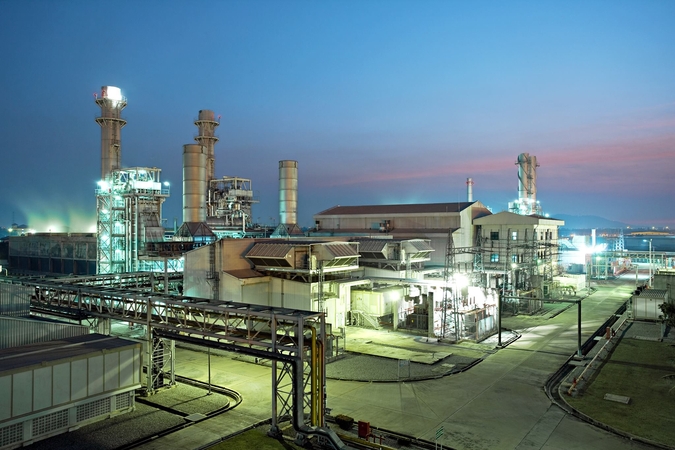
JPMorgan Chase takes baby step toward curbing fossil fuel loans #ศาสตร์เกษตรดินปุ๋ย

#ศาสตร์เกษตรดินปุ๋ย : ขอบคุณแหล่งข้อมูล : หนังสือพิมพ์ The Nation

https://www.nationthailand.com/business/30382773?utm_source=category&utm_medium=internal_referral

JPMorgan Chase takes baby step toward curbing fossil fuel loans

Feb 25. 2020
File Photo by Syndication Washington Post, Bloomberg

File Photo by Syndication Washington Post, Bloomberg
By The Washington Post · Steven Mufson, Dino Grandoni · NATIONAL, BUSINESS, SCIENCE-ENVIRONMENT

JPMorgan Chase, one of the world’s biggest lenders to fossil fuel projects, announced Monday that it would curb loans to coal firms and bar the financing of oil and gas developments in the Arctic.

But in a move that disappointed climate activists, JPMorgan will still provide loans to oil and gas projects in the Lower 48 states and other parts of the world.

The bank has increasingly become a target of climate activists, who have denounced the bank for providing $196 billion in financing for coal, oil, natural gas and pipeline projects from 2016 through 2018 after the Paris climate accord. Among American banks, JPMorgan was the top financier of oil and gas drilling in the Arctic and of tar sands extraction in Canada during that three-year period.

The bank has also come under criticism because its board includes former ExxonMobil chief executive Lee Raymond, who has a long record of dismissing concerns about climate change.

“JPMorgan has been the biggest banker of fossil fuels,” said Ben Cushing, a climate campaigner at the Sierra Club.

Bill McKibben, an environmental studies professor at Middlebury College and leading climate activist, said the bank’s new commitments were disappointing and closely resembled pledges made recently by Goldman Sachs.

“It seems like weak beer to me, basically just copying Goldman,” McKibben said. “But it shows that even the biggest bank on Earth feels citizen pressure, so we will keep supplying that!” He added that JPMorgan would “retain the title of the doomsday bank.”

The bank’s outsize role in underwriting the oil, gas and coal industries have made it a top target for climate activists who have staged protests at local branches in recent months.

Since Donald Trump’s election in 2016, environmental groups have turned their attention to Wall Street banks, insurance firms and other private sector players as their increasingly urgent calls to address climate change have largely fallen on deaf ears in the White House and the GOP-controlled Senate.

Climate activists “have been looking for other ways to stop the growth of the fossil fuel industry,” Cushing said. “Getting major Wall Street firms to take climate change seriously is important no matter what party is in power.”

The Sierra Club has issued a report called “Banking on Climate Change.” And McKibben, who was arrested while protesting at a Chase ATM in New York on Jan. 10, has rallied people online around the slogan “Stop the Money Pipeline.”

JPMorgan Chase’s announcement said that it would complete – five years early – a commitment made in 2017 to facilitate $200 billion in financing for projects that meet the United Nations’ sustainable development goals. The bank said it would include $50 billion for “green initiatives.”

It spelled out terms for lending to the coal industry that will effectively end such loans. It said it would not refinance loans on existing coal plants or provide money or advice to companies making most of their revenue from coal. Existing loans would be phased out by 2024.

Yet under that policy, the bank could still do business with big coal-mining companies that have other major revenue streams. “That’s a big loophole,” said Jason Disterhoft, a campaigner at the Rainforest Action Network.

The bank also said it would join the Climate Leadership Council, a group that has been promoting a carbon “fee” that would be fully returned to Americans in the form of a dividend. It is one of many climate proposals in Congress.

The International Energy Agency said that all energy investment – including renewables, energy efficiency, coal, oil and gas, and the power sector – totaled $1.85 trillion in 2018, stabilizing after three years of decline. There was an increase in investment in fossil fuel supplies. And the largest growth in investment came in the United States, mainly due to oil and gas supply and electricity networks.

Other leading lenders to such projects include Wells Fargo, Citibank and Bank of America.

Pavel Molchanov, senior energy analyst at the investment firm Raymond James, said that divesting from coal or curtailing lending to coal companies were among the first things any firm does when adopting a policy for environment, sustainability or governance.

“Oil and gas activity in the Arctic is so slim anyway that lending for such activity is essentially meaningless,” he said.

HSBC chairman faces mounting pressure after Mustier Rebuff #ศาสตร์เกษตรดินปุ๋ย

#ศาสตร์เกษตรดินปุ๋ย : ขอบคุณแหล่งข้อมูล : หนังสือพิมพ์ The Nation

https://www.nationthailand.com/business/30382769?utm_source=category&utm_medium=internal_referral

HSBC chairman faces mounting pressure after Mustier Rebuff

Feb 25. 2020
By Syndication Washington Post, Bloomberg · Harry Wilson, Sonia Sirletti · BUSINESS, US-GLOBAL-MARKETS

HSBC Holdings Chairman Mark Tucker’s drive to reboot the giant lender needs a reboot.The decision by UniCredit’s Jean Pierre Mustier to drop out of consideration for HSBC’s top job marks the second high-profile setback in less than a week for Tucker, the first outsider ever hired as the chairman of the 165-year-old institution. The bank’s shares have tumbled 6.9% since a Feb. 18 strategy overhaul fell flat and on Monday reached their lowest in more than three years.

Tucker is now conducting the search for a new CEO in the spotlight — his first pick lasted just 18 months — with shareholders demanding answers and some insiders questioning the board. Mustier’s exit further complicates an already drawn-out process and deepens the uncertainty around interim CEO Noel Quinn and the plan he announced last week to cut 35,000 jobs.

“It’s not a good time to join the bank, especially for an external candidate,” Ronald Wan, CEO at Partners Capital International in Hong Kong, said by phone. “HSBC is going through a challenging operating environment — economic slowdown, the coronavirus outbreak, Brexit — and the bank’s new strategy will all make the CEO’s job difficult.”

Mustier, who led a turnaround at Milan-based UniCredit in the past four years, plans to stay and is committed to the new strategic plan announced in December, according to a UniCredit statement on Monday. The Frenchman informed Tucker of his decision to withdraw by phone on Sunday, a person with knowledge of the matter said.

HSBC shares fell 2% in London on Monday, sliding to 550.80 pence, the lowest close since August 2016.

The Mustier interlude highlights the churn at the top of European banking. UBS Group on Wednesday picked ING Groep CEO Ralph Hamers to take over from Sergio Ermotti. Rival Credit Suisse Group replaced Tidjane Thiam with Thomas Gottstein earlier this month, and Marco Morelli said he won’t seek another term as chief of Banca Monte dei Paschi di Siena SpA.

A recent history of troubles at HSBC may make it even tougher to recruit an external candidate. For example, in the U.S., Wells Fargo, another lender in need of a revamp, took six months to attract an outsider as CEO in the wake of scandals that claimed two chiefs in three years.

If Tucker “doesn’t want to appoint Noel Quinn to the position on a permanent basis, then he needs to convince the market that he has some other credible options,” John Cronin, an analyst at the Dublin-based Goodbody stockbrokers, wrote in a note. “Or maybe he will just move to appoint Quinn without delay — perhaps within the next two weeks. Our bet is on the latter.”

Mustier had emerged as a key external contender for the role, pitting him against HSBC lifer Quinn. After being approached by HSBC, he engaged in informal talks before deciding that the timing wasn’t right to move because of UniCredit’s new strategic plan and brewing Coronavirus worries in Italy, according to a person close to his thinking. He informed UniCredit board members of the approach over the weekend before his call to Tucker.

After John Flint’s surprise ouster in August, HSBC said that it could take six to twelve months to find a permanent successor.

A CEO search extending into its seventh month and the appearance that Quinn would be a second choice had some clients and staff worried about the potential outcome, according to a person familiar with the matter.

“The bank’s situation remains tough,” said Alex Wong, Hong-Kong based director of asset management at Ample Capital Ltd. “It’s not easy to ask another CEO to join you when they are already performing in their current position.”

At UniCredit, Mustier has been cutting costs and accelerating the cleanup of the balance sheet, focusing on simplifying the bank’s structure and improving the way it allocates capital. Since 2014, UniCredit has cut about 20,000 jobs, 14,000 of which took place during Mustier’s tenure. He also oversaw a 13 billion-euro ($14.1 billion) rights offer in 2017 to help pay for a clean-up of bad loans. Under the new strategic plan he expects to cut 8,000 jobs in total.

That track record would have been appealing at HSBC, which is going through the third strategic overhaul in a decade. Tucker, who ejected Flint last year after he failed to revive growth at the Asia-focused lender, has struggled to explain why a bank with such a stronghold in some of the world’s fastest-growing economies has been unable to produce a better return.

Warren Buffett expects Todd Combs to run Geico unit only temporarily #ศาสตร์เกษตรดินปุ๋ย

#ศาสตร์เกษตรดินปุ๋ย : ขอบคุณแหล่งข้อมูล : หนังสือพิมพ์ The Nation

https://www.nationthailand.com/business/30382759?utm_source=category&utm_medium=internal_referral

Warren Buffett expects Todd Combs to run Geico unit only temporarily

Feb 24. 2020
File Photo of Warren Buffett/ Syndication Washington Post, Bloomberg

File Photo of Warren Buffett/ Syndication Washington Post, Bloomberg
By  Syndication Washington Post, Bloomberg · Katherine Chiglinsky · BUSINESS, US-GLOBAL-MARKETS

Warren Buffett doesn’t expect Todd Combs, one of his two key investing deputies, to be at auto insurer Geico long.

Buffett’s Berkshire Hathaway Inc. tapped Combs in December to become chief executive officer of its Geico unit. He replaced Bill Roberts, who became vice chairman and said he plans to leave the company by the end of 2020. Combs, 49, is the insurer’s third CEO in the past several years.

“Todd is there and I hope very much that he’s not there very long,” Buffett said Monday in an interview on CNBC. “Our intention always is to promote from within. We would hope to pick out the right person at Geico.”

Tony Nicely quietly stepped down as Geico’s CEO in 2018 after running the insurer for decades. He was replaced by Roberts, who later told Berkshire he would soon retire.

Combs and Buffett’s other top investing deputy, Ted Weschler, haven’t limited their Berkshire responsibilities to picking stocks. Combs also helped with the formation of Berkshire’s health-care venture with JPMorgan Chase and Amazon.com, and Weschler helped Buffett negotiate on deals including the purchase of German motorcycle-equipment retailer Detlev Louis Motorradvertriebs.

AIS launches 5G commercial service #ศาสตร์เกษตรดินปุ๋ย

#ศาสตร์เกษตรดินปุ๋ย : ขอบคุณแหล่งข้อมูล : หนังสือพิมพ์ The Nation

https://www.nationthailand.com/business/30382754?utm_source=category&utm_medium=internal_referral

AIS launches 5G commercial service

Feb 24. 2020
By THE NATION

Advanced Info Service (AIS) kicked off its 2600MHz 5G commercial service today (February 24), making it the first 5G operator in the country to do so.

The mobile phone operator officially received the 2600MHz licence on February 21 and switched on its 5G network the same day.

As part of the launch, AIS is giving its subscribers, who buy upcoming smartphone models such as the Samsung Galaxy S20 Ultra 5G or Huawei Mate 30 Pro 5G, the right to use them with its 5G service free of charge until June 30.

The two models, which will go on sale here in early March, will be able to use AIS’s 5G service instantly after a software upgrade.

AIS will also provide its 5G users with 5G international calls, beginning with the Philippines courtesy of Globe Telecom, and 5G international roaming starting in Switzerland via Swisscom.

Hong Kong companies have no safety net in fight for survival #ศาสตร์เกษตรดินปุ๋ย

#ศาสตร์เกษตรดินปุ๋ย : ขอบคุณแหล่งข้อมูล : หนังสือพิมพ์ The Nation

https://www.nationthailand.com/business/30382709?utm_source=category&utm_medium=internal_referral

Hong Kong companies have no safety net in fight for survival

Feb 24. 2020
A passenger wearing a protective mask rides a tram in Hong Kong on Feb. 12. MUST CREDIT: Justin Chin/Bloomberg

A passenger wearing a protective mask rides a tram in Hong Kong on Feb. 12. MUST CREDIT: Justin Chin/Bloomberg
By Syndication Washington Post, Bloomberg · Kiuyan Wong · BUSINESS, HEALTH, ASIA-PACIFIC

Hong Kong is being threatened by a “Tsunami-like” cataclysm, the city’s finance chief has warned, as the new coronavirus devastates businesses already hobbled by months of anti-government protests. The financial hub’s lack of a bankruptcy process will only exacerbate the pain.

Unlike in the U.S., Australia and rival Singapore, businesses in Hong Kong don’t have recourse to any corporate rescue procedure when in difficulties. The lack of a proper legal framework for seeking bankruptcy protection, which has been deliberated on for a quarter century, means companies are forced into liquidation, according to Johnson Kong, the president of the Hong Kong Institute of Certified Public Accountants.

“If we had the laws in place earlier, companies could have a better chance to survive this hit,” Kong said in an interview last week.

Kong expects a wave of bankruptcies with the virus outbreak keeping consumers indoors. Last year’s list of casualties was already the highest in two years as Chinese tourists deserted the protest-hit city and pushed it into recession. The government has pledged HK$25 billion ($3.2 billion) for relief measures and banks have been waiving some fees and extending loan payments.

The retail and food and beverage sectors are most vulnerable to liquidations, said Kong, who’s been involved in restructuring and insolvencies for more than 35 years.

Formal procedures give cash-strapped companies the opportunity to turn around, instead of immediately winding up and leaving employees and creditors unpaid. In the U.S., for example, Chapter 11 protection helped the once troubled toy chain Toys ‘R’ Us come back.

Hong Kong has been discussing a new legal framework since as early as 1996 and proposed legislation was submitted in 2014, but never dealt with by lawmakers.

A spokesman for the Financial Services and Treasury Bureau said that a new bill is now in an “advance stage,” but any debate on it won’t happen until later this year, or early next year. “Given the complexity and technicalities of the bill as well as the concerns expressed by various stakeholders in previous exercises, we will organize a fresh round of engagement with stakeholders on specific areas in the draft bill in the next few months,” the spokesman said.

Kong, who was on the Standing Committee on Company Law Reform from 2009 to 2015, said that the government pushed for a rescue procedure after Lehman Brothers Holdings Inc. collapsed, but the economy recovered swiftly and the plan was “put on the back burner.”

January was the worst start to a year since 2015 with 703 bankruptcies, according to the latest statistics from the Hong Kong government. The city’s unemployment rate also rose for a fourth straight month, reaching its highest level since 2016. The data does not reflect the full impact of shutdowns from the outbreak, which emerged toward the end of January.

Gordon Lam, a food truck owner and convener for the Hong Kong Small and Middle Restaurant Federation, said a lot of his peers are considering closing up. The virus has brought business to a standstill, while rents and staff expenses remain.

“Doing business in Hong Kong has always been pricey, but I could at least make the money to pay rent and costs,” he said. “Now there’s no business to start with.”

America’s coal country isn’t dead – it’s preparing for a comeback #ศาสตร์เกษตรดินปุ๋ย

#ศาสตร์เกษตรดินปุ๋ย : ขอบคุณแหล่งข้อมูล : หนังสือพิมพ์ The Nation

https://www.nationthailand.com/business/30382677?utm_source=category&utm_medium=internal_referral

America’s coal country isn’t dead – it’s preparing for a comeback

Feb 23. 2020
By Syndication Washington Post, Bloomberg · Will Wade · BUSINESS

At least five of America’s coal producers went bankrupt in 2019. Prices for the fossil fuel have plunged 40% since a 2018 peak. And some of the nation’s largest miners are retrenching and slashing their dividends.

But don’t be mistaken: The fight against climate change hasn’t killed off Coal Country yet.

Instead of pouring money into dividends and buybacks, the nation’s largest coal producers say they’re hoarding cash to weather what they see as an impermanent storm. Overall, the industry returned more than $1 billion to investors last year before retrenching. The goal this year: Be ready to start mining again and paying dividends at the first sign of a market revival. They’re betting that prices will bottom out in the first half of 2020 before rising in the second half as production declines and global consumption gains.

That’s spurred a new “mantra” at Peabody Energy Corp., according to Chief Executive Officer Glenn Kellow. It is “to live within our means,” he said during his Feb. 5 earnings call.

A year ago, Peabody announced its biggest dividend ever, and said it would return to shareholders all of its free cash flow. On Feb. 5, the message was very different: The nation’s leading coal producer said it was suspending its dividend, halting buybacks and cutting capital expenditures.

Hope has been in short supply for coal miners. The industry has been battered as much of the world forsakes the fuel to fight climate change, and as low natural gas prices squeezes its economics. Coal once accounted for more than half of all U.S. power generation. Today it’s less than 25%.

The decline underscores the limitations of President Donald Trump’s pro-fossil fuel policies. While the White House has rolled back environmental regulations and tried to rescue coal plants from early retirement, utilities are still shifting to cheaper and cleaner natural gas, wind and solar power. Meanwhile, all of the Democratic presidential candidates have taken a stance against coal.

And yet there’s still “a hope that prices have bottomed out and will begin to tick up a bit,” said Michael Dudas, an analyst with Vertical Research Partners, in a telephone interview. “Companies are trying to preserve cash and keep conservative.”

Optimism within the industry is probably stronger among companies producing coal used by steelmakers, Dudas said. Still, thermal coal might also see a gain with a hot summer or a colder winter, he said.

Because of the lower prices, higher-cost mines are being shut down and there’s been a wave of bankruptcies. The result, according to Dudas: “Supply comes off the market, inventory levels start to get worked off and, eventually, we will have more demand and that will move the price cycle higher.”

Peabody’s not alone. Consol Energy Inc. also announced it’s cutting capital expenditures. And while Arch Coal Inc. boosted its dividend, the company said there will be less cash available to return to shareholders through share buybacks. Instead, the money will go toward toward a new mine in West Virginia, expected to open in mid-2021.

“We’re confident that Arch is well equipped to weather the current market downturn,” said Arch CEO John Eaves in a Feb. 6 conference call. “And just as well equipped to capitalize on the next market up cycle whenever it occurs.”

Jimmy Brock, the Consol CEO, also sees a glimmer on the horizon. “Low prices are starting to drive a supply response,” he said during his earnings call last week. “There are some indications that provide hope for an improvement in the second half of 2020.”

Alliance Resource Partners LP too cut its distribution by 26% this month, with CEO Joe Kraft saying it made more sense to keep the cash to ride out a bumpy year.

Prices for thermal coal delivered to Amsterdam, Rotterdam and Antwerp, an Atlantic benchmark, are about $52 a metric ton. That’s down almost 50% from an October 2018 peak, and last month it slipped to the lowest in 44 months. Booming natural gas supplies and a mild winter are dragging down demand at power plants, while utilities in the U.S. and Europe continue to shift away from the dirtiest fossil fuel in an effort to curb climate change.

Metallurgical coal is also down, sliding more than 40% from an early 2018 high. Prices for the steelmaking ingredient plunged steeply in the second half of last year as global economic trends slowed and trade tensions heated up with China, the world’s biggest producer of the metal.

(Michael Bloomberg, the founder and majority owner of Bloomberg LP, the parent company of Bloomberg News, has committed $500 million to launch Beyond Carbon, a campaign aimed at closing the remaining coal-powered plants in the U.S. by 2030 and slowing the construction of new gas plants.)

Shinsegae outlet shuts down food section over coronavirus fears #ศาสตร์เกษตรดินปุ๋ย

#ศาสตร์เกษตรดินปุ๋ย : ขอบคุณแหล่งข้อมูล : หนังสือพิมพ์ The Nation

https://www.nationthailand.com/business/30382664?utm_source=category&utm_medium=internal_referral

Shinsegae outlet shuts down food section over coronavirus fears

Feb 23. 2020
(Yonhap)

(Yonhap)
By The Korea Herald/ANN

Shinsegae Department Store, a major South Korean retailer, said Sunday it will partially shut down one of its outlets in southern Seoul for a disinfection measure following a recent visit there by a patient diagnosed with the new coronavirus.

The store in the posh Gangnam district will close its food court at the basement level for one day, the company said.

The patient infected with the COVID-19 virus stayed at the venue for an hour on Wednesday with her husband.

The patient also attended a religious service of a minor Christian sect in Daegu, 302 kilometers south of Seoul, last week.

Her infection was confirmed on Friday.

Members of the sect constitute the majority of the total coronavirus infections here, which topped 400 cases on Saturday.

Shinsegae said it has decided to maintain the operation of other floors as the patient only visited the food court and wore a face mask.

“We will take all necessary disinfection and sanitary measures to prevent the spread of the COVID-19 virus,” a corporate official said.

Earlier this month, other department store and supermarket chains, such as Lotte Department Store and Hyundai Department Store, also suspended the operations of their stores after patients’ visits. (Yonhap)