Jeff Bezos’ record $4.1 billion sale if Amazon shares ends years of restraint #ศาสตร์เกษตรดินปุ๋ย

#ศาสตร์เกษตรดินปุ๋ย : ขอบคุณแหล่งข้อมูล : หนังสือพิมพ์ The Nation

https://www.nationthailand.com/business/30381987?utm_source=category&utm_medium=internal_referral

Jeff Bezos’ record $4.1 billion sale if Amazon shares ends years of restraint

Feb 12. 2020
By Syndication Washington Post, Bloomberg · Tom Metcalf 

Jeff Bezos’ stake in Amazon.com Inc. barely budged over the past decade. That’s started to change.

Bezos sold 2 million shares, worth $4.1 billion, as part of a pre-arranged trading plan between Jan. 31 and Feb. 6, according to regulatory filings. That’s the largest seven-day selldown by any executive tracked by the Bloomberg Billionaires Index, which began in 2012.

WhatsApp co-founder Jan Koum sold $4 billion of Facebook Inc. shares in 2016, but that took months. Laurene Powell Jobs divested more than $6 billion of Walt Disney Co. shares in 2016, though it wasn’t part of a trading plan.

For Bezos, it’s a sharp reversal from years of relative restraint even as the value of his Amazon stake eclipsed 12 figures in 2017.

His increased pace of sales this year might be a result of his 2019 split from MacKenzie Bezos. The pair divorced in the state of Washington, where Amazon is based and the couple lived. It’s a community property state, meaning all assets and debt acquired during a marriage “will be divided equitably by the court if the couple cannot negotiate an agreement,” according to the website of McKinley Irvin, a family law firm in the region.

The terms of their divorce – at least those publicly disclosed in stock filings and a single tweet by MacKenzie Bezos in April – show that Jeff Bezos retained 75% of the couple’s stake in Amazon as well as interests in The Washington Post newspaper and rocket company Blue Origin. The pair may have agreed to a cash payment in return for such an uneven split, according to divorce lawyers.

“It’s possible the agreement provided for some cash transfer,” said Peter Walzer, founding partner of law firm Walzer Melcher and a past president of the American Academy of Matrimonial Lawyers. “Cash is king.”

Bezos, 56, has plenty of other expenses. As well as supporting Blue Origin to the tune of $1 billion a year, his lifestyle has become increasingly glamorous. He owns properties on both coasts and 42,000 acres of desert scrub in Texas. He’s been house hunting for a mega-mansion in Los Angeles, according to the New York Post, and has reportedly started making waves in the art world.

Whatever the reason for his sales, the proceeds still make up just a fraction of his wealth. The divestiture amounted to less than 4% of his Amazon holdings, which had a value of $116 billion on Friday.

Vacant booths and general gloom at virus-hit Singapore Airshow #ศาสตร์เกษตรดินปุ๋ย

#ศาสตร์เกษตรดินปุ๋ย : ขอบคุณแหล่งข้อมูล : หนังสือพิมพ์ The Nation

https://www.nationthailand.com/business/30381975?utm_source=category&utm_medium=internal_referral

Vacant booths and general gloom at virus-hit Singapore Airshow

Feb 11. 2020
A monitor displays a thermographic image of attendees passing through a screening point at the Singapore Airshow in Singapore on Feb. 11, 2020. MUST CREDIT: Bloomberg photo by SeongJoon Cho.

A monitor displays a thermographic image of attendees passing through a screening point at the Singapore Airshow in Singapore on Feb. 11, 2020. MUST CREDIT: Bloomberg photo by SeongJoon Cho.
By Syndication Washington Post, Bloomberg · Anurag Kotoky

The first day of the Singapore Airshow usually features teeming crowds, flashy presentations and big orders for aircraft makers.

The coronavirus outbreak has shot that to pieces this year as scores of companies steer clear of Asia’s biggest aerospace and defense gathering. People who did attend limited their interaction to bows or uneasy elbow bumps.

Changi Exhibition Centre near the city-state’s airport is dotted with vacant booths displaying signs from companies apologizing for their absence, while the static display area for aircraft is virtually empty.

Beyond a smattering of deals — Korean Air Lines Co. buying engines from Pratt & Whitney Holdings, PNG Air ordering three ATR turboprops and Japan Airlines signing a service agreement with General Electric – there was little action, with rainy weather adding to the gloom.

Concern about the coronavirus grew as the air show approached and more cases were reported beyond the epicenter in China’s Hubei province. Singapore clamped down on arrivals from China, forbidding people who’d recently been to the country from entering. Confirmed cases of infection in Singapore have climbed to 45, making it one of the worst affected places outside China, where more than 1,000 people have died and nearly 43,000 infected.

At the opening ceremony for the expo late Monday, Singapore’s Deputy Prime Minister Heng Swee Keat said the outbreak cast fresh uncertainty on near-term prospects for the global economy. “With the situation still rapidly evolving, it is difficult to gauge the full impact at present,” he said. “If SARS is a reference point to go by, it will be many months before the situation returns to normal.”

Singapore last week raised its disease response level to the same grade used during the SARS outbreak in 2003 and Prime Minister Lee Hsien Loong said it was a “major test for our nation.” The government urged residents to stop hoarding supplies such as toilet paper and instant noodles.

Organizers of Singapore’s biennial airshow, which attracted more than 54,000 trade attendees in 2018, have advised people to follow a no-contact policy in which they should bow or wave instead of shaking hands. That followed news of several coronavirus cases in Europe being traced to a so-called super-spreader who attended a business meeting at Singapore’s Grand Hyatt hotel last month.

Very few people wore face masks at the airshow Tuesday, heeding the advice on a notice pasted around the halls that said they were only necessary if you are sick. It also told people to cover their mouths if sneezing or coughing.

The handshaking caused some confusion: some attendees extended their hands out of habit and pulled back at the last moment with a nervous laugh. Elbow-bumping appeared to be catching on as a greeting. Organizers also glued sanitizers to desks so they couldn’t be taken away.

The show was deserted even before the scheduled 6 p.m. close, a far cry from previous years when organizers would plead with attendees and reporters to leave. Lights were turned off at several booths and cabs were easily available.

The Singapore Airshow isn’t alone in being affected by the virus.

Intel Corp. and MediaTek Inc. became the latest big names to pull out of Mobile World Congress, the largest annual event for the wireless industry, which is due to start in Barcelona on Feb. 24. Large-scale events in China scheduled for as late as the end of March have been postponed and international art fair Art Basel Hong Kong canceled.

Airbus still played a relatively prominent part at the show in Singapore on Tuesday, unveiling a model of a futuristic blended-wing aircraft named Maveric. Later in the afternoon, Francois Caudron, the Toulouse-based company’s senior vice president of marketing, said it expects to sell 1,000 A321 XLRs in 10 years, the long-range version of the narrow-body A320 family.

Meanwhile, Boeing’s Vice President for Marketing Randy Tinseth said it will take several quarters to get all the 700 or so 737 Max jets grounded around the world flying again, though the company aims to return the model to the skies in mid-2020. Federal Aviation Administration chief Steve Dickson reiterated that there’s no schedule as yet for a Max re-certification flight,

In another interview, jet-engine maker Rolls-Royce Holdings’s president for Southeast Asia, Pacific and South Korea Bicky Bhangu was confident about growth in the region and that the coronavirus would have a short-term impact.

Hasbro climbs after profit tops estimates on Frozen 2 toys #ศาสตร์เกษตรดินปุ๋ย

#ศาสตร์เกษตรดินปุ๋ย : ขอบคุณแหล่งข้อมูล : หนังสือพิมพ์ The Nation

https://www.nationthailand.com/business/30381971?utm_source=category&utm_medium=internal_referral

Hasbro climbs after profit tops estimates on Frozen 2 toys

Feb 11. 2020
Hasbro's Baby Alive in an arranged photo on July 21, 2019. MUST CREDIT: Bloomberg photo by Tiffany Hagler-Geard.

Hasbro’s Baby Alive in an arranged photo on July 21, 2019. MUST CREDIT: Bloomberg photo by Tiffany Hagler-Geard.
By Syndication Washington Post, Bloomberg · Kelly Gilblom 

Hasbro posted earnings that topped analysts’ estimates as toys based on Frozen 2 and Star Wars helped it overcome the fallout from President Donald Trump’s trade war with China. The shares jumped in early trading.

Excluding some items, profit of $1.24 a share far outpaced the 88-cent average projection. Revenue rose 3% to $1.43 billion, the Pawtucket, Rhode Island-based toymaker said Tuesday. That was shy of estimates for $1.44 billion.

Hasbro has bounced back after the threat of tariffs weighed on the third quarter, disrupting the company’s supply chain and leading some retailers to cancel shipments. It has been working to diversify its supply chain to reduce its reliance on sourcing in China.

On an earnings call with analysts Tuesday, Chief Financial Officer Deborah Thomas said the coronavirus has disrupted Hasbro’s supply chain and commercial operations in China. She said the impact on its business to date is small, though it’s difficult now to quantify the potential magnitude.

Shares of Hasbro rose as much as 9.3% in premarket trading before paring some of the gain. The stock had dropped 4.5% this year through Monday’s close after advancing 30% last year.

Revenue in the entertainment, licensing and digital segment rose 22% last year. Hasbro recently completed a $4 billion, all-cash purchase of British production and distribution company Entertainment One Ltd., giving it access to new content with brands like Peppa Pig and PJ Masks.

Magic: The Gathering Arena and the Transformers: Bumblebee film helped drive entertainment and licensing revenue. Analysts forecast Hasbro bested its rival Mattel Inc. over the holiday season, with a strong showing from Frozen and Star Wars branded products.

Daimler CEO promises fresh approach after bumpy start in role #ศาสตร์เกษตรดินปุ๋ย

#ศาสตร์เกษตรดินปุ๋ย : ขอบคุณแหล่งข้อมูล : หนังสือพิมพ์ The Nation

https://www.nationthailand.com/business/30381970?utm_source=category&utm_medium=internal_referral

Daimler CEO promises fresh approach after bumpy start in role

Feb 11. 2020
Ola Kaellenius, chief executive officer of Daimler, speaks with journalists during the automaker's annual press conference in Stuttgart, Germany, on Feb. 11, 2020. MUST CREDIT: Bloomberg photo by Alex Kraus.

Ola Kaellenius, chief executive officer of Daimler, speaks with journalists during the automaker’s annual press conference in Stuttgart, Germany, on Feb. 11, 2020. MUST CREDIT: Bloomberg photo by Alex Kraus.
By Syndication Washington Post, Bloomberg · Christoph Rauwald

Ola Kallenius got off to a shaky start at the helm of Daimler, presiding over three profit warnings since last May as legal costs, tariff threats and swollen development spending marred his coronation after he took over from longtime boss Dieter Zetsche.

The new chief executive officer sought to draw a line under the turbulent period at the German luxury-car maker on Tuesday when he tempered a drastic cut in the dividend with the promise of a brighter year ahead.

The 50-year-old executive vowed to deliver “significantly” higher profit by squeezing out costs and capping investments, while committing to a more decisive push into electric cars. Daimler will also review non-core operations to channel more money into automaking.

“This company is going to change fundamentally,” Kallenius told investors near Daimler’s home base in Stuttgart, Germany. While it won’t be easy, “we will work 24/7 to make this happen, to make this somewhat of a turning point.”

Investors drove the shares up as much as 4% on the earnings optimism before retreating as the session wore on. The stock was down 0.4% to 42.88 euros at 2:12 p.m. in Frankfurt.

“The tone from CEO Kallenius was uncompromising, suggesting a united and concerted effort to turn Daimler around,” Redburn analyst Timm Schulze-Melander said in a note. “However, a quick top-down glance suggests things may be far from straightforward.”

Nine months into the job, the Swedish executive has struggled to make headway on a planned restructuring push. Earnings before interest and taxes slumped by 61% in 2019, hampered by production hiccups and ballooning expenses to fix diesel vehicles.

The problems aren’t going away. Fresh allegations of diesel-cheating, years after the scandal broke at competitor Volkswagen, have burdened Daimler with mounting recall and legal costs. And the company, which was slower than VW to electrify its fleet, now faces rising competition from Tesla Inc., which plans to build a factory outside Berlin.

With a market value of about 46 billion euros ($50 billion), Daimler is worth less than half of the much-smaller Tesla, and is the worst performer on Germany’s benchmark DAX index this year.

Still, there is cause for optimism, according to Harald Hendrikse, an analyst with Morgan Stanley. Daimler should see a trough in profit margins this year, and he’s confident free cash flow bottomed in 2019 given the newfound investment discipline and the two-thirds drop in the dividend, which brought the payout to its lowest point since 2010, when it was eliminated in the wake of the the global financial crisis.

“Management is improving the decision-making,” Hendrikse said. “Daimler metrics should improve from here.”

While Kallenius expects the efficiency measures to unleash a turnaround, the CEO faces outside obstacles to contend with as well — everything from the persistent threat of higher tariffs to the coronavirus outbreak in its largest market, China.

The profit rebound will be slowed by restructuring costs totaling about 2 billion euros through 2022, according to Chief Financial Officer Harald Wilhelm. And luxury unit Mercedes-Benz has a challenge meeting stricter European Union emission tests that come with the threat of hefty fines, Kallenius said.

Mercedes-Benz average fleet emission stood at 137 grams last year, much higher than the 95-gram limit stipulated under European rules that start taking effect this year.

“I cannot guarantee” that Mercedes-Benz will comply with EU emission rules, “but we should be within striking distance,” Kallenius said.

Job cuts are a critical component of Kallenius’s effort to make the manufacturer leaner. While Daimler didn’t detail any new personnel changes, the carmaker said last year it would eliminate more than 10,000 positions worldwide, using voluntary measures such as early retirement and attrition. On Tuesday, Kallenius said the savings on labor will top 1.4 billion euros ($1.5 billion) by 2022.

He also said that while the heavy-trucks division remains a core business, a new group structure introduced last year keeps Daimler’s options open should the management board change its mind in the future about deeper structural changes within its organization.

Alongside moves to rein in spending, Kallenius has outlined plans to introduce more than 20 new plug-in hybrid and fully-electric Mercedes cars by 2022.

Mercedes-Benz will unveil a fresh iteration of its S-Class flagship sedan this year and roll out the EQA, a compact electric SUV that will flank the slightly larger EQC and the EQV minivan. The brand plans to quadruple the share of plug-in hybrids and fully electric vehicles in its deliveries this year, the company said.

Kallenius also confirmed Daimler will cull the slow-selling Mercedes X-Class pickup truck.

It’s a big list, and for many investors, the case is the CEO’s to prove.

“Self-help measures are only expected to slowly improve profitability,” said Marc-Rene Tonn, an analyst with Warburg Research. “We would like to see some evidence that the targeted improvements will ultimately be sufficient to lift earnings before granting early praise for the measures.”

Coronavirus hits the conference circuit, prompting cancellations, special precautions #ศาสตร์เกษตรดินปุ๋ย

#ศาสตร์เกษตรดินปุ๋ย : ขอบคุณแหล่งข้อมูล : หนังสือพิมพ์ The Nation

https://www.nationthailand.com/business/30381969?utm_source=category&utm_medium=internal_referral

Coronavirus hits the conference circuit, prompting cancellations, special precautions

Feb 11. 2020
By The Washington Post · Jeanne Whalen

Coronavirus has already closed countless factories in China and grounded flights to and from the country. Now it’s hitting the global conference circuit, too.

Several big tech companies are pulling out of the telecom industry’s largest annual meeting in Barcelona later this month, citing worries about a virus that has killed more than 1,000 people worldwide. Many Chinese researchers are unable to attend a major artificial-intelligence gathering in New York this week, and a number of conferences in Asia have been canceled or postponed.

Conferences and industry events are big business, generating more than $1 trillion in spending each year on meeting venues, catering, hotels and travel, according to the Events Industry Council.

The vast majority of coronavirus cases so far have been inside China, where there have been more than 41,000 infections compared with 319 across the rest of the world. But uncertainty about how the virus will spread has business travelers on high alert. The story of a British businessman who appears to have passed the virus to people in at least three countries has fueled concerns.

IACC, an industry association representing conference venues, held an emergency webinar last week for members seeking advice on how to handle the virus, according to IACC chief executive Mark Cooper. About 400 organizations participated, he said, and questions covered disinfectant to whether the coronavirus could be considered a situation beyond their control that would trigger force majeure clauses in contracts and allow cancellations.

“It is absolutely a situation that is making the meetings and conference industry stand up, react and prepare,” Cooper said.

Alzheimer’s Disease International’s annual meeting in Singapore, two Australian Grains Industry conferences in China and Vietnam and Art Basel Hong Kong are among the canceled or postponed conferences in Asia.

Cooper said he did not know of entire conferences being canceled in Europe or the United States, but he added that in some cases, big attendees are pulling out.

“Ericsson has thousands of visitors in its hall each day and even if the risk is low, the company cannot guarantee the health and safety of its employees and visitors,” the Swedish telecom company said in a statement as it backed out of MWC Barcelona, a major industry event set to begin Feb. 24.

Amazon, Sony, the South Korean cellphone maker LG and the semiconductor company Micron said they are pulling out of MWC Barcelona because of the virus. LG was planning to bring hundreds of employees to the gathering but ultimately decided “not to put them in that situation,” said Frank Lee, an LG spokesman. The company has also canceled all unnecessary business travel, he said.

GSMA, the industry group that organizes the annual event, said there are still 2,800 exhibitors coming. Among them are Huawei and ZTE, two Chinese telecom equipment makers that have put “preventive measures” in place to stop employees from spreading the virus, GSMA said.

To try to reassure attendees, GSMA published a list of precautions it is taking: Travelers from China’s Hubei province, where more than 900 people have died of the virus, will not be permitted to attend, and travelers from China will need to prove that they have been outside of China for 14 days before the conference. Attendees will have their temperatures screened and will be asked to certify that they’ve had no contact with an infected person.

Organizers will disinfect microphones between each speaker, step up cleaning and disinfection of handrails, doorknobs, touch screens and bathrooms, and double the number of on-site medical personnel, GSMA said.

It will also advise “all attendees to adopt a no-handshake policy,” the group said in a statement.

Integrated Systems Europe, an annual gathering of the audiovisual industry, said about 50 Chinese companies have withdrawn from this week’s meeting in Amsterdam “due to travel restrictions and flight cancellations.” A few non-Chinese companies have also backed out.

Like the Barcelona event, the Amsterdam gathering is advising against handshakes. “A simple verbal greeting or fist bump will do,” the organizers said.

T-Mobile wins court approval for $26.5 billion Sprint takeover #ศาสตร์เกษตรดินปุ๋ย

#ศาสตร์เกษตรดินปุ๋ย : ขอบคุณแหล่งข้อมูล : หนังสือพิมพ์ The Nation

https://www.nationthailand.com/business/30381968?utm_source=category&utm_medium=internal_referral

T-Mobile wins court approval for $26.5 billion Sprint takeover

Feb 11. 2020
By Syndication Washington Post, Bloomberg · David McLaughlin, Erik Larson, Scott Moritz

T-Mobile US won court approval for its $26.5 billion takeover of Sprint Corp., defeating a state-led lawsuit that sought to block the industry-altering wireless deal.

The decision by a district judge in Manhattan is a huge win for T-Mobile and its owner Deutsche Telekom, as well as SoftBank Group, Sprint’s parent. The combined company, which will operate under the T-Mobile name, will have a regular monthly subscriber base of about 80 million — in the same league as AT&T Inc., which has 75 million subscribers, and Verizon Communications Inc., which has 114 million.

After the merger, T-Mobile will have more spectrum — the frequencies through which wireless signals are transmitted — than any other carrier. This larger capacity will give the combined company an advantage as the industry transitions to the next generation of wireless technology, the much-faster 5G standard.

The ruling comes almost two years after the deal was first announced. The states’ lawsuit was the last major hurdle to the deal after it secured the blessing of regulators at the Federal Communications Commission and Justice Department’s antitrust division. It still needs approvals from California’s utility board and a federal judge in Washington who must sign off on the Justice Department settlement.

News of the pending court approval was reported late Monday. Deutsche Telekom shares rose as much as 4.6% to 15.54 euros in Frankfurt on Tuesday, its highest price since November. Shares of Sprint soared 61% to $7.72 in pre-market trading in New York after closing at $4.80 Monday in New York. T-Mobile rose as much as 7.7% to $91.02.

The deal is also a victory for Dish Network Corp. co-founder and Chairman Charlie Ergen, who is buying assets from the two carriers to set up a new wireless network. With his company’s core satellite TV business in decline, Ergen has amassed a trove of airwaves to build a state-of-the-art network.

To win federal approval, T-Mobile and Sprint had agreed to sell multiple assets to Dish in order to create a new fourth competitor. The new Dish wireless network will start life with about 9 million subscribers.

T-Mobile and Sprint haven’t renewed the merger agreement since it lapsed on Nov. 1. And while there have been “not hostile” discussions of several issues, including price, T-Mobile has suggested there could be new terms.

T-Mobile Chief Executive Officer John Legere said last week he was still optimistic that the deal would go through, though the terms could change. If the agreement needs to be amended, “including possibly price, we would handle that very swiftly after the deal was approved,” he said.

As far as negotiation leverage goes, Sprint’s in a tough spot, said Walt Piecyk, an analyst with LightShed Partners. “Sprint has no alternative but to take whatever DT and T-Mobile offers them,” he said. “There’s really nothing else they can do.”

T-Mobile and Sprint had been the most aggressive U.S. wireless companies in terms of price competition in recent years, forcing AT&T and Verizon to follow moves like ending service contracts and adopting unlimited data plans. The proposed combination came under fire from lawmakers and consumer advocates who said it would lead to higher prices and fewer services, especially for poor and rural consumers.

The companies had pursued a combination for several years, but a proposed deal was twice rejected as anti-competitive under the previous administration. After the FCC approved the deal, the all-Democratic group of attorneys general filed suit. The Justice Department then gave its approval, leading to a rare split between states and the federal government over antitrust enforcement.

“This is exactly the sort of consumer-harming, job-killing mega-merger our antitrust laws were designed to prevent,” New York Attorney General Letitia James said at the time.

Legere tried to address these concerns by promising to not raise prices for three years. He is credited with helping to remake T-Mobile into an industry maverick, and pitched the Sprint takeover as a way to compete against industry leaders Verizon and AT&T.

Legere announced in November that he will be handing off the job to Chief Operating Officer Mike Sievert in May, but plans to remain on the combined company’s board.

One of their central pitches was that the deal would advance the introduction of 5G. The companies pledged to FCC Chairman Ajit Pai in May that they would deploy a 5G network covering 97% of the U.S. population within three years and 99% within six.

Ghosn faces Nissan in Dutch court for 1st time since escape #ศาสตร์เกษตรดินปุ๋ย

#ศาสตร์เกษตรดินปุ๋ย : ขอบคุณแหล่งข้อมูล : หนังสือพิมพ์ The Nation

https://www.nationthailand.com/business/30381925?utm_source=category&utm_medium=internal_referral

Ghosn faces Nissan in Dutch court for 1st time since escape

Feb 11. 2020
File Photo: Ghosn/Syndication Washington Post, Bloomberg

File Photo: Ghosn/Syndication Washington Post, Bloomberg
By Syndication Washington Post, Bloomberg · Ellen Proper

Carlos Ghosn’s lawyers faced off with Nissan in an Amsterdam court for the first time since the former executive’s dramatic escape from Tokyo last year.

Ghosn is suing his former employer for 15 million euros ($16.4 million) as part of a Dutch wrongful dismissal lawsuit. At a hearing Monday, his lawyers asked a court for access to documents related to a March 2019 report on internal governance that led to Ghosn’s dismissal by the carmaker’s Dutch unit and by a joint venture called Nissan-Mitsubishi BV.

The 65-year-old, who was facing two trials on charges of financial misconduct in Japan, jumped bail and fled the country in December with the help of a security detail led by a former Green Beret. Ghosn has since accused executives at Nissan of plotting with prosecutors in Japan to have him unjustly arrested.

Ghosn’s lawyers argued that documents used to write the report were the basis for his ouster from top leadership roles at Nissan, France’s Renault SA, and Mitsubishi Motors Corp., and are necessary for his wrongful dismissal lawsuit.

“He needs to know how and why Nissan came to the conclusion that there was no confidence in him anymore,” Ghosn lawyer Roeland de Mol told the three-judge panel. Ghosn didn’t attend the hearing and remains in Lebanon where he settled after his escape.

Nissan’s lawyers said that Ghosn’s dismissal was justified by many factors including his long-term detention in Japan as well and questionable tax payments by the Nissan-Mitsubishi joint venture. They detailed an earlier allegation he embezzled 7.8 million euros, and told the court they want it back.

“Ghosn has started a media offensive in which he tries to portray himself as a victim and has announced a massive offensive of lawsuits with bravado,” Nissan lawyer Eelco Meerdink told the court.

In January 2019, Nissan alleged that Ghosn been improperly paid 7.8 million euros through Nissan-Mitsubishi. His lawyer said Monday that the amount included 5.8 million euros in salary he had been receiving as Nissan’s CEO. The venture started to pay it after he stepped down from that role at the Japanese automaker, with the aim of keeping the payments off of Nissan’s books, Meerdink said.

Similarly, the tax payment totaled almost 500,000 euros, and Ghosn also received an improper 1.9 million-euro signing bonus, the lawyer said.

The court said it would rule on the document issues after several weeks of additional arguments. A trial could be scheduled for later this year.

BlackRock’s Paris office barricaded by climate activists #ศาสตร์เกษตรดินปุ๋ย

#ศาสตร์เกษตรดินปุ๋ย : ขอบคุณแหล่งข้อมูล : หนังสือพิมพ์ The Nation

https://www.nationthailand.com/business/30381914?utm_source=category&utm_medium=internal_referral

BlackRock’s Paris office barricaded by climate activists

Feb 11. 2020
French riot police block pedestrian access outside the Blackrock Inc. offices following a climate activist protest in Paris on Feb. 10, 2020. MUST CREDIT: Bloomberg photo by Christophe Morin.

French riot police block pedestrian access outside the Blackrock Inc. offices following a climate activist protest in Paris on Feb. 10, 2020. MUST CREDIT: Bloomberg photo by Christophe Morin.
By Syndication Washington Post, Bloomberg · Gaspard Sebag 

BlackRock’s Paris office was briefly barricaded on Monday by climate activists who sprayed red paint on the floors and covered the walls with graffiti before leaving the premises of the world’s largest asset manager.

Youth For Climate France said in a statement that it targeted BlackRock for its investments in companies that damage the environment, listing Vinci, Total, BNP Paribas and Societe Generale among them.

“Our activists left BlackRock’s headquarters of their own accord after having occupied it for more than an hour,” the group said in a tweet.

BlackRock offices in other cities have drawn similar protests in the past few years, including its New York headquarters and London. Protesters have trailed its chief executive officer, Larry Fink, to events and speaking engagements. Beyond climate concerns, activists have also voiced objections to its holdings in companies that manufacture guns and run private prisons.

About two-thirds of BlackRock’s $7.4 trillion under management is held in index funds, putting it among the largest owners of a huge swathes of public companies and complicating the issue of divestment because it’s a passive investor.

The climate protests on Monday come after BlackRock CEO Fink issued his strongest warning yet to business leaders on the environmental crisis, and said his firm will take steps to address the issue across the thousands of companies in which it invests.

This month, it rapped Siemens on the knuckles for its handling of a controversial rail contract for an Australian coal mine, which has come under criticism from environmental activists. BlackRock, which is Siemens’ biggest shareholder, said the German industrial company needs a “more thorough review of the potential risks.”

In France, BlackRock has become a lightning rod for many demonstrations. Last month, its offices were stormed during protests against President Emmanuel Macron’s pension reforms on speculation that the company had helped shape the plan.

“We strongly condemn the violent intrusion and acts of vandalism on our premises this morning,” BlackRock said in a statement after the Paris protest. “These acts, like the attempts to intimidate our employees for several weeks, are unacceptable and intolerable.”

Vinci, Total, BNP and Societe Generale didn’t immediately respond to messages seeking comments on the protesters’ allegations.

During the occupation of BlackRock’s Paris premises, live feeds posted online showed police vans seeking to cordon off the area, after dozens of climate activists had entered the building. The walls inside were covered with graffiti.

“BlackRock assassins” and “I want to live” could be read on walls and windows. There were also anarchist logos. One activist interviewed on the live-feed said the blockade was also a protest against the French state’s inaction on climate issues.

BlackRock’s Paris offices are in the center of the city, a five-minute ride away from the iconic Louvre pyramid. Many members of the company’s staff in Paris were still in the building as the protest unfolded. Security personnel appeared to have been overwhelmed by the activists.

Family builds $3.8 billion fortune, one pint of blood at a time #ศาสตร์เกษตรดินปุ๋ย

#ศาสตร์เกษตรดินปุ๋ย : ขอบคุณแหล่งข้อมูล : หนังสือพิมพ์ The Nation

https://www.nationthailand.com/business/30381913?utm_source=category&utm_medium=internal_referral

Family builds $3.8 billion fortune, one pint of blood at a time

Feb 11. 2020
By Syndication Washington Post, Bloomberg · Emma Vickers

Harry Lee Armstrong is almost broke. But he’s found a quick way to make a little cash. It’s called “plassing.”

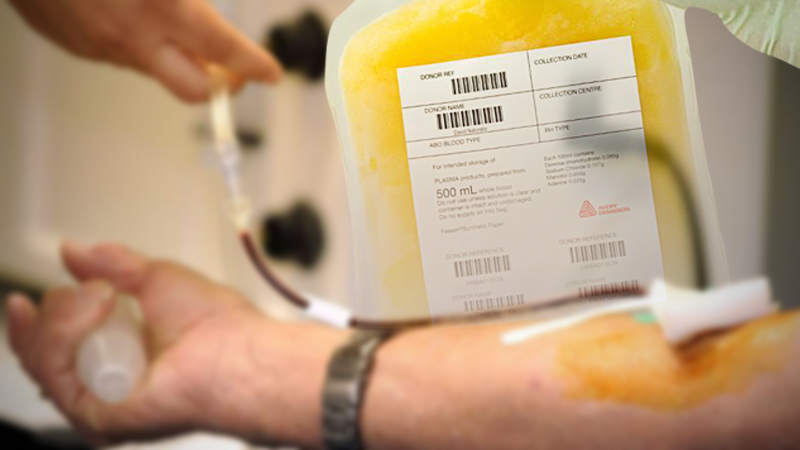
Laid off from his construction job, Armstrong has driven to a storefront donation center where a valuable global commodity – the golden plasma in human blood – is harvested seven days a week.

Wedged between a dental office and a liquor store in a Pennsylvania strip mall, the place hardly looks like a cogwheel of international commerce.

But that’s precisely what it is: part of a far-flung corporation that’s raking in hundreds of millions a year thanks in large part to hard-pressed people like Armstrong.

In fact, the blood plasma business is so good these days that the family behind this company, Barcelona-based Grifols, has amassed a $3.8 billion fortune, according to calculations by Bloomberg. The Grifols family declined to comment.

Over the past decade, as international demand for plasma has soared and many Americans have struggled to make ends meet, plasma collection in the U.S. has more than doubled, according to the Plasma Protein Therapeutics Association, which represents the industry. Grifols is riding the wave. The company’s shares have climbed 37% in the past year, almost four times more than Spain’s IBEX 35 Index.

After a series of acquisitions over the past two decades, Grifols runs 220 collection centers in at least 32 states, a quarter of the U.S. total. The company posted net income of 596.6 million euros ($653 million) for 2018. More than three-quarters of its 4.49 billion euros of revenue was generated by the company’s bioscience division, which runs donation centers in the U.S. and processes the collected plasma into drugs for sale.

For millions of people, many of them poor or underemployed, cash in the hand is worth a needle in the arm. On this gray December Monday, Armstrong has gotten $70 for as much as a pint and a half of plasma.

“We gotta pay the bills, eat,” said Armstrong, leaning against his car in the parking lot outside the Grifols center.

Of his day’s plasma pay, he said: “It’ll put gas in the car.”

– – –

Plasma is the liquid portion of blood, and it has a wide variety of medical uses. Drugs derived from plasma are used for treating ailments such as hemophilia and are showing promise in slowing the progression of Alzheimer’s. It’s also a big business, and at times a contentious one. Doctors agree that donating plasma is safe, but how often is too often is a matter of debate.

At issue, too, is whether companies should pay donors, or “plassers,” as they’re known in the trade. The U.S., Germany and China are among the only countries where payment is legal.

Grifols and several other companies have built what analysts characterize as a global oligopoly. Central to the business model is the idea that encouraging people to sell plasma is perfectly fine. Donors want the money, the argument goes, and their plasma ultimately leads to life-saving products for everyone.

Still, studies have found that plasma collection centers are disproportionately located in low-income areas. Critics say the industry is taking advantage of the poor.

“It’s intentional,” said Heather Olsen, a researcher on a Case Western Reserve University study of the plasma business. “There’s nothing happenstance happening in this industry.”

Some donors might agree. But many of them just need the money.

On a December day, business is steady at the collection center in suburban Fairless Hills, north of Philadelphia. A banner outside urges people to “join our plasma donor community.” Armstrong found the Grifols center by word of mouth. Another one closer to his home that’s run by one of Grifols’ competitors, CSL Ltd. of Australia, was packed.

People trickle in and out. A forklift operator donates weekly to earn fun money. A retired painter is supplementing his Social Security.

Grifols donor Hunter Tini said in January he sells his plasma on lunch breaks, often passing the time by listening to audio books like “Lord of the Rings.” He’s grappling with $80,000 in student debt, so the extra money comes in handy, he said.

Emiliano Montero, 22, said he recently landed a position paying $11 an hour after years of doing odd jobs under the table. Now, he’s no longer eligible for government food assistance, so he’s plassing, too. He said he’s living out of his Honda Civic while taking care of his sisters. Montero said he doesn’t mention his plasma sideline to friends.

“It just hurts my pride a bit,” he said. “I guess you gotta do whatever you gotta do.”

– – –

Founded in Barcelona in 1940 by brothers Jose Antonio and Victor Grifols Lucas, Laboratorios Grifols began developing vaccines and blood transfusion technology among a population impoverished by civil war and internationally isolated by the Franco regime.

Jose Antonio pioneered the plasmapheresis technique in 1950. By separating out the plasma, the part of the blood rich in antibodies and proteins in which white and red cells float, and re-infusing the red blood cells, Grifols found that donors could give more frequently and with no side effects.

Today, Grifols is among three companies that dominate the global plasma market. It remains a family business, run by co-chief executive officers Raimon Grifols Roura, the son of co-founder Victor, and his nephew, Victor Grifols Deu.

It also has remained loyal to the city of its inception. During a rare public appearance in 2014, Grifols Chairman Victor Grifols Roura expressed his support for Catalan independence, Reuters reported at the time. When the Catalan constitutional crisis peaked in 2017, Grifols Roura kept his company headquartered in Barcelona, as at least six other major Spanish companies, fearful of a unilateral independence declaration, moved out.

The Grifols family fortune is shared between the children of co-founders Victor and Jose Antonio. Nuria Roura Carreras, Victor’s widow, also has substantial holdings and the highest individual net worth in the family: more than $900 million.

Grifols acknowledges its reliance on low-income Americans. In its 2018 annual report, the company flagged what might seem like an unusual risk for a business: the people it depends on might actually become better off financially.

“Improvements in socioeconomic conditions in the areas in which our and our suppliers’ plasma collection centers are located could reduce the attractiveness of financial incentives for potential donors,” the company wrote.


Amazon, Apple and HBO hit Culver City to fight the streaming war #ศาสตร์เกษตรดินปุ๋ย

#ศาสตร์เกษตรดินปุ๋ย : ขอบคุณแหล่งข้อมูล : หนังสือพิมพ์ The Nation

https://www.nationthailand.com/business/30381909?utm_source=category&utm_medium=internal_referral

Amazon, Apple and HBO hit Culver City to fight the streaming war

Feb 11. 2020
By Syndication Washington Post, Bloomberg · Edvard Pettersson, Olivia Rockeman

The streaming wars have come to Culver City. A century after the pioneers of Hollywood built their studios here, a new breed of entertainment company is transforming this California town just east of Santa Monica into a hotbed for content.

Amazon.com, Apple and HBO are moving into vast office and production spaces in the city of 40,000 over the next few years as they scale up their Southern California movie and TV operations to compete with Netflix, the top video-streaming platform. Netflix itself has been expanding in the heart of Hollywood, about 8 miles northeast of Culver City.

Its rivals are building their war rooms in the city to tap Los Angeles County’s deep resources in the entertainment industry. They’ve spent billions of dollars on movies and TV shows to steal viewers from Netflix, cable channels and the very movie studios Culver City was built on. Developers have poured billions of their own into the land rush, converting aging industrial hulks to sleek creative space.

“It’s been quite amazing to watch what has been happening there in the last 24 to 36 months,” said Lewis Horne, division president for the Pacific Southwest with commercial-property brokerage CBRE Group Inc. “This is exponential growth that we’re seeing.”

The streamers need to be where the writers, producers and other creative talent live and work. Apple craves content for its new Apple TV+ streaming service as it pushes beyond iPhones into digital services and subscriptions. Amazon says its massive spending on movies and shows helps draw consumers to its Prime subscription plan and encourages current members to renew. HBO, a pioneer in its own right with “The Sopranos,” which fired the starting gun on the “prestige TV” race in 1999, has to keep up.

Culver City’s “rich legacy” in cinema and its central location — about a half-hour drive from downtown L.A. and less than 20 minutes from the airport — were a big draw, said Albert Cheng, chief operating officer of Amazon Studios.

Amazon Studios will lease almost the entire 720,000-square-foot (67,000-square-meter) Culver Studios complex once it’s completed next year and has already taken all the office space at the adjacent Culver Steps, a recently finished mixed-use development by Hackman Capital Partners.

Hackman bought Culver Studios, where parts of “Gone With the Wind” and “King Kong” were shot, in 2014 and is transforming it into state-of-the-art production facilities. It’s preserving the historic neocolonial mansion that producer-director Thomas Ince, known as the father of the Western, built after real estate developer Harry Culver persuaded him to move his studio there in 1915.

“It was a fantastic opportunity to acquire 15 acres in the the middle of downtown Culver City and bring it back to its former glory,” founder and Chief Executive Officer Michael Hackman said. “We didn’t have a tenant in tow, but we believed one of the giant media companies would be interested in it.”

Apple will lease 128,000 square feet for its content division at a new complex developed by LPC West and Clarion Partners. Apple already houses employees in Culver City to work on its TV+ video service, Apple Music, Apple Podcasts, Beats by Dre headphones and some hardware and software engineering. HBO’s new, 240,000-square-foot digs will be in Ivy Station, a mixed-use development by Lowe and AECOM-Canyon Partners scheduled to be completed this year.

Apple, HBO and Netflix declined to discuss their real estate expansions in Southern California.

All told, an estimated 1.3 million square feet of office space is under construction in Culver City, according to CBRE. Retail developers, for their part, are changing the city’s image with boutique shopping centers like Platform, built in 2016 on a former used-car dealership and including coveted millennial brands like Blue Bottle Coffee, Reformation and SoulCycle.

The Los Angeles area now has the third-biggest high-tech workforce on the West Coast, behind the San Francisco Bay Area and Seattle, according to a report published in August by Clarion Partners. Lured in part by rents lower than in Northern California’s tech hubs, companies have concentrated in Silicon Beach towns such as Santa Monica, El Segundo, Venice and Culver City itself.

Facebook, for one, is expanding in Playa Vista, and in West L.A. Google will move into a converted shopping mall where it will lease all 600,000 square feet of office space.

The studio Ince set up in 1915, before he built Culver Studios down the street a few years later, became part of Metro-Goldwyn-Mayer, which expanded the site to a 180-acre complex of studio lots where such classics as “The Wizard of Oz” were filmed. It’s now part of Sony Corp.’s Sony Pictures Entertainment, still the largest employer in Culver City as of 2018, with about 3,000 workers, according to a city report.

Culver City, which sits on about 5 square miles, has been more affordable than its more glamorous Silicon Beach neighbors, but that’s starting to change as it emerges as a media and tech hub. Home prices are now 72% higher, on average, than in Los Angeles County as a whole, according to Zillow.

Meanwhile, office space in the city, occupied or vacant, has increased to 5.3 million square feet at the end of last year from about 3 million in early 2015, according to CBRE. The vacancy rate fell to 9% from 16%. The average asking rent rose to $4.02 a square foot from $2.88.

Hackman got interested in Culver City about 13 years ago when his children were attending a private school here. His first venture was to buy up a number of industrial warehouses in the Hayden Tract area and convert them to creative office spaces.

Last month, TikTok, owned by Beijing-based ByteDance, moved into its new space at C3, a building designed for entertainment, media and tech companies. Vanessa Pappas, general manager of TikTok U.S., summed it up in a Jan. 22 blog post.

“Located between the innovative tech companies in Silicon Beach and the streaming content companies at Hayden Tract,” she wrote, “TikTok truly sits at the intersection of technology and entertainment.”