Popeyes sandwich demand fuels profit beat at Burger King owner RBI #ศาสตร์เกษตรดินปุ๋ย

#ศาสตร์เกษตรดินปุ๋ย : ขอบคุณแหล่งข้อมูล : หนังสือพิมพ์ The Nation

https://www.nationthailand.com/business/30381908?utm_source=category&utm_medium=internal_referral

Popeyes sandwich demand fuels profit beat at Burger King owner RBI

Feb 11. 2020
Restaurant Brands International Inc. rose after posting earnings that topped analysts' estimates, driven by surging popularity of the Popeyes chain's chicken sandwich.

Restaurant Brands International Inc. rose after posting earnings that topped analysts’ estimates, driven by surging popularity of the Popeyes chain’s chicken sandwich.
By  Syndication Washington Post, Bloomberg · Leslie Patton

Restaurant Brands International Inc. rose after posting earnings that topped analysts’ estimates, driven by surging popularity of the Popeyes chain’s chicken sandwich.

Popeyes same-store sales soared 34% in the the fourth quarter, more than double the 15% gain analysts had predicted, according to Consensus Metrix. The brand’s business in the U.S. catapulted after it introduced a new chicken sandwich last year. It sold out in the summer, and was brought back in November chainwide.

The “chicken sandwich has proven to be a game changer for the brand in every way,” Restaurant Brands Chief Executive Officer Jose Cil said in a statement.

The shares rose as much as 3.6% to $66.17 in New York Monday. The stock was little changed this year through Friday’s close, after gaining 22% last year.

Restaurant Brands, which also owns Burger King and Tim Hortons, reported fourth-quarter earnings, excluding some items, of 75 cents a share, exceeding the average analyst estimate by two cents.

While Burger King’s same-store sales rose 2.8%, the result was shy of projections for 3.4% growth. Like Popeyes, the burger chain is having success in the U.S. with new fare, including the much-hyped Impossible Whopper, and plans to expand the line further this year. But faux meat competition is building as other chains, including McDonald’s Corp., add Impossible Foods Inc. or Beyond Meat Inc. items.

Tim Hortons, where Restaurant Brands gets about 60% of its revenue, continues to struggle in its home market of Canada. The chain has failed to pull in diners with its lunch offerings, as well as cold coffees, amid steep fast-food and cafe competition. Comparable sales declined 4.3% last quarter, a bigger drop than analysts’ estimated.

Restaurant Brands has big growth plans in China for Popeyes, and Cil said on a conference call Monday that there is “massive potential” for the brand there.

Cil said it’s too early to say what impact the deadly coronavirus will have on Restaurant Brands’ business, and that Burger King China accounted for about 2% of systemwide sales in 2019. The immediate focus is on the health and well-being of its partners and customers, he said. In August, the company said there were about 1,000 Burger King restaurants in China.

Rivals including McDonald’s and Yum China Holdings Inc. have closed locations in China.

Foxconn delays return of workers to China iPhone plants #ศาสตร์เกษตรดินปุ๋ย

#ศาสตร์เกษตรดินปุ๋ย : ขอบคุณแหล่งข้อมูล : หนังสือพิมพ์ The Nation

https://www.nationthailand.com/business/30381905?utm_source=category&utm_medium=internal_referral

Foxconn delays return of workers to China iPhone plants

Feb 11. 2020
By Syndication Washington Post, Bloomberg  

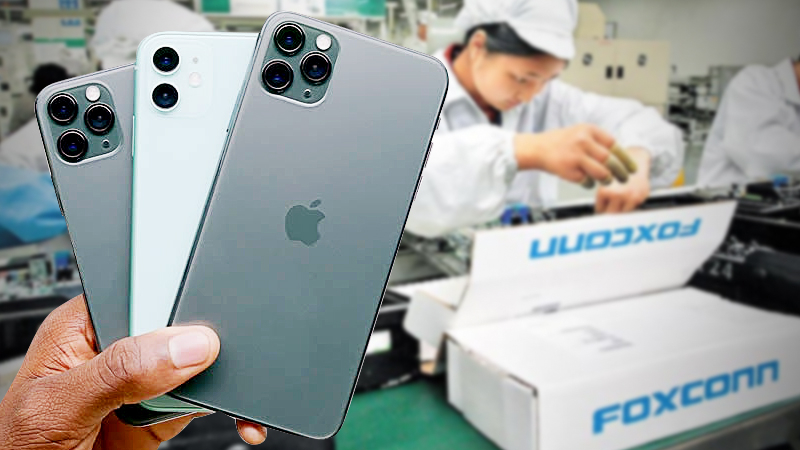
Hon Hai Precision Industry has told some employees at its main iPhone-making unit that it’s postponing the resumption of production, a sign of the struggles Apple’s primary partner is having with the novel coronavirus.

Hon Hai, known also as Foxconn, sent a message via its internal app on Sunday that it wouldn’t be able to decide on a back-to-work date “until further notice” for its iDPBG business unit, according to a version reviewed by Bloomberg News. That division makes gadgets for Apple at a factory in the so-called iPhone city of Zhengzhou in central China and two other plants in Shenzhen. It’s not clear how many employees received the message and whether other workers were summoned back.

Foxconn declined to comment on the message and said on Monday its factories will comply with government requirements, and resume output in an “orderly manner” by staggering the return of workers.

The internal directive is bound to fuel more confusion over when the assembler of electronics to most of the world’s largest tech brands will fire up its factories. Foxconn has told employees at its southern Shenzhen headquarters not to return to work when the extended Lunar New Year break ended Feb. 10, according to a memo obtained by Bloomberg.

Not all of its employees returned to their hometowns for the holiday break so there’s still some available workers on production sites, according to people familiar with the plant operations. But it’s unclear as to how many such workers are on hand.

The unit could also struggle to hire back workers after the holiday period. A recruitment app for iDPBG shows that two of its plants in Shenzhen had received only 800 applications from former workers as of Monday morning. The facilities are seeking as many as 3,000 ex-workers.

Apple and Foxconn were among the first corporations to try and quantify the epidemic’s impact. Hon Hai slashed its 2020 outlook last week, anticipating disruptions to Apple’s carefully calibrated production chain as well as weaker consumer demand and overall economic growth. As China’s largest private employer and a key partner to many of the world’s most recognizable consumer brands, Foxconn has become a high-profile symbol of how the outbreak could disrupt Chinese manufacturing and hence the world’s supply of electronics.

SOFTBANK: Singer versus Son looks like billionaires playing nice, for now #ศาสตร์เกษตรดินปุ๋ย

#ศาสตร์เกษตรดินปุ๋ย : ขอบคุณแหล่งข้อมูล : หนังสือพิมพ์ The Nation

https://www.nationthailand.com/business/30381826?utm_source=category&utm_medium=internal_referral

SOFTBANK: Singer versus Son looks like billionaires playing nice, for now

Feb 08. 2020
By Syndication Washington Post, Bloomberg · Pavel Alpeyev, Takahiko Hyuga 
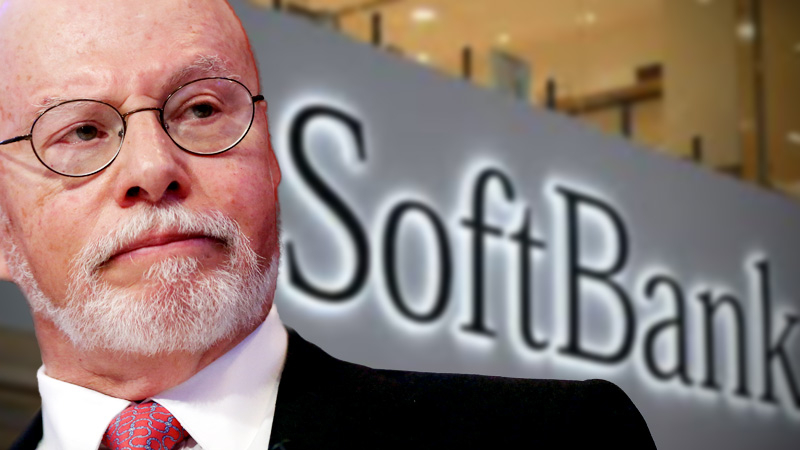
Paul Singer earned his reputation as a take-no-prisoners brawler by challenging the interests of Argentina’s government and South Korea’s chaebol. With his latest investment though, the American activist appears to be taking a more collaborative approach.

Singer’s Elliott Management Corp. took a stake of almost $3 billion in SoftBank Group Corp., saying the Japanese company’s shares are woefully undervalued compared with its assets. That’s exactly the argument SoftBank founder Masayoshi Son has been making for years.

Indeed, SoftBank has taken to posting a daily calculation online of what its shares are worth compared with their price, based on its holdings in Alibaba Group Holding, Sprint and others. The company’s own sum-of-parts calculation puts its total value at 12,259 yen a share ($111). That’s more than twice SoftBank’s actual share price, which values the company at about $96 billion. Elliott thinks SoftBank’s net asset value could be about $230 billion, people familiar with the discussions have said.

The New York-based hedge fund and SoftBank’s leadership have held cordial discussions, according to people familiar with the matter, perhaps because some of their interests are aligned. Indeed, news of Elliott’s stake popped SoftBank’s market value by more than $6 billion, and lifted the value of Son’s stock by more than $1 billion. The value of Elliott’s stake rose too, of course.

SoftBank may not go along with everything that Singer is seeking. But their interests may be more similar than they first seemed. As SoftBank prepares to report financial results on Feb. 12, here’s a rundown of the issues:

Buyback: Elliott wants SoftBank to buy back shares because of their discount, arguing it could spend as much as $20 billion by trimming investments in companies like Alibaba, Sprint and others. Son seems likely to accommodate at some point, though the amount may be much smaller. He has already unveiled re-purchases with February earnings twice in the past — one for $5.5 billion last year and another for $4.4 billion in 2016.

“There was a pretty good chance of another share buyback in 2020, even before Elliott’s involvement,” said Atul Goyal, an analyst at Jefferies Group. “Given the persistent discount, it was only a matter of time before SoftBank got targeted by an activist.”

Alibaba shares surged 55% last year, far outstripping SoftBank’s 30% gain. The “decoupling” prompted Goyal to speculate that another buyback is imminent. Son has shown increasing willingness to part with stock in his most successful investment to date, including putting up $9.5 billion of Alibaba shares as collateral for margin loans under conditions that suggest he has no intention of getting them back, Goyal wrote in a report dated Dec. 9.

Board diversity: Elliott isn’t seeking any board seats at SoftBank, but wants the company to boost independence and diversity on its board, the people said. At most, only two of the 11 directors are independent and all are male, they said. At the last earnings call in November, Son said he was committed to improving corporate governance. A person familiar with the matter said the company was currently seeking independent board members.

Investment oversight: Elliott also wants SoftBank to set up a special committee to review the investment process at its $100 billion Vision Fund, which it thinks has dragged on the share price despite making up a small portion of assets under management, the people said. Son isn’t likely to give up his control; indeed, he is the only “key man” at the fund. But SoftBank recently approved new governance standards for its portfolio companies and investment guidelines, a step toward more accountability.

“A buyback is a near-term catalyst for the share price,” said Justin Tang, head of Asian Research at United First Partners. “A more enduring catalyst in our view is increased Elliott involvement in SoftBank’s investment decision making and a restructuring of its debt which is costing billions in interest payments.”

Transparency: Elliott also wants greater transparency around the Vision Fund, which discloses the names of its investments but not the size of the stakes or the valuation at which they were made, the people said.

SoftBank itself had recognized the need for more oversight as early as 2018 when it charged Chief Operating Officer Marcelo Claure with improving operations across portfolio companies. Claure, who led the Sprint turnaround, spent months assembling a team of about 40 executives. In the end, he was forced to cede control of the so-called SoftBank Operating Group to the man it was supposed to be overseeing — Rajeev Misra, the head of the Vision Fund.

“More disclosure on Vision Fund would be good, but in the end it comes down to trust and track record — listing the investments and getting independent valuations,” said Dan Baker, an analyst at Morningstar Investment Management Asia Ltd. “Any reduction in power and control for Son would likely be hard for him to swallow.”

The real boost to SoftBank’s shares would be if Elliott convinced Son to gradually wind down the Vision Fund altogether, Baker said. But there is little sign Son would go along. The Japanese billionaire seemed undeterred by the poor market reception of marquee investments, including Uber Technologies Inc., and the implosion of WeWork. As recently as November, Son said he still plans to raise another massive investment fund.

“The interests of SoftBank and Elliott are aligned when it comes to wanting the shares price to rise,” said Mitsushige Akino, an executive officer at Ichiyoshi Asset Management Co. in Tokyo. “But Son’s management style is looking 10 to 20 years ahead. That’s where you may see tension.”

Onetime Indian billionaire says he’s now worth nothing #ศาสตร์เกษตรดินปุ๋ย

#ศาสตร์เกษตรดินปุ๋ย : ขอบคุณแหล่งข้อมูล : หนังสือพิมพ์ The Nation

https://www.nationthailand.com/business/30381825?utm_source=category&utm_medium=internal_referral

Onetime Indian billionaire says he’s now worth nothing

Feb 08. 2020
By Syndication Washington Post, Bloomberg · Jonathan Browning
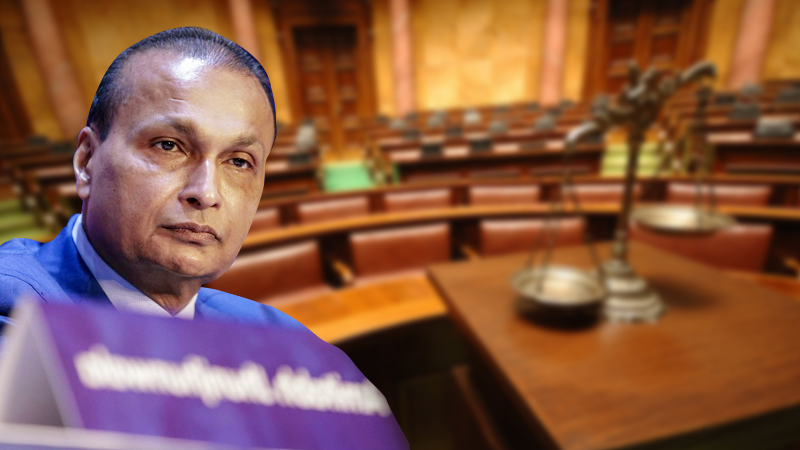
The brother of Asia’s richest man was ordered to set aside $100 million in his dispute with three Chinese banks, even as he pleaded poverty.

“The value of my investments has collapsed,” Anil Ambani said, according to a London court filing by banks seeking around $700 million in defaulted loans. “My net worth is zero after taking into account my liabilities. In summary, I do not hold any meaningful assets which can be liquidated for the purposes of these proceedings.”

The lawsuit was filed by three state-controlled Chinese banks, which argue that they provided a loan of $925 million to Ambani’s Reliance Communications in 2012 with the condition that he personally guarantee the debt. Ambani’s comments were disclosed as he tried to avoid depositing hundreds of millions of dollars with the court ahead of a trial.

On Friday evening, Judge David Waksman ordered Ambani to put up $100 million into the court’s account within six weeks. Ambani plans to appeal.

The embattled Indian tycoon says that while he agreed to give a non-binding “personal comfort letter,” he never gave a guarantee tied to his personal assets — an “extraordinary potential personal liability.”

The 60-year-old is the brother of Mukesh Ambani, who’s worth $56.5 billion and is the wealthiest man in Asia. Anil, on the other hand, has seen his personal fortune dwindle over recent years, losing his billionaire status. His Reliance Communications filed for bankruptcy last year.

Anil has “clearly got more assets and income than he’s letting on,” the judge said. “What I’m dealing with is an extraordinarily wealthy family who have helped each other in the past.” Waksman said he didn’t believe that Ambani’s family “have firmly and irrevocably brought the shutters down.”

Ambani’s lawyer, Robert Howe, had argued that the court shouldn’t order his client to make a payment he can’t cover. The tycoon argues that that an order requiring him to do so would hinder his ability to defend himself in the case, Howe said.

“Mr. Ambani is reviewing the order of the U.K court and will take legal advice as to further remedies in appeal,” representatives for Ambani’s Reliance Group said.

Bankim Thanki, an attorney representing Industrial & Commercial Bank of China Ltd., China Development Bank and the Export-Import Bank of China, said in a filing that Ambani’s statements are “plainly a yet further opportunistic attempt to evade his financial obligations to the lenders.”

“We hope that Mr. Ambani will comply with the court’s order and look forward to the swift resolution of the case at trial,” the banks said in a statement.

Ambani was caught up in another legal wrangle last year, when India’s Supreme Court threatened him with prison after Reliance Communications failed to pay to pay 5.5 billion rupees ($77 million) to Ericsson’s Indian unit. The judges gave him a month to find the funds, and his brother, Mukesh, stepped in just in time to make the payment.

The brothers’ relationship has been fraught since their father’s death left behind a vast empire that was split between them. While Mukesh’s oil and petrochemicals businesses have flourished, Anil’s assets dwindled.

Anil said in a filing that he recognized that the judge would want to know if he could satisfy any order to put up funds from outside resources, including his family.

“I can confirm that I have made enquiries but I am unable to raise any finance from external sources,” he said.

Waksman had said in an earlier ruling that he believed Ambani’s defense would be shown to be “opportunistic and false.”

Ambani’s lawyer told the judge that as a result of the comments the tycoon’s relatives were unlikely to lend any funds.

There is a “very substantial risk they will never get it back,” Howe said.

“The order pertains to an alleged personal liability of Mr. Ambani and will have no bearing on the operations of the Reliance Infrastructure Ltd., Reliance Power Ltd. and Reliance Capital Ltd.,” Ambani’s representatives said.

Fed’s stress test scenario is tougher for the biggest U.S. banks #ศาสตร์เกษตรดินปุ๋ย

#ศาสตร์เกษตรดินปุ๋ย : ขอบคุณแหล่งข้อมูล : หนังสือพิมพ์ The Nation

https://www.nationthailand.com/business/30381824?utm_source=category&utm_medium=internal_referral

Fed’s stress test scenario is tougher for the biggest U.S. banks

Feb 08. 2020
By Syndication Washington Post, Bloomberg · Yalman Onaran
The Federal Reserve’s hypothetical scenario to test the biggest U.S. banks’ resilience in a crisis just got tougher.

The 2020 test foresees the harshest decline in real economic output and the biggest rise in unemployment since the exercises were first carried out in 2009, and four of the six major criteria that feed into the potential losses are more dramatic than last year’s inputs. Still, the 2018 test holds the record for the most elements being the toughest.

Harsher test scenarios haven’t necessarily stopped the biggest banks from increasing their dividends or share buybacks in recent years. After almost a decade of holding onto most of their profits, the big banks have been allowed by the Fed to ramp up payouts in the past two years following a buildup of capital levels to more-comfortable levels.

This year’s test will also consider a higher stress to the banks’ exposures to leveraged loans and collateralized loan obligations, a corner of the financial world that’s been worrying regulators around the world as corporate leverage rises with interest rates remaining low.

Exporters scramble for materials as factories idle #ศาสตร์เกษตรดินปุ๋ย

#ศาสตร์เกษตรดินปุ๋ย : ขอบคุณแหล่งข้อมูล : หนังสือพิมพ์ The Nation

https://www.nationthailand.com/business/30381822?utm_source=category&utm_medium=internal_referral

Exporters scramble for materials as factories idle

Feb 08. 2020
By Special To The Washington Post · Michael Tatarski
HO CHI MINH CITY, Vietnam – The extended shutdown of Chinese factories from the coronavirus outbreak is upsetting supply chains as manufacturers feel the pinch from shortages of material and travel restrictions on staff.

In Vietnam, which shares an 800-mile border with China and is home to many businesses that export to the United States, companies say the squeeze is compounding pressure caused by President Donald Trump’s trade war with Beijing.

Despite Vietnam’s close economic and tourism ties with China, the human cost of the coronavirus outbreak in this country of nearly 100 million remains small, with 12 confirmed infections. But for companies with Chinese staff, or those reliant on materials and equipment from China, the pain is real.

Kaiser Furniture, a Taiwanese-owned manufacturer that has operated in Vietnam since 2004, falls into both of those categories. The company, which sells 95 percent of its furniture to the United States, has over 3.2 million square feet of production facilities and roughly 5,000 employees in Binh Duong province, a heavily industrialized region outside Ho Chi Minh City.

Dwayne Wood, Kaiser’s general manager of sales and marketing, says 120 of its workers are from mainland China, 50 of whom are trapped in Hubei province, the epicenter of the outbreak. The employees had been visiting home for the Lunar New Year holiday when the virus began to spread rapidly, prompting Chinese authorities to place Hubei under an unprecedented lockdown.

“They are all senior and middle managers,” Wood said. “Our production scheduling guys, our entire costing department. A couple of our purchasing people and two senior managers at our upholstery area are stuck, so we’re having to move things around to be able to get those areas to work.”

Other Chinese employees of Kaiser were able to return to Vietnam before flights between the two countries were suspended last weekend, though some had to fly via Malaysia or South Korea. Now, Vietnam is no longer granting new visas to Chinese nationals, and anyone arriving in the country who has been in China within the last two weeks faces 14 days in quarantine.

While travel restrictions have created personnel problems, Wood said, broader issues are gaining prominence.

“The bigger impact for us is that China really just hasn’t started back up [since the end of the holiday], and China is such a huge trading partner, and we still rely heavily on them for a lot of our component parts,” he said.

Furniture production for the U.S. market is well-established in Vietnam, with large-scale manufacturing dating back two decades.

While Vietnam’s economy has diversified and grown rapidly in recent years, driven in part by rising labor costs in China, businesses still rely on the huge Chinese industrial sector to churn out essential components. For Kaiser, that means parts such as drawer guides and specific fabrics or leather, though most of the lumber it uses is American.

“The biggest disruption of the coronavirus for a lot of people here will be how it affects the supply chain. It was already a stretch with Lunar New Year; our customers placed extra orders early to compensate for the break. . . . But now we’re back, and we’re trying to contact our vendors in China, and they’re not even back to work,” Wood said.

Others in Vietnam say they have not felt the full force of disruptions but worry that it’s only a matter of time.

An executive at a large American footwear company based in Ho Chi Minh City said that while the business is not experiencing problems yet, managers are monitoring the supply chain closely.

“A lot of the athletic brands have already started moving out of China, but a lot of technical materials, whether knits or carbon plates, things like that, haven’t completely migrated out of China yet,” said the manager, who was not authorized to comment publicly and spoke on the condition of anonymity.

These parts are largely produced in Guangdong province, home to the industrial powerhouses of Shenzhen and Guangzhou, a region that so far has avoided significant disruptions from the outbreak. Nonetheless, the footwear producer is exploring contingency plans with other suppliers. Its factories outside Ho Chi Minh City have distributed masks and hand sanitizer to workers, while also quarantining Chinese employees for 14 days.

“There have been concerns voiced by the Vietnamese workers, some of which is perpetuating something kind of stereotypical, but we want the factories to be super transparent,” the executive said.

The footwear firm is not alone in taking such a step. The labor department in Ho Chi Minh City has ordered 187 companies to keep 1,069 Chinese employees in quarantine for two weeks.

New restrictions within China could further stress production lines. This week, officials in Zhejiang province announced that only one person per household would be allowed to leave home every two days for necessities. This includes three districts of the city of Hangzhou, home to e-commerce giant Alibaba.

“We’ve also heard that Hangzhou is telling factories they can’t open until March 1, and that’s a really key fabric area,” Wood said. “If that happens, then we’ll be greatly affected.”

Although China has largely weathered Trump’s trade war, many economists expect its annual growth to slump to below 4% for the first quarter as services halt and consumers avoid going out due to contagion fears.

“The tariffs have had a great impact on the exodus of manufacturing from China, but it’s been kind of a slow death, whereas if something like this happens where they’re physically not able to go back to work, it really forces people to quickly change their mind-set and move away from China at a much faster pace,” Wood said.

GE’s ‘beat-and-raise story’ leads longtime skeptic to upgrade #ศาสตร์เกษตรดินปุ๋ย

#ศาสตร์เกษตรดินปุ๋ย : ขอบคุณแหล่งข้อมูล : หนังสือพิมพ์ The Nation

https://www.nationthailand.com/business/30381818?utm_source=category&utm_medium=internal_referral

GE’s ‘beat-and-raise story’ leads longtime skeptic to upgrade

Feb 08. 2020
By Bloomberg · Esha Dey 
General Electric received faint praise from Wall Street on Friday as a long-time bearish analyst upgraded his rating on the stock, saying the company has successfully repositioned itself into a “high-level beat and raise story.”

Gordon Haskett analyst John Inch, who has had a sell-equivalent rating on GE since October 2018, raised it to hold, and also lifted his price target to $11 from $7.

“The financial targets that GE recently laid out for 2020 appear to be readily achievable,” Inch wrote in a note to clients. He added that GE’s businesses, while not particularly inspiring as a whole, appear to pose less of a risk today than before. The worst for the struggling power segment appears to be over, at least in the coming 1-2 years, while the healthcare unit’s performance could improve from current anemic levels, Inch added.

GE Capital also seemed to pose less of a future risk as the asset portfolio has shrunk and time has passed, and even though aviation still has some challenges, possible cash tailwinds related to Boeing’s 737 Max should provide sufficient breathing room to hold reported free cash flow relatively intact over the next couple years, Inch wrote.

After a tumultuous few years since late 2017 when GE’s financials started slowly unraveling, the company’s recent results have inspired hope that its turnaround was steadily progressing. In the latest fourth-quarter results reported last month, GE said its industrial free cash flow, a closely watched indicator of earnings potential, may climb to as much as $4 billion this year from $2.32 billion in 2019.

Inch, however, does not believe all is rosy with GE yet, and still sees fundamentals that are fraught with risks, including outsized debt, aggressive accounting, weak earnings quality and a “significantly mediocre to moribund” portfolio mix outside of aviation. The analyst said there was no obvious reason why GE’s share price should continue to meaningfully outperform from current levels, and expects it to ultimately settle closer to $10 to $11.

GE shares gained as much as 1.1% Friday, to touch the highest since October 2018. The stock has now risen 17% this year, whereas the S&P 500 Index has gained 3.1%.

The company has 12 analysts recommending buying the stock, 10 advising to hold, while 3 say sell, according to Bloomberg data.

FedEx to curb duplicate deliveries in e-commerce efficiency push #ศาสตร์เกษตรดินปุ๋ย

#ศาสตร์เกษตรดินปุ๋ย : ขอบคุณแหล่งข้อมูล : หนังสือพิมพ์ The Nation

https://www.nationthailand.com/business/30381817?utm_source=category&utm_medium=internal_referral

FedEx to curb duplicate deliveries in e-commerce efficiency push

Feb 08. 2020
By Syndication Washington Post, Bloomberg · Thomas Black · BUSINESS 
FedEx is revamping its operations to hand off some deliveries from its overnight division to its separately-run ground business, in a new effort to wring more profit from surging e-commerce.

The arrangement is part of Chief Executive Officer Fred Smith’s strategy to tackle the flood of residential packages from online shopping, which can be more expensive to handle because fewer are left at each stop. By having Express hand off less time-sensitive parcels to its ground unit for final delivery, the company will reduce cases in which a driver from both units visit the same customer.

“We are duplicating efforts and diluting our delivery density, including the number of packages delivered at each stop,” Chief Operating Officer Raj Subramaniam said in a letter to employees. “This move is an effort to make costly last-mile deliveries more efficient.”

In the last year, FedEx has rolled out several changes, including seven-day deliveries, later pickup deadlines and more capacity to handle large packages, to capture more e-commerce business and stem a drop in profit margins. FedEx predicts that 90% of growth in the parcel industry from 2018 through 2026 will come from e-commerce.

Unlike competitors United Parcel Service Inc. and Amazon.com Inc., FedEx operates two separate networks for overnight and ground deliveries. Its ground business uses contractors who hire their own employees to operate delivery vehicles. The more packages delivered to the same place by one driver, the lower the per-parcel delivery cost will be.

FedEx will start the initiative in Greensboro, North Carolina, with Express products that have less strict delivery deadlines, such as standard overnight and second-day service. The plan is to roll it out to other U.S. cities in phases, FedEx said in a statement.

“We continue to flex our network to stay ahead of e-commerce growth, and that includes adjustments to better handle the demand for residential deliveries while lowering our cost to serve,” Subramaniam said in the statement.

L’Oreal expects to outperform rivals amid temporary virus hit #ศาสตร์เกษตรดินปุ๋ย

#ศาสตร์เกษตรดินปุ๋ย : ขอบคุณแหล่งข้อมูล : หนังสือพิมพ์ The Nation

https://www.nationthailand.com/business/30381808?utm_source=category&utm_medium=internal_referral

L’Oreal expects to outperform rivals amid temporary virus hit

Feb 08. 2020
L'Oreal CEO Jean-Paul Agon in Paris on Jan. 14, 2020. MUST CREDIT: Bloomberg photo by Christophe Morin.

L’Oreal CEO Jean-Paul Agon in Paris on Jan. 14, 2020. MUST CREDIT: Bloomberg photo by Christophe Morin.
By Bloomberg · Eric Pfanner, Deirdre Hipwell

L’Oreal expects demand for high-end beauty products to help it outperform beauty rivals, even as the coronavirus outbreak causes a temporary slowdown in the key market of China, Chief Executive Officer Jean-Paul Agon said.

The shares rose as much as 4% to a record Friday in Paris after the company reported its highest operating margin ever and the strongest revenue growth in more than a decade, driven by Asia.

“It’s all about sales growth,” RBC analyst James Edwardes Jones wrote. Earnings per share missed the consensus, “but who cares?”

The French owner of the Lancome and Kiehl’s brands said late Thursday it’s confident demand in China will bounce back quickly once the epidemic eases. Agon said L’Oreal will beat rivals again this year in terms of sales and profit growth.

Estee Lauder Cos. also said Thursday it expects a short-term hit from the coronavirus, which has killed more than 600 people and prompted travel restrictions.

After China decided to extend the Lunar New Year holiday, all of L’Oreal’s offices and factories are closed in China until Monday.

The company “had a good January in China,” Agon said, saying it’s too early to assess the impact of the outbreak. L’Oreal’s strength in e-commerce in that market will help the company deal with the crisis, he said.

“The good news is we have 12,000 employees in China and I am in communication every day with the general manager in China and no one in our teams is sick,” the CEO said.

L’Oreal’s sales have been fueled in recent quarters by Chinese consumers splashing out on luxury skincare products and makeup, which has made up for a sluggish performance by the company’s mainstream brands like Maybelline in the U.S. The cosmetics maker said its performance for China’s Singles Day holiday in November was exceptional.

The beauty market maintained its pace last year, growing about 5%, driven in large part by online sales of beauty products and consumers buying more expensive products, CEO Agon said on a call with analysts.

China was the main driver of growth in Asia Pacific, which has become L’Oreal’s largest region. Sales rose 18% in both Indonesia and Vietnam, while the Philippines and South Korea also had double-digit growth.

“It was the best year for a very long time in all the countries of Asia,” Agon said. Although there will be an impact from the virus, the CEO said the company’s experience with previous virus outbreaks, shows that after a period of disturbance, consumption “resumes stronger than ever.”

The company has nine brands with annual revenue exceeding 1 billion euros ($1.1 billion), with La Roche Posay being the latest to reach that level.

BlackRock cuts stake in U.S. coal giant after climate pledge #ศาสตร์เกษตรดินปุ๋ย

#ศาสตร์เกษตรดินปุ๋ย : ขอบคุณแหล่งข้อมูล : หนังสือพิมพ์ The Nation

https://www.nationthailand.com/business/30381801?utm_source=category&utm_medium=internal_referral

BlackRock cuts stake in U.S. coal giant after climate pledge

Feb 08. 2020
By Bloomberg · Will Wade · BUSINESS, US-GLOBAL-MARKETS 
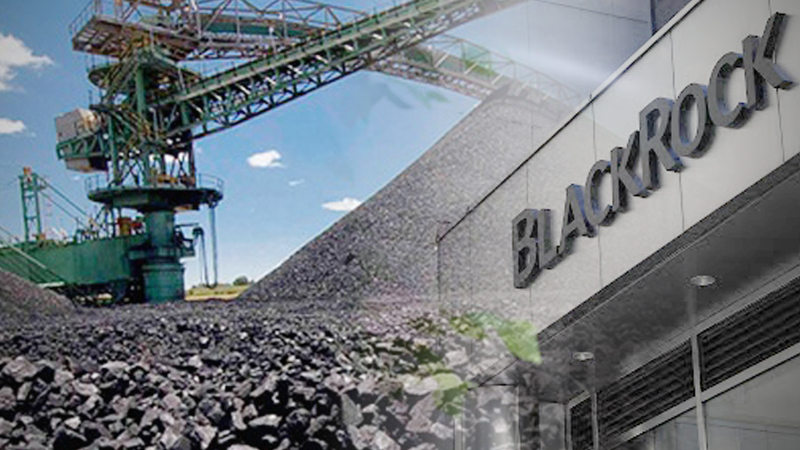
Less than a month after vowing to unwind its investments in coal, BlackRock Inc. has cut its stake in the biggest U.S. miner.

The world’s largest asset manager now has about 4.87 million shares of Peabody Energy Corp., a 5% stake, according to a regulatory filing Friday. That’s down 14% from the end of December, making it the miner’s sixth-largest holder, according to data compiled by Bloomberg.

The move follows BlackRock’s announcement in January that it would put climate change at the heart of its strategy, a plan that includes exiting both debt and equity investments in thermal coal companies in its $1.8 trillion active portfolios. Financial companies around the world are facing increasing pressure to back away from the dirtiest fossil fuel to help fight global warming.

Climate is now a “defining factor” for the global economy, BlackRock Chief Executive Officer Larry Fink told shareholders in his annual letter.

A BlackRock spokesman did not have an immediate comment.

On Wednesday, Peabody’s biggest shareholder — activist investor Elliott Management Corp. — moved to increase control over the mining company. Peabody’s shares are down more than 70% in the past year as the coal industry faces waning demand from utilities and slumping prices.