Virus scare empties malls on world’s priciest shopping strip #ศาสตร์เกษตรดินปุ๋ย

#ศาสตร์เกษตรดินปุ๋ย : ขอบคุณแหล่งข้อมูล : หนังสือพิมพ์ The Nation

https://www.nationthailand.com/business/30381795?utm_source=category&utm_medium=internal_referral

Virus scare empties malls on world’s priciest shopping strip

Feb 07. 2020
People wearing surgical mask at the Time Square in Causeway Bay in Hong Kong on Feb. 6, 2020. MUST CREDIT: Bloomberg photo by Ivan Abreu.

People wearing surgical mask at the Time Square in Causeway Bay in Hong Kong on Feb. 6, 2020. MUST CREDIT: Bloomberg photo by Ivan Abreu.
By Syndication Washington Post, Bloomberg · Shawna Kwan · BUSINESS, WORLD, RETAIL

In an almost deserted mall, the few shoppers hurry past wearing face masks. In the luxury stores, sales assistants, also in masks, outnumber customers — if they have any at all. To pass the time, staff chat with each other or play with their phones.

This isn’t a scene from some dystopian movie. Instead, it’s Tuesday afternoon in Hong Kong’s usually bustling Times Square, a 17-floor mega-mall in the heart of Causeway Bay, home to the world’s most-expensive retail strip.

The stylish displays of Gucci and Louis Vuitton advertisements usually compete for the attention of wealthy Chinese tourists, who until early last year swarmed the city for quick shopping expeditions. Now, no more.

Already reeling from months of anti-government protests that at times broke into pitched street battles between demonstrators and police — scaring off tourists — the outbreak of coronavirus has dealt a second, crippling blow to retailers.

Mainland Chinese visitors, who used to come to Hong Kong to buy everything from luxury watches to discount cosmetics, plunged 53% in December from a year earlier. That’s set to fall even further after the government said it will start to quarantine people arriving from across the border.

On top of that, local residents are now reluctant to go out amid fears of catching the deadly virus. The number of confirmed cases in the city climbed to 24 as of Friday, with some of those likely to have been infected locally.

“Many retailers are saying it’s a disaster,” said Nicholas Bradstreet, managing director of leasing at Savills. “In the last 10 days, their sales have been down 70% to 80% week-on-week. There’s very little traffic into the shops” particularly in key retail districts like Central, Causeway Bay and Tsim Sha Tsui, he added.

Times Square fronts Russell Street, where at $28,713 per-square-meter a year, retail rents top salubrious addresses like New York’s Upper 5th Avenue ($23,549) and the Champs Elysee ($15,473), according to Cushman & Wakefield.

The strip is usually thronged by thousands of shoppers hitting upmarket stores like Burberry, La Perla and Audemars Piguet. Not this day though. Two employees at an Omega boutique stare into space as pedestrians walk by without a glance at the watches on display.

Further down the street sits an empty Prada store. The high-end Italian fashion retailer quit its HK$9 million ($1.2 million) per month lease at the site four months early, according to the Hong Kong Economic Journal.

“Causeway Bay is very quiet now. It used to have a lot of traffic,” said Wong, a salesperson at a fashion boutique in a mall near Lockhart Road who declined to give her first name because she isn’t allowed to talk to the media. “With the scarcity of face masks, people would rather not go out at all.”

Retail sales plunged 19% in December, the 11th straight monthly decline. The slump in consumer spending has helped drive the economy into recession for the first time in a decade.

The retail downturn is also putting the squeeze on landlords. Rents in Causeway Bay dropped 8.5% in the fourth quarter versus the previous three months, resulting in a full-year decline of 14%, according to Cushman & Wakefield.

Mall owners including Times Square’s Wharf Real Estate Investment Co. will face pressure to offer rent concessions, according to Phillip Zhong, a senior equity analyst at Morningstar Investment Management Asia. Wharf’s rental income will fall about 2% this year, Zhong estimates.

The property company’s shares have slumped 14.6% since Jan. 20, when the virus began to spread more broadly.

Shares of other mall owners have also suffered. Link REIT, the city’s biggest mall owner, is down 6.1% while Hysan Development Co., which owns retail and office space throughout Causeway Bay, has dropped 5.2%.

Singapore-based Mapletree North Asia Commercial Trust, whose Festival Walk mall was trashed during protests last year, has fallen about 5%.

The only retailers in demand at the moment are drug stores. On Lockhart Road, just a 10-minute walk from Times Square, shoppers queue to snap up face masks and hand sanitizer, which are now in short supply across the city.

Sky Fan, who runs a neighboring electronics-gadget store, can only look on in envy. The coronavirus outbreak has taken a bigger toll on spending than the protests did, he said, with sales after Lunar New Year down about 50%.

“You can see that many people outside are just hunting for masks and cleaning products,” Fan said.

Credit Suisse CEO Thiam ousted after losing boardroom battle #ศาสตร์เกษตรดินปุ๋ย

#ศาสตร์เกษตรดินปุ๋ย : ขอบคุณแหล่งข้อมูล : หนังสือพิมพ์ The Nation

https://www.nationthailand.com/business/30381789?utm_source=category&utm_medium=internal_referral

Credit Suisse CEO Thiam ousted after losing boardroom battle

Feb 07. 2020
An Oct. 21, 2015 file photo shows Tidjane Thiam, then chief executive officer of Credit Suisse Group (left) with Urs Rohner, Credit Suisse chairman, in Zurich, Switzerland. MUST CREDIT: Bloomberg photo by Alessandro Della Bella.

An Oct. 21, 2015 file photo shows Tidjane Thiam, then chief executive officer of Credit Suisse Group (left) with Urs Rohner, Credit Suisse chairman, in Zurich, Switzerland. MUST CREDIT: Bloomberg photo by Alessandro Della Bella.
By Syndication Washington Post,  Bloomberg · Dale Crofts

Tidjane Thiam was ousted as chief executive officer of Credit Suisse Group, losing a boardroom showdown with the chairman in the wake of a tabloid scandal that unnerved the Swiss establishment.

The 13 directors rebuffed appeals from major shareholders in the U.S. and U.K. to back Thiam and instead closed ranks behind Chairman Urs Rohner, giving him their “unanimous” support, according to a statement Friday. They picked Thomas Gottstein, a 20-year Credit Suisse veteran, as the bank’s first Swiss-born CEO in almost two decades.

Credit Suisse shares dropped as much as 5.1%, reflecting doubts about strategy under the new boss.

The drama represents the culmination of a conflict between the CEO and Rohner that escalated after it emerged that top management hired detectives to follow former executive Iqbal Khan. While Thiam, 57, was cleared in an internal probe and a close lieutenant was blamed, the bank has struggled to move beyond the scandal. Swiss regulators have launched their own inquiry, raising questions about the culture at the top of the firm.

Top shareholders including Harris Associates, Silchester International Investors and Eminence Capital had warned the board of directors before Thursday’s meeting that if there was a choice to be made, Rohner should be the one to go. They urged the chairman to back Thiam or step down. Rohner’s backers saw the high-profile demands as an unseemly gambit, according to a person familiar with the matter. Meanwhile, the chairman lined up support behind the scenes from other shareholders for the board, including Qatar’s sovereign wealth fund, the person said.

“Tidjane has made an enormous contribution to Credit Suisse since he joined us in 2015,” Rohner said in the statement. “It is to his credit that Credit Suisse is standing on a very solid foundation and has returned successfully to profit.”

For Thiam, who was born in Ivory Coast and previously held top roles at Aviva and Prudential before Rohner hired him in 2015, the departure blemishes a record that includes a pivot away from volatile trading and toward the more stable business of catering to affluent clients. While the shares lost about half of their value during his tenure, he was applauded for stabilizing the franchise.

The troubles started in September when Swiss media reported Khan, who had left for crosstown rival UBS Group, confronted his pursuers in downtown Zurich. Embarrassing disclosures followed, including accounts of the personal feud between Thiam and Khan and the suicide of a contractor, rattling business circles in a city that normally enjoys a reputation for quiet professionalism.

An internal probe concluded Thiam didn’t know about the spying, and that Chief Operating Officer Pierre-Olivier Bouee was responsible. Bouee was fired late last year. It later came out that human resources chief Peter Goerke was also followed, which the bank also blamed on Bouee.

“I had no knowledge of the observation of two former colleagues,” Thiam said in the Friday statement. “It undoubtedly disturbed Credit Suisse and caused anxiety and hurt. I regret that this happened and it should never have taken place.”

A third spying case, involving a former Credit Suisse employee in the U.S., was also probed and rejected by the bank. However, lawyers for Credit Suisse still looked into the matter as recently as last week, Bloomberg reported on Tuesday.

Gottstein is CEO of Credit Suisse Switzerland and has been in the banking industry for 30 years, including more than 20 at Credit Suisse. His experience includes 13 years in investment banking in London, as well as in private banking.

Thiam’s resignation after prominent overseas shareholders had backed him marks a victory for the Swiss establishment. A former lawyer who has been chairman of Credit Suisse for a decade, Rohner’s leadership “during this turbulent time” was praised by lead independent director Severin Schwan, CEO of Swiss pharmaceuticals company Roche Holding.

The spying scandal underscores the risk of reputational damage to companies if their top executives are seen as running afoul of ethical standards. Barclays CEO Jes Staley survived a yearlong regulatory probe into his attempts to unmask a whistle-blower, escaping with a fine in 2018. The British lender reprimanded Staley after discovering he had twice tried to identify a whistle-blower who had raised concerns about his recruitment of a former colleague.

It’s unclear what impact Thiam’s surprise departure will have on the investigation by Swiss banking regulator Finma into the scandal. Finma said in December that it had appointed an independent auditor to investigate the case and that such probes typically take several months. No one at the regulator was immediately available on Friday morning to comment on the news.

Thiam took over at Credit Suisse in mid-2015 and quickly outlined a plan to slash costs, boost profitability and increase his firm’s financial strength. A former politician and insurance executive, he had no direct experience in investment banking, a business that became one of his biggest headaches. He was blindsided by losses at the trading unit in 2016, pushing him to accelerate cost cuts.

While the cost reductions were successful, the bank initially saw revenue fall under his watch, and the CEO had to tap investors for fresh capital. The measures started to pay off last year as earnings bucked the gloom facing other European banks and wealthy clients added new money. But by December, Thiam cut a profitability target and warned of a loss at the investment banking and capital markets business.

Educated in France at the elite Ecole Polytechnique, the francophone Thiam has spent a lifetime defying the odds. By his mid-20s, he was working in Paris for McKinsey & Co., the high temple of consulting. By his mid-30s, he was back in Ivory Coast — and under house arrest following a military coup. By his late-40s, he was in Britain, as the first black executive of a FTSE-100 company.

Bank of Ayudhya lowers MRR to 6.70% #ศาสตร์เกษตรดินปุ๋ย

#ศาสตร์เกษตรดินปุ๋ย : ขอบคุณแหล่งข้อมูล : หนังสือพิมพ์ The Nation

https://www.nationthailand.com/business/30381787?utm_source=category&utm_medium=internal_referral

Bank of Ayudhya lowers MRR to 6.70%

Feb 07. 2020
The bank's president and chief executive officer Seiichiro Akita

The bank’s president and chief executive officer Seiichiro Akita
By THE NATION

Bank of Ayudhya is poised to cut its Minimum Retail Rate (MRR) by 0.25 percentage point to 6.70 per cent a year on Saturday (February 8) to ease the financial burden of customers.

The bank’s president and chief executive officer Seiichiro Akita said on Friday (February 7) that the bank was ready to provide relief to customers and follow trend of the policy rate.

Several major commercial banks have already trimmed loan rates after the Bank of Thailand’s Monetary Policy Committee (MPC) cut its policy rate on Wednesday (February 5), effective immediately.

The committee voted unanimously to cut the policy rate by 0.25 percentage point from 1.25 per cent to a historic low of 1 per cent.

BGRIM confident of coping with drought, rules out impact form global economy #ศาสตร์เกษตรดินปุ๋ย

#ศาสตร์เกษตรดินปุ๋ย : ขอบคุณแหล่งข้อมูล : หนังสือพิมพ์ The Nation

https://www.nationthailand.com/business/30381768?utm_source=category&utm_medium=internal_referral

BGRIM confident of coping with drought, rules out impact form global economy

Feb 07. 2020
By The Nation

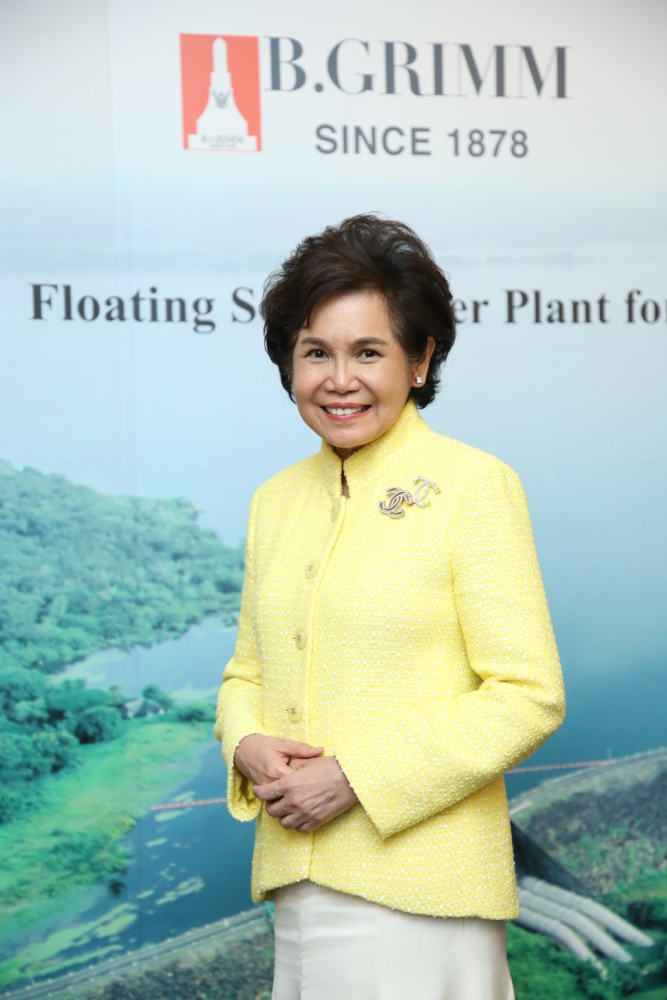
B Grimm Power Plc (BGRIM), a leading private power producer in Thailand, is confident of coping with the problems of drought by embracing international standards for water supply management in its electricity production.

The company did not expect any impact from fluctuations of the global economy, given its world-class customer base and continuous growth in new clients.

BGRIM CEO Preeyanart Soontornwata said: “We have closely monitored the drought situation and planned our water management strategy in coordination with industrial estate operators”.

 BGRIM CEO Preeyanart Soontornwata

BGRIM CEO Preeyanart Soontornwata

“We are confident of continuing production of high-quality electricity and steam to meet strong demand from existing customers and new clients”.

She noted that BGRIM’s cash flow remains stable for the long term as most of its revenue are derived from long-term power purchase agreements of up to 25 years with state utilities both at home and abroad.

Regarding the drought, she said the company had closely monitored the development and put in place guidelines and measures for water management to ensure ample supply to clients by means of consuming and preserving water resource in a sustainable way.

Most of the water used in the production of co-generation power plants come from recycle process or treated waste water from factories.

In addition, the company’s plan to manage electricity production efficiently also enables effective water management.

BGRIM has worked closely with industrial estate operators for managing water usage prudently.

It has been confirmed that water reserves in wells in industrial estates are sufficient for operation until the rainy season.

“Rest assured that BGRIM’s power plants will be able to serve and support the industrial sector continuously,” Preeyanart said.

In regard to the impact of the global economic uncertainties on BGRIM, she pointed out that more than 70 per cent of the company’s revenue come from power sales to government agencies, both in Thailand and overseas under 20-25 year contracts which are not subject to changes in economic conditions.

The rest of BGRIM’s earnings derive from industrial sectors in Thailand and Vietnam where strong power demand looks set to continue, mainly due to the presence of world-class manufacturers from Japan.

The company has continued to sign on new industrial clients in Thailand, adding a combined 25 MW in demand last year.

Contracts for 15 MW power sales have been concluded with a group of customers which are expected to come on line in the first half of this year.

Meanwhile, there are demands from the more than 1,000 potential clients in industrial estates which are already in operation or under development.

BGRIM’s combined installed capacity now stands at 3,424 MW from a total of 57 projects, 2,896 MW of which come from 46 projects already in service.

Construction of the 16-MW wind farm in Thailand and the 39-MW solar photovoltaic system in Cambodia is well underway for the start of commercial operation later this year.

The company has implemented an expansion plan for stable and sustainable growth towards securing not less than 5,000 MW in aggregate power sale deals by 2022 through new project development as well as mergers and acquisitions (M&A) of projects both at home and abroad.

These M&A accords are expected to be gradually concluded in the first half of this year.

Several development projects overseas are undergoing feasibility studies, including new ventures in South Korea, Vietnam, Malaysia, Cambodia and the Philippines.

More banks fall in line on rate cut #ศาสตร์เกษตรดินปุ๋ย

#ศาสตร์เกษตรดินปุ๋ย : ขอบคุณแหล่งข้อมูล : หนังสือพิมพ์ The Nation

https://www.nationthailand.com/business/30381763?utm_source=category&utm_medium=internal_referral

More banks fall in line on rate cut

Feb 07. 2020
By THE NATION

TMB and Thanachart Bank cut their Minimum Overdraft Rate (MOR) from 7.175 per cent to 6.925 per cent on Friday (February 7) to ease the financial burden of customers and help lift the subdued economy.

The move follows the policy rate reduction by the Bank of Thailand’s Monetary Policy Committee (MPC) on Wednesday (February 5), effective immediately.

Several major commercial banks have already trimmed lending rates after the MPC move.

Export-Import Bank of Thailand (EXIM Thailand) also announced on Friday that it will cut prime interest rate for customers in general and SMEs from 6 per cent per annum to 5.985 per, effective February 11. EXIM Bank’s prime interest rate is equivalent to commercial banks’ Minimum Retail Rate (MRR).

EXIM Thailand president Pisit Serewiwattana said the cut was in response to the government policy to stimulate the economy and in line with the policy rate direction.

Pisit said under the current circumstances where the policy rate has been slashed to a record low and the baht has stayed around at 30-31 against the US dollar, 15 per cent stronger than in 2016 when the baht was traded at Bt36/dollar. Thus, it is a good timing for Thai entrepreneurs to import machinery and new production technology to improve efficiency which would enhance their competitiveness in the long run.

EXIM Thailand has developed an array of financial facilities to serve import and investment alongside a liquidity enhancement scheme to boost export.

Amazon CEO Jeff Bezos rebukes White House adviser #ศาสตร์เกษตรดินปุ๋ย

#ศาสตร์เกษตรดินปุ๋ย : ขอบคุณแหล่งข้อมูล : หนังสือพิมพ์ The Nation

https://www.nationthailand.com/business/30381749?utm_source=category&utm_medium=internal_referral

Amazon CEO Jeff Bezos rebukes White House adviser

Feb 07. 2020
File Photo: Amazon chief executive Jeff Bezos

File Photo: Amazon chief executive Jeff Bezos
By The Washington Post · Jeff Stein, Abha Bhattarai 

Amazon chief executive Jeff Bezos rebuked a White House adviser on Thursday with an Instagram post that included a “Seinfeld” meme, the latest twist in an increasingly personal clash between the e-commerce giant and a key Trump administration official.

Bezos’s social media post appeared to be a direct attack at White House trade and manufacturing adviser Peter Navarro. In an article The Washington Post published Tuesday, Navarro alleged that the Amazon founder had backed out of a promise to meet in person, saying he was instead offered a meeting with other senior executives. Navarro told The Post he wanted to speak with Bezos about ways to prevent counterfeiters from using the e-commerce platform to sell their goods. (Bezos owns The Washington Post.)

In his Instagram post Wednesday afternoon, Bezos appeared to accuse Navarro of ambushing him at the Alfalfa Club dinner on Jan. 25 and also calling his colleagues at Amazon “minions.” He also asked his social media followers how he should have handled being confronted. And in a sign that tensions between the two are escalating quickly, Navarro responded to the Instagram post almost immediately, calling Bezos’s message a “wonderfully banal passive aggressive post.”

Navarro had said he approached Bezos at the dinner to discuss counterfeiting issues related to Amazon. According to Navarro, Bezos agreed to meet later to discuss the issue.

In his Instagram post, Bezos didn’t exactly clarify what happened. Instead, he presented the encounter as a hypothetical scenario.

“Let’s say you’re at a big cocktail party and someone you don’t know comes up to you while you’re talking to your dad and girlfriend and asks for a meeting. Let’s say this person is the kind of person who actually uses the word ‘minions’ to describe the people who work for you,” Bezos wrote.

“How do you respond: A) Yes, I’ll definitely meet with you. B) No, I won’t meet with you. C) Tell you what. Call so and so and they’ll work something out. D) Quietly resolve to become a shut-in. E) Something else (fill in the blank).”

Bezos offered to give a button inspired by the sitcom “Seinfeld” that says “Serenity Now!” to whoever came up with the best response. “Serenity Now” is what one of the “Seinfeld” characters would say when he was starting to become very angry and wanted to calm himself and keep his blood pressure down.

Navarro responded to the Instagram post by telling The Hill: “A wonderfully banal passive aggressive post from the would-be author of ‘Zen and the Art of Counterfeit Trafficking.’ ”

Navarro confirmed to The Post that he made the statement. When asked whether Bezos would ultimately meet with Navarro, an Amazon spokeswoman reiterated an earlier statement saying senior executives have met with administration officials, including Navarro, on “multiple occasions” to discuss counterfeits. The company, she said, is “eager to continue this collaboration and will make our executives available to meet as often as necessary to effectively address this issue.”

Navarro also said in an email to The Post: “How about the choice Jeff Bezos actually made when I spoke with him on January 28: F) ‘Peter, call my second-in-command Jay Carney and have him set up the meeting.’ That’s exactly what I did and now Bezos in hiding is simply trivializing one of the most important issues facing American consumers.”

Other figures within the administration have more amicable relationships with Bezos. A few hours after the Navarro incident at the Alfalfa Club, Bezos hosted President Donald Trump’s daughter Ivanka, her husband, Jared Kushner, and top Trump adviser Kellyanne Conway for a party at his house in Washington.

The tussle comes a few weeks after the Trump administration said it would crack down more aggressively on counterfeit imports by holding third-party platforms such as Amazon accountable for knockoffs sold on their sites. Counterfeit goods have become a growing problem for e-commerce sites as they allow third-party merchants to list and sell products with little oversight.

Amazon will grow to 15,000 employees in Seattle suburb of Bellevue #ศาสตร์เกษตรดินปุ๋ย

#ศาสตร์เกษตรดินปุ๋ย : ขอบคุณแหล่งข้อมูล : หนังสือพิมพ์ The Nation

https://www.nationthailand.com/business/30381737?utm_source=category&utm_medium=internal_referral

Amazon will grow to 15,000 employees in Seattle suburb of Bellevue

Feb 07. 2020
By Bloomberg · Matt Day 

Amazon.com plans to expand to some 15,000 employees in Bellevue, Washington – a more than seven-fold increase and the latest indication of where the company will put its people following an aborted effort to build a corporate campus in New York.

Amazon has been expanding in Bellevue, just east of hometown Seattle, since 2017, and announced the scale of its plans for the city of 145,000 people in a blog post on Thursday. Amazon’s corporate neighbors there include the headquarters of T-Mobile U.S., and satellite offices of Microsoft. Amazon has about 2,000 workers in Bellevue today, including some teams in Senior Vice President Dave Clark’s operations and logistics organization.

Amazon, which has more than 50,000 employees at its Seattle headquarters, decided in 2018 to split a second HQ between New York and Arlington, Virginia, following a closely watched search. Bloomberg reported this week that the public bakeoff for what Amazon called HQ2 was motivated in part by a desire to encourage big government incentives of the sort Tesla landed for its Gigafactory in Nevada. But Amazon abandoned plans for New York amid opposition from local politicians and said it would put the 25,000 workers initially planned for that campus at its roughly two-dozen corporate offices across North America.

Amazon’s relationship with its hometown has become strained in recent years, with critics holding the company partly responsible for rising costs, snarled traffic and homelessness. Tension turned into a public clash in 2018 when the Seattle City Council passed a tax on big employers to fund homelessness services. Amazon threatened to abandon two expansion projects in the city if the tax went through, and, even after it was repealed, pulled the plug on one. The company’s blog post Thursday called Bellevue a business-friendly city.

Amazon this week joined large companies based in the Seattle area in voicing support for a proposed tax on large employers based in King County, which contains both Seattle and Bellevue, to fund affordable housing and homelessness services.

CEO fired by company he founded after video showed him shouting racial slur at Uber driver #ศาสตร์เกษตรดินปุ๋ย

#ศาสตร์เกษตรดินปุ๋ย : ขอบคุณแหล่งข้อมูล : หนังสือพิมพ์ The Nation

https://www.nationthailand.com/business/30381735?utm_source=category&utm_medium=internal_referral

CEO fired by company he founded after video showed him shouting racial slur at Uber driver

Feb 07. 2020
By The Washington Post · Lateshia Beachum

An Arizona-based CEO has been fired from the company he founded after video surfaced of him calling a black Uber driver a racial slur during a trip Friday night.

Hans Berglund, 71, has been replaced with an interim chief executive by his agricultural-product company, Agroplasma, for calling Randy Clarke, 25, the n-word in a video the driver released.

The interaction with Berglund is just the latest disturbing ride that Clarke, a full-time Arizona State University senior, can count among the 14,000-plus trips he’s had in the 4½ years he has worked for the ride-hailing company, he told The Washington Post in an interview Thursday.

He installed cameras in his SUV in April 2018 when he increased his driving. The cameras were a way for the young father of one to cover himself if he ever received complaints or if something happened to him, he said.

Clarke, who has a near-perfect driver rating, said he was sexually assaulted by a passenger sitting next to him in the front seat in 2018. The assault was caught on his vehicle cameras, he said.

That experience prompted him to implement an Uber-approved rule that is plastered on the inside and outside of his vehicle: “Front seat use is reserved for parties of 3 or more.”

It is also on the Uber profile riders can read before getting in his dark gray 2018 Kia Sorento, which offers four iPads for passengers to entertain themselves along with drinks and snacks.

Berglund apparently did not read the message under Clarke’s smiling picture or the sign on the vehicle door.

He got into the front seat without looking at the sign above the glove box with the message about who can sit there.

The diamond-rated driver asked Berglund whether he minded sitting in the back seat, according to video obtained and reviewed by The Post.

A seemingly shocked Berglund said he did not like sitting in the back, and Clarke explained that he did not like when passengers sat in the front.

Both men agreed to cancel the ride, but Berglund grew annoyed and asked, “Are you f—ing serious with me?” from outside the car.

Clarke explained his position again and offered to cancel and refund Berglund’s money.

“OK,” Berglund said, closing the front door and opening a door to the back seat. “I’m going to ride in the back, and I’m going to file a complaint. OK? I have the right to make my own options.”

Clarke explained that he had the right to deny the ride as an independent contractor with Uber. Berglund was ready to be driven to his destination, but Clarke wouldn’t move.

“Sir, please leave my vehicle,” Clarke said.

“Is that because I’m white?” Berglund asked.

Clarke denied that allegation. Berglund replied: “You’re a f—ing n—–.”

Clarke told Berglund that he had two dash cameras and that their interaction was being recorded.

Berglund hurled more expletives at Clarke before exiting and slamming the door.

“Woohoo! This is good. This is perfect,” Clarke said to himself as he drove out of Berglund’s gated community and dialed an Uber support line for drivers to file a complaint.

“My initial reaction was complete and utter shock that this happened in 2020,” the communications and political science major told The Post.

Clarke has experienced discrimination before while driving for Uber, but the incident with Berglund was the first time he had been called a racial slur, he said.

The young father’s college tuition is covered through a program Uber has with Arizona State University that pays the tuition of top-rated drivers. Driving for Uber gives Clarke time to care for and spend time with his son, he said.

Clarke said he decided to do some digging on Berglund, and that is when he discovered he was a successful businessman in the fertilizer business in Tempe, he told ABC15 Arizona.

Clarke alleges that Uber’s investigation team did not contact him until ABC15 reported about the incident. Berglund no longer has access to Uber, a person with knowledge of the situation confirmed.

An Uber spokesperson provided a statement that said that the company does not tolerate discrimination and that Berglund’s described actions were a “clear violation of our community guidelines.”

Clarke wants the company to have a direct link for drivers to upload videos of complaints, and for it to implement a system to alert passengers about a driver’s rules.

Berglund told The Post: “I’m so sorry for what I said and for what I did. I cannot apologize any more than what I have.”

By Wednesday, Berglund was replaced with an interim CEO at his company.

Matt Brill, marketing director for the company, released a statement to ABC15 that confirmed Berglund’s removal.

“The incident is not at all reflective of Agroplasma’s values and ethics,” he wrote in the statement to the station, adding that the company will work to repair “the harm” Berglund’s actions caused.

In an interview outside his home Wednesday with ABC15 reporter Zach Crenshaw, Berglund said that he is not racist. He said the incident has been “so blown out of proportion” and has ruined his life and his company.

The ousted CEO could also face legal action, the Phoenix New Times reported.

Clarke is being represented by attorney David Dow and plans to file complaints with Tempe’s Human Relations Commission and the Arizona attorney general’s office, the news outlet reported.

The city of Tempe could issue a fine of as much as $2,500 for a civil rights violation, the station reported, although the incident happened in Scottsdale.

Clarke would also like a sit-down meeting with Berglund, saying he wants Berglund to walk away with a deeper understanding of the racial slur.

“I don’t want a lawyer apology,” Clarke said. “I want a genuine, heartfelt apology so I can actually forgive him and give him a big hug.”

Clarke said that he has lost sleep and become physically ill from seeing online reactions to the incident and that he can’t walk outside without being recognized.

Berglund recently told ABC15 that what happened to him is “such as sad story,” which Clarke saw.

“I wasn’t pleased with how he played the victim,” Clarke said. “I do pray for him and his family, but you just don’t go on TV and put up a pity party when you did something wrong.”

Casper Sleep rises in debut after IPO falls short of target #ศาสตร์เกษตรดินปุ๋ย

#ศาสตร์เกษตรดินปุ๋ย : ขอบคุณแหล่งข้อมูล : หนังสือพิมพ์ The Nation

https://www.nationthailand.com/business/30381733?utm_source=category&utm_medium=internal_referral

Casper Sleep rises in debut after IPO falls short of target

Feb 07. 2020
By Syndication Washington Post, Bloomberg · Liana Baker 

Bed-in-a-box seller Casper Sleep Inc. rose in its trading debut after an $100 million initial public offering priced at the bottom of a reduced range.

Shares of Casper rose as much as 32% Thursday and were up 23% to $14.75 apiece at 1:22 p.m. in New York, giving the company a market value of $585 million. That’s just over half of the online mattress retailer’s $1.1 billion valuation in a private funding round last year.

Casper sold 8.35 million shares Wednesday for $12 each. This came after it cut its price target significantly from an initial range of $17 to $19.

“We’re seeing consumers come back very frequently to buy from Casper,” Chief Executive Officer Phillip Krim said in a Bloomberg TV interview. “That will continue to accelerate as we bring more products to market.”

The IPO shows investors have grown skeptical of money-losing unicorns — startups whose private valuations reached $1 billion or more. The listing follows landmark but largely disappointing performances last year by consumer-oriented companies including Uber Technologies Inc. and its smaller rival Lyft Inc., as well as SmileDirectClub Inc. and Peloton Interactive Inc.

Casper priced its shares on the same day as PPD Inc., a biotechnology and drug-research services firm that raised $1.62 billion, pricing its shares at the top of its target for the offering. In the past year, such business-to-business firms, especially software makers, have tended to fare better in their IPOs than consumer-focused companies.

New York-based Casper, founded in 2014, became one of the leading brands in its niche thanks to its pioneering status and savvy marketing. Since then, a slew of competitors have emerged in the U.S. and abroad. From 2016 to September 2019, Casper spent $422.8 million on marketing, according to an earlier filing.

Casper had 60 stores in the U.S. and Canada as of Sept. 30. Its sales increased to $312 million for the nine months ended Sept. 30, a 20% gain from the same period in 2018. Its net loss widened to $67 million from $64 million during the same period in 2018.

The company’s backers include Target Corp. and Dani Reiss, the chief executive officer of Canada Goose Holdings Inc.

The offering was led by Morgan Stanley, Goldman Sachs and Jefferies Financial Group Inc. The company’s shares are trading on the New York Stock Exchange under the symbol CSPR.

Frozen Wells Fargo bonuses show a peril for bankers after crisis #ศาสตร์เกษตรดินปุ๋ย

#ศาสตร์เกษตรดินปุ๋ย : ขอบคุณแหล่งข้อมูล : หนังสือพิมพ์ The Nation

https://www.nationthailand.com/business/30381725?utm_source=category&utm_medium=internal_referral

Frozen Wells Fargo bonuses show a peril for bankers after crisis

Feb 07. 2020
Signage is displayed outside of Wells Fargo & Co. bank branch in St. Petersburg, Fla.,, on Jan. 14, 2019. MUST CREDIT: Bloomberg photo by Eve Edelheit.

Signage is displayed outside of Wells Fargo & Co. bank branch in St. Petersburg, Fla.,, on Jan. 14, 2019. MUST CREDIT: Bloomberg photo by Eve Edelheit.
By Syndication Washington Post,  Bloomberg · Hannah Levitt 

A new religion swept Wall Street after the 2008 crisis: Pay executives with stock, make them wait to collect it, and there will be fewer problems.

Now a generation of executives retiring from Wells Fargo & Co. is experiencing what can happen to those payouts when new scandals arise — even for people uninvolved in wrongdoing.

Dozens of former executives have waited, in some cases for years, to collect millions of dollars in stock-linked bonuses, according to people with knowledge of the situation. Behind the scenes, the company’s scandals triggered a series of stringent reviews by both the bank and regulators that must be completed for each payout to proceed.

The situation has swept up executives who haven’t been accused of any misconduct, according to the people, who asked not to be named discussing the confidential process. For denizens of the financial industry, it offers a cautionary tale about what can happen now that banks are diverting billions of dollars annually into stock awards to be doled out in the future.

To be sure, Wells Fargo’s executives may not draw much public sympathy — their bank has been accused of myriad customer abuses and has become a favorite punching bag across the political spectrum. But their peers at others firms might wonder if they will someday find themselves unwittingly in similar situations.

“That’s the fear: You’re going to be at the wrong place at the wrong time — you didn’t do anything bad but you’re going to be judged in a politically, potentially arbitrary way,” said Alan Johnson, managing director of compensation consultant Johnson Associates. “It’s like nuclear fallout. The bomb didn’t drop on you but you were within five miles of it.”

Delayed compensation came into vogue just after the crisis, as bank investors and regulators looked for ways to end an era of lax supervision, aggressive risk-taking and outright wrongdoing that nearly toppled the global financial system. By delivering a higher portion of annual pay in the form of stock, locking it up for years, and making it susceptible to clawbacks or other terms, stockholders could theoretically take comfort that their long-term interests were aligned with those of the people in charge of running the business. And if something went wrong, it’d be easier to hold individual executives accountable.

Highly paid executives at banks typically received as as little as 30% of their earnings in the form of long-term compensation before the financial crisis — a portion that’s grown to 50% to 60% today, according to Johnson Associates. Wells Fargo’s top five earners received 72% of their pay in long-term awards by 2018, according to its most recent annual proxy statement.

Soon after the lender’s scandals began erupting in September 2016, the bank announced it would withhold millions of dollars in unpaid stock awards from some of its most senior leaders, including former Chief Executive Officer John Stumpf and community banking chief Carrie Tolstedt.

Critics led by Sen. Elizabeth Warren said that didn’t go far enough. They argued that executives paid heavily in stock had long benefited from its rising price, while legions of branch staff lost their jobs for either failing to hit overly aggressive targets or engaging in bogus sales to do so.

But unknown to many in the public, a broader drama was starting to unfold inside the San Francisco-based company. In November of that year, the Office of the Comptroller of the Currency withdrew a waiver it had granted the bank a few months earlier so that it could continue paying deferred stock to retiring executives.

Losing the waiver meant thousands of senior managers could be subject to intense scrutiny upon their departure — a review process created by regulators decades ago to prevent executives at troubled banks from escaping with “golden parachutes.” Banks have to fill out documents that can run 50 pages long for every applicant, showing retirees weren’t involved in any misconduct before they collect shares earned at the peak of their careers. Then, multiple regulators review the paperwork and decide whether payouts can proceed.

Some executives have been in that limbo for years.

“We have been working diligently and constructively with our regulators in this review process, but the process is highly detailed and has, unfortunately, caused a number of former employees to experience delays,” Wells Fargo acknowledged in a statement.

“We regret that any former employee who should receive post-departure payments has experienced a delay, and we are looking forward to completing the review process,” it said. “We appreciate the patience demonstrated by everyone involved.”

As the backlog mounted, the OCC reached a new deal with the bank in 2018, limiting the number of executives subject to the reviews and allowing the agency to sign off on behalf of the regulators. Reviews from that wave are also still pending, and senior executives planning to retire soon will enter that process, too.

Last month, the OCC announced civil charges against eight former Wells Fargo executives, looking to levy about $59 million in penalties. Stumpf and two others settled. Tolstedt and four colleagues are fighting the claims.

Meanwhile, a number of federal probes of the bank are rumbling on.

There’s an irony in the situation at Wells Fargo. The bank largely skated through the 2008 credit crisis that upended Wall Street and shifted pay practices across the industry. Now its executives are feeling the brunt of those changes.