FWD acquires Siam City Insurance, upbeat on goal in Thailand #ศาสตร์เกษตรดินปุ๋ย

#ศาสตร์เกษตรดินปุ๋ย : ขอบคุณแหล่งข้อมูล : หนังสือพิมพ์ The Nation

https://www.nationthailand.com/business/30379758?utm_source=category&utm_medium=internal_referral

FWD acquires Siam City Insurance, upbeat on goal in Thailand

Dec 23. 2019
Rob Schimek, Managing Director and Group Chief Operating Office of FWD Group

Rob Schimek, Managing Director and Group Chief Operating Office of FWD Group
By THE NATION

1,905 Viewed

FWD Group (FWD) has completed the acquisition of Siam City Insurance (SCI), according to a FWD statement on Monday (December 23), which also reassured SCI customers that they will not be affected in any way by the change of ownership and will continue to receive their protection, benefits and client services in accordance with the terms of their policies.

All existing SCI policies will be honoured by FWD, it added.

The acquisition is part of FWD group’s growing general insurance proposition in Thailand and the region.

Rob Schimek, Managing Director and Group Chief Operating Office of FWD Group, commented: “We welcome the SCI team into the FWD family, and look forward to grow our general insurance offerings in Thailand. SCI will play an important role in realising our ambition to capture Thailand’s tremendous digital growth opportunity as we endeavour to change the way people feel about insurance”.

Kulvat Janvatanavit, Director of SCI, said: “This is an exciting new chapter for our customers, teams and partners. FWD will extend its best-in-class insurance platform and extensive experience to SCI, enabling us to enhance our operational capabilities and better serve the evolving needs of customers in Thailand”.

FWD also took over Siam Commercial Bank Life in September 2019, and as of the end of the third quarter this year, it had three million customers and group members and more than 2,300 employees in Thailand.

FWD Group activities span Hong Kong , Macau, Thailand, Indonesia, the Philippines, Singapore, Vietnam, Japan and Malaysia, offering life and medical insurance, general insurance, employee benefits, Shariah and family takaful products across a number of its markets.

Established in Asia in 2013, FWD is the insurance arm of investment group, Pacific Century Group.

Two new airlines set to take off next year #ศาสตร์เกษตรดินปุ๋ย

#ศาสตร์เกษตรดินปุ๋ย : ขอบคุณแหล่งข้อมูล : หนังสือพิมพ์ The Nation

https://www.nationthailand.com/business/30379707?utm_source=category&utm_medium=internal_referral

Two new airlines set to take off next year

Dec 23. 2019
By THE NATION

2,997 Viewed

Thai Eastar Jet and Thai Summer Airways — two new airlines — are expected to get off the ground next year, according to Civil Aviation Authority of Thailand (CAAT) director-general Chula Sukmanop.

Thai Eastar is a joint venture between Thai investors and South Korean carrier Eastar Jet, while the latter is between Thai and China investors.

Chula said that Thai Eastar Jet was expected to obtain the CAAT’s air operator certificate next month. CAAT is in the process of issuing a certificate to Thai Summer.

He added that both carriers could recruit 100 per cent Thai pilots given that CAAT’s current Air Operating Licence does not set the ratio of foreign pilots the carriers have to hire.

According to Thai Summer Airways’ homepage, it is a regional low-cost airline registered in Thailand. It was established in early 2018 and is scheduled to be officially opened in January 2020. The company is headquartered in Bangkok, and its operations base is located at the U-Tapao Rayong-Pattaya International Airport.

Korean tech giants to showcase advanced AI for life at CES 2020 #ศาสตร์เกษตรดินปุ๋ย

#ศาสตร์เกษตรดินปุ๋ย : ขอบคุณแหล่งข้อมูล : หนังสือพิมพ์ The Nation

https://www.nationthailand.com/business/30379729?utm_source=category&utm_medium=internal_referral

Korean tech giants to showcase advanced AI for life at CES 2020

Dec 22. 2019
LG ThinQ appliances (LG Electronics)

LG ThinQ appliances (LG Electronics)
By The Korea Herald/ANN

1,625 Viewed

South Korean tech companies said Sunday they are gearing up for the Consumer Electronics Show 2020 in Las Vegas slated for January, making all-out efforts to showcase how far their artificial intelligence technologies have advanced with the ability to make life much easier.

LG Electronics is putting its AI platform ThinQ at the forefront of its exhibition at the event with a plan to introduce a seamless lifestyle with the help of advanced solutions making users feel homey anywhere.

Under the main theme of “Anywhere is home,” LG said it will allocate a third of its booth for ThinQ-equipped appliances and services.

Compared to the 2019 show, the company aims to demonstrate its expansion in utilization of AI solutions that help connect life at home and outside seamlessly.

The company will, for the first time, introduce a smart door that has a fresh food storage and a parcel locker that can be securely accessed by deliverymen. The door verifies homeowners with biometrics like 3D facial scanning and vein recognition.

Inside the ThinQ home, LG will showcase a proactive customer care service that demonstrates how its AI platform is designed to control home appliances, including the washing machine, refrigerator, dryer, oven and dish washer, in accordance with users’ lifestyles and daily patterns.

In collaboration with automotive seating supplier Adient, the Korean tech giant will also debut its connected car solution Web OS Auto for the first time.

The system will offer visitors an experience of a connected car that is linked with homes, which will enable drivers to continue household chores behind the wheel.

“We aim to show our vision for AI,” said Kim Jeon-hong, senior vice president at LG. “The LG ThinQ platform will help expand AI solutions at home and outside to make users’ lives much easier.”

Samsung Electronics will also be proclaiming a clearer vision for AI at the 2020 show.

Samsung CEO Kim Hyun-suk will take the stage to deliver a keynote speech on lifestyle innovation driven by AI, internet of things and 5G.

As announced earlier, the tech giant is likely to unveil some new robots featuring Samsung’s AI Bixby to square off against LG’s CLOi bots.

Samsung limited a showcase of the first wearable robots for medical use at this year’s show.

“To enhance its AI vision, Samsung may introduce some robots, including a caring bot, for the first time,” said an industry official.

Apple has secret team working on satellites to beam data to devices #ศาสตร์เกษตรดินปุ๋ย

#ศาสตร์เกษตรดินปุ๋ย : ขอบคุณแหล่งข้อมูล : หนังสือพิมพ์ The Nation

https://www.nationthailand.com/business/30379708?utm_source=category&utm_medium=internal_referral

Apple has secret team working on satellites to beam data to devices

Dec 22. 2019
By Syndication Washington Post, Bloomberg · Mark Gurman 
970 Viewed
Apple has a secret team working on satellites and related wireless technology, striving to find new ways to beam data such as internet connectivity directly to its devices, according to people familiar with the work.

The Cupertino, California-based iPhone maker has about a dozen engineers from the aerospace, satellite and antenna design industries working on the project with the goal of deploying their results within five years, said the people, who asked not to be identified discussing internal company efforts. Work on the project is still early and could be abandoned, the people said, and a clear direction and use for satellites hasn’t been finalized. Still, Apple Chief Executive Officer Tim Cook has shown interest in the project, indicating it’s a company priority.

Apple’s work on communications satellites and next-generation wireless technology means the aim is likely to beam data to a user’s device, potentially mitigating the dependence on wireless carriers, or for linking devices together without a traditional network. Apple could also be exploring satellites for more precise location tracking for its devices, enabling improved maps and new features.

It’s not clear if Apple intends to pursue the costly development of a satellite constellation itself or simply harness on-the-ground equipment that would take data from existing satellites and send it to mobile devices. Northrop Grumman, Lockheed Martin and Boeing are some of the biggest satellite makers. An Apple spokeswoman declined to comment.

Amazon.com plans to deploy more than 3,000 satellites as part of a future constellation. However, the industry is littered with failures. Iridium LLC filed for bankruptcy protection in 1999, and Teledesic abandoned its “internet from the sky” plan more than a decade ago. Newer efforts from Facebook, SpaceX and Amazon are a long way from generating revenue, and Apple rarely enters new categories without a clear way to make money.

“The lessons of prior failures like Iridium, Globalstar and Teledesic are that it’s really hard to find a viable business plan for multibillion-dollar satellite communications projects,” said Tim Farrar, a satellite expert and principal at TMF associates.

In recent months, Apple has started hiring new software and hardware experts for the team, seeking engineers with experience in designing components for communications equipment. The company has also hired additional executives from the aerospace and wireless data delivery fields.

The team is led by Michael Trela and John Fenwick, former aerospace engineers who helped lead satellite imaging company Skybox Imaging before it sold to Google in 2014. The pair led Google’s satellite and spacecraft operations until leaving together in 2017 to begin a new initiative at Apple, Bloomberg News reported at the time.

During their first year and a half at Apple, Trela and Fenwick explored the feasibility of developing satellite technology and understanding the problem they want to solve, and in recent months have started intensifying work on the project. The effort suffered a setback earlier this year when its previous leader, Greg Duffy, left Apple after joining in 2016. Duffy, the co-founder of camera startup Dropcam, which Google acquired in 2014, reported to Dan Riccio, Apple’s senior vice president of hardware engineering.

On his LinkedIn profile, Duffy said he worked on projects involving “satellite communications, wireless, and home products/technologies.” He declined to comment more specifically on his work at Apple.

Trela and Fenwick still work within Apple’s hardware engineering division, but now report to Riccio’s lieutenant in charge of iPhone engineering.

The team has recently added people from the wireless industry, including engineer Matt Ettus, who now helps lead the initiative, people familiar with the team said. Ettus is one of the foremost names in wireless technologies and created Ettus Research, a National Instruments-owned firm that sells wireless networking equipment.

Apple has also hired Ashley Moore Williams, a longtime executive from Aerospace who focused on communication satellites, and Daniel Ellis, a former Netflix executive who helped oversee the company’s Content Delivery Network, or CDN. Ellis has experience in building networks that can beam content and information on a global scale.

The work on satellite technology is one of several “special projects” — an Apple term for skunkworks initiatives or development of major new product categories — under way at the company.

As Bloomberg has previously reported, Apple also is working on a virtual reality headset to debut as early as 2021, augmented reality glasses for launch after that, MicroLED screens for future devices, new home products, self-driving car technology and a future Apple Watch that can analyze a user’s blood chemistry to determine glucose levels. Apple is also expanding its in-house chip development, seeking to replace Intel Corp. as its Mac processor maker, and Intel and Qualcomm as the providers of its modem component for phones.

Under Cook, Apple has rapidly expanded its research and development budget, spending $16 billion in the 2019 fiscal year, an increase of 14% from the prior year, according to company filings. One of Apple’s primary goals is to bring more of the technology behind its products in house, which is what work on satellites could eventually enable.


Loxley reshuffles top management #ศาสตร์เกษตรดินปุ๋ย

#ศาสตร์เกษตรดินปุ๋ย : ขอบคุณแหล่งข้อมูล : หนังสือพิมพ์ The Nation

https://www.nationthailand.com/business/30379668?utm_source=category&utm_medium=internal_referral

Loxley reshuffles top management

Dec 20. 2019
Suroj Lamsam

Suroj Lamsam
By THE NATION

1,174 Viewed

The Board of Thailand’s conglomerate Loxley has approved the appointment of Suroj Lamsam as chief executive officer and president effective January 1.

He will also be chairman of the executive board, replacing Dhongchai Lamsam, who will remain the board of directors’ chairman. Suroj is currently Loxley’s president.

The board of directors also approved the adjustment of the internal management structure to make it more agile and suited to the changes in the business environments.

Part of the change is the merger of the executive board and the management board into one executive board.

The executive board will be responsible for the daily running of the business management and operation, and generating revenue conforming with the company’s business plan, vision, and mission. The new structure is effective from January 1.

Suroj said that the company has also set up the Project Investment & Evaluation Committee to assess the plans and projects for which Loxley will bid.

EGCO Group expands footprint in Taiwan #ศาสตร์เกษตรดินปุ๋ย

#ศาสตร์เกษตรดินปุ๋ย : ขอบคุณแหล่งข้อมูล : หนังสือพิมพ์ The Nation

https://www.nationthailand.com/business/30379658?utm_source=category&utm_medium=internal_referral

EGCO Group expands footprint in Taiwan

Dec 20. 2019
By THE NATION

437 Viewed

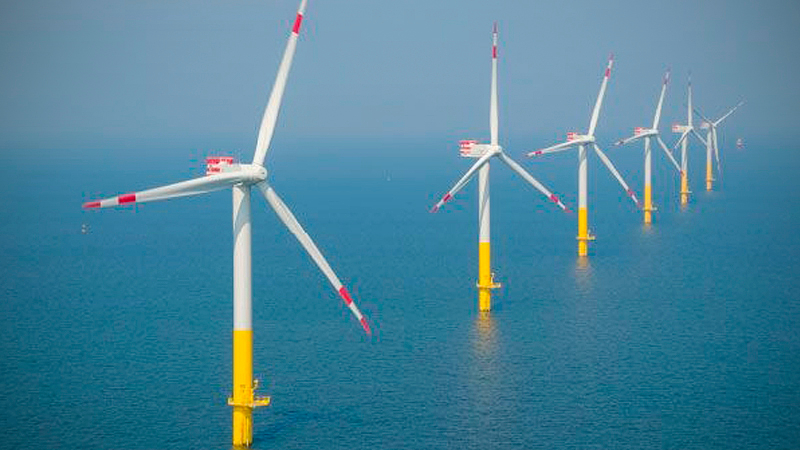
Electricity Generating Public Company Limited or EGCO Group on Friday (December 20) announced its first successful investment in the 64- megawatt Yunlin offshore wind farm project which is under construction in Taiwan, through the acquisition of a 25-per-cent ownership interest in Yunlin Holding GmbH.

The Group’s president Jakgrich Pibulpairoj, said the EGCO wholly owned subsidiary Greenwing Energy BV entered into a share purchase agreement to acquire a 25-per-cent interest in Yunlin Holding GmbH (Yunlin) owned by Taiwan Offshore Holding GmbH on December 19.

This investment was approved by the EGCO board on November 22, The transaction is expected to be closed in the first quarter of 2020, subject to completing all closing conditions including consent by Taiwanese authorities.

Yunlin is a holding company which owns 100 per cent of Yunneng Wind Power. The latter is constructing a 640MW offshore wind farm which will be located in the Taiwan Strait approximately 8 km west of the coast of Yunlin County in Taiwan.

Yunneng entered into power purchase agreements with Taiwan Power Company (Taipower) on December 11, 2018 for each of its two phases.

Through these agreements, Yunneng has secured a fixed 20-year feed-in-tariff for the sale of electricity from the project. Commissioning of the project will occur in phases, with phase 1 comprising 352MW scheduled for completion in the fourth quarter of 2020, and phase 2 comprising 288MW scheduled for completion in the third quarter of 2021.

EGCO Group’s president added that Taiwan possesses high investment potential and is an avid supporter of renewable energy development as a means to meet its lofty renewable energy targets.

The focus of this programme emphasizes onshore and offshore wind as well as solar power with a target to achieve 20 per cent of its generated electricity from renewables by 2025.

“This investment represents a unique and important opportunity for EGCO Group to expand its footprint in a new and growing renewable market in the Asia Pacific region. The project is expected to support the company’s growth momentum while offering compelling long-term returns for shareholders. Moreover, the project represents the company’s first successful investment in Taiwan which will provide a strategic platform for the future growth,” Jakgrich said.

KBank Private Banking thrives on product, service innovations amid market volatility #ศาสตร์เกษตรดินปุ๋ย

#ศาสตร์เกษตรดินปุ๋ย : ขอบคุณแหล่งข้อมูล : หนังสือพิมพ์ The Nation

https://www.nationthailand.com/business/30379652?utm_source=category&utm_medium=internal_referral

KBank Private Banking thrives on product, service innovations amid market volatility

Dec 20. 2019
During a press conference to unveil KBank Private Banking (KPB)’s 2019 operating performance and its 2020 strategy,  Jirawat Supornpaibul, KBank’s Private Banking Group Head, said that with the launch of investment innovations throughout the year, KPB met with astounding success – raking in 14 outstanding private banking awards from nine world-renowned institutions. It grew customers’ portfolio by 12.5 percent despite a highly volatile market. For its 2020 strategy, KPB will continue to strengthen its partnership of five years with Lombard Odier, a world-class private banker. The press conference was held recently at Bhiraj Tower @Emquartier.

During a press conference to unveil KBank Private Banking (KPB)’s 2019 operating performance and its 2020 strategy, Jirawat Supornpaibul, KBank’s Private Banking Group Head, said that with the launch of investment innovations throughout the year, KPB met with astounding success – raking in 14 outstanding private banking awards from nine world-renowned institutions. It grew customers’ portfolio by 12.5 percent despite a highly volatile market. For its 2020 strategy, KPB will continue to strengthen its partnership of five years with Lombard Odier, a world-class private banker. The press conference was held recently at Bhiraj Tower @Emquartier.
By The Nation

1,247 Viewed

KBank Private Banking has launched a series of innovative products throughout the year, beating market volatility and growing customers’ portfolio by 12.5 per cent, said Jirawat Supornpaibul, head of the Private Banking Group on Thursday (December 19).  He, however, warned investors of market correction next year.

“The global market has witnessed high volatility this year, thus investment is a challenge. KBank therefore focuses on development of investment innovations for risk management in diversified portfolios that offer satisfactory returns in the late-cycle of the global economy,” he said.

KBank sees a good opportunity for our customers to adjust their investment portfolios and shift to K-Alpha, focusing on a risk-based allocation strategy, and alternative investments such as gold and over-the-counter stocks in order to lessen risks. As evidenced, K-Alpha portfolio has grown 12.5 per cent so far, with its risk standing at 4.5 per cent. Therefore, the portfolio’s risk-adjusted return is as high as 2.8 times, he said. Average investment return over the past five years stood at 5 to 7 per cent, depending on individual client’s risk profile.

KBank Private Banking has continued to grow this year with 11,600 customers and assets under management (AUM) worth around Bt 750 billion; investments worth Bt450 billion, up 7 per cent; and a 24.7-per cent rise of investment in complex assets year-on-year, he said.

In 2020, KBank will continue to offer the most comprehensive personal finance advisory service in Thailand and strengthen its partnership with world-class wealth manager Lombard Odier. The first KBank Private Banking Lounge will be launched at EmQuartier department store for added customer convenience, thanks to its prime location in the same building as our office. This will enhance our brand visibility and reaffirm our successful collaboration with Lombard Odier, Jirawat said.

“Despite the world economy continuously showing signs of slowdown, KBank does not anticipate a recession in the next 12 months, ” he assured. “We think that the world’s capital markets will continue to be highly volatile next year, which could easily trigger market panic. There is a chance of a market correction due to stretch valuation this year, it could be a drop of 5 to 10 per cent or more,” he warned.

Investment will become more difficult, with major risks coming from political uncertainties due to international trade disputes and the 2020 US presidential election. Investment returns form capital market next year would be in single digit, down from double digits this year, he said.

KBank has come up with five strategic investment recommendations for our clients next year: 1 Diversify risks and increase flexibility in their investment portfolio; 2 Safeguard their portfolio with safe assets such as gold, and apply hedge funds’ equity long/short strategy; 3 Focus on carry strategy for high-yield assets which generate higher interest rates; 4 Adopt a cautious approach in stock investment by choosing business groups with solid net profit growth, such as stocks in healthcare, technology and energy segments, as well as stocks of some attractive emerging markets; 5 Create additional returns on alternative assets such as real estate, private equity funds and infrastructure, which are less volatile in terms of market prices but are suited to long-term investment of more than five years, he revealed.

“They should represent a small proportion of the portfolio,” Jirawat said, adding that “clients would be protected or they could even take advantage of it should a market correction occurs next year”.

Jirawat cited product and service innovations as key to the impressive performance of the KBank Private Banking this year.

“The product and service innovations recommended to our customers have also enabled KBank to win a total of 14 awards related to private banking, from nine international institutions, he noted. These included “Best Private Bank in Thailand” awards from Asian Private Banker, Finance Asia and The Asset; “Best Private Bank in Asean” from The Digital Banker, he noted.

“In addition to the “Outstanding RM Training and Development Programme” award, which reflects our leadership in human resource development, KBank also won the “Outstanding Wealth Management Technology Initiative – Back Office” award from the Private Banker International Global Wealth Summit and Awards 2019, in recognition of our leadership in private banking business technology. We have also received the “Best Private Bank for Digital Culture Asia” award and “Best Private Bank for Digitally Empowering Relationship Managers Asia” award from PWM’s second annual Wealth Tech Awards, highlighting our success in the private banking business”.

To brace for the late-cycle global economy, the bank recommended that clients adjust their investment portfolios and reduce overall risks by raising the proportions of investment in core portfolios, safe haven assets and cash, as well as reducing risks from growth stocks, while focusing on the following innovation-based funds:

1 Sustainability Fund (K-CHANGE): The fund invests in companies that attach importance to the environment, society and governance (ESG) for sustainable growth over the long term, including those creating positive impacts to the world.

2 Private Equity Fund: The fund invests in private equity worldwide, and is the first-ever private equity fund in Thailand.

3 Fixed Maturity Fund: The fund invests in fixed income instruments in Asia for a specific investment period. It generates higher returns than interest rates, which are on a downward trend, and automatic redemption of investment units as scheduled upon maturity.

4 New Risk-based Allocation Fund (K-GLAM): The mixed fund uses a risk framework to control portfolio adjustment.

“Family wealth planning service and non-capital market investment were first introduced in Thailand by KBank Private Banking in 2015. Also, KBank Private Banking has steadily improved other services by, for example, helping clients establish their family governance, family constitution and family office, and providing them with recommendations on the use of their land. This year, our clients are particularly concerned about tax planning, especially issues related to the new Land and Building Tax Act. We have advised our clients on tax liability management through the Land Loan for Investment project, which has attracted strong interest from the customers, translating to more than Bt12 billion in combined land value and around Bt 6 billion of total financial facility,” Jirawat added.

First Thai CEO sets goal of thought-leader for Cigna Thailand #ศาสตร์เกษตรดินปุ๋ย

#ศาสตร์เกษตรดินปุ๋ย : ขอบคุณแหล่งข้อมูล : หนังสือพิมพ์ The Nation

https://www.nationthailand.com/business/30379647?utm_source=category&utm_medium=internal_referral

First Thai CEO sets goal of thought-leader for Cigna Thailand

Dec 19. 2019
Teeravuth Suthanaseriporn

Teeravuth Suthanaseriporn
By SIRIVISH TOOMGUM
THE NATION

1,448 Viewed

Health insurer Cigna Thailand, under the leadership of its first Thai chief executive officer Teeravuth Suthanaseriporn, has adopted a customer-centric approach and focusing on advanced technology to grow the company’s business.

“I feel extremely honored to be entrusted by the head office with the role of chief executive officer for Cigna Thailand,” said the newly-appointed CEO.

“I see this as an achievement for every single employee here who has been putting their utmost effort into their work, to strengthen our businesses and to achieve our corporate goals, for the continuous growth of the organization so that Cigna can become a thought-leader in health and well-being, for the sustainable well-being of Thais”.

“And it confirms a long term commitment with Cigna Corporation in Thai market,” he added.

Before Teeravuth took on the CEO role at Cigna Thailand, he was its Chief Marketing Officer.

Preceding his roles at Cigna, he had successfully managed well-known organizations in top-level management for over 10 years.

Cigna Thailand is a subsidiary of Cigna, the US-based global health service company, servicing over 95 million customers worldwide.

He added that under his stewardship, Cigna will continue building on its achievements. The company will focus on using new insights from a recent study on Thai customers in developing its business strategies.

He added that the company would remain customer-centric by continuously understanding the behavior and needs of consumers, including various factors that impact the health of people in Thailand.

Cigna Thailand will also take advantage of technology in the digital age, so that both Thai and foreigners can access its insurance plans more conveniently and quickly via online distribution channels.

The company will also offer innovative products and services that are accessible and responsive to customer needs individually, he added.

“In my perspective, understanding of Thailand’s cultural nuances is a key. That insights coupled with a decade-long record of successful business management in the insurance industry can break new ground for the company,”

“For example, the development of various marketing and insurance plans, coming from an in-depth understanding of Thais, as a base to formulate customized insurance plans that best suit the lifestyle of all Thais for their health and wellbeing. This reinforces our position as a leader in the health insurance market, reinforcing the brand’s mission to improve health well-being and peace of mind of those we serve”.

Teeravuth said that Cigna Thailand’s strength also lies in teamwork.

“Our strengths are derived from both our core values and our people that focus on building the best-in-class of customer experience and innovation”.

“I have always admired the innovation and expertise of Cigna across the world and, of course, our Thai team. I can help contribute to the company’s continued success and leadership in changing the world”.

While competition in the Thai insurance market is intensifying, the most challenging task is dealing with our customers’ heath problems, he said.

“Our mission is to improve the health, well-being and peace of mind of those we serve; accordingly, Cigna always design and develop new innovative products and services to meet with our valued customers’ needs and expectations,”

“Being customer-focused is a true power and the only way to be more pioneering in the eyes of our customers”.

Teeravuth is very confident that both the health insurance and policy-holder markets in Thailand will continually to post double-digit growth.

One contributive factor is the increased awareness of the need for health solutions, resulting in a growing demand for wellness services that is echoed in Thailand and leading to increased demand in health insurance.

The Office of National Economic and Social Development Board of Thailand (NESDB) shows that nearly one-third of the country’s population will be over 60 years old by 2031. This means that Thailand is shifting into a full-fledged ageing society, he added.

“Lastly, our Cigna 360 Well-being Score Survey revealed a perception among Thais that they performed ‘poorly’ in financial and family aspects of their lives. Meaning that Thais need more financial security”.

Although the economy is slowing down, growth rate of the health business is encouraging.

“That’s probably because Thai people are increasingly interested in good health for themselves and their loved ones”.

As Thailand has entered the digital era, one of Cigna’s most important strength is in adapting to the rapidly changing social situation, he said.

“Nowadays, people compete in work, usually forgetting to care for their own health and those they love. The results of Cigna’s 360 Well-Being Survey in 2019 indicated that 84 per cent of the world’s population suffered from stress and that stress in the workplace was affecting 87 per cent of employees”.

Overall, the survey found that Thais are better at coping with stress than people from other countries, but the stress epidemic is still prevalent in Thailand, especially among office workers.

Accordingly, amid the current digital disruption, Cigna Thailand has been developing new innovative technology while also devising a health care programmed which is short, easy, and effective to improve Thai people’s health towards a full circle of well-being, he said.

When asked if there is much different between a Thai CEO and a expatriate CEO in managing the insurance business in Thailand, he said: “I think it’s not that much difference between having Thai CEO and expat CEO, as we both have the same mission and both will work hard to improve Thai people health well-being by using the innovative technology and effective health care services,”.

“However, as the first Thai CEO, what I can bring to make some differences to the organization is my experience in developing various marketing and insurance plans that come from in-depth understanding of Thais, as a base to formulate customized insurance plans that best suit the lifestyle of all Thais”.

Talking about his management style, he said he has a coaching and democratic style of management, which encourages team members to build a strategic direction and involves employees in decision making.

“With this, I can adjust my management style to fit with the team or people I manage”.

“As a CEO, you will face countless challenges every day. Being supportive and giving meaningful advice to my team are things that I usually do to ensure everything is smoothly executed and correspond to our business direction and goal”.

Talking about his leisure, he said, “What I usually do for leisure is to spend time in a tennis court, playing golf with my friends and business partners and running. Also, spend quality time with my family such as travelling abroad”.
Auttapol is next PTT president/CEO #ศาสตร์เกษตรดินปุ๋ย

#ศาสตร์เกษตรดินปุ๋ย : ขอบคุณแหล่งข้อมูล : หนังสือพิมพ์ The Nation

https://www.nationthailand.com/business/30379645?utm_source=category&utm_medium=internal_referral

Auttapol is next PTT president/CEO

Dec 19. 2019
 Auttapol Rerkpiboon

Auttapol Rerkpiboon
By THE NATION

1,813 Viewed

The board of PTT Plc on Thursday (December 19) approved the nomination of Auttapol Rerkpiboon by the President & CEO Nominating Committee as the company’s next President & CEO.

The appointment with a 4-year tenure will be effective on May 13, 2020, according to its filing to the Stock Exchange of Thailand on Thursday.

Auttapol will replace current President & CEO Chansin Treenuchagron, who retires on May 12.

Amid 737 Max crisis, Boeing faces a key test of its spacecraft designed to fly NASA’s astronauts

#ศาสตร์เกษตรดินปุ๋ย : ขอบคุณแหล่งข้อมูล : หนังสือพิมพ์ The Nation

https://www.nationthailand.com/business/30379627?utm_source=category&utm_medium=internal_referral

Amid 737 Max crisis, Boeing faces a key test of its spacecraft designed to fly NASA’s astronauts

Dec 19. 2019
Chris Ferguson, Boeing's director of Starliner crew and mission systems and a former NASA astronaut, fist bumps NASA commercial crew astronaut Suni Williams as astronauts Nicole Mann and Bob Behnken look on. The spacecraft that will one day carry them into space undergoes a critical test on Friday. MUST CREDIT: Washington Post photo by Jonathan Newton

Chris Ferguson, Boeing’s director of Starliner crew and mission systems and a former NASA astronaut, fist bumps NASA commercial crew astronaut Suni Williams as astronauts Nicole Mann and Bob Behnken look on. The spacecraft that will one day carry them into space undergoes a critical test on Friday. MUST CREDIT: Washington Post photo by Jonathan Newton
By The Washington Post · Christian Davenport 

177 Viewed

CAPE CANAVERAL, Fla. – Boeing has been under siege for months after two of its 737 Max aircraft plummeted from the sky killing 346 people. Members of Congress are accusing the industry stalwart of putting profits over safety. A whistleblower testified that schedule pressure created a “factory in chaos.”

Even Jim Chilton’s part of the company – the space division – was the subject of a searing watchdog report last month that found it had received hundreds of millions of dollars in “unnecessary” payments stemming from an unusually cozy relationship with NASA. For Boeing, the timing of the report couldn’t have been worse, coming as it was preparing to fly a key test of its Starliner space capsule, designed to fly NASA’s astronauts to the International Space Station.

That launch is now scheduled for 6:36 a.m. Friday from Cape Canaveral, and while no astronauts will be on board, the first launch of its new spacecraft has taken on a far greater importance for Boeing than just a test. It’s a shot at a bit of redemption.

A successful launch would be a moment of triumph amid the tumult that has dogged the company the past year and the news this week that it will halt production on its troubled 737 Max airplane in January, a decision that could not only harm Boeing’s bottom line but send shock waves through the economy.

Friday’s launch also comes as Boeing, long one of the major dominant players in space, now faces increased competition from a growing space industry, including from rivals such as Elon Musk’s SpaceX and Jeff Bezos’ Blue origin. (Bezos owns The Washington Post.)

So in the face of the critical report from NASA’s Inspector General last month, Chilton, a soft-spoken engineer who has risen through the ranks during a 35-year career at Boeing, fired off an email to his staff.

He reminded the team that it was building on a heritage that stretched to the dawn of the Space Age: “We have been part of every NASA human spaceflight from – from Mercury, Gemini and Apollo to the space shuttle and [the International Space Station] – and we’re proud to continue that unwavering partnership.”

And he issued an emotional call to arms, both defending the company and its workforce while also pushing back against critics and competitors. The email, a copy of which was obtained by The Post, is part of a broader strategy inside Boeing to fight back aggressively that includes a radio ad playing in Washington touting the flight, saying it “is paving the way for the new age of space exploration.”

“Let’s not allow this inaccurate report or the critical media coverage it’s generating to become a distraction,” Chilton wrote. “Our Starliner teammates have put their hearts and souls into developing a spacecraft that we can all be proud of, and they need all the support they can get from our broader space and launch team in the countdown to first flight.”

If successful, the flight would be a critical step toward helping NASA restore human spaceflight from United States soil. Since the space shuttle was retired in 2011, NASA has been unable to fly people to space. Instead, it has had to pay Russia as much as $84 million a seat to take its astronauts to the space station about 240 miles above Earth.

In 2014, NASA embarked on a risky experiment, awarding contracts to Boeing and SpaceX to develop spacecraft capable of human spaceflight. As part of what’s called the “commercial crew program,” NASA awarded Boeing $4.2 billion and SpaceX $2.6 billion to build capsules capable of flying at least four NASA astronauts.

The first flights with people on board were originally scheduled for 2017. But both companies have suffered delays and setbacks. In March, SpaceX successfully launched its Dragon capsule to the space station and returned it successfully. But weeks later the spacecraft exploded during a test of its emergency abort engines, a problem the company says is now fixed.

Boeing also has had a host of problems – from a propellant leak last year to a problem with its parachute system during a test of its abort engine last month.

But now it says it is on track, and now NASA hopes the launches with humans will happen sometime next year.

“I’m happy to announce we’re go for launch,” NASA Deputy Administrator Jim Morhard told reporters last week.

At a press briefing on Tuesday, John Mulholland, Boeing’s commercial crew program manager, said “the spacecraft is in really good shape” and that the company was “looking forward to a short and successful mission.”

If all goes well Friday, the first flight with people, scheduled for sometime next year, will carry into space two NASA astronauts, Nicole Mann and Mike Fincke, as well as Chris Ferguson, a former NASA astronaut who now works for Boeing.

“We consider this a dress rehearsal for the first flights with crew members on board,” said Pat Forrester, the chief of NASA’s astronaut office. “I don’t think there’s anybody in the office, as they’ve gone about their work, who hasn’t thought about about Chris and Nicole and Mike.”