Mercedes reaches $20 million settlement with federal auto safety agency

#ศาสตร์เกษตรดินปุ๋ย : ขอบคุณแหล่งข้อมูล : หนังสือพิมพ์ The Nation

https://www.nationthailand.com/business/30379612?utm_source=category&utm_medium=internal_referral

Mercedes reaches $20 million settlement with federal auto safety agency

Dec 19. 2019
By The Washington Post · Ian Duncan 

580 Viewed

Mercedes-Benz has agreed to pay $13 million to the nation’s top highway safety regulator to resolve an investigation into how the luxury German automaker handled recalls on defective cars.

The company also faces $7 million in additional penalties if it doesn’t meet the terms of a settlement with the government.

The U.S. National Highway Traffic Safety Administration began the investigation that led to the settlement last year. The agency concluded that Mercedes missed deadlines in the recall process on multiple occasions.

It’s the first penalty the agency has issued to an automaker under the Trump administration.

“The agency’s reporting requirements help ensure that consumers are protected and given important information about how to get recalls repaired,” said James Owens, the NHTSA’s acting administrator.

“These laws are critical to ensure NHTSA’s ability to provide oversight, and we expect manufacturers to follow their legal obligations to the agency and to consumers in carrying out safety recalls,” he said.

Robert Moran, a spokesman for the company’s U.S. operation, MBUSA, said Mercedes did not believe it had done anything deliberately wrong.

“But unfortunately we missed some deadlines in informing the agency of the measures we had taken in fulfilling their requirements,” Moran said in an email. “We agreed to resolve this matter in an effort to answer NHTSA’s questions and move forward. In all cases, however, MBUSA had announced the recalls, provided consumers with information and launched the recalls as soon as possible.”

NHTSA investigators looked at how Mercedes handled recalls between 2016 and 2018, in which time it reported 101 safety-related defects or problems complying with federal rules.

In six of those cases, the agency found that Mercedes did not mail notices to customers within 60 days, a deadline set by federal rules – overshooting by 20 days in one case. It found dozens of other paperwork problems and questioned how well a Mercedes vehicle lookup tool worked.

The settlement requires Mercedes to have quarterly oversight meetings with the NHTSA. The settlement will remain in force for at least a year.

The agency considered investments Mercedes had made in an automated recall tool, new staff members it hired, and training it conducted in determining the size of the penalty, according to the settlement agreement.

Jason Levine, director of the Center for Auto Safety, said that he was glad to see the settlement and that NHTSA ought to be doing more to routinely monitor recall programs.

“One can only hope that this is the beginning of a renewed effort by the government to remember that its job is to ensure compliance with the law by car manufacturers and to use all of the enforcement tools at its disposal to do so,” he said.

Last year, the Transportation Department’s internal watchdog faulted the NHTSA’s oversight of the recall process. The watchdog issued six recommendations that it now lists as having been closed.

The settlement with Mercedes is the largest the NHTSA has issued since a $40 million agreement with BMW in 2015. In that case, BMW had to pay $10 million up front and commit to spending $10 million to come into compliance with auto safety rules.

That same year, Fiat Chrysler was issued a pair of penalties totaling $175 million, and Takata, whose air bags are believed to have caused multiple deaths, was penalized $200 million – the largest penalty the agency had ever issued.

The problems at Takata affected tens of millions of air bags, which the auto industry is still working to resolve. NHTSA data shows that Mercedes has the lowest recall completion rate of any automaker, at 33%.

“Mercedes-Benz USA, like most U.S. auto companies, is replacing Takata air bags on a schedule that is coordinated with NHTSA,” Moran said. “While we are not aware of any customers who have experienced the Takata inflater malfunction in any of our vehicles anywhere in the world, we are following NHTSA’s protocol in replacing these inflaters.”


Pot stock short-sellers net almost $1 billion in 2019

#ศาสตร์เกษตรดินปุ๋ย : ขอบคุณแหล่งข้อมูล : หนังสือพิมพ์ The Nation

https://www.nationthailand.com/business/30379610?utm_source=category&utm_medium=internal_referral

Pot stock short-sellers net almost $1 billion in 2019

Dec 19. 2019
By Syndication Washington Post, Bloomberg · Kristine Owram
403 Viewed

Short-sellers are winning big this year with expensive bets against pot stocks.

Cannabis bears have cleared $993 million in mark-to-market gains so far in 2019, even after losing $132 million this month as stocks bounced off their lows, according to data from financial analytics firm S3 Partners.

Short exposure to the sector grew by $843 million or 35% in 2019, with most of that concentrated in 20 companies, S3 said in a report Wednesday.

The investor frenzy that had characterized the cannabis industry in 2018 quickly faded this year as companies missed earnings expectations and the regulatory landscape proved to be more difficult than expected. Since March, pot stocks are down by about two-thirds, and capital markets have largely frozen for all but the strongest names.

Pot stocks are now among the most expensive to short, with an average borrow fee of 31% for the 20 that are most shorted. Despite that, “the sector has surprisingly been immune to short squeezes,” wrote Ihor Dusaniwsky, managing director of predictive analytics at S3.

“A prolonged cannabis sector rally will be bolstered with a flurry of short covering as the high cost of short financing (stock borrows) coupled with mark-to-market losses will result in multi-security short squeezes,” he said.

Uber to pay $4.4 million to victims of alleged gender discrimination

#ศาสตร์เกษตรดินปุ๋ย : ขอบคุณแหล่งข้อมูล : หนังสือพิมพ์ The Nation

https://www.nationthailand.com/business/30379609?utm_source=category&utm_medium=internal_referral

Uber to pay $4.4 million to victims of alleged gender discrimination

Dec 19. 2019
By The Washington Post · Faiz Siddiqui 

501 Viewed

Uber will pay $4.4 million to victims of alleged gender discrimination and strengthen its defenses against sexual harassment, government officials announced Wednesday.

The settlement addresses claims arising from a probe opened by the U.S. Equal Employment Opportunity Commission in 2017 into Uber’s workplace culture. The EEOC found reasonable cause to believe “Uber permitted a culture of sexual harassment and retaliation against individuals who complained about such harassment,” according to the agency.

Uber voluntarily agreed to settle the claims with independent monitoring over its workplace culture and the establishment of a victims’ compensation fund.

“We’ve worked hard to ensure that all employees can thrive at Uber by putting fairness and accountability at the heart of who we are and what we do,” Uber’s Chief Legal Officer Tony West said in a statement. “I am extremely pleased that we were able to work jointly with the EEOC in continuing to strengthen these efforts.”

The investigation was initiated after public attention turned to Uber’s workplace culture amid a series of scandals in 2017, including a viral blog post from then-employee Susan Fowler that alleged a culture of sexual harassment and discrimination. Some of those allegations helped result in the ouster of then-chief executive Travis Kalanick.

“This agreement holds Uber accountable, and, going forward, positions the company to innovate and transform the tech industry by modeling effective measures against sexual harassment and retaliation,” EEOC Commissioner Victoria Lipnic said in a statement.

As part of the agreement, Uber agreed to let an outside official monitor its workplace. It will also establish a fund of $4.4 million to issue payouts to those who the EEOC finds experienced sexual harassment, retaliation or both with the company over a period beginning in 2014.

The EEOC said Uber had agreed to establish a mechanism for identifying workers who have been subject to multiple harassment complaints and for managers who did not respond to such complaints in a timely manner. It is also updating workplace policies in an effort to prevent gender discrimination, and focusing special attention on issues of sexual harassment and retaliation in forums such as exit interviews.

The EEOC said that women who worked at Uber from 2014 through June 30 will be informed of the agreement, and that those with claims can submit a report from which the agency will determine whether they’re eligible for compensation.

Uber pointed to numerous workplace changes it has instituted since 2017 under the helm of its new CEO, Dara Khosrowshahi.

The company said it established a new leadership team, eliminated a mandatory arbitration requirement for claims of sexual harassment and assault, and worked to institute a new culture guided by a mantra: “We do the right thing. Period.”

Separately, Uber this month released its first transparency report detailing the scope of its sexual harassment and assault problem on the app, pledging improvements to the platform. The report found that there were 464 reports of alleged rape between 2017 and 2018 and nearly 6,000 reports of sexual assault.

The company has been dogged by allegations that it turned a blind eye to riders’ safety problems and has been scolded for its treatment of drivers, especially in the wake of its May initial public offering.

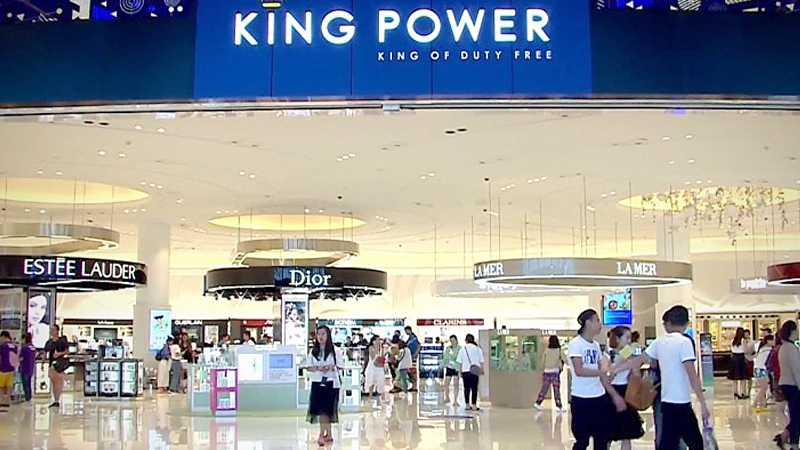
AOT panel gives nod for King Power’s Don Mueang duty-free bid

#ศาสตร์เกษตรดินปุ๋ย : ขอบคุณแหล่งข้อมูล : หนังสือพิมพ์ The Nation

https://www.nationthailand.com/business/30379598?utm_source=category&utm_medium=internal_referral

AOT panel gives nod for King Power’s Don Mueang duty-free bid

Dec 19. 2019
By THE NATION

861 Viewed

The revenue committee of Airports of Thailand on Wednesday (December 18) approved the bid of King Power group for the duty-free concession at Don Mueang International Airport, an AOT senior official said.

AOT president Nitinai Sirismatthakarn said the committee will present the result to the AOT board on December 23.

The detail of the company’s proposal cannot be disclosed, pending the board’s approval of the proposal, he added.

King Power is the lone bidder for this concession, which will be valid from October 1, 2022 to March 31, 2033.

In a related matter, the AOT board has resolved to open anew the bidding for a concession to run a duty free pick-up counter service at Don Mueang International Airport, as King Power Development is the only company to have picked up the tender document.

WeWork clinches $1.75 billion in financing with Goldman’s backing

#ศาสตร์เกษตรดินปุ๋ย : ขอบคุณแหล่งข้อมูล : หนังสือพิมพ์ The Nation

https://www.nationthailand.com/business/30379571?utm_source=category&utm_medium=internal_referral

WeWork clinches $1.75 billion in financing with Goldman’s backing

Dec 18. 2019
Photo Credit: WeWork

Photo Credit: WeWork
By Syndication Washington Post, Bloomberg · Sridhar Natarajan, Gillian Tan 

382 Viewed

WeWork has obtained $1.75 billion in new financing in a fundraising push led by Goldman Sachs Group Inc., under terms that free up a mountain of cash for the struggling office-sharing company.

The new line of credit is the first hurdle cleared by SoftBank in its pledge to put together $5 billion in debt financing for WeWork as part of a bailout package. The move should free up roughly $800 million in cash that WeWork had set aside to satisfy covenants on its previous credit line, according to two people with knowledge of the matter.

“We are pleased that WeWork and SoftBank Group Corp. have entered into a commitment letter with Goldman Sachs,” Erin Clark, a spokeswoman for WeWork, said in an emailed statement. WeWork won’t be required to post any cash collateral under the new deal, she said. “WeWork and Softbank are co-obligors on a senior-secured and unsecured basis, respectively.”

WeWork will be able to access the facility starting next month, Clark said. While Goldman has committed to providing capital, it’s still in the process of farming out portions of the loan to other investors.

The new credit line will replace existing facilities that total about $1.1 billion. WeWork had about $575 million in restricted cash, mostly tied to the letters of credit, at the end of June, according to a regulatory filing. Since then, the cash set aside has increased, one of the people said.

Bonds that WeWork issued last year to help fund its expansion have climbed more than 10 cents this month to 81.75 cents on the dollar, according to Trace pricing data.

Defaults in one of China’s richest provinces spook investors

#ศาสตร์เกษตรดินปุ๋ย : ขอบคุณแหล่งข้อมูล : หนังสือพิมพ์ The Nation

https://www.nationthailand.com/business/30379570?utm_source=category&utm_medium=internal_referral

Defaults in one of China’s richest provinces spook investors

Dec 18. 2019
File Photo of Shandong /Credit: China Daily

File Photo of Shandong /Credit: China Daily
By Syndication Washington Post, Bloomberg · Bloomberg News 

475 Viewed

Six privately owned companies in one of China’s wealthiest provinces have defaulted on their debt or come perilously close in the past three months. With 68.1 billion yuan ($9.7 billion) in outstanding debt among those six companies alone, the distress in Shandong has rattled even seasoned investors.

The problem isn’t the defaults themselves – other provinces have seen more and worse. It’s the practice common among Shandong companies of guaranteeing one anothers’ debts. Firms don’t have to make public these liabilities, leaving investors to wonder who’s on the hook and for how much. With the once-strong industrial economy flagging, the murky ties between the province’s private companies threaten to drag them all down together.

This is one of many challenges bond investors must grapple with in China now, after defaults onshore climbed from zero just a few years ago to 130.7 billion yuan ($18.7 billion) in 2019. In Shandong and elsewhere, it’s still unclear how the government will intervene. Policy makers have been increasingly willing to let weak companies fail, but they’re also under pressure to keep the economy growing and the markets stable.

As of now, Shandong’s city and local governments have stepped in with piecemeal relief. It’s uncertain whether the provincial government will do the same. As a result, the province’s firms risk entering a vicious cycle that “spreads solvency risks to the entire region, swamping the good credits along with the bad,” according to an October report from S&P Global Ratings.

The default rate for bonds issued by non-state companies across China increased to a record 4.5% in the first 10 months of 2019, Fitch Ratings said in a Dec. 3 report, adding that the figure might understate the true level of defaults given that some borrowers settle with bondholders privately rather than through clearing houses. The rate for state-owned companies was 0.2% thanks to financial support from the government and better access to funding from banks, Fitch said.

In Shandong, fears of contagion show up in unusual ways. In late October, bad news about a corn and steel conglomerate in the province dragged down the bonds from at least two seemingly unrelated provincial neighbors. Aluminum producer China Hongqiao Group and food distributor Shandong Sanxing Group had been known to back other companies’ debt, and investor concerns that they’d be responsible dragged their bonds to record lows.

Hongqiao tried to reassure its creditors, saying it doesn’t have a business relationship with the group and didn’t plan to offer any financial support. The three main international rating companies haven’t changed their assessments on the borrower since then, but investors remained unconvinced. The yield of one of its dollar bond hit 14% last week, a new high.

“Shandong’s privately-owned enterprise default rate isn’t particularly high compared to the national one,” said Jenny Huang, Director of China Corporate Research at Fitch Ratings. “But recently, the risks have exploded.”

Shandong is one of China’s oldest economic centers, built first on trade, then agriculture, mining and oil drilling. Not long ago, the economy was still booming, credit was cheap and private firms were on a spending spree, restrained only by limited access to capital. In communist-run China, state-owned banks tend to favor state-owned companies for loans.

So city governments encouraged the private sector to support itself. Cross-guarantees were one solution. They also concentrated the financial risks, says S&P analyst Cindy Huang.

“Cross-guarantees tend to be clustered around certain cities and regions rather than across the province,” she said. “They’re often between private, unlisted companies from either the same city, same sector or where CEOs know one another.”

It’s not clear how common cross-guarantees are in the rest of China, an information gap that heightens investors’ anxiety. There was one analyst who tracked them at Citic Securities, and he left the field earlier this year. His last survey, in 2018, suggested that cross-guarantees had made Shandong firms more vulnerable than anywhere else in the country.

In the last year, Shandong’s economy has slowed dramatically. Demand for industrial products is down overall; in the province, industrial profits fell 15.5% through October relative to a year earlier. It’s still China’s third-richest province, but through the first nine months of 2019, it grew by 5.4%, one of the slowest in China.

Every week now seems to bring news of a new default or firm under stress. Two companies, Shandong Yuhuang Chemical and Xiwang Group, have defaulted on 4 billion yuan ($572 million) of domestic notes since October. Investors are watching whether luxury clothing giant Shandong Ruyi Technology Group will repay a $344 million bond on Thursday. Moody’s Investors Service downgraded the firm last week on heightened refinancing risks.

Some of Shandong’s firms may find some reprieve from local and city governments. State-owned Jining City Construction, for example, came to the rescue of Ruyi in October. It agreed to become the company’s second-largest shareholder and provide a guarantee for some of its debt. Even still, S&P downgraded and later withdrew Ruyi’s rating at the company’s request sending notes to record lows.

Chinese authorities have reasons to save jobs and preserve social stability, but it’s unlikely they’ll bail out every struggling firm and not always clear how relief will be allocated. The political will to rescue China’s private companies has been waning since Beijing allowed the first defaults in 2014.

That puts growing pressure on businesses and their bondholders to work out solutions by themselves. “The next step is to see if local companies can successfully refinance,” said Ivan Chung, head of greater China credit research and analysis at Moody’s. He echoed mounting calls for companies to provide more and better information to their investors. “In the long run, companies must become more transparent and improve corporate governance to restore the confidence of financial institutions.”

KBank gears up for risks and challenges next year

#ศาสตร์เกษตรดินปุ๋ย : ขอบคุณแหล่งข้อมูล : หนังสือพิมพ์ The Nation

https://www.nationthailand.com/business/30379553?utm_source=category&utm_medium=internal_referral

KBank gears up for risks and challenges next year

Dec 18. 2019
Kattiya Indaravijaya

Kattiya Indaravijaya
By THE NATION

817 Viewed

Kasikornbank (KBank) will face the challenge of deceleration in the growth of the global and local economies next year, resulting from the prolonged US-China trade war, said president Kattiya Indaravijaya on Tuesday (December 17).

Some countries have already entered into a recession, she said, adding that the bank had estimated all the risks and challenges to come.

Another lies in head-hunting for top-notch local and foreign IT experts, especially data scientists and programmers, to enhance its digital banking services.

The bank, she said, has continued to seek out these IT geeks. “We visit leading international universities overseas every year to recruit crop of the cream IT students to work for the bank”.

She added that the bank expected loan growth of between 4 per cent and 6 per cent next year with the ratio of non-performing loans (NPL) in the range of 3.6 per cent and 4 per cent.

Indonesia’s Medco Energi produces first oil from field in Thailand

#ศาสตร์เกษตรดินปุ๋ย : ขอบคุณแหล่งข้อมูล : หนังสือพิมพ์ The Nation

https://www.nationthailand.com/business/30379542?utm_source=category&utm_medium=internal_referral

Indonesia’s Medco Energi produces first oil from field in Thailand

Dec 17. 2019
Bualuang oil field operated by Medco Energi Internasional in Thailand. (Handout/Medco Energi Internasional)

Bualuang oil field operated by Medco Energi Internasional in Thailand. (Handout/Medco Energi Internasional)
By Norman Harsono
The Jakarta Post

1,374 Viewed

Indonesian oil company Medco Energi Internasional is producing an initial 12,900 barrels of oil per day (bopd) from its offshore Bualuang oil field in Thailand.

The company, publicly listed on the Indonesia Stock Exchange as MEDC, said in a statement on Tuesday that production was expected to ramp up to 14,000 bopd once the company finished drilling wells by mid-2020. Medco did not reveal the targeted customer for its oil.

Medco took over Bualuang after acquiring the field’s previous owner, London-based Ophir Energy, for 408.8 million pounds (US$543.1 million) in May. The Indonesian company had planned to drill three wells, install new infrastructure and produce oil from Bualuang by this year’s fourth quarter.

“The integration of Medco Energi with Ophir Energy is going well with potential collaboration worth US$50 million each year,” said Medco chief executive officer Roberto Lorato in the statement.

The acquisition was meant to strengthen Medco’s international portfolio but the company surprised observers in August when it announced plans to sell off high-risk and high-investment assets in, among other countries, Bangladesh, Vietnam and Guinea, but not Thailand.

Judge balks at making California Uber drivers employees

#ศาสตร์เกษตรดินปุ๋ย : ขอบคุณแหล่งข้อมูล : หนังสือพิมพ์ The Nation

https://www.nationthailand.com/business/30379527?utm_source=category&utm_medium=internal_referral

Judge balks at making California Uber drivers employees

Dec 17. 2019
A traveler uses a smartphone while waiting for ride. MUST CREDIT: Bloomberg photo by David Paul Morris

A traveler uses a smartphone while waiting for ride. MUST CREDIT: Bloomberg photo by David Paul Morris
By Syndication Washington Post, Bloomberg News · Joel Rosenblatt 

427 Viewed

Uber Technologies beat back an aggressive bid to force it to treat California drivers as employees, but a judge’s ruling may allow a long-running fight over pay and benefits to gain traction in 2020.

U.S. District Judge Edward Chen declined Monday to order Uber to instantly convert drivers in its home state from contractors to employees based on an argument that it’s cheating not just workers but also the public at large.

But the San Francisco judge also refused to throw out the case, an early test of a California law aimed at gig economy companies that’s set to take effect Jan. 1. In what may turn out to be a significant threat to Uber’s business model, Chen concluded that the case presents “a plausible claim that any misclassification by Uber is willful.” Uber declined to comment on the ruling.

AB 5, signed by California Governor Gavin Newsom in September, says workers can generally only be considered contractors if they perform duties outside the usual course of a company’s business. Legal experts say the law weakens Uber’s argument that its drivers are independent contractors, and even the company acknowledges the law creates a higher hurdle.

Shannon Liss-Riordan, the lawyer representing the drivers and a longtime Uber nemesis, argued that AB 5 was passed in order to stop Uber and the rest of the gig economy from misclassifying its workers. Liss-Riordan had no immediate comment on the ruling

Chen said it’s premature to order Uber to immediately reclassify its California drivers given that arbitration agreements they signed barring them from pursuing their grievances in court will likely diminish the number who would benefit, which the judge said is still “ill-defined.”

But he refused Uber’s request to dismiss the complaint, finding the driver who filed it “could form the basis” of a lawsuit based on the 2018 Dynamex decision by California’s highest court. The ruling applies a more straightforward test to determine which workers qualify for employee status and the attendant benefits.

Legal experts widely agree that test, especially as codified by AB 5, will make it much harder for Uber to continue to deny California drivers benefits including business expense reimbursements that would ordinarily be available to employees.

The case is Colopy v. Uber Technologies Inc., 19-cv-06462, U.S. District Court, Northern District of California (San Francisco).

Boeing will halt 737 MAX production in January as FAA reviews software fix

#ศาสตร์เกษตรดินปุ๋ย : ขอบคุณแหล่งข้อมูล : หนังสือพิมพ์ The Nation

https://www.nationthailand.com/business/30379526?utm_source=category&utm_medium=internal_referral

Boeing will halt 737 MAX production in January as FAA reviews software fix

Dec 17. 2019
File Photo: GettyImages

File Photo: GettyImages
By The Washington Post · Aaron Gregg

441 Viewed

Chicago-based aerospace manufacturer Boeing will halt production of its new 737 Max commercial jetliner in January, Boeing announced Monday.

There are no layoffs associated with the production cut, a person familiar with the decision said.

The production cut caps off a financially disastrous year for Boeing’s commercial airplanes division. The 737 Max, Boeing’s newest commercial jet, was grounded worldwide in March after a software problem played a role in two deadly crashes in Indonesia and Ethiopia. The company has been waiting for the Federal Aviation Administration to approve a software fix, but the approval timeline has been repeatedly pushed back.

“We believe this decision is least disruptive to maintaining long-term production system and supply chain health,” the company’s statement reads.

“This decision is driven by a number of factors, including the extension of certification into 2020, the uncertainty about the timing and conditions of return to service and global training approvals, and the importance of ensuring that we can prioritize the delivery of stored aircraft. We will continue to assess our progress towards return to service milestones and make determinations about resuming production and deliveries accordingly.”

The company’s announcement did not say how long the production halt would last. Although no furloughs of Boeing’s workers were announced, hundreds of companies supply parts for the Max and would be affected by the decision.

Some White House officials had hoped that there would be a bump in economic growth if Boeing was able to quickly solve its problems. Boeing’s stock dropped $14.67 to $327 by the end of trading Monday, following reports that the company was expected to suspend production of the Max. Shares of Boeing Co. stock are down 10% over the past three months.

Commerce Secretary Wilbur Ross in August told CNBC that “problems” with the 737 Max had been big enough to shave 0.4% off the entire U.S. gross domestic product for a period this year. He said he expected an uptick when the problems were fixed, but it’s unclear what the impact might be if production is completely halted.

The Boeing planes have been grounded worldwide since the March 10 crash of an Ethiopian Airlines flight. It was the second crash involving a 737 Max in less than five months. In all, 346 people died in the tragedies.

Last week, a former senior manager at Boeing said he repeatedly warned company executives about production issues at the Renton, Washington, factory where the jets were being built, but his recommendations to shut down production were rebuffed.

“The factory did not have enough skilled employees, specifically mechanics, electricians and technicians to keep up with the backlog of work,” said Edward Pierson, in remarks prepared for a hearing Wednesday before the House Transportation Committee. “I witnessed numerous instances where manufacturing employees failed to communicate effectively between shifts, often leaving crews to wonder what work was properly completed.”

In October, a group of international and American aviation safety experts identified broad failures in the design and oversight of the jet’s production, including that government regulators had “inadequate awareness” of an automated system that contributed to two deadly crashes. The report by the Joint Authorities Technical Review panel said communication breakdowns, bureaucracy and staffing disparities meant that key government safety personnel did not know enough about the power of the automated feature until after tragedy struck.

Both Boeing and the FAA had deemed the now-grounded planes safe as part of a years-long certification process.