Huawei wins Telefonica deal to help build German 5G network

#ศาสตร์เกษตรดินปุ๋ย : ขอบคุณแหล่งข้อมูล : หนังสือพิมพ์ The Nation

https://www.nationthailand.com/business/30379323?utm_source=category&utm_medium=internal_referral

Huawei wins Telefonica deal to help build German 5G network

Dec 12. 2019
The Huawei logo at the IFA consumer electronics show in Berlin on Sept. 5, 2019. MUST CREDIT: Bloomberg photo by Krisztian Bocsi.

The Huawei logo at the IFA consumer electronics show in Berlin on Sept. 5, 2019. MUST CREDIT: Bloomberg photo by Krisztian Bocsi.
By Syndication Washington Post,  Bloomberg · Stefan Nicola

788 Viewed

China’s Huawei Technologies Co. just got a seal of approval from one of Germany’s biggest telecom companies.

Telefonica’s German unit, which operates the country’s second-largest wireless network, picked Huawei and Finland’s Nokia to take an equal role supplying its fifth-generation mobile phone network upgrade, the company said in a statement Wednesday. The deal is subject to the firms getting certified by German authorities, it said.

The announcement is a boon to Huawei after Deutsche Telekom AG said last week it has stopped ordering new 5G equipment because of political uncertainty over Chinese suppliers. Huawei has repeatedly denied allegations its equipment could be used for espionage.

There’s one caveat, though. The German government is currently drawing up security guidelines for the country’s 5G network expansion, in a move that’s expected to require certification of equipment, including antennas.

Hawks in the intelligence community would like to tighten the rules in a way that would block Huawei. Chancellor Angela Merkel has said in the past she doesn’t want to bar the Chinese firm as long as it abides by certain security standards. It isn’t yet clear what requirements will ultimately be put in place, so it may be too early for Huawei to declare victory in Germany.

The deal with both firms to supply the less-sensitive radio access network “will be subject to the successful safety certification of the technology and the companies,” Telefonica Deutschland Holding said in the statement. The company “is taking into account the ongoing political process of establishing these security guidelines without delaying the start of the 5G expansion.”

Telefonica Deutschland hasn’t yet selected a supplier to upgrade the more-sensitive core network — the ‘brain’ that houses control functions — and won’t do so until next year, Chief Executive Officer Markus Haas said on a call with reporters.

The company’s shares fell 2.1% at 11:24 a.m. in Frankfurt. Its strategy update, presented to investors in London this morning, indicated it would cut its 2019 dividend to 17 euro cents a share from 27 euro cents.

Telefonica Deutschland is targeting sales growth of at least 5% through 2022 and is seeking to improve its profit margin during that period. The company is confident it can win more customers in rural areas and add fixed-line clients as well as corporate customers that install 5G in their factories, Haas said on the call.

Saudi oil giant Aramco starts trading shares a week after historic IPO

#ศาสตร์เกษตรดินปุ๋ย : ขอบคุณแหล่งข้อมูล : หนังสือพิมพ์ The Nation

https://www.nationthailand.com/business/30379322?utm_source=category&utm_medium=internal_referral

Saudi oil giant Aramco starts trading shares a week after historic IPO

Dec 11. 2019
Employees monitor trading prices for Saudi Aramco stocks in the investment branch of the Arab National Bank in Riyadh, Saudi Arabia, on Dec. 11, 2019. MUST CREDIT: Bloomberg photo by Faisal Al Nasser.

Employees monitor trading prices for Saudi Aramco stocks in the investment branch of the Arab National Bank in Riyadh, Saudi Arabia, on Dec. 11, 2019. MUST CREDIT: Bloomberg photo by Faisal Al Nasser.
By The Washington Post · Sarah Dadouch 

658 Viewed

The Saudi Arabian Oil Company, the most profitable commercial enterprise in the world, started trading shares on Wednesday, a week after its long-awaited listing on the Saudi Arabian stock exchange broke the record as the largest initial public offering (IPO) in history.


The company, known as Aramco and frequently dubbed the “crown jewel” of Saudi Arabia, was partially privatized as part of a campaign by Saudi Crown Prince Mohammed bin Salman to wean the kingdom off its dependence on oil.

Since becoming the heir to the crown in 2017, Mohammed has emphasized the importance of economic diversification in the conservative kingdom. Global fears regarding climate change and worries about the use of fossil fuels has played a part in Saudi Arabia selling a stake in Aramco, which was the world’s most profitable company last year, followed by Apple and Industrial & Commercial Bank of China.

Last week’s IPO stood at $1.7 trillion, making Aramco the most valuable listed company in the world, but fell short of the $2 trillion valuation aimed for by Mohammed. The company floated 1.5 percent of its stake on the Riyadh stock exchange, or Tadawul.

Initially priced at 32 riyals ($8.53), shares rose the maximum 10 percent to 35.2 riyals on Wednesday, giving Aramco a market value of around $1.88 trillion, Reuters reported, surpassing Apple who made history when it became the first $1 trillion publicly traded company.

More than 80 percent of the stake sale was bought by Saudi buyers, Reuters reported, following lukewarm interest from international investors. Saudi Arabia was shunned by some financial institutions for a brief period of time following the brutal murder of Washington Post columnist Jamal Khashoggi, who was killed in the Saudi consulate in Istanbul as a result of his criticism of Mohammed.

King Power lone bidder for duty-free concession at Don Mueang International Airport

#ศาสตร์เกษตรดินปุ๋ย : ขอบคุณแหล่งข้อมูล : หนังสือพิมพ์ The Nation

https://www.nationthailand.com/business/30379311?utm_source=category&utm_medium=internal_referral

King Power lone bidder for duty-free concession at Don Mueang International Airport

Dec 11. 2019
By THE NATION

1,245 Viewed

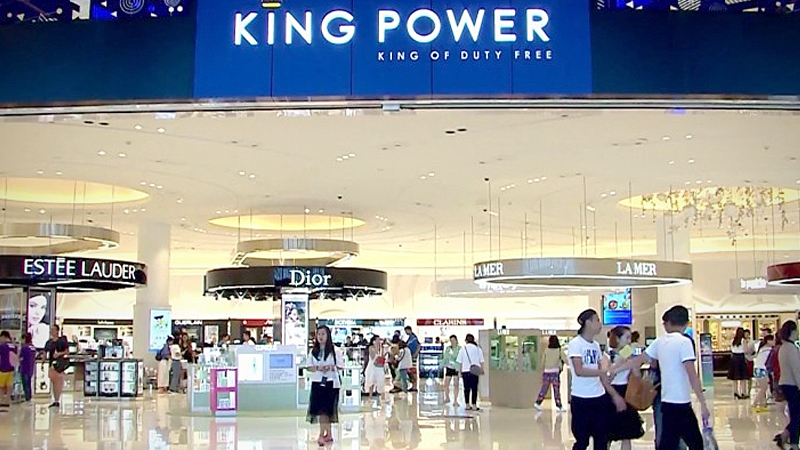
King Power Duty Free of King Power Group was the only company submitting a bidding price for duty-free concession at Don Mueang International Airport, a senior official of Airports of Thailand said today (December 11).

Wichai Bunyu, AOT senior executive vice president/Business Development and Marketing, said today that only King Power had submitted a price since the bid was called.

The Mall Group, which had picked up the term of reference earlier, did not participate.

AOT asked King Power to present details of the bid on December 13 and will open its bid letter on December 16. The bid winner is obliged to guarantee a minimum revenue sharing of 20 per cent of total revenue with AOT.

In a related matter, AOT is selling term of reference document for the bids to operate duty free pick-up counter service at Don Mueang Airport and Suvarnabhumi Airport under concessions

King Power group and Bangkok Airways Public Company Limited have picked up the document.

AOT will stop selling the TOR on December 13, after which bidders must submit their bidding prices on January 17 next year.

Krungsri Bank’s new chief strategy officer named

#ศาสตร์เกษตรดินปุ๋ย : ขอบคุณแหล่งข้อมูล : หนังสือพิมพ์ The Nation

https://www.nationthailand.com/business/30379295?utm_source=category&utm_medium=internal_referral

Krungsri Bank’s new chief strategy officer named

Dec 11. 2019
 Pairote Cheunkrut

Pairote Cheunkrut
By THE NATION

1,159 Viewed

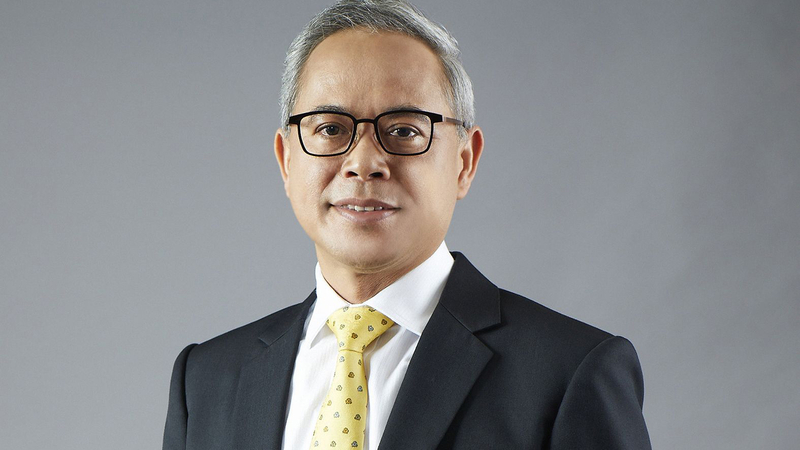
Krungsri (Bank of Ayudhya), a member of Mitsubishi UFJ Financial Group (MUFG), has appointed Pairote Cheunkrut as Chief Strategy Officer, effective January 1.

He will hold management responsibility for the bank’s business strategic direction and support across nine divisions under Krungsri’s Corporate Strategy and Planning Group, namely Corporate Planning, Business Transformation, Customer Experience Management, Corporate Branding and Marketing, Finance and Risk Project Management, Business Process Planning and Management, Research, Central Administration, and Environmental, Social and Governance.

“Khun Pairote has solid management experience and deep technical strength that will surely contribute to the bank’s strategy in advancing to the next level,” said Seiichiro Akita, Krungsri president and CEO.

“His accomplishments at Krungsri Auto have helped Krungsri’s ‘Think Digital First’ and financial inclusion strategies come to fruition, while driving the Bank towards its ambition to be a top-tier financial group in Thailand.”

Prior to this appointment, Pairote was Head of Krungsri Auto Group. He brings with him 24 years of experience in consumer finance and management at Krungsri Auto, GE Capital Auto Lease and GE Money Thailand.

KBank turns cautious in lending to SMEs amid rising bad loans

#ศาสตร์เกษตรดินปุ๋ย : ขอบคุณแหล่งข้อมูล : หนังสือพิมพ์ The Nation

https://www.nationthailand.com/business/30379272?utm_source=category&utm_medium=internal_referral

KBank turns cautious in lending to SMEs amid rising bad loans

Dec 11. 2019
 Wirawat Panthawangkun, Kbank's senior executive vice president  was concerned that NPL level of SMEs might rise from the current 5 per cent to 6 per cent of its portfolio.

Wirawat Panthawangkun, Kbank’s senior executive vice president was concerned that NPL level of SMEs might rise from the current 5 per cent to 6 per cent of its portfolio.
By The Nation

1,138 Viewed

Kasikornbank is taking a cautious approach on loans to small and medium-sized enterprises in fear of rising bad debts, said senior executive vice president Wirawat Panthawangkun.

The bank’s credit growth to SMEs is forecast at a mere 1 per cent this year, compared to the year’s target of 2-4 per cent, resulting from a slowdown of the global economy, the US-China trade war and strengthening of the baht. The negative factors led to drops in sales and revenues in the first nine months of this year.

In the first three quarters, credit to SMEs grew 0.4 per cent year on year, with Bt664 billion in outstanding non-performing loans (NPL).

Wirawat was concerned that NPL level of SMEs might rise from the current 5 per cent to 6 per cent of its portfolio. SMEs in the agriculture and export businesses have been adversely affected by the economic deceleration and fast appreciation of the Thai currency.

To reduce exposure to bad loans, the bank has been careful in granting new loans, particularly for working capital and new investments to SMES, he said

“We have not seen an improvement in NPLs for a long time. They are still rising and might climb from 5 per cent to 6 per cent by the end of this year,” he said.

Other banks did not lend much to SMEs, he said, adding that Kasikornbank will also be careful in lending to new SME clients.

Growth in SME credit next year is expected to be flat, or about 1 to 2 per cent, due to weak consumers’ spending especially among farmers who have been hit by falling prices of farm products, drought and the strong baht, he said.

Next year, The bank will look into SMEs operating online trade and will apply big data to evaluate their business outlook and loan prospect.

Online trade is still growing and expected to continue expanding by over 10 per cent a year, he said.

The bank will also monitor companies involved in construction as they may benefit from the government’s infrastructure investments, Wirawat added.

AOT share price under pressure on risk of revenue-sharing scheme.

#ศาสตร์เกษตรดินปุ๋ย : ขอบคุณแหล่งข้อมูล : หนังสือพิมพ์ The Nation

https://www.nationthailand.com/business/30379266?utm_source=category&utm_medium=internal_referral

AOT share price under pressure on risk of revenue-sharing scheme.

Dec 10. 2019
By The Nation

2,581 Viewed

The proposal by government that could force Airports of Thailand (AOT) to share its departing passenger fee with the Department of Airports caused AOT’s stock price to drop to Bt72.5 yesterday (December 9), the lowest in the last two months, before closing at Bt73, 2.99 per cent down from the previous day.

This year, the share price of AOT rose from Bt64.25 to a peak of Bt81.75.

Capital Nomura Securities views that the risk of such a policy being introduced would have a negative effect on AOT’s net profits and target prices next year, which could drop by 3-8 per cent and 3-6 per cent respectively.

Legal interpretation is pending at the government legal adviser, the State Council, will rule whether the AOT has to share part of its revenue with the Department of Airports as a contribution to the Department’s revolving fund.

However, if the government uses the Airports’ revolving fund efficiently, then the Thai airline industry will enjoy higher competitiveness, said Capital Nomura.

The results of the legal interpretation will have an impact on net profits and the target price of AOT shares.

If the government orders AOT to share 5 per cent of its revenues with the Department of Airports’ revolving fund, then it could send net profits and target price down by 3-4 per cent and 3 per cent respectively.

If the government forces the AOT to share 10 per cent of its revenue with the Department, it would cause net profits to go down by 6-8 per cent and lower the price of AOT shares by 6 per cent.

AOT’s total revenue in 2018/2019 was Bt64.5 billion, up 3.91 per cent from the previous year, but net profits dropped by 0.51per cent to Bt25.1 billion.

According to Investment Analysts Association (IAA ) consensus of 17 brokerage firms, analysts expected that AOT’s earning per share would be Bt2.04, a 14.9-per-cent rise next year, the average share price would be Bt83 based on 42 times price-to-earnings ratio (P/E) and the dividend is estimated to be 1.3 per cent.

Tesco considers sale of its operation in Thailand and Malaysia

#ศาสตร์เกษตรดินปุ๋ย : ขอบคุณแหล่งข้อมูล : หนังสือพิมพ์ The Nation

https://www.nationthailand.com/business/30379259?utm_source=category&utm_medium=internal_referral

Tesco considers sale of its operation in Thailand and Malaysia

Dec 10. 2019
By The Nation189 Viewed

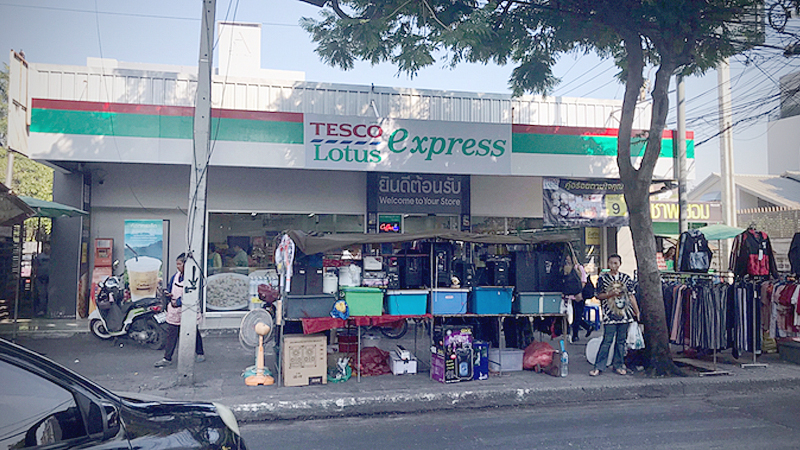
Tesco this week confirmed that, following inbound interest, it has commenced a review of the strategic options for its businesses in Thailand and Malaysia, including an evaluation of a possible sale of these businesses

The evaluation of strategic options is at an early stage, no decisions concerning the future of Tesco Thailand or Malaysia have been taken, and there can be no assurance that any transaction will be concluded. A further announcement will be made if and when appropriate, the statement read.

True Digital Group sets up subsidiary in Indonesia

#ศาสตร์เกษตรดินปุ๋ย : ขอบคุณแหล่งข้อมูล : หนังสือพิมพ์ The Nation

https://www.nationthailand.com/business/30379250?utm_source=category&utm_medium=internal_referral

True Digital Group sets up subsidiary in Indonesia

Dec 09. 2019
By THE NATION

1,070 Viewed

True Corporation’s wholly owned subsidiary True Digital Group (TDG) has established a new, wholly owned subsidiary, PT True Digital Indonesia in the Asean country.

The company will operate a Web portal and/or digital platform for commercial purposes, according to its filing to the Stock Exchange of Thailand on Monday (December 9).

The firm has invested 24.99 billion rupiah, or approximately Bt57.18 million (calculated according to the Bank of Thailand’s exchange rate on December 6). The source of funds is from TDG’s working capital.

Pet-food boom drives crop giant ADM’s push in $91 billion market

#ศาสตร์เกษตรดินปุ๋ย : ขอบคุณแหล่งข้อมูล : หนังสือพิมพ์ The Nation

https://www.nationthailand.com/business/30379216?utm_source=category&utm_medium=internal_referral

Pet-food boom drives crop giant ADM’s push in $91 billion market

Dec 09. 2019
Pet dogs stand in a shopping cart inside a Lowe's Cos. Home Improvement Warehouse store in Burbank, Calif., on May 19, 2017. MUST CREDIT: Bloomberg photo by Patrick T. Fallon.

Pet dogs stand in a shopping cart inside a Lowe’s Cos. Home Improvement Warehouse store in Burbank, Calif., on May 19, 2017. MUST CREDIT: Bloomberg photo by Patrick T. Fallon.
By Syndication Washington Post, Bloomberg · Isis Almeida

1,045 Viewed

At Archer-Daniels-Midland Co.’s new animal-nutrition lab in Decatur, Illinois, food scientists aren’t coming up with the next generation of rations for the world’s pigs, cows or chickens. They’re making dog cookies.

Just-baked bone-shaped treats containing ancient grains including quinoa, buckwheat and chia sit on a lab counter that looks more like a large kitchen island. The smell is so good they could be mistaken for real cookies. And that’s the objective, as animal lovers across America increasingly project their personal tastes on their cats and dogs.

Dog treats may seem like a strange bet for one of the world’s largest traders of crops such as corn, wheat and soybeans. But the $91 billion pet-food market is growing so rapidly it will be almost as big as the chocolate confectionery market by 2024, according to data from Euromonitor International Ltd.

“What we are seeing is a trend toward humanization of pets, so pet food solutions and labels are starting to mirror more and more what the pet owners are thinking and eating,” Ian Pinner, vice president of growth and strategy at ADM, said in an interview. “Think about gluten-free pet food. It’s a very small category, but it’s a category that’s growing very quickly at the moment.”

The newly-opened research center is part of ADM’s push to transform itself into an ingredients and animal-nutrition business, a drive largely responsible for billions in acquisitions in recent years. This year’s $1.8 billion buyout of Neovia, ADM’s second-biggest deal ever, expanded the pet-food business from just supplying ingredients, premixes and treats to manufacturing and owning consumer brands.

ADM is already seeing strong results. In the third quarter, the nutrition unit — which also contains Wild Flavors, a maker of flavors, colors and food ingredients — accounted for 17% of earnings before interest, taxes, and amortization, up from 9.5% a year earlier.

Dogs and cats have become so popular that American households now have more pets than children. As a result, the pet-food market is expected to have grown at an average annual rate of 5.5% to $91 billion in the 10 years through 2019, according to Euromonitor data. By 2024, the researcher found, pet food sales may hit $115 billion, just $1.1 billion less than the chocolate market.

Pet food usually contains a blend of meat and grains, including corn, wheat, rice and soy products. But just like in human food, the gluten-free craze is spreading with pet owners increasingly seeking grain-free options. Many brands and treats have replaced traditional recipes with ingredients that include pea protein, sweet potatoes and even tapioca starch.

“As we humanize pets, there are more and more ingredients being introduced,” Ryan Lane, president of ADM’s North American animal-nutrition business, said in an interview in Decatur. There’s now a value proposition with things like food without wheat, or corn or soy, he said.

“That has been the biggest change over the last five years,” Lane said. “And our specialty ingredients business can supply those.”

As consumers become more demanding, so do ADM’s customers.

The 117-year-old agriculture giant is working harder to cater to customer needs as it develops new products. To prototype treats for clients, for instance, ADM’s lab has a 3-D printer that can make “on the spot concepts and designs for what might be a new dog treat,” Pinner said. The research center is also focusing on aquaculture, another growing area for ADM, and should have salmon and shrimp tanks in operation by 2021.

Just like for humans, taste is crucial. The pet treats ADM develops are tested in partnership with the University of Illinois. Dogs will get two bowls of dog food and scientists will note their preferences. Studies also take into account if a dog has a right or left paw preference, meaning they have a tendency to turn one way or the other when deciding which bowl to focus on. And surprisingly, taste is also important for fish.

“Salmons are carnivores and they will spit it right out if it doesn’t taste right,” Lane said.

Overall, Americans last year spent around $72.6 billion on everything from pet food to veterinary care, a figure that’s expected to rise by 3.9% this year, the American Pet Products Association estimates.

“If you think about labels, wanting to be more nutritious and less processed, healthier and more traceable, I think those are trends you’ll see coming through companion animals as well,” ADM’s Pinner said.

The death of the English High Street hits women workers hardest

#ศาสตร์เกษตรดินปุ๋ย : ขอบคุณแหล่งข้อมูล : หนังสือพิมพ์ The Nation

https://www.nationthailand.com/business/30379208?utm_source=category&utm_medium=internal_referral

The death of the English High Street hits women workers hardest

Dec 08. 2019
Pedestrians walk along the high street with a view towards Canterbury Cathedral in Canterbury, England, on Feb. 22, 2018. MUST CREDIT: Bloomberg photo by Luke MacGregor.

Pedestrians walk along the high street with a view towards Canterbury Cathedral in Canterbury, England, on Feb. 22, 2018. MUST CREDIT: Bloomberg photo by Luke MacGregor.
By Syndication Washington Post, Bloomberg · Lucy Meakin

1,643 Viewed

When the northern city of Leeds began setting up its retail skills training center, manager Dianne Wainwright knew that one of her biggest problems was simply getting people in the door.

She knew there was an audience, but she had to find a way to fit into the schedule of workers — often women — trying to juggle family life and caring commitments around long hours on the shop floor.

Getting workers up to speed on everything from digital skills and visual merchandising to functional math is becoming more pressing as major chains such House of Fraser, Mothercare and ToysRUs shutter stores and shift online. The employees being left behind are predominantly female, often facing high barriers to securing new positions in a changing workplace, even when initiatives like Wainwright’s Ambition Leeds are stepping in.

It’s a particular problem for Britain, which really is a nation of shopkeepers. Retail is the largest private sector employer with 2.9 million people. Of the sales assistants and cashiers on the front line of stores, around seven in 10 are female, according to the Annual Population Survey.

But while you’re still likely to hear a female voice at the grocery store checkout, it’s increasingly likely to be a machine. Self-service checkouts and home delivery are now ubiquitous. J Sainsbury, the second largest supermarket chain, is even trialing an entirely till-free store in central London, meaning the kinds of jobs available are shifting away from the female dominated end to those more usually held by men.

“Work is gendered,” said Vivian Hunt, managing partner for the U.K. and Ireland at McKinsey. “The further you go back in the supply chain, in manufacturing and warehousing, there are fewer women but those jobs are a little slower to be automated. It’s the customer facing, customer service roles, it’s the call support centers, the back office jobs with low physicality. These roles are more vulnerable.”

The Office for National Statistics estimates that about two-thirds of cashier, sales and retail assistant jobs are at high risk of being replaced by technology. Of the 108,000 job losses in sales and customer service occupations between 2011 and 2018, almost three quarters were women, according to analysis by the Royal Society for the Encouragement of Arts, Manufactures and Commerce.

At department store Debenhams, many workers face an uncertain future. It may close as many as 22 locations next year as part of an agreement with creditors to save the company.

Ex-retail workers are staying unemployed for longer. About 40% have been unemployed for six months or more, the second-highest of all sectors and a stark turnaround from before the global financial crisis, when they had among the shortest periods of unemployment, according to the Resolution Foundation.

Overall, 70% of roles at high risk of automation are currently held by women, according to the ONS. McKinsey estimates that one-in-four working women will need to substantially re-skill — and probably more in retail.

Many of the industry’s new jobs, Wainwright says, aren’t on the shop floor. They’re more like social media specialists, visual merchandisers, data analysts and multimedia designers. Even those in more traditional customer service roles face new challenges, from event planning to drive store footfall to the IT skills needed to handle online order collections.

For bosses, a tight labor market and lack of qualified candidates means redeploying existing workers is increasingly attractive. Employment is near record highs and the jobless rate is below 4%. McKinsey estimates the cost of retraining an employee is around 10% of their annual salary, while replacing them can cost as much as 30%.

Retraining isn’t always that simple, though. Despite huge changes in attitude over the past century, women in still spend an average 23 hours per week caring for family members, more than double the time spent by men. As a result they may not be able to commit additional — and usually unpaid — time to learning outside working hours.

Mobility is also an issue for women who are likely to earn less than their partner. Wider caring responsibilities may also mean they need to remain close to elder family members, or near to childcare for their own kids.

For Wainwright and the team at Ambition, the answer was to fit around the lives of those it hopes to reach. That means opening early, for pre-work sessions, and late, with at a location right in the center of the retail district.

“When we’re running a breakfast session, people know that they can leave here and be at work literally within five minutes,” Wainwright said. “The money could be invested in retraining them. It makes far more sense than getting rid of people.”