Paris billionaires’ rivalry fuels pursuit of Tiffany, Moncler

#ศาสตร์เกษตรดินปุ๋ย : ขอบคุณแหล่งข้อมูล : หนังสือพิมพ์ The Nation

https://www.nationthailand.com/business/30379205?utm_source=category&utm_medium=internal_referral

Paris billionaires’ rivalry fuels pursuit of Tiffany, Moncler

Dec 08. 2019
Jewerly, boxes and decorations sparkle in Tiffanys Holiday window display at the flagship store in New York on Nov. 17, 2019. MUST CREDIT: Bloomberg photo by Christopher Goodney.

Jewerly, boxes and decorations sparkle in Tiffanys Holiday window display at the flagship store in New York on Nov. 17, 2019. MUST CREDIT: Bloomberg photo by Christopher Goodney.
By Syndication Washington Post, Bloomberg · Eric Pfanner, Albertina Torsoli

1,421 Viewed

The first families of French luxury are at it again, firing up a race to gather the world’s brightest baubles and fanciest fashions under their rival houses.

Only days after the Arnaults’ LVMH snapped up jeweler Tiffany & Co. for $16.2 billion, word surfaced of a possible riposte from the Paris giant’s crosstown rival, the Pinaults’ Kering. The Gucci owner has held exploratory talks with Italian skiwear maker Moncler SpA about a potential acquisition, according to people with knowledge of the matter.

“We had expected the LVMH-Tiffany news to catalyze a round of industry consolidation — which Kering-Moncler would be a part of — but the race seems to have gotten underway even more swiftly than imagined,” said Swetha Ramachandran, investment manager of the GAM Global Luxury Brands Fund.

The rivalry, more than two decades in the making, has defined the modern luxury industry and shows no signs of ending. Since 2001, when Kering founder Francois Pinault beat out LVMH Chief Executive Officer Bernard Arnault for control of Gucci, the companies have increased their hold over the sector through dozens of deals.

Kering has announced at least $14.7 billion of acquisitions since 1995, according to data compiled by Bloomberg, compared with at least $45.5 billion for LVMH. Each family’s wealth has increased vastly as the companies integrated their purchases and rode a wave of demand in China.

As their dominance over the business has grown, the two families have broadened the playing fields on which they compete. The Pinaults and Arnaults have bought up neighboring vineyards in Burgundy, set up separate art museums in Paris and even one-upped each other with contributions to the rebuilding of Paris’s fire-ravaged Notre Dame Cathedral.

On one scorecard, Arnault has a clear lead. He’s the richest person in Europe with a $101.8 billion fortune, after adding $33 billion this year alone, according to the Bloomberg Billionaires Index. Pinault, whose son Francois-Henri now runs Kering, has a net worth of $38.7 billion, up $9 billion in 2019.

Sprawling structures like those of Kering and LVMH — which owns brands ranging from Louis Vuitton to Christian Dior to Dom Perignon — have gone out of style in other industries. But there’s no conglomerate discount for these giants.

Combining many different brands under one umbrella lets LVMH and Kering pool functions like purchasing and information systems, while feeding investment to those that need it most, as individual labels ride the ups and downs of consumers’ changing tastes.

With a market value of more than 200 billion euros, LVMH is one of the biggest companies in Europe. Its rival, which owns Saint Laurent, Boucheron jewelry and Brioni suits, trails at 68 billion euros, but Gucci has been the fastest-growing major luxury brand over the past few years.

As the bigger player, LVMH has led the way in turning new acquisitions into drivers of growth. While Arnault has had a few missteps, including purchases of Donna Karan and Marc Jacobs and unsuccessful runs at Hermes International and Gucci, deals for the likes of Bulgari jewelry, Givenchy and Christian Dior have paid off handsomely. LVMH has pushed newly acquired brands upmarket with a sharper focus on marketing and store presentation, boosting profits.

Kering’s offerings include Ulysse Nardin watches, fashion labels such as Alexander McQueen and Bottega Veneta, but it’s less diversified than LVMH. The company has become increasingly dependent on Gucci, which provided more than three-quarters of its operating profit in the first half of the year. That’s putting pressure on Kering to hedge against the risk that demand for the Italian brand’s new looks could fade. Hence the possible interest in Moncler, which has a market value of about $12 billion.

To secure the maker of puffy down jackets worn on the ski slopes of St. Moritz and at the World Economic Forum in Davos, the Pinaults will need the backing of another luxury billionaire. Moncler Chairman Remo Ruffini’s holding company owns a 22.5% stake in the company, valued at about $2.5 billion.

Moncler confirmed that it’s had contacts with Kering, saying there are no concrete proposals. A representative for the French company declined to comment.

So successful have the Pinaults and the Arnaults been that others elsewhere have sought to emulate the conglomerate approach, but so far their acquisitions have been limited to second-tier brands. Capri Holdings Ltd., the U.S. parent of Michael Kors, has added Italian label Versace and Jimmy Choo. Tapestry Inc. owns Coach, Kate Spade and Stuart Weitzman. China’s Shandong Ruyi has talked of turning itself into an Asian LVMH.

With many Italian luxury labels already acquired and others struggling, that means the global luxury business is increasingly controlled from Paris.

“Competition is the mother of invention,” Luca Solca, an analyst at Sanford C. Bernstein in Geneva, said. “The rivalry between LVMH and Kering – or between Arnault and Pinault, if you really want to personalize it – has brought the creation of two incredible companies that sit at the top of the modern luxury goods industry.”

CAAT ordered to monitor financial health of airlines

#ศาสตร์เกษตรดินปุ๋ย : ขอบคุณแหล่งข้อมูล : หนังสือพิมพ์ The Nation

https://www.nationthailand.com/business/30379187?utm_source=category&utm_medium=internal_referral

CAAT ordered to monitor financial health of airlines

Dec 07. 2019
Transport Minister Saksayam Chidchob

Transport Minister Saksayam Chidchob
By THE NATION

1,287 Viewed

Transport Minister Saksayam Chidchob has instructed the Civil Aviation Authority of Thailand (CAAT) to check on the financial status of all airlines operating in Thailand to see if they are in financial trouble.

He added that the CAAT should conduct the inspection immediately. If it finds any airlines financially unhealthy, it should increase its frequency of such inspections and order them to improve their financial status.

He said that the move is aimed at proactively preventing financial troubles from causing problems to passengers.

CAAT director general Chula Sukmanop said that it has found several carriers should be closely monitored in relation to their financial status.

If they fail to improve their situations in compliance with relevant rules, they risk having their licences revoked, he added.

PTT to hike LNG imports next year to meet needs of industrial sector

#ศาสตร์เกษตรดินปุ๋ย : ขอบคุณแหล่งข้อมูล : หนังสือพิมพ์ The Nation

https://www.nationthailand.com/business/30379146?utm_source=category&utm_medium=internal_referral

PTT to hike LNG imports next year to meet needs of industrial sector

Dec 07. 2019
By THE NATION

1,203 Viewed

PTT Plc will import 5.2 million tonnes of liquefied natural gas (LNG) next year, up from 5 million tonnes this year, the company’s senior executive vice president of its Gas Business Unit, Wuttikorn Stithit, said.

This is in line with the long-term contracts PTT has signed with four suppliers.

The company estimated that the total demand of LNG next year would be almost the same level as this year or a little bit higher.

The LNG demand from power plants is expected to remain the same this year at 4,800-5,000 million cubic feet per day, accounting for 60 per cent of the country’s total demand.

The demand by the industrial sector, which accounts for 20 per cent of total demand, is expected to increase from this year.

He expected the demand for industrial use will expand as PTT’s gas business has continued to expand its gas distribution network to tap more number of industrial customers.

PTT has also increased the number of partners to distribute its LNG on a retail basis. Therefore, he expected growth in LNG demand for industrial use next year.

PTT is expected to begin trial of LNG-related services in the first quarter next year as part of the government’s policy of turning Thailand into the regional LNG trading hub.

The activities include LNG reloading and LNG bunkering services.

MBS got his world-beating Aramco IPO. Now the hard work begins.

#ศาสตร์เกษตรดินปุ๋ย : ขอบคุณแหล่งข้อมูล : หนังสือพิมพ์ The Nation

https://www.nationthailand.com/business/30379156?utm_source=category&utm_medium=internal_referral

MBS got his world-beating Aramco IPO. Now the hard work begins.

Dec 06. 2019
By Syndication Washington Post, Bloomberg · Alaa Shahine, Matthew Martin883 Viewed

Saudi Aramco’s world-beating initial public offering is a watershed moment for a business that’s bankrolled the kingdom and its rulers for decades. The world’s largest public company will now trade in Riyadh and not New York.

Less clear is how far it will help overhaul the economy of the world’s biggest oil exporter.

First floated by Crown Prince Mohammed bin Salman in 2016 with an ambition to raise as much as $100 billion, the share sale was touted as part of a blueprint for life after oil. Saudi Arabia would raise funds off its biggest asset, and use them to develop new industries.

But after global investors balked at hopes to value the company at $2 trillion, the final deal was not quite what the prince had envisaged. Aramco offered just 1.5% of its shares and opted for a local listing, relying almost entirely on Saudi and regional investors.

And while proceeds of $25.6 billion exceed the 2014 IPO of Chinese internet giant Alibaba Group Holding, it’s unlikely to be a game-changer for the $780 billion economy.

“It’s difficult to see how this level of subscription can be repeated to raise the sort of revenue required by Vision 2030,” said Bill Farren-Price, a consultant at RS Energy Group. “And Saudi economic diversification will need a lot more of that.”

The sale is the first major disposal of state assets under a plan to empower the private sector and attract foreign direct investment, which has tumbled since oil prices crashed in 2014.

“It does provide ammunition to support investments as they move into the main construction phase, but by itself it’s not enough,” said Monica Malik, chief economist at Abu Dhabi Commercial Bank and a longtime Saudi watcher. “The quality of spending remains critical — how much will be spent domestically, how effectively it will be deployed.”

The proceeds will be transferred to the Public Investment Fund, which has made a number of bold investments, plowing $45 billion into SoftBank Group Corp.’s Vision Fund, taking a $3.5 billion stake in Uber Technologies Inc.

At home, the sovereign wealth fund is financing mega projects to develop tourist hubs along the Red Sea and elsewhere.

But the fund has also been criticized for elbowing out private businesses in smaller projects. Plans for a $500 billion futuristic city announced in 2017 have raised concerns that the prince may end up sinking more cash into vanity ventures.

Funds from the IPO “should be invested, in domestic projects, with a large local content, while avoiding white elephants,” according to Ziad Daoud, chief Middle East economist at Bloomberg Economics.

“The government’s recent spending pattern has failed to live up to these criteria. It has cut investment, increased current spending and shown a continued penchant for mega-projects,” he wrote last month.

Still, pulling off the deal can help the prince get his ambitious plan for the economy back on track after setbacks at home, including the backlash against his purge of the elite, and abroad by the outrage over the murder of columnist Jamal Khashoggi and the war in Yemen.

The kingdom’s richest families, some of whom had members detained in Riyadh’s Ritz-Carlton hotel during a so-called corruption crackdown in 2017, are expected to have made significant contributions.

The state-owned oil giant set the final price of its shares at 32 riyals ($8.53), valuing the world’s most profitable company at $1.7 trillion. It received total bids of $119 billion.

Aramco will become the world’s most valuable publicly traded company once it starts trading, overtaking Microsoft and Apple.

The deal opens up one of the world’s most secretive companies that, until this year, had never published financial statements or borrowed in international debt markets.

It will also mean the company now has shareholders other than the Saudi government for the first time since it was fully nationalized in 1980.

Saudi Arabia pulled out all the stops to ensure the IPO got done. It cut the tax rate for Aramco three times, promised the world’s largest dividend and offered bonus shares for retail investors who keep hold of the stock.

Goldman Sachs, acting as share stabilizing manager, has the right to exercise a so-called greenshoe option of 450 million shares. The purchase option can be executed in whole or in part at any time on or before 30 calendar days after the trading debut. It could raise the IPO proceeds to $29.4 billion.

Vietjet launches four new international routes

#ศาสตร์เกษตรดินปุ๋ย : ขอบคุณแหล่งข้อมูล : หนังสือพิมพ์ The Nation

https://www.nationthailand.com/business/30379142?utm_source=category&utm_medium=internal_referral

Vietjet launches four new international routes

Dec 06. 2019
By THE NATION

1,462 Viewed

To meet the rising travel demand in the year-end festive season, Vietjet will launch four more direct international services linking Vietnam’s Central Highlands City of Da lat and the hub of Vietnam’s southwest city Can Tho to Seoul, Can Tho to Taipei and Hanoi to Bali.

These new routes aim to expand the airline’s international flight network while offering more travel opportunities for people from the North to the South of Vietnam and creating more convenient connections for travellers to visit Vietnam’s famous destinations.

In celebration of the new routes, millions of promotional tickets priced only from zero dollar (excluding taxes and fees) are up for grabs during the three golden days from December 10 to 12, between the golden hours noon to 2pm (GMT+7).

The promotional tickets are applied to all Vietjet’s international routes between Vietnam and Japan, South Korea, Taiwan, Hong Kong, India, Indonesia, Thailand, Singapore, Malaysia, Myanmar and Cambodia as well as all routes operated by Thai Vietjet.

The promotional tickets for all flights between Vietnam and Japan can be snapped at any time during the three golden days.

The promotional tickets are valid from January 3, 2020 to October 24, 2020 (excluding public holidays).

The Da Lat-Seoul (Incheon) route will operate four return flights per week, starting from January 15, 2020. The flight departs from Da Lat at 5.10pm and arrives in Seoul (Incheon) at 11.55pm. The return flight takes off from Seoul (Incheon) at 2.30am and lands in Da Lat at 5.50am (all in local times).

The Can Tho-Seoul (Incheon) route will operate three return flights per week starting from January 16, 2020.

The flight departs from Can Tho at 4.50pm and arrives in Seoul (Incheon) at 11.55pm. The return flight takes off from Seoul (Incheon) at 2.30am and lands in Can Tho at 6.20am (all in local times).

With the two new routes, Vietjet now has 11 routes, operating the most flights connecting Vietnam and South Korea, including Hanoi/Ho Chi Minh City/Hai Phong/Da Nang/ Nha Trang/Phu Quoc/Can Tho/Da Lat – Seoul, Hanoi/Nha Trang – Busan and Da Nang-Daegu.

The Can Tho-Taipei route will operate four return flights per week, starting from January 10, 2020. The flight departs from Can Tho at 12.40pm and arrives in Taipei at 5.10pm.

The return flight takes off from Taipei at 6.10pm and lands in Can Tho at 8.55pm (all in local times). After five years of operation in Taiwan, Vietjet operates the most routes between Vietnam and Taiwan with nine routes, including Hanoi/Ho Chi Minh City/Da Nang/Can Tho – Taipei, Ho Chi Minh City/Hanoi – Taichung/ Kaohsiung and Ho Chi Minh City-Tainan.

The Hanoi-Bali route will operate daily return flights, starting from January 26, 2020.

The flight departs from Hanoi at 10am and arrives in Bali at 4.25pm. The return flight takes off from Bali at 5.30pm and lands in Hanoi at 9.55pm (all in local times). Vietjet is the first and only carrier to operate direct flights from Hanoi to Bali. This is the second route of Vietjet to Bali following the Ho Chi Minh City-Bali route operated since May 2019.

Thai Union takes stake in cod-liver producer in Iceland

#ศาสตร์เกษตรดินปุ๋ย : ขอบคุณแหล่งข้อมูล : หนังสือพิมพ์ The Nation

https://www.nationthailand.com/business/30379137?utm_source=category&utm_medium=internal_referral

Thai Union takes stake in cod-liver producer in Iceland

Dec 06. 2019
 Thai Union CEO Thiraphong Chansiri 

Thai Union CEO Thiraphong Chansiri
By THE NATION

1,852 Viewed

The world’s seafood leader, Thai Union Group, has made a strategic investment in Aegir Seafood Company, one of the leading producers of cod liver in Iceland.

The investment in Aegir will support the growth of the cod liver business for Thai Union’s King Oscar brand, a Norwegian-based manufacturer of cod liver, sardines and mackerel.

“Aegir has built a reputation over almost 25 years for manufacturing some of the most premium cod liver in the market today,” said Thai Union CEO Thiraphong Chansiri.

“The strategic investment in Aegir will strengthen King Oscar’s capacity and market position through the addition of the plant in Iceland, while also providing improved sourcing of cod liver for the brand.”

Aegir sources all of its cod from Icelandic Responsible Fisheries, while its products are also certified by the Marine Stewardship Council (MSC). MSC certification is widely recognised by global experts as the best mark of seafood sustainability.

The investment will play an important role in King Oscar’s strategy to create growth and help it take a leading position in the canned cod liver segment.

King Oscar has a strong brand heritage of more than 140 years and is one of the leading canned fish suppliers in Norway, the US, Poland, Belgium and Australia. King Oscar was acquired by Thai Union in 2014.

Optus deputy to take over as CEO as Singtel veteran Allen Lew moves to new role in Thailand

#ศาสตร์เกษตรดินปุ๋ย : ขอบคุณแหล่งข้อมูล : หนังสือพิมพ์ The Nation

https://www.nationthailand.com/business/30379110?utm_source=category&utm_medium=internal_referral

Optus deputy to take over as CEO as Singtel veteran Allen Lew moves to new role in Thailand

Dec 05. 2019
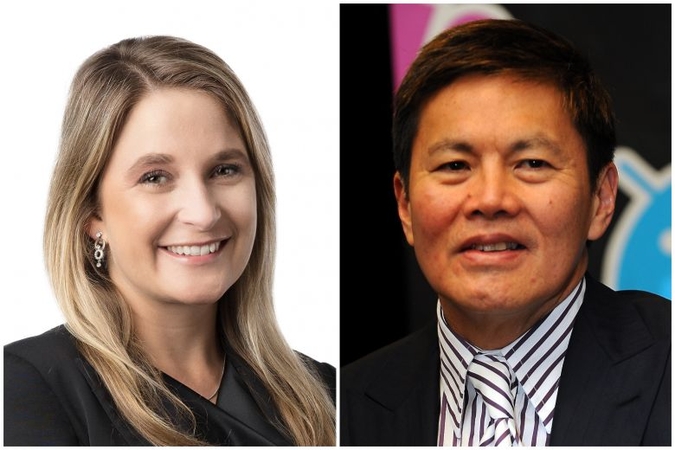
CEO designate of Optus, Kelly Bayer Rosmarin, will take over from Allen Yew, who joined Singtel in 1980.PHOTOS: SINGTEL, STEPHANIE YEOW

CEO designate of Optus, Kelly Bayer Rosmarin, will take over from Allen Yew, who joined Singtel in 1980.PHOTOS: SINGTEL, STEPHANIE YEOW
By Choo Yun Ting
The Straits Times

2,509 Viewed

SINGAPORE – Local telco veteran Allen Lew, who is currently chief executive of Singtel’s Australian subsidiary Optus, will be taking on a new role in Thailand from next April.

In its announcement on Thursday (Dec 5), Singtel said that Mr Lew will be assuming the newly-created roles of chief executive officer for group strategy and business development and country chief officer of Thailand.

He will also continue as chairman of the executive committee of Singtel’s Thai associate AIS.

Optus is Australia’s second-largest telco and a wholly-owned subsidiary of Singtel.

Taking over from Mr Lew is current deputy CEO of Optus, Ms Kelly Bayer Rosmarin, who has been named CEO designate of both Optus and Consumer Australia.

She will join the Singtel management committee from April 1, 2020.

Singtel group CEO Chua Sock Koong said that Mr Lew’s tenure at Optus, which he has headed since 2014, has made it the go-to operator in Australia for good connectivity, innovative services and content.

“Given the tremendous growth of digital services in Thailand and the strides taken by AIS to assert market leadership, he is best placed to help drive growth there given his knowledge of the Thai market and expertise,” Ms Chua added.

Mr Lew is a long-time employee of Singtel, having held a range of senior management roles such as CEO Singapore since joining the company in 1980.

His designated successor Ms Bayer Rosmarin joined Singtel in March this year, and has been named among the top 10 businesswomen in Australia and top 25 women in Asia Pacific finance.

She was previously group executive of institutional banking and markets at the Commonwealth Bank of Australia, where she drove significant business growth and digital transformation programmes.

Ms Bayer Rosmarin said: “I look forward to harnessing and optimising the benefits of these changes for our customers across the country, and working with the passionate people at Optus to drive innovation, deliver great customer service, and power the digital economy with connectivity for all Australians.”

Musk tells jury he’s worth $20 billion but is short on cash

#ศาสตร์เกษตรดินปุ๋ย : ขอบคุณแหล่งข้อมูล : หนังสือพิมพ์ The Nation

https://www.nationthailand.com/business/30379106?utm_source=category&utm_medium=internal_referral

Musk tells jury he’s worth $20 billion but is short on cash

Dec 05. 2019
Elon Musk, CEO of Tesla Inc., arrives at federal court in Los Angeles on Dec. 3, 2019. MUST CREDIT: Bloomberg photo by Patrick T. Fallon.

Elon Musk, CEO of Tesla Inc., arrives at federal court in Los Angeles on Dec. 3, 2019. MUST CREDIT: Bloomberg photo by Patrick T. Fallon.
By Syndication Washington Post, Bloomberg · Dana Hull, Edvard Pettersson, Tom Metcalf

1,590 Viewed

Elon Musk says he doesn’t have a lot of cash. His wealth came up in the second day of his testimony before a federal jury in Los Angeles, where the Tesla and SpaceX chief executive is on trial over a tweet in which he referred to a British cave expert as a “pedo guy.”

After an unsuccessful objection from his lawyer, Musk told the jury that he has Tesla stock and SpaceX stock, with debt against those holdings, and that his net worth is about $20 billion. But contrary to public opinion, he said, he didn’t have much cash. Musk finished testifying after a total of about six hours on the stand over two days.

Caver Vernon Unsworth sued Musk over the “pedo guy” tweet, which the CEO called “a flippant, off-the-cuff insult.” Musk said he was responding to Unsworth’s criticism of Musk’s effort to help rescue members of a Thai soccer team from a flooded cave in 2018. Musk and engineers at his companies prepared a mini submarine to help with the rescue efforts. The 12 kids, ages 11 to 16, and their coach were ultimately saved without the sub.

Usnworth, who knew the caves well, ridiculed the high-profile effort from Musk. He told CNN that Musk could “stick his submarine where it hurts” and called the idea a PR stunt with no chance of working.

That angered Musk, who said a team of engineers worked very hard to build the sub to save the boys. He said Unsworth’s comments denigrated the efforts of his team.

Thai rescue officials were “very happy” with his team’s effort, and the government thanked him for it, Musk said, contradicting Unsworth’s comments in the CNN interview.

Musk also explained to the jury his penchant to tweet. (He retweeted a Tesla post during a break in his testimony.)

Musk said he likes to solicit public input on Twitter.

“There are pretty smart people out there,” Musk said.

Despite Musk’s status as one of the richest people on the planet, his net worth is largely illiquid.

The Bloomberg Billionaires Index puts his fortune at $26.6 billion. That comprises an estimated $14.6 billion stake in SpaceX. Musk has said previously he doesn’t intend to sell any of his holdings in the closely held company.

Musk has also long been a buyer of Tesla shares to bolster his $11.4 billion holding.

He’s pledged about 40% of his Tesla shares to unlock some of the wealth without shrinking his stake. A May filing revealed that he had access to about $500 million of credit lines from affiliates of Morgan Stanley, Goldman Sachs and Bank of America as of April 30. Still, that’s a fraction of his $26.6 billion overall fortune on the Bloomberg Billionaires Index and it’s unclear how much of those credit lines remain unused.

Musk’s wealth is an issue at the trial because a jury may consider evidence of his net worth in determining punitive damages. But Musk’s lawyers argued in court papers that the jury can’t award more in punitive damages than in compensatory damages. There is no way the jury would award more than $1 billion in compensation, so Musk’s net worth exceeding that isn’t relevant, the lawyers said.

In his testimony, Musk cited his mother as having some good advice, that Unsworth might want to follow.

“As my mom said, if somebody insults you, just let it go,” Musk said.

In September, Musk revealed in court documents that one of his trusted aides, Jared Birchall, paid $50,000 to hire a private investigator who looked into Unsworth. Attorneys for Unsworth said the investigator was offered a $10,000 bonus if he was able to confirm nefarious behavior – which was never paid.

Birchall worked at Morgan Stanley until 2016 and is the manager of Excession, Musk’s family office.

He took the stand after Musk.

Birchall testified that he hired James Howard, who later turned out to be a conman.

After Howard came up with what later turned out to be fake dirt on Unsworth, such as that he had been visiting Thailand since the 1980s and that he met his wife when she was a teenager, Birchall, using the name James Brickhouse, told Howard to leak the information to media in the U.K.

“I believed him to be a credible investigator,” Birchall told the jury. “I understood these things to be facts. I asked him to share facts.”

Musk also enlisted help from a second investigator at the Palo Alto, California-based law firm Cooley, which didn’t respond to a request for comment.

The case is Unsworth v. Musk, 18-cv-08048, U.S. District Court, Central District of California (Los Angeles).

BlackRock raises $1 billion for clean power as wind, solar boom

#ศาสตร์เกษตรดินปุ๋ย : ขอบคุณแหล่งข้อมูล : หนังสือพิมพ์ The Nation

https://www.nationthailand.com/business/30379090?utm_source=category&utm_medium=internal_referral

BlackRock raises $1 billion for clean power as wind, solar boom

Dec 05. 2019
File Photo

File Photo
By Syndication Washington Post, Bloomberg · Brian Eckhouse

921 Viewed

Here’s the latest indicator of how hungry investors are to profit from clean energy: BlackRock just raised $1 billion for wind, solar and battery-storage projects.

The world’s largest money manager received initial commitments from over 35 institutional investors in North America, Europe and Asia for its third global renewables fund. It’s the most BlackRock has raised yet for a clean-power fund’s first close.

Renewable energy is becoming “one of the most active sectors in infrastructure,” said David Giordano, global head of BlackRock renewable power. It comes, he said, “as global power generation shifts from two-thirds fossil fuels to two-thirds renewables over the next few decades.”

Clean-energy investments have surged as much of the world pushes to move beyond fossil fuels to fight climate change. Wind, solar and other forms of renewable power will attract about $322 billion annually through 2025, according to the International Energy Agency. That’s almost triple the $116 billion a year that will go into fossil-fuel plants.

BlackRock Real Assets aims to raise a total of $2.5 billion for the fund, Giordano said. Its renewable power group manages $5.5 billion in assets. Its first renewables fund raised $611 million and is full invested. The second one raised $1.65 billion and has committed nearly all of it.

Amazon unveils new server chip to compete with Intel’s product

#ศาสตร์เกษตรดินปุ๋ย : ขอบคุณแหล่งข้อมูล : หนังสือพิมพ์ The Nation

https://www.nationthailand.com/business/30379085?utm_source=category&utm_medium=internal_referral

Amazon unveils new server chip to compete with Intel’s product

Dec 04. 2019
Employees stand near an The Amazon logo in Hyderabad, India, on Sept. 6, 2019. MUST CREDIT: Bloomberg photo by Dhiraj Singh.

Employees stand near an The Amazon logo in Hyderabad, India, on Sept. 6, 2019. MUST CREDIT: Bloomberg photo by Dhiraj Singh.
By Syndication Washington Post, Bloomberg · Matt Day, Dina Bass

763 Viewed

Amazon.com Inc.’s cloud unit keeps trying to eat away at Intel Corp.’s stranglehold on the server chip market.

Amazon Web Services has developed a more powerful version of its own chips to power services for cloud-computing customers, as well as some of AWS’s own programs. AWS Chief Executive Andy Jassy on Tuesday introduced a second-generation chip, called Graviton2, aimed at general-purpose computing tasks. He didn’t specify a release date.

The company last year unveiled its first line of Graviton chips, which it said would support new versions of its main EC2 cloud-computing service. Prior to that, Amazon -and other big cloud operators – had almost exclusively used Intel Xeon chips. The company said at the time that the Graviton-backed cloud service would be available at a “significantly lower cost” than existing offerings run on Intel processors.

Intel’s chips account for more than 90% of the server chip market and handle most tasks at the biggest cloud providers including Amazon, Microsoft Corp. and Alphabet Inc.’s Google. But these companies are also announcing plans to use Intel’s main rival Advanced Micro Devices Inc. AMD has forecast it will top 10% in server processor market share by mid-2020, a target that analysts at Instinet LLC said in a note is achievable.

Jassy said on Tuesday that Intel is “a very close partner,” but that to push the envelope on prices, “we had to do some innovating ourselves.”

Amazon is using its 2015 acquisition of startup Annapurna Labs, which Jassy called a “a big turning point for us,” to design its own chips. The new processor uses technology from SoftBank Group Corp. unit ARM Holdings, a standard that dominates in mobile phones.