Tesco Lotus redefines its approach to meet needs of urban shoppers

ศาสตร์เกษตรดินปุ๋ย : ขอบคุณแหล่งข้อมูล : หนังสือพิมพ์ The Nation

http://www.nationmultimedia.com/business/30372142

Tesco Lotus redefines its approach to meet needs of urban shoppers

Jul 02. 2019
Sompong Rungnirattisai, the chief executive officer of Tesco Lotus

Sompong Rungnirattisai, the chief executive officer of Tesco Lotus
By Kwanchai Rungfapaisarn, The Nation

244 Viewed

To cash in on the growth of urbanisation in Thailand, Tesco Lotus is redefining its proposition to better serve the needs of urban customers. It aims to do that through differentiated product offerings and an omni-channel shopping experience.

As a result, the retailer’s medium-term investment plan will see the opening of 750 Tesco Lotus Express stores over the next three years, as well as upgrading its existing Express stores to fit the new proposition, a space repurposing programme for its hypermarkets, and an expansion of its online shopping coverage.

Tesco Lotus is currently operating 400 large-scale hypermarkets, and 1,600 Express stores in Thailand.

Sompong Rungnirattisai, the chief executive officer of Tesco Lotus, said that urbanisation, along with digital technology, has transformed the way consumers live and shop. Both trends have led to a greater demand for convenience, speed, and a seamless omni-channel experience, while quality and value continue to be crucial for shoppers of any era.

Tesco Lotus has seen urbanisation as a significant trend that continues to shape the way people shop. More than 58 per cent of the Thai population is expected to live in urban areas by 2030, up from the current rate of 50 per cent.

In order to cater to the rising demands for convenience, speed and a seamless omni-channel experience, while still maintaining great offers on quality and value, Tesco Lotus is redefining its proposition to better serve the needs of urban customers. This includes differentiated product offerings and an omni-channel experience through all of our channels, online and offline.

“We plan to serve the growing urban population better through differentiated propositions that enhance both our product offerings and shopping channels. These include adding new, and refurbishing existing, Tesco Lotus Express stores into a new proposition that caters to urban lifestyles, repurposing space and creating relevant offers in large stores, as well as improving the omni-channel shopping experience,” he said.

“With growing urbanisation, shoppers want both convenience and a good shopping experience, without compromising quality and value for money. To better suit customers, we have focused on simplification, including re-arranging space in our large stores to improve shopping experience, as well as utilisation of technology and an omni-channel platform to enhance convenience. Tesco Lotus is known for offering high quality products at affordable prices and we will maintain this approach as quality and value for money continue to be important to urban shoppers. Fresh food and Tesco’s own brand products play a key role in reinforcing this unique proposition. We focus on sourcing our fresh food directly from local farmers and having capable Thai SMEs producing Tesco’s own brand products to ensure that we deliver high quality, sustainable products at affordable prices to our customers,” said Sompong.

Sompong said that for small-format Express stores, Tesco Lotus has designed a new proposition: “fresh, simple, and helpful for your daily needs”. The first 30 Tesco Lotus Express stores built around this concept have received positive responses from customers. The new Tesco Lotus Express proposition combines the company’s current core strength in groceries and fresh food “for later” consumption with more variety, and delicious ready-to-eat options or “for now” missions.

“Our plan is to open 750 new Express stores, while refreshing existing stores over the next three years into this proposition,” he said.

For large stores, a space repurposing programme with new offers is already under way, with 20 hypermarkets having been repurposed. In parallel, their online business will be expanded to cover more areas.

In terms of products, in order to serve the urban lifestyle better, the new proposition Express stores offer an extensive range of ready-to-eat options both hot and cold, such as cage-free boiled eggs, cold sandwiches, hot croissants and freshly baked goods through to heavier options such as rice dishes. In addition to ready-to-eat products, the company continues to focus on a core range of fresh food including fruits, vegetables, and meat in convenient packages and dry groceries. In addition to food, other items such as household and beauty products are offered in smaller sizes to suit the consumption behaviours of convenience store shoppers.

“In term of channels, many provincial areas outside Bangkok are becoming urban cities,” said Sompong. “Consumers living in these areas are not well served with the right proposition, hence we will add our Express stores in the new proposition to cater for this group of customers. Around two-thirds of the new Express stores will be in Bangkok and the central region, while the rest will be in urban areas in other cities across Thailand,” he said.

“Tesco Group remains committed to Thailand, currently its largest market outside the United Kingdom. The continued investment in the country will benefit the Thai economy, as well as reinforcing our commitment to making positive contributions to society, communities and environment,” he said.
Veteran shows the way forward for PR agencies

ศาสตร์เกษตรดินปุ๋ย : ขอบคุณแหล่งข้อมูล : หนังสือพิมพ์ The Nation

http://www.nationmultimedia.com/detail/Corporate/30372093

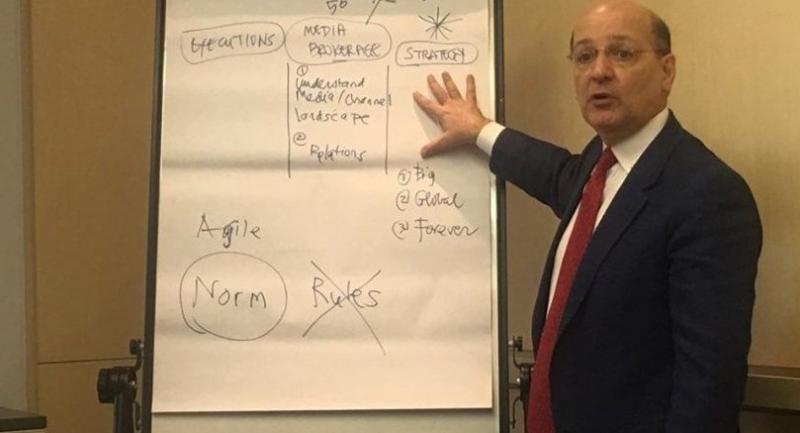
Hasan Basar, managing director of Bangkok Public Relations

Veteran shows the way forward for PR agencies

Breaking News July 01, 2019 19:44

By Kwanchai Rungfapaisarn
The Nation

The changing landscape in media channels has given public relations agencies that are strategy-oriented an additional premium in partnering with their clients, according to public relations guru Hasan Basar, managing director of Bangkok Public Relations who has 35 years of experience in this service industry.

Trusted media will be in greater demand by consumers in the future with the increasingly blurred lines between real and fake news, especially in social media, he said, noting also that PR consultants need to layer on top of their public relations skills the ability to understand the real business dynamics of their clients.

Basar said that he co-established the consultancy in 1995, only two years before Thailand sank into a financial crisis that quickly spread throughout the region.

“In a way, we were fortunate to be hit by the crisis so early in the company’s life. It forced us to set up a business system and structure that is very flexible and lean, and an organisation that is flat and focused on quality,” he said. “These are all the things essential for survival today, some 25 years later, and they helped us weather the multiple political and natural crises that we all suffered, especially in the last ten years.”

Basar said that every staff member at Bangkok PR has cross-functional capability, from decision making, to execution and consultancy services.

“Our flat organisation keeps our staff numbers low, helping us work better and faster,” he noted, adding that in today’s business environment, quality and speed is critical to success.

“From the beginning, we were committed to working for a limited number of clients, doing a lot for them, and staying with them a long-time. We’ve served some clients for 25 and 22 years. It allows us to emphasise higher-end services such as strategy and the execution of plans that require sensitivity and good judgment,” Basar said, adding that when Bangkok PR first started, it almost exclusively served multinational companies.

Basar said that Bangkok PR currently has around 18 staff, which is similar to 24 years ago when he set up the company. However, the company has posted annual revenue five times higher.

“That has been possible because we’ve moved up the value chain and after 24 years of experience, all our staff are still hands on with clients and share the benefit of that long experience with them on a day-to-day basis and at every level, handling the most challenging tasks. Almost half them have worked with me for 20 years, or more.”

“Our organization culture is ‘boundaryless’, whether between responsibility or seniority,” said Basar, however, noting that confidentiality of client information is as strict as in a legal practice.

“When we recruit new staff, we don’t test their public relations knowledge, but rather their ability to think clearly, and analyse and solve problems that have multiple parametres,” said Basar.

“Our staff retention is built on taking care of our people emotionally – fulfilment of important assignments, physically – working in a good, spacious office, and financially. Of course, salary and bonuses are important, but, in the consultancy business, the ability to be exposed to big challenges and to work with experienced people is the best way to learn and increase one’s own capabilities and earning capacity,” he said.

Basar said PR consultancies need to understand media channels, their particular behaviours, mixing and matching their content and their style to suit the particular requirements of each channel, and also still maintaining a relationship of trust with those channels that are moderated, or curated, such as traditional news channels.

“The birth of social media allows consumers access to a huge volume of information, disinformation, and non-information, which we have to accept in the context of ‘enriching’ what traditional media such as television and newspapers provide, through digital and other platforms. Far from weakening traditional media, I personally believe social media has made the trusted editor a far more important player,” he said.

Companies serving only as brokers for accessing media will decline as a service, while the ability to correctly anticipate public mood as well as formulate effective messaging will gain in importance.

“At Bangkok PR, we allocate around half of our efforts to the creation of strategic PR plans for our clients and the other half to executing them effectively on their behalf,” said Basar. He said that, today, almost 100 per cent of the company’s clients are Thai firms, which have grown to regional and global scale in their public relations.

GulfNRV2 begins supplying electricity to EGAT

ศาสตร์เกษตรดินปุ๋ย : ขอบคุณแหล่งข้อมูล : หนังสือพิมพ์ The Nation

http://www.nationmultimedia.com/detail/Corporate/30372087

x

GulfNRV2 begins supplying electricity to EGAT

Corporate July 01, 2019 18:25

By The Nation

The Gulf Energy Development Plc said in a filing with the Stock Exchange of Thailand on Monday that its subsidiary Gulf NRV2 Co Ltd – operator of Gulf NRV2 power project – has commenced the sale of electricity to the Electricity Generating Authority of Thailand (EGAT) under the Small Power Producer (SPP) programme.

Gulf Energy’s executive director Yupapin Wangviwat said the GNRV2 project, located in Nakhon Ratchasima’s Suranari Industrial Estate, has an installed power-generation capacity of 128.2 megawatts and a steam-generation capacity of 10 tonnes an hour.

GNRV2 is contracted to supply 90MW to EGAT pursuant to a 25-year power-purchase agreement and will supply the remaining power and steam it generates to industrial users through secured long-term contracts.

The GNRV2 power project is the last of the 12 SPP projects under Gulf MP Co Ltd (GMP), which had a combined power-generation capacity of 1,563.4MW and steam-generation capacity of 225 tonnes per hour.

All 12 projects commenced commercial operations as scheduled at a lower cost than initially projected, and 2019 is the first year that the company will realise revenues from the 12 projects.

Mongkol Puangpetra, KTB Securities (Thailand) Co Ltd’s head of research, estimates that the total power-generating capacity of Gulf will surge by 448MW this year.

The increase in capacity is expected to boost its revenue to Bt31 billion this year from over Bt20 billion last year.

Hilton set to enter Malaysia’s Damai Laut town with DoubleTree

ศาสตร์เกษตรดินปุ๋ย : ขอบคุณแหล่งข้อมูล : หนังสือพิมพ์ The Nation

http://www.nationmultimedia.com/detail/Corporate/30372068

Signing of DoubleTree by Hilton Damai Laut Resort

Hilton set to enter Malaysia’s Damai Laut town with DoubleTree

Corporate July 01, 2019 15:29

By The Nation

Hilton, one of the world’s fastest-growing hospitality groups, announced recently that it was converting Swiss-Garden Beach Resort in Malaysia’s Damai Laut into DoubleTree by Hilton.

Set to open next year, the 291-room DoubleTree by Hilton Damai Laut Resort will offer unobstructed views of the Strait of Malacca and Pangkor Island.

“Damai Laut is one of the key gateways to beautiful surrounding islands, including Pangkor and Marina islands. As a coastal town with a rich historical heritage, Damai Laut has a huge potential to be the next resort destination of choice for domestic travellers. We are confident that the entry of Hilton in this location will propel demand as we expand our iconic Hilton hospitality to guests in the region,” said Shawn McAteer, senior vice president and global chief for DoubleTree.

“As we celebrate the 50th anniversary of Hilton this year, we are excited to continue expanding our presence in Malaysia by giving more guests the opportunity to experience our comfortable spaces and warm service, all starting with our signature welcome.”

The DoubleTree by Hilton Damai Laut Resort will be located within 425 of lush surroundings, featuring an 18-hole award-winning golf course with direct access to the beachfront. Strategically located along the southern reaches of Malaysia’s coastal town of Lumut, the resort will be located near the only turtle sanctuary of the west coast.

“We recognise the immense tourism potential in Malaysia, which is one of our key growth markets here in Southeast Asia. Secondary and tertiary destinations in the country, such as Damai Laut, are opening up to tourists even more and we are keen to continue expanding our footprint and portfolio of brands across both gateways and secondary cities in the market by working with the right partners,” said Guy Phillips, senior vice president for Hilton’s Asia and Australasia markets.

“We are delighted to partner with OSK Holdings Berhad to introduce DoubleTree by Hilton as the first internationally-branded resort in Damai Laut,” Phillips added.

The new property will offer 291 guest rooms with a mix of garden and sea views and features five dining outlets, including an all-day-dining restaurant, a speciality restaurant and a beach restaurant. Guests can enjoy a mini water park and the 18-hole golf course at the resort, which will also feature meetings and events facilities, including a 1,860-square metre event space and an 885sqm ballroom.

Up, Up, and into the Cloud The Four Common Traits of Successful Cloud Journey in Thailand

ศาสตร์เกษตรดินปุ๋ย : ขอบคุณแหล่งข้อมูล : หนังสือพิมพ์ The Nation

http://www.nationmultimedia.com/detail/Corporate/30371947

Ed Lenta
Ed Lenta

Up, Up, and into the Cloud The Four Common Traits of Successful Cloud Journey in Thailand

Corporate July 01, 2019 15:00

By Special to The Nation

In recent years, many countries in Asia including Thailand, have launched national initiatives for a digital economy.

According to a report by the Thailand Investment Board, the Thailand Ministry of Digital Economy and Society said that economic digitalisation will spur growth in every industrial sector in  the country and is estimated to contribute 25 per cent  to Thailand’s GDP by 2027.

Every organisation has its reason for embarking on a cloud transformation journey. Some want to consolidate their data assets. Others want to respond faster to the changing needs of their customers while some are seeking a platform that will help them launch new ventures, and explore local, and global market opportunities.

Since 2006, Amazon Web Services (AWS) has helped thousands of organisations of all sizes across Asia Pacific launch their journeys into the cloud. And over that time, one of the things I have discovered, is that while each transformation is unique in its own way, the most successful ones have four distinctive traits in common.

1.  visionary leadership

Visionary leaders are constantly reinventing their customer experience because if they don’t, someone else will and they risk being disrupted. These leaders inspire teams by painting a picture of what the future state of their organisation will look like, and the benefits from it. By establishing a clear sense of the organisation’s purpose, and effectively communicating how the organisation’s cloud strategy will fulfil that purpose, the leadership team can align employees throughout the company, to a common goal.

2. Innovators at heart

Time and time again, we see that the most successful cloud transformation leaders are innovators. They take the building blocks offered by cloud providers and assemble them in unique ways, creating new platforms, products, and services that enhance their operations and provide them with launching pads for new business strategies.

These companies would also invest in their own organisational capabilities by hiring and re-training worked needed to move forward. They know that by building and retaining knowledge within their organisations, they are creating an evolving resource that will help them maintain their competitive edge well into the future.

3. Think big, but start small

Cloud transformation leaders know the world is changing, and they are determined to change with it. So they get started. They learn through the process of doing, and adapt accordingly when their increasing knowledge and experience tell them this is necessary. They become highly adaptable, not just in response to changing market conditions, but also to what the new insights tell them.

The only way to truly learn how to execute a successful cloud transformation programme is to start one.

4.  Excite and enable everyone

The most successful cloud transformation leaders excite staff about the future state of the company and what the transformation will bring, while also giving them the skills to make the most of the future.

Every department of an organisation will be impacted by cloud transformation, including product development, marketing, finance, and the legal team. Hence, informing and including employees from across the organisation ensure that they can get the most benefits from the changes as they happen, and gives the project a greater chance of success. The benefits they receive are directly connected to how quickly and deeply leaders and teams begin thinking about how to empower their staff with the opportunity and tools they need to innovate for their customers.

Bringing it all together

One of the best examples of these four traits in action is the Central Group, one of the largest conglomerates in Thailand with businesses spanning from retail, shopping malls, real estate to hotels. Central  is adopting a cloud-first strategy, choosing to run data lake architecture on AWS, and at the same time rebuilding its mobile applications and e-commerce capabilities. By leveraging the elasticity, agility, and cost benefits of AWS, Central Group aims to offer more innovative services not only to digitally-savvy customers, but also to connect with the legacy systems such as ERP and the  business units in different countries, support OMNI channel and the unified commerce platform in order to become more operationally efficient.

Organisations will exhibit these four attributes in different ways, but experience has shown that any successful transformation relies to some extent on all four.

Leadership sets the vision and inspires and steer the organisation towards its goal by themselves. They trust in their purpose and vision and then work to ensure that all of their people understand that vision, make it happen, and maximise its value as it is delivered.

Contributed by Ed Lenta, Managing Director, Asia Pacific, Amazon Web Services

The growing trend of INTERCONNECTION

ศาสตร์เกษตรดินปุ๋ย : ขอบคุณแหล่งข้อมูล : หนังสือพิมพ์ The Nation

http://www.nationmultimedia.com/detail/Corporate/30371922

(Photo/Ericsson)
(Photo/Ericsson)

The growing trend of  INTERCONNECTION

Corporate July 01, 2019 01:00

By   SIRIVISH TOOMGUM
THE NATION

2,819 Viewed

AMID the growing interconnection between machines and people, Thai consumers and businesses will continue to experience changes. This phenomenon has also raised concerns among captains of the telecom and ICT industries about how Thais will adapt to the new environment.

“With machines and humans being more and more interconnected, Thai consumers and businesses will continue to experience change,” Alexandra Reich, chief executive officer of Total Access Communication (DTAC), said.

“Mobile communication has had a substantially positive impact on the economic and social development of Thailand and we are optimistic that it will continue to improve our well-being as a nation,” said Reich.

Artificial intelligence (AI) in a data-rich and connected world will continue to stimulate innovation and product development with new usage and monetisation, she added.

There are still many untapped opportunities for business, especially SMEs, to digitalise their business and operations using the cloud, machine learning, internet of things (IoT) connectivity and mobile applications, she said.

“This will not only drive productivity but also enrich offerings and improve customers’ experiences. Consumers will be able to embrace new experiences with augmented and virtual realities, have access to billions of people seeing their content, and live through shared experiences across borders with low latency networks and simultaneous translation.”

Reich said connectivity is the core enabler for these innovations and the demand for quality services will increase as they become critical for people and businesses.

However, there is danger if the human touch gets lost in this fast-paced digital development.

The threats are real but telecom operators, government and businesses can work together to mitigate them, she said.

“We need to be careful about how many hours we watch our mobile phones and how we value privacy. We need to be conscious that a connected world can amplify the good voices but also the bad.

“We need to protect our citizens against cyberattacks and identity theft. Most importantly, we need a well-managed transition, as the digital economy also comes with a change in job profiles and capabilities. Also, we need to not only continuously educate our kids, but also the adult population,” she said.

Benefits of the 5G wireless broadband will take a number of years before being fully exploited.

“While we are seeing 5G deployments in 2019, most analysts believe that it could take three to five years to build the ecosystems and the new use-cases that will be valued by businesses and consumers,” she explained.

”It will be a learning curve on how to drive value for the respective stakeholders. The biggest change will come as we will see a structural change in a lot of business models leading to a more collaborative approach across industries,” Reich said.

The growing data consumption, especially for processing, as well as virtualisation, will at some point lead to the next generation of network – 6G. 6G will require more spectrum, more energy efficiency and probably work even faster.

The National Broadcasting and Telecommunications Commission (NBTC) has granted 700MHz licences to the three telecom operators – DTAC, Advanced Info Service (AIS), and True Corp for the development of 5G service on this band. Terms of the licence will become valid next October and the NBTC also plans to allocate additional new spectrum bands in preparation for the launch.

(Photo/Ericsson)

Nadine Allen, president and country manager of Ericsson (Thailand) Ltd, said 5G is not just another G.

“Previous [network] generations were centred around consumer and personal communications. With 5G, we are on the threshold of a global technology shift, which will bring about new opportunities, new efficiencies and new business models. 5G will enable consumers to capture the full value of connectivity,” said Allen.

“Consumers in Thailand are already waiting for 5G. According to Ericsson’s ConsumerLab Report, one in two smartphone users will switch mobile operators within six months if their original operator does not provide 5G, providing operators with a first mover advantage.”

According to the report, 5G is a platform for innovation and a game-changer. With ultra-fast connectivity speeds and low latency rates, 5G will transform industries and enable the future of smart cities.

“With game-changing capabilities, we believe that 5G has the potential to enable mobile communications networks to be an important and critical part of national infrastructure,” said the report.

5G-related use cases could range from connected robotics, healthcare and smart manufacturing, to connected homes, and give rise to endless possibilities as well as new opportunities to innovate on a broader scale.

“Beyond 5G, Ericsson is also constantly innovating in the next wave of technologies. For example, we have an Accelerator innovation hub in Canada to focus on R&D in AI and automation as it will be a key trend in the future. In fact, innovation is in Ericsson’s DNA. Today, around 18.5 per cent of Ericsson’s annual global revenues is invested in R&D,” said Allen.

Attractive to foreign investors

For Thailand, 5G will be the enabler for the Digital Thailand 4.0 vision. In a yearly rankings recently released by the Switzerland-based IMD World Competitiveness Centre, Thailand advanced five places to 25th, propelled by an increase in foreign direct investment and productivity. 5G will further enhance the country’s competitiveness and strengthen its attractiveness for foreign investors looking for locations in a digitalised environment, she said.

AIS chief executive officer Somchai Lertsutiwong said the world is on the edge of entering the 5G era.

Moreover, there are nine other key technology trends shaping the future: big data and analytics, the cloud, artificial intelligence, blockchain, cognitive security, quantum computing, robotics, autonomous driving, and fintech. New technologies will change the world in a way that previously could only be seen in science-fiction movies.

“Thais have been called the most intensive Facebook users. We have seen many companies, especially SMEs, reaping benefits from Instagram, Line, and other online networks to grow their businesses, including online payment,” said Somchai. “However, as of today, only 65 per cent of the Thai population can access the internet, leaving more than 20 million out of the loop.”

Looking forward to the next decade, AIS expects more than 90 per cent of Thais will be using one or more telecommunication devices for convenience in life, work and doing business, he added. 5G, together with the above-mentioned technologies, will bring about a new level of applications such as virtual reality everywhere, smart autonomous-driving cars, smart homes, smart manufacturing, smart cities and many more “smarts” enabled by IoT (where everything can be connected). Business will not be the same in the 5G era.

“The major concern now is how we adapt ourselves to the future and how we prepare the next generation to be comfortable with their own future. Replaced by robots, AI and automation, many jobs will become unnecessary; many things we currently teach our children in schools and universities might be out of date,” said Somchai.

“Thailand needs to reskill its workforce and reform the educational system to ensure our competitiveness in the future. It took 10 years for the development of the 5G standard and it will take another decade for 6G. I hope it will take less time for Thailand to prepare for the changes,” he said.

SCB Life enters partnership with FWD via Bt92.7 bn share sale

ศาสตร์เกษตรดินปุ๋ย : ขอบคุณแหล่งข้อมูล : หนังสือพิมพ์ The Nation

http://www.nationthailand.com/business/30372083

SCB Life enters partnership with FWD via Bt92.7 bn share sale

Jul 01. 2019
Huynh Thanh Phong, group chief executive officer of FWD Financial Services, left, and Arthid Nanthawithaya, chief executive officer of Siam Commercial Bank, at the press conference on Monday. 

Huynh Thanh Phong, group chief executive officer of FWD Financial Services, left, and Arthid Nanthawithaya, chief executive officer of Siam Commercial Bank, at the press conference on Monday.
By PHUWIT LIMVIPHUWAT  THE NATION

 Siam Commercial Bank Plc (SCB) has sold 99.2 per cent of its holding in SCB Life Assurance Plc for Bt92.7 billion to FWD Group Financial Services Plc (FWD), in a move to raise investment capital. The bank’s life insurance business generated an average of Bt6 billion in profits in recent years.

The segment is still doing well in Thailand but customer growth has been declining in the past three years, said SCB President Arak Sutivong.

SCB will now continue its life insurance business through a long-term partnership with FWD, said Chief Executive Officer Arthid Nanthawithaya at press conference today (July1). SCB has signed an agreement on the sale.

Following the transcation, Capital Yuan Tao expects SCB to pay a special dividend this year, between Bt16 to a maximum of 27 baht per share.

KTB Securities predicts the bank to post Bt42 billion in annual net profit after tax, representing a surge of 105 per cent.

Meanwhile, SCB has informed the Stock Exchange of Thailand this morning that it had signed a binding Share Sale Agreement with FWD – the largest life insurance transaction in Southeast Asia in terms of value.

“The process will be completed by the end of this year, including the approval of the transaction by regulators and the Bank of Thailand and other stakeholders,” Arthid stated.

Under the arrangement, SCB will distribute FWD’s life insurance products to FWD’s customers in Thailand for a period of 15 years.

SCB Life’s customers will not be affected by the transfer of ownership to FWD and will continue to receive protections, benefits and customer services in accordance with the terms of their policies, which will be upheld by FWD after the closure of the transaction, said Ronald Arculli, chairman of the board of FWD Group, at the press conference.

“The bancassurance business remains our long-term strategic priority. The establishment of this partnership with FWD will help create significant long-term value for our customers, shareholders, employees, and other key stakeholders,” Arthid said.

Currently, SCB Life has about two million policy holders, to be transferred to FWD after the transaction process.

Established in Asia in 2013, FWD is the insurance arm of Pacific Century Group. The firm entered the local market in February 2013 through the acquisition of ING.

It has 2.2 million customers in Thailand, said Huynh Thanh Phong, the company’s chief executive officer.

“Southeast Asia is the future of growth in the life insurance business. Our financial commitment of Bt92.7 billion is a symbol of our commitment in Thailand and the rest of the region,” he stated.

SCB’s share price rose to Bt145.50 at mid-day before close Bt141 per share or up Bt1.50 per share or 1.08 per cent from Friday’s close with trade value Bt6.99 billion on Monday.

PTTEP’s equity content rating upped to minimal

ศาสตร์เกษตรดินปุ๋ย : ขอบคุณแหล่งข้อมูล : หนังสือพิมพ์ The Nation

http://www.nationthailand.com/business/30372073

PTTEP’s equity content rating upped to minimal

Jul 01. 2019
By The Nation

S&P Global Ratings on Monday revised its assessment of the equity content in PTT Exploration and Production Plc’s (PTTEP) foreign currency (BBB+/Stable) and local currency (A-/Stable) from intermediate to minimal. The rating is related to PTTEP’s US$500 million (Bt15.3 billion) outstanding perpetual securities.

This is in response to PTTEP’s repayment of similar hybrid securities on their first call date on June 19. This revision does not affect S&P’s assessment of the company’s “BBB” rating on the company’s standalone credit profile (SACP).

The ratings agency said it believes PTTEP is committed to maintaining hybrid securities as part of the company’s capital structure until the first call date in 2022.

However, PTTEP’s longer-term commitment to keeping these hybrid instruments for loss-absorption or cash conservation is uncertain, S&P said, adding that it is also considering PTTEP’s decision not to replace its hybrids repaid on June 19.

Initially S&P treated half of the $500-million hybrid securities as equity and the rest as debt. Revising the equity content to minimal will increase the calculation on PTTEP’s adjusted debt by $250 million.

PTTEP’s creditworthiness has been largely stable since the issuing of the hybrid securities in 2014, due to the company’s strong affiliation with its parent PTT Plc. PTTEP has also maintained minimal leverage through last year.

In parallel, its operating profile has weakened due to its reducing reserve life. PTTEP has also lined up two large acquisitions worth $2.7 billion to be completed by the end of this year.

PTTEP has also made a final investment decision on its 8.5 per cent-owned liquefied natural gas project in Mozambique, and the project is set to produce gas most likely by 2024.

PTTEP also won the bid for new concessions covering the Bongkot and Erawan fields in December last year and these could significantly boost its reserves over the next three to five years.

15 Nescafe Hubs to roll out over next 12 months

ศาสตร์เกษตรดินปุ๋ย : ขอบคุณแหล่งข้อมูล : หนังสือพิมพ์ The Nation

http://www.nationthailand.com/business/30372055

15 Nescafe Hubs to roll out over next 12 months

Jul 01. 2019
By The Nation

Nestle Indochina is investing more than Bt50 million to open 15 Nescafe Hubs in Thailand over the next 12 months, following the success of its first such hub at BTS Chit Lom last July, the company’s chairman and chief executive officer Victor Seah said on Monday.

A second Nescafe Hub was opened at BTS Ekkamai in March this year, followed by one at BTS National Stadium in April and third at BTS Ari at the end of June. The remaining Nescafe Hubs will follow different formats, including choosing locations other than the BTS.

With its current expansion plans, Nescafe Hub expects to grow cup sales by over 600 per cent to reach a volume of 400,000 cups over the next year and achieving sales of Bt20 million, he said.

More than 85 per cent of Nescafe Hub customers are regulars, ordering their coffee both on the go and via delivery such as the Line Man delivery service, Seah said. Nescafe Hub uses a database for geo-targetting, sending messages about drinks and services to consumers who are within a two-kilometre radius of a Nescafe hub.

WHAUP extends commercialisation of water sales, introduces demineralised water

ศาสตร์เกษตรดินปุ๋ย : ขอบคุณแหล่งข้อมูล : หนังสือพิมพ์ The Nation

http://www.nationthailand.com/business/30372052

WHAUP extends commercialisation of water sales, introduces demineralised water

Jul 01. 2019
By The Nation

WHA Water Co Ltd, a subsidiary of WHA Utilities and Power Plc or WHAUP, has signed a 15-year contract for demineralised water sales with Global Power Synergy Plc (GPSC), whose initial orders will stand at 1.5 million cubic metres per year.

Under the agreement, commercial services will start from October 18. The supply of demineralized water is the company’s latest product, reflecting its strong determination to be a total solution provider in the utilities business, WHAUP’s chief executive officer Wisate Chungwatana said on Monday.

This is due to the continuous increase in water demand by both existing and new clients in WHA’s Industrial Estates, he said, adding that the company’s water business in Vietnam was slated to gradually commence operations in the third quarter of this year.

Earlier this year, the company signed a sales contract for clarified water with GCOxyrane Co Ltd (GCO), a manufacturer and distributor of propylene-oxide, which has a water demand of around 3.6 million cubic meters per year. It has also entered into a contract with GC Polyols Co Ltd (GCP), a manufacturer and distributor of polyetherpolyols, which has a water demand about 300,000 cubic meters per year. It is expected the two clients will start using water in their productions in December. All three new clients are located in the WHA Eastern Industrial Estate (Map Ta Phut).

The WHAUP chief executive added that for overseas investment in utilities, especially in Vietnam, the company has already been granted a license to operate utilities business in WHA Industrial Zone 1 – Nghe An. The project will be operated by subsidiary WHAUP Nghe An Joint Stock Company, which is currently under development and expected to start commercialization in Q3 this year.

In addition, the company has invested in Cua Lo Water Supply Joint Stock Company (Cua Lo), a distributor of tap water in Nghe An, which currently has a production capacity of 3,000 cubic metres per day and is expanding that capacity to 13,000 cubic metres per day. This is in accordance with company’s policy to expand overseas, especially in the CLMV (Cambodia, Laos, Myanmar, and Vietnam).

The overall outlook of the utilities business for WHAUP in 2019 is positive, with growth as planned. Apart from providing services to three new clients, the company is in talks with other new potential clients and existing clients who are in need of water.