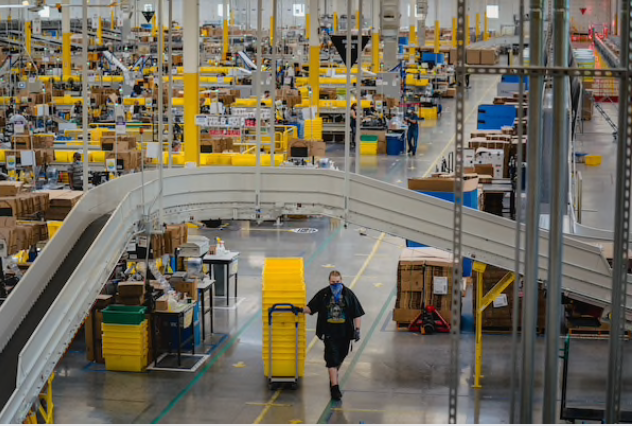
SCG Packaging (SCGP) has signed a contract to buy 100 per cent stake in Go-Pak UK Limited (Go-Pak) on Monday to expand its food packaging business.
SCGP chief executive officer Wichan Jitpukdee said the transaction would be made by its subsidiaries, expecting to be completed by December this year.
He said the acquisition of Go-Pak would help expand the company’s food packaging business by expanding customer bases in the UK, Europe and North America markets.
“Also, it would help increase the company’s competitiveness by adding a variety of food packaging solutions and expand production bases,” he said.
Go-Pak is one of the leading food packaging solutions providers in the UK, Europe and North America. Its head office is located in Bristol in the UK, while its production base is located in the southern part of Vietnam.
Go-Pak’s customer base consists of retailers and wholesalers in the food service and restaurant sectors, as well as outside catering service providers.
Go-Pak’s revenue in the previous 12 months was 68.7 million pounds sterling (Bt2.8 billion), while its assets at the end of the third quarter was 40.7 million pounds sterling (Bt1.65 billion). The company’s food packaging production capacity was 4 billion pieces per year with over 250 types of products.
By Syndication Washington Post, Bloomberg · Julia Fioretti, Bei Hu, Gregor Stuart Hunter · BUSINESS Institutional investors are buying Ant Group Co.’s shares at a 50% premium, signaling the Chinese fintech giant is poised to soar in its debut this week following the world’s largest initial public offering.
Some trades were executed at $15.50 (HK$120) apiece in gray-market trading Monday, compared with the listing price of HK$80, according to people familiar with the matter who declined to be identified as they aren’t authorized to speak to the media.
Billionaire Jack Ma’s Ant IPO has become the most anticipated in years, attracting at least $3 trillion in orders for its dual listing in Hong Kong and Shanghai ahead of its trading debut on Nov. 5. The stampede for shares is fueling predictions of a first-day pop, even as skeptics warn of risks including the U.S. election, tightening regulations in China and rising covid-19 infections worldwide.
“This is huge: the largest IPO ever, priced at the top end and now this huge premium in the gray market,” said Gary Dugan, chief executive officer of the Global CIO Office in Singapore, which didn’t take part in the IPO. “It’s pretty extraordinary given the backdrop and it shows you how much Asia is decoupling from the United States.”
In a so-called gray market, investors can bid for new shares before they officially start trading on a stock exchange. The over-the-counter mechanism is often seen as an early indicator of investor demand for an IPO. Retail buyers will be able to trade through a similar channel a day before Ant’s Thursday debut.
Demand for Hong Kong shares was so strong that the firm stopped taking orders from professional investors a day earlier than scheduled. Institutions and strategic investors may take up about 97.5% of the offering in Hong Kong, according to Ant’s prospectus, though the figures may change due to clawback and greenshoe provisions.
The fintech company’s $34.5 billion IPO gives it a market value of about $315 billion based on filings, bigger than JPMorgan Chase & Co. and four times larger than Goldman Sachs Group Inc. The sale vaults Ma’s fortune to $71.6 billion, topping the Walmart Inc. heirs.
The IPO surpasses Saudi Aramco’s record $29 billion sale last year, and the $25 billion raised by Ma’s Alibaba Group Holding Ltd. in 2014. Ant priced its Shanghai stock at $10.27 (68.8 yuan) apiece. The company may raise another $5.17 billion if it exercises the option to sell additional shares to meet demand, known as the greenshoe.
The IPO is attracting interest from some of the world’s biggest money managers, and sparking a frenzy among individual investors in China clamoring for a piece of the sale. In the preliminary price consultation of its Shanghai IPO, institutional investors subscribed for over 76 billion shares, more than 284 times the initial offering tranche, according to Ant’s Shanghai offering.
“The market’s infatuation with growth stocks is very strong at the moment,” said Arnout van Rijn, chief investment officer for Asia-Pacific at Robeco. With many investors betting China’s domestic economy will be sheltered from the trade war with the U.S., “it’s not surprising that there’s more demand than supply for a stock like this.”
Bidding was so intense in Hong Kong that one brokerage’s platform briefly shut down after becoming overwhelmed by orders. Demand for the retail portion in Shanghai exceeded initial supply by more than 870 times.
T. Rowe Price Group Inc., UBS Asset Management and FMR LLC, the parent of Fidelity Investments, are among the money managers angling for a piece of the deal, a person familiar with the matter has said. Hong Kong stockbrokers are so confident Ant IPO will go smoothly that they’re offering to let mom-and-pop investors buy the stock with as much as 20 times leverage.
Ant was formed when Alibaba launched the Alipay payments app in 2004 as an escrow service for buyers and sellers on Ma’s e-commerce website. In 2013, they were given the ability to save money and earn interest on the balances stored on their accounts. The firm then started offering credit to small businesses, branching out from its consumer-finance focus.
Telecoms firm ALT sees surge in demand for bandwidth
CorporateNov 02. 2020Somchai Treerattananukool, vice president of Marketing and Sales at International Gateway (IG)
By The Nation
SET-listed ALT Telecom (ALT) says its fibre-optics business is booming in the “new normal” era thanks to increasing demand for bandwidth from mobile operators. The ALT share price is up almost 94 per cent this year, as of Monday.
Somchai Treerattananukool, vice president of Marketing and Sales at International Gateway (IG), a subsidiary of ALT, said internet usage in the Asean region, including Thailand, was rising rapidly amid lockdown measures to contain the spread of Covid-19.
“The demand for bandwidth to connect with the internet in this region is expected to increase by 35-40 per cent yearly,” he said.
He added that the company had invested in 15 base stations on the border between Thailand and neighbouring Myanmar, Laos, Cambodia and Malaysia.
“In 2018, the region’s leading telecoms companies and mobile operators used bandwidth totalling 260 gigabit per second. The bandwidth then increased to 470 gigabit per second in 2019 and 1 terabit per second this year,” he said.
He added that ALT designs its fibre optic networks with high security and various access points to meet demand during the Covid-19 crisis.
As economic recovery remains fragile, the country’s leading bankers said they would provide financial support to businesses, especially small and medium-sized enterprises (SMEs), until next year.
The move follows the end of the blanket debt holiday supported by the Bank of Thailand in October.
Financial aid for groups in need will focus on debt restructuring and helping debtors to increase their ability to repay debt, according to the top five bankers.
Manop Sangiambut, first executive vice president at Siam Commercial Bank (SCB), estimated that his bank needed to extend financial aid to debtors whose combined loans amount to about Bt300 billion of the loan portfolio of Bt630 billion in the third quarter of this year.
Non-performing loans are expected to rise as the economy has not yet returned to growth, he said. The tourism industry is the most affected by the economic slowdown combined with the Covid-19 fallout, he added.
Pipatpong Poshyanonda, president of Kasikornbank, shared a similar view, saying the economic trend remains in negative territory, while the hotel and property sectors are facing oversupply. Our bank would not focus on lending more, but would focus on helping debtors to enhance their ability to repay debt, he said.
“The bank’s loans could expand as the bank lends more to AEC+3 [Asean Economic Community plus China, Japan and South Korea],” he added.
Chartsiri Sophonpanich, president of Bangkok Bank, said the bank’s loan quality has slightly deteriorated, but it was not a cause for concern. The bank would support all groups of borrowers, especially SMEs and the property sector, until next year, he added.
Payong Srivanich, president and CEO of Krungthai Bank, said SMEs remained fragile while bad debts would not change much. “We would focus on debt restructuring rather than loan growth,” he added.
Prakob Phiencharoen, executive vice president at Krungsri Bank, said tourism and property sectors were still in trouble, while big corporates remained resilient. “We, however, have to monitor all groups of borrowers as the economy remains weak and Covid-19 is lingering,” he added.
By Syndication Washington Post, Bloomberg · Christopher Palmeri · BUSINESS, ENTERTAINMENT, US-GLOBAL-MARKETS, FILM, TV
Netflix raised prices for its most-popular plan for the second time in two years, betting subscribers are willing to pay more for a huge library of shows and movies as the pandemic rages on.
The world’s largest streaming video service is raising the cost of its main U.S. subscription by $1, to $14 a month. That includes full high-definition viewing. The price of its 4K-resolution service increased by $2, to $18. An entry-level tier stays priced at $9.
Netflix shares rose as much as 5.7% on the news and finished Thursday’s session up 3.7% to $504.21. The stock is up 56% this year.
The increases take effect immediately for new customers. The existing base of more than 65 million U.S. subscribers will see the changes over the next two months.
“We’re updating our prices so that we can continue to offer more variety of TV shows and films,” the company said in a statement. “As always, we offer a range of plans so that people can pick a price that works best for their budget.”
In the past, Netflix price hikes have led to a slowdown in subscriber growth, particularly in the more-mature U.S. market. But on a conference call with investors last week, Chief Operating Officer Greg Peters said the company believed it could raise prices, given the large amount of original and popular shows it produces.
Netflix’s fall programming slate includes season four of the British-monarchy drama “The Crown,” focusing on the queen’s relationship with Princess Diana, and Ron Howard’s film version of the J.D. Vance memoir “Hillbilly Elegy,” starring Amy Adams and Glenn Close.
“We feel like there is that opportunity to occasionally go back and then ask members, where we’ve delivered that extra value in those countries, to pay a little bit more,” Peters said.
Raising prices in a difficult economic environment isn’t without risks, which Netflix nodded to by keeping its service for budget-conscious subscribers unchanged. Spotify Technology SA, the largest audio streaming service, slid Thursday after reporting subscription-service revenue that missed estimates. That company cited price increases in certain international markets.
The increase in Netflix’s most-popular tier brings its price closer to, but still below, that of AT&T’s HBO Max, whose $15 monthly fee is thought to have discouraged sign-ups by people who didn’t already have HBO.
Netflix last week reported a second-quarter global subscriber number that fell short of analysts’ expectations. Chairman Reed Hastings said he wasn’t concerned about the shortfall, since the global pandemic had prompted more subscribers to sign up early in the year and viewing trends remained strong. The company has over 195 million subscribers worldwide.
Netflix most recently announced higher U.S. prices in January of last year, an increase at the time of $2 a month for the most-popular plan.
McDonald’s faces second bias suit by Black franchisees
CorporateOct 30. 2020Signage is displayed at a McDonald’s restaurant in Lynwood, Calif., on April 27, 2020. MUST CREDIT: Bloomberg photo by Kyle Grillot.
By Syndication Washington Post, Bloomberg · Jeff Green, Peter Blumberg · NATIONAL, BUSINESS, COURTSLAW, RACE, RETAIL McDonald’s was accused of discrimination by the Black franchise operators of four of its restaurants in Tennessee, escalating a legal fight after a group of Black former franchisees claimed in a lawsuit that the company set them up to fail in crime-ridden areas.
The complaint was filed Thursday in Chicago federal court as a class action by the same law firm that brought the previous case two months ago. It follows other cases alleging that the fast-food chain gives preferential treatment to Whites among the ranks of its executives and workers.
McDonald’s said it’s reviewing the complaint filed Thursday and that it has an “obvious interest in franchisees maintaining successful and profitable restaurants.” The company has denied the allegations in the earlier suit that the franchisees were unable to succeed and is asking a judge to dismiss it.
Addressing the two brothers who filed Thursday’s complaint, McDonald’s USA said in a statement that the company has “invested significantly in each of their respective businesses after they ran into business difficulties caused by mismanagement of their organizations.”
One thrust of the complaints is that Black owners are steered toward owning restaurants in Black neighborhoods, which brings higher overhead costs for security, insurance and employee turnover. James Ferraro, a lawyer for the franchisees, said McDonald’s is trying to improve its image with owners and has offered rent reductions and other perks to current Black owners since the Sept. 1 lawsuit filed by 52 former franchisees.
Like the plaintiffs in that case, brothers James Byrd and Darrell Byrd in Thursday’s case are seeking as much as $5 million per store they operate to compensate for their losses. Ferraro said there are currently 186 Black franchisees across the U.S. and that they will be able to join the case or opt out of it according to ground rules set by the court. Ferraro had no immediate comment on the company’s allegation that the Byrd brothers mismanaged their businesses.
McDonald’s said in July that it would step up efforts to fight systemic racism by addressing any hiring biases, increasing the diversity of its leadership and doing more to attract diverse franchisees.
The case is Byrd v. McDonald’s USA LLC, 20-06447, U.S. District Court, Northern District of Illinois (Chicago).
PTT Exploration and Production Pcl (PTTEP) has reported improved operating results for the third quarter of 2020 compared to the previous quarter with net profit of US$230 million (Bt7.2 billion), primarily due to higher sales volume and higher average selling price.
Phongsthorn Thavisin, chief executive officer of PTTEP
Phongsthorn Thavisin, chief executive officer of PTTEP, said that the company generated a total revenue of $1.305 billion (Bt40.887 billion) in the third quarter of 2020, up 19 per cent over the $1.095 billion in the second quarter.
The key factor was improvement in sales volume to 344,317 barrels of oil equivalent per day (BOED), a 5 per cent growth from 327,004 BOED in the previous quarter. This was supported by higher gas nomination from projects located in the Gulf of Thailand, especially the Bongkot project and the Contract 4 project. Meanwhile, the average selling price in the third quarter adjusted upward by 11 per cent to $38.77 per barrel of oil equivalent (BOE) in comparison with $34.97 per BOE of the second quarter as the global crude oil price rose.
PTTEP reported net profit of $230 million in the third quarter, an increment of 72 per cent from $134 million in the previous quarter. The company managed to maintain the unit cost at $30 per BOE with earnings before interest, taxes, depreciation and amortisation margin at 71 per cent, aligned with the company’s target.
For the first nine months of 2020, PTTEP earned a total revenue of $4.082 billion, down 11 per cent from $4.572 billion year on year.
Net profit was booked at $639 million, a decrease of 46 per cent from $1.185 billion, caused by low average selling price in line with global crude oil price.
Phongsthorn said: “The performance of the third quarter was better than the previous one. This was a result of rising demand for energy after several countries started to relax the enforcement of city lockdown measures to curb Covid-19 pandemic. Meanwhile, members of the Organisation of the Petroleum Exporting Countries Plus still adhere to its policy on petroleum production cut. Spot LNG price in late September climbed above $5 per MMBTU, encouraging lower LNG import while we witnessed higher gas nomination from projects in the Gulf of Thailand. This is expected to potentially increase the sales volume in the last quarter of this year. However, PTTEP shall stay abreast of the situation in order to get prepared in terms of both proactive and reactive plans in correspondence to situations.”
Phongsthorn added that during the third quarter, PTTEP started drilling an appraisal well to assess the petroleum potential of Block Sarawak SK410B in Malaysia. Exploration activities last year found PTTEP’s largest commercial discovery of natural gas, which was also recorded as the world’s seventh largest petroleum discovery in 2019. The result of the appraisal campaign will be obtained this year prior to making a final investment decision in 2022. In addition, PTTEP said it had acquired additional participating interests of 24.5 per cent in the Algeria Hassi Bir Rekaiz project from CNOOC Limited, one of the joint venture partners. The investment value will be evaluated from CNOOC’s total spending during the development phase until the approval from the Algerian government, which is now in process. Once the transaction is completed, the company will have a total share of 49 per cent. First oil production is expected to come on stream in 2021 with the start-up volume of 10,000-13,000 barrels per day (BPD), and will be ramped up to 50,000-60,000 BPD in 2025 as targeted.
Regarding progress of Block G1/61 (Erawan) and Block G2/61 (Bongkot) operational transitions, PTTEP said it planned drilling activities, construction of wellhead platforms, interfield pipelines, and relevant preparations to ensure gas production in pursuance of the Production Sharing Contract. Regarding Block G1/61, PTTEP said it remains in negotiations with the existing operator for site access so as to install production platforms and submarine pipelines as planned.
PTTEP estimates average sales volume this year at 350,000 BOED, slightly lower from what has been targeted in the middle of the year.
By The Washington Post · Jay Greene · NATIONAL, BUSINESS, TECHNOLOGY SEATTLE – Pandemic-fueled online shopping, coupled with the expected crush of holiday sales, has led Amazon to add 400,000 jobs this year, pushing its total employment over 1 million for the first time.
Those new jobs – primarily in its warehouses and delivery operations – come as the company continues to deal with a crush of orders from shoppers reluctant to buy goods in stores over concerns about the novel coronavirus. Amazon added 250,000 jobs in the three months through the end of September alone, Amazon finance chief Brian Olsavsky said in a call with journalists after the company reported its financial results Thursday. It added another 100,000 workers in October, and now has nearly 1.13 million employees worldwide, compared with 750,000 workers a year ago.
“We are adding people at a rapid clip,” Olsavsky said.
That’s still about half the 2.2 million workers that rival Walmart employs. Home Depot employs about 400,000 workers. At the same time, layoffs continue to mount at other major employers in the United States. ExxonMobil announced plans Thursday to slash 1,900 jobs from its U.S. workforce. Previously, Disney said it would lay off 28,000 workers and American Airlines cut 19,000 jobs.
Amazon’s latest wave of hiring comes after it already announced plans to hire 100,000 workers in March, the company’s first move to add staff to handle the initial surge of pandemic-driven shopping.
The company has also grown its fulfillment capacity – the collection of warehouses, delivery stations and drivers it uses to get packages to customers – by 50% this year, Olsavsky said. What’s more, the company this year has doled out $30 billion in capital spending – the amount it spends for property, equipment and other fixed assets – “a large part” of which has been directed at operations, Olsavsky said. And still, Amazon faces challenges to getting packages to customers on time.
“We’re not totally insulated because we still have third-party delivery partners and certainly our own (shipping) capacity has its limitations,” Olsavsky said. “We do think it will be tight on capacity industry-wide, and we’re no exception to that.”
(Amazon chief executive Jeff Bezos owns The Washington Post.)
And while the pandemic has fueled a surge in online shopping, the virus has also hit Amazon warehouse workers. The company announced earlier this month that nearly 20,000 of its U.S. employees had tested positive, or had been presumed positive, for the coronavirus since the pandemic started. The company faced fierce criticism from employees and some lawmakers that it wasn’t doing enough to protect workers.
In April, the company said it would spend $4 billion on pandemic-related costs, including testing warehouse workers and providing them with personal protective gear. It said it expects coronavirus-related costs, including productivity losses in warehouses where workers no longer can work closely together, to hit $4 billion.
In the quarter, Amazon beat analyst expectations, earning $6.3 billion, or $12.37 a share. Sales jumped 37% to $96.1 billion. Analysts expected Amazon to earn $7.36 a share on sales of $92.6 billion, as measured by S&P Global Market Intelligence.
Nation Broadcasting Corporation (NBC) has gained shareholders’ approval for a new issue of 321.26 million ordinary shares to increase its registered capital by Bt170.27 million to fund its business expansion.
The approval was given during the annual shareholders’ meeting on Thursday.
The newly issued shares will be offered to existing shareholders at a price of Bt0.53 and a ratio of two per every five existing shares held.
The offering period is December 1-4, 8-9, and 14-15.
Proceeds from the issue will be used to support investment in expansion of the media business, including the planned acquisition of Greennet 1282 (GNET). NBC will buy 189,997 GNET shares worth Bt164.40 million at Bt865.30 per share from News Network Corporation (NEWS) and be responsible for paying GNET’s outstanding debt of Bt85.59 million.
Currently, GNET earns revenue from three businesses – online media, call centre, and software services.
NBC chairman Shine Bunnag said the acquisition of GNET will help enhance the company’s media business and reduce its dependence on advertising revenue.
“We believe that this is the best decision as GNET’s call centre business will help boost the Happy home-shopping service, while the New Media programme will help with digital media development and its content can be applied to news content,” he said.
He added that NBC also approved the acquisition of Kom Chad Luek Media (KMM) from Nation Multimedia Group (NMG) in a deal worth Bt70 million.
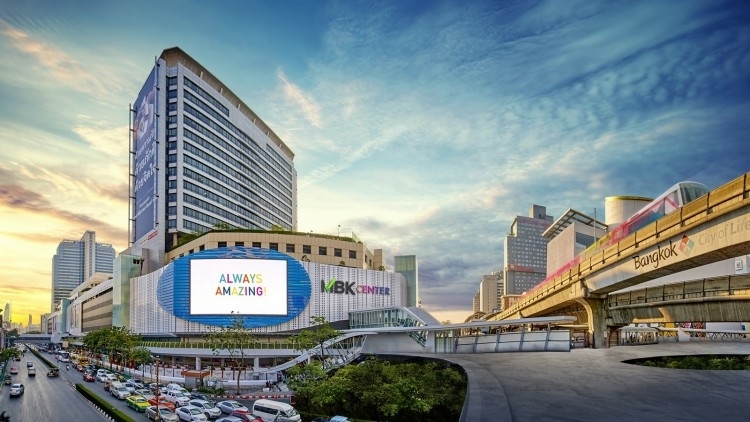
MBK Centre shopping mall plans to develop and improve the retail space left vacant by Tokyu Department Store once the latter withdraws from its business operations in Thailand at the end of January.
The store had announced it was ceasing operations after facing three consecutive years of losses.
MBK said on Thursday it has a plan to develop and improve the retail space left vacant by Tokyu’s exit in line with the centre’s business strategy to meet the demands of customers, business partners and shareholders.
“MBK Centre continues to develop its business to maintain sustainable growth and standards as a leading shopping centre in Thailand,” the company said.
Tokyu started its business at MBK Centre in 1985. With a total retail area of 12,000 square metres, the store was the second largest there after SF Corporation.


 Jack Ma/ file photo
  Somchai Treerattananukool, vice president of Marketing and Sales at International Gateway (IG)

 Signage is displayed at a McDonald’s restaurant in Lynwood, Calif., on April 27, 2020. MUST CREDIT: Bloomberg photo by Kyle Grillot.