Thai entrepreneurs urged to partner Indian startups in fast-growing market
TUESDAY, JANUARY 03, 2023
Thai entrepreneurs should join hands with Indian startups to penetrate the fast-growing Indian market, the Department of International Trade Promotion said on Tuesday.
The department’s director-general, Phusit Rattanakul Seriroengrit, said startup business in India has continued to grow, thanks to support from the Indian government to stimulate the economy in the long term.
He said the number of Indian startups has increased exponentially from 400 to 70,000 over the past eight years (2014-2022), adding the number is likely to increase further, especially in India’s second-tier cities.
“The Indian government organised an event ‘Huddle Global 2022’ in Kerala state on December 15-16 last year which featured seminars on attracting foreign investment to expand the startup businesses there,” he said.
Phusit Rattanakul Seriroengrit
He said many countries are interested to invest in India’s startup business, especially countries from the Middle East and Europe.
He added that the Indian government is organising “Invest Madhya Pradesh-Global Investors Summit 2023” in the central state of Madhya Pradesh on January 11-12 to promote high-potential Indian startups.
“This is an opportunity for Thai entrepreneurs to join hands with Indian startups to penetrate the Indian market,” he said.
Each Indian state has different resources and expertise. For instance, he said Kerala state has expertise in spices and herbs, while Madhya Pradesh has expertise in chemicals and biomaterials.
“Each Indian state has a specific institution which serves as the centre for startup development,” he said, adding that specific institutions also connect Indian startups with foreign investors.
Nearly 12 million foreign tourists visited Thailand last year
TUESDAY, JANUARY 03, 2023
As many as 11.81 million foreign tourists visited Thailand last year, the Tourism Authority of Thailand (TAT) said on Tuesday.
Thai and foreign travellers were expected to generate 1.5 trillion baht in tourism revenue for the country last year, TAT Governor Yuthasak Supasorn said.
He said most foreign visitors last year came from Malaysia (1.95 million), followed by India (965,994), Laos (844,959), Cambodia (591,657) and Singapore (589,770).
Most foreign visitors entered Thailand via Suvarnabhumi Airport (6.09 million), followed by Phuket International Airport (1.56 million), Don Mueang International Airport (972,614), Sadao Border Checkpoint (729,976) and Nong Khai Border Checkpoint (348,529).
Yuthasak Supasorn
“TAT aims to attract at least 25 million foreign travellers to Thailand this year, generating 2.38 trillion baht in tourism revenue,” he said.
Yuthasak expects at least 5 million Chinese tourists to visit Thailand this year once the country lifts travel restrictions from January 8 onwards. He also expects around 300,000 Chinese tourists to visit Thailand in the first three months of this year.
“Chinese tourists are expected to begin their trips after January 15,” he said, adding that independent Chinese travellers would arrive in Thailand earlier than other groups of Chinese tourists.
He said Thailand would take care of Chinese tourists based on hygiene and safety similar to other foreign visitors.
So far, Japan, India, Italy, Malaysia, South Korea, Spain, Taiwan and the US have imposed tighter requirements, including negative Covid tests on travellers from China, where infection rates are soaring. However, Thailand has not tightened rules for Chinese visitors, its biggest overseas market before the pandemic struck in 2020.
Sharp jump in spending by Thais on parties and travel during New Year holidays, poll shows
TUESDAY, JANUARY 03, 2023
The majority of people spent money on parties and get-together activities, according to a poll conducted by the University of the Thai Chamber of Commerce (UTCC)’s Centre for Economic and Business Forecasting on people’s spending during the year-end and New Year.
The results of the poll, revealed on Tuesday, surveyed an undisclosed number of participants.
Of the respondents, 68.4% said they spent money on parties/get-togethers, while 60.4% said they spent money on domestic and overseas travel; 47.7% spent on religious ceremonies or donations during the year-end; some 31% bought household appliances; 27.6% said they bought luxury items such as jewellery; 17.1% spent on alcohol for New Year celebrations; and 10.7% bought lottery tickets to try their luck in the New Year.
The UTCC said it was notable that this year only 9.4% of respondents said they spent New Year time relaxing at home, compared to 43.6% in 2021. This signals a big jump in travel demand during the New Year holidays, the UTCC said.
The UTCC had earlier estimated that around 103.03 billion baht would be spent by Thais during the New Year festival this year, a 20.1% increase from the previous year and the highest in 17 years.
“It would be the first time that consumer spending would be exceeding 100 billion baht since 2007,” the UTCC president, Thanavath Phonvichai, said last month.
He added that with the support of the government’s stimulus measures, such as “Shop Dee Mee Kuen” (Shop and Payback) and “Rao Tiew Duay Kan” (We Travel Together) schemes during the first quarter of next year, the country’s economy is expected to grow by 0.1% to 1%.
Phuket tourism revs up, 12 million arrivals expected this year
TUESDAY, JANUARY 03, 2023
Phuket expects to welcome 12 million domestic and foreign tourists this year, marking an 85% recovery from 14 million visitors in 2019, before the Covid-19 pandemic hit Thailand.
The Thai Hotels Association Southern Chapter said on Tuesday that China’s move to lift travel restrictions on January 8 will see almost 1 million Chinese tourists visiting the island by mid this year.
“Of the 12 million travellers expected to visit Phuket in 2023, 8 million will be foreigners and 4 million from within the country,” the association’s chairman Sueksit Suwanditthakul said.
He said Phuket is counting on visitors from China, India, Australia and the Middle East during the low season, and in preparation, hotels in the province have started recruiting staff.
“The occupancy rate of hotels in Phuket is expected to be 80% from January to February before declining to 70% in March,” he said.
Sueksit went on to say that Phuket welcomed 8.5 million visitors last year, 4.5 million of whom were foreign arrivals.
He said the hotel occupancy rate on the island from January to November last year was 45%. He added that judging by the occupancy in December, he expects hotels to be 76% full because most foreigners stay in Phuket for at least a week or two.
“In November, Phuket saw a surge in Russian tourists, or 27% of all foreign arrivals, followed by India [11%], Singapore [6%], Australia [5%] and the United Kingdom [5%],” he said.
He added that December saw 6,730 flights land at Phuket International Airport, 3,000 of which were international flights.
“Phuket’s daily average for flights in December was 217 or about 50% of the 450 flights per day average in 2019,” he added.
2023 positive for Thailand as EECO predicts full economic recovery
MONDAY, JANUARY 02, 2023
The Thai economy should return to the pre-pandemic level by mid this year thanks to the recovery of the tourism sector and private consumption, the Eastern Economic Corridor Office (EECO) reckons.
The agency said on Monday that it believes the economy will expand by 3.8% this year.
“However, there is still the risk of declines in export due to rising production costs and high-interest rates,” EECO said.
The economy expanded by 4.5% in the third quarter of last year, it said
“Investment in production and construction sectors in the third quarter of last year rose despite rising production costs,” it said.
EECO said the operators of 376 projects in industries targeted for the Eastern Economic Corridor (EEC) have won investments worth 247 billion baht for the first nine months of last year.
The target industries include next-generation automotives, medical and wellness tourism, agriculture, food for the future, robotics, aviation and logistics, biofuels and biochemicals, and digital technologies.
“Investment in these industries is expected to expand further,” EECO said.
It added that 77 factories worth 6.66 billion baht had been set up in the EEC in the third quarter last year, 13 of which worth 1.66 billion are located in Chachoengsao, 40 worth 2.43 billion baht in Chonburi and 24 worth 2.55 billion in Rayong.
Thailand’s property sector unfazed by inflation, expects a profitable 2023
MONDAY, JANUARY 02, 2023
As many as 120,000 residential units are expected to be snapped up this year despite rising inflation, property firm Supalai said in its latest prediction.
Supalai director Prasas Tangmatitam said that listed real-estate companies had sold 115,902 units last year compared to 75,364 in 2021. He said this was a clear indicator of the property market’s expansion.
Prasas reckoned that the sale of property had risen because homebuyers in the 26-30 age group had not been affected by the economic fallout of the Covid-19 crisis.
He said he expects the Thai property market to regain confidence thanks to a pick up in tourism and investment since the third quarter of 2022.
He also said that the rising prices of construction materials and high mortgage rates triggered by inflation should not affect the property market much.
“Taking all factors into account, demand for new homes is expected to stand at 120,000 units this year,” he said.
Prasas said property firms will probably be working hard on promotions to woo young homebuyers this year to stimulate the sale of residences.
Ninja Van Clinches Gold and Silver Trophies at the “Marketing Excellence Awards 2022”
SUNDAY, JANUARY 01, 2023
Ninja Van Thailand, Southeast Asia’s leading logistics provider, has been awarded gold for Excellence in Media Strategy and silver for Marketing Team of the Year for its “Rubber Ring Man” advertising campaign.
The campaign is to highlight Ninja Van Thailand’s brand attributes and reinforce its commitment to hassle-free deliveries.
The “Marketing Excellence Awards 2022′ or MEA is organized by MARKETING-INTERACTIVE, a leading online magazine in Asia with focus on advertising and marketing. Based in Singapore, the magazine is accessible to high level marketing executives not only in Singapore but also in Hong Kong, Malaysia, the Philippines, Indonesia and Thailand.
This is the first year that Thailand is hosting the annual marketing award designed to reward and celebrate outstanding work from across the marketing communications spectrum.
Pierce Ng, Chief Operating Officer of Ninja Van Thailand, said, “Winning the coveted awards at the prestigious “Marketing Excellence Awards” is a great achievement for Ninja Van Thailand’s marketing team. The accolades reinforce the team’s success in raising the significant brand awareness of Ninja Van and maintaining top-of-mind status amongst consumers.
In the commercial, customers’ pain points are portrayed and rectified to demonstrate that Ninja Van is ready to assist our customers in solving their logistical challenges.”
Ninja Van Thailand, operating in Thailand since 2016 with a focus on B2B, has attempted to shift its focus to diversify its sources of revenue. The company found that its brand was not top in the mind of target customers because it lacked visibility to the public, partly because its fleet was unbranded. They decided to design a campaign that let the public know about their goal of creating “Hassle Free Deliveries” for customers.
The company selected a TV personality and host as its brand presenter, Woody Milintachinda, to convey the messages.
They also surveyed parcel delivery services’ customers and identified key factors which later became the 4 RTBs (reasons to buy) that would serve as the brand’s main USPs (unique selling points) for the brand campaign.
They came up with the Rubber Ring campaign. The use of Rubber Rings is a play on words in the Thai language. The word “ring” or “loop” in Thai is “Huang” which meant “worry.”
The same word is used to describe inflatable swimming tubes. Therefore, they decided to use rubber “rings” or inflatable swimming tubes to represent the “worries” or concerns that a shipper had when they shipped a parcel.
In its commercial ads, collateral, and supporting content, rubber ring imagery is prominently featured with each “ring” or “worry” representing a real concern that a shipper experiences.
All of its content shows how Ninja Van can alleviate a shipper’s worries with various service guarantees or commitments. By using Ninja Van services, the customers can remove the rubber “rings”, weighing down on them, essentially removing their worries and making their experience with Ninja Van hassle-free.
The Rubber Ring campaign was used to introduce its Brand Presenter. Once this portion of the campaign ends, they plan to continue with the second portion of the campaign which would talk about its Customer Service commitments and how they help resolve issues that may arise when a customer ships items.
“The reason they decided to highlight how they resolved issues is because of the nature of the logistics business. Due to such high volume, there will always be a small percentage that faces some issues,” according to the company.
Tencent woos Thai customers with AI cloud and promises of easy access to China’s market
SUNDAY, JANUARY 01, 2023
Nongluck Ajanapanya
The cloud computing unit of Shenzhen-based Tencent is promoting its services and products to Thai businesses as vital components that ensure a smooth entry into China’s massive market.
Tencent (Thailand) chief operating officer Chang Foo told reporters that its Cloud-AI is a “must-have technology” for Thai businesses transforming their operations to compete in the borderless, digital economy.
Moreover, the advantage of using Tencent’s technology and services is that the company also provides the know-how necessary for a smooth and successful entry into China’s market, where its products and services are ubiquitous, Chang said.
Thai businesses can equip themselves with the cloud and artificial intelligence (AI) technologies necessary to compete in the emerging digital economy globally while also ensuring their technology is built for success in China, he explained.
Chang touted Tencent’s Cloud-AI as one of its key products, saying it could have a transformative effect on the Thai businesses that use it.
His pitch to Thai businesses arrives at a time when they are swiftly upgrading technology to ensure competitiveness in an increasingly digital economy.
The International Data Corporation, which provides market research and advisory services, recently reported that companies in the region are investing heavily in technology that focuses on digital interaction to enhance customer engagement. AI is regarded as the key to accelerating efforts to engage consumers.
Chang said Tencent’s Cloud-AI was the ideal technology for accomplishing this, explaining that it can respond to swift changes in customer expectations.
Cloud computing refers to the delivery of computing services, such as storage, databases, networking, software, analytics, and intelligence, via remote servers connected by the Internet. It provides faster innovation, enhances economies of scale, and greater flexibility.
Thai companies are rapidly shifting to cloud computing and Tencent can provide the technology to accomplish this, Chang said. The rapid increase in digital technology in Thailand is also increasing opportunities for Tencent to sell its Digital Enabler, he said.
Business transactions now require online data dissemination, storage, processing, and transfer, as well as enhanced security and management, Chang said.
The growing use of digital audio and video to improve customer engagement requires businesses to replicate in-person interactions with AI technology, he added.
Tencent’s products and services merge AI and cloud computing, Chang said.
“Tencent Cloud provides a number of Cloud-AI solutions … We also offer a variety of cloud security solutions to meet the needs of entrepreneurs, such as Cloud Streaming Service and Tencent Cloud Web Application Firewall,” he said.
Furthermore, Tencent already has the know-how to help businesses succeed in the shift to Web3, which Chang described as the next phase of the internet. It allows users and content developers to connect independently.
“As we enter the era of ‘Immersive Convergence’, with digital technology at the forefront of this transition, the integration of digital technology and the real economy has become a top priority. We are witnessing the formation of a stronger connection between the digital and real worlds as mainstream technologies become more widely used.” Chang said.
He said Tencent’s more than 20 years of experience and its thorough understanding of Chinese consumers can help its Thai customers succeed in China.
Tencent Cloud is one of the world’s leading cloud computing companies. It has two high-performance data centers in Thailand.
Evolving cloud computing can transform Thai SMEs, US tech company says
SATURDAY, DECEMBER 31, 2022
Nongluck Ajanapanya
California-based NetApp says it can help Thai companies remain competitive in an increasingly digital economy by reducing their costs and increasing their agility through cloud computing.
Cloud computing can help Thai companies, particularly small and mid-sized enterprises, swiftly accelerate their ability to thrive amidst the digital transformation, NetApp country manager for Thailand, Anchalee Towannasoot, told Nation Thailand.
Cloud computing gives businesses the flexibility, scalability, and agility necessary to increase innovation and enhance value, she said, referring to the remote servers cloud computing uses.
Thai companies are fully aware that digital transformation is key to their competitiveness. A recent study by Deloitte found that 95% of the Thai businesses it surveyed agreed that digital transformation was necessary for their survival.The digital transformation is being driven by competitors as well as customers, the survey found.
“This is where NetApp comes in,” Anchalee said. “By working closely with our local customers and partners … we can unleash the full potential of digital and cloud technologies. We are committed to helping our customers achieve simplicity, security, savings, and sustainability in their cloud journey.”
The key question is: How can businesses better manage data’s exponential growth, intrinsic value, and movement? She added that businesses must also find ways to improve data security and customer experience.
Cloud computing is the solution, Anchalee said, adding that it also allows users to better deflect cyber-attacks through its data-centric approach for bolstering cyber resilience.
Anchalee said NetApp helps companies remove barriers that separate data and ensure it is delivered where, when, and how businesses need it by providing hybrid cloud infrastructure.
Hybrid cloud infrastructure refers to a mix of in-house and remote data storage.
Cloud computing saves IT costs and gives small and mid-sized companies the same capacity for managing data that large companies have. This increases the competitiveness of smaller companies without requiring massive investments in IT, Anchalee said.
She also said that cloud computing had evolved to a new level, explaining: “We have reached the next phase of the evolved cloud, which focuses on delivering a better hybrid multi-cloud experience. Organizations will need a strategic approach that seamlessly connects a mix of clouds and on-premises environments.”
The shift to cloud computing is unstoppable, Achalee said, citing the 2021 study “Unlocking Thailand’S Digital Potential” by AlphaBeta. The study, which was commissioned by Google, said that if Thailand made full use of digital technologies it would generate up to THB 2.5 trillion baht in annual economic value by 2030 – an amount equivalent to about 16% of Thailand’s 2020 GDP.
Achalee said NetApp’s 30 years of cloud innovating experiences has positioned it as a leader in the provision of “unified hybrid multi-cloud experience with built-in data protection”.
“NetApp offers our customers something no other company can: the freedom to choose NetApp’s cloud services natively in the world’s top three public clouds, AWS, Azure, and Google Cloud,” she added.
Anchelee said that increasing NetApp’s relevance in Thailand remains its key focus over the next five years.
She said Thailand is at a crossroads and that many businesses here have already created hybrid multi-cloud environments. This represents a significant opportunity for NetApp to help them “smoothly transition into the next phase of the evolved cloud”.
According to Statista, Thailand’s public cloud market revenue will increase by more than 270% from 2022 to 2027, reaching US$2.75 billion a year.
Beginning on January 3 of the next year, Krungsri bank will increase its lending rates by 0.40% per annum, said Chief Strategy Officer Pairote Cheunkrut on Friday (December 30).
The decision about the adjustment was made following a gradual economic recovery in Thailand and an increase in interest rates, added Pairote.
The rates are changing as follows:
– Minimum Loan Rate (MLR) is increased by 0.40% to 6.48% – Minimum Overdraft Rate (MOR) is increased by 0.40% to 6.725% – Minimum Retail Rate (MRR) is increased by 0.40% to 6.65%
He added that Since Thailand’s economy continues its gradual recovery, the decision to raise rates has been made following the current economic climate, rising global interest rates, and the change in contributions to the Financial Institution Development Fund (FIDF) at a normal rate of 0.46%.
Factors namely market conditions and economic factors were taken into account before making this decision. The Bank remains committed to offering timely and appropriate support to meet the needs of customers, aligning with the Thai Bankers’ Association (TBA)‘s practice, he added.


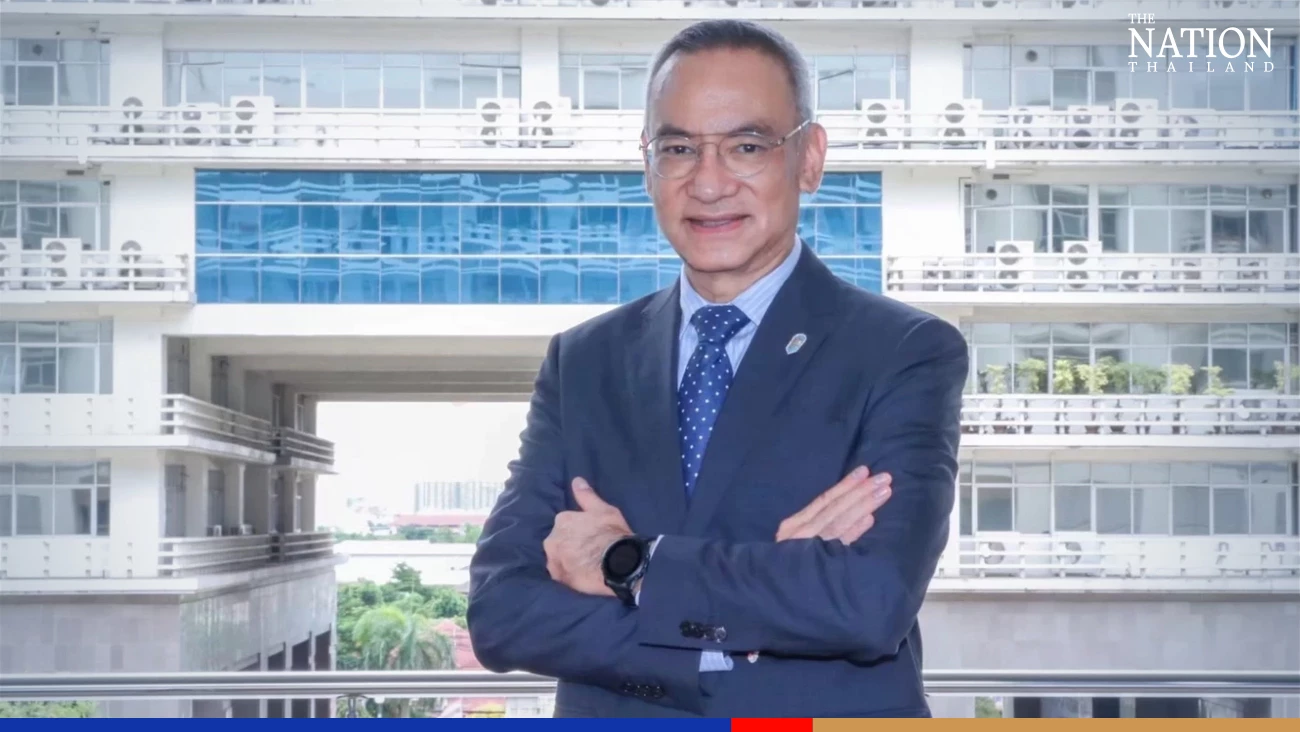 Phusit Rattanakul Seriroengrit
 Yuthasak Supasorn







 SootinClaimon.Com