Demand for Thai durian rising in China despite new Covid-19 wave
FRIDAY, DECEMBER 30, 2022
Demand for Thai durian in China is still strong, an exporter said on Friday dismissing rumours that orders had dropped due to a spike in Covid-19 infections in the mainland.
“The price and orders of durian are not dropping as some have speculated,” said Thanes Sangthaworn, general manager at Chumphon’s Morakot Central Fruit Market. “Chinese importers are actually ordering more to build their stocks ahead of the Chinese New Year, which falls on January 22, when consumption of the fruit is expected to soar.”
Thanes said that due to the high demand, the price of Thai durian has risen across the board compared to the previous week.
For instance, Mon Thong durians of AB and ABC grades are now going for 160 baht and 140 baht per kilogram respectively, up from 140 baht and 120 baht per kilo from last week. Grade C Mon Thong now goes for 110 baht/kg instead of 100 baht/kg last week.
“With the price rising 50 baht/kg on average, durian is still a very lucrative crop for farmers in the South,” he added.
Thanes reckons the export of durian to China will see fewer obstacles next year as China announced this week that it will scrap quarantine measures for overseas arrivals from January 8, as well as downgrade Covid-19 from a Class A to Class B infectious disease.
The Commerce Ministry estimates the total output of durian in the South this year will stand at 600,000 tonnes, 80% of which has already been sold locally and overseas. December marks the end of the harvest season for durian in the South and consumers have to wait until late February when durian farms in the East enter harvest season.
Massive investment planned for new Smart City in Eastern Economic Corridor
THURSDAY, DECEMBER 29, 2022
The government will invest 1.35 trillion baht to transform the eastern seaboard’s Eastern Economic Corridor (ECC) into a regional financial hub and a world-class smart city by 2037, deputy government spokesperson Rachada Dhnadirek said on Thursday.
In the first 10 years, the focus will be developing the business and financial area, regional business offices, government offices, medical facilities, and educational centres, she said.
This will be followed by creating a world-class smart city by 2037 to serve as a model for the development of smart cities across the country, Rachada added.
The smart city will be known for an innovative technological system that covers seven main areas: smart mobility, smart energy, smart environment, smart living, smart people, smart economy, and smart governance, she said.
The corridor spans three eastern provinces: Chon Buri, Rayong, and Chachoengsao.
Rachada said that most of the 1.35 trillion baht investment – 1.18 trillion or 87.5% – would come from the private sector, while 37.6 billion (2.8%) would be contributed by the Thai government, and the remaining 131.1 billion (9.7%) by state enterprises or joint ventures between the public and private sectors.
She said the 1.35-trillion-baht investment would expand gross domestic product by 2 trillion baht within 10 years.
The EEC smart city is expected to have about 350,000 residents by 2032, she said. At least 200,000 new jobs are expected to be created by that time. It will generate more than 1.2 trillion baht in salaries for employees and create between 150 and 300 start-ups, she said.
Ex-deputy minister slams Prayut government over failure to tackle rising household debt
THURSDAY, DECEMBER 29, 2022
A former deputy labour minister in the Cabinet of Prime Minister General Prayut Chan-o-cha on Thursday criticised the government for its lack of clear-cut measures to tackle household debt.
Narumon Pinyosinwat, who served in the second Cabinet of Prayut, said in her Facebook post that the government was only focused on debt moratorium measures and was providing new loans without a clear strategy to solve the problem.
As a result, she expects many families to remain trapped in their debt burden.
Narumon said the government should set a target for household debt at not more than 80% of gross domestic product (GDP) because a higher ratio of household debt would lead to a sluggish economy in the long term.
Narumon said all economic forecast agencies agreed that the global economy would slow down next year and it would affect the Thai economy, which would aggravate the household debt situation and affect economically vulnerable groups.
The impact of the global economic slowdown can already be felt in the contraction of exports by 6% in November and export growth for the year would slow down to 3.2%, compared to a 6% expansion last year, Narumon said.
The ex-deputy minister said the flood crisis in 2021 and the Covid-19 pandemic had aggravated the household debt situation from 80% of GDP in 2019 to 90% of GDP this year.
Suntory with National Blood Centre launch the “BRAND’S Young Blood”
THURSDAY, DECEMBER 29, 2022
Now in its 23rd year, the campaign – organized under the “Give Blood…Give Lives” concept – invites the new generation, especially university students to give the “gift of giving” by becoming new blood donors or making blood donations once every three months.
Other activities include short songwriting, singing, lip-syncing and dancing contests as well as the “TikTok Challenge” to win royal trophies, scholarships and other prizes. With roadshows and mobile blood donation centres to be located at academic institutes nationwide, the campaign expects to receive 90,000 donated blood units from across the country.
Associate Professor Dootchai Chaiwanichsiri, M.D. The Director of the National Blood Centre said “The main mission of the National Blood Centre, the Thai Red Cross Society in 2023 is to ensure the national blood supply is sufficient and of the best quality. And each year the Blood Centre expects to receive an estimated 2.5 million units of donated blood in response to the demand which rises by 8-10% annually,”.
Currently, Thailand still sees an unpredictable frequency of public blood donations and sometimes blood supply shortages such as during the Covid-19 pandemic when donations plunge significantly.
Therefore, it is important for the National Blood Centre to create a network of alliances to raise awareness and send messages across to encourage more people to make blood donations which bring about an adequate blood supply and sufficient blood reserve in case of emergency or other unavoidable circumstances where blood is urgently required for at least two to five days.
“Potential and sustainable donors – our main target group – are university students across Thailand as they still have many years to make blood donations. The campaign aims to raise awareness and understanding among Thai youth that blood donations are important and require mutual responsibility and that they can give the “gift of giving” by becoming new blood donors or regular donors who make blood donations once every three months. Their donated blood will become the national blood supply to be used in case of emergency. The campaign also encourages them to be socially responsible and to make voluntary blood donations without expecting anything in return. This year, the National Blood Centre expects to receive 90,000 donated blood units nationwide,” Dootchai said.
Mathuvalee Stithyudhakarn, Director of Regulatory Affairs and Corporate Affairs, Suntory Beverage & Food Thailand and Indochina
Mathuvalee Stithyudhakarn, Director of Regulatory Affairs and Corporate Affairs, Suntory Beverage & Food Thailand and Indochina said “Under ‘Giving Back to Society’ corporate value, Suntory organizes various activities to give back to the society both in terms of the environment as well as people’s health and wellbeing. The company, therefore, initiated the “BRAND’S Young Blood” campaign in collaboration with the National Blood Centre, the Thai Red Cross Society.”
In 2020-2021, the Blood Centre received 68,701 donated blood units under the campaign, a reflection of the power of giving among students and youth who truly had the volunteer spirit. Furthermore, Suntory also organized the BRAND’S Young Blood Game Creator contest under the topic of BRAND’S Young Blood Hero where participants were encouraged to create computer games, and present their concepts alongside audio and visual communication to create public awareness with regard to blood donations and the power of giving. The team I am Alone from Rangsit University won the top award from the computer game competition.”
Now in its 23rd edition, the BRAND’S Young Blood 2023 campaign also sends mobile blood donation units to various academic institutes and organizes roadshow activities to raise national awareness and to provide a space for university students to shine and be part of the campaign. Major activities include:
1. Short songwriting contest on the topic of “Give Blood…Give Lives”: University students aged 17-22 years old can use this opportunity to show off their songwriting skills to compose a song encouraging the young generation to make blood donations and to create the power of giving. The winner shall receive a trophy from HRH Princess Maha Chakri Sirindhorn, a certificate and a scholarship worth 30,000 baht as well as BRAND’S Essence of Chicken for one-year consumption. Entries can be self-submitted or sent by mail from 5 January to 31 March 2023. The winner will be announced on 31 May 2023.
2. “TikTok Challenge” dancing contest featuring “Give Blood…Give Lives” short song: University students aged 17-22 years old can now showcase their dancing skills and creativity by singing, dancing or lip-syncing “Give Blood…Give Lives” and post it on TikTok to create public awareness with regard to the importance of blood donations among the new generation. The winner shall receive a certificate and a scholarship worth 10,000 baht along with BRAND’S Essence of Chicken for one year of consumption.
The application can be sent by email via Project.nbc@redcross.or.th. Entries can be posted on TikTok from 1 June to 30 September 2023. The winner will be announced on 10 November 2023.
University students interested in joining activities in the campaign including blood donations can visit www.blooddonationthai.com and http://www.brandsworld.co.th or call 02-255-4567 and 02-263-9600 ext 1743 for more information.
CLMV, Mideast markets, future products crucial to business survival in 2023 slowdown: EXIM Thailand
WEDNESDAY, DECEMBER 28, 2022
EXIM Thailand has advised Thai businesses to stay adaptable penetrate CLMV and Middle East markets – which have strong prospects and demand for Thai goods – in order to survive and thrive in 2023.
The export-import bank said companies should develop products in response to global trends of the new era, leveraging EXIM Thailand and public sector mechanisms as tools for business development toward the Next Normal world. This would respond to expected 3.5% expansion of the Thai economy in the new year, against decelerating global economic growth of 2.7%, driven by recovery of Thai tourism and private sector consumption, while exports could slow down in line with global economic outlook, it said.
Rak Vorrakitpokatorn, President of Export-Import Bank of Thailand, revealed that the Thai economy in 2023 tends to continue to grow by around 3.5% against the slowing global economic growth predicted by the International Monetary Fund (IMF) to 2.7%, the lowest in 21 years (excluding the years with crisis eruption).
Thailand is among only a few countries whose economic growth is on an upward trend compared to the foregoing year fueled mainly by the clearly improving tourism with foreign tourist inflows expected at more than 20 million, doubling that of the previous year, along with support from domestic demand, particularly private sector consumption which has expanded on the back of the increased farm income and improving employment in service sectors in line with tourism recovery.
Meanwhile, export which has for the past 2 years been the main engine in propelling the Thai economy has tended to slow down as reflected by EXIM Index which has consistently declined and hit the lowest level in 8 quarters.
Thai export in 2023 is forecast to expand by only 1-2%, decelerating from 7-8% in 2022, pressured by slowing global demand, particularly from Thailand’s major trade counterparts like the US and Europe which are at risk of falling deeper in economic recession, coupled with the slower than expected Chinese economic recovery.
Furthermore, global supply chain disruption, though having relieved to some extent, still carries high uncertainties, and the prevailing foreign exchange fluctuations as well as geopolitical tensions could inevitably dampen Thai export looking forward.
EXIM Thailand President said that there are certain ways for Thai entrepreneurs to make it through the global economic slowdown and capture opportunities in the markets where there is still room for Thai goods, comprising:
1. Penetration of the CLMV (Cambodia, Lao PDR, Myanmar and Vietnam) and the Middle East markets, such as Saudi Arabia. In the first 10 months of 2022, Thai export to such markets recorded a growth of over 15% and 26% respectively.
2. Export of goods that would fill upmarket gaps, such as tourism-related goods like foods, fruits, cosmetics, home appliances, etc., and products that cater to conflicting countries in international politics, such as the export of Thai electrical appliances in substitution for Chinese ones in the US market, and the increasing relocation of production bases from China to Thailand for several industries, e.g. electric vehicles and electronics products. With such developments, Thai entrepreneurs should also be enabled to make a presence in the supply chains of the future.
3. Export of goods responsive to the trends of new generation consumers, such as wellness and eco trends which have become the New World Order.
Rak further said that EXIM Thailand is fully equipped to work alongside the public and private sectors to assist Thai entrepreneurs including individuals in doing business, capturing upcoming opportunities to drive business development in linkage with global supply chains, and developing strategies and product lines to cater to the demand of new generation consumers who support businesses conducive to sustainability in economic, social and environmental dimensions, and better quality of life and health of consumers toward balanced and sustainable development of all sectors.
“The year 2023 could still be embattled with numerous risks but fresh opportunities are poised to emerge in the markets where Thai goods could access with a competitive edge. EXIM Thailand is well-positioned to give advice and offer full-fledged financial solutions to strengthen Thai business sectors from individuals to community enterprises and business entities of all levels who aspire to expand their businesses beyond Thailand,”.
In view of this, it is easier today to do business on various online trade platforms. What really matters is business operators’ capability to adapt to and catch up with global advancement making the best use of mechanisms and supports from the public sector, including EXIM Thailand.
” We are committed to performing our role as Thailand Development Bank which dares to take ‘One Step Ahead for All Development’ to transform Thailand and the world at large into a better place of tomorrow for all,” added Rak.
The top three delivery trends in the coming year will be healthy foods, afternoon snacks, and subscription-based delivery service, according to the latest Grab study.
The “Delivery Trend Report 2022” surveyed behaviours and attitudes of over 30,000 users of the platform in six Southeast Asian countries – Singapore, Malaysia, Indonesia, Vietnam, and Thailand.
It found three big trends emerging as people move into the “new normal” post-pandemic lifestyle.
People are increasingly focused on their health and wellness, which is driving growth of associated products, said Chantsuda Thananitayaudom, senior director of Commercial & Marketing for Grab Thailand, in the report issued on Wednesday.
Healthy and plant-based alternatives are no longer niche, as 74% of Thais say they eat at least one healthy meal every two to three days, and 2 out of 5 consumers have tried plant-based in the last six months.
Meanwhile, as people return to the office, snack breaks at work have become a popular option for group activities. According to the report, 2 out of every 5 Thais snack at least once a day, and 64% admit to ordering snacks for more than one person.
The rising popularity of delivery services is driving up Grab revenue as calculated by delivery Gross Merchandise Value (GMV).
Chantsuda said Grab’s regional GMV soared by 24% in 2022 from last year, with 7 out of 10 consumers polled saying deliveries are now a permanent part of their lives.
“In Q2 2022, Grab’s total transacted delivery sales volume increased by 24% year on year, while average basket sizes of spending via GrabFood and GrabMart increased by 17% year on year,” she added.
Air purifiers, high-waist jeans, and kitty beds are among Alibaba’s trending products for next year
WEDNESDAY, DECEMBER 28, 2022
E-commerce will continue roaring ahead next year as sales of medicinal supplements, fashion, and kitchen products surge, e-commerce titan Alibaba said.
Globally, e-commerce sales will surpass US$5 trillion this year, resulting in a surge of money circulating in business-to-business portals.
E-commerce has remained vital for B2B business despite the war in Ukraine, supply chain hiccups, and energy shortages, Alibaba said.
Sales of health and wellness products will rise next year, Alibaba said, citing a survey by the World Economic Forum that found 62% of respondents were more concerned with their health now than they were before the pandemic.
Unease about health and the environment will foster greater use of eco- and health-friendly products, such as medicinal supplements, air purifiers, and reusable water bottles, Alibaba said.
Fashion products, especially shapewear and high-waist jeans, will also see rising demand due to the resumption of social and outdoor activities. Demand for beauty and personal care products, like sleeping masks and electric toothbrushes, will surge by more than 50% over the next few years, reaching $131 billion in revenue by 2026.
Kitchen items, like portable blenders and air fryers, are likely to post strong sales next year as consumers continue to dine at home. Even after the pandemic, seven out of 10 consumers will continue to cook at home, Alibaba said.
The company also said that home decor products would continue to see high sales, with growth forecast to rise by 4.8% a year. Online sales of home decor products saw revenue of $641.4 billion in 2020, Alibaba said.
Spending on childcare-related products – including baby monitors, swings, and toys – is rising. In the US alone, demand for these goods climbed by 17% in 2021, according to Alibaba.
Demand for pet-care products, like kitty beds, will also rise, it said, citing Google Trends.
Sales of office supplies and gadgets will continue to surge as more people work from home, Alibaba said.
Business associations succeed in lowering rise in power price
THURSDAY, DECEMBER 29, 2022
The cost of electricity for businesses will not rise as much in January as proposed earlier this month, following an intensive and coordinated effort by Thailand’s largest business associations to prevent what they described as a crippling rise in the fuel tariff (Ft) rate.
The Energy Regulatory Commission has approved a decision by the Electricity Generating Authority of Thailand (Egat) to reduce a rise in the Ft rate during the first quarter of next year, commission secretary-general Komkrit Tantravanich said on Thursday.
Komkrit said the commission made the decision at a meeting on Wednesday.
The Ft rate is determined by the cost of fuel used for generating electricity and the cost of buying power from private generating plants.
Komkrit said Egat asked his commission to review the new Ft rates in light of fluctuations in the prices of natural gas and diesel, as well as exchange rates. The accumulated debt of Egat was also a factor considered.
Komkrit said the commission on Wednesday approved an Ft rate for non-household electricity of 154.82 satang per unit (100 satang is one baht). This was a 35.52 satang reduction from the Ft rate of 190.44 satang per unit approved on December 14.
The reduction from the December 14 proposed rate for non-household electricity lowers the per unit rate to 5.33 baht from the proposed 5.69 baht per unit, from January to April, Komkrit said.
The commission also approved Egat’s proposal to maintain the Ft rate for household electricity use at 93.43 satang per unit, keeping the power rate for households at 4.72 baht per unit during the same period.
On December 14, the ERC decided to raise the Ft rate for non-household use by 97.01 satang to 190.44 satang per unit, which would result in a power rate for non-household use of 5.69 baht per unit – an increase of 21%.
The ERC’s decision sparked a backlash from businesses, which argued that a rise in the cost of electricity would undermine their profitability and competitiveness when they had yet to fully recover from the pandemic.
The Joint Standing Committee on Commerce, Industry, and Banking held a press conference earlier this month at which leaders of the country’s largest business associations appealed to the government, as well as Prime Minister Prayut Chan-o-cha, to delay the proposed rate hike, saying it could damage members of their associations as well as the country’s economy.
Bangkok, Chonburi top choices for foreigners buying property
WEDNESDAY, DECEMBER 28, 2022
Bangkok and Chonburi are the two provinces where most foreigners bought condominiums in the first nine months of 2022, the Government Housing Bank’s Real Estate Information Centre (REIC) said.
The centre reported on Wednesday that 75.2% of condominium ownership that had been transferred to foreign nationals from January to September this year were either in the capital or the eastern resort province.
Bangkok saw 3,325 units sold to foreigners, or 45.6% of all condo units sold to foreigners, while Chonburi recorded 2,155 units sold, or 29.6%.
Other provinces on the list, but at significantly lower numbers than the top two, are Samut Prakan, Phuket, and Chiang Mai.
The REIC noted that about 30% of condo units sold to foreigners are pre-owned.
“Sales of condominiums to foreign customers have been gradually rising in the past two years, but are still lower than the pre-pandemic level,” said the centre. “The reopening of borders, lifting of Covid restrictions, recovery of the tourism industry and the local economy are factors that have driven up property sales to foreigners.”
The REIC added that the biggest foreign clients of the condominium market have always been Chinese. However, since China has yet to fully reopen, Thai property sellers must seek buyers from other markets, such as Europe, the US, Australia, Russia and India.
The centre said that the recent announcement by the Chinese health authorities that the country will scrap quarantine measures for overseas arrivals starting January 8 could be an immediate gamechanger for Thailand’s tourism industry, but the impact of the measure on the property sector would be visible only late in the second half of 2023.
“The property market trend for foreigners next year remains to be seen, as Chinese buyers might not have the same purchasing power as before, due to the battering the Chinese economy has taken for nearly two years because of the strict zero-Covid policy,” the REIC pointed out.
“Plus, to boost its economy the Chinese government could impose measures that promote domestic spending rather than overseas purchases.”
Tourism officials moving swiftly to attract Chinese visitors
WEDNESDAY, DECEMBER 28, 2022
The Tourism Authority of Thailand (TAT) is in talks with its offices in China to update its plan for attracting Chinese tourists following Beijing’s announcement earlier this week that it will begin relaxing restrictions on travel on January 8.
The discussions began after China’s National Health Commission announced on Monday that it would allow Chinese citizens to apply for passports for travel from January 8, after nearly three years of strict pandemic border controls prevented tourists from leaving the country.
Visitors from China were Thailand’s largest tourism market before the pandemic struck in 2020.
TAT executive director of the East Asia region, Chuwit Sirivejkul, said the Chinese government’s announcement that it would allow its citizens to apply for passports for travel from January 8 was already leading to a surge of interest in travel to Thailand.
Online searches for travel packages skyrocketed in China and airlines have asked its aviation authorities to increase the number of international flights.
Chuwit said the TAT was working with its five offices in China – in Beijing, Shanghai, Guangzhou, Kunming and Chengdu – to revise its plan to attract Chinese tourists to Thailand.
“Chinese travel agencies have launched travel packages to Thailand for the upcoming Chinese New Year festival,” Chuwit added.
TAT governor Yuthasak Supasorn said the agency would discuss its plan to attract Chinese tourists with hotel operators, airlines, and airport operators.
Tourism and Sports Minister Phiphat Ratchakitprakarn said Thailand would increase next year’s target for international tourists, from 20 million to 25 million, following Beijing’s announcement. This will help the country reach its 2023 tourism revenue target of 2.38 trillion baht, the minister said.



 Mathuvalee Stithyudhakarn, Director of Regulatory Affairs and Corporate Affairs, Suntory Beverage & Food Thailand and Indochina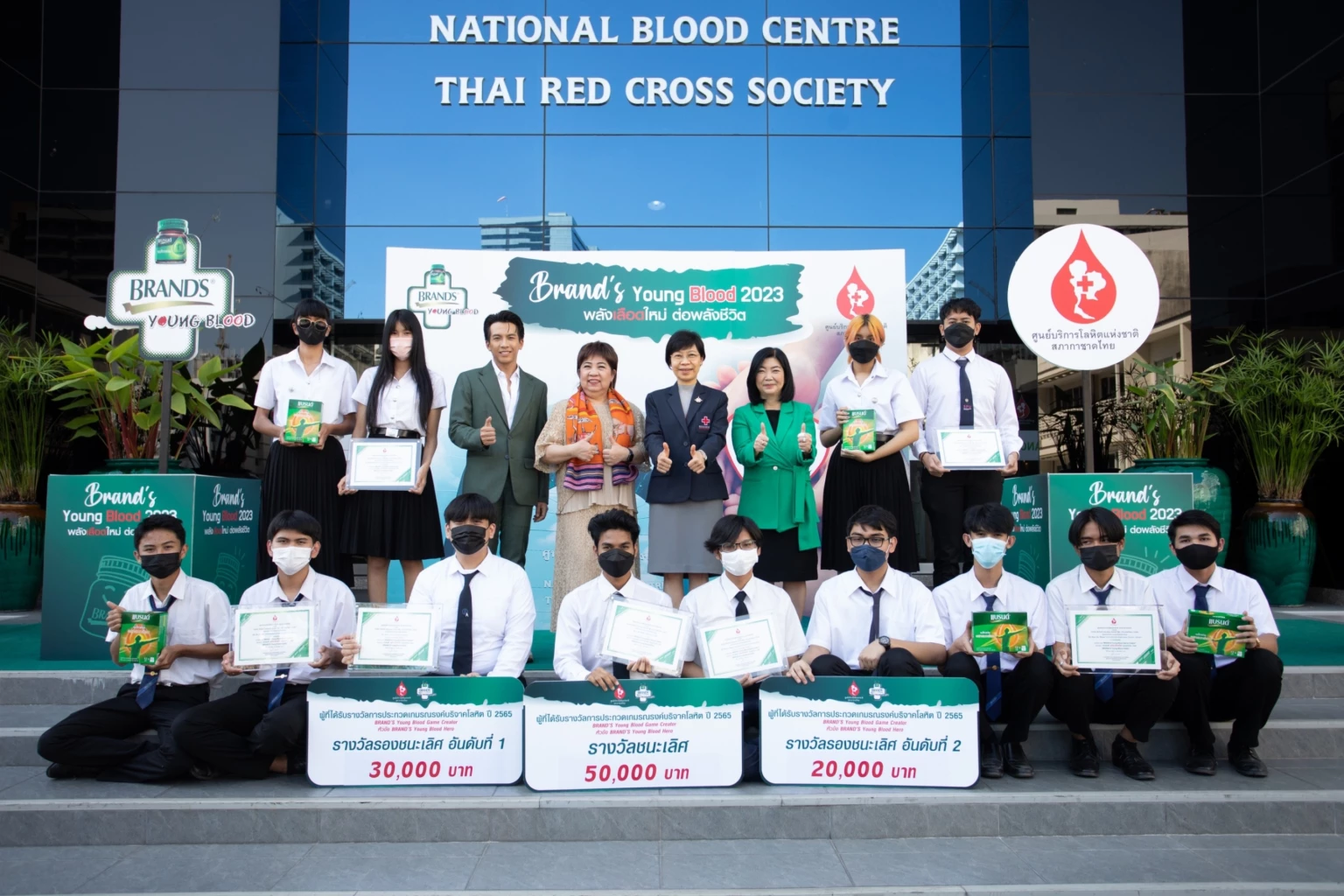




 SootinClaimon.Com