Thai AirAsia expects to achieve 90% of pre-Covid business next year
TUESDAY, DECEMBER 20, 2022
Budget airline Thai AirAsia is confident that its business will continue to improve next year because of increasing foreign arrivals and the possibility of China relaxing its travel rules.
Thai AirAsia CEO Santisuk Klongchaiya said the prospects for robust business next year were already reflected in the rebound in passenger numbers and aircraft utilisation rate this year.
Santisuk expressed confidence that Thai AirAsia would fly 10 million passengers this year, thanks to the strong market for domestic flights. Last year, the airline flew only 2.93 million passengers, he said.
As the tourism sector has started to revive, Thai AirAsia’s aircraft utilization rate last month rose to 12 hours, the CEO added.
He said Thai AirAsia expected seat occupancy would reach 81% by the end of this year.
Thai AirAsia has a 32% share of the domestic market.
The budget airline believes its flights and passengers would return to pre-Covid levels next year because of the strong domestic passenger market and return of foreign tourists, he said.
Thai AirAsia has the biggest fleet among low-cost airlines in the country with 53 planes and it is confident that China would start relaxing its travel restrictions in the first quarter of next year.
Once China reopens its country to foreign tourists and allows its people to travel outside the country, Thai AirAsia would deploy 10 of its planes that are now grounded, Santisuk added.
He said Thai AirAsia has changed its strategy not to depend on a particular market and has opened routes to India, South Asia and Asean nations as well as a route from Don Mueang to Fukuoka, Japan this year.
“Next year, we’ll open new routes to Nepal, Pakistan, and other cities in India. This gives us the confidence that the volume of our passengers next year will reach about 90% of the pre-Covid level,” Santisuk said.
One of the latest routes is Don Mueang-Taipei, which has four flights per week. Flights can now be booked via airasia Super App, the CEO added.
KResearch revises Thailand 2023 GDP forecast to 3.2 % amid global economic recession
TUESDAY, DECEMBER 20, 2022
Kasikorn Research Center (KResearch) has revised its 2023 GDP growth projection to 3.2 % from the previous projection range of 3.2-4.2 %, though its 2022 GDP growth forecast has been upgraded to 3.2 % from the earlier projection of 2.9 %.
Nattaporn Triratanasirikul, KResearch Deputy Managing Director, viewed that the global economy will see a significant slowdown in 2023 – presenting an obstacle for the Thai economic recovery. The US and Eurozone are set to show no growth given their policy rate hikes to tame inflation and the impact of an energy crisis in Europe.
Meanwhile, it is more likely that China will reopen its borders in the second quarter of 2023. However, close attention should be paid to the situation there, especially the number of infected cases and deaths, as well as the adequacy of China’s public healthcare system. China may face a new wave of COVID-19 which would affect its economic activity. Under these circumstances, KResearch holds a cautious view towards China’s reopening and therefore maintains its 2023 projection of international tourist arrivals at 22 million. Meanwhile, the Thai economy is projected to grow at 3.2 % next year.
As for the interest rate outlook, we at KResearch are of the view that the US Federal Reserve (Fed) may continue to raise its policy rate to 5.0 % or even higher during the first quarter of 2023. The Fed Funds rate will likely stay at an elevated level throughout 2023. Meanwhile, Thailand’s Monetary Policy Committee is expected to hike its policy rate at its two upcoming meetings by 0.25 % each, reflecting that domestic interest rates are also on an upward trajectory. Regarding the Baht’s outlook during the first quarter of 2023, it is expected that the Thai currency will strengthen even as the Fed presses ahead with its planned policy rate hikes because markets have already priced in such a likelihood.
For the financial sector, it is expected that loans of commercial banks registered in Thailand will grow within a limited range of 4.2-5.2 % YoY (median rate of 4.7 %) in 2023 versus the 5.0 % growth projected for 2022, in line with economic conditions facing numerous risks and an uneven recovery expected in the business sector. The cautious trend will also be reflected in asset quality within the commercial banking system, as the NPL to total loan ratio in 2023 may not improve from that seen in 2022. NPLs are projected to stay within a range of 2.55-2.80 % at the end of 2023, compared to the 2.65-2.75 % expected at the end of 2022.
Kevalin Wangpichayasuk, KResearch Deputy Managing Director, said, “Regarding the Thai business outlook for 2023, KResearch views that most industries are still dealing with numerous challenges. In terms of operating costs, electricity prices, labour costs and interest rates are rising. Meanwhile, business income would be affected by major economies falling into a recession and the Baht’s appreciation, thus causing a decrease in Thai exports. Additionally, as the impacts of such factors on each industry vary, business income in 2023 will likely see an uneven or “K-shaped” recovery. Hotels and restaurants, private hospitals and the retail sector may lead the recovery. Meanwhile, industries which will see their recovery take longer or even see a contraction are real estate and exports of electronic devices and electrical appliances.”
In addition, Thai businesses will increasingly be challenged by environmental, social, and governance (ESG) issues in 2023. Thailand’s trading partners will likely adopt more stringent rules and regulations, especially the EU’s Carbon Border Adjustment Mechanism (CBAM). Meanwhile, Thailand will focus more on developing definitions and a practical green taxonomy to move towards a green economy. Given this, Thai business operators need to study and make adjustments in order to enhance their long-term competitiveness.
NBTC urged to create national platform to help digital TV operators compete with OTT service
MONDAY, DECEMBER 19, 2022
Jarupong Krisanaraj
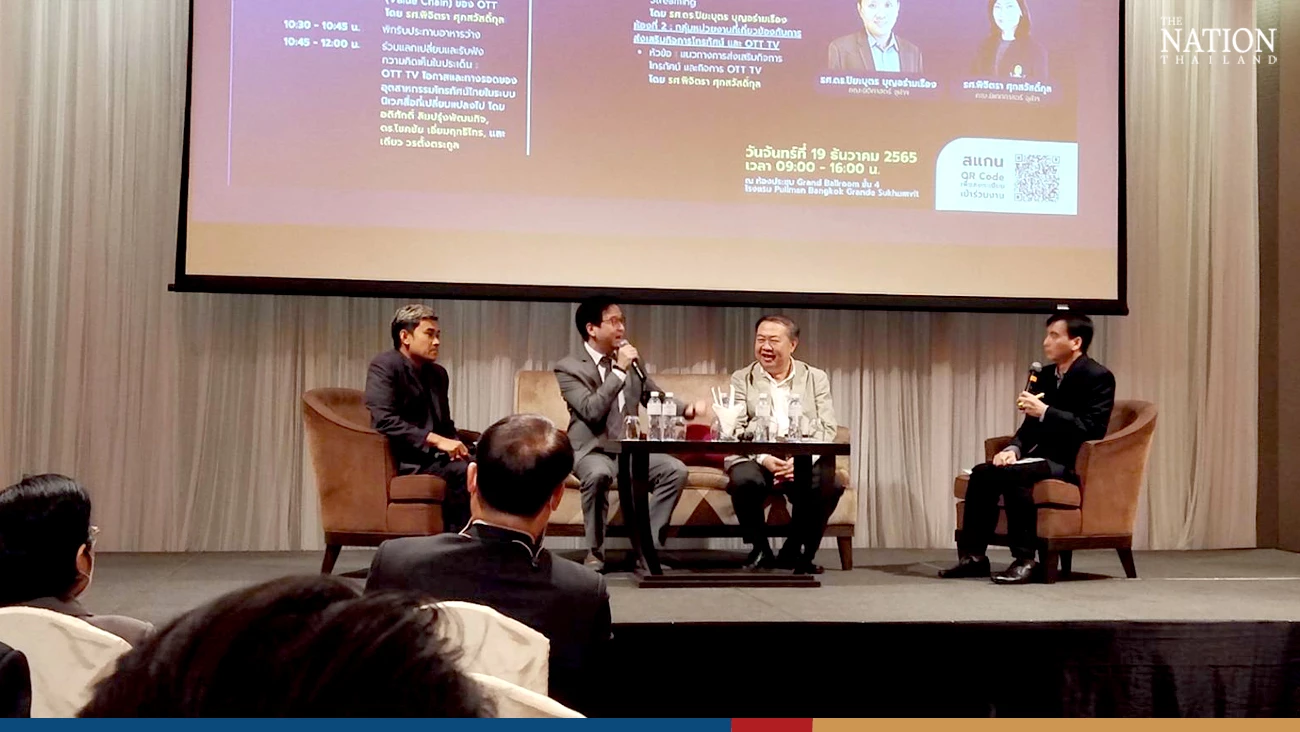
Digital television (TV) industry experts have advised the National Broadcasting and Telecommunication Commission (NBTC) to revise regulations and create a national TV channel that would boost operators’ competitiveness.
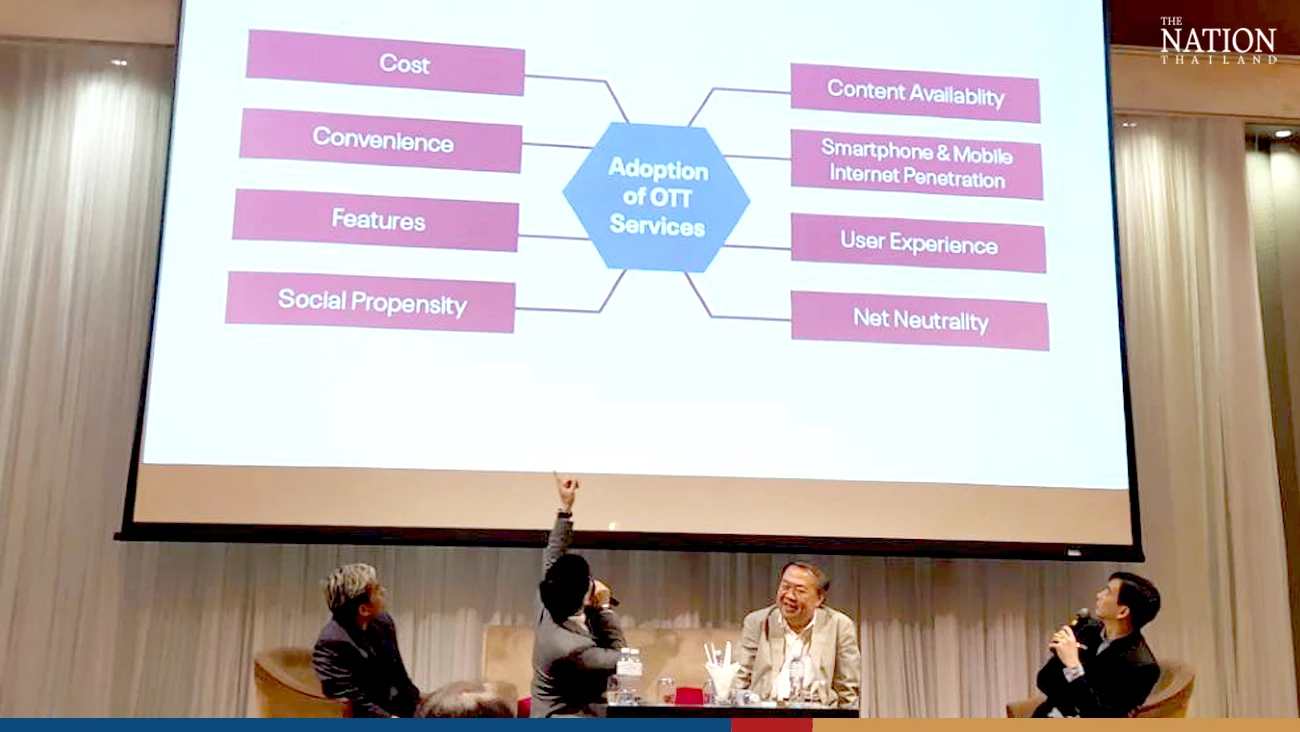
Three panellists made the remarks during a seminar “Opportunities and solutions for Thailand’s digital TV industry amid changes in media ecosystem” at Pullman Bangkok Grande Sukhumvit on Monday.
Special adviser to Nation Group Adisak Limparungpatanakij said he sees opportunities for digital TV operators as content providers.
“Up to 80% of content nowadays comes from digital TV operators,” he said.
He urged the NBTC to revise regulations so as to make digital TV operators more competitive, otherwise over-the-top (OTT) streaming could dominate Thailand’s media market.
“OTT streaming has already won the hearts of people in Greater Bangkok,” he pointed out.
Tero Entertainment’s deputy managing director, Choakchai Eaimrittikrai, said the emergence of OTT streaming services, such as Netflix, Hulu, YouTube and Line TV, has forced digital TV operators to become content providers.
He added that digital TV operators’ revenue from advertising had halved from 60 billion baht to 30 billion baht due to disruption caused by OTT streaming.
“Digital TV operators have been forced to pay more attention to changes in consumers’ demands, such as broadcasting content on digital TV, Facebook and TikTok at the same time,” he said.
He asked the NBTC to create a national TV channel that would enable Thai content providers to broadcast content both locally and internationally.
He added that content on the national TV channel should include food, music, travel and sports, which could help promote Thailand’s soft power.
“Content providers simply make content to be broadcast on the national TV channel and add the subtitles,” he said, adding that it is weird that no Thai content is broadcast overseas.
He said that it is the NBTC’s duty to promote Thai content internationally to further strengthen Thailand’s digital TV industry.
He added that Tero Entertainment is currently in talks with a global sports media platform, Group One Holdings, on broadcasting One Lumpinee Muay Thai matches in 179 countries worldwide.
One 31’s chief operating officer, Deaw Woratangtragool, said there were still opportunities for Thailand’s digital TV industry to become content providers amid the streaming disruption.
“Amid the digital transition, many digital TV operators have already adjusted themselves to become content providers,” he said.
Echoing Choakchai’s idea, he said a national TV channel would benefit Thailand both locally and internationally.
The three panellists also agreed that digital TV was still effective despite changes in the media ecosystem.
However, they pointed out that outdated laws and regulations, as well as a lack of infrastructure and NBTC’s support, posed challenges to Thailand’s digital TV industry.
“Digital TV is still effective, but content providers must pay more attention to consumers’ needs,” the panellists said.
Food delivery businesses face slump in demand next year: KResearch
MONDAY, DECEMBER 19, 2022
The research arm of Kasikornbank (KBank) expects the food delivery business sector in Thailand to slow down next year in line with the situation in other countries as the Covid threat slowly ebbs.
A KResearch Centre study, released on Monday, said that the food delivery business in Thailand next year would be valued at around 81 billion to 86 billion baht next year, a contraction of 0.8% to 6.5% compared to the value this year.
The centre said the value would still be much higher than before the Covid pandemic.
KResearch said its study from early this year until now had found that about 37 per cent of its survey group had reduced the frequency of food delivery service since the improvement in the Covid-19 situation and as people have started returning to work.
KResearch said single-dish and basic foods remain the biggest group of foods ordered via food delivery services.
It said the categories of foods and drinks that faced a slowdown were drinks and bakery because employed people prefer to buy them on their own since their return to work.
KResearch advised operators of food delivery services to diversify their operations and allow customers to hire their riders to buy goods from supermarkets and convenience stores, or try to expand their services to the provinces to be able to sustain their business.
Epic wins for BBDO in Asia and MENAP at the Epica this year, focusing on impact first
MONDAY, DECEMBER 19, 2022
Middle East and Asia, December 16, 2022 – At the recently concluded Epica, IMPACT BBDO, BBDO India and BBDO Bangkok brought home gold and silver awards with works focused on impact, led by three creatives who are pioneering the field.
In contrast to other design and advertising awards, the Epica Awards are judged by the industry’s press, composed of 35 editors and senior reporters from marketing magazines. Out of the 3099 entries that were made this year, some work took home top honours. Among those who got recognised for their work were IMPACT BBDO, BBDO India and BBDO Bangkok.
In response to these wins, Josy Paul, Chairman of BBDO India, who has spoken at Cannes Lions in the past about the future of advertising said; “It’s evident from the work celebrated here, among all of the winning work that approaching advertising with a mindset of creating acts, not ads, is the way to go. The future of advertising should be about driving meaningful action. That’s what good advertising does. It goes beyond just selling physical goods. It has the power to help us see societal issues differently.”
In recent years, brands have been shifting their focus from the pursuit of just profit to purpose-driven work.”It’s truly a remarkable time to be creative. You have the power and the opportunity to truly make your work bring about a real impact on society, and make a positive change,” said Ali Rez, Chief Creative Officer IMPACT BBDO MENAP.
BBDO India’s see ‘Equal #ShareTheLoad’, for P&G’s Ariel detergent brought home gold at the Epica Awards for Creativity 2022 last week. Since 2015, Ariel India has continuously sparked conversations around the unequal division of domestic chores within households and urging more and more men to #ShareTheLoad. The works have won multiple Cannes Lions since then, but most importantly, they’ve made an impact in India. In 2015, 79% of men believed that laundry is a woman’s job. Today, that number has dropped to 26%.
Regarding their latest Epica win, Josy said; “We are thrilled that our work has been recognized at the Epica Awards for Creativity 2022. We started the brand movement for social change in 2015 and it’s rewarding to see its impact on brand and culture. It’s the longest-running movement for any brand in India that’s been winning year after year. We thank our enlightened client and all our media, PR and activation partners for this record-breaking win. Our latest film has been viewed over 115 million times across platforms and we’re humbled to see so many people that keep watching the work, keeping the impact going.”
Thasorn Boonyanate, Chief Creative Officer, BBDO Bangkok added; “#ShareTheLoad has helped us see gender equality and in-home equality from a different perspective. This is not about content, but context and insights.”
Provoking change is sometimes referred to as changing the way we approach change. “In a time when newspapers are dying, AnNahar with the help of Impact BBDO decided to show how important they are. It’s one of the most powerful pieces of work I’ve seen so far in 2022,” said Thasorn Boonyanate.
IMPACT BBDO brought home gold for this work dubbed “The Elections Edition”, a campaign that was directed at Lebanon’s government claiming they couldn’t hold elections due to ink and paper shortages. Driven by this, the local newspaper AnNahar and Impact BBDO created a campaign to donate ink and paper to the government’s printing associate instead of using it to print their daily edition. To take a stand, the daily paper ceased publishing for the first time in its 88-year history. The powerful message of support spread like wildfire across the nation as citizens donated books, magazines, and paper to the government to secure the election.
Ali Rez, Chief Creative Officer IMPACT BBDO MENAP said “AnNahar truly believes in the impact purposeful work can have. They have consistently been incredibly courageous about using their newspaper to drive positive change in society – in this case, to protect Lebanese democracy. This campaign is the perfect example of how a traditional medium can be transformed into a highly integrated activation that is medium agnostic. In fact, the print medium for a newspaper in this case didn’t even exist.”
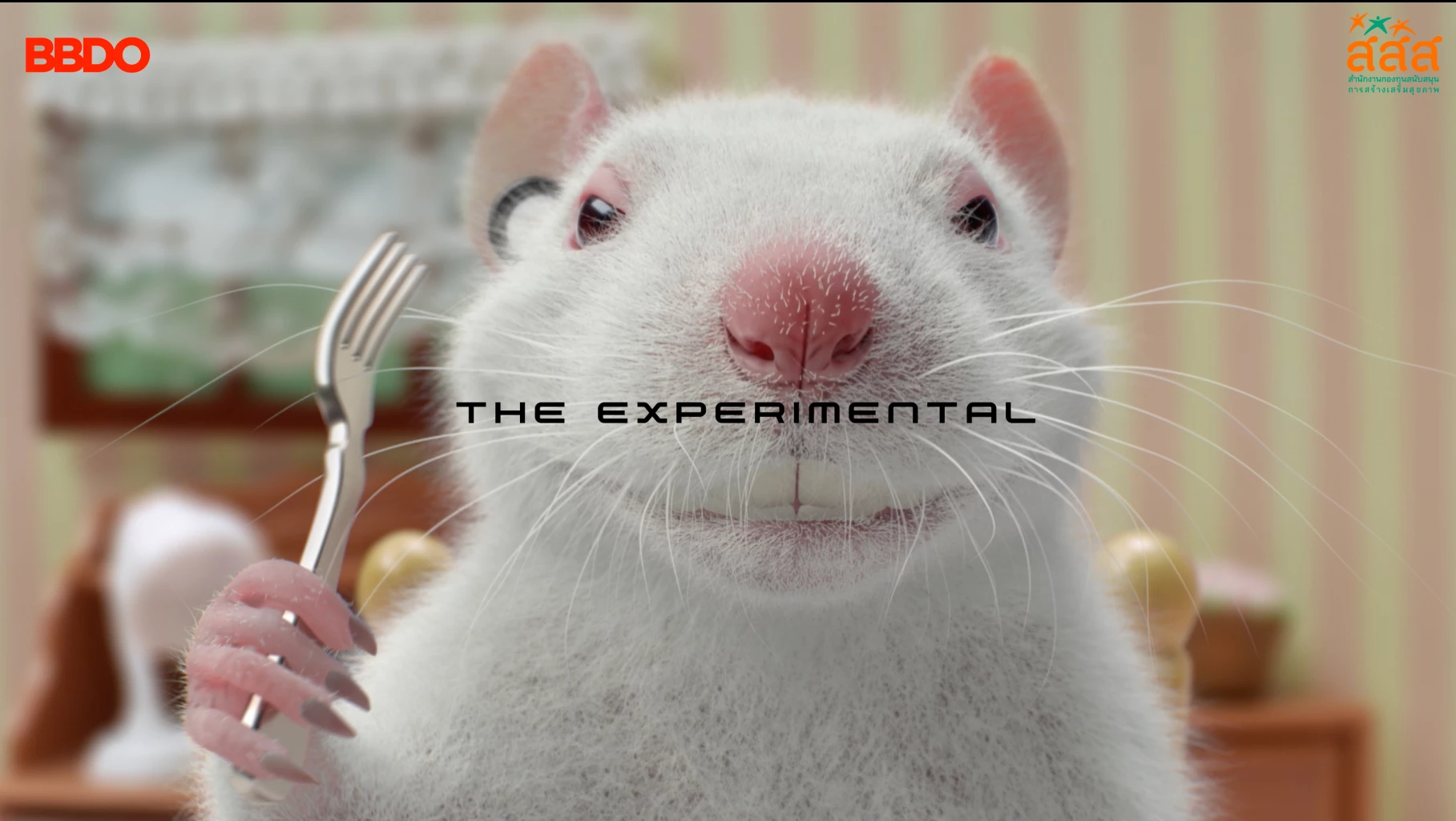
When it comes down to tackling serious health issues, Thailand has taken an unusually entertaining route. Responding to concerns raised by the Thai Health Promotion Foundation about the adverse effects of e-cigarettes on cognitive memory functions, with young Thais as the majority of users, BBDO Bangkok with lead Creative Head Thasorn Boonyanate wanted to approach this serious topic with a less serious tone.
The result? An entertaining animated mini-film called “The Experimental”, featuring a brilliantly funny fuzzball, Sunny, in a Korean laboratory and Baifern, his girlfriend, discussing Sunny’s e-cigarette addiction and its side effects. And for its approach, it won a Silver in the Public Interest – Health & Safety Online Film category.
“We were over the moon when we heard that we had won the Epica Award. Teens are crazy about e-cigarettes, but few are aware of the damage they actually pose. By adding a little humour, the video became a sharing hit, and even sparked the creation of memes among this young gen. Hopefully, more people will become aware of the effects of e-cigarettes. Thanks to Mum Films’ legendary commercial director Suthon Petchsuwan for partnering with us on this work,” added Thasorn Boonyanate, Chief Creative Officer of BBDO Bangkok.
Commenting on ‘The Experimental,’ Ali Rez said that “Thailand has an amazing reputation of making brilliant comedy work, and this is yet another fantastic example of it. A serious topic tackled in a humorous manner with memorable storytelling, engaging characters, and superb craft: absolutely brilliant.”
Josy Paul added, “The Experimental’ is fully mental! It is humour on steroids! A brilliant mix of animation and live-action story, this highly entertaining film presents genuine medical advice with ‘Thai’ lightness and quirkiness.The Thai Health Promotion Foundation and BBDO Bangkok promotes good health in a fresh and compelling manner.”
You can find the full results of this year’s winners at epica-awards.com.
PTTEP sells off its Angola operations to Somoil Bloco
MONDAY, DECEMBER 19, 2022
PTT Exploration and Production (PTTEP) has informed the Stock Exchange of Thailand that it is selling off its operations in Angola.
PTTEP CEO Montri Rawanchaikul said his company had informed SET on Friday that it has decided to sell all its investments in the deep offshore Block 17/06 in Angola to Somoil Bloco 17/06, a subsidiary of Sociedade Petrolifera Angolana.
The sale is being overseen by PTTEP (Angola) Corporation and will be completed by mid-next year, Montri said.
PTTEP’s Block 17/06 in the west of Angola is at development stage. Once the block has been sold off, all PTTEP’s operations in Angola will come to a halt in line with the company’s strategy, Montri added.
CPF to buy back 200 million shares in 3rd go at stabilising its stock price
SUNDAY, DECEMBER 18, 2022
Charoen Pokphand Foods (CPF)’s board of directors has resolved to buy back 200 million more shares for the third time in two years to prevent its stocks from falling.
The board announced that CPF will start buying back 200 million shares or 2.32% of its paid-up shares from Monday to June 18, and will pay no higher than 115% of the average closing price of the stock over five working days.
Between October 31 and December 13, the average price of CPF shares was 24.36 baht apiece.
The board said it has decided to carry out another round of buyback because it believes the stock market value is lower than the stock’s book value.
The board is also confident that the buyback will result in an increase in CPF’s return on equity (ROE) and earnings per share.
Before the board announced the latest round of buybacks, CPF’s stocks closed at 23.80 baht, marking a 6.67% drop year to date (YTD). The shares’ price vs EPS ratio is at 10.60 and price to book value ratio of 0.79, the board said.
CPF insists that it has enough cash to carry out the new round of buybacks. As of September 30, the CPF had 2.23 billion baht in cash and said it expects to receive another 9.5 billion baht in dividends from its subsidiaries in the fourth quarter for profits earned in the first half of this year.
Hence, the company said it is confident it will have enough cash to buy back shares.
CPF has bought back its shares twice before to stop its price from dropping in the fallout of the Covid-19 pandemic.
The first buyback was launched on March 13, 2020, when the company said it would buy back 400 million shares or 4.65% of all paid-up shares for 10 billion baht. The first buyback round lasted from April 1 to September 30.
CPF’s shares had dipped to the lowest in four years, below the resistance line of 20 baht to 18.70 baht per share on the day the board resolved to buy back the shares.
As of September 30, CPF had bought back 197.673 million shares or 2.30% worth 6.084 billion. The programme drove up CPF’s shares to gradually peak at 35.25 baht on July 20, 2020, before sliding back to 28 baht per share at the end of the programme.
Then on September 30, 2021, the board resolved to spend another 10 billion baht to buy back more shares from October 15 to April 14, 2022. During this period, CPF’s share price fluctuated in the 25.75 to 23.50 range.
Brokerage firm CGS-CIMB said the actual value of CPF’s shares was about 30.65 baht per share and recommended that people buy up to sell at a profit when the price rises to 33 baht.
Thailand needs to change to strengthen its bilateral ties with Japan, say experts
SUNDAY, DECEMBER 18, 2022
Stephanie Adair
Japan has played a big part in Thailand since bilateral ties were first established 135 years ago. Now Thailand has nearly 100,000 Japanese expats and is the base for some 6,000 Japanese companies.
However, many experts believe Thailand’s potential as an important partner is being held back by its lack of infrastructure.
The experts were speaking at Nagoya University’s annual Thai alumni seminar, “Past 135 Years and the Future: Japan and Thailand Relationship in the Changing World”, held recently at the Japan Foundation in Bangkok.
Dr Attachak Satayanuruk, a history professor at Chiang Mai University, pointed out that Thailand needs to adapt itself to match Japan as a partner.
“I think other than thinking about what holds us back as a society, we must perceive Japanese people’s way of thinking. In Thailand, it is the system that defines the outcome of each person’s life, while in Japan, people are taught that every outcome defines society as a team.”
Prof Dr Siriporn Wajjwalku from Thammasat University’s Faculty of Political Science agreed, saying that the shift from being a reliable partner to an important one will require Thailand to make adjustments.
“Can Thailand change for Japan to see us as an important partner in the future? Not just in terms of bilateral relations but when it comes to shared production and operating system?” he asked.
Dr Pichet Itkor, a special adviser at Ajinomoto Sales (Thailand), said: “If we look at it, Thailand is mostly a recipient and Japan may not view Thailand as an equal partner but more as a place for investment. If Thailand wants to become a true partner, it will have to elevate its system and upskill the workforce.”
GE Technology to use advanced recycling technology at new facility in S Korea
SUNDAY, DECEMBER 18, 2022
GE Technology will transform end-of-life plastic waste into Honeywell Recycled Polymer Feedstock (RPF) which can be used to create new plastics using Honeywell’s UpCycle Process Technology
Honeywell announced that GE Technology will license Honeywell’s UpCycle Process Technology at their planned advanced recycling facility in South Korea.
The plant will be able to convert mixed waste plastics into Honeywell Recycled Polymer Feedstock (RPF), which will then be used to create new plastics, and help enable the development of a circular economy for plastics.
Production is anticipated to begin in 2025 and is projected to be the first commercialized waste plastics recycling facility to use Honeywell’s UpCycle Process Technology in Korea.
The planned advanced recycling plant is expected to have the capacity to transform 30,000 metric tons of mixed waste plastics into Honeywell RPF per year.
“Honeywell’s UpCycle Process Technology not only allows us to reduce waste by expanding the types of plastics that can be recycled but also displaces the need for fossil fuels in the creation of virgin plastics,” said Woo-Hyun Shim, vice president, GE Technology.
“Enabling a circular economy for plastics in Korea is now possible through our licensure with Honeywell and their UpCycle Process Technology.”
Honeywell’s UpCycle Process Technology is a ready-now technology that utilizes molecular conversion, pyrolysis, and contaminants management technology to convert waste plastic to Honeywell RPF, which is then used to create new plastics.
The UpCycle Process Technology expands the types of plastics that can be recycled to include waste plastic that would otherwise go unrecycled, including coloured, flexible, multilayered packaging, and polystyrene.
When used in conjunction with other chemical and mechanical recycling processes – along with improvements to collection and sorting – Honeywell’s UpCycle Process Technology has the potential to help recycle nearly 90 % of waste plastics. This would represent a considerable increase in the number of waste plastics that can be turned into polymer feedstock
“GE Technology is the first company in Korea to license Honeywell’s UpCycle Process Technology, which will build upon GE Technology’s existing capability in waste collection and mechanical recycling,” said Barry Glickman, vice president and general manager, Honeywell Sustainable Technology Solutions.
“Honeywell’s technology can play a key role in driving a circular plastics economy to tackle the global challenge of plastic waste.” Today’s announcement expands the UpCycle Process Technology footprint, building on Honeywell’s recent announcements in the U.S., Spain, Turkey, China, and Egypt.
Honeywell’s UpCycle Process Technology was created within Honeywell’s Sustainable Technology Solutions (STS) business, which is part of Honeywell UOP.
This latest breakthrough technology builds upon Honeywell’s focus to deliver high-impact, environmentally sustainable solutions for customers and society.
Honeywell committed to achieving carbon neutrality in its operations and facilities by 2035. This commitment builds on the company’s track record of sharply reducing the greenhouse gas intensity of its operations and facilities as well as its decades-long history of innovation to help its customers meet their environmental and social goals.
Approximately 60 % of Honeywell’s new product introduction research and development investment is directed toward products that improve environmental and social outcomes for customers. About GE Technology
GE Technology is a leading waste management company in South Korea with the vision of Plastic Circularity, carbon reduction and Hydrogen Economy. With broad experience operating Material Recovery Facilities for years, GE Technology has been establishing strong value chains and offering full-service waste management and recycling optimization solutions.
Thai company with global ambitions targets net-zero emissions by 2042
SATURDAY, DECEMBER 17, 2022
Opal Varunsuda
Organic growth, with focus on research and development for sustainable expansion, are the key mantras of the SET-listed Eastern Polymer Group Plc (EPG) that aims for a global presence in niche segments.
EPG focuses on investing in world-class, innovative businesses that make polymer and plastic products through its subsidiaries Aeroflex, which makes thermal insulation; Aeroklas, which makes parts and accessories for cars; and Eastern Polypack Co Ltd (EPP), which makes plastic and packaging.
Automotive parts and accessories were the biggest contributors to its revenue, accounting for 50.9% in the second quarter of fiscal year 2022-23 (July 22-Sep 22); insulation accounted for 29.7% and plastic and packaging for 19.3%.
Pawat Vitoorapakorn, the CEO of EPG and Aeroflex Co LtdPawat Vitoorapakorn, the CEO of EPG and Aeroflex Co Ltd, is ambitious. He is not satisfied with dominance in the domestic market. He wants the companies’ products to gain worldwide recognition and his motto is: “The world is the market”.
“Our aggressive business strategies centre on NIN [network, innovation, niche] markets,” he says. “Aeroflex, for example, develops and sells only novel goods protected by legal patents to a niche market. Because of this, we can sell in large quantities in our specialised markets. Only a few manufacturers can compete with EPG globally,” he says.
Speaking of the company’s history, Pawat says: “The Vitoorapakorn family founded Eastern Polymer Group Public Company Limited in 1978. Thermal insulation, vehicle and accessories, plastic and packaging, and R&D are the primary businesses. In 2014, we changed our name to Holding Company and listed on the Stock Exchange of Thailand, raising 2.8 billion baht after having begun with an investment of 1 million baht.
EPG is now investing in domestic and foreign enterprises, focusing on polymer and plastic processing, with revenues from three major industries.”
Aeroflex has factories in both Thailand and the United States. They also work together in China and India. In the second quarter of 2022-23, 76% of Aeroflex’s sales came from outside the country, while only 24% were from Thailand. America, Asia, and the Middle East make up the main international markets, says Pawat.
Eastern Polypack manufactures and distributes disposable plastic food and beverage containers, cups, plates, and bowls under the EPP brand
Aeroklas Co Ltd designs and develops patented vehicle parts and accessories. Aeroklas’ car components and accessories are used to decorate and improve the efficiency of pickup trucks. Aeroklas distributes the brand domestically and internationally.
Eastern Polypack manufactures and distributes disposable plastic food and beverage containers, cups, plates, and bowls under the EPP brand. EPP is a premium brand in the food and beverage industry, he says, adding, the company introduced “eici” last year to expand into non-premium products.
“During the pandemic, the company experienced the same difficulties as other industries because our customers were impacted. Fortunately, we had another business opportunity with Eastern Polypack, which sells food containers. They became the pandemic’s demand-pull delivery food business. As a result, our company did not suffer much of an impact,” he says.
Pawat said that in fiscal year 2022–2023, EPG expects to increase revenue by 12–15%, with a gross margin of 29–32%. He added that the group is focusing on a strategy to achieve sustainable growth in four areas:
▪️ Create organic growth from the core business with technological readiness and highly efficient production capacity that create innovative products to achieve continuity in the new S-curve and to expand the market domestically and internationally to increase market share. ▪️ Build joint venture investments. ▪️ Increase the budget allocated to R&D to develop a new business era in the future. ▪️ Set the long-term aim of achieving “net-zero” greenhouse gas emissions by 2042.
EPG is also committed to its vision of long-term growth by adhering to the motto “Contribution to a better society”. EPG adheres to its commitment of “Creating a World in Harmony with Technology and Innovation”, says Pawat.
“Energy consumption is a fundamental need for business operations, and energy activity generates greenhouse gases. So Aeroflex has set a long-term goal of net zero by 2042,” he says. “Proactive energy conservation measures have been implemented to improve the organisation’s energy efficiency, including a solar rooftop, resulting in total power capacity of 18 megawatts and the ability to absorb 13,500 tons of CO2, saving about 70 million baht per year,” he added.


 Once China reopens its country to foreign tourists and allows its people to travel outside the country, Thai AirAsia would deploy 10 of its planes that are now grounded, Santisuk added.










 Pawat Vitoorapakorn, the CEO of EPG and Aeroflex Co LtdPawat Vitoorapakorn, the CEO of EPG and Aeroflex Co Ltd, is ambitious. He is not satisfied with dominance in the domestic market. He wants the companies’ products to gain worldwide recognition and his motto is: “The world is the market”.
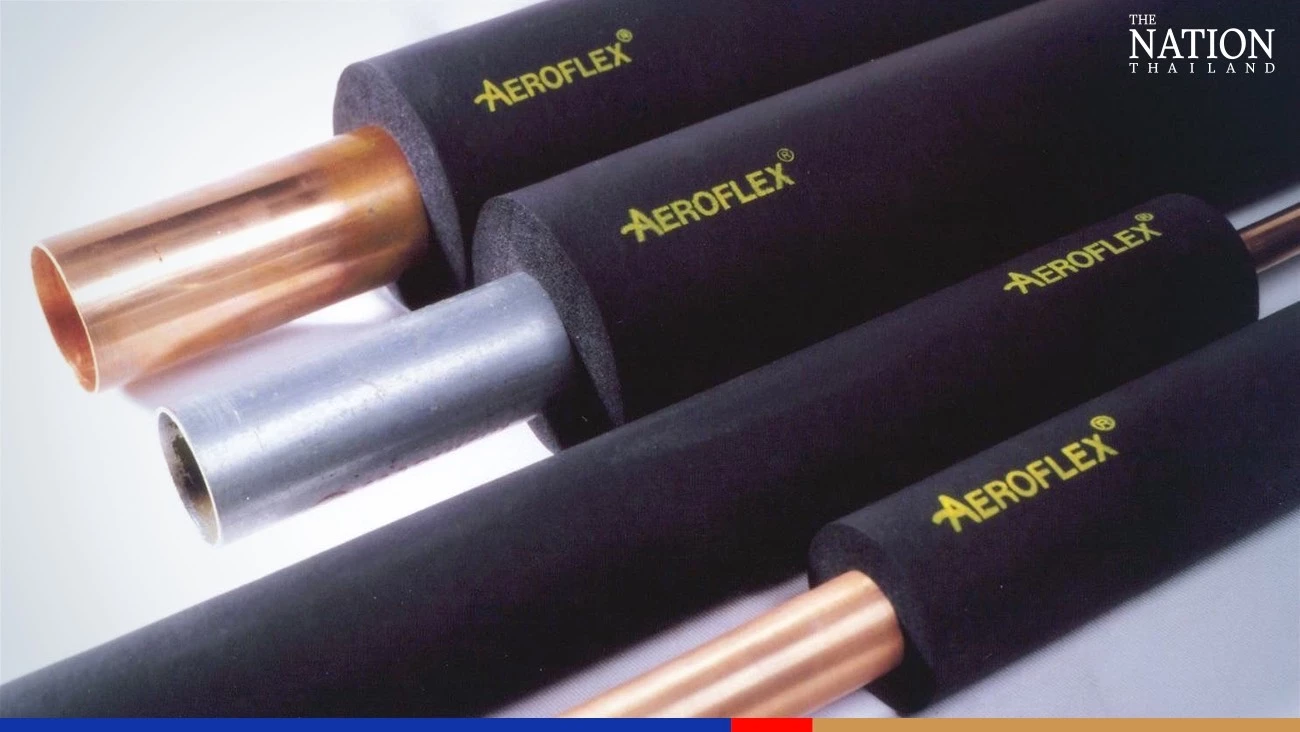 Speaking of the company’s history, Pawat says: “The Vitoorapakorn family founded Eastern Polymer Group Public Company Limited in 1978. Thermal insulation, vehicle and accessories, plastic and packaging, and R&D are the primary businesses. In 2014, we changed our name to Holding Company and listed on the Stock Exchange of Thailand, raising 2.8 billion baht after having begun with an investment of 1 million baht.
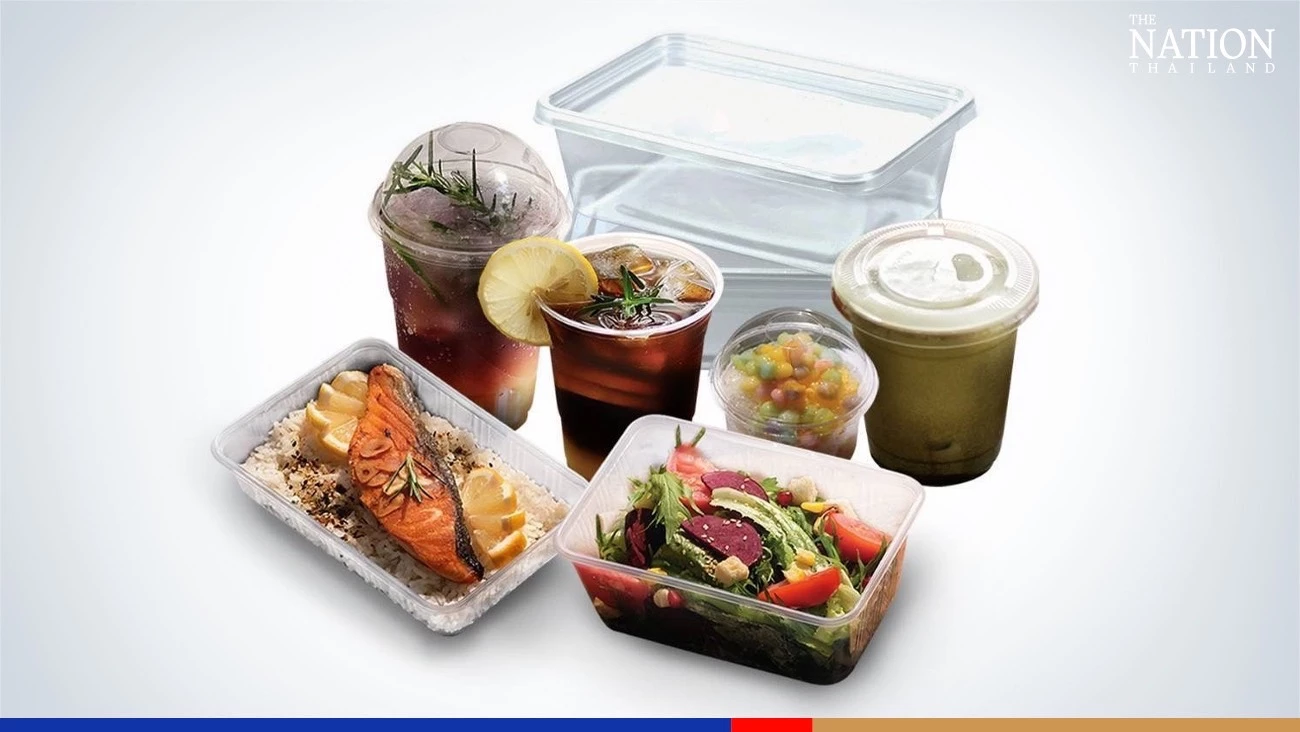 Eastern Polypack manufactures and distributes disposable plastic food and beverage containers, cups, plates, and bowls under the EPP brand
 SootinClaimon.Com