Sizzler alters strategy to cater to customers’ hunger for premium experience
TUESDAY, DECEMBER 06, 2022
Nongluck Ajanapanya
Sizzler, a western-style steak, seafood, and salad restaurant franchise, has adjusted its marketing strategy by creating an impressive dine-in experience with a premium menu to give consumers a special feeling.
Kreetakorn Siriatha, chief of financial and strategy officer, The Minor Food Group Pcl, Sizzler’s parent company, told a press conference on Tuesday that specialty is a food trend for 2023.
There is a demand for premium foods that make consumers feel special, he explained. For example, some people now prefer to drink specialty coffee rather than plain coffee.
The new strategic plan is being implemented as the dine-in restaurant industry continues to recover from the post-Covid era, where competition is fierce. Many players are working hard to win over consumers’ hearts in order to win over their loyalty, while newcomers are entering the market with new and amazing concepts.
“As a result, the industry has become extremely diverse. Though it is beneficial for customers to have more options, we must transform ourselves as quickly as their demand changes in order to stay on top of our customers’ minds,” Kreetakorn elaborated.
He pointed out that Covid has altered consumer behaviour. Aside from being concerned about healthy food and its safety, they want something premium and unique that will add value to their experience.
That is why, in addition to introducing new recipes with imported ingredients for a limited time in each season, Sizzler plans to open a dozen new branches in Bangkok’s suburbs and large provinces while renovating stores with more space and green colour tone under the Healthy Food Happy Mood concept.
Kreetakorn Siriatha (Center)
The concept focuses on medium-sized stores including innovation and creativity in store layout, new recipes, and a premium salad bar to attract more customers with high purchasing power in each location, he said.
Meanwhile, the loyalty programme e-member system at Sizzler has been upgraded, further enhancing member benefits. With these unique offers, which go beyond discounts, the company hopes to more than double its current membership base of 200,000.
Kreetakorn stated that competition in the restaurant industry is no longer primarily about discounts and promotions. It is how to always adjust its business to meet customers on time or ahead of schedule.
In response to the growing market, he said that Sizzler will have 61 stores nationwide by the end of 2022. The majority of Sizzler’s business is still dine-in, but the company’s delivery and takeaway services have grown significantly.
Consumer behaviour and the stimulation of consumer purchasing power through the introduction of various promotions are the growth factors.
The “Sizzler to Go” model, which focuses on serving food and drink recipes that suit consumers’ fast-paced lifestyle and require convenience in settings like train stations and hospitals, supports the growth. There are currently four branches, which may also help to increase the percentage of Sizzler’s overall sales.
Companies in four sectors to gain from revival of Thailand-Saudi Arabia ties
WEDNESDAY, DECEMBER 07, 2022
The restoration of bilateral relations between Thailand and Saudi Arabia would benefit four business sectors, according to analysts at news agency Bangkokbiz.
Saudi Arabia restored its relationship with Thailand this year after 32 years of coldness, and this offers an opportunity for several businesses.
Saudi Arabia’s economy weathered even the Covid-19 crisis, recording GDP growth of 6.8% in 2021, its best performance since 2012, due to the global energy demand.
Bangkokbiz analysts evaluated the potential of the relationship and zoomed in on four business sectors in Thailand that could benefit the most.
Food export and food processing
The Saudi Food and Drug Authority has permitted import of chicken from 11 Thai factories including CP, GFPT, and Thai Foods Group (TFG).
Saudi Arabia was the fifth biggest chicken-importing country at 590,000 tonnes per year — 70% from Brazil and 30% from Ukraine and Russia.
In 2021, Thailand exported 912,900 tonnes of chicken worldwide while the export value of chilled, frozen, and processed chicken was 102.529 billion baht, the Bangkokbiz analysts said.
Tourism
Saudi national airline Saudia is now flying three times a week to Thailand from Riyadh and Jeddah, which is beneficial for the SET-listed Airports of Thailand.
According to statistics, Saudi tourists had generated a lot of revenue for Thailand:
2017 – 33,517 tourists; 3.51 billion baht
2018 – 28,334 tourists; 2.615 billion baht
2019 – 30,002 tourists; 2.716 billion baht
2020 – 4,125 tourists
2021 – 467 tourists
Medical
Medical tourism is also popular with Saudi tourists. There is enormous potential for Thailand as the Saudi government aims to improve healthcare for its people.
Meanwhile, the Cabinet has approved an extended 30-day visa on arrival for Saudi visitors, which will be beneficial to Bumrungrad Hospital (BH) and Bangkok Dusit Medical Services (BDMS), the analysts said.
Eastern Economic Corridor (EEC)
The EEC recently revealed that the Saudi government and private sectors are preparing to invest 300 billion baht in Thailand in fiscal year 2023 in several industries including tourism, medical care, and petrochemicals.
Capital Nomura Securities viewed the number as significantly higher than the foreign investment in the first nine months of 2022 with only 2.86 billion baht.
Investment in 2019 — before the Covid-19 pandemic — was 4.64 billion baht and 4.58 billion baht in 2020.
The company expected average foreign direct investment per year to double, which will be beneficial to AMATA Corporation and WHA Corporation.
Thai cement producers urged to eye Philippines as tax on imports ends
WEDNESDAY, DECEMBER 07, 2022
Thai cement producers can turn to the Philippines as a potential market now that the Philippine government has decided not to extend a tax on imports of cement to protect domestic producers, a senior Thai trade official said on Wednesday.
Ronnarong Phoolpipat, director-general of the Foreign Trade Department, said the Philippine Department of Trade and Industry (DTI), announced its decision to end the tax on November 10 following a probe into the issue.
The DTI decided not to continue the import tax on cement after it expired on October 21.
The Philippines imposed the levy on imported cement on October 22, 2019 for three years. In the first year, the tax was 250 pesos (US$4.5) per tonne. The duty fell to 245 pesos and 200 pesos per tonne in the second and third years, respectively.
On February 24 this year, the Philippine Tariff Commission began an inquiry to decide whether to continue duty on. By World Trade Organisation’s rules, it could continue the safeguard measure for seven more years.
However, Ronnarong said his department appealed against the measure, arguing that a safeguard should only be used to protect a damaged industry. The department also noted that cement production had risen in the Philippines.
Ronnarong said the appeal prompted the Philippines to decide not to continue imposing the tax.
During the first nine months of this year, Thailand produced about 20.56 million tonnes of cement. Most, 18.39 million tonnes, was for the domestic market. The rest, 1.67 million tonnes, was exported.
Myanmar, Laos and Cambodia are the major export markets for Thai cement, Ronnarong said, adding that Thai producers rarely exported to the Philippines because of the tax.
He said the Philippines imported about 4 million tonnes of cement a year, with about 90 per cent of that from Vietnam.
The Foreign Trade Department expects the Philippines to import more cement next year as its property market and overall economy continue growing.
Now that the tax on imported cement is gone, the Philippines is a high-potential market for Thai cement exporters, Ronnarong said.
Thailand’s headline inflation edges downward for third successive month
WEDNESDAY, DECEMBER 07, 2022
Thailand’s headline inflation in November eased for the third consecutive month, but the consumer price index (CPI) was up year on year, data showed on Wednesday.
The director of Trade Policy and Strategy Office (TPSO), Poonpong Naiyanapakorn, said Thailand’s consumer price index (CPI) in November stood at 107.92 points compared to 102.25 points in the same month last year, pushing headline inflation up to 5.55%.
But the rate of increase in headline inflation in November continued to drop for the third month. Headline inflation was 6.41% in September and 5.98% in October, the TPSO chief added.
He said the lower inflation was due to lower food prices, especially fresh vegetables and fruits, meat and food seasoning because their production had increased month on month.
Poonpong said Thailand’s headline inflation was better than several countries, including the United States, the United Kingdom, Italy, Mexico, India, Laos, the Philippines and Singapore.
According to Poonpong, the price index of foods and non-alcoholic drinks rose by 8.40% in November, compared to a 9.58% increase in October because the prices of fresh vegetables dropped significantly.
Poonpong said the prices of other goods rose by 3.59% because of the rising prices of oil, electricity and cooking gas as well as cost of public transportation, while the prices of cleaning products such as detergents and softeners saw a slight increase.
He said core inflation, after deduction of price indices of fresh foods and energy, rose to 3.22%, compared to 3.17% in October.
He said the CPI this month dropped by 0.13 compared to October due to the drop in food prices.
Poonpong noted that the average CPI from January to November rose 6.10% year on year in line with the forecast of the Commerce Ministry.
He said the ministry expected headline inflation in December to be at a similar rate as this month and headline inflation for the year would be between 5.5% and 6.5%.
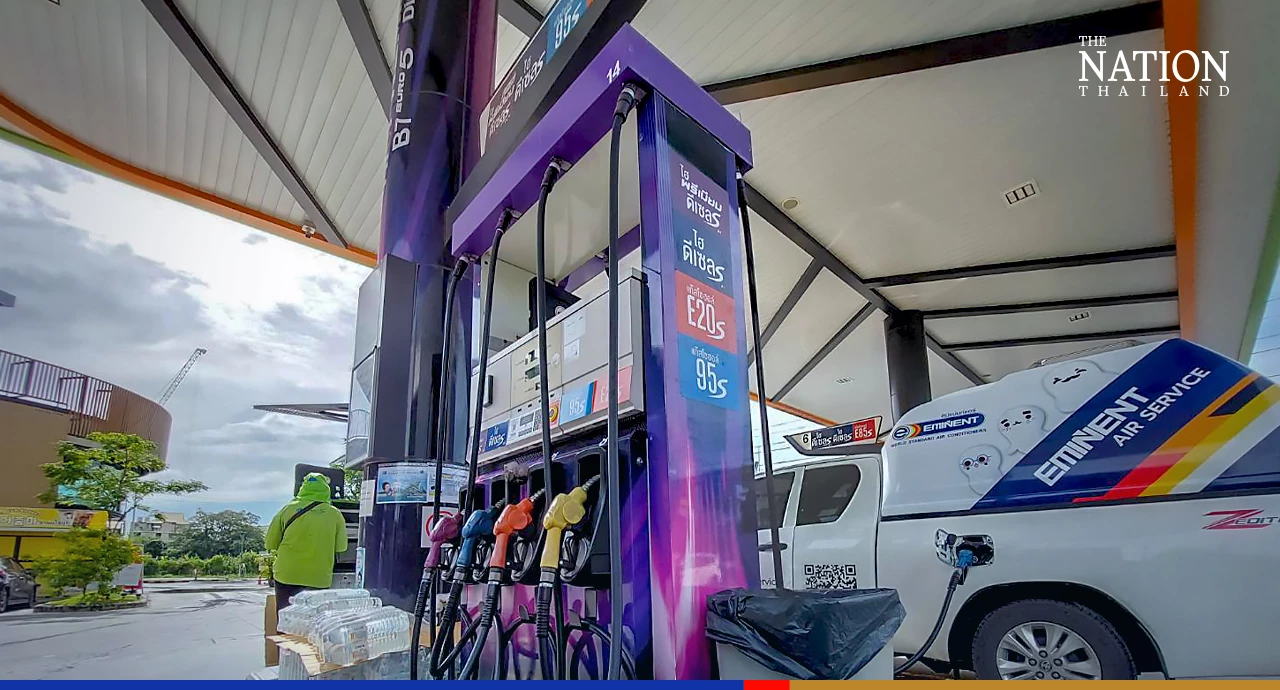
No diesel price cut despite falling oil: Energy minister
WEDNESDAY, DECEMBER 07, 2022
Energy Minister Supattanapong Punmeechaow said on Wednesday it is too early to lower the diesel price in Thailand despite the falling price of oil in the global market.
Supattanapong said the diesel price will be maintained at 35 baht per litre even though the Oil Fuel Fund should save around 3 baht per litre as the global oil price drops.
He added that diesel excise tax cut of 5 baht per litre would remain in place as compensation.
“We believe that Thailand’s retail price of diesel at 34.94 baht per litre is not very high compared to neighbouring countries,” he said.
He added that the ministry is collecting data to consider “New Year gifts” for the public.
As of Sunday (December 4), the Oil Fuel Fund was 129.42 billion baht in debt – 87.23 billion baht from subsidising fuel and 44.18 billion baht from subsidising liquefied petroleum gas (LPG).
Supattanapong said the ministry and Oil Fuel Fund are monitoring the global crude oil price closely after Opec+ maintained its production capacity at 2 million barrels per day, while the price of LNG remains high at around US$30 per barrel due to rising global demand in winter.
Moving to electricity bills, he said the ministry would consider the fuel tariff (FT) for January to April next year after talks between the Energy Regulatory Commission (ERC), Electricity Generating Authority of Thailand (EGAT) and PTT.
He said he expects the ERC to clarify the January-April FT soon to ensure it comes into effect on January 1.
The ministry and related agencies are making efforts to lower electricity production costs and find cheaper alternatives to LNG, he added.
“We expect the ERC to announce the FT soon, so the ministry can gather data to launch measures to relieve expense burdens among the public, while industry can seek ways to mitigate FT impacts as much as possible.”
SCB first to raise interest rates after Bank of Thailand rate hike
WEDNESDAY, DECEMBER 07, 2022
Siam Commercial Bank (SCB) on Wednesday raised its interest rates for both deposits and loans, the first bank to do so following the Bank of Thailand (BOT)’s latest policy rate hike.
BOT’s Monetary Policy Committee (MPC) on November 30 raised the policy rate 0.25 points to 1.25% amid an inflation outlook that is declining but still higher than the BOT’s target.
SCB announced it was raising its deposit interest rate to 0.25-1.4% per year and loan interest rate to 0.125%-0.25%, effective today (December 7).
Meanwhile, SCB’s minimum retail rate (MRR) will be raised from 5.995% to 6.12% per year, and the minimum loan rate (MLR) will go up from 5.5% to 5.75%. Finally, the minimum overdraft rate (MOR) will go up from 6.095% to 6.345% annually.
“SCB has always realised that the recovery of Thailand’s economy will happen gradually and not in all sectors at once. Therefore, we will continue to offer special measures to minimise the burden from the loan interest rate on our customers as much as we can,” said the bank’s CEO Kris Chantanotoke.
Thai rubber industry has 2 years to meet international standards
TUESDAY, DECEMBER 06, 2022
Rubber produced in Thailand may be rejected by foreign buyers if plantations do not meet international management standards in the next two years.
Nakorn Takwiraphat, governor of the Rubber Authority of Thailand (RAOT), said on Tuesday that French tyre manufacturer Michelin raised this issue recently with Agriculture Minister Chalermchai Sreeon.
“There is a risk that many international companies like Michelin and Swedish-Dutch furniture conglomerate Ikea, will not buy our rubber if the plantations do not meet international standards in two years,” Nakorn said.
He added that Michelin’s warning came after the United Nations and the international rubber industry decided that all plantations should follow sustainable principles and be transparent in their management.
Exporters failing to meet these standards will face the risk of their products being rejected, he added.
“Hence, RAOT will urge rubber farmers to make changes so they can command high prices in the international market,” he said.
International standards in the rubber industry include certification from the Forest Stewardship Council (FSC) and the Programme for the Endorsement of Forest Certification (PEFC), he added.
“Rubber farmers who meet these standards will be able to sell their products at prices up to 40% more than normal,” he said.
Some 100,000 rai (16,000 hectares) of about 20 million rai of rubber plantations in Thailand have already met FSC standards.
He added that RAOT has summoned rubber farmers, institutions and exporters to discuss global demands and new regulations.
He added that RAOT aims to ensure at least 50% of Thai rubber plantations meet FSC standards to ensure the country can meet international demands.
Thailand holds global education conference “Forum for World Education 2022” for the first time
TUESDAY, DECEMBER 06, 2022
FWE joins CP Group in sessions with business and educational experts to advance and transform education to satisfy business demands in the 5.0 era. CP senior president believes that education may help a nation develop.
Forum for World Education (FWE) in collaboration with Charoen Pokphand Group (CP Group) held a summit “Forum for World Education 2022” for leaders in education from public and private sectors around the world under the theme of “Shaping the Future of Education to Match Global Economic Trends” on December 1st -2nd, 2022 at the C.P. Leadership Institute, Pak Chong District, Nakhon Ratchasima Province, Thailand.
More than 400 education professionals from different countries collaborate with international business leaders who are concerned with human development and education to come up with a model for education that will serve both the requirements of the future and businesses all over the world.
The discussion at the forum will cover a variety of subjects, including “Strategies for Shaping the Future of Education in Line with Global Economic Trends” and “Educational Transformation & Human Capital Readiness to The World 5.0.” with the goal of transforming education and constructing a strong human resource base for the future global economy in the 5.0 era.
World-class business leaders who value human development and education, as well as educational leaders from different nations, attended Forum for World Education 2022, including Dr. Cheng Yan Davis, co-founder and secretary-general of FWE, Mr. Anek Laothammathat, Ministry of Higher Education, Science, Research and Innovation, Dr. Tan See Leng, Deputy Minister of Trade and Industry, Singapore, Mr. Dhanin Chearavanont, senior president of Charoen Pokphand Group, Khunying Kalaya Sophonpanich, Deputy Minister of Education, Assoc. Prof. Dr.Khunying Sumonta Promboon, Andreas Schleicher, director of the Organization for Economic Co-operation and Development (OECD), Mr. Michael Bloomberg, founder of Bloomberg News and former Mayor of New York City, Mr. Vikram Rao, Head of Enterprise, ASEAN from Amazon, Dr. Inoue Mitsuteru, Senior Executive Director, Kosen Institute, Japan, Mr. Collin Marson, Director of Education, Google Asia Pacific and Mr. Li Kai Chen, Senior Partner and Managing Partner, Mackenzie.
Dr. Cheng Yan Davis, co-founder of the Forum for World Education (FWE) and secretary-general of the Global Council for Education, said that the FWE has existed for more than three years as a forum for businesses who believe that education may spur economic progress.
“Today, we invite global educational leaders to a discussion focused on the future, both online and offline. FWE will make every effort to assist on research and education since we think education will advance commerce. Because of the pandemic we are currently experiencing, we would like to encourage everyone to utilize the potential of education to shape the global economy,” she said.
The senior president of Charoen Pokphand Group, Dhanin Chearavanont, stated that the forum’s main issues were education and human development. Education is the key to human progress and determines how much a nation can develop. There won’t be a CEO if a strong organization doesn’t generate leaders with broad expertise. In the past, out of a fear that other organizations would take them away, we only created people to operate in silos. But at CP, we develop owners who are familiar with every aspect of the business—profits, accounts, losses, human resources, public relations, etc.—and we have no fear that they will leave the company. Instead, we believe that we have produced individuals for the nation and for society.
“Selfish people will never become excellent leaders, so if we want to build leaders, we must create leaders who are appreciative, know how to give, to learn, and able to be disadvantaged. Charoen Pokphand Group has six core values: Three Benefits, Speed with Quality, Simplification, Accept Change, Innovation, and the most important thing is Integrity. You have to be a good person who understands how to return favors to the land, show gratitude to parents, love your family, love the organization, and love your coworkers to be good leaders,” he said.
The FWE meeting today is a preparation for continuing workforce development to satisfy of an increasingly complicated and unstable world, according to Dr. Tan See Leng, Deputy Minister of Trade and Industry, Singapore. Singapore places a high priority on effectively developing its human resources from an early age. In particular, the development of 21st century values and capacities, world knowledge, skills, and cultural distinctions, which have become incredibly relevant in the modern world.
“The pandemic crisis taught us to understand the importance of lifelong learning, which enables our workforce to adapt to unforeseen circumstances. Singapore continues to invest in lifelong learning and aiding those who have lost their employment by motivating them to be resilient and effective at work, especially through training and skill enhancement, along with future economic and technological progress,” he said.
Mr. Andreas Schleicher, director of the Organization for Economic Co-operation and Development (OECD), revealed that the most important thing that affects the quality of education is student and teacher attitude in supporting learning.
“Learning attitudes play a critical role in determining how the next generation will develop. Children will create a learning and creative environment if they are not scared to make mistakes, dare to make decisions, and brave enough to take risks,” he said. “Also, if we provide everyone the chance to discover their aptitude and talent, they will be able to improve both individually and qualitatively. Additionally, the most crucial element in the process of learning and building a successful educational system is the teacher. The challenge is that there aren’t enough competent teachers. How do we encourage teachers of the new generation to go beyond the classroom? How can we recruit more qualified individuals to work as teachers in the system?”
The Forum for World Education (FWE) is a non-profit world organization with its headquarters in Cambridge, Massachusetts, United States of America. In order to influence and change the education system to suit the rapidly shifting global society and economic backdrop, FWE aspires to connect the education system with businesses and provide corporate opinions on educational management.
The “Forum for World Education” symposium, which annually hosted by FWE was first held in Paris, France, in 2019. The CP Group and Concordian International School collaborated to make this year’s Forum for World Education 2022 possible in Thailand on December 1 and 2, 2022, at the C.P. Leadership Institute in the Pak Chong District of Nakhon Ratchasima Province.
Climate change is one of the most significant storm clouds hovering over the global consciousness, and despite persistent warnings, it isn’t going away.
United Nations Secretary-General Antonio Guterres recently described our position as “on a highway to climate hell with our foot on the accelerator…We are in the fight of our lives, and we are losing”.
This is a scary prospect, but fear can sometimes be a great motivator for change, and there’s no doubt that we need to ramp up the changes we are implementing if we are to have any chance of averting climate disaster. This change must come from all stakeholders, but consumers have an important role in taking us off the highway to climate hell and onto greener pastures.
Consumer engagement
Consumer engagement in sustainability has undoubtedly deepened as environmental concerns escalated in recent years. Whilst this is encouraging, it doesn’t solve all of our problems.
The biggest challenge is turning this heightened engagement into actual action by consumers. We need to prove to them that climate change threatens their health and costs them money and convince them of the personal – not just the global, altruistic – benefits of being more responsible. We need to sell ethics and eco-action – to paraphrase John Lennon – and sell it like people sell soap or soft drinks.
Climate and inequality
Like many negative influences, those most vulnerable tend to feel the consequences more keenly, and radical climate change is no different. The world’s richest 10% generated over half of the emissions between 1990 and 2015. Today, developing and poorer nations bear the brunt of the historic emissions of wealthy industrialised countries and their over-consumption.
People living in coastal communities and increasingly hot, desertified, or melting ice sheet environments are displaced as migrants. Poorer people or those with disabilities are more exposed to the financial costs and health dangers of dependence on fossil fuels or extreme weather events. Rich countries and consumers have a moral duty to act politically and individually.
According to research by Mintel, air quality, climate change and deforestation are Thai consumers’ top three environmental concerns, and they are concerns that consumers can impact. 59% of the emission reductions we need to achieve net zero are linked at least indirectly to what they choose to do or buy.
Like everyone else, Thai consumers who care about these issues should strive to reduce the consumption of clothes, meat and dairy, ensure their packaging goes into a recycling scheme and select more responsible brands. They can also embrace micro-mobility options such as walking and cycling. When it comes to ensuring governments speed up the transition to renewables, it’s a case of voting for government programmes of action.
Accelerating momentum on a short timeline
Although we need consumers to be proactive, there are increasing levels of scepticism about the long-term effect their actions can have. In fact, the number of consumers who believe we still have time to save the planet if we act now has declined, and they’re right; we are running out of time. The previous COP commitments left us a long way off the target to limit warming to 1.5 degrees. Still, it’s not just consumers that need to step up: Governments and companies need to be honest about where they are and what needs to be achieved, take action and prove to consumers that their actions make them part of this journey.
We must reward consumers and excite them about environmental sustainability to increase and maintain their engagement. This means showing them how much money they’ve saved by renting instead of buying something or by installing home solar instead of gas, for example.
We also need to appeal to their sense of ego and individuality and let them show, share and even flaunt the fact that they’re taking small actions for good. The same marketing rules apply here as any other “product”: sell into them not just for the environmental benefit but for how they feel about themselves and look to their peers.
Mintel spokesperson: Richard Cope, Senior Trends Consultant
Firmenich announces Dragon Fruit as 2023 Flavour of the Year
TUESDAY, DECEMBER 06, 2022
Firmenich, the world’s largest privately-owned fragrance and taste company, is excited to announce its 2023 Flavour of the Year, dragon fruit, celebrating consumers’ desire for exciting new ingredients and bold, adventurous flavour creation.
“This marks our 11th Flavor of the Year, which is something our customers have come to look forward to each year. Dragon fruit’s bold vibrancy is a perfect choice as we embark an exciting year of change,” said Maurizio Clementi, ad interim President, Firmenich’s Taste & Beyond division. “Our in-depth Human Insights have identified the strong shift towards well-being and sustainability in people’s food and beverage choices, as well as newly-emerging elevated expectations in terms of taste. As everything we do is rooted in nature and deep consumer understanding, this inspired us to choose a Flavor of the Year which captures both.”
Drawing Inspiration from Color & Trenz
This is the second consecutive year of a sensory partnership between Firmenich and Pantone. The global colour authority has just launched its 2023 Color of the Year, PANTONE 18-1750 Viva Magenta, which it describes as a “brave and fearless, a pulsating colour whose exuberance promotes optimism and joy.” Mikel Cirkus, Global Creative Director for Taste & Beyond said: “In the same way that Pantone’s Color of the Year captures the emerging themes seen in the world around us, our choice for Flavor of the Year does so by translating new signals into positive sensory experiences. Our 2023 choice of dragon fruit reflects the global consumer’s increasingly adventurous palate and desire for the new or exotic when it comes to ingredients and taste.”
Jeff Schmoyer, Firmenich Global Head of Human Insights, said: “Dragon fruit’s subtle flavour creates a wonderful opportunity to bring the exceptional creativity and expertise of Firmenich’s Flavorists to the fore, providing the perfect canvas for them to dare to imagine bold, exciting and delicious new taste combinations.”
A Fruit by Any Other Name
Native to Central America, where it is known as Pitahaya, and thriving in tropical and subtropical climates across the world, dragon fruit’s flesh is rich in antioxidants and high in calcium. Dragon Fruit grows from a climbing cactus, making it a drought-resistant and naturally low water-use crop, requiring only a quarter of the water to grow compared to that of an avocado.
Much like the mystical creature that inspired its name, dragon fruit is fierce in appearance, with a scale-like skin in bold hues ranging from fiery yellow to bold magenta. However, its delicate flavour belies its imposing armour. With several different types varying in both colour and taste, dragon fruit ranges in flavour from milder melon and kiwi-like to slightly sweeter berry profiles with notes of beetroot.
Enter the Dragon Fruit
Part of its industry-leading Human Insights capability, Firmenich’s Trenz™ forecasting team spotted a post-Covid rise in dragon fruit across almost every major city in the world. While always popular within niche segments, the exotic fruit began showing up more universally across diverse markets and food service venues, as well as product applications, from the more intuitive juices and smoothies to less traditional formats like tea and cooked savoury dishes.
According to Mikel Cirkus, this is all part of a decade-long trend for boldness and discovery in food and drink. The pandemic increased the pace of this trend, with huge spikes in consumers broadening their palates for new seasoning. Notably, expenditures on spices & seasonings at home grew 27% CAGR[1], Trenz™ found. New product innovation has followed, with on-pack claims such as “bold” and “exotic” up by 38% since 2017, and the use of three- and four-way flavour combinations in products now cresting over 25% of all Food & Beverage launches.
Firmenich’s renowned Emotions360 consumer research offered a second clue. This proprietary in-depth study of natural ingredients identified that people are very excited about dragon fruit. In fact, Emotions360’s latest wave, which surveyed 18,670 consumers across eight countries around the world, indicated that 88% of consumers have heard of dragon fruit, and 56% have tasted it. In terms of consumer perceptions, dragon fruit triggers associations with adjectives like bold, exotic, exciting, impressive and fun. Given this positive association, it’s not surprising that the same consumers ranked dragon fruit in the 90% percentile among all ingredients with a high likelihood to rise in popularity in the future.
A Fiery Future
As much as dragon fruit is on fire in juice bars, markets, and street vendors around the world, the packaged Food & Beverage world was initially slow to innovate around this trend. However, this trend is changing, with product launches containing dragon fruit callouts now accelerating in all regions. In fact, dragon fruit use in CPG (Consumer Packaged Goods) is growing more quickly in foods than beverages, where innovations typically appear first.
Jeff Schmoyer, Firmenich Global Head of Human Insights, commented: “Dragon fruit may be still a ‘rare’ fruit flavour for CPG food & beverage brands, but it is no longer rare to consumers. And in fact, this has translated to one of the fastest growth rates of any ingredient we’ve tracked in recent years. Given the small base and fast growth, it is certainly our boldest Flavor of the Year choice yet from a predictive foresight perspective. It’s possible that the initial lag in new product innovation is in part related to the challenge of realizing the flavour of dragon fruit. Our consumer research shows that the fruit can sometimes surprise people by not having the strong flavour to match its visual appearance. Instead, the taste is light, refreshing, sweet, and delicious.”
“For this reason, Firmenich believes that its flavour creativity will play a key role in amplifying the taste and celebrating combinations of dragon fruit with other flavours,” Schmoyer concluded.


 Kreetakorn Siriatha (Center)




 SootinClaimon.Com