Baht rally may have hit ceiling: market strategist
MONDAY, NOVEMBER 14, 2022
The baht opened at 36.04 to the US dollar on Monday, weakening from Friday’s close of 35.94.
The currency will likely move between 35.90 and 36.10 against the greenback during the day and between 35.60 and 36.30 during the week, Krungthai market strategist Poon Panichpibool said.
He added that the baht’s upward trend may slow and even reverse if the price of gold drops quickly.
The baht surged back from 38.31 per dollar on October 19 to a five-month high on Friday.
However, Poon said foreign funds were now flowing out of the Stock Exchange of Thailand as it neared its resistance level while Thai bond yields, especially long-term yields, fell last week.
Meanwhile, the dollar is reaching its support level zone and could rebound in the short term if the market grows concerned over a possible US interest rate hike, or risk factors force it into a risk-off state, he said.
He also advised investors to use hedging tools such as options to manage risks in a highly volatile currency market.
Apec Summit 2022: Bracing for recession, striving for recovery
SUNDAY, NOVEMBER 13, 2022
Nongluck Ajanapanya
World leaders at the Asia Pacific Economic Cooperation (Apec) summit will seek inclusive solutions to the current global turmoil over the next six days.
Experts expect two major outcomes from the summit: a plan to prepare for recession and the outlines of a path to recovery.
Today’s uncertainties and geopolitical tensions are no longer the responsibility of a single country or region. Hence, experts say that countries must engage face to face to find solutions together to the deepening problems afflicting the world.
Ndiame Diop, World Bank country director for Brunei, Malaysia, the Philippines, and Thailand, said the global economy is currently dealing with overlapping crises.
Just as countries began to recover from the pandemic and reduce policy support, the world was confronted first with Russia’s invasion of Ukraine, then inflation, and now financial tightening as interest rates ratchet up.
Though these crises originated in different parts of the world, their impact has been global. World economic growth is projected to decline to 3.2% in 2022 and to 2.7% in 2023, from 6% in 2021, with poor and vulnerable countries bearing the brunt of the impacts.
Developing countries of East Asia and the Pacific, including Thailand, will not be immune to the global slowdown and fiscal tightening.
“Our latest economic update released in late September projects regional growth will decline from 7.2% in 2021 to 3.2% in 2022 and recover somewhat to 4.6% in 2023,” Diop said.
The risk of a global recession in 2023 is rising, according to the World Bank, International Monetary Fund (IMF), Asian Development Bank (ADB), and many other leading institutions, as central banks implement simultaneous interest-rate increases to combat inflation.
However, the expected trajectory of interest-rate increases and other policy actions may not be sufficient to return global inflation to pre-Covid levels. Global inflation, which is currently at a 14-year high, is expected to remain above target ranges in the vast majority of advanced and developing economies until 2023.
Diop pointed out that the way governments respond to today’s challenges will also shape development in the long term. Governments need to act on two fronts, he added.
They must mitigate the major risks while at the same time seizing the few opportunities.
He proposes four different courses of action to deal with this perfect storm.
First, improve fiscal policy efficiency for relief, recovery, and growth. More targeted assistance to households and businesses, rather than blanket transfers and price controls, would alleviate pain and make room for investment in infrastructure, health, and education.
Second, strengthen macroprudential policies to reduce risks associated with global financial tightening. Greater and earlier transparency about financial sector problems hidden behind the cloak of regulatory forbearance would aid in the prevention of financial instability and misallocation.
Third, reform trade-related policies in goods and, especially, in still-protected services sectors to take advantage of shifts in global trade.
Fourth, change policy to encourage technology diffusion. Increased competition and improved digital infrastructure may boost incentives for technology adoption. Ending fossil fuel subsidies and other forms of assistance are also required to encourage the adoption of green technologies and to combat climate change.
Unsurprisingly, the World Bank’s proposal aligns with the key agenda that Apec leaders will discuss during their summit at Queen Sirikit National Convention Centre in Bangkok on November 18-19.
Cherdchai Chaivaivid, the Thai Foreign Ministry’s director-general of International Economic Affairs, said that Apec leaders will discuss how to advance the Asia-Pacific region through ongoing global economic challenges toward sustainable and inclusive economic recovery from Covid-19.
The summit will renew talks on the Asia-Pacific Free Trade Area (FTAAP) by establishing a long-term framework for dialogue, he added.
Apec members will also discuss digitalisation, sustainable development, and inclusive engagement.
Host Thailand’s guiding framework for the summit is titled “Bangkok Goals on BCG (Bio-Circular-Green) Economy”. The framework will push towards a sustainable, inclusive, and resilient Apec.
“If you want to grow quickly, go alone; if you want to grow sustainably, go together,” said Kriengkrai Thiennukul, chairman of the Federation of Thai Industries (FTI), at a press conference for the Apec CEO summit.
He said that many of the issues currently facing the world arose because we failed to listen and talk to one another. The first in-person Apec summit in four years would be an excellent place to begin fixing this communication breakdown, he added.
Montri Mahaplerkpong, FTI vice president, said the summit is a great opportunity for participants to share what they have and what they lack so that they can figure out how to address urgent issues like food security, supply chains, carbon emissions, and competitiveness of small and medium-sized businesses.
Meanwhile, Kobsak Pootrakool, executive vice president of Bangkok Bank, said Apec members must cooperate to strengthen themselves, hasten recovery and combat recession.
He expects the summit to produce opportunities and paths for recovery in Thailand and other member economies.
Diop from the World Bank noted that global cooperation remains critical to overcoming our common challenges across all issues.
As such, the week-long Apec meet is an important opportunity to strengthen multilateral cooperation on these and other challenges, with a focus on solidarity and solutions, he said.
Apec comprises 21 economies accounting for 38% of the world’s population, approximately 61% of global GDP and 47% of its trade in goods and services.
Elite residency visa luring younger Chinese expats to Thailand
SUNDAY, NOVEMBER 13, 2022
The average age of wealthy Chinese expats in Thailand is falling fast, according to the firm that handles Elite residency visas in China.
Rui Guo, president of Thai Jiaranai Group, said the average age of Elite visa buyers is now lower than 40, compared to over 50 in the past.
Chinese nationals are by far the biggest buyers, accounting for 7,350 of some 20,000 Elite visas approved so far.
Thai Jiaranai Group is the official seller of Thailand Elite residence programme in China. The firm also operates Chinese online media in Thailand while offering consultancy advice to Thai firms seeking business opportunities in China.
Rui Guo was speaking during a reception party held for Elite visa holders at S31 Sukhumvit Hotel on Thursday night. He said the number of Chinese expats holding the visas has soared several-fold in the past five years. And the fact that they were getting younger showed the new generation of high-income Chinese are attracted to Thailand, he added.
The Thailand Elite Residence Programme offers four different visas for multi-entry stays of between five and 20 years.
Aimed at luring foreign investment to boost Thailand’s economy, the programme is managed by the Tourism Ministry’s Thailand Privilege Card Company (TPC).
Chinese Elite visa applicants are drawn to Thailand by the food and pleasant environment, said Rui Guo. They liked the programme because they did not have to renew visas often, he added.
Thailand’s excellent geopolitical position made it attractive for both travel and business, said Senator Weerasak Kowsurat, in his welcome speech at the event.
Weerasak, a former tourism minister, said Thailand was also luring wealthy Chinese with its international food and beautiful tourist destinations.
Fears the Elite visa is a gateway for wealthy criminals were played down by Foreign Ministry representatives, who said all applicants are checked to ensure they have honest income to benefit the Thai economy during their stay.
Thousands of holders were helping the country recover from the Covid-19 crisis by spending on tourism, sports, spars and other activities across Thailand, said Pornthep Pantanapat, deputy managing director of TPC.
None of those granted Elite visas in the past 20 years had been arrested for serious crime, he added.
BOT puts baht’s rise down to confidence, surging regional currencies
SATURDAY, NOVEMBER 12, 2022
The baht is strengthening in line with the upward trend in Asian currencies, the Bank of Thailand (BOT) said in relation to the 5% rise in the Thai currency.
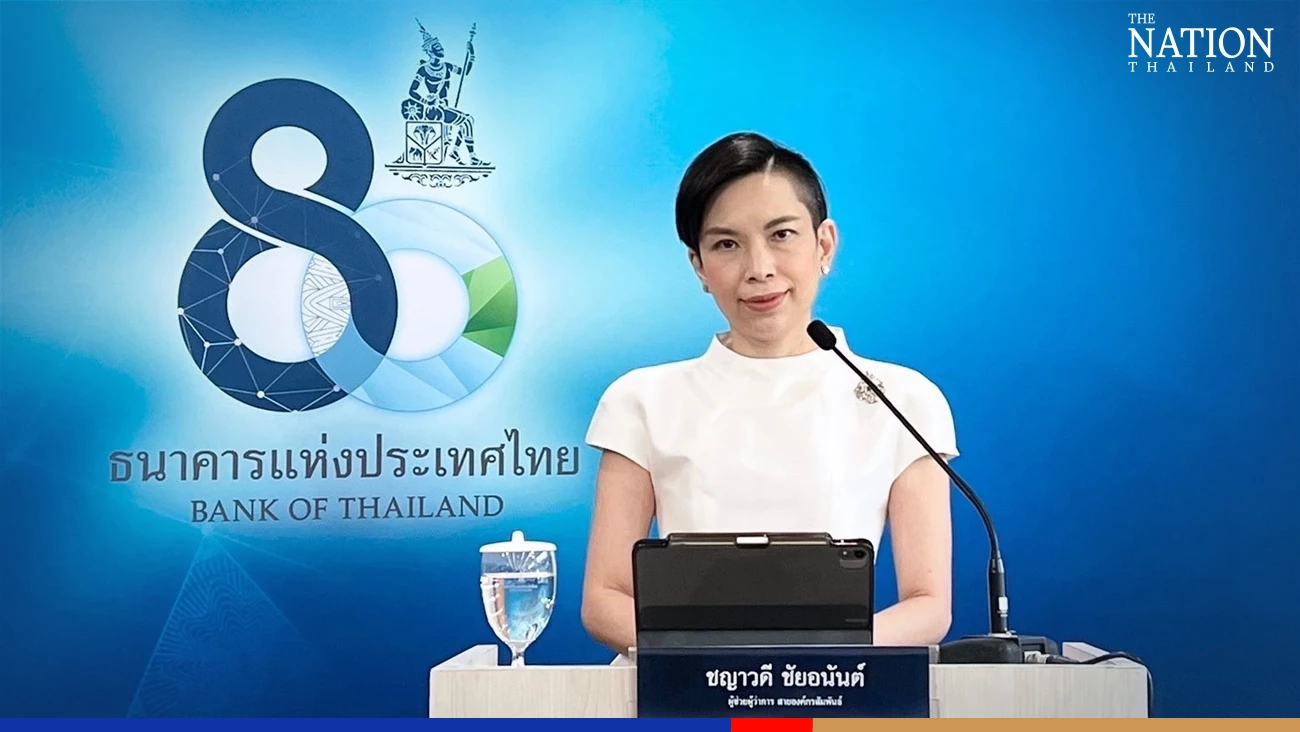
Asian currencies are picking up in response to rising investors’ confidence following speculation that the US Federal Reserve may ease its monetary policy amid a slowdown in inflation, BOT spokesperson Chayawadee Chaianant said on Friday. She is also the central bank’s assistant governor for corporate relations.
She also put the rise down to signs that China may relax its zero-Covid policy.
According to Reuters, the dollar fell across the board for a second straight day on Friday as investors favoured riskier currencies following cooler-than-expected US inflation data, which fuelled the Federal Reserve’s decision to ease its hefty interest rate hikes.
The weakening of the dollar on Friday was an extension of the movement set off after Thursday’s data showed that inflation in the US rose 7.7% year on year in October, the slowest since January and below the 8% forecast.
The BOT, however, predicts that the financial market will still experience high volatility in the coming months, and has warned the private sector to monitor risks from currency exchange rates closely.
The central bank also said that between November 1 and 10, foreigners have purchased 107 billion baht worth of Thai assets. Of that, 89 billion baht was spent on the bond market and 18 billion baht on the securities market.
Thailand’s “Health for Wealth” plan for economic recovery is taking off under the twin engines of its herbal products and medical tourism markets – worth 50 billion baht and 1 trillion baht respectively.
Legalised cannabis sold over the counter around the country is the latest fuel powering those impressive figures.
The figures were revealed by the Public Health Ministry on Friday as the country builds the medical hub seen as key to its recovery from the pandemic-related crisis.
The spokes of the hub are traditional Thai medicine, alternative medicine, herbs, Thai local wisdom, and medical tourism, ministry permanent secretary Opas Karnkawinpong said.
In 2022, Thailand has so far consumed 52.104 billion baht worth of herbal products, up from 48.108 billion baht in 2021, he added.
Opas said the Health for Wealth plan had three major benefits: creating more jobs, generating more income for people and the country, and conserving traditional Thai medicine and wisdom.
Thanachart Capital Pcl (TCAP) has released the operating results for the first nine months of 2022. Net profit based on the consolidated financial statements amounted to 5.142 billion baht, while net profit attributable to the company amounted to 4.134 billion baht, representing an increase of 17.51% when compared to the same period last year. TCAP attributed the results to continuously growing operating results from associated companies and subsidiaries.
Somjate Moosirilert, Chief Executive Officer of Thanachart Capital Public Company Limited (TCAP), said, “Based on the consolidated financial statements of the Company and its subsidiaries for the nine months of 2022, net profit amounted to 5,142 million baht, of which 4,134 million baht was net profit attributable to the Company, representing an increase of 17.51 % when compared to the same period last year. This was mainly due to the continuously growing operating results from the associated companies and the subsidiaries, in which the Company held shares.”
The performance of the associated companies, particularly TMBThanachart Bank (ttb), in which TCAP held shares was stronger. This was mainly due to continued economic recovery. As regards its subsidiaries, profit of Ratchthani Leasing (THANI) increased by 11.55 % compared to the nine months last year. This was attributable to healthy growth of hire purchase loans for trucks, effective cost control management, and efficient asset quality control.
In relation to Thanachart Insurance (TNI), the premiums received in the nine months increased by 24.92 %, which was in line with the established target.
As for Thanachart Plus (T-Plus), it registered continuous growth with outstanding loans of above 4,000 million baht and no non-performing loans. This was due to cautious and effective risk management.
On the other hand, Thanachart Securities (TNS) registered healthy growth in non-brokerage income, offsetting the falling brokerage income due to unfavourable market conditions.
In addition, on October 27, 2022, TCAP made additional investments in TNI and TNS. As a result, TCAP’s equity stake in the two subsidiaries increased to 89.96 % from 50.96 %. This was mainly because TCAP considered that both subsidiaries were its key subsidiaries and they continuously delivered strong performance with their Return on Equity (ROE) being high.
“TCAP is confident that the additional investments will generate good results for TCAP’s shareholders in the future,” Somjate said.
Centara Anda Dhevi Krabi has special offer for guests
THURSDAY, NOVEMBER 10, 2022
A special offer to celebrate the reopening of Centara Anda Dhevi Resort & Spa Krabi will be available for guests from November 15 this year to June 30, 2023, the hotel said.
With “The Place to Be” reopening offer, guests can enjoy a variety of exciting perks, including up to 30 per cent discount on available room rates, 500 baht resort credit to spend on food & beverage for stays of two consecutive nights and a 20% discount on food at all outlets, according to the hotel.
Other benefits include late check-out and a complimentary room upgrade, both of which are subject to availability.
Guests who book rooms will receive a special offer from November 15, 2022, to June 30, 2023. The offer includes complimentary Wi-Fi, daily breakfast for two guests and free stays for up to two children.
Located a few steps away from Nopparat Thara and Ao Nang beaches, Centara Anda Dhevi Krabi offers a base from which to explore the province’s tropical wonders, including world-class rock climbing, diving and snorkelling cruises to nearby karst islands.
The resort features an expansive 43-metre swimming pool complete with a swim-up bar, waterslide and direct pool-access rooms.
Kids can enjoy the children’s pool, while adults indulge in a quiet time at the award-winning Cenvaree spa, a fully equipped fitness centre and steam room.
Three delectable dining venues offer culinary experiences every guest will remember, the hotel added.
For reservations or more information, contact Centara Contact Centre at ccc@chr.co.th or dial +66(0) 2101 1234, or use live chat.
Opt for non-capital market assets, KBank Private Banking advises investors
THURSDAY, NOVEMBER 10, 2022
Nongluck Ajanapanya
KBank Private Banking, Kasikornbank’s wealth management arm, has advised affluent Thai investors to focus on alternative assets as the global economy enters a recession.
Speaking exclusively to a group of media, KBank’s senior managing director, Private Banking Business Head Triphon Phumiwasana, said that alternative assets with diversified portfolio risks would help increase opportunities for returns amid current uncertainties.
He noted that the capital market has been extremely volatile throughout 2022, resulting in sharp drops in returns across almost all major asset classes and a 20% drop in MSCI World.
“This year also marks the third time in 30 years that both equities and bonds have delivered negative returns, and the first time that both asset classes’ returns have declined by as much as 20%,” Triphon said. “As a result, KBank Private Banking suggests diversifying into non-capital-market assets to reduce portfolio volatility while increasing opportunities for returns.”
Meanwhile, according to the most recent Lombard Odier report, market volatility leading to negative returns on portfolios is the top concern for Thai high-net-worth individuals. Over 50% have repositioned their portfolio with the help of their bank, and nearly 30% plan to increase allocation to alternative investments in the near future.
The bank recommends six alternative assets, highlighting outstanding year-to-date returns: quantitative hedge funds, private equities, global private real estate, Thai private real estate, private credit funds, and structured notes.
These alternative assets offer average returns of 8% or higher.
Triphon cautioned that while alternative investments are becoming increasingly important in increasing returns opportunities during this period of high inflation and economic recession, investors must work hard to understand the assets as well as the market landscape.
KBank Private Banking provides international comprehensive wealth management services to Kasikornbank customers with assets under management of 50 million baht or more. The service covers all aspects of preserving, growing, and passing on wealth, and all asset types from financial assets, family businesses, real estate, and others.
In the 21 th episode of Business Story, Pongwud Praipaisankij, CEO-Multiverse Expert,Group CEO -MiGroup discusses the direction of Multiverse Expert as the forth unicorn of Thailand.
Pongwud Praipaisankij, CEO of Multiverse Expert and Group CEO for MiGroupMultiverse Expert Co Ltd, a subsidiary of MiGroup, is another Thai digital start-up to successfully rise to the unicorn level and Thailand’s first unicorn in the metaverse.
This jump was made possible by a US$120 million investment from the Foxconn subsidiary, Power-all Networks, which pushed the start-up’s value to $1.2 billion.
This is the fourth unicorn in Thailand.Multiverse Expert, which specialises in information technology infrastructure development, will work with Foxconn to forge new paths into the Chinese and global Metaverse markets.
Pongwud Praipaisankij, CEO of Multiverse Expert and Group CEO for MiGroup, said Thailand is becoming very competitive in the digital industry and will draw investment along with skilled workers to help usher in the Web3 era.
“No one can precisely define what the metaverse is. Place is the most prevalent topic of metaverse discussion. People connect, travel, and experience together in one or more locations without regard to boundaries.This is a typical occurrence; we can characterize it immediately.” Pongwud said.
“For the developing portion, such as me, the builder who thinks differently, because there are no boundaries in the Metaverse reality, we can program anything. However, in terms of business, you should consider Metaverse to be a marketing tool. This tool can assist the brand in rethinking the client journey.”He added.
Follow Full interview in the Business Story in Episode : Multiverse Expert
Amazon Global Selling offers Thai SMEs new expansion opportunities
FRIDAY, NOVEMBER 11, 2022
Nongluck Ajanapanya
With the pandemic changing consumer behaviour and expanding the e-commerce industry, Amazon Global Selling has created new tools and resources to help Thai businesses cross borders.
The aim is to help Thai companies, especially small and medium-sized enterprises, to establish a foothold in foreign markets.
Anand Palit, Southeast Asia head of Amazon Global Selling, said the opportunity to “capture a piece of the international e-commerce pie is ripe” and Thai businesses should seize it now.
“There are enormous opportunities internationally, and Amazon provides the tools and services that can help Thai businesses lay the groundwork to accelerate their brand sales to the rest of the world,” Palit said.
He added that many Thailand-made products like health items, wooden toys, jewellery and clothes are already very popular in the US and Europe.
Hence, he said, Thai businesses must overcome their fear and take action to expand internationally.
“Our strategy to help Thai businesses succeed is to introduce tools, resources and ramp up support to power independent entrepreneurs to dream big and make Amazon the best place to grow their brands,” Palit added.
He stated that Amazon was working on deepening collaborations across sectors to foster even greater success for Thai businesses.
For instance, he said, to help new businesses get started, Amazon is offering incentives worth up to US$50,000, including Fulfilment by Amazon and advertising credits.
(from left) Jamie Brennan and Anand Palit
Jamie Brennan, chief of Amazon Global Selling Thailand, said the platform is committed to offering innovative ideas to sellers with a focus on creating growth and new opportunities.
“We have collaborated closely with government agencies to jointly enhance the transformation through cross-border e-commerce, and we will continue to do so in 2023,” she said.
Amazon showcases 22 stores, ships products to more than 200 countries and has over 400 fulfilment centres worldwide.
It also has more than 28,000 people on hand to help out, not to mention the Amazon Seller University which educates sellers in the early stages.
In Thailand, Palit said, the Amazon Global Selling team has come up with dedicated support options in Thai. He added that the team is working on helping more Thai businesses enter the global market and scale up their operations.
Amazon has created the Global Selling unit to help businesses to launch globally from anywhere in the world and reach more than 100 million potential buyers worldwide.







 Thousands of holders were helping the country recover from the Covid-19 crisis by spending on tourism, sports, spars and other activities across Thailand, said Pornthep Pantanapat, deputy managing director of TPC.






 Pongwud Praipaisankij, CEO of Multiverse Expert and Group CEO for MiGroupMultiverse Expert Co Ltd, a subsidiary of MiGroup, is another Thai digital start-up to successfully rise to the unicorn level and Thailand’s first unicorn in the metaverse.
 Pongwud Praipaisankij, CEO of Multiverse Expert and Group CEO for MiGroup, said Thailand is becoming very competitive in the digital industry and will draw investment along with skilled workers to help usher in the Web3 era.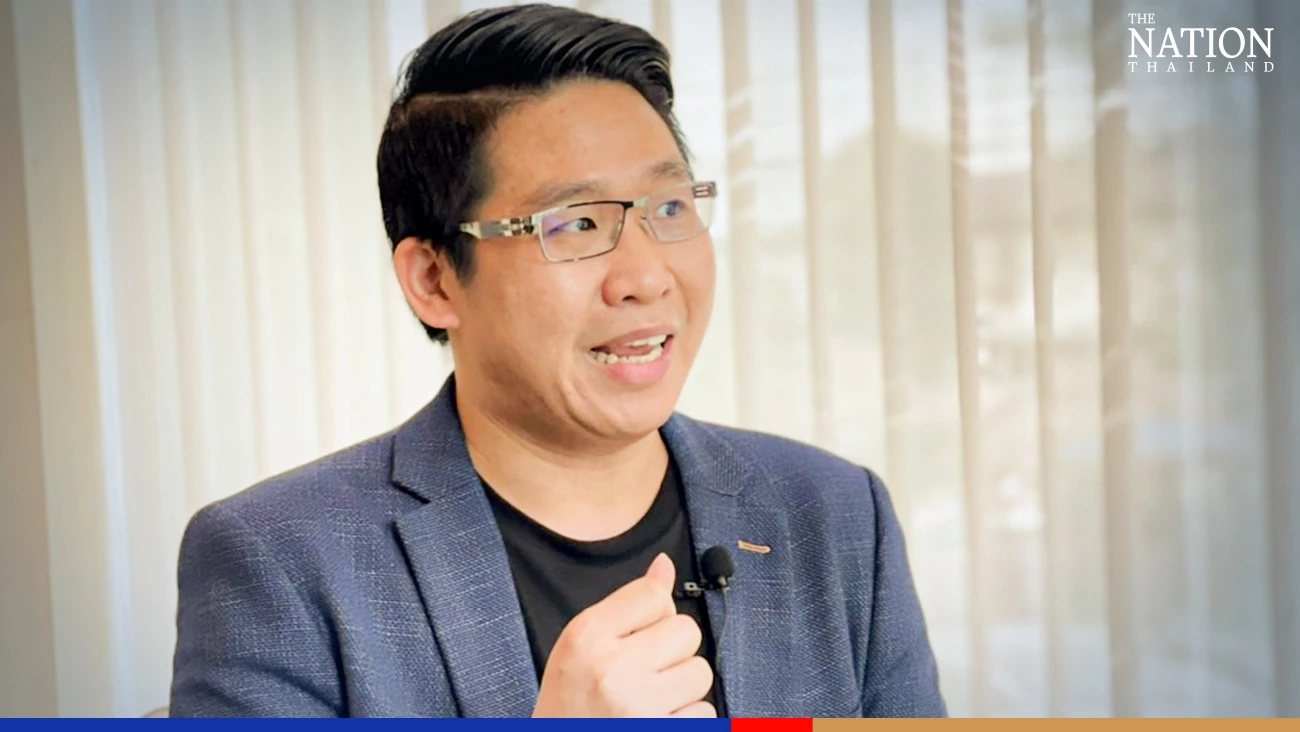

 (from left) Jamie Brennan and Anand Palit
 SootinClaimon.Com