Thailand ready to strengthen economic ties with China, PM affirms
THURSDAY, NOVEMBER 03, 2022
Prime Minister Prayut Chan-o-cha on Thursday confirmed the Thai government’s readiness to working with its Chinese counterpart to strengthen the partnership between the two countries.
He said Thailand is looking to boost its partnership with China for a future that is “strong, wealthy and sustainable — like a saying that China and Thailand are no strangers. We are brothers and sisters”. The Thai premier was speaking during his special lecture given at the Thailand-China Investment Forum organised at the Shangri-La Bangkok Hotel. The event was also attended by China’s Ambassador to Thailand Han Zhiqiang and Thailand’s Deputy Premier and Energy Minister Supattanapong Punmeechaow. General Prayut said the forum was a good initiative by the Thai private sector to serve as “an important mechanism” in strengthening economic ties between the two countries.
“This is a good opportunity for both countries to work together in recovering the economies severely affected by the Covid-19 crisis and boosting bilateral cooperation for sustainable development,” the PM said. He noted that this year marks the first decade of a comprehensive strategic partnership between Thailand and China. The prime minister said that the Thai government is attempting to attract investments from other countries, particularly China, by improving Thailand’s infrastructure and developing new industrial zones such as the Eastern Economic Corridor.
He pointed out that Chinese companies have the potential and expertise in many industries, particularly involving electric vehicles and digital manufacturing. He noted that in the first nine months of this year, about 45 billion baht of investment had come from China into the electronics, electrical appliances and EV industries.
Jurin visits Thai owner of mega importer in LA, promotes Thai films at AFM event
THURSDAY, NOVEMBER 03, 2022
Commerce Minister Jurin Laksanawisit held talks with the Thai owner of a large wholesale store in Los Angeles and attended a film market event to promote Thai movies.
Jurin and his delegation on Tuesday paid a visit to Anek Bholsangngam, the owner of Lax-C wholesale store, which the commerce minister said is the largest Thai goods wholesaler in the western United States.
The minister said he visited Lax-C because the store imports Thai goods worth 40 million to 50 million baht a year.
Lax-C, which imports various types of products from Thailand, serves as a centre to distribute the products to Asians across the United States.
“Lax-C is a major importer in the US and it sells various types of Thai-made products, including food and consumers goods for daily use,” Jurin pointed out.
He said even Thais can’t imagine the variety of products available at Lax-C, which include Parrot-brand soaps and several types of fresh traditional sweets, such as khanom tan, which is a yellow small steamed cake flavoured with toddy palm sugar and coconut milk wrapped in banana leaves.
“Lax-C is an effective distribution centre of Thai products, which is owned by a Thai. It helps distribute Thai-made goods in Asian markets and is strategically located near China Town in Los Angeles,” Jurin said.
“I would like to thank its owner for playing a part in helping Thailand export goods to the US.”
The DITP said the wholesale store imports several brands from Thailand, including house brands AC and Pa Siam. The store is well-known as the “Thai Costco Market” of Los Angeles.
Jurin noted that the US is the second largest export market for Thailand, with exports to that country valued at a whopping 1.2 trillion baht in the first nine months of the year – a growth of 30.34 per cent compared to the same period last year.
The DITP also said Jurin attended the American Film Market & Conference (AFM) 2022 at the Hotel Casa del Mar in Los Angeles on Wednesday.
Jurin witnessed the signing of cooperation between Epic Pictures Group and Hollywood (Thailand) to produce “Insee Daeng” (Red Eagle) 2024 with an investment of 200 million baht.
The DITP said Jurin also attended “Thai Night”, which was hosted by the Commerce Ministry, at the AFM venue. Thai Night was presided over by His Majesty the King’s sister, Princess Ubolratana Rajakanya.
The event provided a chance for Thai movie directors and Thai film circles to meet some 250 international movie producers and companies.
Jurin said eight Thai digital content firms also accompanied him to the AFM. They were expected to sell products worth 800 million baht to international movie firms.
The eight were Benetone Films, Film Frame Productions, GDH 559, Hollywood (Thailand), Kantana Sound Studio, M Pictures, Right Beyond and Sahamongkolfilm International.
They presented some 50 films during the event, including “Haunted Dormitory”, “Home for Rent”, “5th Round”, “Faces of Anne”, “Immortal Species” and “Khun Pan 3”.
The Cabinet recently approved an expense rebate for international filmmakers to promote Thailand as a film shooting destination, Jurin said.
International movie companies would be given a 20 per cent rebate on expenses paid to Thais during film shoots in the kingdom, he added.
According to the minister, as many as 122 foreign films were shot in Thailand last year.
Port Authority turns Warehouse Stadium into huge parking space for Apec Summit
WEDNESDAY, NOVEMBER 02, 2022
The Port Authority of Thailand (PAT) said on Tuesday it had transformed its Warehouse Stadium in Bangkok’s Khlong Toei district into a parking space and preparation area for the fleet of vehicles transporting international delegates taking part in the Asia-Pacific Economic Cooperation (Apec) Economic Leaders’ Meeting.
The meeting, scheduled for November 18-19, is part of the Apec Summit, which kicks off on November 14 at Bangkok’s Queen Sirikit National Convention Centre.
Besides serving as a parking space during the event, the stadium will be used as a training ground before the summit for officers guiding motorcades.
PAT said it is proud to support the country’s role as host of the Apec Summit, which aims to promote economic cooperation, free trade and investment across the Asia-Pacific region.
The authority also hoped its participation would help promote the Warehouse Stadium as a high potential commercial space and attract future investors.
BAAC launches new mobile banking app ‘for convenience of farmers’
WEDNESDAY, NOVEMBER 02, 2022
Nongluck Ajanapanya
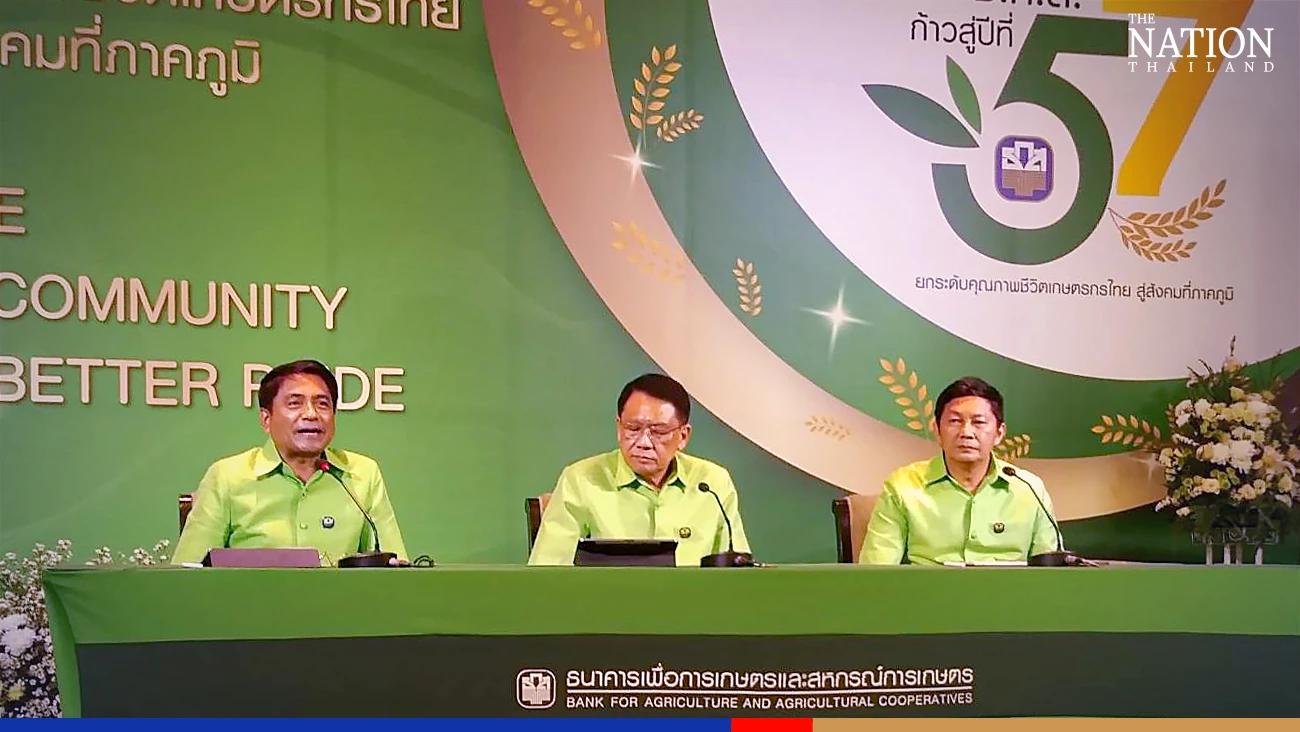
Thailand’s Bank for Agriculture and Agricultural Cooperatives (BAAC) has launched “A-Mobile Plus”, a new version of its mobile banking that offers farmers access to digital banking.
BAAC president Thanarat Ngamvalairat stated during the launch ceremony on Tuesday that the new application is an improvement over the company’s mobile banking services.
Thanarat said new functions and features are being added to make online transactions faster and easier. Users can now buy lottery savings scheme and apply for loans while their personal information is completely secure.
“Local farmers in rural areas make up the majority of our clients. As a result, we anticipate that our A-Mobile Plus will enable them to access banking services anywhere and at any time, as well as encourage them to participate in a cashless society and digital life,” Thanarat explained.
The move comes just a few weeks after the World Bank released a contentious report revealing that rural Thais, the majority of whom are farmers, continue to live in poverty. One of the primary reasons is a lack of banking and funding.
Meanwhile, he has vowed to take any measures necessary to assist farmers in repaying their debts following the recent severe floods.
He stated that the assistance is part of BAAC’s efforts to reduce its non-performing loan (NPL) rate, which is currently 12.5%. The target for bank NPLs is 7%.
“We have already collaborated with the government to implement numerous relief and subsidy schemes for affected farmers. We intend to launch additional projects aimed at assisting farmers in debt management and income generation,” Thanarat said.
He stated that Thai farmers are ready to repay the debt. They are unfortunately unable to do so. Therefore, the BAAC must increase their knowledge of efficient farming, fundamental accounting, effective money management, and product marketing.
Furthermore, he promised to peg the interest rate loan as long as possible if the Bank of Thailand decides to hike the interest rate to stabilise the country’s financial sector.
The announcement comes as BAAC reports its first six-month performance for the current fiscal year, which runs from October 1 to September 30.
During this time, the BAAC has advanced loans totalling 368.745 billion baht, amassing a credit balance of 1.6 trillion baht. Meanwhile, current deposit account totals 1.7 trillion baht. After deducting expenses, the net profit is 1.388 billion baht.
Thanarat confirmed that the bank’s performance remains on track to be a secure rural development bank offering integrated financial services to improve farmers’ quality of life.
We believe that many people recently learning about blockchain technology or investing in cryptocurrency are getting confused with a numerous number of coins to choose from.
One reason that can be explained with such a large number of coins is the use of blockchain technology, which has a continuous development. The development allows them to solve any problem that exists in previous networks, leading to numerous blockchain generations.
Hence, this article will get you to know more about each generation of blockchain, to understand what is the purpose of it being created and what is the problem of each generation following the solution itself.
1st Generation – Bitcoin
(Source: esri.com)
The first time blockchain used in finance was Bitcoin. In this use case, the purpose was to use Bitcoin to remove intermediaries from transaction, to avoid a problem occurring from this system such as a delay in international payment or a fee charged by the intermediaries.
Bitcoin was also created to have a characteristic of “Good Money” in that it was created to have a limited number of coins, 21 million, and to have a mechanism that reduces the number of coins launched every four years. This gimmick is called “Bitcoin Halving” making Bitcoin similar to gold in the digital world.
After Bitcoin was being well-known, there were many networks emerged such as Litecoin which was solved to have a faster transactions than Bitcoin. However, overall, both of them have a relative fundamental.
Apart from that, in October 2022, Guinness World Records just record Bitcoin for being the world’s first decentralized digital currency and for having a total value higher than any other digital currency.
2nd Generation – Ethereum
(Source: imbstudent.donau-uni.ac.at)
The blockchain that has been accepted as a generation 2 is Ethereum. This is because Ethereum was the first network that introduce the use of smart contracts in the blockchain.
The idea of smart contract is an agreement that can be executed automatically if conditions are met.
Smart Contract is similar to programming on blockchain but more transparent as everyone can examine its work process. This is why blockchain can do more than just transferring money.
When having a smart contract, developers can create applications on the blockchain, leading to new use cases such as the Decentralized Exchange used in Uniswap or the Decentralized Lending service used in AAVE.
Furthermore, for NFT, an asset having a unique feature that cannot be interchaged, when people hear this word, they probably think of digital art such as Bored Ape Yacht club or CryptoPucks. However, NFT can be used in various specific assets like real estate, collectibles, vehicles, or even game items.
With smart contracts and NFT, the blockchain has been expanded apart from just transferring money like in the Bitcoin era. However, a problem still exists in this generation such as scalability, which is an expansion of network to be suitable for a large number of users. Therefore, such a problem leads to the development of new blockchain generation.
3rd Generation
(Source: weforum.com)
A major weakness of both Bitcoin and Ethereum is the issue of scalability, or expanding the network to handle higher transaction volumes, which causes a bottleneck leading to transaction delays and higher gas fees.
In order to fix this problem, third-generation blockchains like Cardano, Avalanche, TRON, etc. have been developed. Each network employs a unique set of technologies, such as sharding or sidechain. Some networks have been overhauled by switching from blockchain to a DAG (Directed Acyclic Graph) data structure.
The Ethereum side did not just sit around, as Ethereum 2.0 is being developed to improve speed, smart contracts functions, along with other features, which were partly completed in the September 2022 update of The Merge. This is an update that changed the consensus algorithm from Proof-of-Work to Proof-of-Stake. However, the date for the next update has not been announced, and therefore, we will have to keep an eye out for it.
Nevertheless, the majority of third-generation blockchains are still very new and are not as widely known or used as Bitcoin and Ethereum. Thus, it remains to be seen whether these networks will prove themselves capable of handling massive transactions effectively in the future.
4th Generation
(Source: cloudhm.co.th)
At present, it is still uncertain how the fourth-generation blockchains will develop since the third-generation blockchains are still relatively new, with most of them trying to fix the issues that arose in the second generation.
Some believe the fourth generation will integrate blockchain with AI (Artificial intelligence) technology, while others believe it will focus on mass adoption, making blockchain more accessible to the general public, educational institutions, or small businesses.
However, it is highly likely that the fourth-generation blockchain may arrive sooner than expected due to the leap forward in technological advancement nowadays. In particular, the advent of the metaverse has caused all industries to turn their attention to key infrastructure such as blockchain technology.
Conclusion
Blockchain is constantly evolving like any other technology. Currently, blockchain can be divided into 3 generations:
First generation: solves the problem of making transactions through an intermediary (Bitcoin)
Second generation: smart contracts were added to support new use cases (Ethereum)
Third generation: solves scalability issues and enables massive transactions in blockchain (Cardano, Avalanche, TRON)
Fourth generation: is expected to be about integrating AI technologies or perhaps focusing on mass adoption that will allow blockchain to infiltrate everyday life better.
Citi completes sale of Malaysia, Thailand consumer banking to UOB
TUESDAY, NOVEMBER 01, 2022
Citi announced on Tuesday that it has completed the sale of its Malaysia and Thailand retail banking and consumer credit card businesses to United Overseas Bank Limited (UOB) subsidiaries, which includes the transfer of over 3,000 related staff.
The move marks the completion and closing of the third and fourth divestitures of Citi’s restructuring.
The transaction is expected to result in a capital benefit to Citi of over US$1billion.
Citi and UOB first announced the transaction on January 14, 2022, as part of a broader sale agreement covering consumer banking across Malaysia, Thailand, Vietnam, and Indonesia and excluding the bank’s institutional businesses. As previously disclosed, the sales of the Vietnam and Indonesia consumer businesses are expected to be completed in 2023.
Since announcing as part of its strategic refresh that Citi intends to exit consumer banking across 14 markets in Asia, Europe, the Middle East and Mexico, sales agreements have been signed in nine markets. Transactions have now closed in four markets including Australia, the Philippines, Thailand and Malaysia. Citi is also in the process of winding down consumer banking in South Korea and Russia.
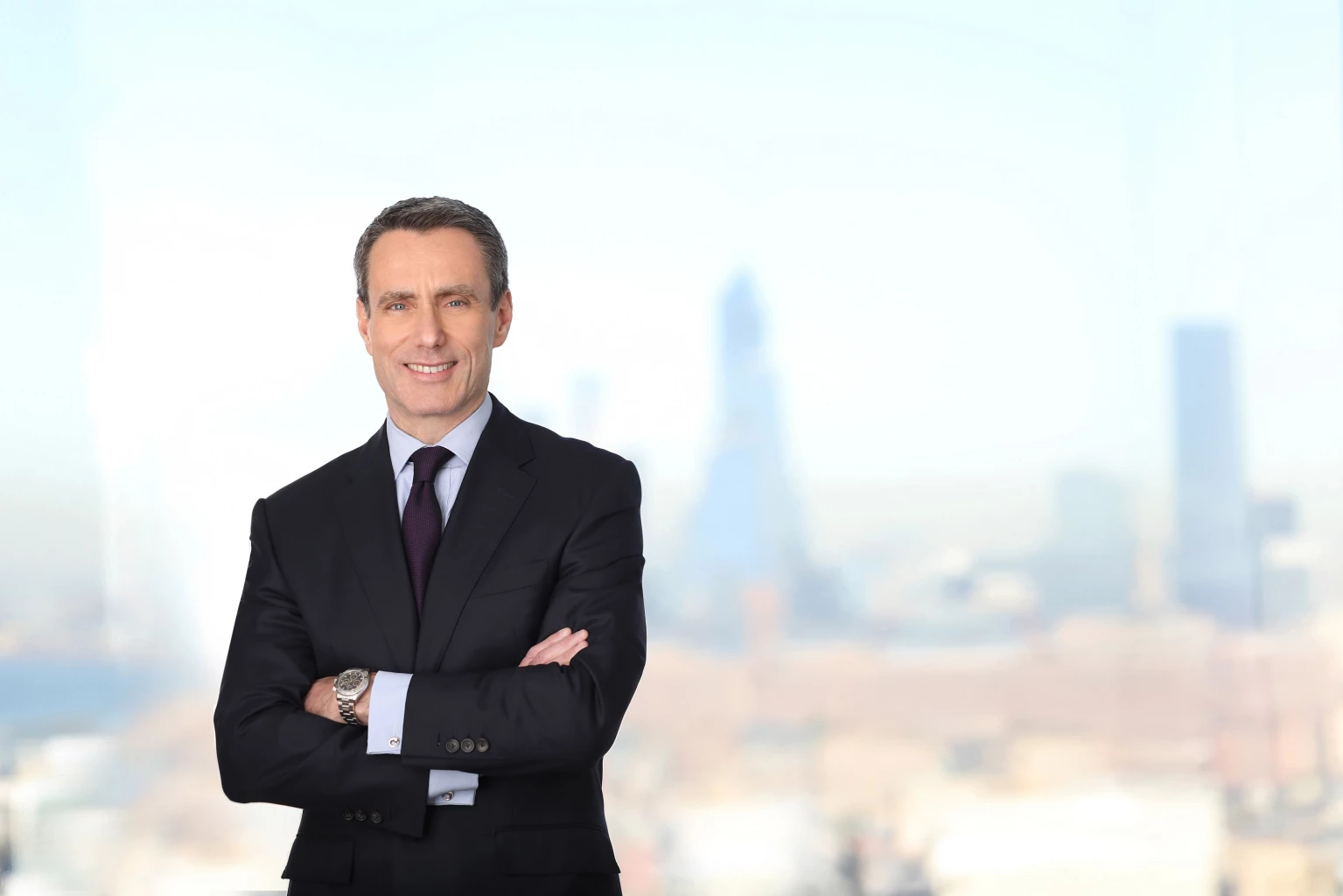
Asia Pacific CEO Peter Babej said, “Today’s announcement is positive for clients, colleagues, and our firm. Citi remains deeply committed to Malaysia and Thailand and we will invest further in both markets across our leading institutional franchise to support clients locally and where they do business across Citi’s network. We thank former employees and customers for their commitment and support and wish them continued success in the future.”
Peter BabejTiti Cole
Citi’s CEO of Legacy Franchises, Titi Cole, said, “With these completed sales, we have now divested four consumer businesses and are making swift and strong headway in delivering on our firm’s strategy refresh. We are confident about the future our former employees and clients will have as part of UOB and look forward to seeing them prosper.”
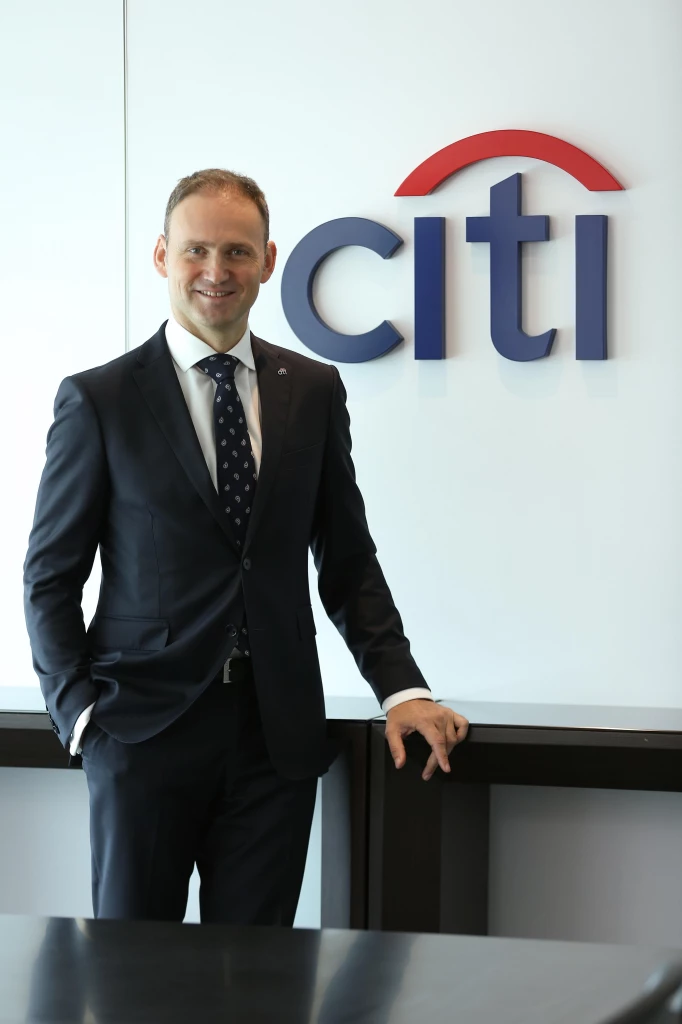
Tibor Pandi
Tibor Pandi, Country Head, Citi Thailand said, “I would like to thank for a strong support and commitments of our former staff to prepare the smooth transition of the services for our clients to UOB, I wish them all the best for their new career path. Citi Thailand remains a key market for Citi globally and we remain committed and focused on serving institutional clients locally, regionally, and globally as we have for over half a century.
Bangchak continues expanding with more petroleum fields in Norway added to portfolio
TUESDAY, NOVEMBER 01, 2022
Bangchak Group continues the expansion of its natural resource business through Norway’s OKEA ASA, of which it is a major shareholder. On November 1, OKEA acquired three petroleum fields namely Brage, Ivar Aasen and Nova fields. The total value of the transaction stood at more than 4 billion baht, with revenue recognition starting from November 1 onwards.
Chaiwat Kovavisarach, Group Chief Executive Officer and President,Bangchak Corporation Public Company Limited, as Chairman of OKEA ASA, Norway, an exploration and production company listed on the Oslo Stock Exchange, stated that as of 1 November 2022, OKEA ASA has completed the acquisition of Wintershall Dea‘s 35.2 % interest in the Brage field, 6.4615% interest in the Ivar Aasen field, as well as a 6 % interest in the Nova development field.
The acquisition also includes the operatorship of Brage oil field. The total value of the transaction amounts to NOK 1.1 billion or over 4 billion Baht.
The acquisition of the Brage field and two other assets represents a significant step in OKEA’s growth strategy, like the acquisition of the Draugen field in 2018. It will not only add over 7,000 barrels of oil equivalent per day (BOEPD) of production capacity and bring OKEA’s total production to 25,000 – 27,000 BOEPD in 2023 – 2024 but will also increase OKEA’s reserves by 30 – 40%, and further expand its portfolio and strengthen the company’s position as a leading mid- to-late-life operator on the Norwegian Continental Shelf (NCS).
Moreover, 140 competent and highly experienced offshore and onshore employees from Wintershell Dea will be transferred to OKEA, doubling the number of OKEA employees.
“The acquisition of the operatorship of the Brage field reiterates OKEA’s ambitious growth strategy and reflects Bangchak Group’s focus in balancing the energy trilemma; energy security with energy affordability, and environmental sustainability” Chaiwat concluded.
Baht might weaken but resistance level will be 38: market strategist
THURSDAY, NOVEMBER 03, 2022
The baht opened at 37.80 to the US dollar on Thursday, weakening from Wednesday’s close of 37.58.
The currency will likely move between 37.70 and 38.00 against the greenback during the day, Krungthai market strategist Poon Panichpibool predicted.
He speculated that the baht might be pressured to weaken as the dollar advances amid increased gold purchases as prices of the precious metal went down after the US Federal Reserve chairman signalled he would continue to increase the interest rate.
This is in line with Poon’s view that investors should beware of a volatile baht and there could be a chance the Thai currency would weaken after the Fed chairman’s statement.
Poon said the baht might weaken but its resistance level will be 38 to the dollar.
However, he said the baht will not weaken much from its resistance level while its support level would be around 37.50 to 37.60, the level that importers are waiting for to buy the dollar.
Poon advised investors to use hedging tools such as options to manage risks in a highly volatile currency market.
Thailand targets a juicy THB200 bn worth of fruit exports next year
THURSDAY, NOVEMBER 03, 2022
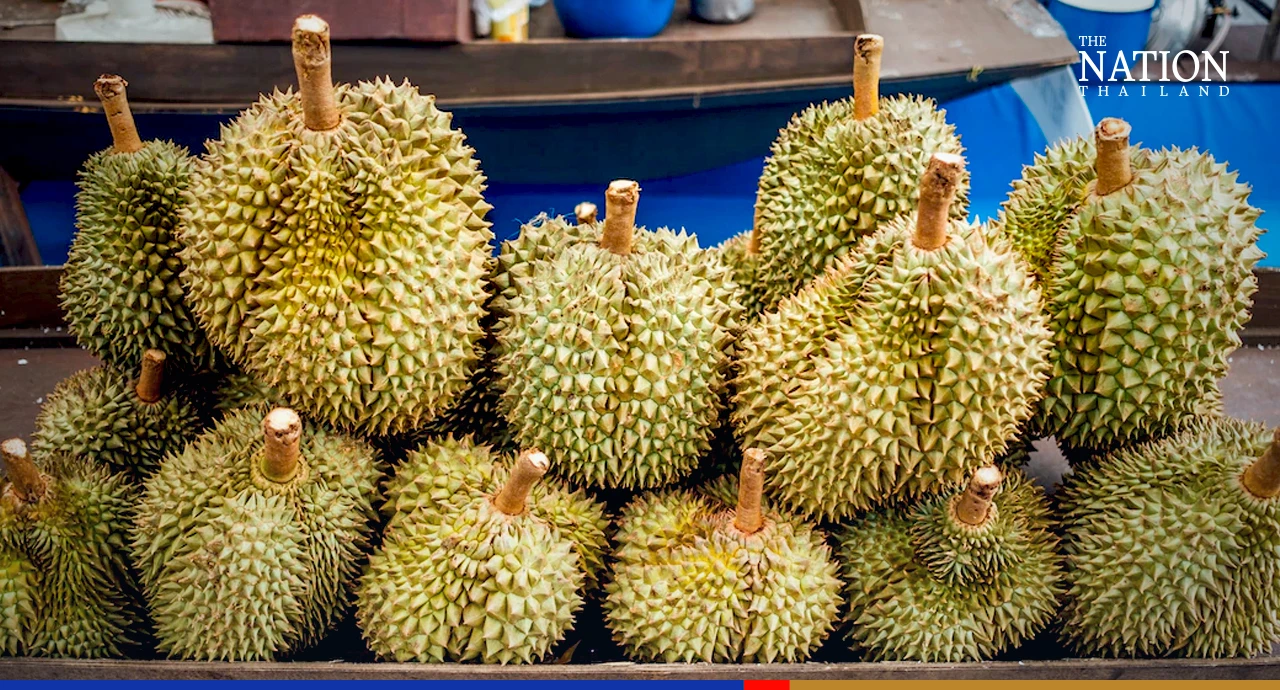
Thailand expects 200 billion baht worth of fruit exports in 2023 after earning 1.8 billion baht in revenue so far this year from 2.82 million tonnes of fruit exports, the Department of Agriculture said.
Director-general Raphiphat Chantarasriwong said on Wednesday that China is still Thailand’s biggest market, responsible for 84.75 per cent of total fruit exports. Other markets include Malaysia, Indonesia, Vietnam, South Korea and the United States, respectively.
“Next year, we expect China to import up to 2.39 million tonnes of fruit worth 159 billion baht, while overall fruit exports would reach 200 billion baht,” he said.
Raphiphat said that next year the department plans to apply to export more types of fruits to several countries after negotiating with foreign markets.
“We plan to apply for exports of date palm, passion fruit and salak to China; coconut husk to Saudi Arabia; lychee, longan, rambutan, dragon fruit and pomelo to the US; mango, mangosteen and pomelo to Japan, and lychee, longan and pineapple to Australia,” he said.
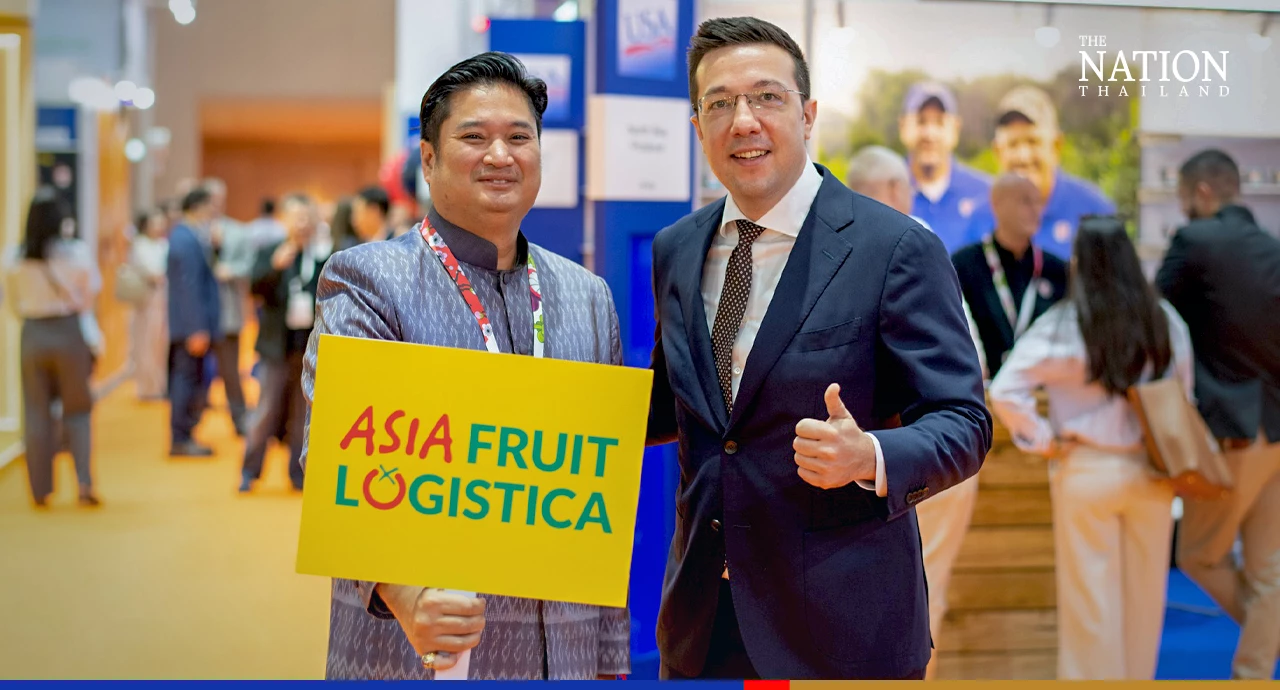
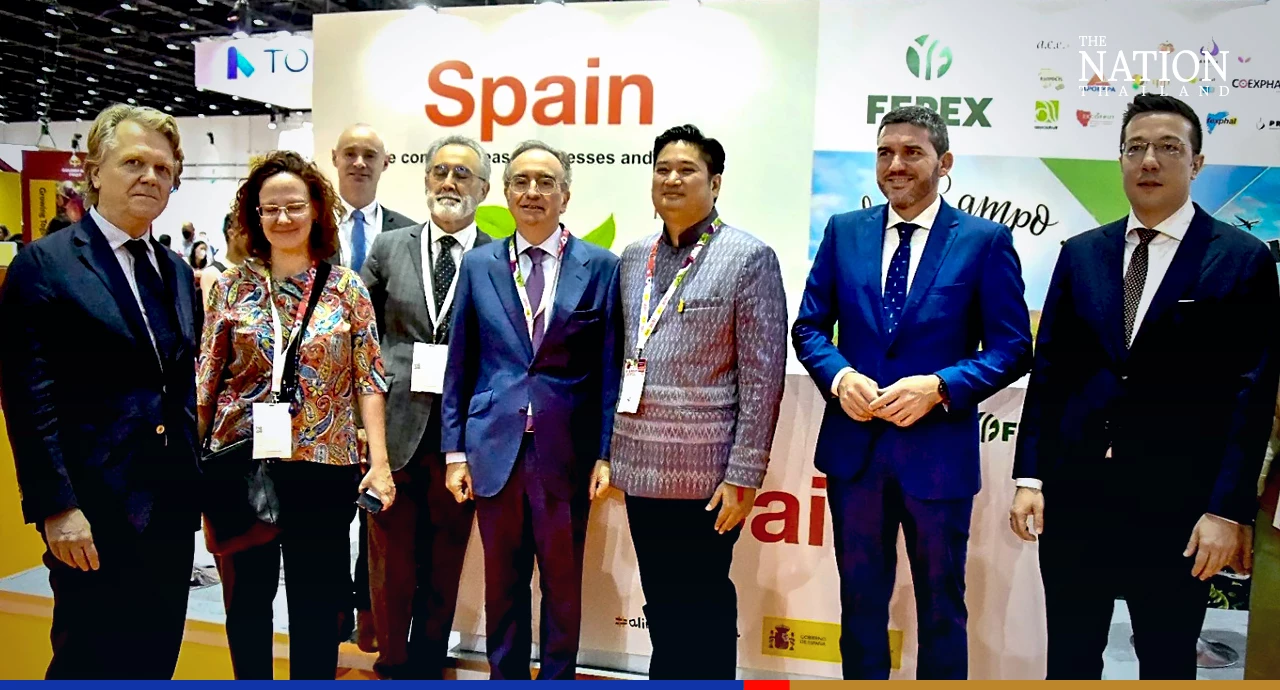
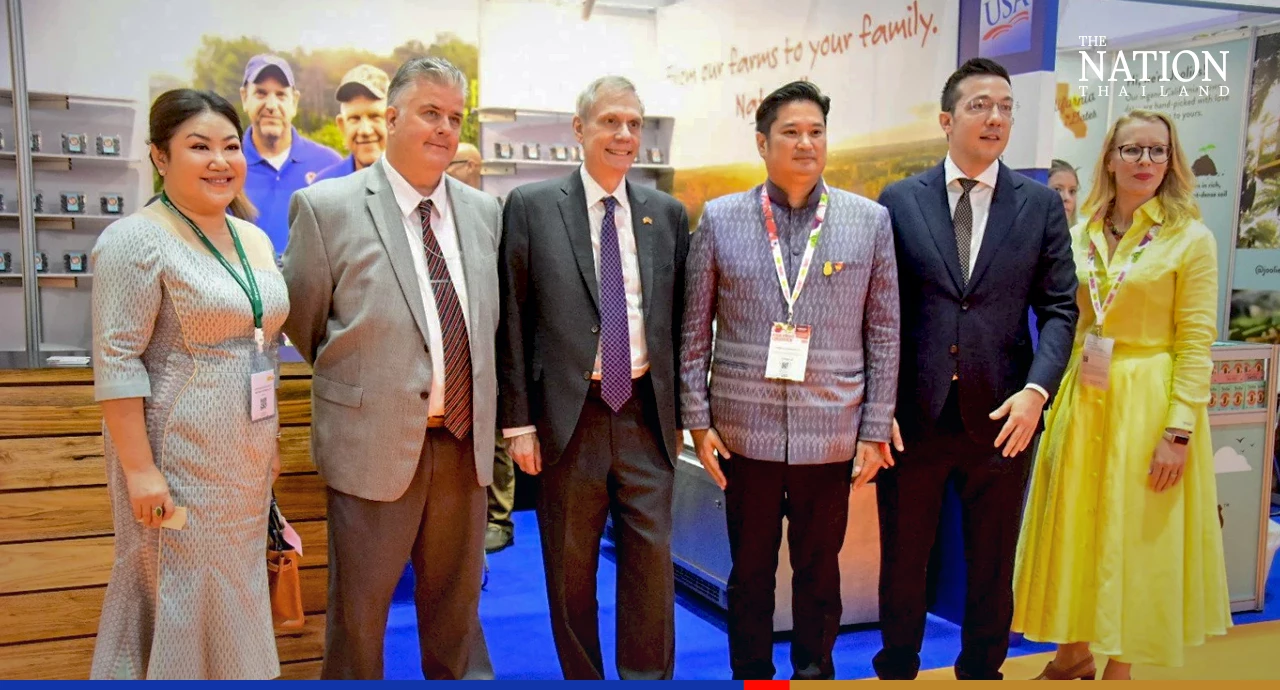
Raphiphat was visiting the “Asia Fruit Logistica” fair, which runs from November 2 to 4 at Queen Sirikit National Convention Centre in Bangkok. The annual event has been organised for the past 15 years with participation from Thai and international agricultural authorities, fruit importers/exporters, and companies across the fruit supply chain to carry out fruit-trade negotiations. The event also helps local firms to explore new market opportunities in the Asian region.
At the fair Raphiphat met Spanish Ambassador Emilio de Miguel Calabia and American Ambassador Robert F Godec, while visiting the booths of the two countries to discuss fruit import and export opportunities as well as additional agricultural cooperation.
Baht advances but could be affected by results of key US Fed meeting
WEDNESDAY, NOVEMBER 02, 2022
The baht opened at 37.76 to the US dollar on Wednesday, strengthening from Tuesday’s close of 37.74.
The currency will likely move between 37.65 and 37.95 against the greenback during the day, Krungthai market strategist Poon Panichpibool predicted.
He said the baht strengthened more than he expected due to a series of factors – the weakening of the dollar, hopes that the Chinese government would ease its Covid restrictions, the increasing gold price, and over 6.1 billion baht in foreign transactions involving Thai stocks.
However, these supporting factors might decrease or disappear if investors remain unsure whether the US Federal Reserve would slow its interest rate increases.
Poon warned investors to beware of market and stock volatility during the Fed chairman’s press conference.
He expected the market not to get too shaken up with the results of the Fed’s key meeting and has acknowledged that the Fed might increase the interest rate by 0.75%.
If the Fed chairman does not clearly signal a move to slow its interest rate increases in the future or does not show concern for the US economy, the baht might weaken as the dollar would strengthen.
Poon said the baht’s new support level is between 37.60 and 37.70 to the dollar, while the resistance level is between 38.20 and 38.30 if the Thai currency exceeds the 38 level.
It might weaken to 38 if the market fluctuates during the Fed press conference, Poon added.
He advised investors to use hedging tools such as options to manage risks in a highly volatile currency market.


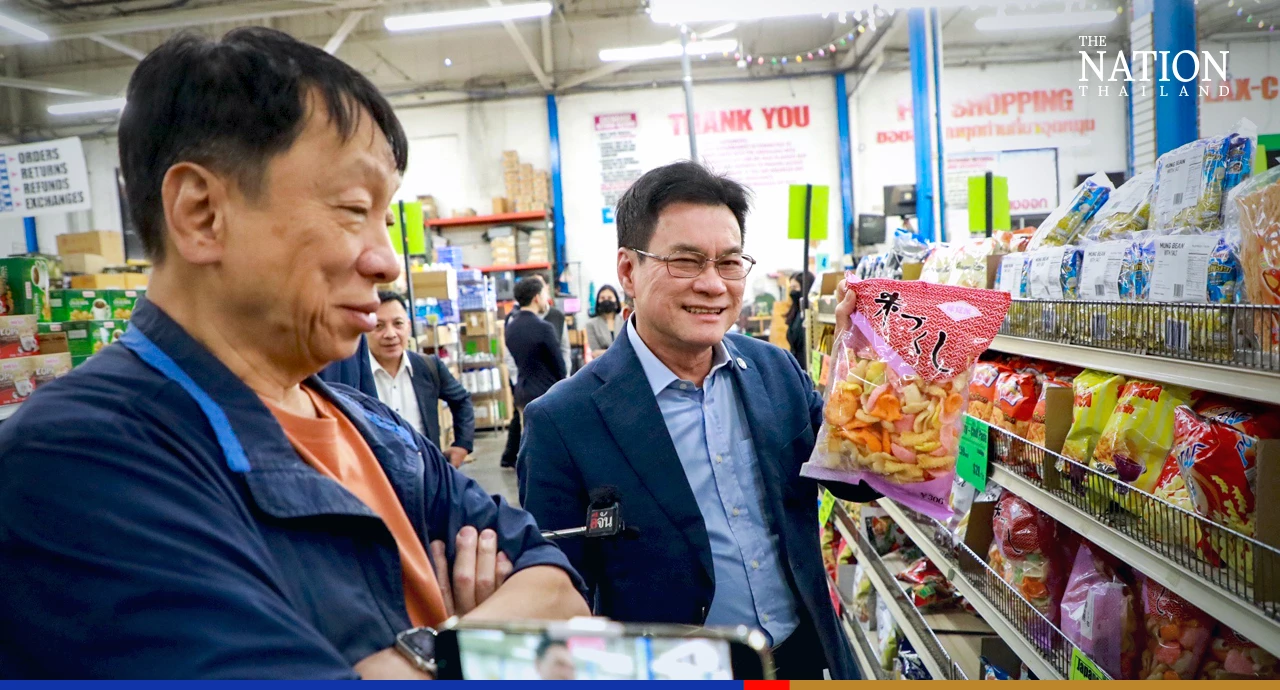 Lax-C, which imports various types of products from Thailand, serves as a centre to distribute the products to Asians across the United States.
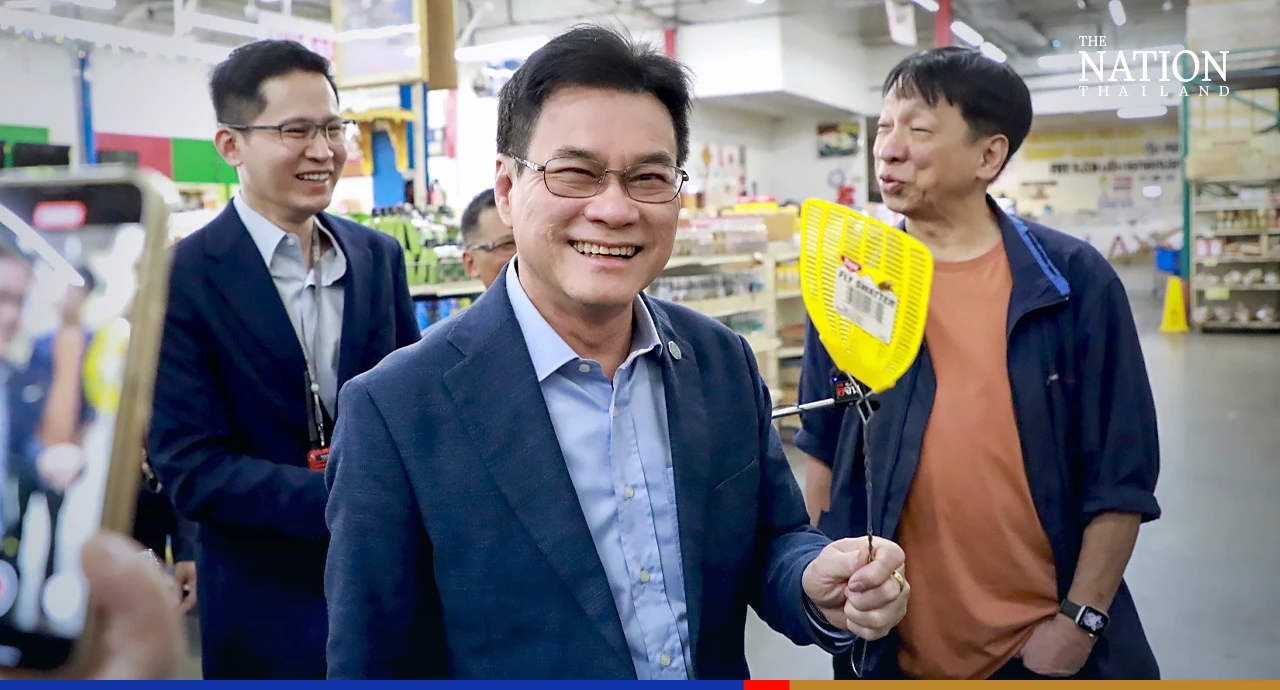 “Lax-C is an effective distribution centre of Thai products, which is owned by a Thai. It helps distribute Thai-made goods in Asian markets and is strategically located near China Town in Los Angeles,” Jurin said.
 The DITP also said Jurin attended the American Film Market & Conference (AFM) 2022 at the Hotel Casa del Mar in Los Angeles on Wednesday.
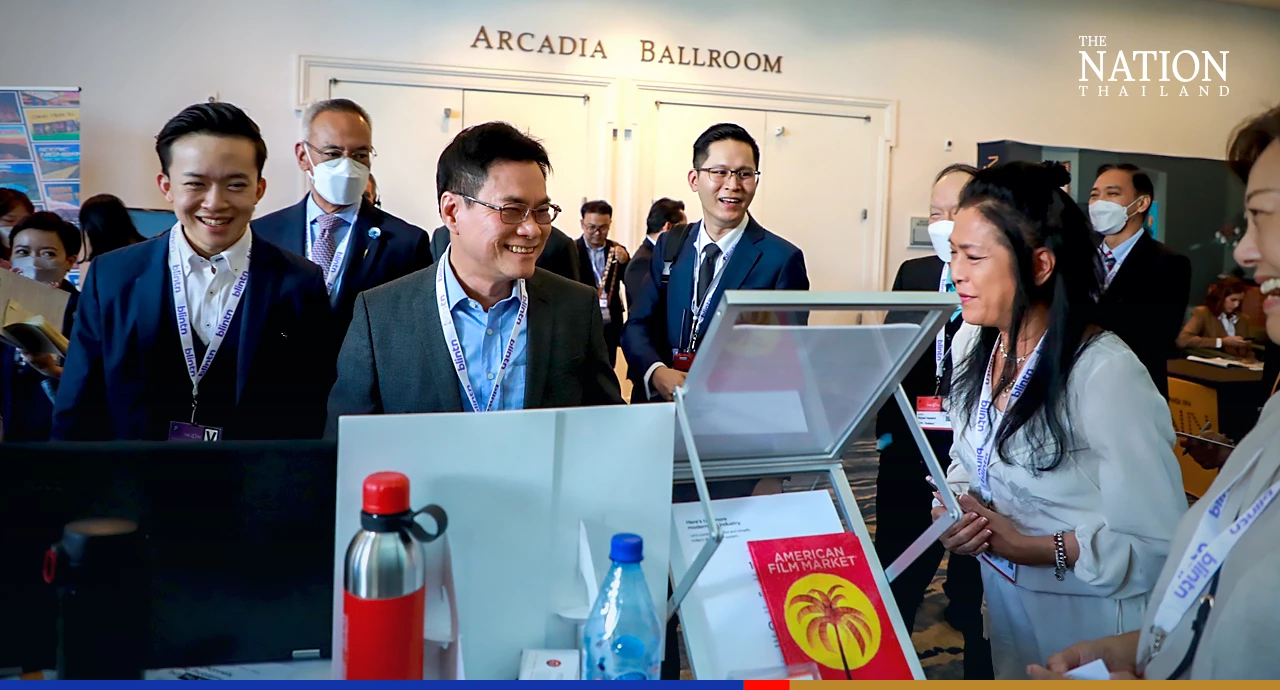 Jurin said eight Thai digital content firms also accompanied him to the AFM. They were expected to sell products worth 800 million baht to international movie firms.




 Peter Babej
 Titi Cole
 Tibor Pandi



 SootinClaimon.Com