The Stock Exchange of Thailand (SET) Index rose 4.25 points or 0.31 per cent, closing at 1,356.43 today (June 23). Total transactions stood at Bt49.101 billion with an index high of 1,361.84 and a low of 1,351.92.
A stock analyst at Krungsri Securities said during the morning session that he expected the index to rebound between 1,360 and 1,365 points before falling in response to the US Congress’s approval of a US$1 trillion (Bt30.94 trillion) bill for infrastructure development in a move to boost economic recovery.
“Energy and petroleum stocks also won positive sentiment from rising price of crude oil, which rose to more than $40 per barrel,” the analyst said.
However, he said, bank stocks were under pressure after the Bank of Thailand ordered commercial banks to conduct stress tests on their capital management by next month.
“The index will also come under pressure following uncertainty amid a second wave of Covid-19 in Brazil, the US and India,” he noted.
The top 10 stocks with the highest trade value today were KBANK, CPF, STA, BBL, MINT, PTTEP, CPALL, SAWAD, AOT and SCB.
As of 4.30pm, the price of crude oil rose by $0.24 or 0.59 per cent to $40.97 per barrel, while gold rose by $4.80 or 0.27 per cent, to $1,771.20 per ounce.
Asian indices rose as follows:
Japan’s Nikkei Index closed at 22,549.05, up 111.78 points, or 0.50 per cent.
China’s Shanghai SE Composite Index closed at 2,970.62, up 5.35 points, or 0.18 per cent, while Shenzhen SE Component Index closed at 11,794.01, up 91.57 points, or 0.78 per cent.
Hong Kong’s Hang Seng Index closed at 24,907.34, up 396.00 points, or 1.62 per cent.
South Korea’s KOSPI Index closed at 2,131.24, up 4.51 points, or 0.21 per cent.
Taiwan’s TAIEX Index closed at 11,612.36, up 39.43 points, or 0.34 per cent.
Jun 23. 2020Nadine Allen, head of Ericsson Thailand
By THE NATION
The number of global 5G subscriptions is expected to hit 190 million this year and 2.8 billion by the end of 2025, according to Ericsson’s latest mobility report.
In Southeast Asia and Oceania, ultra-fast 5G will surpass 270 million subscriptions and be used by 21 per cent of mobile consumers by 2025, second only to LTE technology.
The forecasts come from June’s Ericsson Mobility Report, along with projections for data traffic growth, and regional subscriptions.
Nadine Allen, head of Ericsson Thailand, said: “People all over the world have had to change their daily lives as a result of the spread of Covid-19. The move to working or studying from home has seen network traffic rapidly shift from business to residential areas. The latest Ericsson Mobility Report shows that mobile and fixed networks are increasingly playing an even bigger part of critical national infrastructure.”
While 5G subscription growth in some markets has slowed as a result of the pandemic, this is outweighed by other markets where it is accelerating, prompting Ericsson to raise its year-end 2020 forecast for global 5G subscriptions.
“Beyond measuring the success of 5G in subscriptions, 5G will bring enormous benefits to people and enterprises,” Allen added. “5G was made for innovation and this crisis has highlighted the true value of connectivity and the role it can play in rebuilding economies.”
The data traffic per smartphone in Southeast Asia and Oceania is expected to reach 25 gigabytes (GB) by 2025, growing at a compound annual growth rate (CAGR) of 33 per cent.
Traffic growth is driven by coverage build-out and continued adoption of 4G, linked to a rise in smartphone subscriptions and increases in average data usage per smartphone. The total mobile data traffic in Southeast Asia is expected to reach 25 exabyte (EB)/month from 3.2 EB/month growing at a CAGR of 40 per cent.
Changes in behaviour due to lockdown restrictions have caused measurable changes in the usage of both fixed and mobile networks. The largest share of the traffic increase has been absorbed by fixed residential networks, which has experienced a 20-100 per cent growth. But many service providers also noticed a spike in demand on their mobile network.
In a recent study by Ericsson Consumer Lab, 83 per cent of the respondents from 11 countries claim that ICT significantly helped them to cope with the lockdown. The results show an increased adoption and usage of ICT services, such as e-learning and wellness apps, that have helped consumers adapt to new realities, underpinned by connectivity.
Looking ahead, while 57 per cent say they will save money for financial security, one-third plan to invest in 5G and an improved broadband at home to be better prepared for a potential second wave of Covid-19.
The pandemic has also highlighted the importance of digitalisation for businesses worldwide. Connectivity has enabled companies to continue engaging with customers as well as conduct business transactions online. Additionally, the combination of 5G and digitalisation creates new opportunities for service providers to extend their businesses beyond connectivity into a variety of sectors ranging from healthcare, automotive to manufacturing.
Wuttichai Wutti-Udomlert, head of Network Solutions, Ericsson Thailand, said: “At Ericsson, we have the right 5G portfolio in place to enable our customers to deploy 5G networks in all main frequency bands globally in the fastest and most efficient way. Over time, new exciting innovation in 5G for business will come with IoT use cases as 5G opens up opportunities for operators.”
Wuttichai Wutti-Udomlert, head of Network Solutions, Ericsson Thailand
Thailand is the first country in Southeast Asia to commence commercial deployment of 5G, in March this year.
In Southeast Asia, 5G-enabled digitalisation revenues are projected to top US$41 billion (Bt1.27 trillion) by 2030.
The Stock Exchange of Thailand Index on Monday (June 22) fell by 18 points due to a 6.37 per cent drop in the price of bank stocks, experts said. Investors sold bank stocks after the Bank of Thailand (BOT) ordered banks to hold off paying interim dividends and buying back shares to strengthen their capital to deal with risks in the future.
Also, bank stocks were under pressure from the central bank’s measures to cut the interest rates charged for credit cards, personal credit and hire purchases to help people struggling with debt due to the Covid-19 crisis.
These factors caused the price of bank stocks to drop 6.37 per cent, while the SET Index fell by 18 points to 1,352 at yesterday’s close. Foreign and institutional investors made net sales in stocks of Bt3.106 billion and Bt3.695 billion, respectively.
Bangkok Bank’s stock dropped the most, by 9.09 per cent, followed by Siam Commercial Bank (7.44 per cent), Kasikorn Bank (6.79 per cent), Tisco Financial Group (5.78 per cent), and Kiatnakin Bank (5.68 per cent).
A Capital Nomura Securities stock analyst said BOT’s order caused negative sentiment for bank stocks, although the banks’ capital adequacy ratio is currently 19.6 per cent, higher than the central bank’s minimum criteria of 12 per cent.
“The central bank’s announcement showed that the Covid-19 impact on the economy and asset quality may be worse than they expected,” he said. “BOT’s intervention always lends negative sentiment to bank stocks.”
The analyst also said BOT’s move has impacted banks that pay interim dividends more than banks that pay dividends only once a year as investors expect dividends as promised.
“However, banks’ dividends are expected to decrease due to a decline in profits,” he added.
Theerasate Prompong, an analyst at Maybank Kim Eng Securities (Thailand), said interim dividends totalling Bt14.3 billion have been held back, causing banks’ and stock market dividend yields this year to drop to 4.38 per cent and 3.46 per cent, respectively.
“The price of bank stocks dropped sharply due to uncertainty among foreign and institutional investors following BOT’s intervention,” he said. “Therefore, we advise investors to avoid investing in bank stocks.”
Principal Asset Management chief investment officer Win Phromphaet said BOT’s move would impact bank stocks only in the short term because bank fundamentals are still strong.
“Currently, we are still investing in bank stocks at a moderate level, but our fund is still interested because we have other stocks that can escape the impact from Covid-19,” he said.
By The Washington Post · Josh Dawsey, Jeff Stein · NATIONAL, BUSINESS, WORLD, WHITEHOUSE, ASIA-PACIFIC
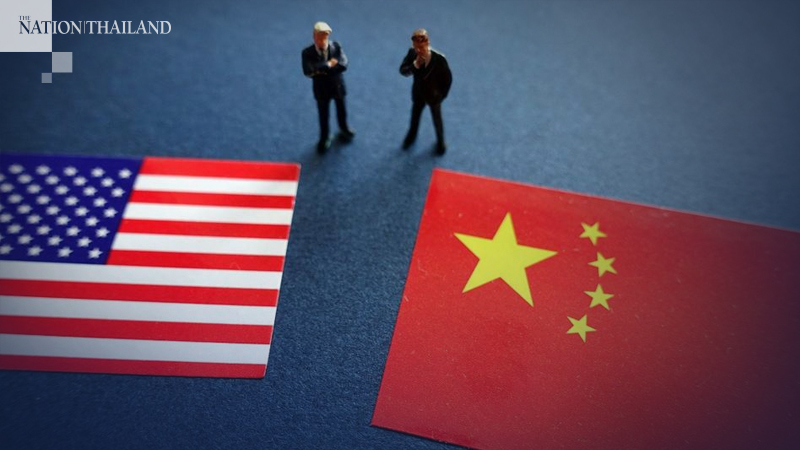
WASHINGTON – President Donald Trump took to Twitter late Monday to quell an international incident caused by one of his aides hours earlier as White House officials struggled to convey a consistent China strategy.
White House trade adviser Peter Navarro, an unabashed China hawk, said in a Fox Business interview Monday evening that the trade deal Trump signed with Beijing in January was “over.”
The comments triggered a sell-off in stock futures, an index the president watches closely.
Shortly after 10 p.m., Trump tweeted that “The China Trade Deal is fully intact. Hopefully they will continue to live up to the terms of the Agreement!”
As part of Navarro’s provocative Fox Business interview, he also alleged without offering any evidence that China had sent hundreds of thousands of people “to spread that virus” in the U.S.”
“It’s over, yes,” Navarro said when asked about the status of the trade deal during that interview.
Navarro has a special status in the White House; he often goes on television shows and says what he likes, discarding administration talking points. His comments on Monday, however, clearly upset other White House officials and prompted a swift rebuttal.
Soon after Navarro made his comments, White House National Economic Council Director Larry Kudlow told the Washington Post that “The China trade deal is still intact.”
A senior administration official, speaking on the condition of anonymity to frankly discuss internal matters, said Navarro was not speaking for the administration when he made the comments about the deal being over.
Navarro later told Reuters his comments had been “wildly” taken out of context and did not pertain to the trade deal with China.
“They had nothing at all to do with the Phase 1 trade deal, which continues in place. I was simply speaking to the lack of trust we now have of the Chinese Communist Party after they lied about the origins of the China virus and foisted a pandemic upon the world,” Navarro said.
The mixed signals from the White House come as factions within the administration jockey over how the U.S. should respond to China’s role in the pandemic. Navarro has blamed Beijing for allowing its representatives to visit the U.S. in January, when the coronavirus was beginning to spread rapidly across China. He told Fox Business that the moment amounted to a “turning point” in relations between the superpowers.
The president repeatedly has cited the trade deal as one of the top economic policy accomplishments of his administration, and other senior advisers have urged a more cautious approach. But Trump appears to have soured on the trade deal recently, and last week he wrote on Twitter that the option of a “complete decoupling” between the U.S. and China was on the table.
The price of gold rose by Bt50 per baht weight in morning trade today (June 23), the Gold Traders Association reported.
As of 9.23am, the buying price of a gold bar was Bt25,600 per baht weight and selling price Bt25,700, while gold ornaments cost Bt25,135.28 and Bt26,200, respectively.
At close yesterday (June 22), the buying price of a gold bar was Bt25,550 per baht weight and selling price Bt25,650, while gold ornaments were priced at Bt25,089.80 and Bt26,150, respectively.
The Gold Spot Index price this morning moved to around US$1,753 (Bt54,324) per ounce after the price rose by $13.40 to $1,766.40 per ounce at yesterday’s close.
Investors bought gold as a safe haven asset due to the rising number of new Covid-19 cases worldwide, weak economic data and a weakening dollar.
The Stock Exchange of Thailand Index opened at 1,360.62, up 8.44 points, or 0.62 per cent, this morning (June 23).
A stock analyst at Krungsri Securities expected the index to rebound between 1,360 and 1,365 points before falling in response to expected US Congress approval of a US$1-trillion (Bt30.94 trillion) bill for infrastructure development, which will boost economic recovery.
“Energy and petroleum stocks also gained positive sentiment from the increasing crude oil price, which rose more than $40 per barrel,” the analyst said.
He said bank stocks would be under pressure after the Bank of Thailand ordered commercial banks to conduct stress tests on capital management by July.
“Also, the index will come under pressure following uncertainty amid a second wave of Covid-19 in Brazil, the US and India,” he noted.
He recommended investors buy the following stocks:
▪ Energy stocks that benefit from the rising crude oil price, such as PTT, PTTEP, Top, PTTGC, IRPC, SPRC and IVL.
▪ Food stocks that benefit from rising pork and chicken prices, such as CPF, GFPT and TFG.
▪ Stocks whose second-quarter performance will improve, such as CKP, Tasco, STA and RS.
The SET Index fell by 19 points yesterday (June 22), or 1.36 per cent, closing at 1,352, mainly due to mass sell-offs in bank and financial stocks.
Total transactions amounted to Bt65.7 billion. Foreign investors made net sales of Bt3.106 billion in stocks, while net bond purchases amounted to Bt1.692 billion. There were 1,361 net short TFEX SET50 contracts.
KBank launches Wealth Plus to help customers manage personalised investment portfolios
Jun 23. 2020
By THE NATION
Kasikorn Bank has launched a “Wealth Plus” feature on its KPlus mobile application to serve as a personal assistant in portfolio management for customers.
The feature is designed for customers who seek financial security but have no time to keep track of their investments, which causes them to miss out on good opportunities, the bank said in a press statement.
The new feature “personalises portfolio arrangement” to best suit each individual, monitoring and rebalancing a person’s portfolio regularly based on market circumstances.
According to KBank, Wealth Plus is suitable for the new generation wanting to get into investing. They can choose a portfolio with long-term security or one with a clear goal, such as saving to buy a car, or for travel or retirement.
To get started, customers simply make an initial investment of Bt10,000 without needing to go to any branch or submitting any documents, and no fee is charged. For subsequent investments, a minimum of Bt1,000 is needed.
Wealth PLUS allows customers to:
• Design an investment portfolio tailored to their personal financial goals. It selects mutual funds that diversify risks and offers appropriate returns according to each customer’s risk appetite and investment period, with market conditions also in mind.
• Enjoy automatic risk diversification without the need for exhaustive calculation. It focuses on portfolio investment – investing in myriad mutual funds at an appropriate ratio, helping customers to automatically diversify risks without the need to calculate by themselves.
• Monitor and maintain portfolios around-the-clock. It will auto-rebalance portfolios when they are affected by drastic changes in market conditions, letting customers remain “worry-free”. In normal circumstances, portfolios are auto-rebalanced every six months.
Dow Thailand Group, a global leader in material sciences, points out that sustainable plastic waste management demands all parties’ engagement, particularly the general public.
Chatchai Luanpolcharoenchai, President of Dow Thailand, said, “As one of the world’s largest materials science companies, Dow is aware of the loss of plastic waste to the environment and has explored sustainable management solutions given that plastic is too valuable to be discarded as such. Plastic plays significant roles, particularly in the light of the current coronavirus outbreak (COVID-19), when plastic is turned to medical protection equipment and packaging. Nevertheless, sustainable plastics cannot be achieved by just one organization. It requires the engagement of all involved parties.”
In Thailand, Dow helped found Public-Private Partnership for Sustainable Plastic and Waste Management (PPP Plastics) in 2018. Together with its partners, Dow supported the government’s drafting and implementation of the Roadmap on Plastic Waste Management (2018-2030). The roadmap provides an operational framework in tackling plastic waste under the circular economy concept and fully recycling plastic waste by 2027.
The latest effort, “MueWiset X Won” (the magic recycling hand), involves Dow and over 60 members of PPP Plastics. The project calls for the donation of used plastic items like shopping bags, diaper wraps, water bottle packaging films, and shockproof films used in-home delivery services. These products are destined for recycling, to prevent the loss to the environment and reduce plastic waste to landfill. The goal is to reduce ocean waste and maximize resource utilization accordingly to the circular economy concept.
“The MueWiset X Won Project showcases the engagement of all involved parties, from producers, recycling business operators, and regulators to consumers in tackling plastic in a sustainable manner. The project will promote awareness and inspire a behavioral change, as plastic waste will be appropriately tossed away and sorted at the start,” Chatchai said.
Under the project, in June, “bag recycling buckets” are located at 300 donation spots, including big department stores such as Central, The Mall and Tesco Lotus, including Bangchak gas stations in the Greater Bangkok and Rayong. The coverage areas will be later extended to neighboring provinces and other provinces. The donated bags and films are valued at Bt5 per kg, and the proceeds will go to the Marine Endangered Animals Rescue Center to fund rescue missions.
By Syndication Washington Post, Bloomberg · Ezra Fieser · BUSINESS, US-GLOBAL-MARKETS The pile of distressed debt in emerging markets that ballooned in March is quickly shrinking, suggesting to some investors that fears of a wave of corporate collapses are overblown.
Despite warnings that default rates will rise to double digits, investors have turned more bullish on the riskiest debt sold by companies in markets from Latin America to China, resulting in falling levels of distressed debt.
Since peaking on March 19 at $121.6 billion, the pool of high-yield, emerging-market corporate debt trading at distressed levels has shriveled to $28.6 billion, according to JPMorgan Chase & Co. The spread between high-yield bonds and a broader index of developing-nation debt has tightened 140 basis points over that time.
“The level of hysteria we saw in March for corporates was somewhat unprecedented,” said Steve Cook, co-head of emerging markets fixed income at PineBridge Investments, which has $96.2 billion in assets under management. “There will be some weak links, but to say that you’re going to see 10% to 12% default rates, we don’t see it.”
PineBridge expects the default rate for those corporates to reach 3% to 4% by the end of the year, he said.
A global recession caused by the coronavirus lockdown and worsened by a crash in oil prices has heightened the risks corporations won’t be able to meet obligations. Moody’s Investors Service said this week it expects the default rate to at least triple by the end of the year for speculative-grade companies in Latin America and that it may top 10%. The ratings firm previously said as much as 13.7% of speculative-grade corporate bonds in emerging markets will sour in the year to March 2021. The rate at the end of March was 2.2%.
Yet, high-yield, developing-market debt has gained 15% so far in the quarter starting in April, compared to 12% for high-yield U.S. corporate debt, according to data compiled by Bloomberg.
To be sure, the downturn has taken a toll on the government debt side of emerging markets, with countries including Argentina, Ecuador and Lebanon already defaulting.
The situation is not entirely rosy for companies either, especially if economies recover more slowly than expected. Yet, many corporations went into the downturn with relatively strong balance sheets and have benefited as governments poured stimulus into banking systems and, in some cases, instituted moratoriums on principal and interest payments, said Omotunde Lawal, head of emerging market corporate debt at London-based Barings U.K. Ltd.
Lawal expects a legion of companies to start to benefit when economies do reopen, earning just enough revenue to meet obligations, but not enough to continue cutting debt levels.
“Balance sheets will be weaker and we’ll see a growth of zombie corporates,” she said. Many companies will “muddle through with a slower path to deleveraging, but it will not cause a spike in defaults.”
With many sectors continuing to suffer, notes sold by companies such as Brazilian air carrier Gol Linhas Aereas Inteligentes SA and Chinese property manager China Evergrande Group are still distressed. But the rally has pushed down yields for many bonds that were distressed in March, such as debt from companies as varied as Chilean mobile services company WOM to Mexican concrete giant Cemex SA, according to data compiled by Bloomberg.
Companies across the globe have piled into debt markets since the financial crisis, with the total stock of outstanding bonds reaching $2.4 trillion this year, a four-fold increase from 2009, according to JPMorgan data.
The sheer size of the universe of such debt means even if defaults start to rise, the percentage is unlikely to hit double digits as it did during the financial crisis, PineBridge’s Cook said.
“We need to be careful not to compare it to the financial crisis,” he said.
By Syndication Washington Post, Bloomberg · Michael Hunter · BUSINESS, PERSONAL-FINANCE
U.S. stocks rose, with technology leading the advance, as investors continued to bet on companies with strong balance sheets and better prospects in an economy where work-from-home remains part of the norm.
The Nasdaq 100 jumped more than 1%, with Adobe, Amazon.com and Square ending at all-time highs. The Nasdaq Composite capped a seventh straight advance in its longest rally of the year. The S&P 500 lagged behind, with some sectors under pressure as investors weighed the economic impact of virus flare-ups in some states.
“There’s absolutely a big tug-of-war going on right now,” JJ Kinahan, the chief market strategist at TD Ameritrade, said by phone. “Everyone is trying to figure out who is going to be the winners and losers when things get quote-unquote back to normal. That to me shows that everybody is trying to figure out which way to go.”
Gold tested a seven-year high, while the dollar weakened. European stocks slumped, with Wirecard AG plunging after more than $2 billion in assets went missing. The yield on Germany’s 30-year government debt fell below zero for the first time since May. Crude oil settled above $40 a barrel in New York.
The comments from Texas’s governor come with a dozen states reporting sharp increases in virus cases over the weekend, even as others move forward with phased reopening. There were also new scares in Germany and Australia. But investors are wagering that policymakers will be unwilling to stop business activity or slow progress toward a recovery.
At the same time, risk appetite is being supported by historic stimulus programs by central banks around the world. Equity markets have steadied in recent weeks and the S&P 500 is within 10% of its pre-pandemic peak.
“The market doesn’t believe that we will see such draconian lockdowns even if there is a resurgence of the virus. The politics have moved on,” said James Athey, a money manager at Aberdeen Standard Investments. “Rightly or wrongly, there’s also a pretty widespread feeling that riskier assets won’t go down too far because the Federal Reserve won’t let them.”
These are the main moves in markets:
Stocks
The S&P 500 Index increased 0.7% to 3,118 as of 4 p.m. EDT.
The Dow Jones industrial average added 0.6% and the Nasdaq composite rose 1.2%.
The Nasdaq Composite Index gained 0.8%, hitting the highest in more than a week with its seventh consecutive advance.
The MSCI All-Country World Index was little changed at 527.04.
Currencies
The Bloomberg Dollar Spot Index decreased 0.5% to 1,213.48, hitting the lowest in a week with the first retreat in a week and the largest dip in three weeks.
The euro increased 0.7% to $1.1259, the first advance in a week and the biggest climb in more than two weeks.
The Japanese yen was little changed at 106.83 per dollar, hitting the strongest in more than six weeks with its sixth straight advance.
Bonds
The yield on 10-year Treasurys rose one basis point to 0.70%, the lowest in more than a week.
Germany’s 10-year yield fell three basis points to -0.44%, the lowest in a week on the largest fall in more than a week.
Britain’s 10-year yield fell four basis points to 0.2%, the biggest fall in more than a week.
Commodities
West Texas Intermediate crude advanced 1.8% to $40.46 a barrel.
Gold futures strengthened 0.8% to $1,765.90 an ounce.


 Nadine Allen, head of Ericsson Thailand